Niseko gives you an international resort, Hakuba gives you steep terrain — and Nozawa Onsen gives you the one thing neither can: finishing your runs and walking straight into a centuries-old hot-spring town to soak in free public baths. It's a large Nagano ski area, but what makes it unforgettable is the old onsen village below the slopes — 13 resident-run public baths, the nozawana pickle that originates here, and one of Japan's three great fire festivals. This guide covers the ski area, the bath culture, the Jan 15 fire festival, access and who it suits. It's the Nozawa Onsen deep-dive companion to our Niseko vs Hakuba vs Nozawa guide.
- The definitive "skiing + traditional onsen village": an old town with 13 free public baths right below the slopes
- A large ski area with fun tree runs, beginner to advanced, friendly to families too
- The Dosojin Fire Festival (Jan 15): staying in the village is the ticket — for the 2026 edition admission was limited to residents and village guests, with no grandstand and nothing on sale
- Lift tickets are sold at the window, ¥7,800 adult for 2026-27; none of the three buses need booking
- Easiest from Tokyo: Hokuriku Shinkansen to Iiyama → bus, under 2.5 hours
- Nozawana pickle originates here; the Ogama hot-spring source is a center of village life
📖 Table of contents
Why choose Nozawa Onsen
Plenty of places in Japan have skiing; few let you "finish your runs and walk into a centuries-old onsen village to soak in free public baths" — and Nozawa Onsen is the most iconic of those. It layers a large ski area over a living traditional hot-spring town: ski the mountain by day, ride down at dusk, and walk the stone lanes into a resident-run bath, then a bowl of hot noodles and nozawana. That sense of "skiing plus snow-country life" is something the international-resort feel of Niseko can't offer.
So the key question for Nozawa is: do you value the ultimate snow and terrain, or the whole Japanese experience? For pure powder, choose our Niseko ski guide; for pure steep-and-long terrain, Hakuba; but for skiing wrapped in onsen culture, a fire festival and local life, Nozawa Onsen is almost irreplaceable. It's also in Nagano, so it pairs with Hakuba (both reached via the Nagano direction).
The ski area: terrain and who it suits
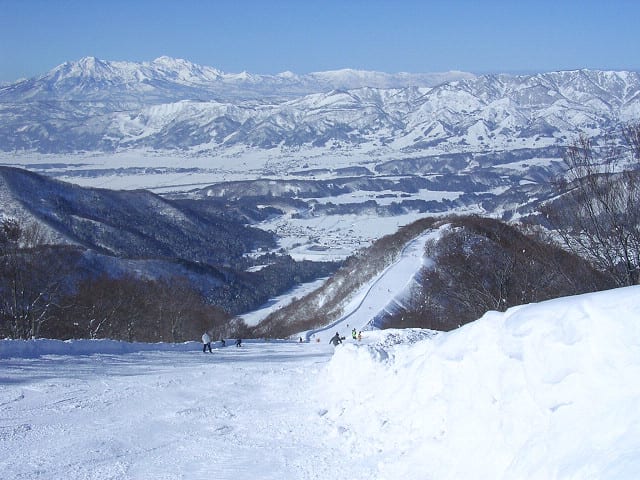
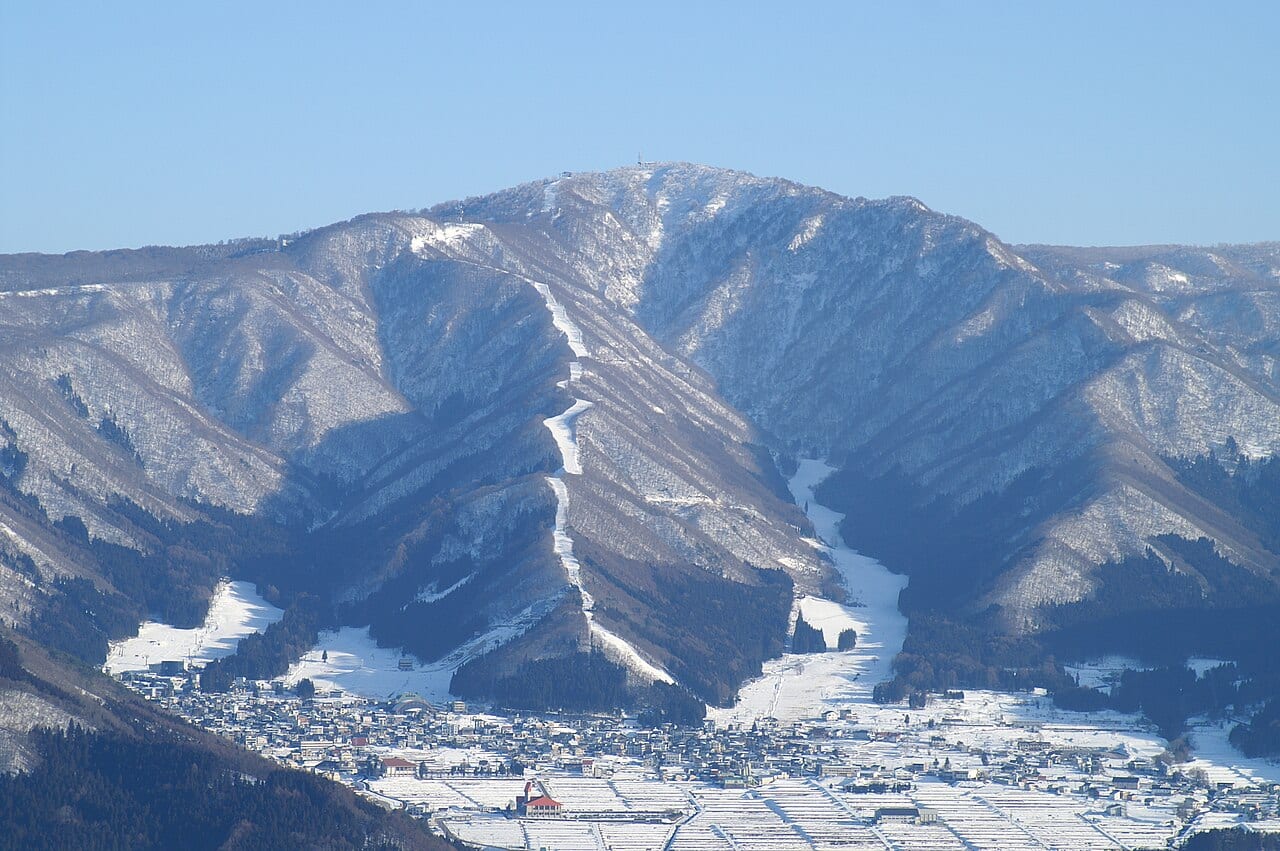
Nozawa Onsen's ski area is among the largest in Nagano, with big vertical and varied runs: the upper "Yamabiko" area has reliable snow and tree runs, while the mid-mountain and base have plenty of wide beginner-to-intermediate slopes, so beginners and families do fine, and advanced skiers have steeps and trees to play on. The snow is dry, with the same January to mid-February core. Gondolas link the town and the mountain, so staying in the onsen village lets you ride up and down each day — the main one is the Nagasaka gondola, about 8 minutes in a straight line from the Nagasaka base to the Yamabiko area, with the Hikage gondola as the other; both are free on the way down.
The 2026-27 season is published as 28 November 2026 to 5 May 2027, with the operator explicitly reserving the right to delay opening. On tickets: the standard rate applies 19 December to 28 March, at ¥7,800 adult, ¥4,700 for junior-high age and under, and ¥6,300 for 60 and over. Before that it's the early-season rate of ¥5,600, and from 29 March to closing it's the spring rate of ¥6,100. You don't need to buy online: all three ticket centres sell on the day and all three take Visa, Mastercard, JCB, transport IC and QR payment. Online sales for 2026-27 hadn't opened as of September, so there is no "cheaper if you book ahead" to chase.
Two details that are easy to miss: ticket types needing an IC card carry a ¥500 deposit, refunded when you return the card; and one accompanying preschool child per adult goes free, with no ticket issued — they simply pass the gate with the adult.
Sotoyu bath culture: soak after your runs
What makes Nozawa special are its 13 "sotoyu" (public bathhouses) maintained collectively by residents, free in principle (a donation box at the door takes voluntary coins for upkeep), the most famous being the landmark "Oyu" in the village center, with its handsome old building. Soaking a circuit of sotoyu after your runs is Nozawa's most authentic pleasure. The system that keeps all 13 running is called yunakama and dates from the Edo period: neighbouring households pay the electricity and water and clean on a daily rota.
Check one thing before you go: Akiha-no-yu is closed for demolition work. The announced suspension runs 11 May to 30 October 2026 and is explicitly labelled provisional. It should be back before the ski season, but this is demolition rather than refurbishment, so check again nearer the time. Opening hours also differ bath to bath: most run 6:00–23:00 from December to March, Taki-no-yu closes at 22:00, and Shinyu and Juodo-no-yu run 6:00–22:00. The village states plainly that late-night bathing isn't possible, for security reasons among others. None of the sotoyu has parking.
But these are genuinely shared local baths, with stricter etiquette than tourist onsen — please respect it: rinse your body clean at the wash area outside before entering, never put your towel in the water, the water runs hot and you mustn't cool it much with cold water (it ruins the temperature for the next bather), and keep quiet. Treat it as walking into someone's communal bath rather than a tourist facility and you won't give offense. To understand Japanese onsen and ryokan culture more deeply, see our 5 best Japanese onsen ryokans.
The fire festival and nozawana
If your trip can hit January 15, Nozawa Onsen's Dosojin Fire Festival is well worth building in — one of Japan's three great fire festivals and a designated Important Intangible Folk Cultural Property. Villagers build a huge wooden shrine, defended by the men of the "unlucky ages" 25 and 42 above and below while others attack with torches to set it alight; the fire, shouting and prayer make a fierce, spectacular scene that exists only this one night.
But read this first, because it decides whether you get in at all. In a notice signed by the organisers on 30 November 2025, covering the 2026 edition: admission is restricted to admission-ticket holders, and those tickets are issued only to residents of Nozawa Onsen Village and to guests staying in the village, with the stated route to one being to ask your own lodging. In other words, staying in the village that night is itself the ticket; turning up from Iiyama for the evening is not something that edition's rules were built to allow. The same notice bans bringing drinks including alcohol into the site, designates the whole village a no-parking zone with pedestrian routing enforced, and prohibits drones.
Three limits to be honest about. First, that notice is worded for the 2026 edition, and nothing official says 2027 repeats it — don't treat it as settled. Second, the restriction exists only in the English text; it isn't on the Japanese pages, so anyone reading only Japanese won't see this warning. Third, there is no grandstand and no ticket for sale: admission tickets are issued, not sold, and no platform has any standing to resell them — treat any offer to sell you one with suspicion.
As for the 2027 date, the organisers state the festival is held every January 15, which would make it a Friday in 2027 — but the official announcement has not been issued. Preparations are under way: the tourism association ran a free, 40-place tour of the sacred-tree felling on 10 October 2026.
Also, the pickled leafy green "nozawana" common on Japanese tables originates from Nozawa Onsen. The village's "Ogama," a hot-spring source where boiling water emerges, is where residents have long blanched nozawana and boiled eggs — a center of onsen-village life. Beyond skiing and bathing, eating local nozawana and seeing the steam rising from Ogama is part of the experience.
Access and lodging
Access: like Hakuba, via Nagano — take the Hokuriku Shinkansen from Tokyo to Iiyama Station (~1 hr 40 min), then a shuttle bus to Nozawa Onsen (~25 min), under 2.5 hours total, far easier than Hokkaido resorts and a good fit for a Tokyo trip.
None of the buses need booking — all three of them. The Nozawa Onsen Liner puts "no reservation required" right in its page title, at ¥600 one way for adults and ¥300 for ages 7-12, from stand 4 on the Chikumagawa (front) side of Iiyama Station. The Nagaden Nozawa service is a local bus you pay onboard when you get off, and the NOTOMA bus linking Madarao and Togari states plainly that "no reservation is necessary". So don't spend effort booking bus seats. Watch other things instead: the Liner explicitly does not connect with every shinkansen, so check times before you travel, and while the operator adds vehicles when it's busy you may have to wait for the next one. Also, there is no public transport at all from JR Togari-Nozawaonsen Station to the village — that bus route was withdrawn in 2015, so don't let the station name send you to the wrong stop.
One more thing that affects the budget: Nozawa Onsen Village introduced a lodging tax on 1 June 2026 — 3.5% of the room rate until the end of May 2029 and 5% thereafter, with room-only charges under ¥6,000 exempt.
Lodging: the essence of Nozawa is staying in a wooden inn or guesthouse on the onsen street, a few steps from the public baths and straight up to the slopes the next day. The ski season is peak and the fire-festival period more so — and under the 2026 rules above, whether you sleep in the village on festival night decides whether you get into the site at all, so treat those dates as competing for a place rather than just finding a bed.
Search Nozawa Onsen stays on Rakuten Travel →
Don't read the number of properties listed as the village's total — it's only what that channel has in stock for the night you searched, and we did not obtain actual ski-season or festival-night availability. If you're slotting Nozawa into a Tokyo trip, the Tokyo end is in our Tokyo 5-day itinerary; for the steeper Hakuba, also in Nagano, see our Hakuba ski guide. The slopes and town have big day-night temperature swings; warm, waterproof packing is in our Japan packing & weather guide.
An ideal day and practical tips
To get the most from the "skiing + onsen village" combo, a day can run like this:
- Ski in the morning: ride the gondola up from the town, take the best early snow with fewer people, ski until midday.
- Onsen circuit in the afternoon: drop your gear at the inn and soak in one or two sotoyu to ease the legs (Oyu is a must) — you'll come out thoroughly warm.
- Stroll the town in the evening: walk the stone lanes, watch the steam at Ogama, and eat nozawana and local snacks — onsen manju and onsen eggs are worth trying.
A few tips: bring your own towel and coins for the sotoyu donation box; the baths run hot, so test the water first rather than forcing it; the town's stone lanes ice over in winter, so wear non-slip shoes; and beginners should take a lesson on day one and not ski all day, saving energy for the baths and the town. Bring your own gloves, goggles and beanie — the resort's own rental shop doesn't rent those three, on hygiene grounds.
Gear rental doesn't need booking ahead: most shops on the official directory are marked as accepting same-day walk-ins, and one advertises "come empty-handed". A few, though, list only web or phone booking, so check the entry for whichever shop you want. The ski school is the same — it takes phone, web and Hikage main-office counter bookings, so it isn't a book-ahead-only affair. What does need arranging is a Chinese- or English-speaking private instructor. Two channels sell it on different terms; take your pick:
| Channel | Listed price | Reviews | What to know |
|---|---|---|---|
| KKday · Chinese-speaking private instructor | TWD 7,720 for 2.5 hrs / 12,303 for 5 hrs / 14,764 for 7 hrs | 5.0 / 7 | Instructors live in the village; all three prices sit on a "super early-bird" plan that the product page states cannot be cancelled, changed or refunded, and both price and terms change once the campaign ends |
| Klook · Chinese/English instructor | from TWD 9,807 | 4.8 / 6 | Free cancellation; the listing covers Nozawa Onsen and Togari, which is a separate resort, so confirm you've selected Nozawa. The price is a promotional starting rate that moves with the campaign |
The two differ in hours, so the prices aren't directly comparable. Both sell instruction only — neither includes lift tickets or rental.
That rhythm — ski by day, soak and eat by night — is exactly what makes Nozawa Onsen so appealing.
Frequently Asked Questions
- Q1:Who is Nozawa Onsen best for?
- Nozawa Onsen has a large ski area with fun tree runs and terrain from beginner to advanced, so it's friendly to beginners and families — but its real draw isn't just the skiing, it's the whole "skiing + a traditional onsen village" experience. If you purely want steep terrain and powder, Hakuba or Niseko go further; but if you want to finish your runs and walk into a stone-paved hot-spring town to soak in free public baths and feel a traditional snow-country atmosphere, Nozawa is almost irreplaceable.
- Q2:What are Nozawa's "sotoyu," and are they free?
- Sotoyu are public bathhouses maintained by local residents, and Nozawa Onsen village has 13 of them, free in principle (a donation box at the door takes voluntary coins for upkeep), the most famous being the landmark "Oyu" in the center. Note these are genuinely shared local baths — the water runs hot and etiquette is strict (rinse off thoroughly outside before entering, don't put your towel in the water, don't cool it down too much with cold water). Treat them as someone's communal bath, not a tourist facility, and you won't offend.
- Q3:What is the Dosojin Fire Festival, and when is it?
- Nozawa Onsen's "Dosojin Fire Festival" is one of Japan's three great fire festivals and a designated Important Intangible Folk Cultural Property, held every January 15. Villagers build a huge wooden shrine, defended by the men of the "unlucky ages" 25 and 42 while others attack with torches to set it alight — a fierce, spectacular scene of fire, shouting and prayer that exists only this one night. But check first whether you can get in. For the 2026 edition the organisers announced that admission is restricted to admission-ticket holders, and that tickets are issued only to residents of Nozawa Onsen Village and to guests staying in the village, obtained by asking your own lodging. Staying in the village that night is itself the ticket — there is no grandstand and no ticket on sale anywhere. That notice covers the 2026 edition; whether 2027 follows the same rule has not been stated, and the restriction appears only in the English text. The official announcement for the 2027 edition has not been issued yet.
- Q4:How do I get to Nozawa Onsen from Tokyo?
- Like Hakuba, via Nagano: take the Hokuriku Shinkansen from Tokyo to Iiyama Station (~1 hr 40 min), then a shuttle bus to Nozawa Onsen (~25 min) — under 2.5 hours total, far easier than Hokkaido resorts and a good fit for a Tokyo trip. None of the buses need booking. The Nozawa Onsen Liner puts "no reservation required" in its own page title (¥600 adult, ¥300 for ages 7-12, from stand 4 at Iiyama Station's Chikumagawa side); the Nagaden Nozawa route is a local bus you pay on alighting; and the NOTOMA bus states "no reservation is necessary". Two things do matter: the Liner does not connect with every shinkansen, so check the timetable; and there is no public transport from JR Togari-Nozawaonsen Station to the village — that route was withdrawn in 2015, so don't be misled by the station name.
- Q5:Is nozawana pickle related to Nozawa Onsen?
- Yes — nozawana (a pickled leafy green) originates from Nozawa Onsen. The village's "Ogama," a hot-spring source where boiling water emerges, is where residents have long blanched nozawana and boiled eggs — one of the centers of onsen-village life. Beyond skiing and bathing, eating some local nozawana and seeing the steam rising from Ogama is part of the experience.