The most important thing to know about visiting Oirase Gorge in 2026 is not which waterfall to photograph. It is that the private-car restriction has moved forward by more than a month: it ran October 21–27 in 2024 and October 27 – November 2 in 2025, and in 2026 it runs September 7 to September 13. More significant still, September 13 is the first full closure to every vehicle class in the programme's history — taxis and coaches included, along that 10 km stretch of road. Anyone arriving with a rental car and the old "restrictions happen in late October" assumption will be turned around at the Sobe junction in early September. This guide explains the restriction in full — dates, hours, which vehicles, the shuttle and what it costs — and then covers everything else you need for a day here: complete JR bus fares and timings, how to choose between the 14 km trail and the 9 km highlight section, the cruise timetable trap, and what spring, summer and winter actually look like. All of it verified against official sources as of July 2026.
📍 This guide does not cover autumn foliage. Peak timing, the reverse-walk photography logic, a five-day Sendai loop and the JR East Pass break-even maths all live in our Oirase autumn foliage guide, which handles that season in far more depth. What follows is the year-round operating manual: restrictions, buses, trail, boats, seasons and facilities.
- 2026 restriction: Sept 7–13. Weekdays 10:00–16:00, weekend 9:00–16:00 — over a month earlier than previous years, and Sept 13 is a total closure to all vehicle classes, a first
- Rental cars are included, as are motorcycles, mopeds and e-scooters. But JR route buses keep running — this is not a road closure
- Shuttle day pass: ¥2,000 on the spot, ¥1,500 as an e-ticket, every 30 minutes, free for elementary age and under
- No day pass on the route buses. The old Lake Towada free ticket is discontinued; it is single-journey cash or IC card, leg by leg
- Trail: 14 km, five hours — but the official highlight section is Ishigedo to Nenokuchi, 9 km in 2.5 hours, and most people should skip the lower 5 km
📖 Table of Contents (click to expand)
- The 2026 car ban explained: dates, hours, vehicles
- Getting around during the restriction
- Why it exists: from a 2003 experiment to the Oirase Nature Museum
- Buses in full: Mizuumi-go vs Oirase-go
- Four ways in, compared
- The trail: all 14 km, or the 9 km that matters
- Ishigedo, the Keiryukan and renting a bicycle
- The Lake Towada cruise and its timing trap
- Seasons: fresh green, moss, and an honest winter answer
- Winter access: frozen waterfall tours
- Towada Shrine: the blue dragon goshuin
- Eating here: himemasu and a hundred-year story
- Is Oirase worth the journey?
- FAQ
The 2026 car ban explained: dates, hours, vehicles
Most important information first. The 2026 Oirase private-car restriction is organised by the Towada-Oirase Tourism Organisation, was announced in a press release on March 26, 2026, and is formally framed as a traffic experiment under the banner "Oirase Nature Museum".
| Item | 2026 detail |
|---|---|
| Dates | Monday September 7 – Sunday September 13, 2026 (seven days) |
| Weekday hours (Sept 7–11) | 10:00–16:00 |
| Weekend hours (Sept 12–13) | 9:00–16:00 (one hour earlier start) |
| Restricted section, ordinary vehicles | National Route 102, Sobe junction to Nenokuchi junction, about 10 km |
| Vehicles covered | Ordinary cars, medium vehicles, motorcycles (including mopeds and electric kick scooters); rental cars included |
| Separate section for large vehicles | Nenokuchi junction to Aobunayama junction, about 6 km (gross weight 8t+, payload 5t+, or 11+ seats) |
| September 13 (Sun) | Total closure to all vehicle classes: large vehicles, designated medium vehicles, taxis, hire cars and small special vehicles all barred |
| Exemption | Vehicles used by people with mobility difficulties |
Three details in that table cause most of the trouble.
First, the date genuinely moved. For the past two years the restriction sat at the tail of the foliage season — October 21–27 in 2024, October 27 – November 2 in 2025. Moving it to early September is the largest single shift since the experiment began in 2003. The practical consequence inverts most people's instincts: if you are coming in early September you now need to check the restriction, and if you are coming in late October you probably do not. Any page still framing this as "restrictions at the end of peak foliage" is describing the pre-2026 arrangement.
Second, rental cars are not exempt. The official notice lists them explicitly. That matters here more than it would elsewhere, because public transport in this corner of Aomori is thin and a lot of visitors plan to drive by default. If your driving day lands between September 7 and 13, those 10 km are simply not available to you — this is not a "drive carefully" advisory. Motorcycles, mopeds and electric kick scooters are covered too. Bicycles, however, are not restricted, which is why the rental cycle service further down becomes unusually useful during that week.
Third, September 13 is a different animal. That single day closes the road to every vehicle class, and the organisers describe it openly as a preview of the future Oirase Nature Museum. No taxis, no hire cars, no tour coaches — the gorge is reduced to a shuttle bus and pedestrians, for the first time ever. Read that either way depending on your priorities: if road noise is what you dislike about Oirase, September 13 will be the quietest day of the year and the closest thing to the gorge as it was before cars, and worth planning around deliberately. If your day needs flexibility, avoid it.
Getting around during the restriction
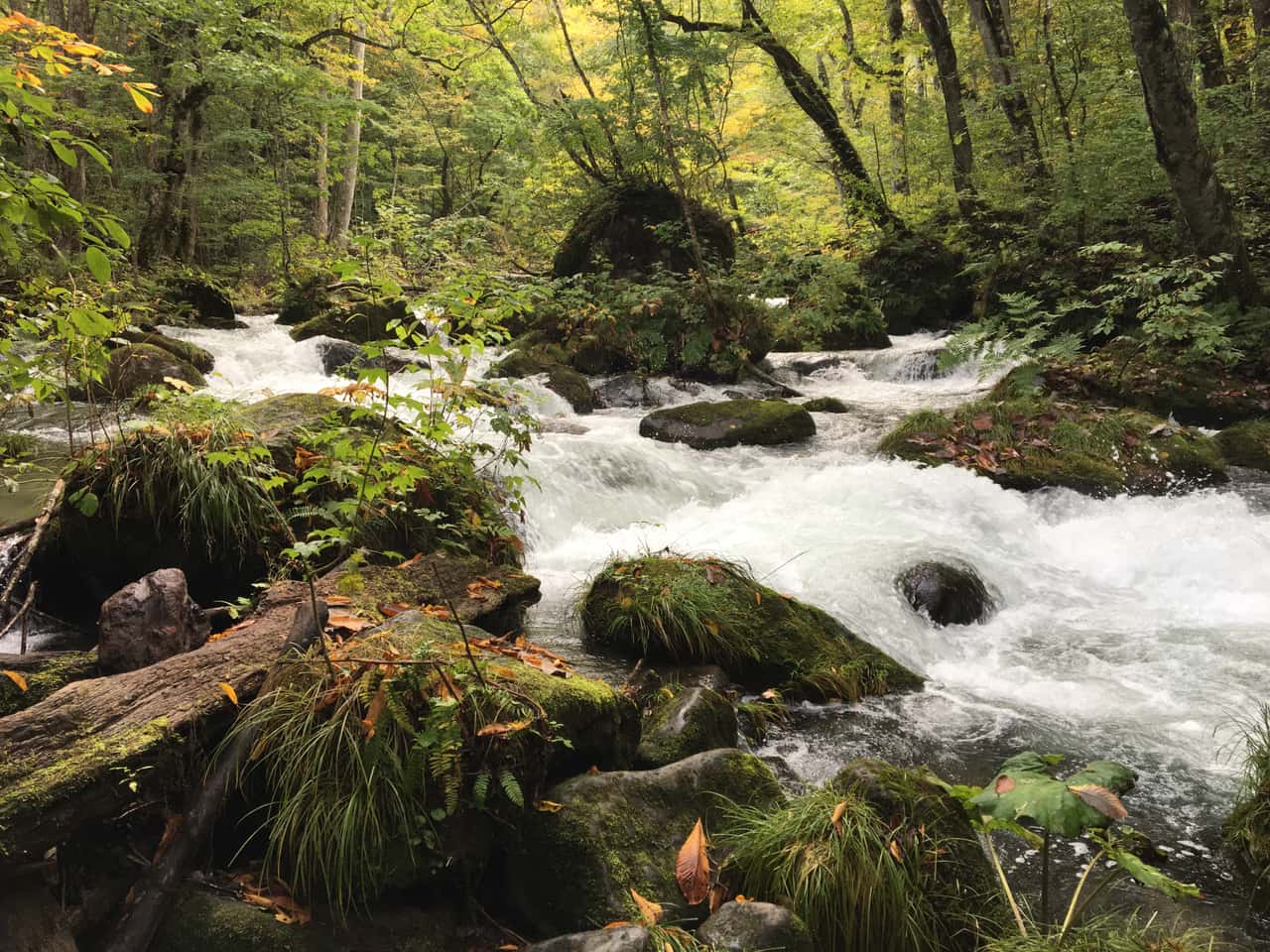
Clear up the biggest misconception first: restricted is not closed. During the restriction you may walk, cycle, ride JR Bus Tohoku's scheduled services, or take the organisers' shuttle. The trail is open end to end, the waterfalls are where they always are, and the shop at Ishigedo trades as normal. Reading "traffic restriction" as "the gorge is shut" is the single most common piece of bad information circulating about this place.
The shuttle bus
| Item | Detail |
|---|---|
| Route | Oirase Keiryu Onsen ski ground ⇄ Yasumiya (stops include Nenokuchi and the JR Bus Lake Towada terminal) |
| Frequency | Every 30 minutes |
| One-day pass, on the spot | ¥2,000 (free for elementary age and under) |
| One-day pass, e-ticket | ¥1,500 (¥500 cheaper) |
| Sales points | Ski ground car park / Nenokuchi bus stop / JR Bus Lake Towada terminal |
| Parking | Ski ground car park and Yasumiya car park during the restriction |
The arithmetic is trivial: the e-ticket saves ¥500 per person, ¥1,000 for a couple, so if your phone has data before you arrive there is no reason to queue and pay the walk-up price. A 30-minute headway is dense by the standards of Japanese seasonal shuttles, and in practice you can walk until you have had enough and wait at whichever stop you reach — during the restriction week, hopping between points is actually easier than at any other time of year.
One detail that costs people money: the shuttle pass and JR route bus tickets are not interchangeable. A shuttle pass will not get you onto the Mizuumi-go, and vice versa. If your day looks like "arrive from Aomori on the Mizuumi-go, move around inside the gorge, leave for Hachinohe on the Oirase-go", the shuttle pass has limited value and you should price it honestly rather than buying reflexively.
If you are driving and need the detour
Drivers are diverted onto a signed detour during restricted hours. The official figures are roughly 14 km for the detour against the 10 km restricted section, adding about five to ten minutes in normal conditions. Note that diversion starts before the restriction itself: 9:30 on weekdays and 8:30 at weekends. So the plan of "slip through just before the 10:00 start" does not work — you will already be diverted at 9:30, and that half hour needs to be in your calculation.
Why it exists: from a 2003 experiment to the Oirase Nature Museum
This section explains what Oirase is likely to become over the next decade, and almost no travel coverage includes it.
Traffic restrictions on the Oirase section of National Route 102 have been run continuously since Heisei 15, that is 2003. This is not a recent policy. Throughout, it has been framed as a social experiment: close the road for a few days, gather data, see what a car-free Oirase looks like, and measure how visitors and local businesses respond.
| Year | Restriction period |
|---|---|
| 2024 | October 21 – 27 |
| 2025 | October 27 – November 2 |
| 2026 | September 7 – 13 (first move into September) |
The direction of travel is in the next paragraph. Aomori Prefecture's published material shows that the Oirase (Aobunayama) Bypass has been advanced since fiscal 2013 by the Ministry of Land, Infrastructure and Transport's Aomori river and national road office under delegated authority. Once that bypass opens, the existing Route 102 section through the gorge is slated for year-round vehicle restriction, converting the corridor into what the prefecture describes as a quiet, people-centred space. The concept was formalised in the 2018 "Oirase Vision" and carries the name Oirase Nature Museum.
So those few days each year are not a nuisance measure — they are a rehearsal for the permanent arrangement. That also explains why 2026 introduced something never attempted before: the total closure on September 13 tests the version with no vehicles at all.
One thing must be said plainly: the bypass has no officially published opening year. Dates such as 2029 circulate online, and I could find no basis for them in the prefecture's own material, so this guide does not print one. What is confirmed is only the direction — Oirase is heading towards being permanently car-free, on a timetable that has not been announced.
Buses in full: Mizuumi-go vs Oirase-go
There is no railway along the gorge, so everyone without a car depends on JR Bus Tohoku's Lake Towada line. It has two service names, and English and Chinese sources routinely confuse them:
- Mizuumi-go departs Aomori Station and Shin-Aomori Station, running past the Hakkoda ropeway, Sukayu Onsen and Tsuta Onsen before entering the gorge and continuing to Nenokuchi and Lake Towada (Yasumiya). It operates April 1 to November 11 in 2026, starting with the opening of the Hakkoda Gold Line.
- Oirase-go departs Hachinohe Station West Exit, running via Towada City (the Art Center) and the Oirase Roman Park roadside station before entering the gorge. It operates April 11 to November 17 in 2026 (service 23 until November 16).
In other words: the Hachinohe service is the Oirase-go, not the Mizuumi-go. That error is widespread, our own older foliage article carried it too and has been corrected in this pass, and asking for the wrong service name at Hachinohe will send you to the wrong stand.
2026 fares (official section fare tables)
| Section | One-way fare |
|---|---|
| Aomori / Shin-Aomori → Lake Towada (Yasumiya) | ¥3,480 |
| Aomori / Shin-Aomori → Nenokuchi | ¥3,060 |
| Aomori / Shin-Aomori → Ishigedo | ¥2,820 |
| Aomori / Shin-Aomori → Oirase Keiryu Onsen / Keiryukan | ¥2,650 |
| Hachinohe West Exit → Lake Towada (Yasumiya) | ¥3,050 |
| Hachinohe West Exit → Nenokuchi | ¥2,600 |
| Hachinohe West Exit → Oirase Keiryu Onsen / Keiryukan | ¥2,270 |
| Keiryukan → Ishigedo (in-gorge hop) | ¥370 |
| Ishigedo → Nenokuchi (in-gorge hop) | ¥550 |
| Nenokuchi → Lake Towada (Yasumiya) | ¥720 |
Other stops along the way are priced too — the Hakkoda ropeway at ¥1,290, Sukayu Onsen at ¥1,570 and Tsuta Onsen at ¥2,400, all from Aomori — but the table above covers what an Oirase day actually needs. The single most useful line is Ishigedo to Nenokuchi at ¥550, because that is exactly the official highlight section: if your legs give out, paying that fare to skip back is a far more sensible move than grinding out 9 km on principle.
2026 timings, inbound
The timetable below is the version effective from April 1, 2026 — roughly four to five inbound services and nine returns per day. Representative departures:
| Service | Origin | Keiryukan | Ishigedo | Nenokuchi | Lake Towada |
|---|---|---|---|---|---|
| Mizuumi-go 102 (Sept 18 – Nov 11 only) | Aomori 7:30 | — | 9:39 | 10:00 | 10:15 |
| Mizuumi-go 2 | Aomori 8:10 | 10:11 | 10:19 | 10:40 | 10:55 |
| Mizuumi-go 4 | Aomori 9:00 | — | 11:45 | ||
| Mizuumi-go 6 | Aomori 11:35 | — | 14:43 | ||
| Oirase-go 21 | Hachinohe West 10:00 | 11:36 | 11:44 | 12:05 | 12:20 |
| Oirase-go 23 | Hachinohe 13:30 | — | 15:50 | ||
| Mizuumi-go 80 (short working) | Keiryukan 8:45 | — | — | 9:29 | |
Two planning conclusions come straight out of that table. First, Aomori to Lake Towada is about two hours 45 minutes and Hachinohe about two hours 20 — this is half a day of travel, not a convenient detour. Second, the earliest you can set foot on the trail is 10:19 at Ishigedo (Mizuumi-go 2) or 11:44 (Oirase-go 21), plus an extra foliage-season service from September 18 to November 11, Mizuumi-go 102, which leaves Aomori at 7:30 and reaches Ishigedo at 9:39. If you want to be walking by 9:00, the only route is to sleep at Oirase Keiryu Onsen or Yasumiya the night before and take the short working, Mizuumi-go 80, which leaves the Keiryukan at 8:45.
Returning, departures from Lake Towada (Yasumiya) run at 8:00 (from April 11), 9:00, 10:00, 12:00, 12:50, 13:45, 15:00, 15:30 and 16:00, and departures from Nenokuchi follow roughly 15 minutes later: 8:15, 9:15, 10:15, 12:15, 13:05, 14:00, 15:15, 15:45 and 16:15. Of these, the 9:00 reaches Aomori at 11:44, the 10:00 (Oirase-go 22) reaches Hachinohe at 12:20, the 13:45 reaches Aomori at 16:29, the 15:00 reaches Aomori at 17:44, and the 16:00 (Oirase-go 24) reaches Hachinohe at 18:20. From September 18 to November 11 there are two extra services: Yasumiya 11:00 (Nenokuchi 11:15, running only as far as Oirase Keiryu Onsen) and Yasumiya 14:30 (Nenokuchi 14:45, reaching Shin-Aomori at 17:29). Check which city each return actually serves — Aomori-bound and Hachinohe-bound services are separate, and not every departure goes where you need.
Three bus rules worth knowing before you go
- Oirase-go 21 and 23 require a reservation to board at Hachinohe Station West Exit, costing ¥300 per seat, paid online when booking, with the fare itself paid on alighting. Boarding at stops between Machinaka Kotsu Hiroba and Shimo-Utarube, and all returns from Lake Towada, need no reservation. The Mizuumi-go needs none on any section. Reservations open three months before the travel date.
- There is no day pass. Neither the official route page nor the 2026 timetable lists any free ticket, and the old Lake Towada free ticket has been discontinued. It is single-journey cash or a transport IC card.
- IC cards work on board (Suica and equivalents). However, boarding at Aomori Station and alighting at Shin-Aomori Station is not permitted, and stops with no time printed against them are not served.
⚠️ No buses enter the gorge from mid-November, and the Aomori line stops almost a week before the Hachinohe line. Last operating days on the 2026 official timetable: the Mizuumi-go from Aomori and Shin-Aomori runs until November 11; Oirase-go 21, 22 and 24 from Hachinohe run until November 17, and 23 until November 16; the in-gorge short workings end on November 11 or 17 depending on the service. So from November 12 to 17 there is no bus into the gorge from Aomori — if you are chasing the last of the foliage, come in from Hachinohe. The winter timetable for November 18, 2026 to March 31, 2027 lists only the Hakkoda-go from Aomori to Sukayu Onsen (reservation required to board at Aomori and Shin-Aomori), with no services into Oirase Gorge or to Lake Towada.
If your trip strings together several Tohoku rail legs, do the pass maths before booking tickets. Note first that the Tohoku edition of the JR East Pass was withdrawn on March 13, 2026 and replaced from March 14 by the all-JR-East JR EAST PASS (¥35,000, five consecutive days). Wider coverage at a higher price means the break-even count has to be recalculated rather than copied from older guides; the versions are compared in our JR Pass complete guide 2026. Note that the JR bus fares listed above are cash fares; what any given pass covers is governed by that pass's current terms.
Four ways in, compared
| Approach | Cost | Strength | What you accept |
|---|---|---|---|
| Driving | Rental plus fuel | Maximum freedom; unlocks Kankodai and Hakka Pass viewpoints | The 10 km section is closed to you Sept 7–13; the trail is linear, so you must return for the car |
| Mizuumi-go from Aomori | ¥3,480 to Yasumiya | Hakkoda, Sukayu and Tsuta on the way in — the most scenic approach; no reservation | About 2h45; earliest arrival at Ishigedo is 10:19 (9:39 on the Sept 18 – Nov 11 extra service); no gorge service from Nov 12 |
| Oirase-go from Hachinohe | ¥3,050 to Yasumiya | Faster and cheaper; connects cleanly with the Tohoku Shinkansen | Services 21 and 23 need a reservation plus ¥300 from Hachinohe West |
| Hopping inside the gorge | Ishigedo → Nenokuchi ¥550 | Bail out whenever you like; best control over effort | Services are not frequent — copy the times down first |
My own preference is blunt: if Oirase and Lake Towada are the whole trip, the bus beats driving. The reason is geometry. The trail is linear, not a loop, so a driver who walks a section has to come back for the car — the same ground twice, or a bus ride back anyway. A bus passenger simply walks forwards and stops at whichever stop suits. Driving earns its keep on the Lake Towada viewpoints (Mt. Ohanabe's Kankodai, Hakka Pass) and any extension towards Hachimantai, which are genuinely hard to reach otherwise; that trade-off is worked through in our Lake Towada, Oirase and Hachimantai guide.
There is a fifth way in that the table deliberately leaves out, because it is a different kind of trip altogether: a day tour out of Aomori. GetYourGuide sells an Oirase, Lake Towada and Hakkoda Ropeway day tour (US$145): 09:00 departure from Aomori Station, Ishigedo at 10:20, 12:20–14:20 at Lake Towada (walk to the Maiden Statue, or take the 13:15 peninsula cruise — the boat fare is included), 15:30–17:00 on the Hakkoda Ropeway, back in Aomori by 18:00. Maximum nine people, running Mondays, Wednesdays, Fridays and Sundays.
🔴 Stop before you book 13 September. The official Oirase page is explicit about tour coaches: on the other six days they are "not subject to the traffic restriction", but on the 13th "large vehicles are also subject to the restriction, so tour coaches cannot pass". This tour runs Mondays, Wednesdays, Fridays and Sundays — and 13 September is a Sunday. Its itinerary puts it at Ishigedo at 10:20 and Lake Towada at 12:20, entirely inside that day 9:00–16:00 window. ⚠️ The product page says nothing about this (checked while writing: zero hits for traffic, restriction or September 13). The tour uses a nine-seat vehicle rather than a full coach, and the notice does not name that class, so only the operator can tell you whether it still runs — ask before booking that date, do not assume. The other six days are unaffected.
🔴 Read this line before you book: the tour does not walk the trail. The operator's own wording is "Normally, we will travel by vehicle with no walking required" — the 9 km from Ishigedo to Nenokuchi is driven past, with 15-minute photo stops at Ishigedo-no-Se, Ashura-no-Nagare, Kumoi-no-Taki and Choshi Otaki. That is a different activity from the walk this entire article is built around. If your reason for coming to Oirase is to walk it, do not buy this. If instead your goal is to see the gorge, the lake and Hakkoda in one day without fighting the bus timetable, it bundles the transport and the cruise cleanly and does that job well. Two more details: admission fees at individual facilities are not included, and non-English speakers are handled with translation apps rather than a dedicated guide.
The trail: all 14 km, or the 9 km that matters
The official figures, from eco-oirase, are these:
- Full route: Yakeyama to Nenokuchi, about 14 km, roughly five hours on foot
- Highlight section: Ishigedo to Nenokuchi, about 9 km, roughly two and a half hours
Read the second line carefully, because the "highlight section" is the operator's own designation — the body that manages the gorge is telling you where the good part is. Subtraction puts Yakeyama to Ishigedo at about 5 km; no official walking time is published for it, but at the same pace it is roughly an hour and a half.
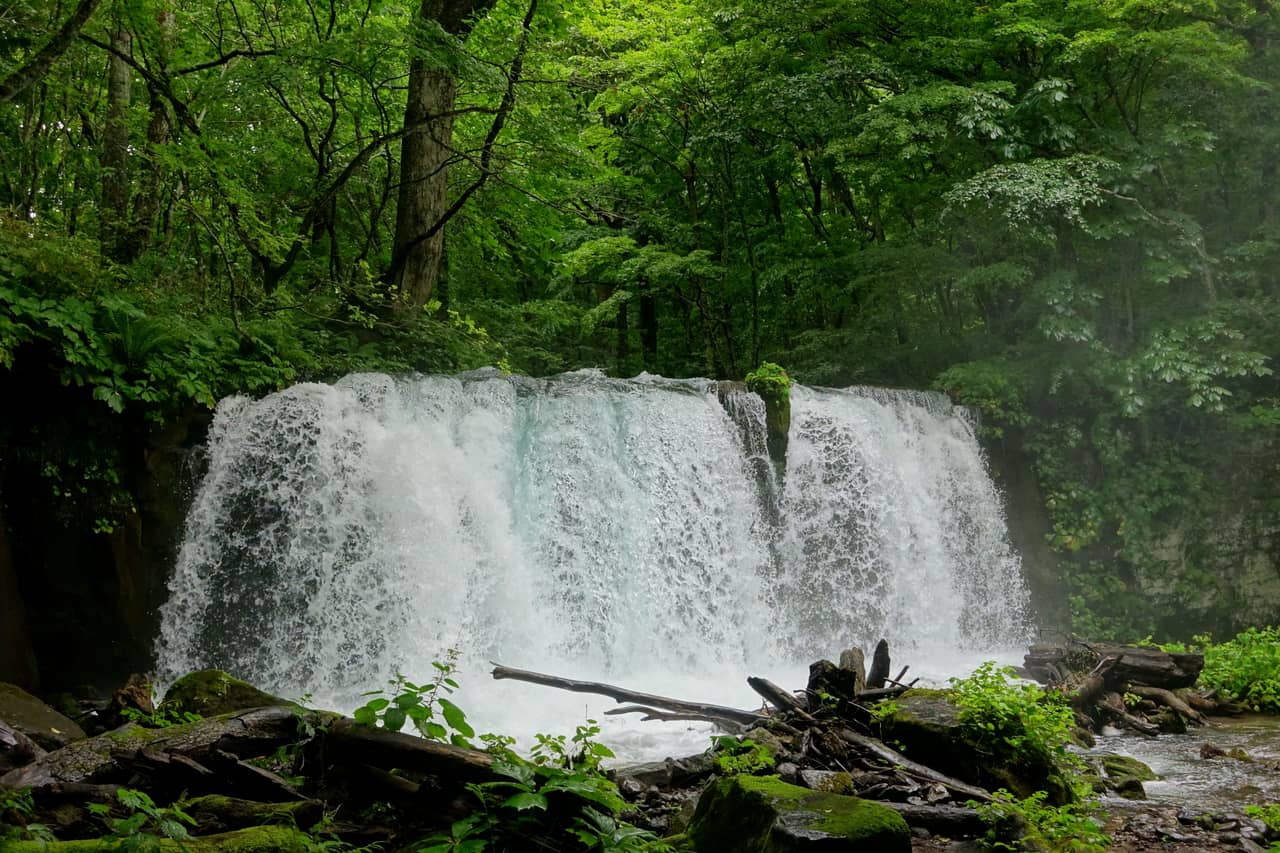
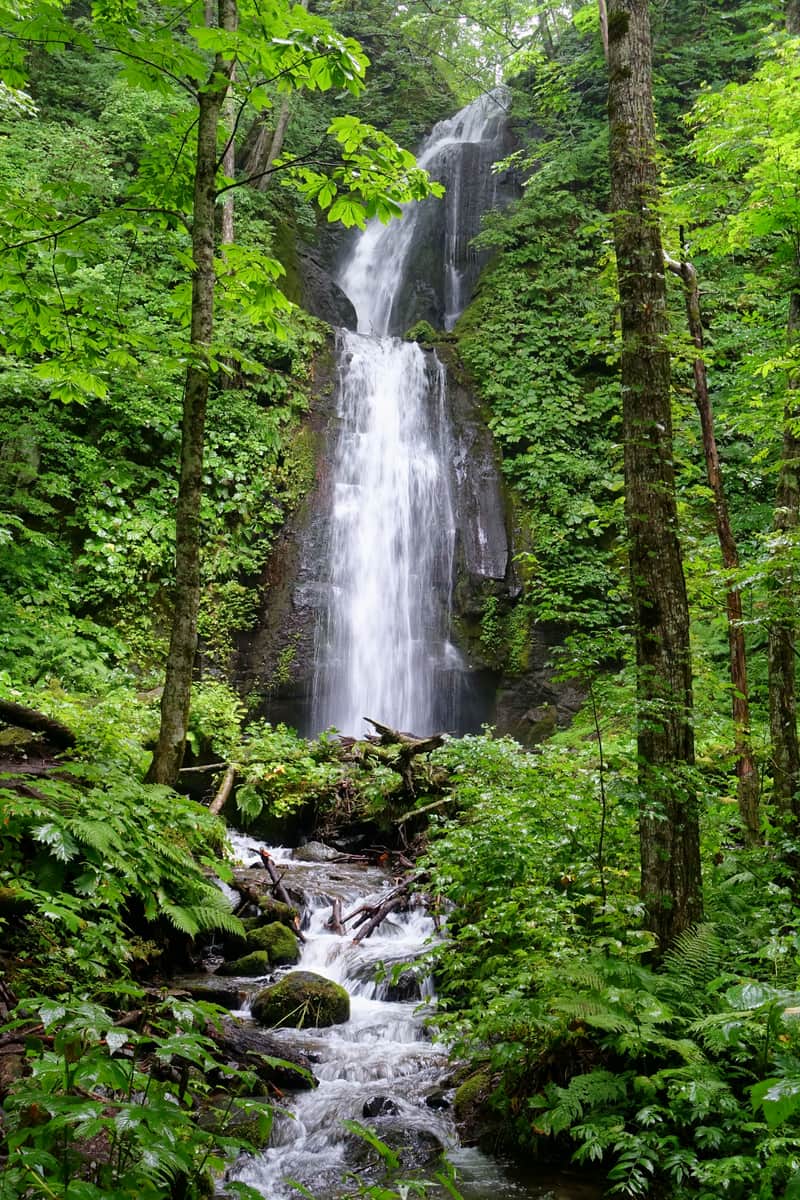
Skip that lower 5 km. Not because it is ugly, but because of density: the named features — Sanran-no-Nagare, Ishigedo-no-Se, Ashura-no-Nagare, Kumoi-no-Taki, Choshi Otaki, the Nenokuchi water gate — sit almost entirely above Ishigedo, which is exactly why the highlight designation falls where it does. Most visitors have the stamina and the daylight for one section, and spending it on the dense one is simply the rational choice. The 14 km is for people whose goal is to have walked 14 km, not for people who came to look at water.
Section timings
| Section | Distance | Time |
|---|---|---|
| Ishigedo → Ashura-no-Nagare | approx 1.7 km | approx 35 min |
| Ashura-no-Nagare → Kumoi-no-Taki | approx 1.1 km | approx 25 min |
| Choshi Otaki → Nenokuchi | approx 1.5 km | approx 30 min |
| Ishigedo → Nenokuchi (whole section) | approx 9 km | approx 2.5 hours |
The intermediate rows come from Ministry of the Environment course data reproduced by a travel operator rather than from eco-oirase directly, which is why each carries an "approx"; only the final row is an official figure. In practice you will be slower than any of them, because this trail puts something worth stopping for every few hundred metres. That is the difference between Oirase and an ordinary hike.
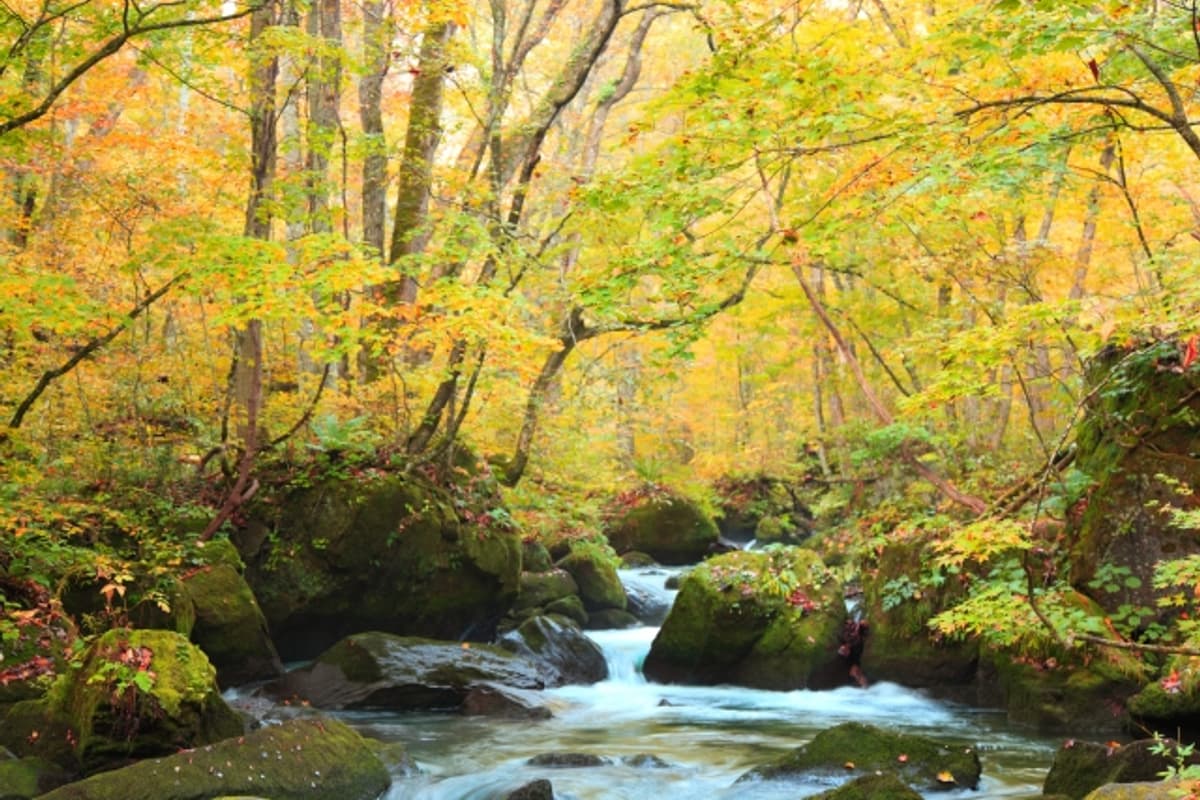
The terrain is nearly flat, with only about 200 m of fall over the whole 14 km, and needs no hiking equipment. A few practicalities are worth knowing in advance:
- Toilets are limited. The official map marks rest points at Nenokuchi, Yakeyama, near Tamadare-no-Taki, at Ishigedo, and near the Kise River. That is the complete list across 9 km, so deal with it before you start.
- The trail parallels National Route 102. That is both Oirase's convenience and its compromise: you cannot get lost, but you will hear traffic — which is the whole argument for the restriction programme.
- Wet stone is slippery. Much of the path is flagstone and gravel beside the water. Sandals and smooth soles are a bad idea.
- This is bear habitat. Towada-Hachimantai National Park appears on the environment ministry's sighting-information list, covered by the separate Aomori, Iwate and Akita prefectural pages. In the ministry's own statistics, hiking ranks second among activities within bear habitat — and the sound of the stream is exactly the condition it says stops a bear bell carrying, which is a problem when the entire walk follows water. For where to check before you go and what to do after an encounter, see bears in Japan and visitor safety.
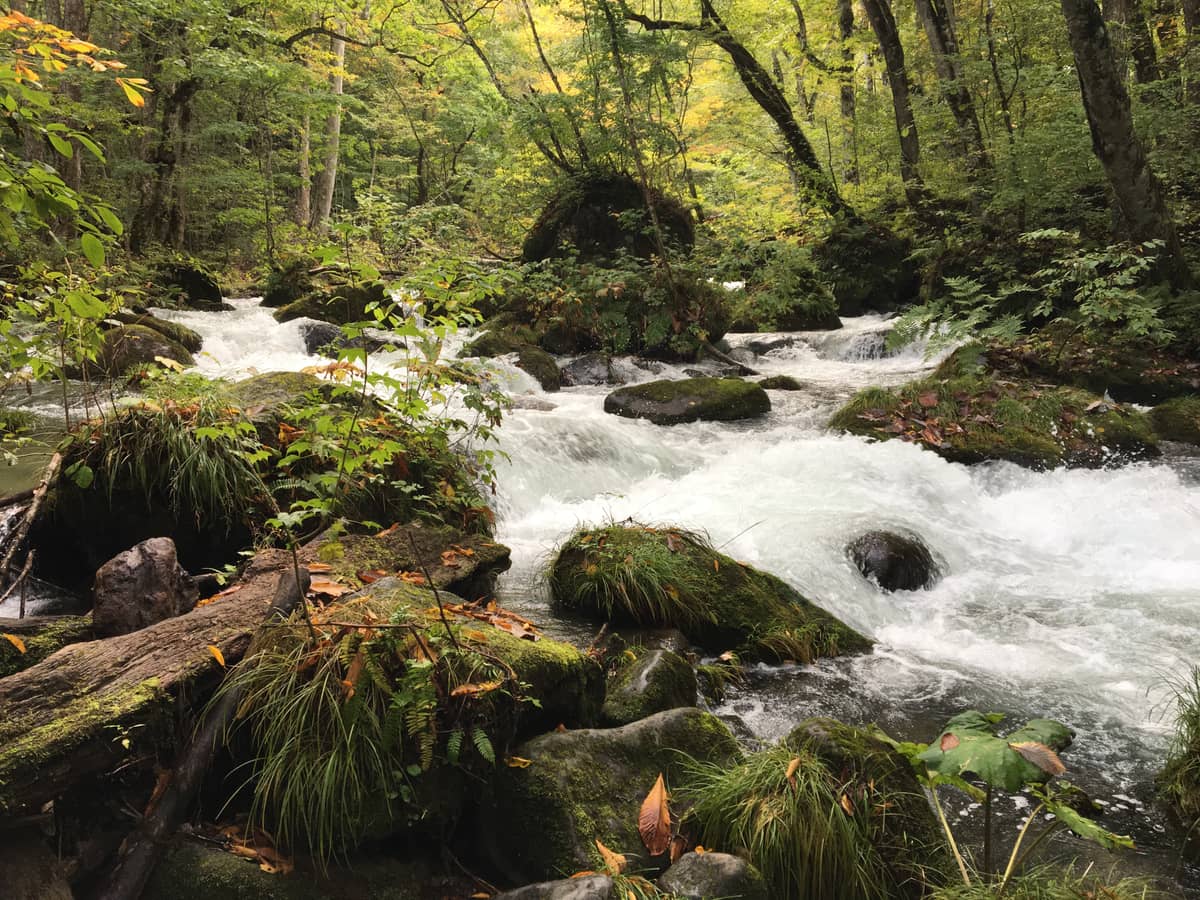
Ishigedo, the Keiryukan and renting a bicycle
Ishigedo rest house: the only supply point on the trail
Here is the fact that should shape your day: Ishigedo is the only place on the trail with a shop. There are facilities at each end, at Nenokuchi and Yakeyama, and nothing else across the 9 km in between. The logic of the day should therefore be "eat and refill at Ishigedo, then walk", not "sort it out later".
The operator, the Lake Towada regional development foundation, publishes hours of 9:30–17:30, open year-round, closed December 31 and January 1. Travel sites frequently list 8:30–16:30 instead, which contradicts that; this guide follows the official page but flags that seasonal shortening is normal at mountain facilities, so the notice on the day governs. Telephone 0176-74-2355.
Inside there is a shop, light meals and toilets including accessible facilities. Published prices include grilled char (iwana shioyaki) at ¥600, soft-serve at ¥400 and a kiritanpo skewer at ¥200. The grilled char is the signature order, and sitting down for one at the end of the first stretch is about the only ritual this trail offers. One point of etiquette: finish what you buy in front of the shop before you move on rather than eating as you walk or carrying food onto the trail and the bus.
Oirase Keiryukan (Yakeyama)
At the downstream entrance to the gorge, this is the information base before you go in. Aomori Prefecture's tourism site lists 9:00–17:30, with winter hours (Nov 15 – Apr 19) of 9:00–16:30, open year-round, with individual shops inside keeping irregular days. The address is 183 Tochikubo, Oaza Okuse, Towada City.
Inside there is a small visitor-centre display, a nature guide desk, the Oirase Field Museum shop selling moss terrariums and nature-themed goods, and an Aomori apple dessert counter called "Ara, Ringo." The moss-themed soft-serve sold here is frequently mentioned as a local specialty — but I could not verify a price from an official source, because the facility's own website has an expired security certificate and would not load. So this guide records that it exists and prints no figure.
Raku-Chari rental cycles: the underrated option during the restriction
Bicycles are not covered by the traffic restriction, which quietly makes renting one the smartest move of the September 7–13 week.
| Item | Detail |
|---|---|
| City bike, 4 hours | ¥1,000 |
| Electric-assist, 4 hours | ¥3,000 |
| Extension | ¥300 per 30 minutes |
| Hours | 9:00–16:30 |
| Season | Approximately early April to early November |
| Pick-up / drop-off | Oirase Yusuikan (Yakeyama) / Ishigedo rest house / JR Bus Nenokuchi — one-way rentals allowed |
| Booking | Advance reservation required; same-day bookings not accepted |
One-way rental is the whole value proposition: ride from Yakeyama to Nenokuchi, leave the bike there, and continue by boat or bus with no backtracking. It solves the trail's structural problem, which is that it is a line rather than a loop. A standard city bike is enough for most people given the 200 m of total fall; the ¥3,000 electric option really only pays for itself if you are riding with older relatives or planning to continue around the lakeshore.
⚠️ The rental desk is at the Yusuikan, not the Keiryukan. The two buildings sit next to each other, and blogs routinely write that you can rent bikes at the Oirase Keiryukan. The actual counter is at Oirase Yusuikan (parking for 80 cars); the other two points are the Ishigedo rest house and JR Bus Nenokuchi (parking for about 70). Also note that same-day reservations are not accepted and stock can run out in peak season, so book ahead if cycling is the plan.
The Lake Towada cruise and its timing trap
If you finish walking at Nenokuchi, the natural next move is the boat across Lake Towada to Yasumiya. It is operated by Towada Kanko Dentetsu, and 2026 has two routes:
| Route | Detail | 2026 operating period |
|---|---|---|
| Route A (one way) | Yasumiya ⇄ Nenokuchi, about 50 minutes | Apr 24 – Nov 5 |
| Route B (loop) | Yasumiya ⇔ Yasumiya, the Ogura and Nakayama peninsula circuit, about 50 minutes | Apr 24 – Nov 16 (main sailings) |
| Fares | Adults ¥1,760 / elementary ¥880; identical on A and B. Green cabin supplement ¥550 adult, +¥330 child | |
| Winter | All sailings suspended mid-November to late April | |
The two directions have different timetables. From Yasumiya: 9:30, 12:15, 14:45 (arriving Nenokuchi 10:20, 13:05, 15:35). From Nenokuchi: 11:00 and 13:30, plus a 16:00 (arriving Yasumiya 11:50, 14:20, 16:50).
⚠️ That 16:00 from Nenokuchi runs only until October 9. From October 10 the last departure from Nenokuchi is 13:30, which breaks the itinerary most people assume — walk the 9 km in the morning, take an unhurried afternoon boat across. After mid-October you must be at Nenokuchi by 13:30, meaning leaving Ishigedo by about 11:00. If you cannot, the fallbacks are the bus from Nenokuchi to Yasumiya (¥720), or reversing the day entirely: take the 9:30 boat from Yasumiya to Nenokuchi and walk downstream.
A few more practicalities. Bicycles can be carried on board for ¥550, which pairs neatly with the one-way rental above. Groups of 15 or more pay a reduced ¥1,430 for adults. Sailings can be cancelled in heavy fog or strong wind, neither of which is rare on this lake. And one number to distrust: some pages quote ¥1,650 or ¥1,500 for the cruise, which does not match the official 2026 fare table. The correct adult fare is ¥1,760.
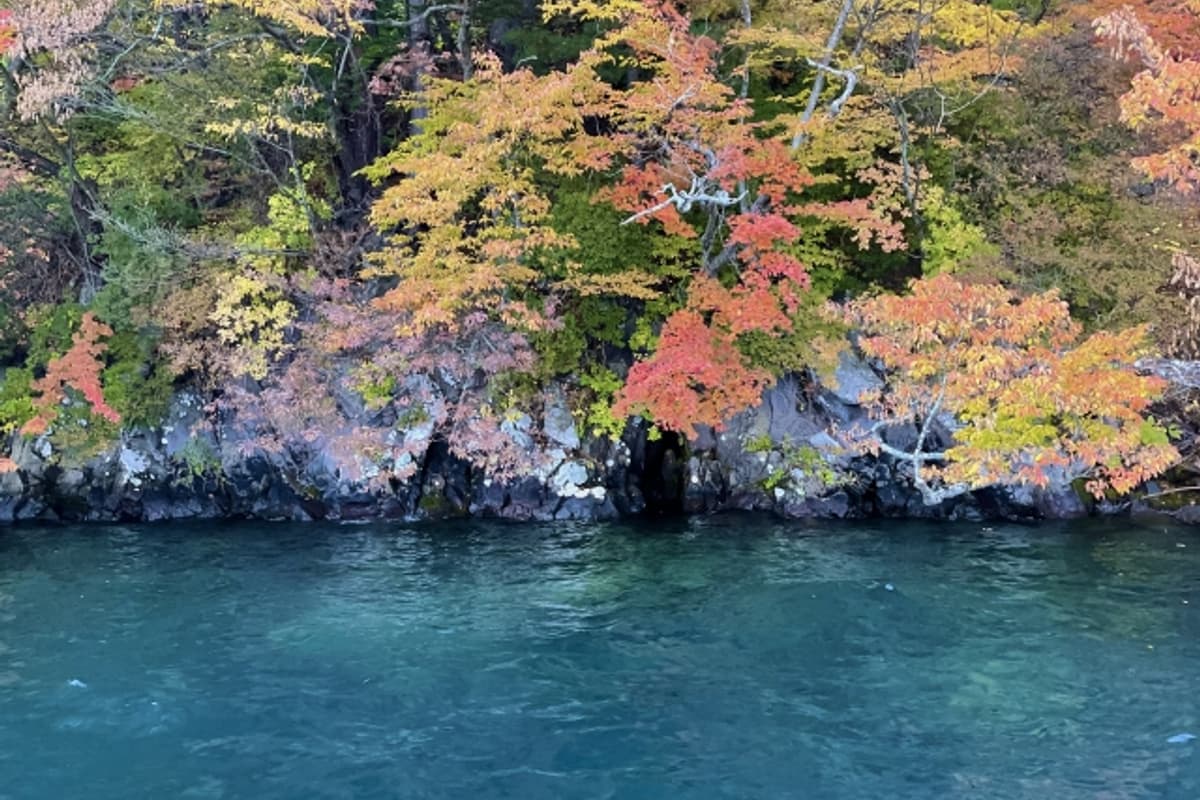
Seasons: fresh green, moss, and an honest winter answer
The Lake Towada National Park Association divides the year like this:
| Season | What the official description highlights |
|---|---|
| Spring (April – mid-May) | Snowmelt swells the stream; butterbur shoots appear; from mid-May flowers underfoot while buds open overhead |
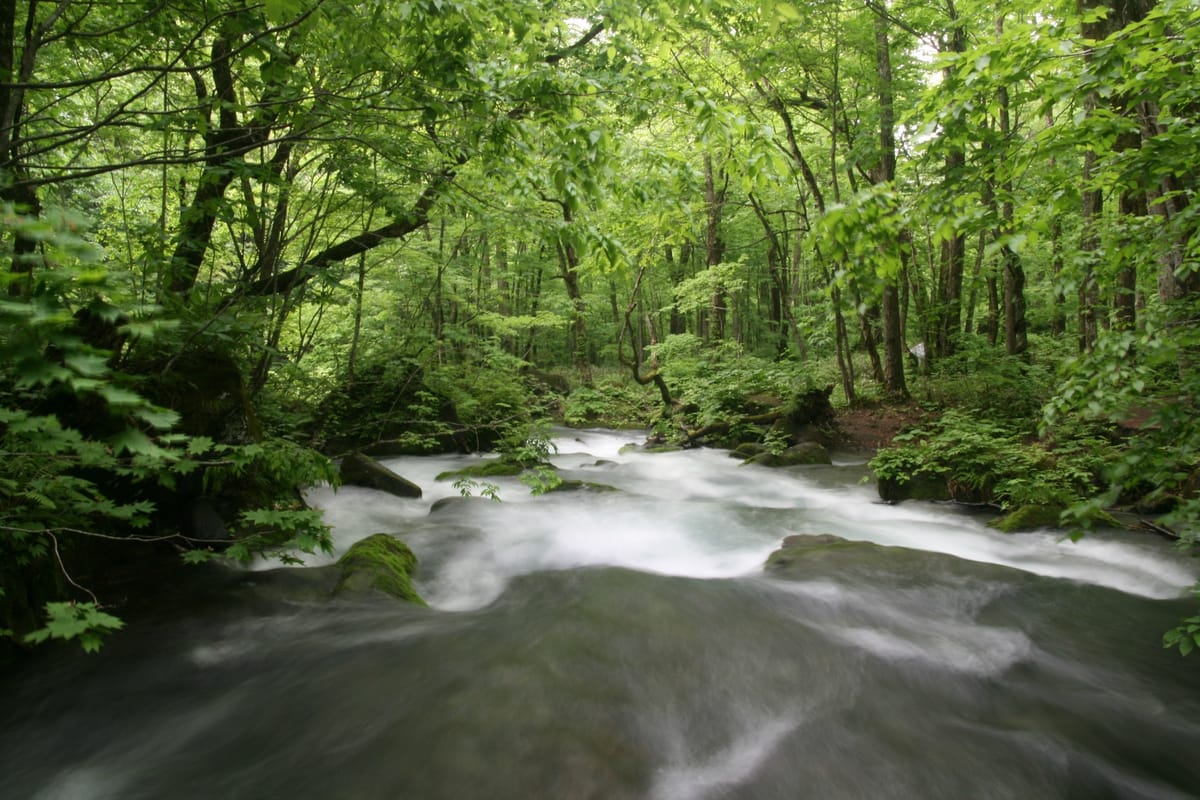
| Summer (from early June) | Peak green — the Oirase of the photographs; waterfall spray plus filtered sun produces small rainbows |
| Autumn (mid-Sept – Oct) | Reds, yellows and browns layered against remaining green; wet days mirror the colour on the water (covered in the autumn guide) |
| Winter (from November) | Wet snow loads the branches; waterfalls freeze into glass-like columns with a celadon tint |
If you can pick one season and are not fixated on autumn colour, I would take early June through July. Three reasons. The signature Oirase image — water, moss, green, filtered light — is a product of the green season; autumn is the same gorge wearing different clothes. Crowds are visibly thinner than in October and rooms are easier to book. And a Tohoku mountain valley in summer is cool enough to walk 9 km comfortably. Fresh green is generally described as arriving from around mid-May, though that is narrative description rather than a published forecast, so treat it as a range.
Moss: the gorge's other official identity
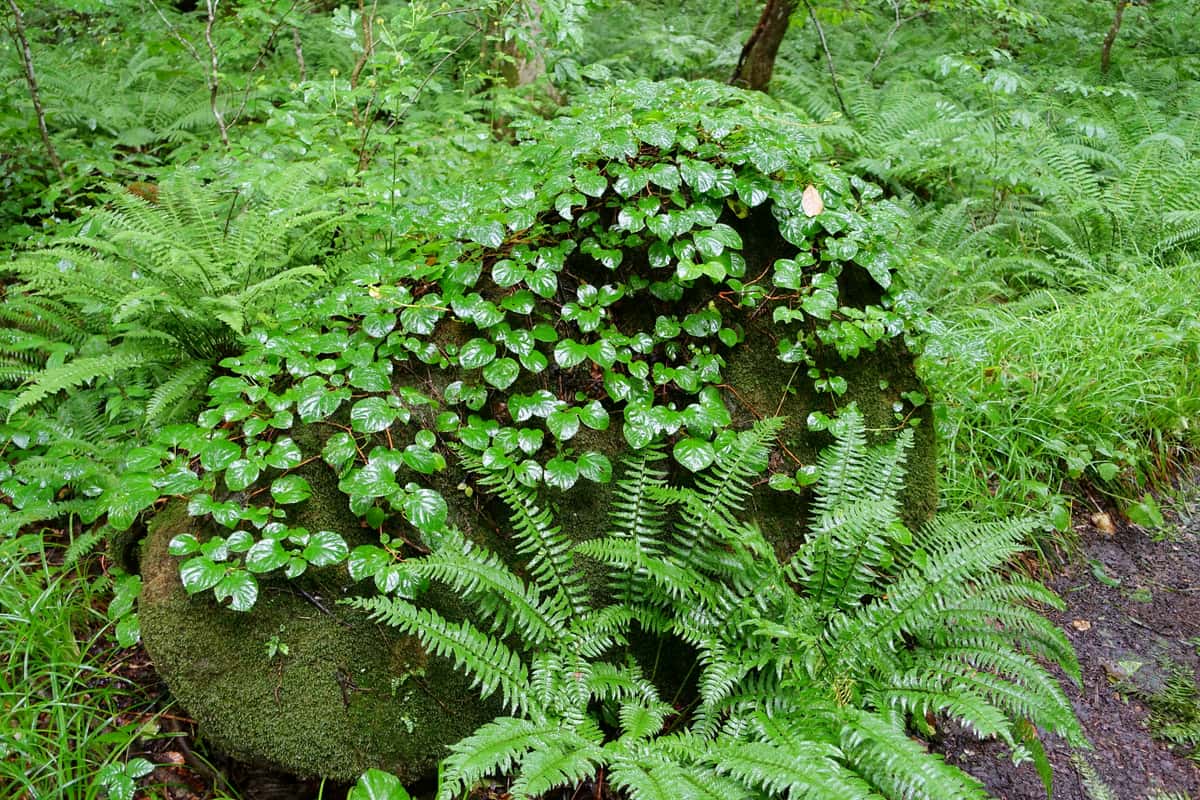
Most visitors watch the water. What is genuinely rare here is the moss. In 2013 the Bryological Society of Japan designated Oirase — the stretch from Lake Towada to Yakeyama — one of Japan's precious moss forests, with roughly 300 moss species growing here.
Knowing that changes how you walk: look down at the rocks. Those velvet-textured boulders beside the water are not background, they are the reason a scientific society singled this forest out. The moss terrariums sold at the Keiryukan shop belong to that context rather than being generic souvenirs. Oirase also holds a two-star rating in the Michelin Green Guide.
Winter access: frozen waterfall tours
Winter starts from one fact: the trail is not cleared of snow, which makes it closed in practice. Towada City's official tourism site states, in describing snowshoe tours, that sections normally closed in winter are cleared specifically for those tours — which confirms the inverse. Transport thins out too: from mid-November JR Bus Tohoku no longer runs into the gorge (closing dates are in the bus section), and the only year-round route is the Towada Kanko Dentetsu bus from Towada City to Yakeyama, which stops at the downstream entrance and runs one bus each way on weekends and holidays. An independent visitor without a car has no realistic way to walk Oirase in winter.
That does not mean winter is closed to you. National Route 102 stays open — the frozen waterfall tour buses drive along it — and the official route in is a guided programme. Winter converts Oirase from a place you stroll into a place you enter with a guide, and that is its biggest structural difference from the other three seasons.
The Oirase frozen waterfall tour
This is the main winter product, organised by Towada City and operated by the Towada-Oirase Tourism Organisation. The 2025-26 season ran as follows:
- Period: December 20, 2025 to March 1, 2026, on Fridays, weekends and the New Year period
- Three plans: evening tours (departing the city centre and Oirase Keiryu Onsen, or the Lake Towada shore) plus a daytime tour (departing Shichinohe-Towada Station, the city centre and Keiryu Onsen)
- Fares: adults, meaning junior high age and up, ¥3,300 to ¥4,400; elementary school children ¥1,650 to ¥2,200, depending on date. Preschoolers free, half price with a disability certificate
- Content: an evening run in a specially lit vehicle that illuminates five frozen waterfalls and snow scenes along the route, each with different colour and intensity; the daytime version views the same ice in sunlight
- Booking: opened online at 12:00 on October 24, 2025
❄️ The 2026-27 dates and fares have not been announced. Everything above describes the 2025-26 season and is offered only as a guide to scale and price band. Based on previous years the announcement and booking opening land in late October, so check the official notice then rather than booking flights against the dates above.
One easy misunderstanding to avoid: the ice illumination is not a permanent installation. It is not a season-long light-up strung along the road as many onsen towns run. The lighting travels with the tour vehicle — when the bus leaves, so does the light. Driving out on your own expecting to find illuminated ice will not work.
Lake Towada Winter Story (Yasumiya)
The lakeshore hosts a separate winter event. In 2026 it ran January 30 to February 23, on Fridays through Mondays and public holidays, with fireworks from 20:00 and a "Yukiakari Yokocho" snow-lantern alley running 16:00–20:30 (11:00–21:00 at weekends and holidays), staged at the Yasumiya multipurpose ground. The 2027 dates have not been published, so plan against the general pattern of late January to February rather than specific days.
Towada Shrine: the blue dragon goshuin
If you cross to Yasumiya with an hour to spare, spend it walking to Towada Shrine, at the base of the Nakayama promontory. It is within walking distance of the Maiden Statue, and the approach runs through a cedar avenue called the Kaiun-no-Komichi, the small path of good fortune.
The shrine's history is more layered than its appearance suggests. The enshrined deity is Yamato Takeru, and one founding tradition credits Sakanoue no Tamuramaro in 807. More importantly, before the Meiji separation of Buddhism and Shinto this was a centre of water-deity worship dedicated to Seiryu Daigongen, the blue dragon. The legend of Nansobo transforming into a nine-headed dragon to defeat Hachirotaro is the most widely told story of Lake Towada, and it explains why this lake was historically treated as a sacred site rather than simply scenery.
About 150 m into the hillside behind the main hall, down a steel ladder, is a spot called the Uranaiba, the place of divination. The traditional practice is to cast a paper slip blessed by the priest into the lake: if it sinks, the wish will be granted. Treating the lake water itself as the oracle is unusual among Japanese shrines.
A goshuin is available at the desk in front of the main hall, and the central calligraphy reads Seiryu, blue dragon — echoing the pre-Meiji worship above, which makes it a distinctive one for collectors. On the variants, the wooden goshuin book and the reception hours, my sources are pilgrimage blogs rather than official notices, so this guide gives direction rather than detail: reception hours shift with the season, and the shrine office may not open when snow is deep — the notice on site governs. No official fee is published, so no figure appears here; bring coins and read the sign. The etiquette and mechanics of collecting are in our Japan goshuin guide.
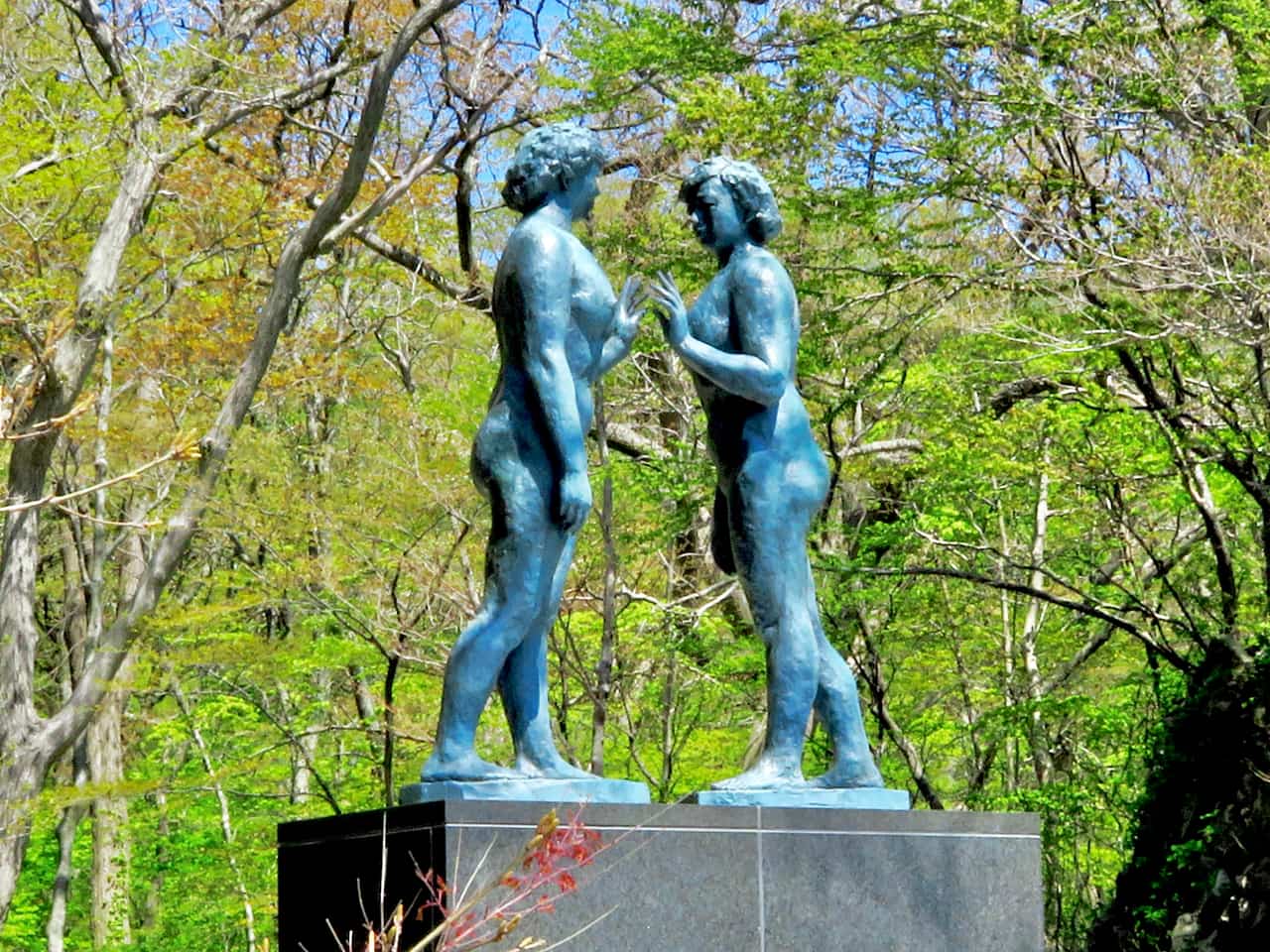
Eating here: himemasu and a hundred-year story
Lake Towada's speciality is himemasu, the kokanee salmon — and its backstory is the best local anecdote in the area: Lake Towada was originally a lake with no fish at all.
What changed that was Wainai Sadayuki, an entrepreneur from Akita. After a string of failures he released roughly 30,000 kokanee fry in 1903 and confirmed a successful returning run in autumn 1905. The "Lake Towada himemasu" you see on menus at Yasumiya today is a branded product backed by the local fisheries cooperative — an entire regional speciality that began with one man spending more than a decade arguing with an empty lake. The fish tastes different once you know that.
Places to eat at Yasumiya. I list dishes and the operating information I could verify; prices are unverified, so none appear here — read the menu on the day.
- Towada Shokudo (Yasumiya 486) — grilled himemasu, himemasu sashimi and a marinated himemasu rice bowl, plus Towada barayaki beef and kiritanpo. Roughly 9:30–14:50, subject to change.
- Oshokujidokoro Kandagawa — 10:00–16:00, irregular closing days.
- Tochi-no-Chaya and Morita — confirmed to exist; details unverified.
- On the Nenokuchi side there is Kohan Shokudo, useful while waiting for a boat or a bus after the walk.
Arriving on the Oirase-go from Hachinohe you also pass the Oirase Roman Park roadside station, the ¥1,800 stop from Hachinohe. It holds the Shikisaikan produce hall and the Miraku Kobo workshop, both 9:00–17:00, plus the OIRASE BEER brewery restaurant, 11:00–16:00 with last orders at 15:30 — a local craft brewery that took a gold award at the Japan Asia Beer Cup in 2013. Note that Roman Park is not on the gorge: it sits in Okuse, Towada City, on the way to Yakeyama, and is best understood as a supply stop before you go in rather than part of the gorge itinerary. This paragraph rests on search summaries rather than direct verification of the operators' own pages, so reconfirm the hours.
Is Oirase worth the journey?
Short answer: yes, but treat it as a destination for a full day, not a stop along the way. It is 2h45 from Aomori and 2h20 from Hachinohe, which is around five hours of travel for the round trip. Give it three hours and the buses will eat the day before you have covered the section the operator itself calls the highlight.
The shape I would recommend: sleep at Oirase Keiryu Onsen or Yasumiya the night before, start walking the highlight section early, eat grilled char at Ishigedo around midday, take the boat from Nenokuchi to Yasumiya in the afternoon, then see the Maiden Statue and Towada Shrine before the evening bus. Nothing in that day is rushed, and you collect two things day-trippers never get: the gorge at first light, when it is essentially empty, and the lake in the evening.
Season by season, bluntly:
- Best: early June to July. Peak green is Oirase's home season — fewer people, easier rooms, cool valley air, and the moss-and-water combination at its most complete.
- The unusual week: September 7–13. If not driving is acceptable to you, the restriction week is the quietest Oirase of the year, and September 13 in particular — the total closure — is a preview of the car-free gorge that may not be repeatable.
- Good value: April to mid-May. Snowmelt puts the most water through the falls and crowds are thin. The trade-off is that fresh green has not fully arrived and mornings and evenings are cold.
- Manage expectations: winter. The trail is uncleared and JR buses no longer enter the gorge (Yakeyama has only a handful of Towada Kanko Dentetsu buses), so independent access effectively disappears and a guided tour is the only way in. The 2026-27 tour dates will not be known until late October.
- Autumn: covered elsewhere. Peak timing, shooting direction and booking windows are all in our Oirase autumn guide, and repeating them here would help nobody.
To finish the thought: what makes Oirase worth the effort is not its place on a top-100 foliage list. It is that this is one of the few natural landscapes in Japan you walk inside rather than stand and look at — 14 km of path hugging the water, dozens of rapids and falls one after another, 300 species of moss on the rocks, and a canopy that closes over most of the sky. The one thing working against that experience is the traffic on the road beside you — and for seven days in September 2026, the authorities are showing you what Oirase looks like without it. To extend the trip, the wider area is covered in our Lake Towada, Oirase and Hachimantai guide, and route planning for the prefecture as a whole in our Aomori travel guide.
Frequently Asked Questions
- Q1:When is the Oirase Gorge car restriction in 2026?
- The 2026 private-car restriction runs Monday September 7 to Sunday September 13, seven days in total. Hours differ by day: weekdays from September 7 to 11 are restricted 10:00 to 16:00, while the weekend of September 12 and 13 starts an hour earlier at 9:00 and also ends at 16:00. The restricted section is roughly 10 km of National Route 102 between the Sobe junction and the Nenokuchi junction. The date is the single biggest change for 2026 — the restriction fell on October 21 to 27 in 2024 and October 27 to November 2 in 2025, both in the autumn window, and 2026 moves it forward by more than a month into early September. If a page tells you the restriction happens in late October, it is describing the previous two years. The programme is run by the Towada-Oirase Tourism Organisation as a traffic experiment under the name Oirase Nature Museum.
- Q2:Can I still visit during the restriction, and does the trail close?
- You can visit, and the trail is entirely unaffected. This is the most common misunderstanding about Oirase: what is restricted is driving your own vehicle through that 10 km stretch, not access to the gorge. During the restriction you can walk, cycle, ride the regular JR Bus Tohoku services, which continue to run normally, or take the dedicated shuttle bus. The shuttle runs between the Oirase Keiryu Onsen ski ground car park and Yasumiya every 30 minutes; a one-day pass costs 2,000 yen bought on the spot or 1,500 yen as an e-ticket, and elementary school children and younger ride free. Two catches. First, shuttle passes and JR route bus tickets are not interchangeable, so one ticket does not cover both. Second, September 13 is a full closure to every vehicle class, including taxis and coaches, so on that day it is the shuttle or your feet. Rental cars are explicitly included in the restriction, with no exemption.
- Q3:Is there a day pass for the Oirase buses?
- No, and this is where older guides mislead people. There used to be free passes such as the Aomori–Hachinohe–Lake Towada furii kippu, but they have been discontinued, and neither the JR Bus Tohoku route page nor the 2026 timetable lists any day pass or free ticket. Payment today is single-journey cash or a transport IC card, and IC cards such as Suica are accepted on board. Budget by adding up each leg individually rather than expecting a hop-on hop-off product. The one exception is the shuttle bus day pass, which exists only during the restriction week of September 7 to 13, 2026, only covers the ski ground to Yasumiya route, and cannot be used on JR route buses.
- Q4:Can I walk the Oirase trail in winter?
- Not as an independent visitor, and it is worth being blunt about that. The walking trail is not cleared of snow in winter, which makes it closed in practice. Towada City's official tourism site says as much indirectly when describing snowshoe tours: sections of the trail that are normally closed in winter are cleared specifically for those tours. The second constraint is transport. JR Bus Tohoku's winter timetable for November 18, 2026 to March 31, 2027 has no services into Oirase Gorge or to Lake Towada (the Aomori buses finish on November 11 and the Hachinohe buses on November 17). The only year-round route bus is the Towada Kanko Dentetsu service from Towada City to Yakeyama (Keiryukan-mae stop) at the downstream entrance; it does not continue to Ishigedo or Nenokuchi, and on weekends and holidays it runs one bus in and one bus out, so a day trip does not work. None of that means winter is off limits. National Route 102 stays open through the winter, and the official way in is a guided programme — the Oirase frozen waterfall tour, which runs a specially lit vehicle past illuminated ice falls, and snowshoe tours. In the 2025-26 season the frozen waterfall tour ran December 20, 2025 to March 1, 2026 on Fridays, weekends and the New Year period, at 3,300 to 4,400 yen for adults and 1,650 to 2,200 yen for elementary school children. Dates and prices for 2026-27 have not been announced; based on previous years they are published in late October alongside booking.
- Q5:How long does the Oirase trail take, and which section should I walk?
- The full route is about 14 km from Yakeyama to Nenokuchi, roughly five hours on foot, according to the official figure. But the same official source defines the highlight section as Ishigedo to Nenokuchi, about 9 km and roughly two and a half hours — in other words the managing body itself tells you where the good part is. My advice is direct: unless walking the whole 14 km is the point for you, skip the roughly 5 km between Yakeyama and Ishigedo and start at Ishigedo. The reason is density, not scenery. The named set pieces — Sanran-no-Nagare, Ishigedo-no-Se, Ashura-no-Nagare, Kumoi-no-Taki, Choshi Otaki and the Nenokuchi water gate — sit almost entirely inside that upper 9 km. Rough section timings, drawn from Ministry of the Environment course data and therefore approximate: Ishigedo to Ashura-no-Nagare about 1.7 km and 35 minutes, Ashura to Kumoi-no-Taki about 1.1 km and 25 minutes, Choshi Otaki to Nenokuchi about 1.5 km and 30 minutes. The whole thing is essentially flat and needs no hiking equipment.
- Q6:Should I approach from Aomori or Hachinohe?
- It depends on the rest of your route. From Aomori you take the Mizuumi-go, which runs past the Hakkoda ropeway, Sukayu Onsen and Tsuta Onsen before entering the gorge: Aomori to Lake Towada is about 2 hours 45 minutes and 3,480 yen. From Hachinohe you take the Oirase-go, which passes the Towada Art Center and the Oirase Roman Park roadside station: Hachinohe to Lake Towada is about 2 hours 20 minutes and 3,050 yen. On pure efficiency Hachinohe is both faster and cheaper, but if you want Hakkoda or a soak at Sukayu on the way in, the Aomori line is worth far more per hour. One operational difference matters: Oirase-go services 21 and 23 require a reservation if you board at Hachinohe Station West Exit, at 300 yen per seat paid online in advance, with the fare itself paid on alighting. Boarding at other stops and all return services from Lake Towada need no reservation, and the Mizuumi-go needs none at all.
- Q7:What time is the last Lake Towada cruise, and can I catch it after the walk?
- There is a timing trap here. On the 2026 A route, Yasumiya to Nenokuchi and back in about 50 minutes, departures from Nenokuchi are 11:00 and 13:30 plus a 16:00 sailing — but that 16:00 departure only operates until October 9. From October 10 the last boat from Nenokuchi becomes 13:30. That breaks the itinerary most people assume, namely walking the gorge in the morning and taking an unhurried afternoon boat to Yasumiya: after mid-October you need to reach Nenokuchi before 13:30, which means leaving Ishigedo by about 11:00. Departures from the Yasumiya side are 9:30, 12:15 and 14:45, all running to November 5, so reversing the day is the alternative. Fares are 1,760 yen for adults and 880 yen for elementary school children, identical on the A route and the B loop. The whole operation stops from mid-November to late April.
Read next
Lake Towada, Oirase Gorge & Hachimantai Guide 2026
The 14 km Oirase Gorge foliage walk (peak late Oct), Choshi Otaki falls, the double-caldera Lake Towada, and Hachimantai's snow corridor and Dragon Eye pond — with the honest no-train access plan.
Tohoku Oirase Stream 2026: 14 km Walking Trail Guide
Japan’s Top-100 foliage stream: reverse-walk strategy, Lake Towada cruise, JR East Pass math.
Aomori Travel Guide 2027: Sannai-Maruyama, Hakkoda & Oirase
Honshu's northern tip of Jomon heritage and gateways — the World Heritage Sannai-Maruyama site, year-round nebuta floats at Wa Rasse, Hakkoda and Oirase, plus Oma tuna and apples.
📊 See the 2026 Price Index (JR Pass, DPA, eSIM, Airport Transport) →