On the north shore of Lake Kawaguchiko there is a stretch of lakeside lawn that faces Mount Fuji head-on, costs nothing to enter, and has flowers to see nearly year-round — that is Oishi Park. Its real draw is not one signature bloom but a rolling calendar: nemophila from mid-April to late May, lavender from late June to mid-July, Casablanca lilies in July, all the way to kokia that turns fire-red from late October to mid-November. In front of the flower beds sits the whole of Mount Fuji, and that "flower field in front, Fuji behind" composition is one of the best and cheapest shots on the north shore. This guide lays out every bloom window from the official calendar, plus what to eat at the Natural Living Center, how to ride the sightseeing bus, and an honest verdict on whether it is worth a dedicated trip.
📍 One trap to avoid first: Oishi Park has no shibazakura (moss phlox). It is often confused with the "Fuji Motosuko Resort Shibazakura Festival" at Lake Motosu — a different place, not on Lake Kawaguchiko. Oishi Park's spring signature is nemophila, not moss phlox. To fit flower viewing into a Fuji-area itinerary, see the Kawaguchiko autumn guide, and for getting here from Tokyo, the Tokyo to Mt. Fuji access guide.
- Free entry, flowers almost year-round — not just lavender; something is blooming through most of the year
- Two headline windows: lavender late Jun–mid Jul (Herb Festival), red kokia late Oct–mid Nov
- Official kokia peak is later than people expect — go by late Oct–mid Nov, or you will arrive to green
- Natural Living Center is free and open year-round — counters close earlier (16:30) from October to February
- Bus stop 20 "Natural Living Center" drops you right there; drivers get a free car park (full on peak weekends)
📖 Table of Contents (click to expand)
Year-round flower calendar
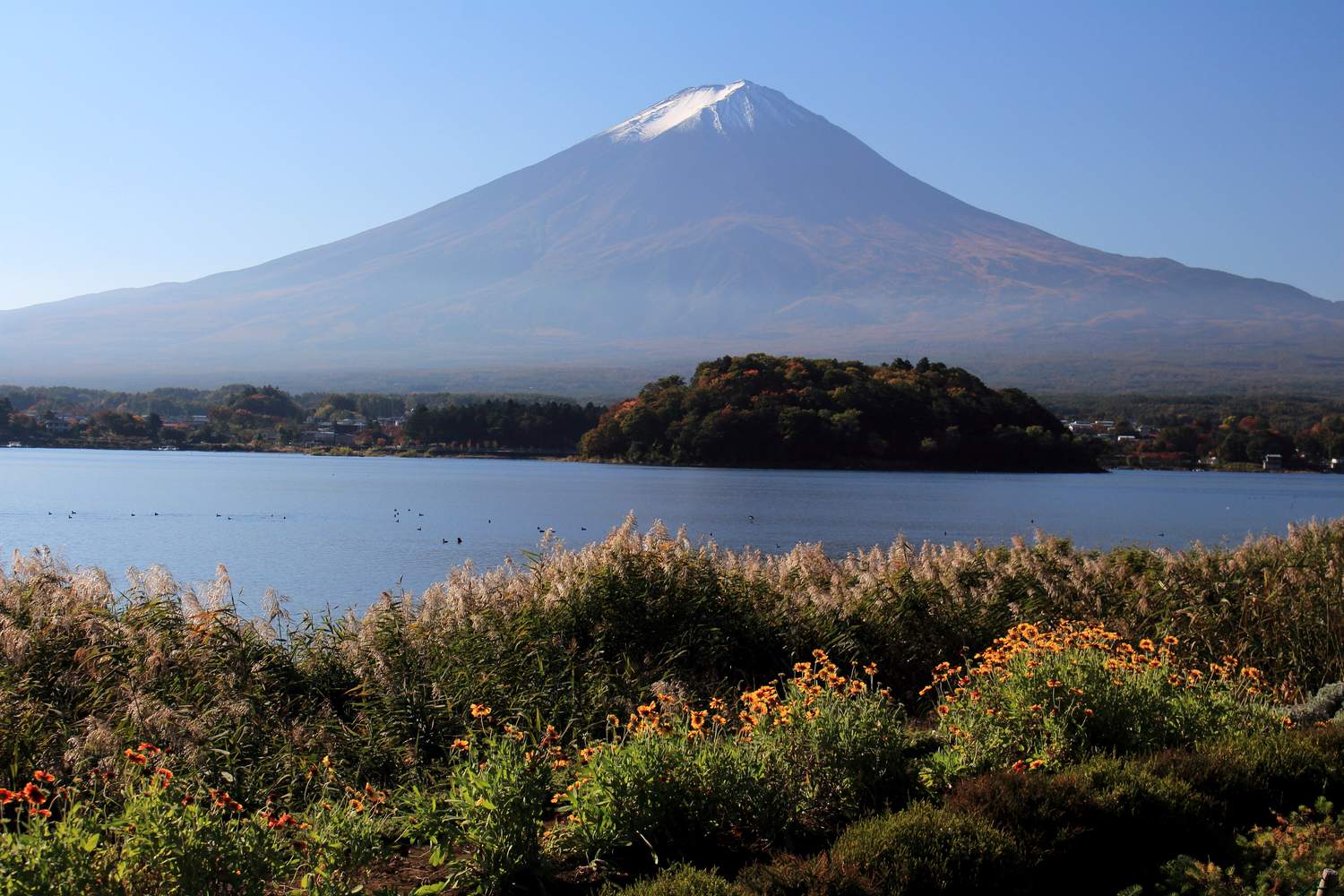
The real value of Oishi Park is not that one flower is especially famous, but that something is in bloom through most of the year. The single most useful thing here is the official flower calendar — I have turned the "flower viewing season" block on the Kawaguchiko Natural Living Center's official page into the table below, so you can see at a glance when to come:
| Flower | Official peak (typical-year framework) | Notes |
|---|---|---|
| Nemophila (baby blue eyes) | Mid-April – late May | The spring signature, not moss phlox |
| Roses | Late May – mid-June | Follows the nemophila |
| Lavender | Late June – mid-July | One of the two headline windows; Herb Festival |
| Casablanca lilies | Early July – late July | A white bloom that takes over from lavender |
| Green kokia | Early August – mid-October | The round green "cushion" phase |
| Red kokia | Late October – mid-November | The second headline window; see below |
An honest caveat: this table is the official "typical-year" framework — the page itself is not labelled "2026" and is not updated year by year, so treat it as "roughly this every year," not "these exact dates in 2026." Bloom timing shifts a week or two with the weather, and the surest check is the live flower-status update on the Natural Living Center site before you set out. But the point of the table is this: this spot has no real off-season. Apart from the short gap in deep winter and early spring, you will almost always find flowers when you arrive. That matters for planning: rather than agonising over "which flower is best," pick your travel dates first and then look up what will be blooming — the odds are it lines up with something, whether that is the blue nemophila carpet in late spring, the purple lavender at midsummer, or the red kokia in late autumn.
Lavender season and the Herb Festival
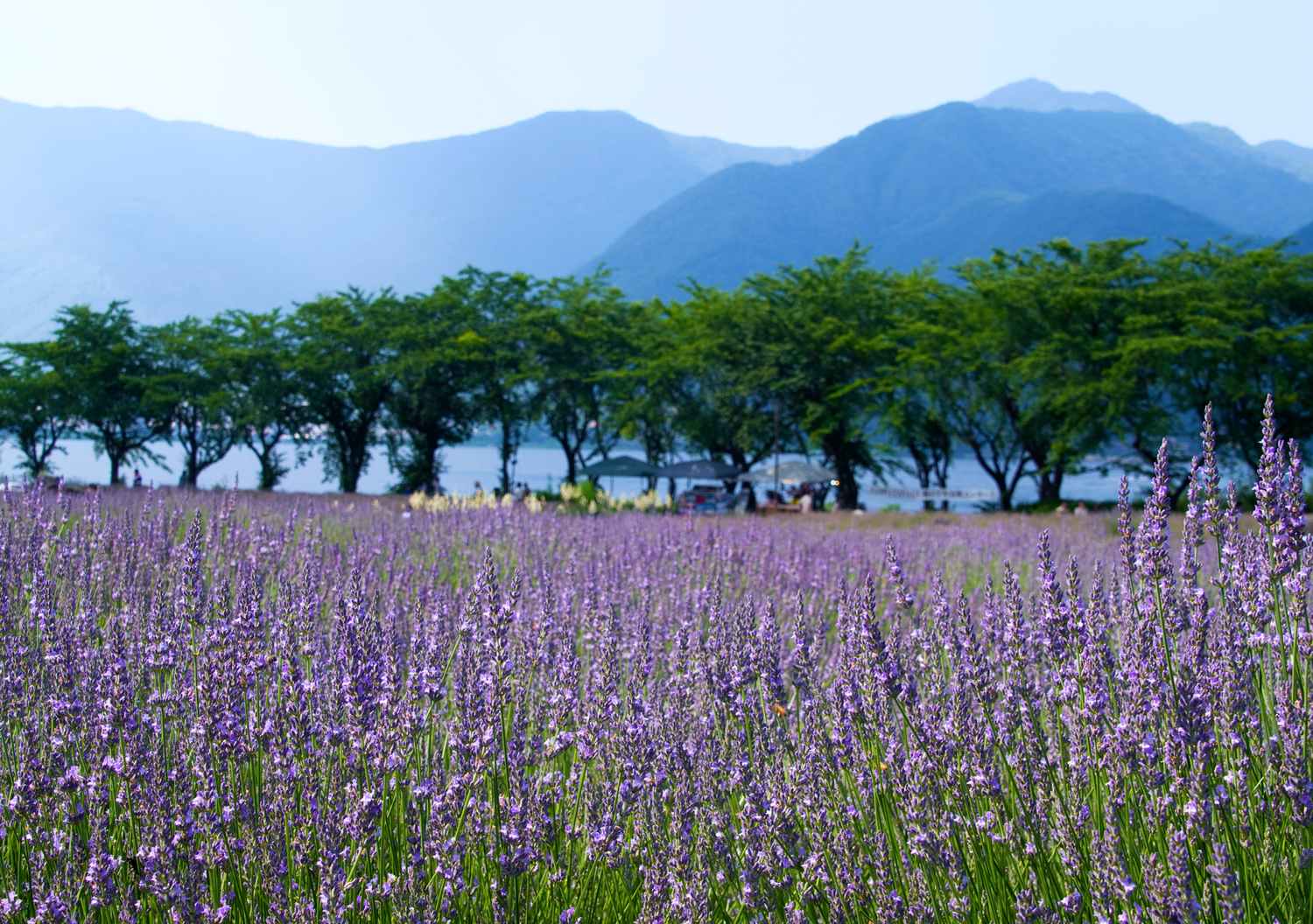
If you had to pick Oishi Park's single most popular window, it is lavender season. The official calendar puts the lavender peak from late June to mid-July, and this is also when the annual Kawaguchiko Herb Festival takes place, split across Oishi Park and Yagizaki Park, with fields of purple spread along the lakeside flower path.
On dates, let me be precise: the 2025 Herb Festival ran June 21 to July 21 (per the official Fujikawaguchiko tourism poster). As for the official 2026 dates, they had not been announced as of this article's verification (July 22, 2026) — some sources are circulating "June 21 to July 21, 2026," but that is identical to 2025 and the weekdays do not even line up, so it looks like last year's data mislabelled, and I will not repeat it as fact. For the confirmed 2026 window, check the Fujikawaguchiko tourism office or the Natural Living Center site before you go.
One more point that trips people up: in recent years the Herb Festival is "flower viewing only, no stalls." The 2025 official poster states plainly that both Oishi Park and Yagizaki Park are for viewing only, with no vendors. So do not expect a market or food stalls just because it is called a "festival" — there are no stalls; you come purely to see the flowers and photograph Fuji. Knowing that keeps your expectations honest.
Kokia: the official peak is later than you think
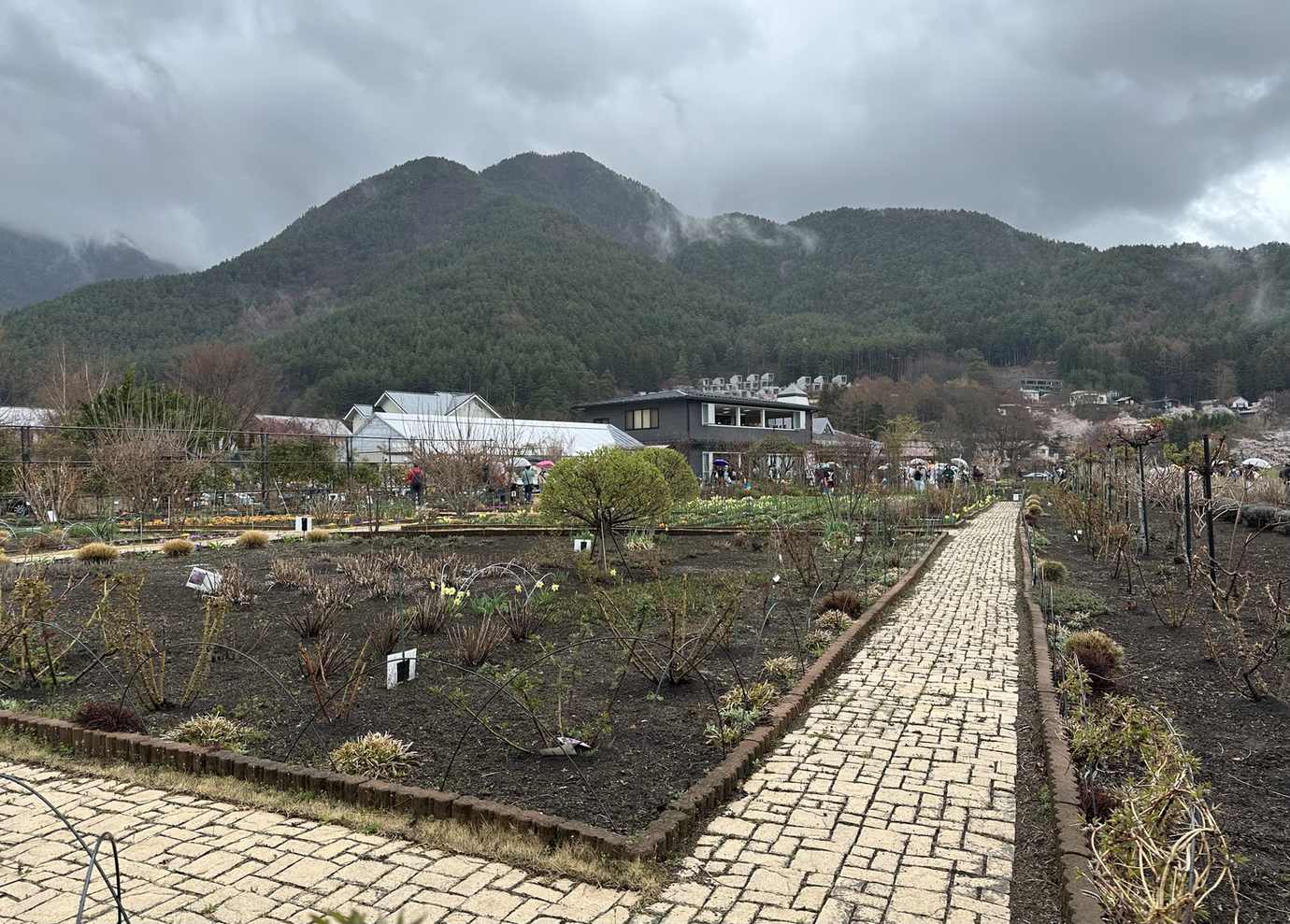
Once the lavender fades, Oishi Park's next peak is kokia — those round, green "cushion" plants that turn fiery red in autumn. The most useful thing in this article is its date: the official red-foliage peak falls later than people expect.
Per the official calendar, the green phase runs early August to mid-October, and the red phase (aka-kokia) falls late October to mid-November. Book for mid-to-late October and you may well find it still green or half-green on arrival. Go by the official late-October-to-mid-November window and your odds of missing it drop sharply. This is also why the red kokia lines up neatly with the Kawaguchiko-area maple season: to slot both the kokia and the lakeside foliage into one autumn trip, see the routing and other spots in our Kawaguchiko autumn guide — read the two together to save time.
Kawaguchiko Natural Living Center: food and hours
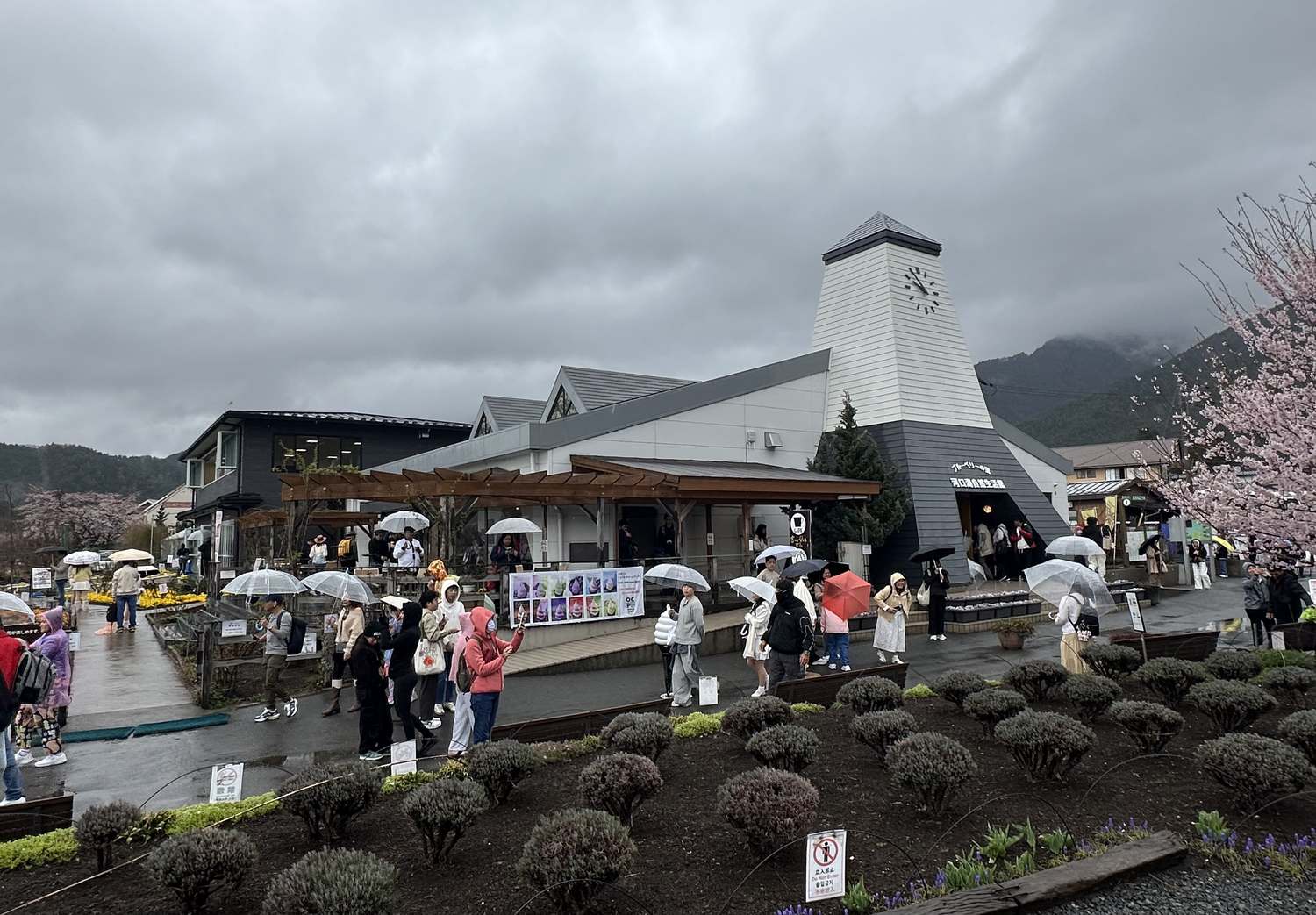
The main indoor base inside Oishi Park is the Kawaguchiko Natural Living Center (official page). The good news is it is free to enter and open year-round, with a cafe that looks out on Fuji, a soft-serve counter, and a shop selling local farm products. Hours vary a little by season and counter — here is what the official page lists:
- March–September: shop 9:00–17:45 / cafe (Fuji-view) 9:15–16:45 / soft-serve 9:15–16:45 / 2F Kitchen 9:00–17:00 (meals served 9:30–15:00)
- October–February: the cafe, soft-serve and Kitchen all close earlier, at 16:30 (official note); still open year-round with no fixed closing day
To eat, the crowd favorite is the soft-serve — the 1F counter has about 12 flavors (blueberry is a signature). The official page does not list prices, and it has posted that prices were adjusted upward due to rising costs, so go by the on-site board for the current price rather than a number that may be out of date. Two more things to know so you do not waste a trip:
- The jam-making experience is currently suspended. The official notice dated April 1, 2026 states it is on hold and that resumption will be announced separately — so do not build "make jam here" into your plan.
- 2026 fruit picking (blueberries / cherries) is handled by the "Oishi Farm Produce Direct Sales" outlet (TEL 0555-28-5141), a separate operator from the Natural Living Center; prices and reservations must be arranged with them directly, not at the center itself.
Access: sightseeing bus and parking
Oishi Park is on the north shore of Lake Kawaguchiko, a fair distance from Kawaguchiko Station, so the easiest way is the bus. Take the "Kawaguchiko Sightseeing Bus (Red Line)" from Kawaguchiko Station and get off at stop 20, "Kawaguchiko Natural Living Center," right at the park. The ride is about 27 minutes, with a bus every 15 minutes and departures from Kawaguchiko Station roughly 09:00–17:45 — frequent enough that you do not need to time it precisely.
A day pass is the best value — the bus loops the main north- and south-shore spots, so it pays off if you hit several in a day:
| Ticket | Adult | Child | Best for |
|---|---|---|---|
| 1-day pass | ¥1,500 | ¥750 | Just the Kawaguchiko area for the day |
| 2-day pass | ¥2,000 | ¥1,000 | Two nights around the lake, taking it slow |
If you drive, Oishi Park (beside the Natural Living Center) has a free car park — the official page clearly states parking is free. But note: the exact number of spaces is not listed officially (the "about 200" you see around is not an official figure), and it fills up easily on weekends in lavender and kokia season, when the park also directs traffic to temporary overflow lots. My advice: take the bus on peak weekends, or arrive early, rather than circling the car park. Practically, most people combine Oishi Park with two or three other north-shore stops — the Kubota Itchiku Art Museum, the Momiji Corridor in autumn, or the ropeway — so a day pass and the loop bus usually beat driving anyway, since you skip parking entirely and hop between spots on a bus that comes every 15 minutes.
If you also plan to ride the Mt. Tenjo (Kachi Kachi) ropeway for a lake overlook, there is an official "ropeway + Oishi Park shuttle" set ticket (around ¥2,500) that strings the two together — the details and the ropeway itself are covered in our Mt. Tenjo ropeway guide, mentioned here just so you know the option exists. To lock in a ropeway round-trip in advance and skip the ticket-machine line in peak season, use Trip.com Mt. Tenjo ropeway round trip →.
Shooting it and beating crowds
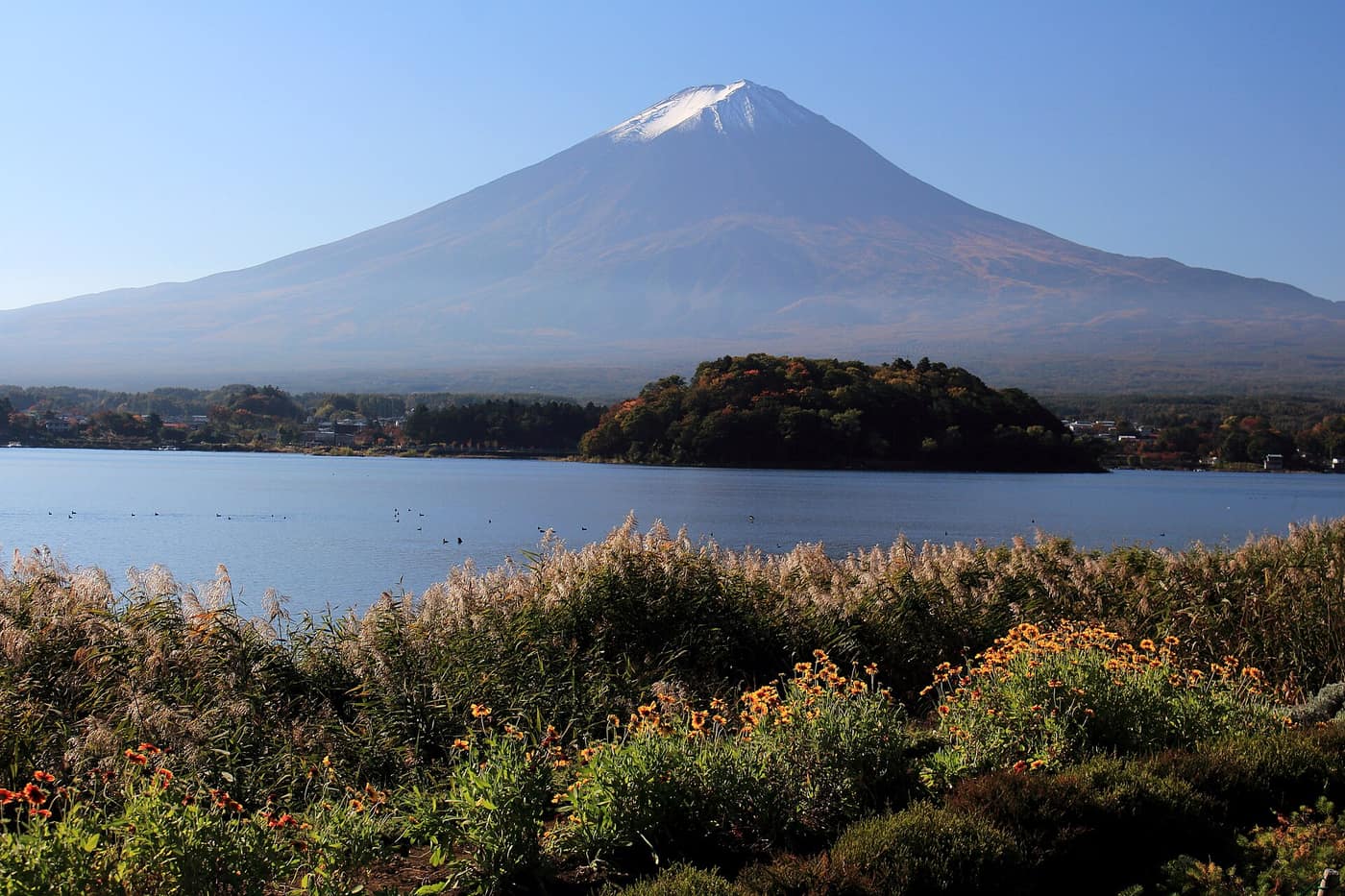
A principle first: there is no official "best light at X o'clock" data, and I will not invent an "editors tested this time slot" figure. What I can offer is basic photography sense — Oishi Park's signature frame is "flower field in front, Fuji behind," and the sun's angle shifts with season and time of day, so morning versus evening front-lighting differs. You judge it on the day; there is no fixed golden hour to copy.
Two things are genuinely useful. First, the sakasa-Fuji (upside-down Fuji reflected on the lake) only appears when the water is calm and windless; mornings tend to be less windy and calmer, but that is a probability, not a guarantee — whether you catch it depends on the day's wind, so do not go expecting "the reflection is guaranteed at dawn." Second, the crowd peaks are the flower seasons — the busiest are weekends in lavender season (late June to mid-July) and red-kokia season (late October to mid-November), especially during the Herb Festival. To dodge crowds, aim for the sweet spot of a weekday morning in season: the flowers are up, the crowds have not poured in, and Fuji is not yet hidden by afternoon cloud.
Is it worth a dedicated trip?
I am not going to give you a spineless "it's all great, depends on you." My verdict splits into two cases:
If the timing is right, very much yes. In lavender or red-kokia season, with Fuji showing its face, that "full flower field in front, whole of Fuji behind" frame is the best value stop on the north shore — because it is free, all you spend is transport and time. Fuji compositions of that caliber often require a ticket or a climb; at Oishi Park you just walk in.
If you hit an off-window, be honest with yourself. If you arrive between blooms (say deep winter or early spring), it is a lakeside lawn facing Fuji — the view remains, the flowers are gone. In that case it is a "swing by for 30 minutes of Fuji photos" stop, and I would not urge you to make a special trip for a flowerless lawn. Whether it merits a dedicated trip hinges on two things: whether Fuji is out that day, and whether your timing lines up with a flower season. On an overcast day with Fuji fully veiled I would simply re-plan; if the flower timing is off, demote it to a drive-by rather than a headline stop.
One expectation to set: Oishi Park is a scenery stop, not a food destination. There is coffee, soft-serve and souvenirs in and beside the park, but for a proper meal the options are thin — which the next section covers.
Eat and browse: what's nearby
Honestly, "not many options" around Oishi Park is simply the truth. Within walking distance, the food of any scale is concentrated in a few spots:
- Inside the Kawaguchiko Natural Living Center: the main option in the park itself — the Fuji-view cafe, 12-flavor soft-serve, and local farm-product souvenirs are all here (see the "Natural Living Center" section above).
- Fuji Oishi Hanaterasu: a retail complex right beside Oishi Park, free to enter with a free car park (about 90 spaces). It gathers several small shops — for example Ichi-no-Kura (dried fruit / chocolate), Brand New Day Coffee (a terrace cafe with a Fuji view), Budouya Kofu Hanaterasu Cafe (Yamanashi peach soft-serve), Hana Cafe Kikyou (Kikyo Shingen mochi and soft-serve), and Fujizakura Kobo (textiles). Hours and closing days differ by shop, so check each on the official site.
- Lake Bake (lakeside bakery): a popular bakery right next to the Natural Living Center — signatures include sake-yeast red-bean bread, the Fuji-shaped "Mont Fuji," and a cheese bread of English toast with Camembert, across about 50 items. Address: 2585-85 Oishi, Fujikawaguchiko, Minamitsuru District, Yamanashi (TEL 0555-76-7585); open 10:00–17:00 (cafe closes 16:00), closed Wednesdays plus the 2nd and 4th Thursday (open on public holidays), closing early at 15:00 over the New Year period — plan around Wednesdays and those Thursdays.
The takeaway is simple: come to Oishi Park for the scenery plus a light bite or dessert, and save a proper meal for the Kawaguchiko Station area or the Kubota Itchiku Art Museum stretch on the north shore, where choices are far wider. Treat it as a flower/scenery stop in your day rather than where you solve lunch or dinner, and the day flows much better. Checking flower status, bus times and Fuji visibility on the spot all need data, and signal in the Fuji foothills is patchy — set up an unlimited eSIM to use on landing: KKday Japan eSIM; for how the five main eSIMs compare, see the Japan eSIM guide.
Frequently Asked Questions
- Q1:When does the lavender bloom at Oishi Park?
- Per the Kawaguchiko Natural Living Center's official flower calendar framework, lavender at Oishi Park peaks roughly late June to mid-July, which is also when the annual Kawaguchiko Herb Festival is held. In 2025 the festival ran June 21 to July 21, at both Oishi Park and Yagizaki Park; the official 2026 dates had not been announced as of this article's verification (July 22, 2026), so confirm on the Fujikawaguchiko tourism / Natural Living Center site before you go. One thing to note: even under the "festival" name, in recent years it is flower viewing only, with no market stalls.
- Q2:When does the kokia turn red at Oishi Park?
- Per the official flower calendar, the green kokia season runs early August to mid-October, and the red foliage (aka-kokia) is roughly late October to mid-November. Arrive in mid-October and you will very likely find it still green or half-green, so go by the official late-October-to-mid-November window. To pair the red kokia with the broader Kawaguchiko autumn foliage, see our Kawaguchiko autumn guide.
- Q3:How do I get to Oishi Park? Is there a bus?
- The easiest way is the Kawaguchiko Sightseeing Bus (Red Line) from Kawaguchiko Station — get off at stop 20, "Kawaguchiko Natural Living Center," and you are there. The ride is about 27 minutes with a bus every 15 minutes. A 1-day adult pass is around ¥1,500 and a 2-day adult pass around ¥2,000, which pays off quickly if you hit several north-shore spots in a day. If you drive, the park has a free car park, but it fills up on weekends in lavender and kokia season.
- Q4:Is there an entry fee for Oishi Park or the Natural Living Center?
- Oishi Park is completely free — an open lakeside green with no ticket gate — and the Kawaguchiko Natural Living Center inside it is also free to enter and open year-round. The only money you spend is on the soft-serve, cafe, and souvenirs inside, plus your bus fare if you take the sightseeing bus. In other words, admission costs nothing; how much you spend is up to you.
- Q5:How long should I spend at Oishi Park, and is it worth it outside flower season?
- When the timing is right (lavender or red-kokia season), with the flower fields, the Natural Living Center, Fuji photos and a soft-serve, about 1 to 1.5 hours is a good fit; add more if you chain it with other north-shore stops. Outside flower season it is simply a lakeside lawn facing Mount Fuji — the view remains but the flowers are gone, so 30 to 40 minutes for photos is honestly enough. Whether it merits a dedicated trip comes down to two things: whether Fuji is out that day, and whether your visit lines up with a flower season.
Read next
Kawaguchiko Autumn 2026: Momiji Corridor & Ropeway Guide
A spot-by-spot peak-timing table, Fujikaiyu vs highway bus math, and how to dodge the leaf-season crowds.
Chureito Pagoda: is the 398-step climb worth it?
The pagoda-and-Fuji postcard after 398 steps — 2026 festival cancellation, timing, and access.
Tokyo to Mt. Fuji day trip guide
Kawaguchiko, Oshino Hakkai, Arakurayama — bus times, prices, must-knows.
📊 See the 2026 Price Index (JR Pass, DPA, eSIM, Airport Transport) →