Okayama is an easy city to blow past on the Sanyo Shinkansen, but it hides two strong cards: in town are Korakuen, one of Japan's three great gardens, and the gleaming black Crow Castle (Okayama Castle); 15 minutes west lies one of Chugoku's most photogenic old streets, the Kurashiki Bikan quarter, where white-walled storehouses meet a willow-lined canal and turn quietly atmospheric under evening lights. Add the birthplace of Japanese denim in nearby Kojima, and Okayama is a "garden + old town + denim" stop you can fill in a single day. This guide covers Korakuen, Okayama Castle, the Bikan quarter, and the Ohara Museum — fees, transport, and a one-day route. It is the eastern neighbor of our Hiroshima guide, and the two pair naturally on a Sanyo Line trip.
- Korakuen is one of Japan's three great gardens: ¥500, or ¥720 combined with the castle
- Okayama Castle = the Crow Castle: black keep, ¥320, facing Korakuen across the river
- Kurashiki Bikan quarter: walking the white-walled streets is free; canal boat + Ohara Museum (¥2,000)
- Kojima is the birthplace of Japanese denim: Jeans Street for denim fans
- Okayama + Kurashiki fit in one day, Okayama in the morning, Kurashiki in the afternoon, 15 min apart by JR
📖 Contents
Why stop in Okayama
Okayama's role is clear: it is the transfer point between the Sanyo Shinkansen and Shikoku, with the Seto Ohashi bridge crossing the sea to Shikoku, an hour-plus east to Osaka and under an hour west to Hiroshima — and the art island of Naoshima is usually reached via Okayama too. For independent travel, Okayama's real value is "a low detour cost for a famous garden, a famous castle, and a gorgeous old town." It is not a three-day city, but as a daytime stop on the Sanyo Line it punches above its weight. The climate helps: Okayama is known as the "Land of Sunshine" with little rain, so outdoor garden and old-town walking has good odds.
Two local keywords worth knowing. One is Momotaro — Okayama is the home of the Peach Boy legend, with a Momotaro statue in front of the station, and its famous "kibi dango" millet dumplings are the very dumplings from the tale, a fitting souvenir. The other is fruit — Okayama's white peaches and Muscat grapes are bywords for premium Japanese fruit, in season from summer into early autumn, so do not skip the fruit parfaits and juices at the station and department stores. For meals, the local specialties are the colorful "Okayama bara-zushi" scattered sushi and the brisk "bukkake udon" — good places to start a local lunch.
Korakuen, one of Japan's three great gardens
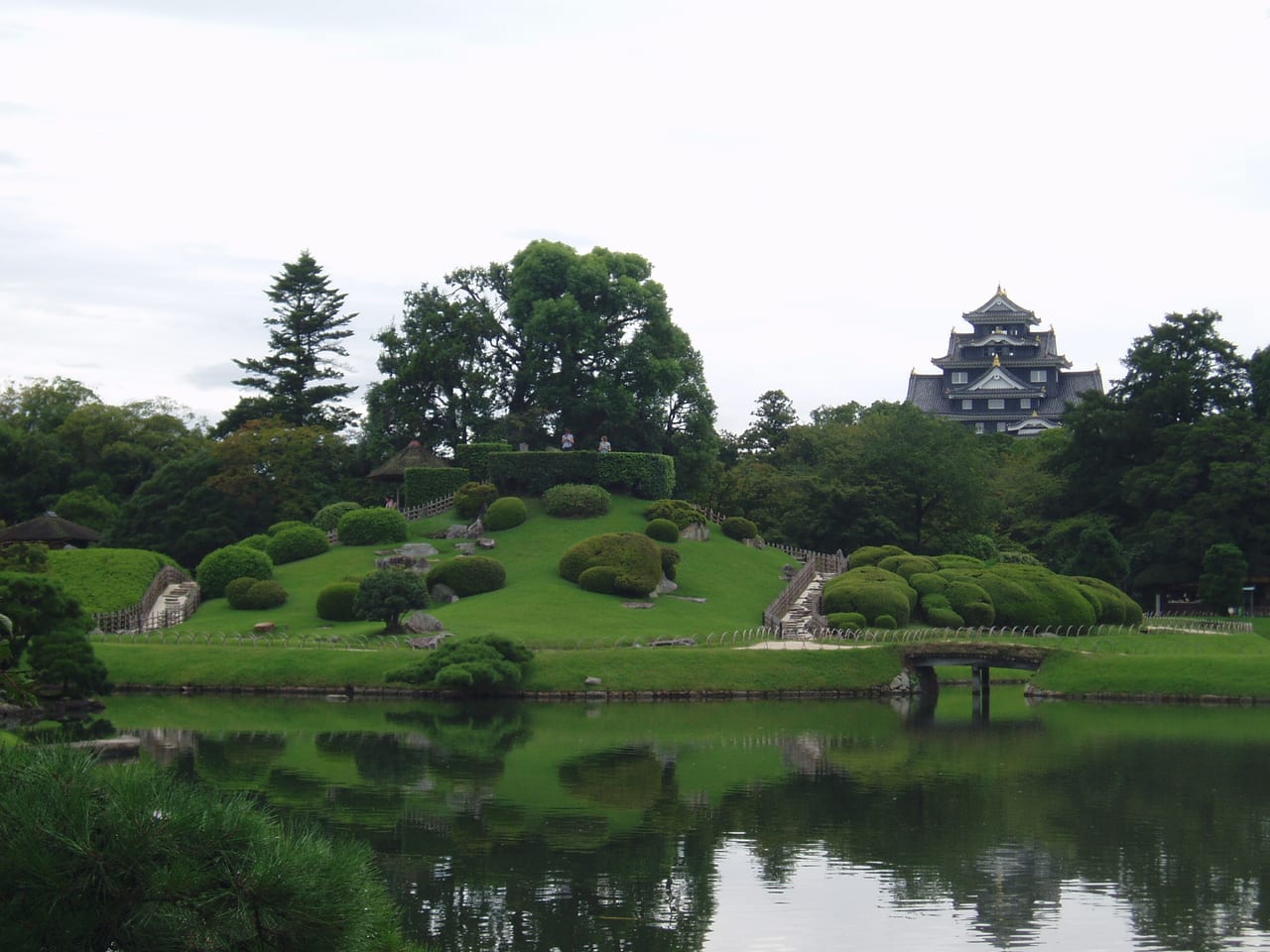
Korakuen ranks with Kenrokuen in Kanazawa and Kairakuen in Mito as one of Japan's "three great gardens," completed by the Okayama lord Ikeda Tsunamasa in 1700. Unlike the enclosed, layered feel of most Japanese gardens, Korakuen is defined by broad open lawns and winding water, with clear sightlines, and it deliberately "borrows" Okayama Castle across the river into the composition — making it bright and pleasant to walk. Admission is ¥500 for adults, free for children; open 7:30–18:00 (Apr–Sep) and 8:00–17:00 (Oct–Mar). The combined ¥720 ticket with the castle is the best value.
Every season has its draw: spring blossoms, early-summer green, the Crow Castle framed by autumn foliage, and summer-evening "fantasy garden" illuminations. Budget 1–1.5 hours to walk and photograph. From Okayama Station, take the streetcar to Shiroshita stop or a bus from in front of the station; the garden and castle sit on opposite banks of the Asahi River, linked by the Tsukimi Bridge, so doing them in sequence is easiest.
Okayama Castle (the Crow Castle)
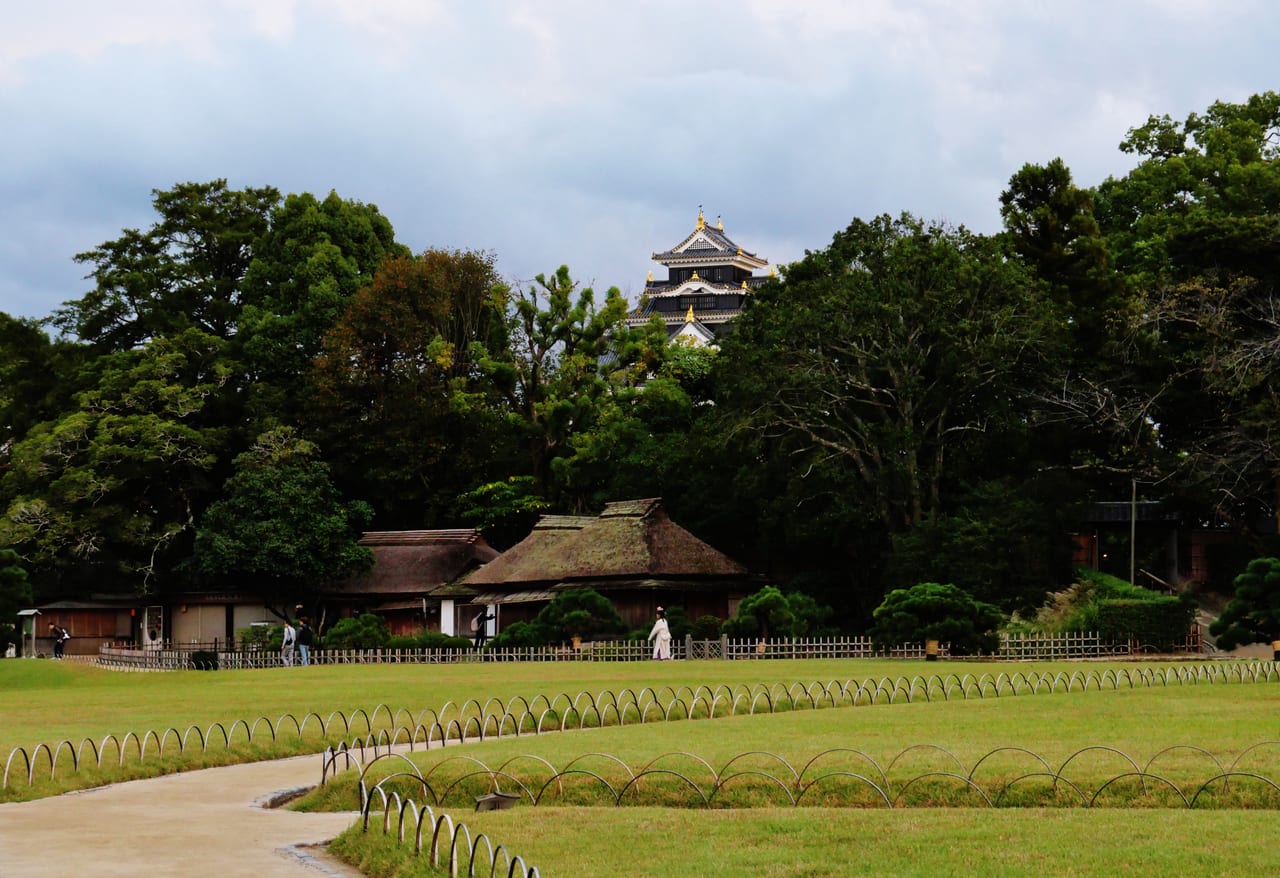
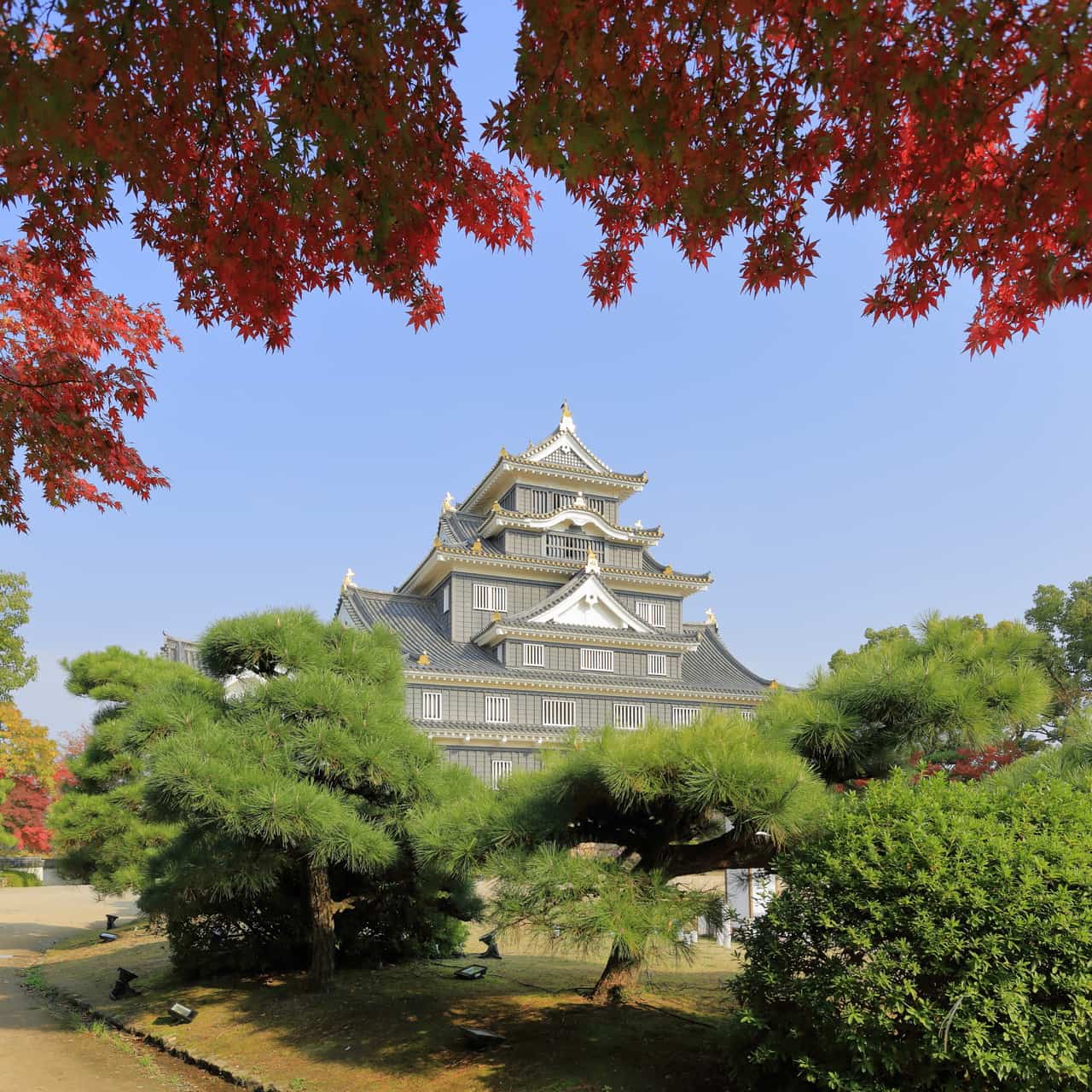
Just across the river from Korakuen, Okayama Castle is nicknamed the "Crow Castle" for its black exterior — a clean contrast with the green-and-white garden and the white-walled Kurashiki. The keep reopened after a major 2021–2022 renovation, with modern history exhibits and hands-on features inside (try-on lord's attire and the like); budget 40–60 minutes for the displays and the climb. Admission is ¥320 for adults, ¥100 for students, open 9:00–17:30 (last entry 17:00).
Honestly, as keep architecture goes, Okayama Castle is not a top-tier favorite among castle buffs — but its pairing with Korakuen is what makes it worthwhile: the black keep rising behind the green lawn is Okayama's signature shot. If you are rushed and can only pick one, choose Korakuen and treat the castle as the borrowed backdrop.
The Kurashiki Bikan quarter
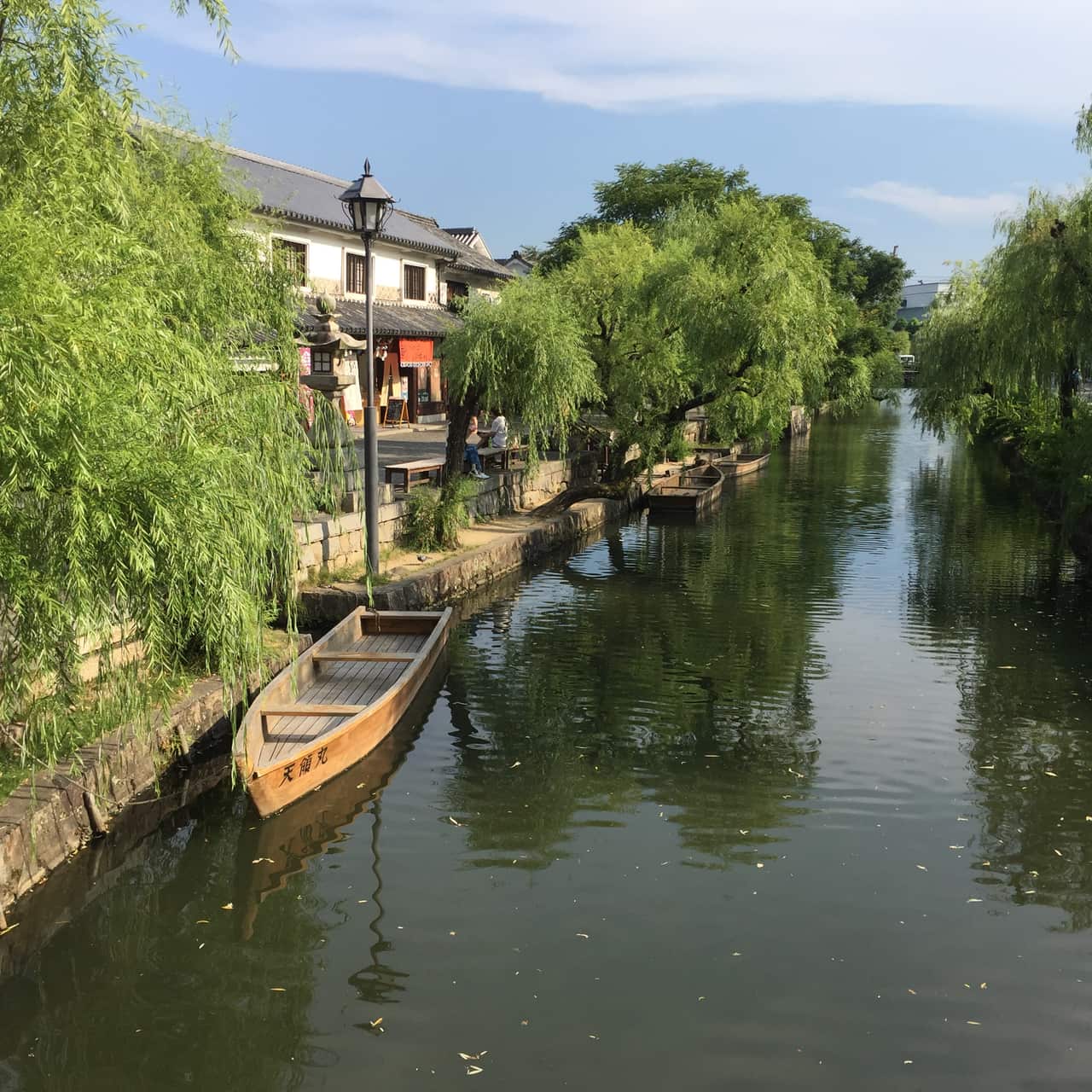
If central Okayama is "famous garden plus famous castle," the Kurashiki Bikan quarter is the dessert of the trip — and many people come specifically for it. It is an Edo-period district of white-walled storehouses: along both banks of the Kurashiki River, willows drape over the canal and the white-plaster, black-tiled rice warehouses and merchant houses now hold cafés, craft shops, and small museums, all carefully preserved into one of Chugoku's most photogenic old streets.
Walking it is free, and simply strolling the canal and sitting under the riverside willows is a pleasure. What costs money are the facilities: the Kurashiki River boat ride (a poled canal boat, about 20 minutes, with a water-level view of the old street — numbered tickets often required in peak season), the Ohara Museum of Art, Achi Shrine (high up, with a view over the quarter), and Ivy Square (a red-brick former textile mill turned complex). My advice: walk the streets by day and deliberately stay for the evening illumination — the lit quarter, lights falling on white walls and the canal, is more atmospheric than daytime and noticeably less crowded, the hidden way to enjoy it.
The Ohara Museum and Kojima denim
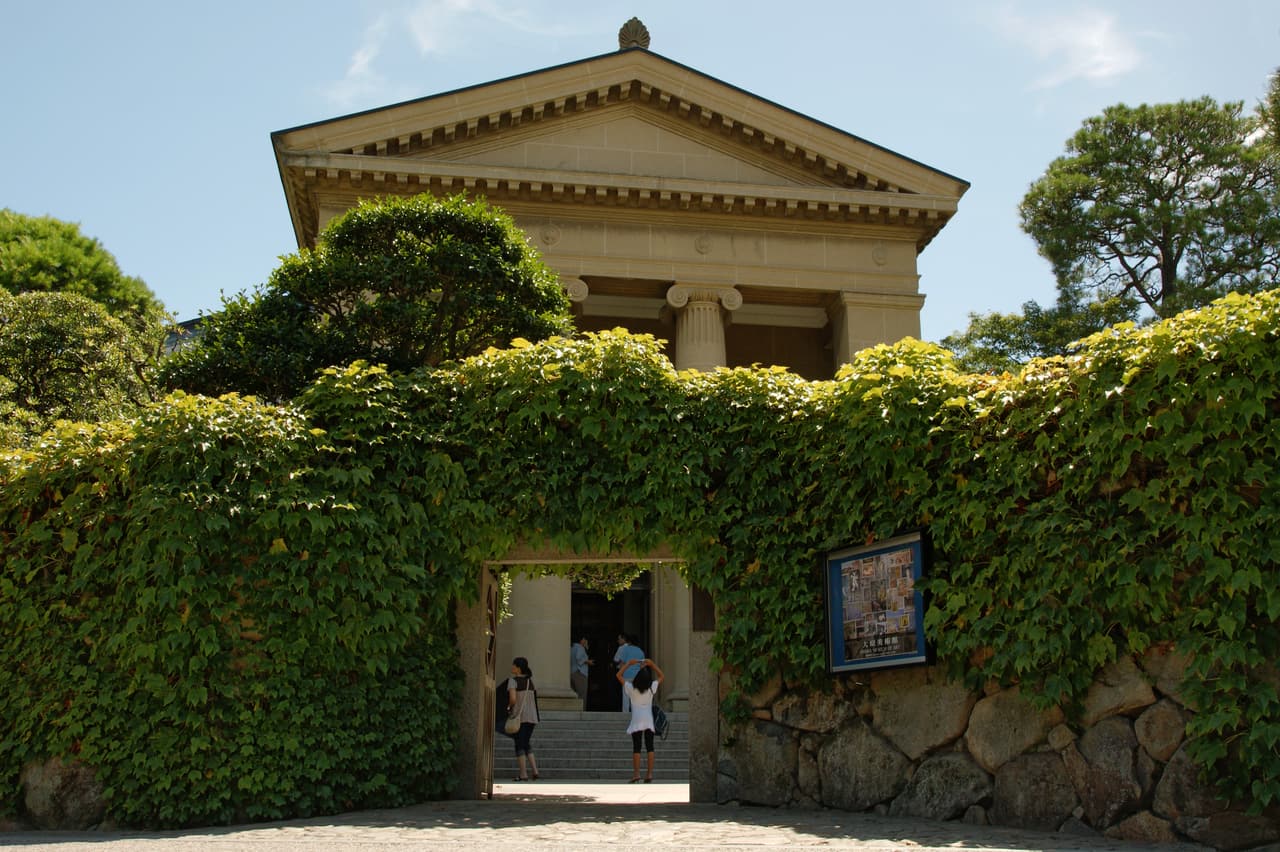
The heavyweight inside the Bikan quarter is the Ohara Museum of Art. Founded in 1930, it was Japan's first private museum devoted to Western art, established by the Kurashiki industrialist Magosaburo Ohara, with originals by El Greco, Monet, Gauguin, and Renoir — a remarkable level of Western painting to find in a regional city. Admission is ¥2,000 for adults, ¥500 for students, closed Mondays (except holidays). It is well worth it for art lovers; for a casual wander, the Bikan streets and a canal boat are plenty. (The museum closed briefly for renovation in early 2026 and reopened in late April — confirm its status before visiting.)
A lesser-known but fun extension is Kojima — the small town just south of Kurashiki is the birthplace of Japanese-made jeans. The first domestic denim was produced here in the 1960s, and it remains a center for high-end denim today. Kojima Jeans Street gathers flagship stores of local denim brands where you can see fabric, stitching, and indigo dyeing — even the lamp-post charms and benches are shaped like jeans. It is about 20–30 minutes from Kurashiki by JR or bus. For denim fans it is a pilgrimage-grade stop; others can weigh it against their schedule.
Transport & lodging
Getting in: Okayama is on the Sanyo Shinkansen — Shin-Osaka → Okayama in about 45–60 minutes, Okayama → Hiroshima in about 35 minutes, easy in both directions. Okayama → Kurashiki is about 15 minutes on the JR Sanyo Line with frequent service, the core hop of this trip. If your route is a Sanyo loop like "Okayama + Kurashiki + Hiroshima + Miyajima," paying for each Shinkansen leg is pricey, and a Sanyo-area JR Pass (Okayama–Hiroshima) is usually better value — price your route with the Okayama–Hiroshima Area Pass. Whether the nationwide pass pays off is in our JR Pass guide.
Around town: Okayama runs on streetcars and buses — Korakuen and the castle are a short walk from the Shiroshita streetcar stop. Kurashiki's Bikan quarter is about a 10–15 minute walk from the south exit of Kurashiki Station, and the whole old town is walkable. Lodging: most people do not stay in Okayama or Kurashiki, treating them as a daytime stop, but if you want the Kurashiki evening illumination and a next-day start, a machiya inn around Kurashiki Station or inside the Bikan quarter is a characterful choice; if you are rushing, stay near Okayama Station for easy Shinkansen access. Set up an unlimited eSIM online to connect on arrival — a KKday Japan eSIM.
A one-day Okayama + Kurashiki route
- Morning (Okayama): Okayama Station → streetcar to Shiroshita → Korakuen (the lawn with the borrowed Crow Castle) → over the Tsukimi Bridge to climb Okayama Castle → back to town for lunch (Okayama bara-zushi or bukkake udon).
- Afternoon (Kurashiki): 15 minutes by JR Sanyo Line to Kurashiki → walk into the Bikan quarter, the white-walled streets and the Kurashiki River boat → into the Ohara Museum if you like art → denim fans can add Kojima Jeans Street.
- Evening: stay in the Bikan quarter for the illumination and a riverside coffee, then back to Okayama or onward by Shinkansen to Hiroshima or Osaka.
One worthwhile extension if you have an extra day: Okayama is the mainland gateway to the Setouchi art islands. From Uno Port (reached by JR and a short bus from Okayama) ferries cross to Naoshima, the island famous for Tadao Ando's concrete museums, the Benesse art sites, and Yayoi Kusama's yellow pumpkin on the pier, with neighboring Teshima and Inujima nearby. It is a different pace from gardens and old towns — contemporary art set against the quiet Seto Inland Sea — and during the triennial Setouchi Triennale the whole archipelago becomes one open-air gallery. If art islands appeal, budget a full separate day rather than trying to squeeze them around Korakuen and Kurashiki.
West of Okayama lie Hiroshima and Miyajima (see our Hiroshima guide and Miyajima guide), and on the way you can stop at Onomichi in eastern Hiroshima Prefecture to ride the Shimanami Kaido cross-sea cycling route; east, back toward Osaka, you can join our Osaka & Kyoto 5-day itinerary. Okayama is also the transfer point for San'in — take a limited express north to pair in the Tottori Sand Dunes. Running the whole Sanyo Line in one direction is the most efficient way to travel it.
FAQ
- Q1:How long do Okayama and Kurashiki need, and how do I plan it?
- Together they make one full day, and they string together easily — JR runs between them in 15 minutes. My route is "Okayama in the morning, Kurashiki in the afternoon": see Korakuen and Okayama Castle in the morning (they sit on opposite banks of the Asahi River, linked by a footbridge), eat in Okayama at midday, then take the JR to Kurashiki to walk the Bikan quarter's white-walled streets, ride a canal boat, and see the Ohara Museum, returning to Okayama or continuing to Hiroshima in the evening. As a Shinkansen stopover, even a half-day for the Kurashiki Bikan quarter alone works. Okayama is on the Sanyo Shinkansen, easy to reach east toward Osaka or west toward Hiroshima and Miyajima.
- Q2:What tier of garden is Korakuen, and how much is it?
- Korakuen is one of Japan's "three great gardens" (with Kenrokuen in Kanazawa and Kairakuen in Mito), completed by the Okayama lord Ikeda Tsunamasa in 1700. Unlike the enclosed feel of most Japanese gardens, Korakuen is defined by broad open lawns, winding streams, and a composition that "borrows" Okayama Castle across the river — open and airy to walk. Admission is ¥500 for adults, free for children, open 7:30–18:00 (Apr–Sep) and 8:00–17:00 (Oct–Mar). A combined ticket with the castle is ¥720. It rewards every season — spring blossoms, early-summer green, autumn foliage, and occasional evening "fantasy garden" illuminations.
- Q3:Can you go inside Okayama Castle (the Crow Castle)?
- Yes. Okayama Castle is nicknamed the "Crow Castle" for its black exterior, a nice contrast with the green-and-white Korakuen and the white-walled Kurashiki. The keep reopened after a major 2021–2022 renovation, with modern history exhibits and hands-on features inside (you can try on lord's attire). Admission is ¥320 for adults, ¥100 for students, open 9:00–17:30 (last entry 17:00). It sits across the Asahi River from Korakuen, reached over the Tsukimi Bridge, so the two are almost always paired. For exterior photos, the borrowed-scenery view of the black keep behind Korakuen's lawn is the best shot.
- Q4:What is the Kurashiki Bikan quarter? Is there an entry fee?
- The Kurashiki Bikan Historical Quarter is an Edo-period district of white-walled storehouses — along both banks of the Kurashiki River, willows drape over the canal and the white-plaster, black-tiled rice warehouses and merchant houses now hold cafés, craft shops, and small museums. It is one of Chugoku's most photogenic old streets. Walking it is free; what costs money are the facilities inside: the Kurashiki River boat ride (about 20 minutes), the Ohara Museum of Art (¥2,000 adults), Achi Shrine, and Ivy Square (a red-brick former mill). Walk the streets by day, then stay for the evening illumination — the lit quarter is more atmospheric and far quieter.
- Q5:Is the Ohara Museum of Art worth going into?
- It depends on your interest in Western art. Founded in 1930, the Ohara Museum of Art was Japan's first private museum devoted to Western art, established by the Kurashiki industrialist Magosaburo Ohara, with originals by El Greco, Monet, Gauguin, and Renoir — a remarkable collection to find in a regional city. Admission is ¥2,000 for adults, ¥500 for students, closed Mondays (except holidays). It is well worth it for art lovers; for a casual stroll, the Bikan streets and a canal boat are enough on their own. (Note: the museum closed briefly for renovation in early 2026 and reopened in late April — confirm its status before you go.)
- Q6:I heard the area near Kurashiki is Japan's "denim holy land"?
- Yes — in Kojima, just south of Kurashiki, which is the birthplace of Japanese-made jeans. The first domestic denim was produced here in the 1960s, and it remains a hub for high-end denim today. The best spot is Kojima Jeans Street, lined with flagship stores of local denim brands where you can see everything from fabric to stitching to indigo dyeing — even the lamp-post charms and benches are shaped like jeans. It is about 20–30 minutes from Kurashiki by JR or bus. For denim fans it is a pilgrimage; casual visitors can weigh it against their time.
Related reading:
Hiroshima Guide 2026: Peace Park, Okonomiyaki & Miyajima
Chugoku's gateway — 1.5 hr from Shin-Osaka by Shinkansen, the World Heritage A-Bomb Dome, layered okonomiyaki, and a Miyajima day trip.
Miyajima Guide 2026: Floating Torii Tides, Mt. Misen & Oysters
World Heritage Itsukushima Shrine — how to time the floating torii by tide, the Mt. Misen ropeway, ferries, the visitor tax and grilled oysters.
JR Pass 2026: Is It Still Worth It?
Four real routes calculated, six alternatives that may beat the Pass.