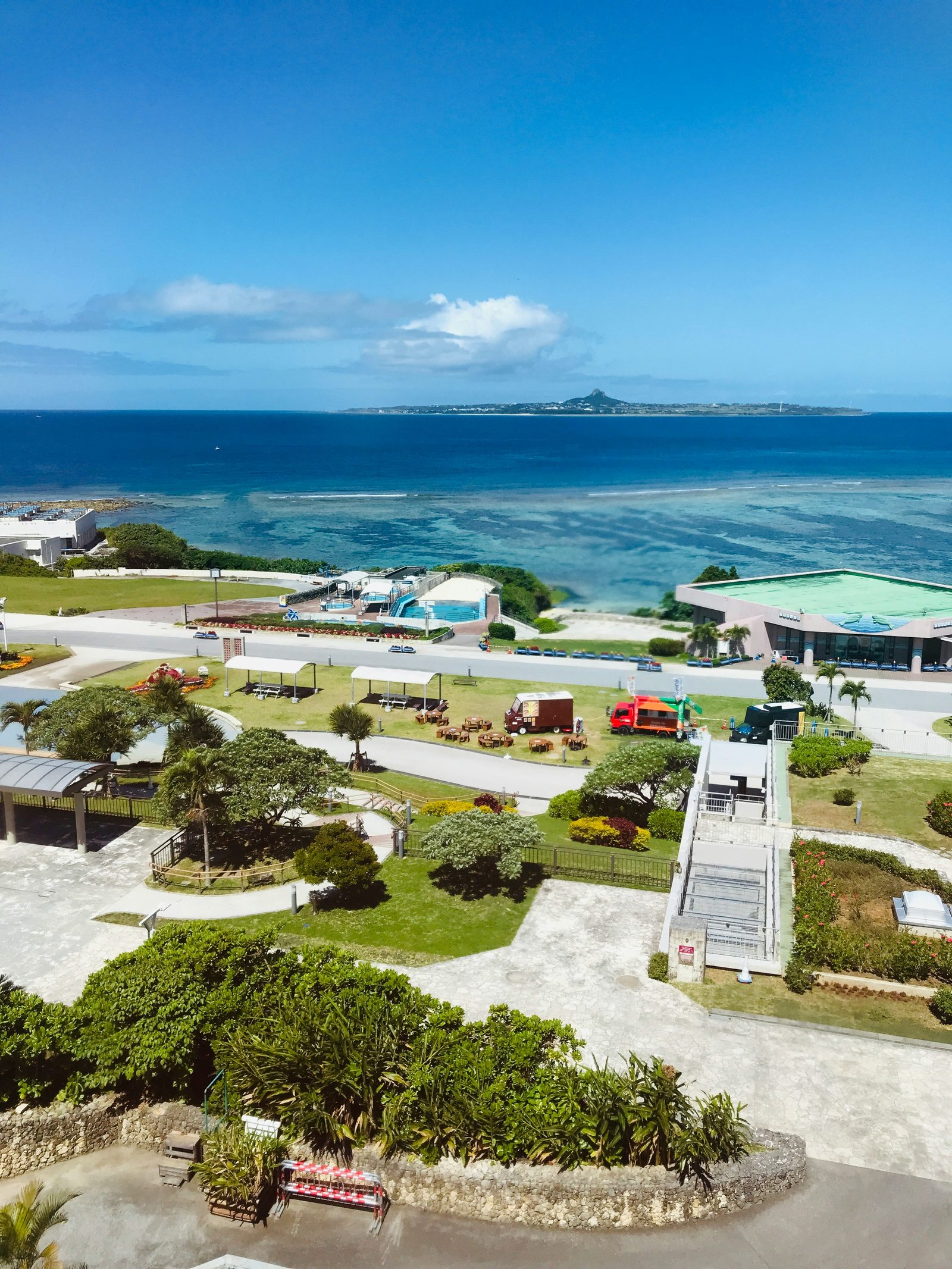
Okinawa is arguably the single best place in Japan for a first-time foreign driver. Traffic is calm outside Naha. Roads are wide and well-signed in English. Parking is abundant and cheap. And unlike mainland Japan — where the train network can take you almost anywhere — Okinawa's best destinations (Churaumi Aquarium, Cape Manzamo, Kouri Island, the northern Yanbaru forests) are simply unreachable without a car. The bus network exists, but a 90-minute drive becomes a 4-hour ordeal with transfers.
This guide covers everything from getting your International Driving Permit to navigating typhoon season — using 2026 published prices from each rental brand's official site and the most common mistakes documented in tourist driving advisories, so you don't have to learn them by paying for them. Before you fly, don't forget the basics: a 10-minute Visit Japan Web entry walkthrough and a proper pre-trip checklist will save you an hour at Naha customs.
- You need an IDP — must be 1949 Geneva Convention type. Get it from AAA/AA/CAA before you fly. Takes 10 minutes, costs ~$20.
- Best value rental — OTS or Times Car Rental: compact car from ~4,500 yen/day. Always add the NOC waiver (~1,100 yen/day).
- Airport pickup — No counters in Naha Airport. Free shuttle buses run every 10-15 min to nearby rental lots.
- Drive on the left — Biggest risk is turning into the right lane at intersections. Stick a note on the dashboard: "KEEP LEFT."
- 3-day minimum — You need at least 3 days to cover Churaumi, Kouri Island, American Village, and the central coast without rushing.
Table of Contents
- International Driving Permit: What You Actually Need
- Rental Company Comparison & Pricing
- Picking Up Your Car at Naha Airport
- Driving on the Left: A Practical Guide
- Insurance: CDW, NOC, and What to Skip
- Best 3-Day Driving Itinerary
- Gas Stations, Parking & ETC Cards
- Okinawa Expressway & Tolls
- 8 Common Mistakes (and How to Avoid Them)
- 🗺️ MapCode Navigation: 15 Must-Save Codes
- 🏝️ Main Island vs Outer Islands
- Typhoon Season Driving: July-October
- Frequently Asked Questions
International Driving Permit: What You Actually Need
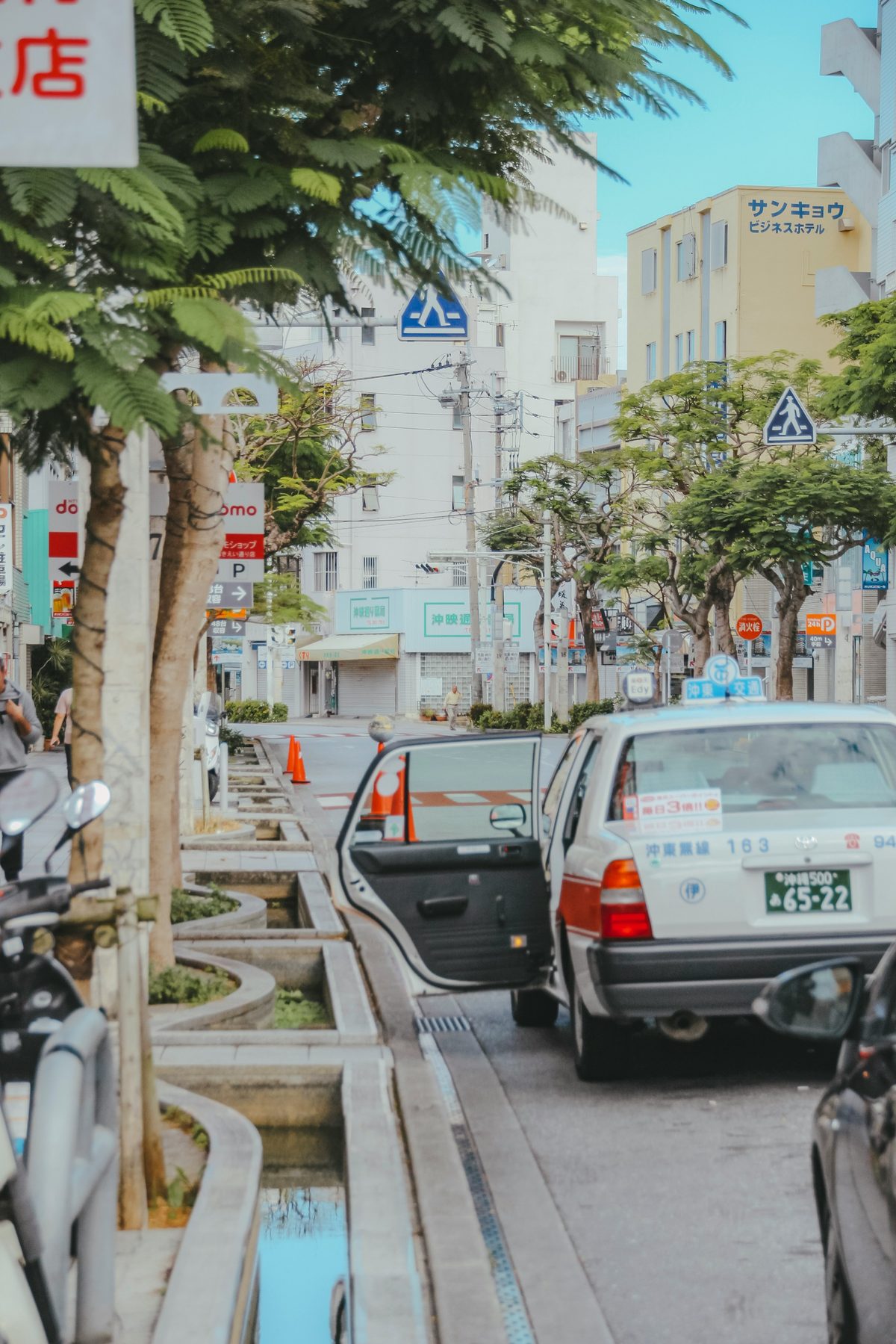
Japan only accepts International Driving Permits issued under the 1949 Geneva Convention on Road Traffic. This is the critical detail that trips people up. Many countries issue IDPs under the 1968 Vienna Convention instead, and those are not valid in Japan. (This rule applies Japan-wide, not just Okinawa; for the nationwide picture — booking across regions, the coupon, insurance and ETC — see our renting a car in Japan guide.)
Countries with Geneva Convention IDPs (valid in Japan)
- United States — Get it from AAA. $20, issued same-day in person. Bring your valid license + one passport photo.
- United Kingdom — Apply at the Post Office. Costs around 5.50 GBP. Takes 5 minutes in person.
- Canada — CAA offices issue them for $25 CAD. Same-day.
- Australia — Through your state automobile association (NRMA, RACV, etc.). About $40 AUD.
- Most EU countries — Available from your national automobile club. France, Germany, Italy, Spain, Netherlands all qualify.
Countries that need special attention
Taiwan, China, South Korea, and some Southeast Asian countries do not issue Geneva Convention IDPs. Citizens of these countries must obtain a Japanese translation of their license from JAF (Japan Automobile Federation) after arriving in Japan. This can be done at JAF offices in major cities, but the process takes time and is not available at the airport. Plan ahead.
Switzerland ratified the Geneva Convention, so Swiss IDPs are valid in Japan. Brazil issued IDPs under Vienna for years, but now offers Geneva-compliant ones — confirm with your local DETRAN.
How long is the IDP valid?
One year from issue date. If you got it in March 2026, it expires March 2027. If your IDP was issued more than 12 months ago, even if it hasn't expired, Japan considers it invalid after you've been in the country for one year. For a typical 1-2 week tourist trip, this is a non-issue.
Rental Company Comparison & Pricing
The four major rental companies foreign tourists use in Okinawa are OTS, Times, Nippon, and Toyota Rent-a-Car. They all deliver a functional car. Based on their official rate sheets, English-service availability, and traveler-forum feedback, the differences are in English support, insurance clarity, pickup speed, and vehicle condition.
| Company | Compact/Day | Standard/Day | English Support | English GPS | NOC Waiver | Airport Shuttle | Best For |
|---|---|---|---|---|---|---|---|
| OTS Rent-a-Car | ~4,500 yen | ~6,500 yen | Good (staff + website) | Yes | 1,100 yen/day | Every 10 min | First-time visitors, best English service |
| Times Car Rental | ~4,200 yen | ~6,000 yen | Moderate | Yes | 1,100 yen/day | Every 15 min | Budget-conscious, wide network |
| Toyota Rent-a-Car | ~5,500 yen | ~7,500 yen | Limited (Japanese-focused) | Yes | 1,650 yen/day | Every 15 min | Newer vehicles, reliability |
| Nippon Rent-a-Car | ~5,200 yen | ~7,200 yen | Limited | Yes | 2,200 yen/day | Every 15 min | Wide mainland network, loyalty programs |
| Budget/Orix | ~3,800 yen | ~5,800 yen | Basic | Sometimes | 1,100 yen/day | Every 20 min | Lowest sticker price |
My recommendation: OTS for first-timers, Times for repeat visitors who want value, Toyota if you need a 7–8 seater van for a family. OTS was founded specifically to serve international tourists in Okinawa, so their English documentation, GPS, and staff communication are a level above the others. Times offers slightly lower prices and has a massive network of stations if you want to pick up in Naha and drop off in Nago.
One booking-channel caveat that costs people time: which supplier you can reach depends on which channel you use. All three of these brands are operating normally in Okinawa and take reservations on their own English-language sites — but the third-party booking platforms carry a rotating subset of suppliers, not the whole market, and Times and Toyota are not currently sellable on KKday's English site. If you have settled on one of those two brands, book direct rather than hunting for a listing that isn't there. If you're brand-agnostic and just want the aggregator's price comparison and free-cancellation terms, that still works — you'll simply be choosing among the suppliers the platform does carry (Nissan, Sky, Lucky and Yuai among them), which is fine for a compact or a sedan and where the price differences below are largest anyway.
What class of car should you get?
Compact (Vitz/Yaris class) — Perfect for 1-2 people with light luggage. Okinawa's roads are wide enough that you don't need to worry about tight squeezes like in Kyoto. Fuel economy is excellent at 18-22 km/L.
Standard sedan (Corolla class) — Best for 2-4 people with luggage. Enough trunk space for two large suitcases. Marginally less fuel-efficient but much more comfortable on the 2-hour drive to Churaumi.
Minivan (Sienta/Noah class) — Families of 4+ or groups with lots of dive/snorkel gear. Costs 8,000-12,000 yen/day. Worth it if you'd otherwise need two compact cars.
💰 Book Okinawa Car Rental — Compare Two Platforms
The two platforms carry different supplier line-ups, and prices for the same car class can differ by 500–1,500 yen. Open both, compare, then book. The KKday link below goes to Yuai Rent-a-Car with Naha pickup, one of the cheaper compact options currently sellable there.
Picking Up Your Car at Naha Airport
This is where first-time visitors get confused. There are no rental car counters inside Naha Airport. Zero. You will not find OTS, Times, or Toyota in the arrivals hall. Instead, every rental company operates a lot 5-15 minutes away by free shuttle bus.
Step-by-step pickup process
- Exit the domestic arrivals hall — If you flew domestically from Tokyo/Osaka, you'll be on the 1st floor. International arrivals exit on the same level but from a different gate.
- Cross to the rental car shuttle area — Walk outside, cross the pedestrian path to the shuttle bus zone. Each company has a clearly marked sign with their logo. OTS is green, Times is yellow, Toyota is red.
- Board the shuttle — Buses run every 10-15 minutes from about 8:00 AM to 8:00 PM. Show your reservation confirmation on your phone. The ride takes 5-10 minutes.
- Complete paperwork at the lot — Present: passport, IDP, original home license, reservation confirmation. Signing takes 10-15 minutes. Staff will explain the insurance, walk you around the car for a damage check, and show you the GPS.
- Drive away — Staff often guide you out of the lot and onto the main road. Follow their hand signals.
DFS T Galleria alternative pickup
Some companies (especially OTS) offer pickup at DFS T Galleria Okinawa, which is directly on the Yui Rail monorail line (Omoromachi Station). This is useful if you're spending your first night in Naha without a car and want to pick up the rental the next morning without going back to the airport. DFS has a massive parking structure and multiple rental counters in the basement level.
Return process
Returning is the reverse: drive to the lot, fill up at the gas station the staff will point out (usually within 1 km of the lot), hand over the keys. Staff inspect the car for new damage. If everything is clean, the shuttle takes you back to the airport in 10 minutes. Budget 45-60 minutes total for the return process, especially during peak hours when there's a queue for inspection.
Driving on the Left: A Practical Guide
If you're from the US, Canada, Continental Europe, or anywhere else that drives on the right, this section is for you. Driving on the left is genuinely not as terrifying as you think — but the moments where your instincts betray you are very specific and predictable.
The three danger moments
1. Turning at intersections. This is where 90% of wrong-side incidents happen. When you turn left, your instinct says "turn into the near lane" — which in Japan is the oncoming traffic lane. The rule: left turns are tight, right turns are wide. The opposite of what you're used to. Drill this into your memory before you start driving.
2. Pulling out of parking lots. You've parked, had lunch, come back to the car. Your brain resets. You pull out and drift to the right side. This happens even to experienced left-side drivers after a break. Before pulling out, look at which side other parked cars are facing.
3. Empty roads. Counterintuitively, heavy traffic is safer because you just follow the car in front of you. It's the quiet rural roads in northern Okinawa, with no other cars in sight, where you'll suddenly find yourself drifting right. Stay vigilant when the road is empty.
Practical tips that actually help
- Stick a note on the dashboard that says "KEEP LEFT." Sounds silly. Works perfectly.
- The driver sits closest to the center line. In Japan, the driver's seat is on the right side of the car. If you're hugging the curb, you're in the wrong lane.
- The turn signal is on the right of the steering column (where your wiper lever usually is). You will activate the wipers instead of the signal for the first two days. Everyone does this. It's the universal badge of a foreign driver in Japan.
- Roundabouts go clockwise in Japan (opposite to right-side countries). Okinawa has a few, particularly near American Village.
- Let your passenger be your second pair of eyes. Ask them to call out "keep left" at every turn for the first hour.
Insurance: CDW, NOC, and What to Skip
Rental car insurance in Japan uses different terminology than you might be used to. Here's what each component means and what you actually need.
What's included in the base rental
Almost all Japanese rental companies include CDW (Collision Damage Waiver) and basic liability insurance in the standard rental price. This covers:
- Damage to the rental car (your deductible is typically 50,000-100,000 yen)
- Third-party property damage up to a certain amount
- Third-party bodily injury coverage
NOC Waiver: the one you should add
NOC stands for Non-Operation Charge. Here's the scenario: you scratch the bumper on a parking garage pillar. CDW covers the repair cost. But the rental company also charges you a NOC fee of 20,000 yen (self-driveable car) to 50,000 yen (non-driveable car) because their vehicle is out of service during repairs and they lose rental income.
The NOC waiver eliminates this charge. It costs 1,100-2,200 yen per day depending on the company. For a 3-day rental, that's 3,300-6,600 yen — far less than a single NOC fee. Given that you're driving on an unfamiliar side of the road, in an unfamiliar car, with an unfamiliar GPS, the NOC waiver is the cheapest peace of mind you'll buy on this trip.
What about your credit card's rental car insurance?
Some premium credit cards (Chase Sapphire Reserve, Amex Platinum, etc.) offer rental car coverage. However, Japan-specific quirks make this unreliable:
- Many cards exclude Japan entirely or exclude left-side-drive countries
- Card insurance typically doesn't cover NOC fees
- Filing a claim from overseas is time-consuming and may require a police report in Japanese
Practical advice: don't rely on credit card insurance as your primary coverage. Take the rental company's CDW + NOC waiver and treat the credit card as a backup for truly catastrophic scenarios.
Keep the split clear: travel insurance covers the person, CDW covers the car, and neither replaces the other — here is how travel insurance and rental car cover divide the job.
Best 3-Day Driving Itinerary
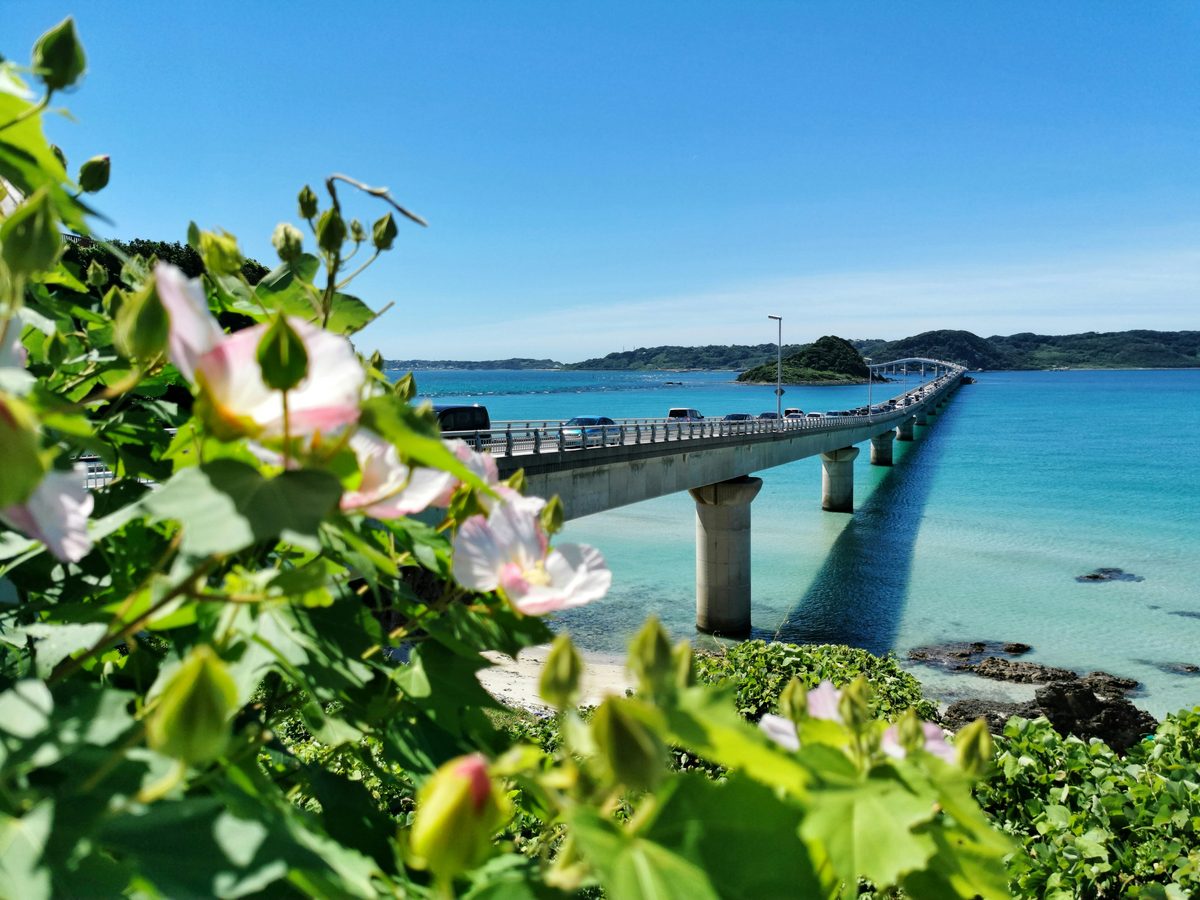
Okinawa's main island is about 106 km long and 4-28 km wide. You can drive from the southern tip to the northern tip in about 2.5 hours without stops. But the point is to stop — a lot. Here's how to structure three days of driving to hit the highlights without backtracking.
Day 1: Central Okinawa (Naha to American Village to Hotel)
Total driving: ~45 minutes (without stops)
- Pick up car at Naha Airport (allow 45-60 min for shuttle + paperwork)
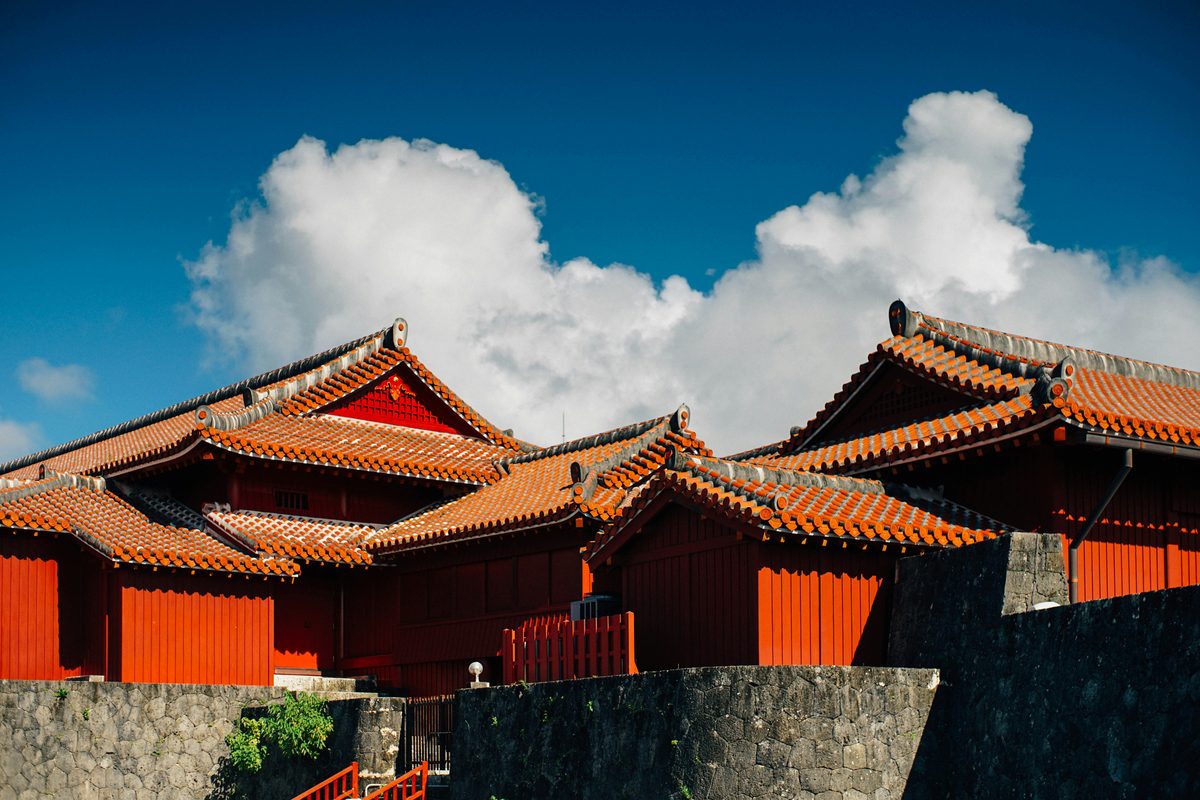
- Shuri Castle (30 min from airport) — The Seiden main hall, lost in the 2019 fire, reopens to the public on November 23, 2026, with interior viewing by timed reservation. The grounds, gates, and views are worth 60-90 minutes. Parking: ¥500 for the first 60 minutes, then ¥250 per 30 minutes, capped at ¥1,000.
- Lunch at a local soba shop — Okinawa soba (wheat noodles in pork broth) is the island's signature dish. Try Kishimoto Shokudo in Nago later or Suumanami along the way.
- American Village (Mihama) — A sprawling shopping and entertainment complex in Chatan, built on former U.S. military land. The sunset from Sunset Beach here is one of Okinawa's best. Free parking in the village lots. Budget 2-3 hours.
- Check into a central coast hotel — Chatan or Onna Village area puts you perfectly positioned for Day 2's northern drive.
Day 2: North Okinawa (Churaumi, Kouri Island, Cape Manzamo)
Total driving: ~3 hours (without stops)
- Cape Manzamo (30 min from Onna hotels) — Dramatic cliff formations and elephant-trunk rock. Best in morning light. Free parking, 15-30 minutes is enough.
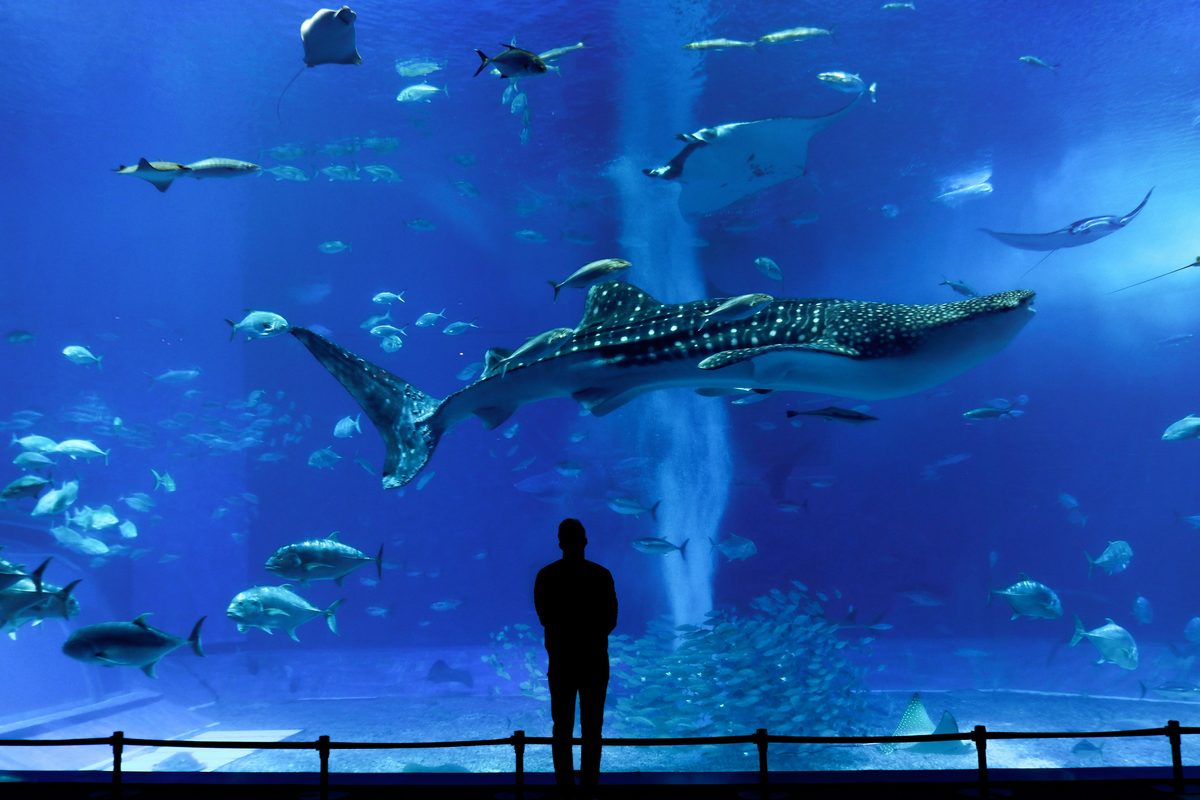
- Churaumi Aquarium (60 min from Cape Manzamo) — One of the world's largest aquariums, famous for whale sharks. Arrive by 10 AM to beat crowds. Tickets: ¥2,180 (adults), discounted after 4 PM to 1,510 yen. Allow 2-3 hours. The parking lot is enormous and free.
- Lunch at Ocean Expo Park — The aquarium is inside this park. Several restaurants and food stalls on-site.
- Kouri Island (30 min from Churaumi) — Connected to the main island by the stunning 1.96 km Kouri Bridge. The bridge itself is the attraction: turquoise water on both sides, Instagram-perfect. Visit Kouri Ocean Tower (800 yen) for panoramic views, or just park at Heart Rock Beach.
- Drive back south — Use the Okinawa Expressway for the return trip (about 75 min to Naha area, tolls ~1,020 yen). Stop at a roadside Lawson or FamilyMart for Okinawan onigiri and Blue Seal ice cream.
🐋 Skip the Churaumi Aquarium Ticket Line
Pre-book an e-ticket — walk straight in with a QR code. Save 20–30 min during peak season.
Day 3: Southern Okinawa (Peace Sites, Caves, Return)
Total driving: ~2 hours (without stops)
- Sefa Utaki (40 min from Naha) — A UNESCO World Heritage Site and the most sacred place in the Ryukyu spiritual tradition. A forest path leads to a triangular rock opening framing the sea. Respectful dress expected. Entry: ¥600 (raised from 300 yen on October 1, 2026).
- Okinawa World & Gyokusendo Cave (20 min from Sefa Utaki) — A 300,000-year-old limestone cave that stretches 5 km (you walk about 900 m). Entry: 2,000 yen including the Ryukyu Village above ground. Allow 90 minutes total.
- Peace Memorial Park (15 min drive) — The site of the Battle of Okinawa. The Cornerstone of Peace lists every name of every person killed — over 240,000 names regardless of nationality. It's a profoundly moving place. Free entry. Budget 60-90 minutes.
- Return car at Naha Airport — Fill up, return, shuttle back. Allow 60 minutes before your flight.
Gas Stations, Parking & ETC Cards
Gas stations (Gasorin Sutando)
Okinawa has abundant gas stations along main roads. Two types exist:
- Full-service (furu saabisu) — An attendant fills your tank, washes your windshield, and takes payment. Just say "regular, full please" (reghyuraa, mantan de). These are becoming rarer but still exist on main roads.
- Self-service (serufu) — You pump your own gas. The machines usually have an English option. Pay by cash or credit card at the pump. Select "regular" (green nozzle) unless your rental specifically requires premium (almost none do).
Gas prices in 2026: Regular gasoline runs about ¥175-185 per liter. A full tank for a compact car costs around ¥4,500-5,500. For a 3-day rental covering 200-300 km, you'll spend roughly 3,000-4,000 yen on fuel. Solid mobile data matters just as much as fuel — we compared 5 eSIM brands in our best Japan eSIM for 2026 piece. For Okinawa's rural stretches, docomo's network coverage is typically the most reliable choice.
Parking
Parking in Okinawa is vastly easier than mainland Japan. Most tourist attractions have free or cheap parking lots. Here's a general guide:
- Tourist attractions — Churaumi Aquarium: free. Cape Manzamo: free. American Village: free. Shuri Castle is the exception: ¥500 for the first 60 minutes, ¥250 per 30 minutes after, capped at ¥1,000, with a 3-hour limit requested.
- Naha city center — Coin parking lots: 200-400 yen per hour, max 1,000-1,500 yen per day. Kokusai Street area is the most expensive.
- Hotels — Most resort hotels include free parking. Naha city hotels charge 500-1,500 yen per night.
- Convenience stores — You can park briefly while shopping, but don't leave your car for hours. They do tow.
Okinawa Expressway & Tolls
Okinawa has one expressway: the Okinawa Expressway (Okinawa Jidosha-do), running 57 km from Naha to Nago. It's the fastest way to get from south to north, cutting the drive time roughly in half compared to coastal Route 58.
Tolls
| Route | Toll (standard car) |
|---|---|
| Naha IC to Nago IC (full length) | 1,020 yen |
| Naha IC to Okinawa-Minami IC (central) | 520 yen |
| Naha IC to Ishikawa IC | 630 yen |
ETC card
An ETC (Electronic Toll Collection) card lets you pass through toll gates without stopping. Most rental companies offer ETC cards as an optional add-on for about 330 yen per rental. Tolls are charged to the card and settled when you return the car.
Is an ETC card worth it? If you're only using the expressway once or twice, paying cash at the toll booth is fine — there's a cash lane at every gate. If you're driving north and back multiple times, the ETC card saves the hassle of fumbling for coins at the booth. ETC cards also qualify for occasional discounts (weekends and holidays), though the savings on Okinawa's short expressway are minimal — about 50-100 yen.
Should you take the expressway or the coastal road?
The expressway saves about 30-40 minutes on the Naha-to-Nago drive. But Route 58 along the coast is one of the most scenic drives in Okinawa, with ocean views nearly the entire way. My recommendation: take Route 58 on the way up (enjoy the scenery, stop at beaches) and the expressway on the way back (you'll be tired and want to get home).
8 Common Mistakes (and How to Avoid Them)
🗺️ MapCode Navigation: 15 Must-Save Codes
Japanese addresses use a block-based system (town, chome, banchi) that is notoriously hard to search. Google Maps often fails to find rural Okinawa spots by name, and the Japanese-style addresses are meaningless without kanji input. MapCode is a 10-digit coordinate system unique to Japan — every in-car GPS in Okinawa supports it. Type the number, get the exact location.
Essential Okinawa MapCodes
| Destination | MapCode | Notes |
|---|---|---|
| Naha Airport (return target) | 33 122 526*41 | Plug this in on return day |
| Churaumi Aquarium | 553 075 797*77 | Free parking lot P7 |
| Kouri Bridge (south end) | 485 662 831*30 | Photo stop before crossing |
| Kouri Ocean Tower | 485 692 174*08 | Island viewpoint |
| Cape Manzamo | 206 312 097*66 | Free parking |
| American Village (Depot Island) | 33 525 387*25 | Sunset beach |
| Shuri Castle | 33 161 734*66 | Parking ¥500/60 min, ¥1,000 cap |
| Sefa Utaki (UNESCO) | 232 593 735*41 | Sacred site, south |
| Okinawa World / Gyokusendo Cave | 232 495 360*30 | Limestone cave |
| Senagajima Umikaji Terrace | 33 002 613*28 | Mediterranean-style mall near airport |
| Chinen Cape Park | 232 594 734*53 | Free cliff-top viewpoint |
| Nago Pineapple Park | 206 716 467*83 | Family stop |
| Bise Fukugi Tree Road | 553 105 654*41 | Hidden near Churaumi |
| Zanpa Cape Lighthouse | 33 881 146*71 | West coast |
| Ashibinaa Outlet | 232 544 541*03 | 5 min from airport |
🏝️ Main Island vs Outer Islands: Can You Drive Between Them?
Okinawa Prefecture has 160+ islands, but the rental car systems on the main island versus the outer islands (Miyako, Ishigaki, Iriomote, etc.) are completely separate. Many visitors assume a Naha rental lets them drive anywhere in the prefecture. It doesn't. Here's how it actually works.
Case 1: Islands connected by bridge (✅ drive across freely)
These small islands are linked to the main island by toll-free bridges. Your main-island rental crosses with no paperwork:
- Kouri Island — Kouri Bridge (1,960 m, free)
- Sesoko Island — Sesoko Bridge (762 m, free)
- Kaichu Road + Henza + Miyagi + Ikei Islands — ~10 km causeway chain, all free
- Senaga Island — short bridge next to Naha Airport, free
Case 2: Miyako, Ishigaki, Iriomote (❌ requires a domestic flight)
These islands are 300–400 km from the main island. You must fly (Naha to Miyako or Ishigaki is ~45 min, 8,000–15,000 yen one way). Rental contracts explicitly prohibit taking main-island cars on inter-island ferries — and practically, no vehicle ferry serves those routes.
The correct plan:
- Rent a car on the main island for 3 days, return at Naha Airport
- Fly to Miyako or Ishigaki and rent a separate local car (OTS, Times, Nippon all operate on the outer islands)
- Spend 2–3 days on the outer island, return the car, fly home or back to Naha
Case 3: Ferry-accessible near islands (⚠️ partial access)
Zamami, Tokashiki, and Kume Islands are reachable by ferry from Naha in 1–2 hours. Most rental companies prohibit taking vehicles on these ferries (contract violation fee 50,000+ yen). Rent a local car on the island, rent an electric bike, or stick to walking/taxis for day trips.
Typhoon Season Driving: July-October
Okinawa sits in the direct path of Pacific typhoons. Between July and October, expect at least one or two typhoons to affect the islands. September is the peak month. This doesn't mean you shouldn't visit — the weather between typhoons is spectacular — but you need a plan.
Before the typhoon
- Monitor the Japan Meteorological Agency (JMA) website — It tracks typhoons 5-7 days in advance with English forecasts.
- Park in a covered structure — Never leave your car in an open lot, under trees, or near the coast. Hotel underground parking is ideal.
- Fill your gas tank — Gas stations may close during the storm. A full tank means you can run the car for AC if needed.
- Stock up on food and water — Convenience stores sell out quickly before a typhoon. Buy supplies 24 hours in advance.
During the typhoon
Do not drive. Winds can exceed 150 km/h. Flying debris, flooding, and zero visibility make driving genuinely life-threatening. Stay in your hotel. This is not a situation where caution is optional.
Most rental companies will extend your rental period at no extra charge if a typhoon prevents you from returning the car on time. Call their emergency line (provided in your rental documents) to notify them. Airlines also routinely reschedule flights during typhoons at no fee.
After the typhoon
Roads may have debris, fallen branches, or minor flooding for 6-12 hours after the typhoon passes. Drive slowly, avoid coastal roads until officially cleared, and watch for downed power lines. The sun usually returns within hours, and Okinawa bounces back remarkably fast.
Is typhoon season worth the risk?
Honestly, yes — if you're flexible. July and August have the best beach weather, warmest water, and longest daylight hours. Hotel prices are higher, but the experience is peak Okinawa. A typhoon might cost you one day indoors. The other six days will be unforgettable. The key is building flexibility into your itinerary: don't front-load all your outdoor activities on one day. For travelable shoulder months (May or November–February at 18–24°C), see our Japan weather by month table; for full Okinawa-specific packing — wetsuit thickness, reef-safe sunscreen, jellyfish season, evening jacket — our What to Wear in Japan pillar has a dedicated subtropical section.
📶 Connectivity for Self-Drive — Japan eSIM Compared
Google Maps navigation needs stable data. For a 3–5 day Okinawa trip, pick an unlimited eSIM plan. Both KKday and Klook offer QR-code eSIMs that install in 2 minutes — compare before you buy.
Frequently Asked Questions
- Q1:Can I rent a car in Okinawa if I'm under 25?
- Yes. Unlike some Western countries, Japanese rental companies do not impose age surcharges. The minimum age is typically 18 (with a valid license and IDP), though some companies require you to be 21. There's no under-25 fee.
- Q2:Do I need a specific car seat for children?
- Japanese law requires children under 6 to use a child seat. Most rental companies offer them for 500-1,000 yen per day — request it when booking. If you bring your own, make sure it's compatible with Japanese car seat anchor points (ISOFIX is standard in newer models).
- Q3:What if I get into an accident?
- First, check if anyone is injured and call 119 (ambulance) or 110 (police) if needed. Then call your rental company's emergency number (printed on the dashboard card or rental agreement). Do not move the car until police arrive — this is required by Japanese law for all accidents, even minor ones. The police will file an accident report (jiko shomeisho) which you'll need for insurance claims.
- Q4:Can I pick up in Naha and drop off at a different location?
- Some companies allow one-way rentals within Okinawa (e.g., pick up Naha, drop off Nago). OTS and Times both offer this, usually with a one-way fee of 3,000-5,000 yen. Cross-island rentals to Miyako or Ishigaki are not available — you'd need a separate rental on each island.
- Q5:Is the GPS navigation really in English?
- Yes, but "English" is generous. The GPS voice gives directions in English and displays major place names in English. However, smaller streets and some rural destinations only show Japanese names. Pro tip: search by phone number (mapcode or phone number input) rather than address — every tourist spot in Okinawa has a phone number that the GPS recognizes. Your rental company will show you how to use phone number search.
- Q6:How strict is the "full tank return" policy?
- Very strict. If you return the car without a full tank, the rental company charges you for fuel at a premium rate (often 50% above market price). There's always a gas station within 1 km of the rental lot — the staff will point it out when you pick up the car. Fill up there on your way back. Keep your gas receipt as proof.
- Q7:Are there electric/hybrid rental options?
- Hybrid models (Toyota Aqua, Prius) are increasingly available from Toyota Rent-a-Car and Nippon. Fully electric vehicles are rare and impractical for Okinawa's longer drives due to limited charging infrastructure outside Naha. Stick with a hybrid or standard gasoline car for the most reliable experience.
Final Thoughts
Renting a car in Okinawa is not an adventure in itself — it's the key that unlocks every other adventure. The aquarium, the bridges, the hidden beaches, the northern forests, the cliffside cafes that don't appear on any English-language website — none of these are accessible by public transit in any reasonable way.
The process is straightforward if you prepare: get your IDP at home, book in advance, take the NOC waiver, remember to drive on the left. After the first hour behind the wheel, your hands will stop gripping the steering wheel so tightly, the wipers-instead-of-turn-signal moments will taper off, and you'll start noticing the ocean instead of the road markings.
That's when Okinawa opens up. And you'll wonder why you ever considered doing it any other way.
Next Reads
Best eSIM for Japan 2026: 5 Brands Compared
Airalo, Ubigi, KKday, Holafly and Jetfi compared on coverage, price and speed. Honest ranking.
Japan trip prep checklist
eSIM, Visit Japan Web, tax-free, insurance — done in one read.
Visit Japan Web Guide 2026
Immigration in ten minutes. The tax-free QR stands in for your passport in the shop — it is not what the airport kiosk reads.
🏨 The textbook Okinawa pairing is a West Coast resort in Onna Village — Halekulani Okinawa (2025's only dual Forbes Five-Star in Okinawa, 360 rooms all ocean-view) is the most complete pick. Full picks at 5 Best Japanese Onsen Ryokans 2026 or filter the Okinawa region at Japan Hotel Picks.