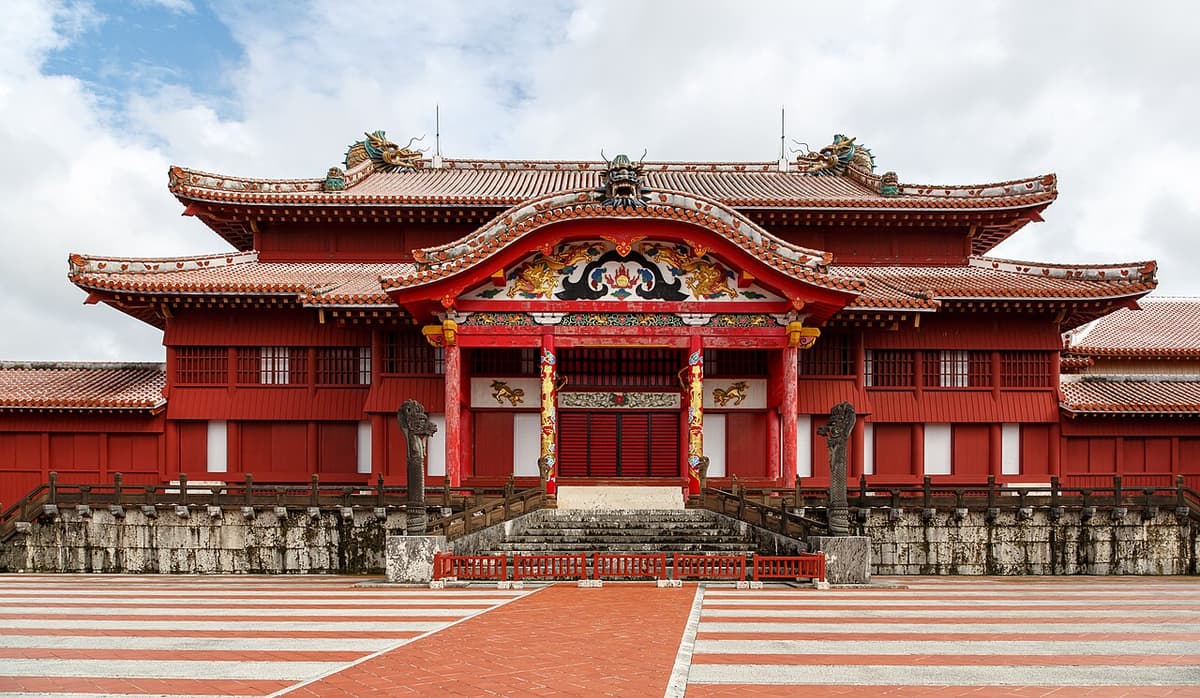
One thing about the 2026-27 New Year in Okinawa is true only of this season: the rebuilt main hall of Shuri Castle opens to the public on November 23, 2026, seven years after the 2019 fire, which makes this the first New Year with the Seiden back. And New Year's Day tickets for the Seiden go on sale at 13:00 on November 1, 2026, first come, first served — the one deadline in this guide that disappears if you miss it. The second number that will shape your itinerary more than any other is this: sunrise in Naha on January 1, 2027 falls at 7:17, while Sefa-utaki, the World Heritage sacred site, does not open until 9:00 from November through February. That gap is exactly why the widely copied plan of watching the first sunrise at Sefa-utaki does not work. This guide runs in two halves. The first covers the season as it will actually be experienced — what is officially confirmed, where the midnight fireworks genuinely are, how to sequence sunrise and shrine visits, and which businesses really open. The second is for people planning months ahead: what to lock in now, and the list of things Japanese operators only publish in December. Every fact here is labelled by status. Confirmed items are stated as fact; anything not yet announced for this season is flagged as a typical-year pattern rather than dressed up as settled.
📍 This guide covers the year-end and New Year week only. For Okinawa's winter climate overall, whale watching season, the early cherry blossom and the off-season case, see the Okinawa winter escape guide. For Shuri Castle as a sight, Kokusai-dori and the city itself, see the Naha travel guide. Nationwide rules — department store opening days, supermarkets and ATMs, reserved-only Shinkansen — are covered in what's open in Japan over New Year.
- True of this season only: Shuri Castle's main hall opens Nov 23, 2026. Seiden interior viewing is by timed reservation, and New Year's Day tickets go on sale at 13:00 on Nov 1, 2026, first come, first served
- Sunrise 7:17, Sefa-utaki opens 9:00: watch from Chinen Cape Park (free, open 24h), then enter Sefa-utaki after 9:00 (¥600, new rate from Oct 1, 2026)
- The fireworks are not at American Village: no official midnight show was announced for 2025-26; real midnight displays are at Onna and Yomitan resorts and are almost always guests only
- Biggest planning trap: Daiichi Makishi Public Market closes Jan 1-3 as a standing rule; Churaumi Aquarium by contrast stays open 8:30-18:30 through the period, though its dolphin show is suspended Jan 4-9
- Hatsumode at Naminoue: roads around the shrine were closed from 23:00 on Dec 31 in 2025-26 — take the monorail to Asahibashi or Kencho-mae and walk
📖 Contents
- Why this season is different: the Seiden is back
- New Year's Eve: where the fireworks actually are
- Hatsuhinode at 7:17 and the order that works
- Hatsumode: Naminoue, Gokoku, Futenma
- What opens and what shuts
- Toshikoshi Okinawa soba and the first sales
- Weather that week, and what to pack
- Soggwachi: Okinawa's second New Year
- The advance-planner's checklist
- FAQ
Why this season is different: the Seiden is back
If you are weighing up whether Okinawa deserves your New Year week, this is the strongest argument on the table.
In June 2026 the Okinawa General Bureau announced, and Shuri Castle Park confirmed on its own site, that the Seiden main hall lost in the 2019 fire opens to the public from November 23, 2026, with a government-hosted completion ceremony the day before. Seven years passed between the fire and the reopening. The consequence for travellers is simple: 2026-27 is the first New Year with the main hall standing again, and that is not repeatable next year.
If you want to be inside the Seiden over New Year, there is one date to remember: 13:00 on November 1, 2026. Tickets for entry from January 1, 2027 go on sale at 13:00 on the first day of the month two months prior, so New Year's Day and January 2 both open at the same moment on November 1. First come, first served — not a lottery — with a maximum of 9 tickets per transaction. Tickets for the opening stretch (November 23 to December 31) were split into two identical-sized releases, at 13:00 on September 1 and 13:00 on October 1, 2026.
Entering the Seiden requires a timed reservation. Seiden interior viewing runs on 30-minute timed slots, and admission comes in two versions — with and without a Seiden slot — at exactly the same price. The timed reservation costs nothing extra. The park puts the whole visit, from the Suimuikan entrance building through the Seiden interior, at 90 to 120 minutes, and advises anyone arriving by monorail to book a slot 40 to 50 minutes after their scheduled arrival at Shuri Station (the walk from the station takes about 20 minutes).
Two things that catch people out. Free entrants still need a reservation — Okinawa residents aged 70 and over, holders of a disability certificate, and even annual passport holders must each book the "with Seiden viewing" ticket; only preschool children are exempt. And missing out is not fatal: if a slot still has space on the day, you can buy online up to 15 minutes before that entry window, or at the Kofukumon ticket window. Check the official ticket page for live availability. How the two same-priced tickets differ, the change and refund deadlines, and why the official English pages still quote pre-fire prices are all covered in the Shuri Castle Seiden guide.
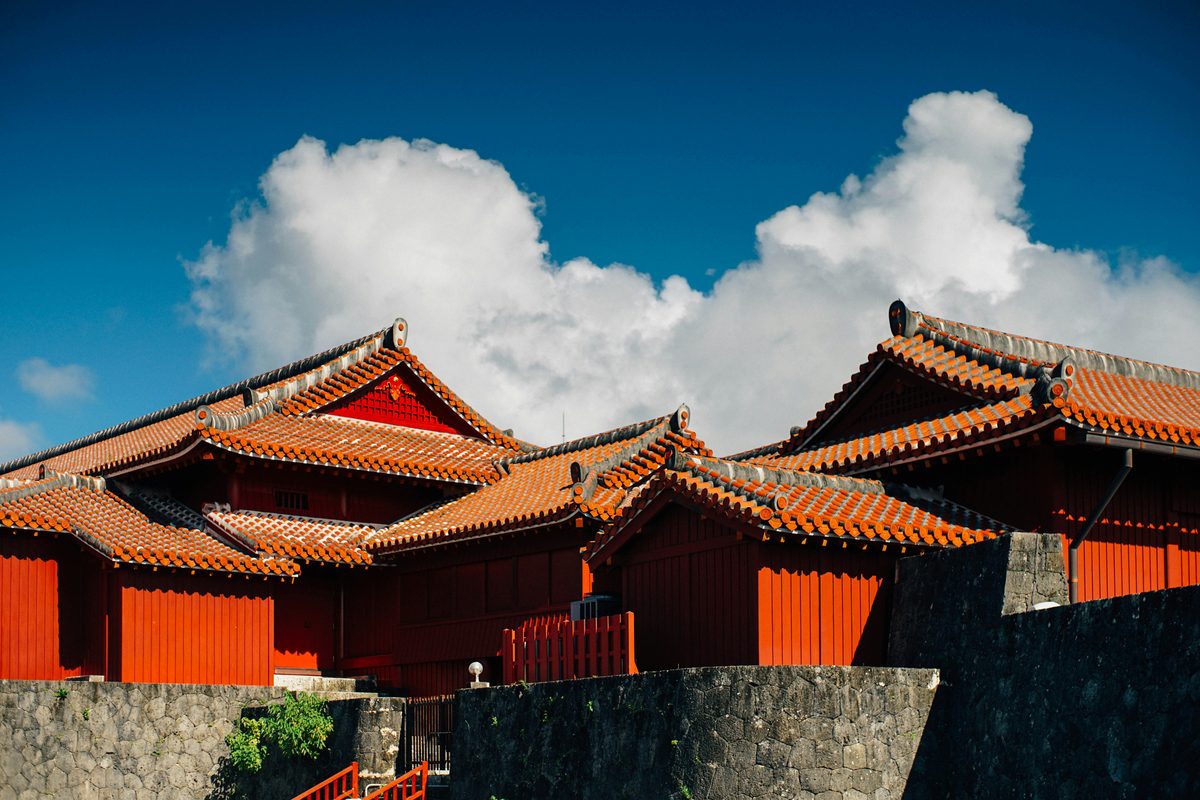
Shinshun no Utage: the Ryukyuan court New Year
For the first three days of January the park runs Shinshun no Utage, a New Year programme staged in the Ryukyuan court idiom rather than the Shinto one. The 2027 edition has not been announced. What follows is the officially documented 2026 edition, useful strictly as a typical-year template:
| Item | 2026 edition (documented) |
|---|---|
| Dates | January 1-3 |
| Chohai Ugishiki court ceremony | Jan 1-2 at 10:00 / 11:00 / 12:00 |
| Appearance of the king and queen | Jan 3 at 10:00 / 11:00 / 12:00 |
| Other performances | Uzagaku court music, Ryukyuan performing arts |
| Bridge of Nations bell striking | Jan 1-3, 16:30-17:30 (free) |
| Paid-area admission | 2026 edition: adults ¥400 / high school ¥300 / elementary and junior high ¥160 ⚠️ For 2027 you pay the revised fares: adults ¥1,000 / high school ¥760 / elementary and junior high ¥370 |
Admission goes up two and a half times before you get there. From entry on November 23, 2026 — the same day the Seiden opens — the paid area costs ¥1,000 for adults (up from ¥400), ¥760 for high school students and ¥370 for elementary and junior high. The park is blunt about what that buys: the official wording is that the paid-area fee is uniform regardless of whether you view the Seiden interior. So over New Year you pay the same whether or not you land a Seiden slot. One way to shave it: show a Yui Rail 1-day or 2-day pass at the ticket window and you are charged the group rate, ¥800, saving 200 yen — though the park specifies the discount applies at the ticket window, and Seiden-slot tickets are bought online in advance, so in practice this mostly helps people buying the no-Seiden ticket on the day. That last inference is ours; the park does not state the two cannot be combined.
The Chohai Ugishiki re-enacts the New Year court audience of the Ryukyu Kingdom, with costumed ranks assembled in the Una courtyard. There is nothing else like it in Japan at New Year, because it is not a mainland Shinto observance at all — it is a kingdom's court ritual. If the 2027 edition follows the pattern, it will be the first Shinshun no Utage since the Seiden reopened, which in my view is the single most bookable reason to be in Okinawa that week. Dates and content still need the official announcement, which typically lands in early December.
💡 One more documented precedent worth knowing: the castle runs a paid first-sunrise viewing at Agari-no-Azana, the highest point of the walls at roughly 140 m. For the 2026 edition it cost 3,000 yen including a souvenir, was capped at 30 people, and sold out as soon as booking opened on December 5, 2025. Whether it runs again is unannounced — but if you want it, watch the official site in early December. A 30-place cap is not something you get to think about.
New Year's Eve: where the fireworks actually are
This section requires more bluntness than the rest, because the most widely circulated claim about Okinawan New Year does not survive checking.
Correcting the record: American Village has no official midnight show
Search for New Year in Okinawa and you will be told to head to American Village in Chatan for countdown fireworks. Checked against the 2025-26 season, that claim has no official support:
- The official 39th Seaport Chatan Carnival fireworks calendar ran to October with a November reserve date — no December 31.
- The follow-on Saturday displays run by the Mihama American Village private operators continued into December, but the published dates contain no December 31 and no midnight slot.
- OKITIVE, the prefectural tourism outlet operated by Okinawa Television, published a five-pick New Year's Eve feature on December 31, 2025, and American Village was not among the five.
What American Village genuinely offers on the night is street illumination, shops open as usual, and Chatan-area hotels running their own programmes — Hilton Okinawa Chatan Resort, for instance, promoted an official festive programme for the 2025-26 season. It is a perfectly pleasant place to spend the evening. It is not an official countdown fireworks venue. If anything changes for 2026-27, it will appear on the official site and social channels in December, so check before you build a night around it.
The real midnight fireworks: inside west-coast resorts
Midnight fireworks in Okinawa are real, but they happen at resort hotels on the west coast, and there is a catch that defines the whole question: they are almost always for hotel guests only. Only one property has confirmed its 2026-27 programme so far: Hotel Nikko Alivila in Yomitan — about three minutes of fireworks from 00:00 on January 1, 2027, fired over the sea to the left of the beach, viewable by hotel guests only, with a poolside countdown concert from 23:20 the night before. The rest are unannounced and usually confirm in October or November. The table below documents the 2025-26 season, compiled from local coverage that matches each hotel's own announcements:
| Hotel | Midnight display, Jan 1, 2026 | Eligibility |
|---|---|---|
| Hotel Nikko Alivila (Yomitan) | about 3 minutes | Hotel guests only |
| Hilton Okinawa Sesoko Resort | about 3 minutes | Hotel guests |
| Hyatt Regency Seragaki Island | about 3 minutes | Guests in designated room types |
| ANA InterContinental Manza | midnight (Manza Countdown) | Fireworks for hotel guests only |
| Okuma Private Beach & Resort | midnight | Hotel guests |
| Grand Mercure Okinawa Cape Zanpa | about 5 minutes | Guests of that hotel plus Alivila |
Translated into a decision: if you want to see fireworks at midnight in Okinawa, the only dependable route is booking a room at a resort that stages one. That is not an upsell, it is the outcome of the checking — there is no public countdown display to attend instead. The Onna and Yomitan stretch of the west coast is where these properties cluster, and New Year is among the earliest weeks of the year to sell out. To get a feel for the price band before committing, Trip.com's Onna coast resort listings are a reasonable starting point; two more lists are Booking.com Onna stays → and Booking.com Yomitan stays → (Alivila is in Yomitan). Most hotels in those lists run no fireworks at all. Before booking, confirm on the hotel's own page whether this season's display is running and whether it is guests-only. Do not book on last year's programme.
Families, and the rest of the options
A few more 2025-26 precedents are worth knowing, again as typical-year patterns only:
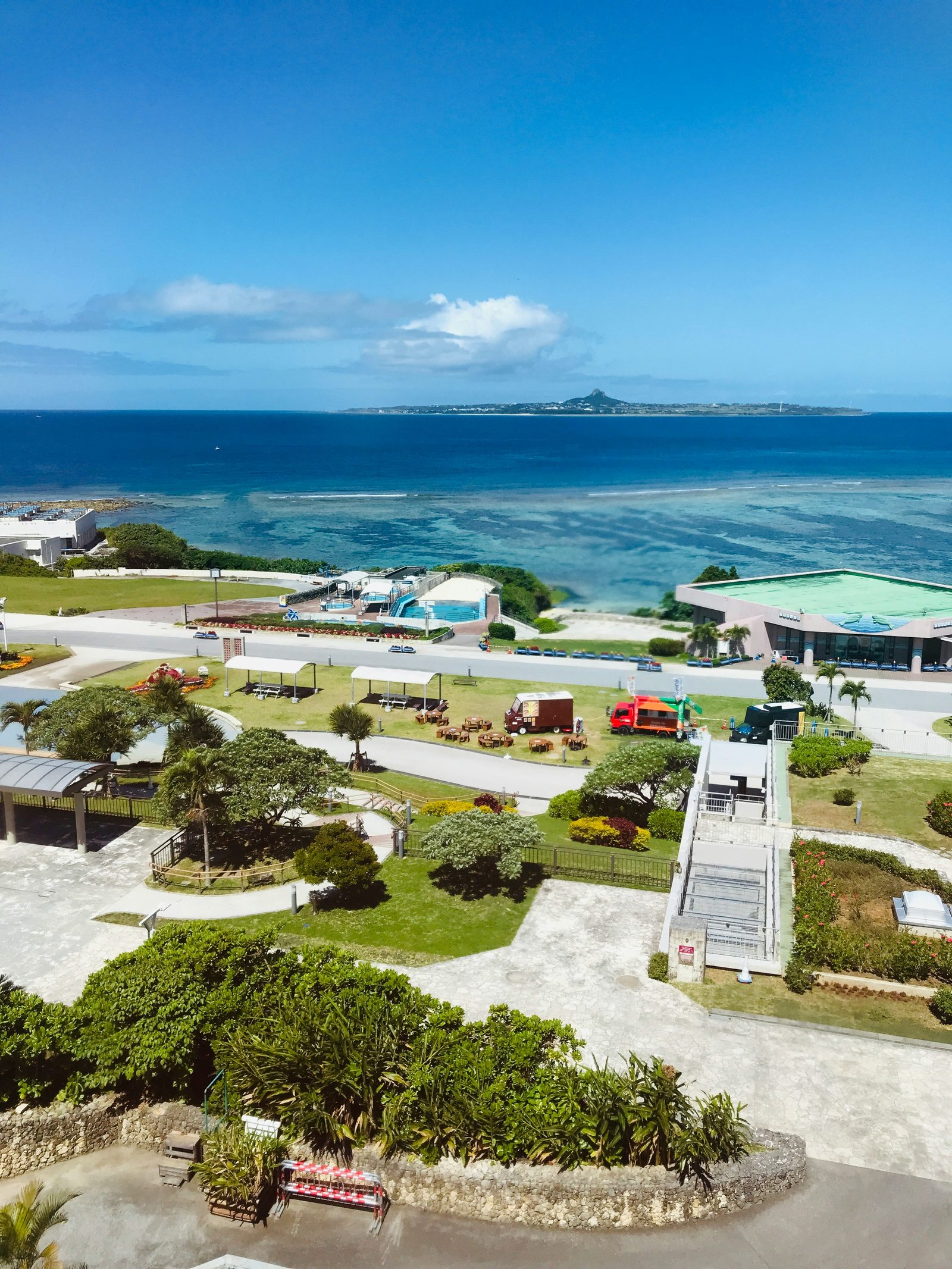
- Okinawa Children's Country countdown (Okinawa City): ran December 31, 2025 from 16:00 to 01:00, advance tickets 3,000 yen and 3,500 yen on the day, children free. This was the clearest example found of a countdown event open to non-residents of any hotel, which makes it the natural pick for families. The 2026-27 dates and prices are unannounced.
- Kanucha Resort in Nago runs its Stardust Fantasia winter illumination across the year-end, and Itoman Peaceful Illumination also spans the period. Details change annually.
- Naha itself: checking found no large official street countdown in the city. Kokusai-dori on the night is individual businesses trading at their own discretion — do not expect a closed-street countdown. Where the crowd in Naha genuinely goes is Naminoue Shrine, and there is police road-closure evidence to prove it (see below).
Hatsuhinode at 7:17 and the order that works
On January 1, 2027, sunrise in Naha is at 7:17 and sunset at 17:49, per the National Astronomical Observatory of Japan's almanac calculation, with the sun rising over the sea to the east-southeast. Being this far south means a later first sunrise than the mainland gets, which is a genuine advantage after a late night.
The main island's default: Chinen Cape Park
The first choice on the main island is Chinen Cape Park in Nanjo City on the southeast coast. It is open 24 hours, free, and has around 70 free parking spaces, on a grassy headland facing the Pacific head-on with proper paths. One warning matters more than the rest: the approach roads clog on New Year's morning, so arrive early. For a 7:17 sunrise, being there around 6:00 is the safe call, and the pre-dawn sea wind is colder than the thermometer suggests.
Sefa-utaki cannot be your sunrise spot: the gate is still shut
Here is the correction this guide most wants to make: watching the first sunrise from inside Sefa-utaki is impossible. Sefa-utaki's official hours from November through February are 9:00 to 17:30, with last tickets at 16:45 and last entry at 17:00. At 7:17 the gate is closed. You cannot watch hatsuhinode from inside the site, full stop.
The sequence that does work, helped by the fact that both sit in the same corner of the island:
- Around 6:00 — arrive at Chinen Cape Park and claim a spot (about 70 free spaces; expect congestion)
- 7:17 — first sunrise
- 7:30-9:00 — breakfast somewhere in Nanjo, warm up, absorb any delay
- 9:00 — Sefa-utaki opens; admission ¥600 for adults and ¥300 for elementary and junior high students (the rate effective from October 1, 2026, which is what New Year visitors pay)
The price change deserves a flag, because a great many pages still quote the old figure. Per Nanjo City's official announcement, from October 1, 2026 adult admission rises from 300 to 600 yen, elementary and junior high from 150 to 300 yen, and the group rate from 200 to 500 yen. Budget on the new number. The better news is that there are no closure days over the New Year period: Sefa-utaki's rest days follow the lunar calendar, falling on November 9-11 for the remainder of 2026 and next on June 5-7 in 2027, so the site is open across the holiday.
Alternatives, and one thing to unlearn
- Cape Zanpa (Yomitan): on the west coast, but the headland projects north and the eastern view opens enough that tourism media list it as a west-coast sunrise option. A sensible fallback if you are staying in the central resort belt, not a first choice.
- Senagajima: worth being explicit here — Senagajima is a sunset and plane-watching location, with Umikaji Terrace facing west, and it does not appear on the main hatsuhinode lists. Go there late on December 31 to close out the year, but do not schedule it for sunrise on January 1.
- Shuri Castle's Agari-no-Azana: paid, tiny capacity, sold out instantly in the 2026 edition — see above.
The practical problem on New Year's morning is not scenery but information: it is dark, navigation has to be live, and parking conditions at each viewpoint change by the minute. Having mobile data working the moment you land removes most of that friction — a KKday Japan eSIM is the common choice, and the five-brand comparison is in our Japan eSIM guide. Between the road closures in Naha at midnight and the traffic heading south before dawn, live navigation is worth more on these two nights than on any other.
Hatsumode: Naminoue, Gokoku, Futenma
Okinawan religious life does not map neatly onto mainland shrine culture — the indigenous core is utaki sacred groves and ancestor veneration — but the New Year crowds at these Naha shrines are real and concentrated. Three options, three different reasons to pick them: atmosphere, convenience, or singularity.
Naminoue Shrine: the scale and the crowd
Naminoue Shrine stands on a cliff above the only beach in central Naha and is the foremost of the eight Ryukyuan shrines. Its official history page records that when the system of eight official shrines was established, Naminoue was placed first, and describes it as the leading shrine of the realm; the deities are Izanami, Hayatama-no-o and Kotosaka-no-o, in the Kumano Gongen tradition. One widely repeated title should be set aside: Ryukyu Ichinomiya does not appear on the shrine's official pages, so this guide does not use it.
On crowd scale, there is one very solid indicator. Per Okinawa Times reporting of December 30, 2025, that season saw sections of Prefectural Route 47 (Naminoue-dori) and surrounding city roads closed to vehicles from 23:00 on December 31 until 03:00 on January 1, with intermittent restrictions continuing to January 4. Four days of traffic management tells you what midnight looks like. (Specific attendance figures circulating online trace back to travel platforms rather than any official count, so they are not repeated here.)
That closure notice generates the practical advice directly:
- Do not drive. The shrine has no car park of its own over the New Year period and points visitors to nearby paid lots — and the roads are shut anyway.
- Take the monorail to Asahibashi or Kencho-mae and walk. That is the reliable approach.
- On whether the monorail adds late-night services for New Year's Eve — this has to be flagged honestly: there is no current official special-timetable notice, and past-year operation could not be verified from official or news sources, so this guide quotes no extra services and no last-train times. Such notices are typically issued in December; check yui-rail.co.jp before you travel.
For desk hours, the 2025-26 season was published officially as 9:00 to 17:00 on December 31 and 7:00 to 22:00 from January 1 to 3. Treat that as the standing pattern and confirm the current season on the shrine's official site in December. Anyone who would rather skip the crush should go during the day on January 1, or on the 2nd or 3rd — hatsumode carries no requirement to be there at midnight.
Okinawa Gokoku Shrine: the easy one to reach
Individual visitors need no booking, and it is a step from the monorail. The shrine states it in plain terms — reservations are not required for individuals; only companies and groups need to arrange a prayer in advance. Okinawa Prefectural Gokoku Shrine sits in Onoyama Park, right beside Onoyama-Koen monorail station — comfortably the most accessible of the three, which matters if you are travelling with older relatives or a pushchair. Regular hours are amulet distribution 9:00 to 17:00 and prayer reception 9:30 to 11:45 and 13:00 to 16:00.
The lanterns are confirmed for this season. The shrine opened applications in September for its 2027 New Year lantern dedication: lanterns are displayed from New Year's Eve to January 15, 2027, at 10,000 yen each, with applications closing on October 31 and accepted only in person or by fax. That matters only if you want to dedicate one — if you are just going to see them and pray, there is nothing to arrange. Special New Year opening hours for 2027 have not been published; check the official site.
Futenma Shrine: the cave inside the precinct
Futenma Shrine in Ginowan is another of the eight Ryukyuan shrines, and its distinguishing feature is the Futenmagu cave beside the main hall — a limestone cave roughly 280 m long of which about 50 m is open, designated a Ginowan City place of scenic beauty on August 1, 1991. Cave viewing is free and by reception on site. Walking into a limestone cave inside a shrine precinct is rare in Japan, and very Okinawan geologically.
A gap in the verification has to be marked here: I could not retrieve the shrine's official website due to a certificate configuration problem, so no New Year worship or reception times are quoted in this guide. The shrine does publish a notice indicating special reception hours around the New Year, but the content was not obtainable. Call or check on site rather than trusting a second-hand time.
What opens and what shuts
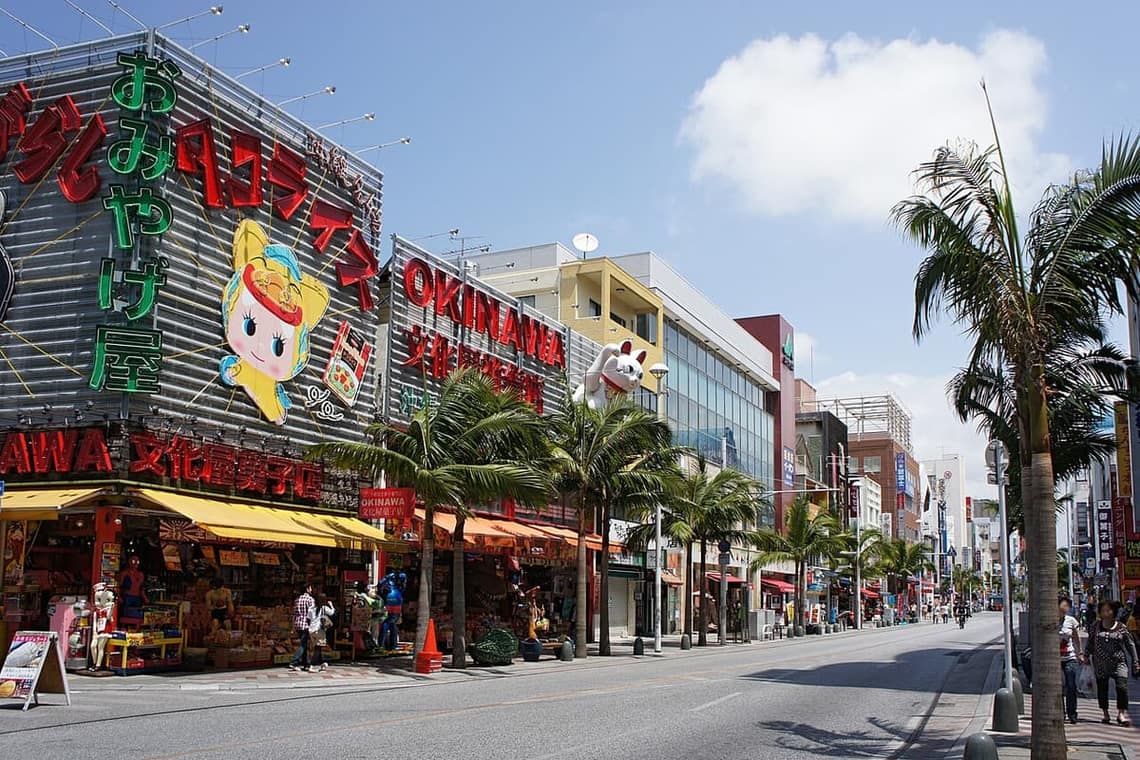
This is the most useful table in the guide. Okinawa does not shut down over New Year the way parts of mainland Japan do, but a few closures will cost you a day if you walk into them.
| Facility or service | Year-end and New Year status | Source status |
|---|---|---|
| Churaumi Aquarium | Open throughout, 8:30-18:30 (last entry 17:30, planned); no closure days scheduled before Mar 31, 2027 barring typhoons. Adults ¥2,180. But the dolphin show at Okichan Theater is suspended January 4 to 9, 2027 for repair work; it runs normally Jan 1-3 (usual times 10:30 / 11:30 / 13:00 / 15:00 / 17:00, free) | ✅ Official |
| Daiichi Makishi Public Market | Closed Jan 1-3 (plus lunar New Year days 1-2, the fourth Sunday monthly except December, and two days after Obon). Hours 8:00-22:00, varying by stall | ✅ Official facility info |
| Sefa-utaki | 9:00-17:30 Nov-Feb; no closure days over New Year | ✅ Official |
| Kokusai-dori | Most shops trade on Jan 1, but hours are set individually with no blanket announcement — do not assume all open | ⚠️ No official aggregate |
| Route buses | Typically a holiday timetable Dec 31 - Jan 3 (Naha Bus, Ryukyu Bus Kotsu, Okinawa Bus, Toyo Bus), fewer services than weekdays; Okinawa City circular bus suspended Jan 1-3 | ⚠️ Typical-year pattern; confirm in late December |
| Yui Rail monorail | No late-night or last-train times quoted here — no current official special timetable and past operation unverifiable. Notices typically appear in December | 🚨 Could not verify |
| Car rental | Major desks near Naha Airport broadly operate year-round (ABC Rent-a-Car's Naha Airport branch states no annual closure, 8:00-20:00), but vehicles are tight over New Year and filling stations may close before your return | ⚠️ Individual New Year hours not verified |
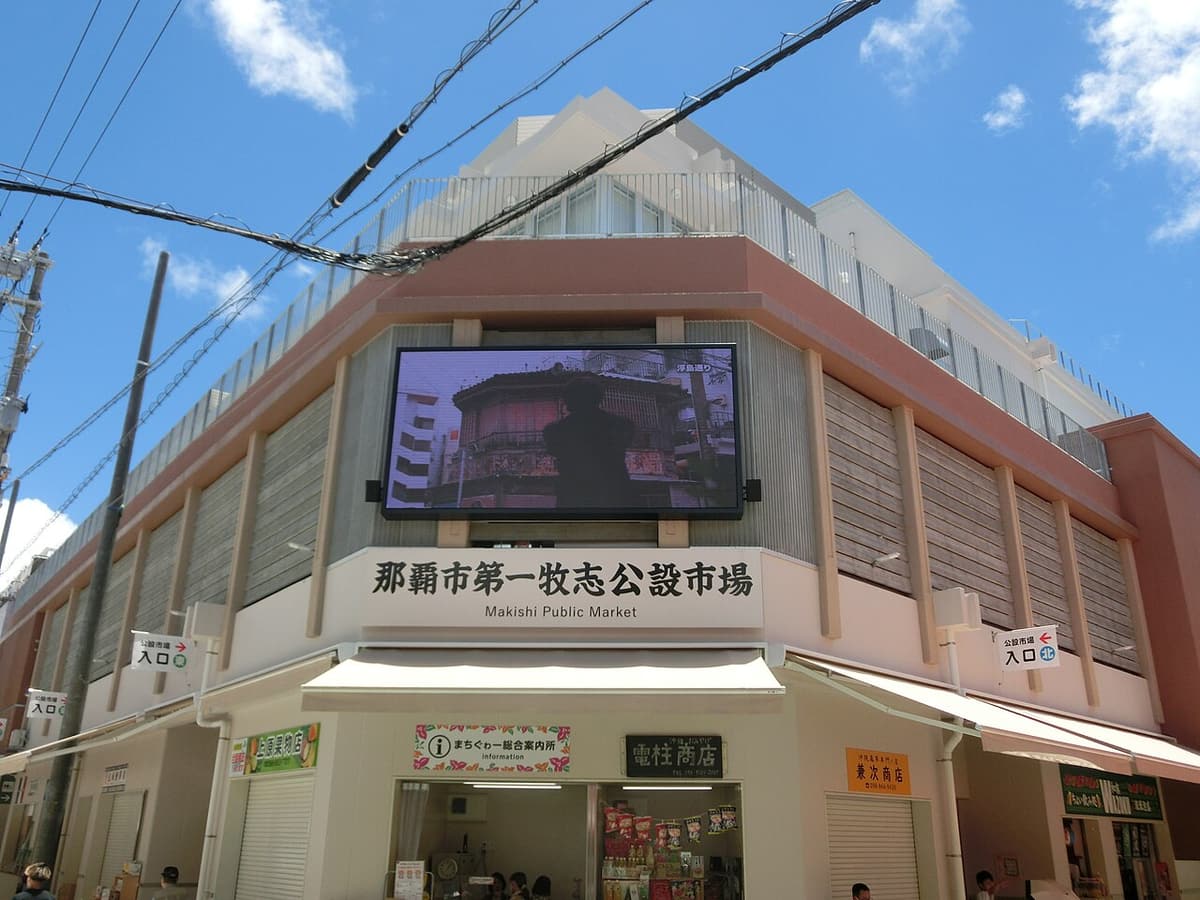
Three things to take from that table. First, put Makishi Market on January 4 or later. It is a standing rule, not a notice you might have missed, and arriving on January 1 for a seafood lunch means a wasted trip. Second, Churaumi is the dependable large attraction of the week — the aquarium writes the year-end and New Year opening straight into its hours page, which is not universal among major Japanese facilities. How to build the northern route around it, including Kouri Island and Cape Manza, is covered in our Churaumi and northern Okinawa guide. Third, book a car early. New Year is among the tightest weeks of the year for rentals, and both pick-up hours and fuel-station opening need checking; driving specifics and insurance are in the Okinawa car rental guide.
Toshikoshi Okinawa soba and the first sales
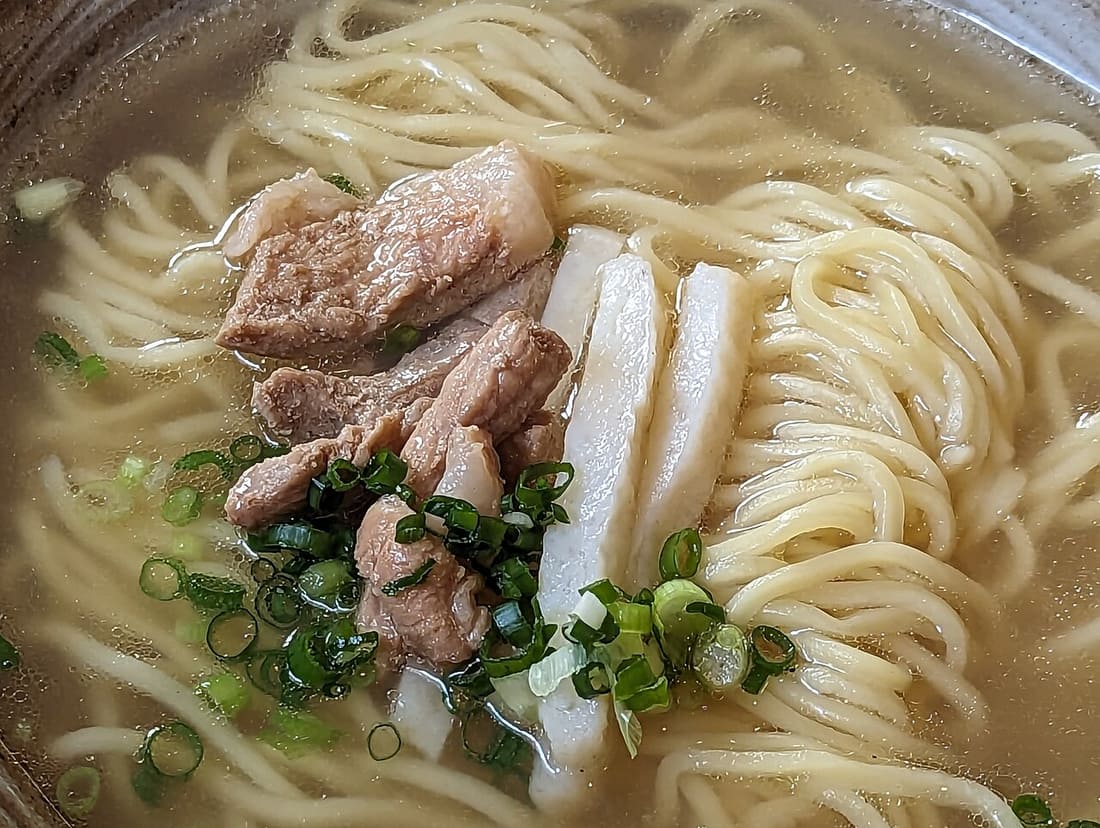
Mainland Japan eats buckwheat soba on New Year's Eve. Okinawa eats Okinawa soba, which is a wheat noodle and not buckwheat at all. This is not internet folklore: the prefecture's official tourism site, Okinawa Story, runs a dedicated feature recommending Okinawa soba for seeing out the year, and December 31 is the busiest day of the year for soba shops.
Two caveats. Individual shops vary enormously in their December 31 hours and most close on January 1, with no official aggregate listing, so no shop names or times are given here — check the shop's own social channels on the day. And on the question of which year the toshikoshi Okinawa soba custom began, a specific year circulates online but traces only to blog research with no reliable primary source, so no origin year is stated in this guide.
On the hatsuuri first sales and fukubukuro lucky bags, only a framework is available: Japanese department stores conventionally close on January 1 and open the first sales with lucky bags from January 2, and in Naha the representative venue is Department Ryubo on Kokusai-dori, the prefecture's only department store. The 2026-27 dates and bag contents are unpublished, so no specific dates or prices appear here; check in December. For how to combine shopping and souvenirs with the rest of the city, see the Naha travel guide.
Weather that week, and what to pack
Japan Meteorological Agency normals for Naha (1991-2020) settle this quickly:
| Month | Daily mean | Daily high | Daily low | Precipitation |
|---|---|---|---|---|
| December | 19.0°C | 21.5°C | 16.8°C | 110.0 mm |
| January | 17.3°C | 19.8°C | 14.9°C | 101.6 mm |
New Year week sits between the two: around 20°C in the daytime, and commonly nearer 15°C at dawn — which is precisely when you will be standing on a headland waiting for the sun. Add the winter northeasterly and it feels considerably colder than the numbers. The packing conclusion is simple: short sleeves plus a light layer will do for daytime, but bring a windproof jacket for the sunrise morning. An hour on an exposed coast at dawn is a different proposition from walking around Naha at noon.
Can you swim? Honestly, no — this is not the swimming season. Winter sea temperatures, whale-watching season and the early cherry blossom are all handled properly in a dedicated guide rather than half-covered here: see the Okinawa winter escape guide.
Soggwachi: Okinawa's second New Year
If your dates are flexible, this section may change which week you pick: Okinawa effectively has two New Years.
The layers matter, and the shorthand that Okinawans celebrate Lunar New Year is wrong as a blanket claim. The reality is that most households now follow the solar calendar — hatsumode, the first sales, New Year food all cluster around January 1 — while the lunar New Year, Soggwachi in Okinawan, persists strongly in particular communities and industries.
The hardest evidence is in central Naha: Daiichi Makishi Public Market's official closure list includes, alongside January 1-3, the Lunar New Year on the first and second days of the lunar calendar. A municipal market still closing on the lunar calendar in 2026 carries more weight than any amount of cultural description.
Geographically the tradition runs deepest in the fishing town of Itoman, where local reporting describes harbours filled with tairyo-bata, the great fishing banners raised for good catches and safe voyages — one of the most recognisable images of the Okinawan New Year. Islands such as Hamahiga and Kudaka also retain it. The connection to fishing is not incidental: communities working to the tides and the moon kept the lunar calendar because their working year runs on it.
The 2027 Okinawan lunar New Year falls on February 7 (Sun). Chinese New Year is February 6, but Japan's lunar calendar is reckoned in Japan time, where that new moon lands just after midnight on the 7th — so count Okinawan New Year events, and the Makishi Market lunar closure, from February 7. If you have leave in early February, that is a completely different Okinawan New Year, with a fraction of the January 1 visitor density. For extending into the outer islands, see the Miyakojima guide or the Ishigaki island-hopping guide — though island New Year specifics vary year to year, so treat that as a direction rather than a plan.
The advance-planner's checklist
Here is the split between what to act on now and what only becomes knowable in December.
Lock in now
- A resort room, if fireworks at midnight matter. Refer back to the table: the displays are guests-only, and the Onna and Yomitan properties that run them fill early for this week. This is the one item on the list that genuinely disappears rather than merely getting expensive.
- Flights. New Year overlaps with the school winter holidays in both Taiwan and Japan, stacking two peak demand periods on top of each other. Taipei to Naha is roughly 1.5 hours, the shortest of the Japan routes, but a short hop is not a cheap one over New Year. No specific fares appear here — those move daily and writing them down only misleads — but the direction is clear: fix your cabin and timing early. Searching Taipei to Naha fares on Trip.com is the quickest way to establish the current band before deciding.
- A rental car. Supply is tight this week across every operator. For the southern sunrise route or the northern aquarium run, a car is a requirement rather than an upgrade.
- City accommodation. If hatsumode and the city are your focus, staying on the monorail line — Asahibashi, Kencho-mae, Makishi — beats the suburbs by a wide margin, puts Naminoue Shrine within walking distance at midnight, and keeps Shuri Castle and the airport on the same side of the island. Two channels for Naha city listings: Booking.com Naha stays → and Agoda Naha stays →. Both open on today's date, so set them to your December 31 nights first.
Only knowable in December — set a reminder
| Item | Expected announcement | Where to check |
|---|---|---|
| Shuri Castle Seiden: January 2027 tickets on sale | Nov 1, 2026 at 13:00 (the 1st of the month two months before entry) | Park's official ticket page (Webket) |
| Shinshun no Utage 2027 schedule | Typically early December | Park events page |
| Agari-no-Azana sunrise viewing | Typically opens early December; tiny quota | Same |
| Resort hotel fireworks programmes | Typically October-November (Alivila already confirmed for 00:00 on Jan 1, 2027; the rest unannounced) | Individual hotel sites |
| Gokoku Shrine 2027 New Year lantern dedication | Applications already open, closing Oct 31 (nothing to do if you are only visiting) | Okinawa Gokoku Shrine site |
| Naminoue desk hours and road closures | December | Shrine site / local news |
| Bus New Year timetables | Late December | Bus operator sites |
| Monorail New Year operation | December, if any | yui-rail.co.jp |
| Ryubo first sales and lucky bags | December | Department store site |
How I would sequence four days
- Dec 30 — land in Naha, ease in around the city (Kokusai-dori, Tsuboya pottery street), sleep on the monorail line.
- Dec 31 — Shuri Castle by day if you secured a Seiden reservation, Senagajima for sunset, Okinawa soba for dinner, then Naminoue at midnight on foot or by monorail, never by car. Anyone prioritising midnight fireworks swaps this night for an Onna or Yomitan resort.
- Jan 1 — leave by 06:00 for Chinen Cape and the 7:17 sunrise, breakfast, Sefa-utaki at 9:00, back to Naha for the afternoon (remember the market is shut).
- Jan 2-3 — Churaumi in the north, reliably open, plus Kouri Island; or stay in the city for Shinshun no Utage if the 2027 edition runs. Makishi Market goes on January 4 or later.
A closing verdict, stated plainly. Okinawa is not a big-countdown destination — there is no Tokyo-scale party and no official street fireworks. Its case rests somewhere else entirely: you can stand in a clifftop shrine at midnight, and seven hours later watch the year's first sun come out of the Pacific, in 15 to 20°C, without a single winter layer beyond a windbreaker. Add the fact that this particular season delivers the first New Year since the Seiden returned, and it earns a dedicated trip more comfortably than most people assume.
For a completely opposite version of the same holiday elsewhere in Japan: Kyoto offers no sunrise worth chasing and stops its municipal transport at midnight, but it does give you the okera mairi sacred fire and seventeen monks ringing a bell across midnight — see the Kyoto New Year and hatsumode guide.
Frequently Asked Questions
- Q1:Are there New Year fireworks in Okinawa, and does American Village really hold a countdown show?
- This is the single most repeated error in travel coverage of Okinawan New Year, so deal with it first. For the 2025-26 season there is no official announcement anywhere of a midnight countdown fireworks display at American Village in Chatan. The official Seaport Chatan Carnival fireworks calendar ran only through October with a November reserve date; the follow-on Saturday displays organised by the Mihama American Village private operators continued into December, but the published dates do not include December 31 or any midnight slot. OKITIVE, the prefectural tourism outlet run by Okinawa Television, published a five-pick New Years Eve event feature on December 31, 2025 and American Village was not on it. What actually happens there on the night is street illumination, shops trading as normal, and hotels in the Chatan area running their own parties. The genuine midnight fireworks in Okinawa are at west-coast resorts in Onna and Yomitan: Nikko Alivila, Hilton Sesoko, Hyatt Regency Seragaki, ANA InterContinental Manza, Okuma and Grand Mercure Zanpa Misaki all ran short shows at midnight for the 2025-26 season, and almost all were restricted to hotel guests. If seeing fireworks at midnight matters to you, the answer is to book a room at a resort that runs one. Hotel Nikko Alivila has already confirmed its 2026-27 display, about three minutes from 00:00 on January 1, 2027 and for hotel guests only; the others typically confirm in October or November.
- Q2:What time is the first sunrise on January 1, 2027, and where should you watch it?
- The National Astronomical Observatory of Japan calculates sunrise in Naha on January 1, 2027 at 7:17, with sunset at 17:49, and the sun coming up over the sea to the east-southeast. Okinawa sits far enough south that hatsuhinode is noticeably later than in Tokyo, which is good news if you were out at midnight. On location, one pairing wastes a morning: Sefa-utaki, the World Heritage sacred site, opens at 9:00 from November through February, closing at 17:30 with last tickets at 16:45. At 7:17 the gate is shut, so you will not see sunrise from inside the site. The working plan is Chinen Cape Park in Nanjo City for the sunrise itself, which is open around the clock, free, faces the Pacific directly and has roughly 70 free parking spaces, then breakfast nearby, then Sefa-utaki when it opens at 9:00. The two are close enough to pair naturally. Cape Zanpa in Yomitan is a reasonable fallback if you are staying on the west coast, since the headland juts north and the eastern view opens up, but it is a backup rather than a first choice. One more correction: Senagajima near the airport faces west and is a sunset and plane-spotting location, not a sunrise one.
- Q3:What is open in Okinawa on January 1, and what should you avoid planning?
- The trap that ruins the most itineraries is Daiichi Makishi Public Market in Naha. The market publishes its closure rules in its official facility information: the fourth Sunday of each month except December, New Year from January 1 to 3, Lunar New Year on the first and second days of the lunar calendar, and the two days after Obon. That January 1 to 3 closure is a permanent rule, not a one-off notice, so walking there on New Years Day means shutters. Normal hours are 8:00 to 22:00 with individual stalls varying. The most reliable large attraction in the same window is Churaumi Aquarium in the north, which states on its official hours page that it opens through the year-end and New Year period, with hours planned at 8:30 to 18:30 and last entry 17:30, and confirms no closure days scheduled before March 31, 2027 barring typhoons. One caveat there: the dolphin show at Okichan Theater is suspended from January 4 to 9, 2027 for repair work, though it runs normally on January 1 to 3. Shops along Kokusai-dori mostly trade on January 1, but hours are set store by store with no blanket announcement, so do not assume everything is open. Route buses in past seasons have run a holiday timetable from December 31 to January 3 across Naha Bus, Ryukyu Bus Kotsu, Okinawa Bus and Toyo Bus, meaning fewer services than a weekday, while the Okinawa City circular bus suspends service January 1 to 3. The 2026-27 versions are published in late December.
- Q4:Can you visit Shuri Castle over New Year now that the main hall has been rebuilt?
- The main hall is the big change this season. The Okinawa General Bureau announced in June 2026, and Shuri Castle Park confirmed officially, that the Seiden main hall destroyed in the 2019 fire opens to the public from November 23, 2026, with a government-hosted completion ceremony on November 22. That makes the 2026-27 New Year the first New Year since the hall returned, seven years after the fire. There is one important restriction to plan around: entering the Seiden requires an advance reservation. The mechanics are now published in full. Seiden viewing runs on 30-minute timed slots booked in advance; tickets for entry from January 2027 go on sale at 13:00 on the first of the month two months earlier, so New Year Day opens at 13:00 on November 1, 2026, first come first served, up to 9 per transaction. Free entrants and annual passport holders must reserve too; preschool children need not. Separately, the park runs a Shinshun no Utage New Year programme over the first three days of January. For the 2026 edition that meant January 1 to 3, with the Chohai Ugishiki court ceremony, the appearance of the king and queen, Uzagaku court music and Ryukyuan performing arts, plus a free bell-striking experience at the Bridge of Nations bell. Paid-area admission for the 2026 edition was 400 yen for adults, 300 for high school students and 160 for elementary and junior high students, but from entry on November 23, 2026 the fares are 1,000, 760 and 370 yen respectively, so the 2027 New Year falls under the new prices. The park states the fee is the same whether or not you view the Seiden interior. The 2027 edition of the programme has not been announced.
- Q5:Does Okinawa celebrate the solar New Year or the Lunar New Year?
- Both, but the layers matter and the common shorthand that Okinawa celebrates Lunar New Year is wrong as a blanket statement. Most households today follow the solar calendar, with hatsumode shrine visits, the first sales and New Year food all clustered around January 1. At the same time the lunar New Year, called Soggwachi in Okinawan, survives strongly in particular communities and industries. The hardest evidence sits in central Naha: the official closure list for Daiichi Makishi Public Market includes not only January 1 to 3 but explicitly the Lunar New Year on the first and second days of the lunar calendar. A municipal facility still closing on the lunar calendar today says more than any cultural essay. Geographically the tradition runs deepest in the fishing town of Itoman, where local reporting describes harbours filled with tairyo-bata, the large fishing banners raised to pray for good catches and safe voyages, and it persists on islands such as Hamahiga and Kudaka. The link to fishing is not a coincidence, since fishing communities have long worked to the lunar cycle. In 2027 the Okinawan lunar New Year falls on February 7 (one day after Chinese New Year on February 6, because Japan counts the new moon in Japan time), so a trip in early February gives you a completely different Okinawan New Year, with far fewer visitors than January 1.
- Q6:How crowded is hatsumode at Naminoue Shrine, and how should you get there?
- Naminoue Shrine sits on a cliff above the only beach in central Naha and is the foremost of the eight Ryukyuan shrines. Its official history page states that when the system of eight official shrines was established, Naminoue was placed first, and describes it as the leading shrine of the realm. The enshrined deities are Izanami, Hayatama-no-o and Kotosaka-no-o, in the Kumano Gongen tradition. One clarification: the title Ryukyu Ichinomiya circulates widely online but does not appear on the shrine official pages, so this guide does not use it. As for crowds, the strongest evidence is a road closure. According to Okinawa Times reporting dated December 30, 2025, for that season sections of Prefectural Route 47, the Naminoue-dori, and surrounding city roads were closed to vehicles from 23:00 on December 31 until 03:00 on January 1, with intermittent restrictions continuing to January 4. Authorities do not close roads for four days over a modest turnout. Specific visitor-number figures circulating online come from travel platforms rather than any official source, so they are not quoted here. Practically: do not drive. The shrine has no car park of its own over New Year and directs visitors to nearby paid lots, and the surrounding roads are closed anyway. Take the monorail to Asahibashi or Kencho-mae and walk. For the 2025-26 season the shrine published its New Year desk hours as 9:00 to 17:00 on December 31 and 7:00 to 22:00 from January 1 to 3; treat that as the typical pattern and confirm the 2026-27 version on the official site in December. Going during the day on January 1, or on January 2 or 3, is far more comfortable than the midnight peak.
Read next
Naha Travel Guide 2027: Shuri Castle, Kokusai-dori & Okinawan Food
Okinawa's gateway and old Ryukyu capital — the rebuilt Shuri Castle, Kokusai-dori and Makishi Market, plus Okinawa soba and taco rice.
Okinawa in Winter: Whale Watching, 17°C, Fewer Crowds
While the mainland freezes, Naha averages ~17°C in January. Whale season, yanbaru hikes, early cherry blossoms and the off-season trade-offs, weighed.
Churaumi & Northern Okinawa 2027: Kuroshio Sea, Kouri Island & Cape Manza
The main island's resort heart — the Churaumi Aquarium's whale sharks, the bridge-linked Kouri Island, Cape Manza and the Onna beaches.
📊 See the 2026 Price Index (JR Pass, DPA, eSIM, Airport Transport) →