In peak foliage week, the slopes below Kiyomizu-dera and the Tsutenkyo bridge at Tofuku-ji can be so packed you barely move. But plenty of travelers forget that Osaka, an hour south, and Nara, forty minutes east, hold a set of underrated foliage spots. Minoo Falls is a free 40-to-50-minute walk from a Hankyu station, waterfall framed by maples the whole way; Katsuo-ji charges ¥500 admission for a mountainside of maples and thousands of wish-granting daruma dolls; and in Nara Park, deer wander through fallen leaves with no ticket at all. This is not a case for skipping Kyoto — it is your Kansai foliage plan B for when Kyoto is elbow-to-elbow: a timing table for five spots, how to route a Minoo day, whether central-Osaka ginkgo or the mountain maples wins when time is short, whether half a day is enough for Nara, and whether Tanzan Jinja earns a special trip. Every peak window here is historical convention — no invented 2026 forecast.
📍 For the full 5-region Japan koyo timing map, see Japan Autumn Foliage 2026. To compare the bigger-name but more crowded Kansai option, see the Kyoto autumn foliage guide — this article is the Osaka-and-Nara alternative for when Kyoto is packed.
- Osaka and Nara are the Kansai foliage plan B for when Kyoto is packed — same Kansai maples, one notch less crowd and hassle
- The peaks are staggered: Nara Park earliest (from about late Oct) → Osaka fringe Minoo/Katsuo-ji mid-Nov to early Dec → central-Osaka Midosuji ginkgo latest (after late Nov)
- Do Katsuo-ji first, Minoo Falls second on a Minoo day: catch the bus up while it is easy, then walk the free trail in the afternoon
- Lots of free spots: Minoo Falls, Nara Park, and the Midosuji ginkgo cost nothing — do not force paid stops in
- The Amazing Pass is situational: worth it if you stay central and chain the Main Tower + Tsutenkaku; not if your day runs to Minoo on the Hankyu line
📖 Table of Contents (click to expand)
- Why Osaka and Nara: the Kansai plan B when Kyoto is packed
- Five-spot timing table: peaks, tickets, and access difficulty
- A Minoo day: how to route Katsuo-ji and Minoo Falls
- Central Osaka: Midosuji ginkgo, the castle, and the pass call
- Is half a day enough for Nara: deer and maples in Nara Park
- Is Tanzan Jinja worth a special trip: the access, spelled out
- Timing caveats: all historical convention
- FAQ
Why Osaka and Nara: the Kansai plan B when Kyoto is packed
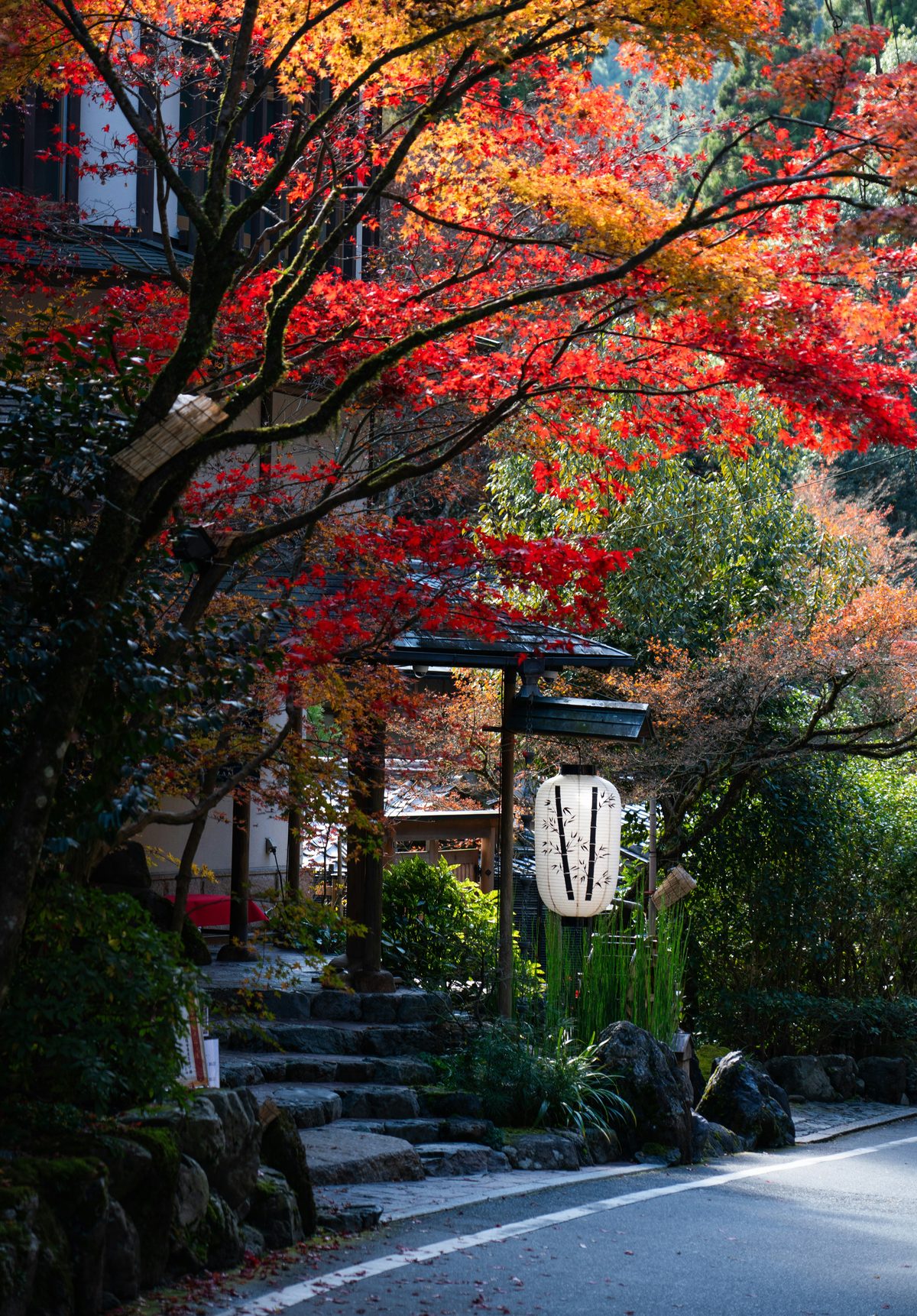
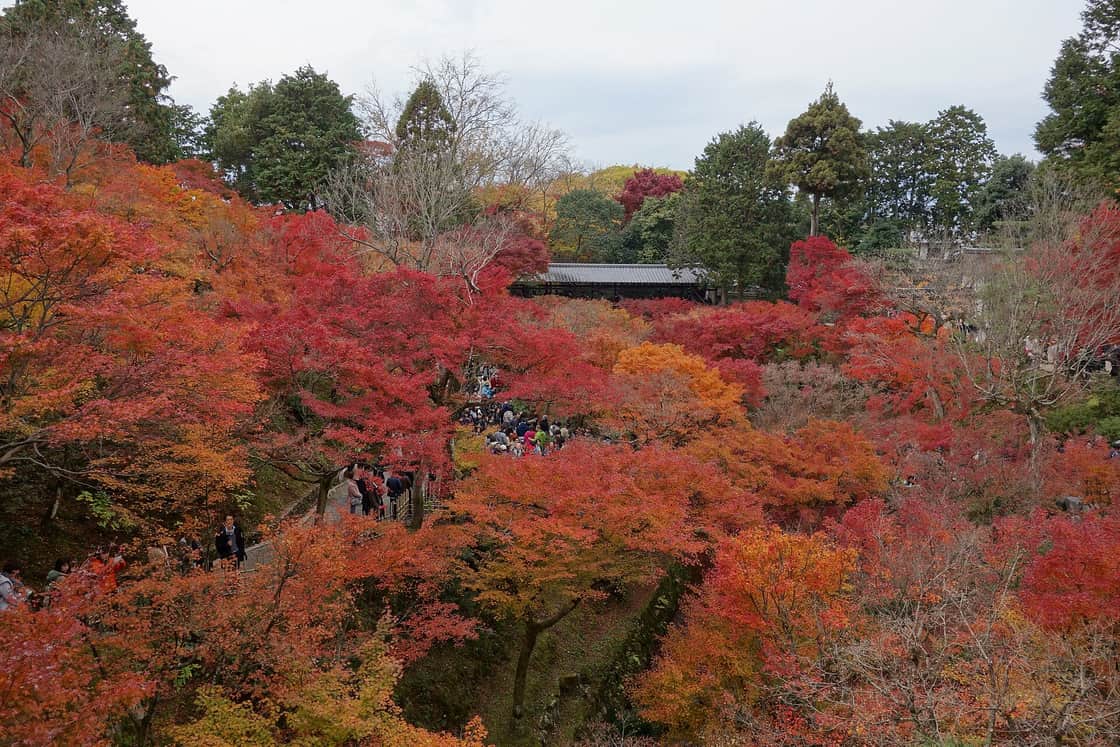
Let me be clear on where I stand: Kyoto foliage is the best in Kansai, no argument — but Kyoto in peak week, especially on weekends, is now crowded enough to dent the experience. At headline spots like the Kiyomizu-dera slopes or the Tofuku-ji Tsutenkyo bridge, you queue, you shuffle in a crowd, and a photo without strangers in it is close to a fantasy. That is exactly when Osaka and Nara become a practical release valve — their foliage spots are less famous, but each has a signature scene, and the crowds are visibly lighter.
The Osaka-Nara foliage spots split into three personalities; get the framework first, then read the table below:
- Osaka fringe mountains (Mount Minoo, Katsuo-ji): the genuine going-into-the-mountains, mountainside-of-maples feeling — the fullest scenery, but half a day or more of transport, and the latest peak (mid-November to early December).
- Central Osaka (Midosuji ginkgo, Osaka Castle Park): an urban autumn scene, straight out of a subway station, mostly free, the most mobile option, and the latest peak of all (after late November).
- Nara (Nara Park, the Todai-ji area): the unique combination of maples with deer and old temples; slightly higher latitude, so it peaks earliest (from about late October) and fits into a half day.
These three personalities carry one very practical planning point: their peaks are staggered. Nara earliest, the Osaka mountains in the middle, the city ginkgo latest. So on a multi-day Kansai trip you can follow the peak sequence — Nara in the early part, the Osaka fringe and city in the later part — essentially chasing the color forward through your trip rather than forcing everything into one day. To line this up against how you would route Kyoto, read the Kyoto autumn foliage guide first and come back; together the two let you decide which days go to Kyoto and which divert to Osaka and Nara.
Five-spot timing table: peaks, tickets, and access difficulty
For the peak windows below: where an official source marks them (Katsuo-ji, Mount Minoo) I quote the official historical convention; where none exists (Nara Park, Midosuji, Tanzan Jinja) I use foliage-tracker averages that multiple sites agree on — none of this is an official word-for-word figure or a precise 2026 forecast. The ticket column pulls live from the site's central product source, so any price hike syncs everywhere automatically:
| Spot / area | Location | Average peak window | Ticket | Access difficulty | Time to allow |
|---|---|---|---|---|---|
| Katsuo-ji | North Osaka mountains (Minoo) | Mid-Nov–early Dec | ¥500 | Medium (infrequent Hankyu bus) | 1.5–2 hrs |
| Minoo Falls · Minoo Park | North Osaka fringe | Mid-Nov–early Dec | Free | Low (Hankyu + paved trail) | Half day |
| Osaka Castle Park · Main Tower | Central Osaka | Late Nov–early Dec | Park free / tower ¥1,200 | Low | 1–2 hrs |
| Midosuji ginkgo avenue Same trees carry the Midosuji Illumination (3 Nov–31 Dec) | Central Osaka | Late Nov–mid Dec | Free (public road) | Low | 30–60 min |
| Nara Park · Todai-ji | Nara city | Late Oct–late Nov | Park free / Great Buddha Hall ¥800 | Low | Half day |
| Tanzan Jinja | Sakurai mountains, Nara | Mid-Nov–early Dec | ¥700 | High (bus ~once an hour) | Half day incl. transit |
How to read it: pin the picture you most want first. For a mountainside of maples plus a waterfall, head to Minoo — the transport is easy but budget a half day. For the unique deer-and-maples scene, choose Nara Park, a half day and almost free. If your schedule is jammed and you can only spare an hour, the Midosuji ginkgo is straight out of a subway station and the most mobile. Only if you are a foliage enthusiast after one special pagoda-and-maples shot is Tanzan Jinja worth the higher transport cost. The table also makes one thing plain: there are plenty of free spots — Minoo Falls, Nara Park, and Midosuji all cost nothing, so do not force paid stops in on the mistaken logic that a trip only counts if you bought a ticket.
A Minoo day: how to route Katsuo-ji and Minoo Falls
Minoo is Osaka's classic day-trip foliage route, and the trick is ordering the two very different spots — Katsuo-ji and Minoo Falls — correctly. Their transport personalities first:
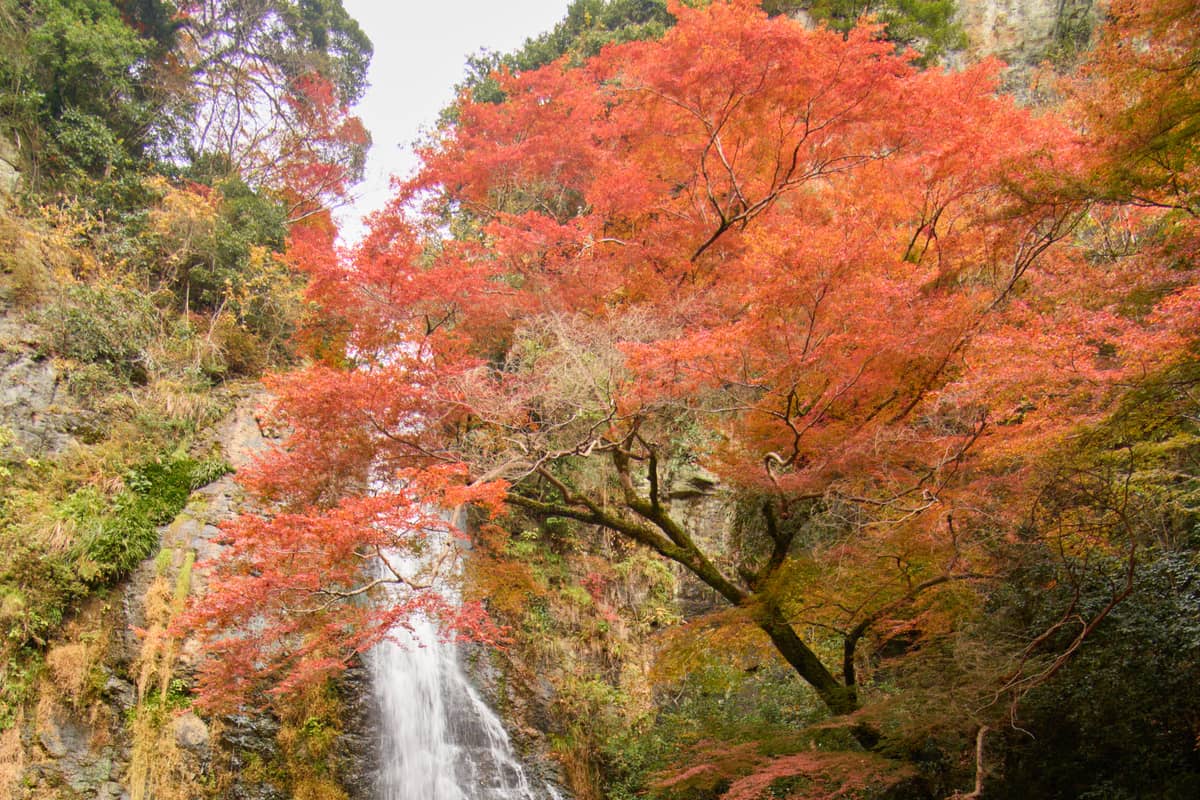
- Minoo Falls: from Hankyu Minoo Station along the Takimichi trail to the waterfall, officially about a 40-to-50-minute walk. The trail is well paved, gently graded, and passes the Minoo Park Insect Museum (about 15 to 20 minutes in) — an easy stroll. Minoo Park itself is free to enter — the official access page lists no entry fee anywhere; only Katsuo-ji up the mountain charges admission. One current caveat: after a November 2025 fire at the shopfront by the falls, the final ~200 m before the basin remains closed with a rough right-bank detour, and whether the foliage illumination returns in 2026 is officially unannounced — full closure details, the detour, and the momiji-tempura food scene are in our dedicated Minoo Falls guide.
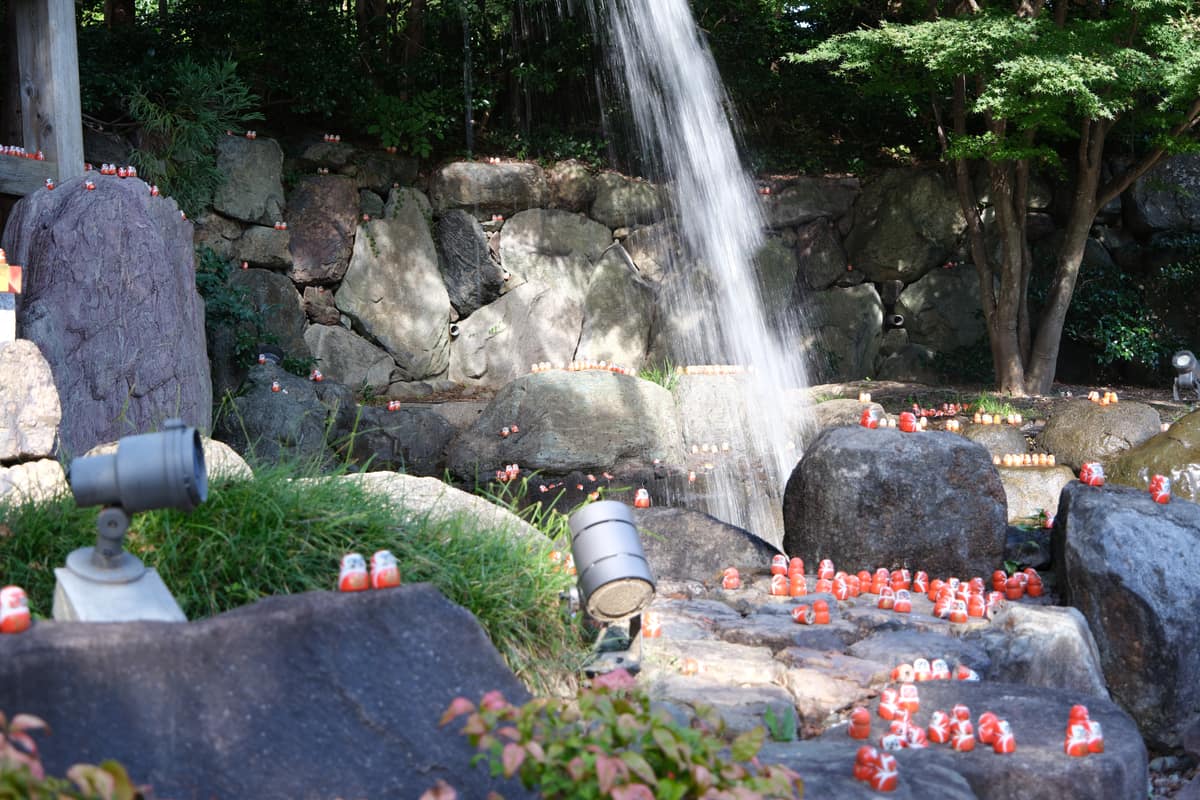
- Katsuo-ji: deeper in the mountains, its signature being a maple-covered hillside dotted with thousands of wish-granting daruma dolls. Public access relies on a Hankyu bus that does not run often, and on peak-season weekends there can be car-park reservation systems and temporary shuttle arrangements when traffic jams — but those peak-season transport details are not confirmed word-for-word on the official page and come from third-party summaries, so check the temple official site or the Minoo tourism association for the current year before you go. For the daruma ritual, goshuin, and the full post-2024 bus fare table, see the dedicated Katsuo-ji deep-dive.
My routing is Katsuo-ji in the morning, Minoo Falls in the afternoon: go up the mountain first while you are fresh and the bus is still easy to catch, clearing the access-limited Katsuo-ji and its maples and daruma; come down around midday and walk the Takimichi trail from Hankyu Minoo Station to the falls at leisure, finishing near the station by dusk. Do the 40-to-50-minute trail first and then race for the bus up to Katsuo-ji, and you can easily end up waiting on a once-an-hour service, burning your day at a bus stop rather than under the maples.
On Katsuo-ji's foliage-season nighttime illumination: the official foliage page does confirm the temple is lit at dusk, so the illumination exists as a fact; but the official page does not list specific 2026 dates or times. Third-party summaries put the 2025 convention at "every weekend and public holiday in November, reception until 20:00 from sunset," so if you want an evening visit, confirm against the temple official site or the Minoo tourism association's current-year notice rather than reusing last year's dates. Katsuo-ji admission is the current price after the temple's March 2023 revision (adult up from ¥400 to ¥500); opening hours run to 17:00 on weekdays and 18:00 on Saturdays, so check the day's operating window before planning any evening.
Central Osaka: Midosuji ginkgo, the castle, and the pass call
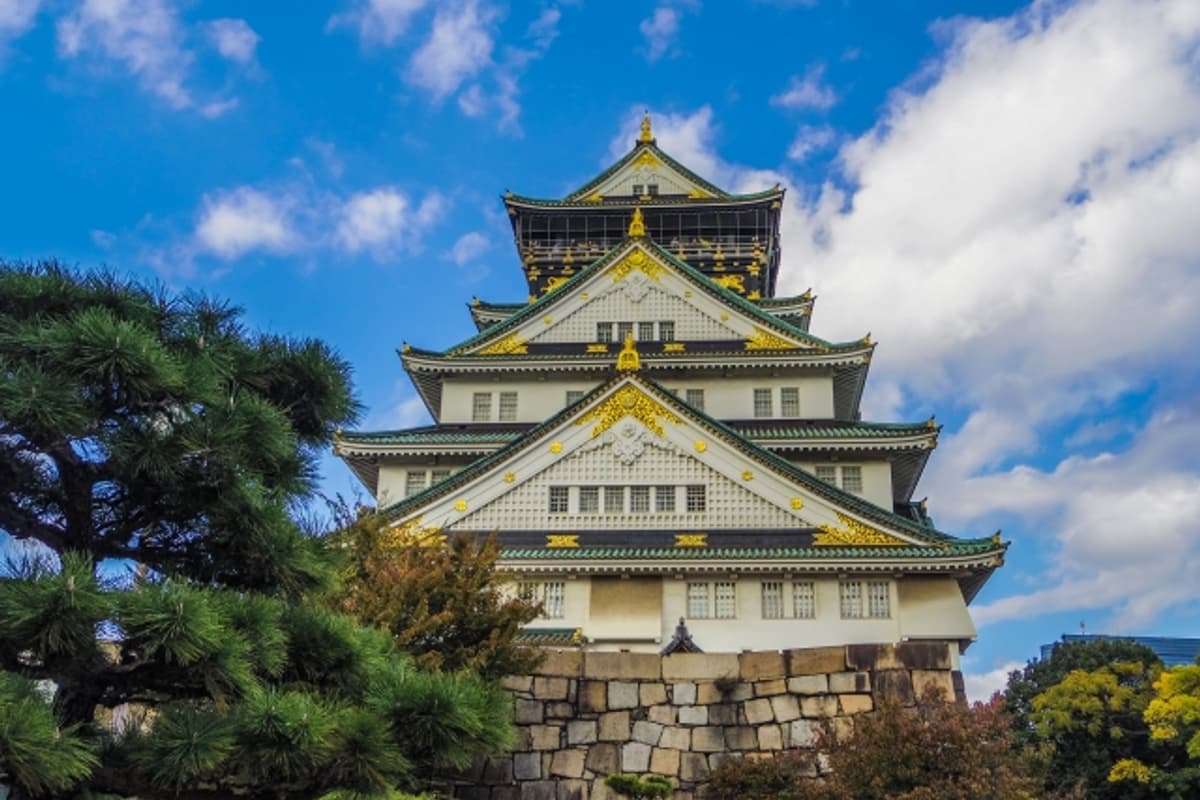
If your trip is centered on downtown Osaka and you can only spare a half day for autumn color, two mostly-free central spots are well worth it. The Midosuji ginkgo avenue is Osaka's most representative urban autumn scene: per Osaka city records, Midosuji was planted from 1933 and completed in 1937 with 928 street trees along a 44-metre-wide boulevard, planted in four rows — both sides of a major boulevard turning gold at once is a genuinely imposing sight, and being a public road it is free, straight out of a subway station, and the most mobile of all. The peak (secondary-source average) is roughly late November to mid-December, the latest of every spot here, which conveniently suits the back end of a Kansai itinerary.
One thing few round-ups mention: Osaka's winter illumination is wrapped around these exact ginkgo trees, and it switches on from 3 November (the 2026 run is 3 Nov–31 Dec, around 17:00–25:00). That means the overlap between golden leaves and lit trees lasts only about two weeks, late November into early December — once the leaves drop in mid-December you get bare branches strung with lights, a completely different picture. If you want both the daytime gold avenue and the evening version, those two weeks are the target; for how to walk it and why three separate runs differ six-fold, see our Osaka winter illumination guide.
Osaka Castle Park is the other easy central stop: the park itself is free (the official page lists no park admission), and its ginkgo and maples color from late November into early December. To climb the Main Tower and look out over the whole grounds in autumn, admission is ¥1,200 — the current price after the April 1, 2025 revision (previously ¥600, doubled in one go). The Nishinomaru Garden in the southwest corner charges a separate entry of ¥300 (raised from ¥200 on April 1, 2026, per the official announcement). For the "third-generation concrete tower" story, the gojoin trap, and which of the four stations to enter from, see our dedicated Osaka Castle deep-dive.
So is the Osaka Amazing Pass worth it? It depends on the shape of your day. The pass is ¥3,500 for one day and ¥5,000 for two days per official pricing (effective March 25, 2026), with unlimited Osaka Metro and some buses plus free entry to 35-plus attractions. Per our on-site check, Osaka Castle Main Tower is one of the covered facilities, along with Tsutenkaku, the HEP FIVE Ferris wheel, and Dotonbori river cruises among others. So the pass genuinely pays off in a clear case: your autumn day stays in central Osaka and you chain paid spots like the Main Tower (¥1,200) plus Tsutenkaku plus a cruise. For that traveler, one pass repays itself quickly.
But to be honest about when it does not pay off: if your day is built around Minoo and Katsuo-ji (which use the Hankyu line, outside the pass metro zone) or you only want to stroll and photograph the Midosuji ginkgo, the pass barely gets used — do not force spots in just to make the card look worthwhile. The official free-facility list is tweaked yearly, so confirm the latest official list before you travel.
If you genuinely fit the "several paid central spots in one day" profile, it is worth pricing a pass that bundles transport and admissions in one: the Osaka Amazing Pass on KKday. For the full break-even math, exactly which attractions it covers, and how to choose between the 1-day and 2-day, see the Osaka Amazing Pass guide.
Is half a day enough for Nara: deer and maples in Nara Park
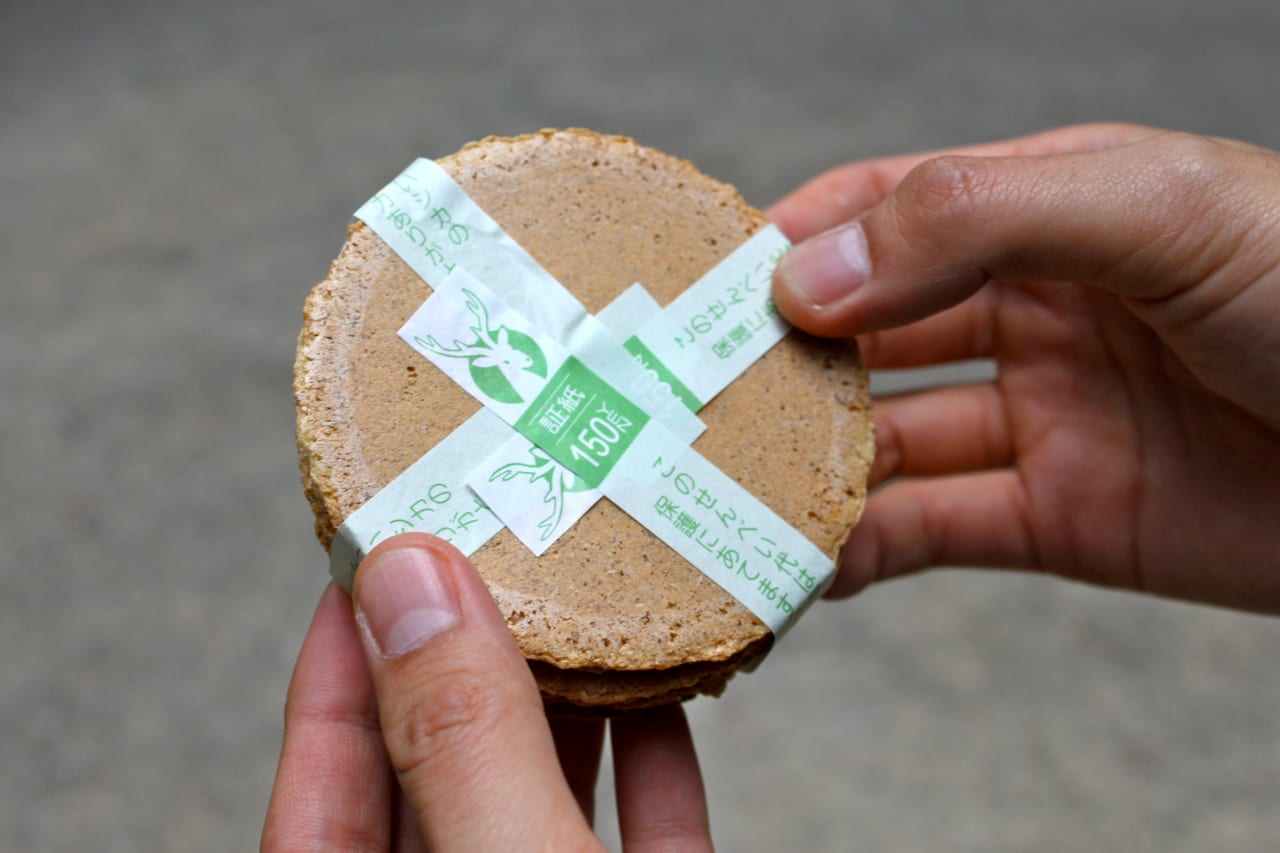
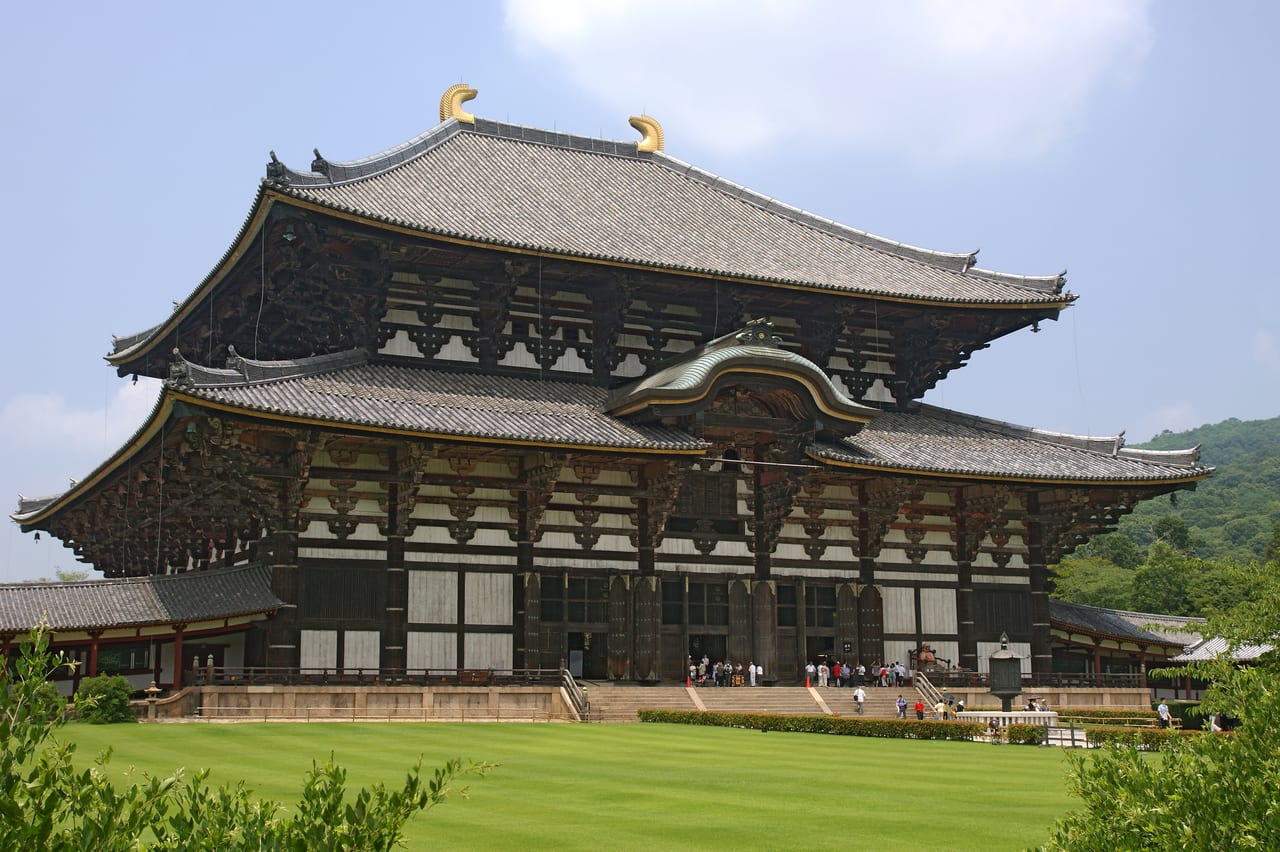
For deer-and-maples alone, Nara Park plus Todai-ji is comfortably a half day. The park officially spans 511.22 hectares (about 47 flat, 464 forested), but the visitor-dense core — the Todai-ji Great Buddha Hall, the Kasuga Taisha approach, and the Ukimido and Mizuya-chaya area — is all within walking distance, so half a day banks the signature deer-plus-maples-plus-old-temple scene. Nara Park itself is free (the official page lists no ticket), and only facilities like the Great Buddha Hall charge admission on top.
For routing, here is how I would do the half day: exit Kintetsu Nara Station → walk east into the park, deer along the way → Todai-ji Great Buddha Hall (admission ¥800, with a museum combo ticket available) → the cedar-and-maple Kasuga Taisha approach → finish around Ukimido and Mizuya-chaya — both recognized foliage viewpoints within Nara Park (Ukimido is a wooden hexagonal pavilion on Sagiike pond, Mizuya-chaya a teahouse at the foot of Wakakusayama), where deer often gather among the maples for a very photogenic combination. Todai-ji's November-to-March visiting hours are 8:00 to 17:00; winter days are short, so do not leave it too late if you want soft light.
When is a full day worth it? If you also want Nigatsu-do and Wakakusayama, or want to dodge tour-group peaks and photograph deer in the soft morning and evening light, a full day earns its keep. On timing, remember that Nara peaks earlier than the Osaka mountains (from about late October by foliage-tracker averages, ahead of Minoo and Osaka Castle), so on a multi-day Kansai trip Nara usually goes in the early part and the Osaka fringe later, following the peak sequence for the least waste. For how to do Nara in depth, how to handle the deer, and what else is nearby, see the Nara travel guide.
If you are arriving via Kansai Airport and heading straight to Nara, the JR HARUKA has a tourist-discount one-way ticket (Kansai Airport to Nara or Osaka, adult one way about ¥1,800 on KKday, with a transfer to the JR Yamatoji line for Nara), a little cheaper than the standard fare; standard fares for getting around the city and to Nara are noted in the timing section below.
Is Tanzan Jinja worth a special trip: the access, spelled out
Let me put the access plainly: Tanzan Jinja is genuinely a hassle. It sits in the mountains of Sakurai, Nara, and the smoothest public route is Kintetsu to Sakurai Station, then the Sakurai City community bus (Tonomine Line, operated by Nara Kotsu under contract) from the south exit stand number one — about 25 minutes and ¥570 one way at the current fare (verified July 2026 against the Sakurai City official fare matrix; the shrine's own access page still shows an outdated ¥500) — but that bus runs only about once an hour, so missing it means a long wait, and peak foliage season can bring traffic (which may reroute the stop to Tonomine). Visiting reception is until 16:00 (last entry 16:30), and adult admission is ¥700.
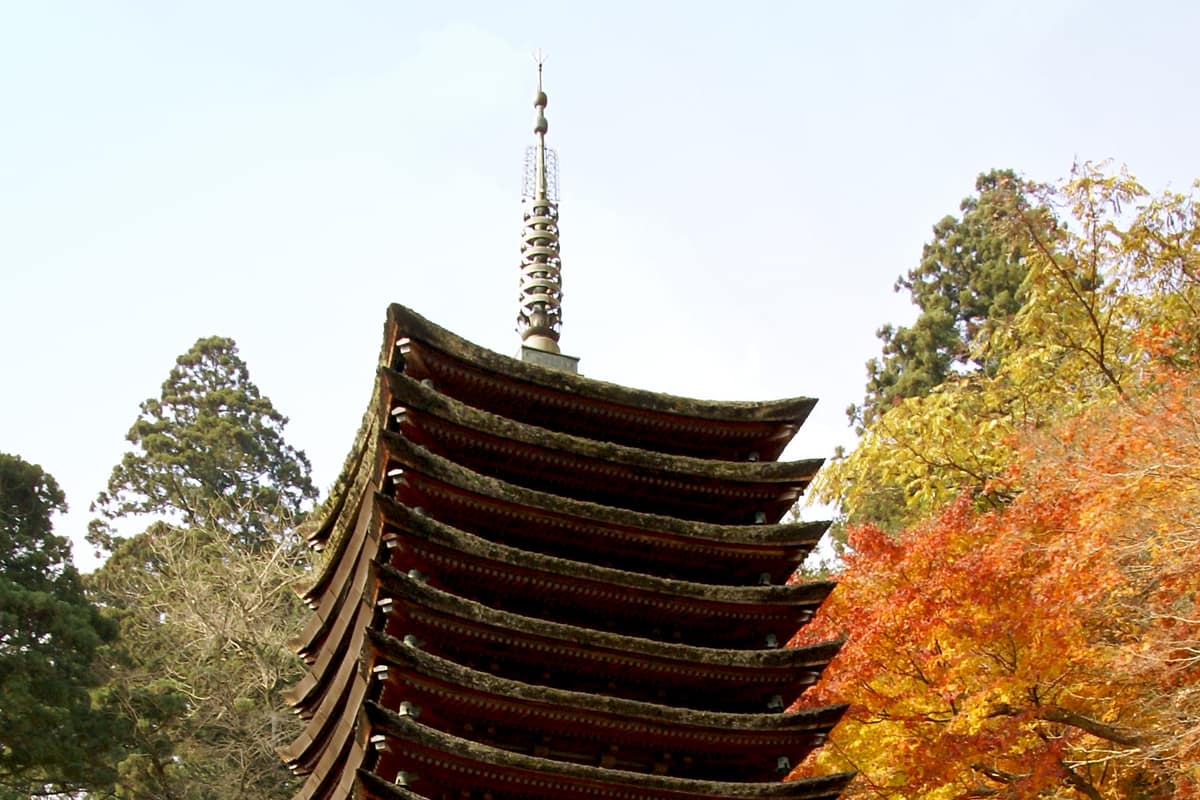
So what makes people willing to make the special trip? The answer is that vermilion thirteen-storey pagoda — the only wooden thirteen-storey pagoda in the world — framed by a mountainside of maples, one of the most recognizable foliage compositions in Kansai and a magnet for photographers. My call is blunt: if you are the traveler who has seen plenty of foliage and wants one special shot, it is worth a half day including transit; if you just want easy leaf-viewing, the city spots and Nara Park are clearly better value, so do not trek out here just to tick a box. For the full bus timetable (including the 17:52 last-bus trap), the goshuin details and the Taika-coup history, see the dedicated Tanzan Shrine deep-dive.
One trap worth flagging: whether Tanzan Jinja has an autumn foliage illumination is not announced by the shrine. The official visiting page lists no autumn illumination dates; the official news section does have a lantern-festival illumination piece, but that is a July 2025 summer event, entirely unrelated to the foliage season — do not conflate the two, and do not build an evening plan on third-party hearsay. To chase foliage illuminations, confirm with the Tanzan Jinja official site or Nara tourism authorities for the current year before you go.
Since you are already in Sakurai, you can pair it with Hase-dera (Nara) — a foliage-famous temple in the same Sakurai area, adult admission ¥500, open 9:00 to 17:00 in October and November, which routes smoothly with Tanzan Jinja into a Sakurai foliage day (from Sakurai Station it's a 6-minute, ¥240 direct ride on the Kintetsu Osaka Line). For the 399-step stairway, bloom calendar and goshuin details, see the full Hase-dera Nara guide.
Timing caveats: all historical convention
Finally, the timing caveat that decides whether your bookings land. Every peak window in this article is a historical-convention range, not a confirmed 2026 forecast. As of September 2, 2026, none of the three Japanese foliage trackers has published a 2026 peak forecast, and each names a different start date on its own page: Walkerplus says early September for peak-timing forecasts and mid-September for color reports, tenki.jp says late September, and WeatherNews only says September 2026. Start with Walkerplus if you want numbers earliest — but its peak-timing forecast republishes WeatherNews, so there are really only two independent sources here, tenki.jp and WeatherNews. Open Walkerplus anyway for its spot database, the largest of the three at roughly 1,200 locations in the 2026 edition. The practical approach: use the historical bands here to book transport and lodging in broad strokes, then recheck the current-year forecast about two weeks before you travel. A warm autumn pushes everything later; an early-cold year pulls it earlier — do not just reuse last year's dates.
A few data-status notes to disclose honestly, so mind them before you plan:
- Transit fares are reference values: Hankyu Osaka-Umeda to Minoo about ¥280 one way, Kintetsu Osaka-Namba to Kintetsu-Nara about ¥680, JR Osaka to Nara about ¥950 — these come from third-party ticketing sites, since the official fare systems are interactive interfaces or image PDFs that cannot be scraped word-for-word. Confirm actual fares with a transit app or at the station on the day. The Sakurai-Station Tanzan Jinja community bus is ¥570 one way, verified July 2026 against the Sakurai City official fare matrix (the shrine's access page still shows an outdated ¥500).
- "Free to enter" is a reasonable inference: for Minoo Park, Nara Park, and Osaka Castle Park itself, none of the official pages print the word "free" — it is a reasonable judgement from the pages listing no charges anywhere. In practice these park bodies do not charge admission; only specific facilities inside (Main Tower, Great Buddha Hall, etc.) charge on top.
- The Amazing Pass facility list: the full free-facility list is best confirmed against the latest official pages; the pass covering the Main Tower is our verification, but the official list is tweaked yearly. (Nishinomaru Garden entry was officially raised to ¥300 on April 1, 2026.)
Laying these statuses out is not meant to alarm you — it is this site's principle: what the official source confirms, we mark official; what it does not, we say plainly is a reference value, so you can make the final check with current-year information rather than being misled by stale or secondary numbers. To get the nationwide foliage sequence first and then decide which Kansai days to divert to Osaka and Nara, start from the nationwide map in Japan Autumn Foliage 2026.
Frequently Asked Questions
- Q1:When are Osaka and Nara autumn leaves at their best in 2026?
- There is no single date, because these spots sit at different latitudes and elevations and their peaks are spread across nearly a month. Nara Park and the Todai-ji area turn earliest, roughly late October to late November by historical foliage-tracker averages; the Osaka fringe mountains of Minoo and Katsuo-ji are later, with the official average marked mid-November to early December; and central Osaka spots like the Midosuji ginkgo avenue and Osaka Castle Park are latest, with secondary sources putting them late November into early-to-mid December. To catch the most layers in one trip, aim for mid-to-late November: Nara is finishing, the Osaka mountains are at peak, and the city ginkgo is just turning gold. Treat all of the above as historical convention. As of September 2, 2026, none of the three Japanese foliage trackers has published its 2026 peak forecast, and each names a different start on its own page: Walkerplus says early September for peak-timing forecasts and mid-September for color reports, tenki.jp says late September, and WeatherNews only says September 2026. Recheck the current-year forecast before you book.
- Q2:Can I combine Minoo Falls and Katsuo-ji in one day, and in what order?
- Yes, but the two have very different transport personalities, so order matters. Minoo Falls is a roughly 40 to 50 minute walk along the well-paved Takimichi trail from Hankyu Minoo Station, entirely free, an easy half-day stroll. Katsuo-ji sits deeper in the mountains and public access relies on an infrequent Hankyu bus. My advice is Katsuo-ji in the morning, Minoo Falls in the afternoon: go up the mountain first while the bus is still easy to catch and see the maple-covered temple with its thousands of daruma dolls, then come down around midday and walk the free trail to the falls to finish near the station. Doing the 40-minute trail first and then racing for the bus up to Katsuo-ji tends to leave you waiting around for a once-an-hour service. Katsuo-ji admission is the current price after the temple official March 2023 revision; Minoo Park itself is free to enter.
- Q3:If time is tight, should I choose central Osaka ginkgo or the mountain foliage?
- It depends on the picture you want. The Midosuji ginkgo avenue is an urban autumn scene: both sides of a wide boulevard turn gold, it is free, you step out of a subway station straight into it, and it demands the least time, ideal if you can only spare an hour or are passing through in the evening. Minoo and Katsuo-ji are a going-into-the-mountains maple experience: fuller scenery but half a day of transport. My call: if you are already based in central Osaka (Shinsaibashi, Namba) and have only half a day, take Midosuji plus Osaka Castle Park, both central and mostly free with flexible timing; only if you are willing to spend a whole day for that genuine mountain-of-maples feeling is Minoo worth the trip. Both peak late (after late November), so they slot neatly into the back end of an itinerary.
- Q4:Is half a day enough for Nara, or should I set aside a full day?
- For deer-and-maples alone, Nara Park plus Todai-ji is comfortably a half day. Nara Park covers 511 hectares, but the visitor-dense core — the Todai-ji Great Buddha Hall, the Kasuga Taisha approach, and the Ukimido and Mizuya-chaya area — is all within walking distance, so half a day banks the signature deer-plus-maples-plus-old-temple scene. Nara Park itself is free; only paid facilities like the Great Buddha Hall charge admission on top. When is a full day worth it? If you also want Nigatsu-do, Wakakusayama, or the soft morning and evening light for photographing deer away from tour-group peaks. On timing, Nara foliage peaks earlier than the Osaka mountains (from about late October), so on a multi-day Kansai trip it usually goes first, with the Osaka fringe later.
- Q5:Is Tanzan Jinja worth a special trip, and how bad is the access?
- Honestly, the access is a hassle, and whether it is worth it depends on how much of a foliage enthusiast you are. Tanzan Jinja is in the mountains of Sakurai, Nara; the smoothest public route is Kintetsu to Sakurai Station, then the Sakurai City community bus (Tonomine Line) from the south exit stand number one, about 25 minutes and ¥570 one way at the current fare — but that bus runs only about once an hour, so missing it means a long wait, and peak season can bring traffic. Its draw is the vermilion thirteen-storey pagoda framed by mountain maples, one of the most recognizable foliage compositions in Kansai and a magnet for photographers. My take: if you are the kind of traveler who has seen plenty of foliage and wants one special shot, it is worth a half day including transit; if you just want easy leaf-viewing, the city spots and Nara Park are far better value. Sakurai also has Hase-dera nearby, so you can pair the two into a Sakurai foliage day.
- Q6:Does Tanzan Jinja have autumn foliage illuminations?
- As verified, the Tanzan Jinja official visiting-information page does not list any autumn foliage illumination dates or times. The official news section does have a piece about a Tanzan Jinja lantern-festival illumination, but that is a July 2025 summer event and has nothing to do with the autumn foliage season, so do not conflate the two. In other words, this article cannot confirm whether Tanzan Jinja holds any nighttime illumination during foliage season. If chasing foliage illuminations matters to you, check directly with the Tanzan Jinja official site or Nara tourism authorities for the current year before planning any evening visit — do not build a night itinerary on old information or third-party hearsay.
- Q7:Is the Osaka Amazing Pass worth it for a foliage day?
- It depends on the shape of your day. The Osaka Amazing Pass is ¥3,500 for one day and ¥5,000 for two days per official pricing (effective March 25, 2026), covering unlimited Osaka Metro and some buses plus free entry to 35-plus attractions. Per our on-site check, Osaka Castle Main Tower is one of the covered facilities, and so are Tsutenkaku, the HEP FIVE Ferris wheel, and Dotonbori river cruises among others. So the pass clearly pays off when your foliage day stays in central Osaka and you chain paid spots like the Main Tower (¥1,200) plus Tsutenkaku plus a cruise. It does not pay off if your day is built around Minoo and Katsuo-ji (which use the Hankyu line, outside the pass metro zone) or if you only want to stroll the free Midosuji ginkgo — do not force spots in just to justify the card. The official free-facility list is tweaked yearly, so confirm the latest official list before you go.
Read next
Japan Autumn Foliage 2026: Peak Forecast & 5-Region Guide
Region-by-region peak-forecast map from late-September Hokkaido to mid-December Kyushu, with itineraries and booking timing.
Kyoto autumn foliage guide
18 temple-by-temple foliage timings + crowd-avoidance tactics.
Osaka Amazing Pass 2026: Is It Worth It? 1-Day vs 2-Day Math
Five worked-out routes: 1-day ¥3,300 pays back at 4 attractions; honest verdict on 1-day vs 2-day vs not buying at all.
📊 See the 2026 Price Index (JR Pass, DPA, eSIM, Airport Transport) →