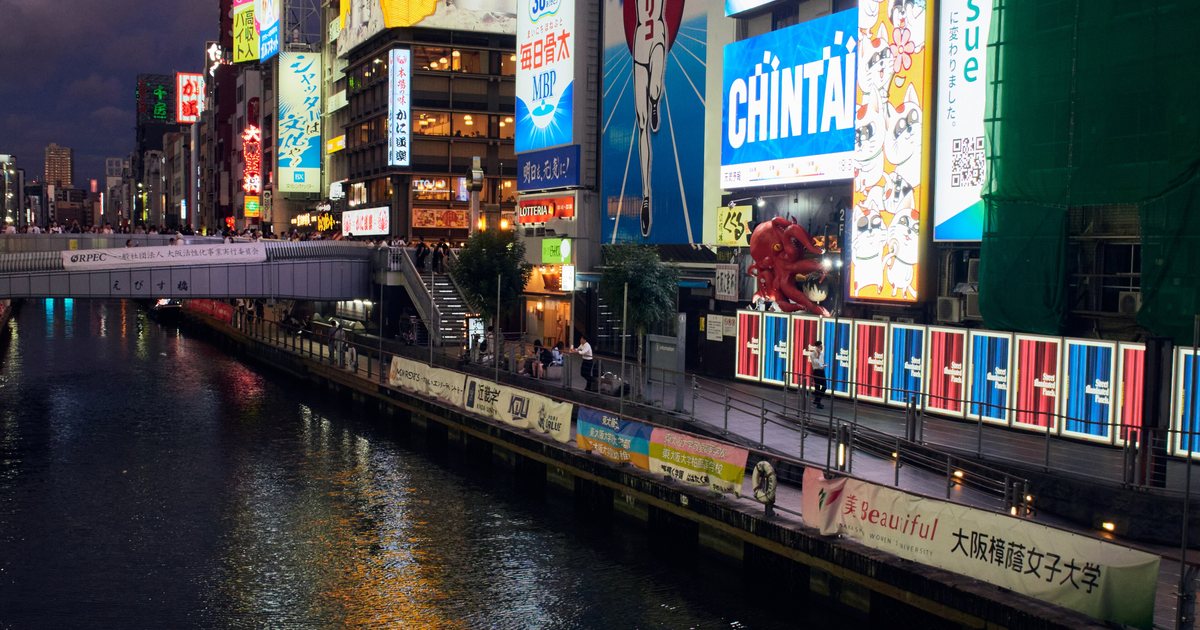
Three things about New Year in Osaka run against the standard advice, and all three have official wording behind them. First, Osaka Metro has now published the same sentence two seasons running: it does not operate all night on New Year's Eve — and JR West says the same thing about all-night running, with only the Osaka Loop Line from about 00:00 to 03:00 and the JR Yumesaki Line from 23:30 to 03:00 carrying anyone through the small hours. Second, the Dotonbori countdown was never cancelled, because there has never been an organiser: neither the Osaka tourism bureau nor the Dotonbori merchants association lists any official countdown, which means no schedule, no crowd plan and nobody responsible. Third, and this is the part that should move your dates: Osaka's real New Year peak is not January 1 but January 9 to 11, when at least three major shrines run Ebisu festivals on the same dates and Imamiya Ebisu — a shrine that normally shuts at 17:00 — stays open, per the city tourism bureau's official listing, from 00:00 on the 9th to 24:00 on the 11th, 72 hours straight. What follows splits the period into three parts and labels every figure: standing official facts are stated flatly, and anything not yet announced for 2026-27 is marked as last season's outcome rather than dressed up as this year's plan.
📍 This guide covers only what changes during the New Year week in Osaka. For how hatsumode works generally — when to go, whether there is a deadline, what to do with last year's charms — see the Japan hatsumode guide. For the nationwide question of what is open over the holidays, see what opens and closes in Japan at New Year. For fitting these days into a wider trip, see the Osaka and Kyoto 5-day itinerary.
- No all-night subway, and no all-night JR either: Osaka Metro says so in writing two seasons running. JR runs only the Loop Line 00:00–03:00 and Yumesaki Line 23:30–03:00. Keihan is the one genuine all-night line
- Dotonbori has no organiser: not cancelled, never run. Osaka's only ticketed countdown is USJ — where an ordinary ticket expires at 17:00 on Dec 31 and 17:00–19:00 is a clear-out
- Two Sumiyoshi Taisha traps: officially no food stalls Dec 31–Jan 5, and the Godairiki stone charm is closed Dec 31–Jan 4 — exactly the days everyone visits
- Sunrise tickets are non-refundable: Harukas 300 states no refund if the sunrise is invisible, and its kotatsu seats cannot see the sunrise at all. Umeda Sky sold out its 250 places last season
- Toka Ebisu is a three-shrine event: Imamiya Ebisu Jan 9–11, Sumiyoshi Taisha Jan 9–10, Osaka Tenmangu Jan 9–11. 2027 details are announced around November 1
📖 Contents
- New Year's Eve: no official countdown, except USJ
- Transport: three tiers, and only one runs all night
- Hatsumode: four Osaka choices and one hard rule each
- First sunrise: two towers and a no-refund clause
- Toka Ebisu: the real reason to be in Osaka in January
- The first three days: stores, markets, the Amazing Pass
- What to book now, and the November-December check list
- FAQ
New Year's Eve: no official countdown, except USJ
Start with the thing most likely to mislead you.
Dotonbori: not cancelled, never organised
In travel writing, New Year in Osaka has become shorthand for Dotonbori. The verification behind this guide reached a blunt conclusion: neither the Osaka Convention and Tourism Bureau official site nor the Dotonbori merchants association official material lists any officially organised countdown event.
The contrast with Tokyo is subtle but important. Shibuya publishes a notice every year explaining that it is not holding a street countdown — an official body is speaking, and crowd management exists (details in the Tokyo New Year guide). Osaka has no notice at all, because there is no organiser. "There is no event" and "the event was cancelled" are different states, and the second one at least implies someone is in charge.
What that means in practice:
- No official schedule. Any start time you read is somebody's observation, not an announcement.
- No official crowd plan. The bridge closures, police cordons and similar details that circulate widely appear on no Osaka Prefectural Police or Osaka City page.
- Nobody is responsible for the crowd, because nobody convened it.
The recommendation is straightforward: go to Dotonbori for the atmosphere if you want, but do not plan around it as though it were an event. If you want a countdown with a programme, a schedule and safety management, Osaka has exactly one answer.
If the crowd is not for you: Midosuji is lit that night
An alternative that rarely gets mentioned. 31 December is the final night of the Midosuji Illumination, and it runs past midnight — the published 2026 dates are 3 November to 31 December with hours "around 17:00 to 25:00", and 25:00 means 01:00 on 1 January. That is not an inference: the organisers' news archive still carries a notice dated 4 January 2023 apologising for the lights failing to stay on after 24:00 on 31 December 2022. You only apologise for that if they were supposed to be on.
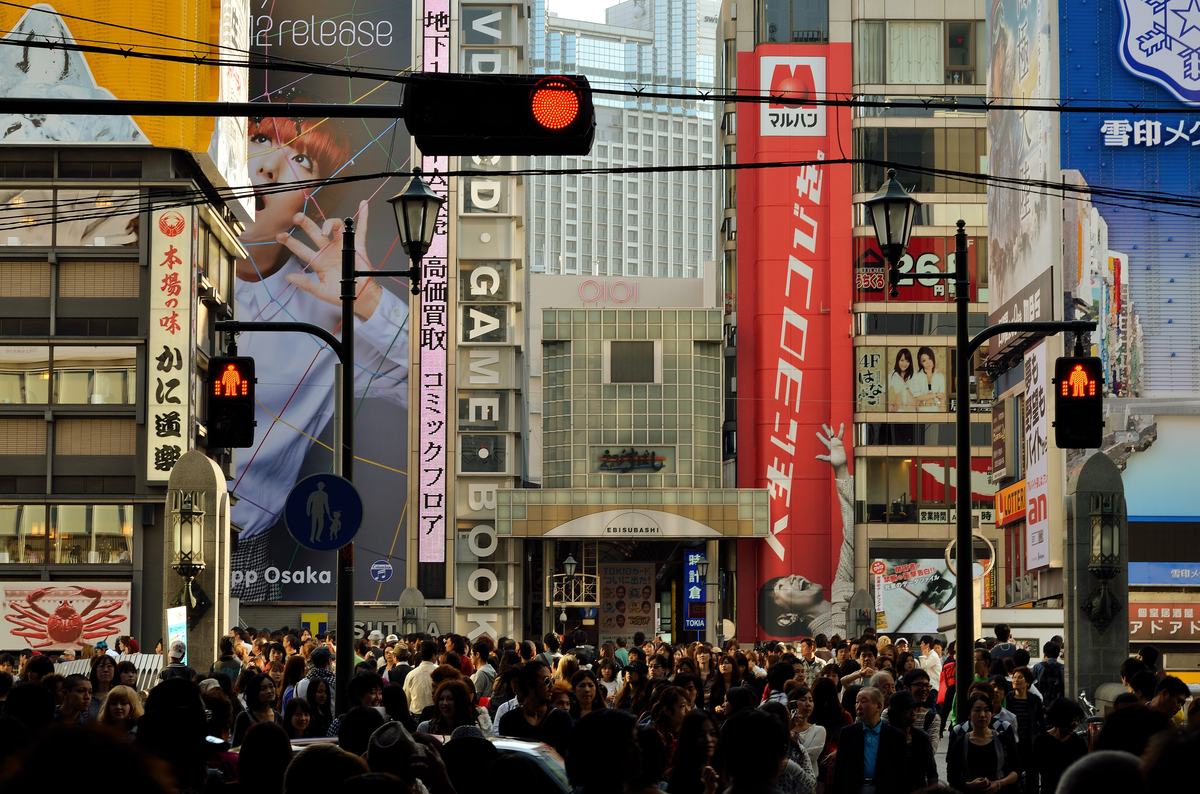
So New Year's Eve gives you a choice: the crush at Ebisubashi, or a walk north up Midosuji from Shinsaibashi — all 4 km of it lit, with a fraction of the people. Mind the boundary, though: from 1 January both Midosuji and OSAKA Hikari no Renaissance are finished, with the official note reading "only some area programmes will operate", and Kobe Luminarie does not open until 29 January. That leaves a four-week gap from 1 to 28 January with no major street illumination anywhere in Kansai. For why three runs differ six-fold and what is lit on which dates, see our Osaka winter illumination guide.
The USJ countdown: Osaka's only ticketed New Year's Eve
Universal Studios Japan runs the only New Year's Eve event in Osaka with an official organiser, official hours and official tickets — and its ticket structure contains a break point that catches almost everyone.
The 2026-27 edition is fully announced, prices and show times included:
| Item | 2026-27 season, official |
|---|---|
| Event and dates | NO LIMIT! Countdown 2027, 19:00 on Dec 31, 2026 to 21:00 on Jan 1, 2027, with re-entry during the period |
| Party Pass | ¥16,900 incl. tax, one price for all ages; special viewing areas ¥23,800 and ¥24,300 |
| Midnight fireworks | Countdown Moment, 23:50 on Dec 31 to 00:05 on Jan 1, over the Lagoon, around 5,000 shells |
| The Dec 31 break point | Ordinary annual passes and 1 Day passes are valid only to 17:00; the park states that 17:00 to 19:00 is outside operating hours |
| Jan 1 ordinary entry | From 02:00 |
| Sales ladder | First come, no lottery: Grand Royal annual-pass presale Oct 7 ~21:00 – Oct 9 23:59 → Lawson Ticket pre-request presale Oct 23 12:00 – Nov 3 23:59 → general sale from ~21:00 Nov 4, only if tickets remain. No on-site ticket sales |
In one sentence: you cannot ride out an ordinary ticket to midnight. The park schedules a two-hour clear-out and sells the countdown separately. And on January 1, ordinary admission does not begin until 02:00.
Adjust your timing accordingly. If you do not hold a Grand Royal annual pass, your first chance is the Lawson Ticket presale from October 23; do not count on the November 4 general sale, which only happens if anything is left. One thing to weigh before you pay: Super Nintendo World shuts for maintenance for part of those 26 hours, and USJ does not say which part — area entry tickets for it are issued through the official app only, once per person for the whole event. For everything about USJ on a normal day — Express Passes, Super Nintendo World timing — see the USJ Express Pass and Nintendo World guide; this section covers only that one night. Ordinary admission currently sits at ¥8,400–11,900 for adults (¥5,500+ for children), and none of that applies on New Year's Eve.
⚠️ Plan the exit at the same time. USJ sits on Universal City station on the JR Yumesaki Line, which happens to be one of only two JR lines running deep into the night (roughly every 10 minutes, 23:30 to 03:00 last season). That is not a coincidence — it is the only mass-transit way out after the countdown. Details in the next section.
Transport: three tiers, and only one runs all night
This is the most practically useful part of the guide, because New Year's Eve transport in Osaka is not a yes-or-no question. It has three tiers.
Tokyo's pattern is "the subway stops, but JR East runs several lines all night." Osaka's is different: the subway stops, JR West also states it does not run all night and merely extends two lines to about 03:00, and the only operator genuinely running through the night is Keihan. All five, from the 2025-26 season notices:
| Operator | All-night? | Official content |
|---|---|---|
| Osaka Metro / New Tram | ❌ No | Official wording: no all-night operation (identical sentence on 2024-12-05 and 2025-12-01). Saturday-and-holiday timetable network-wide Dec 27 to Jan 4 |
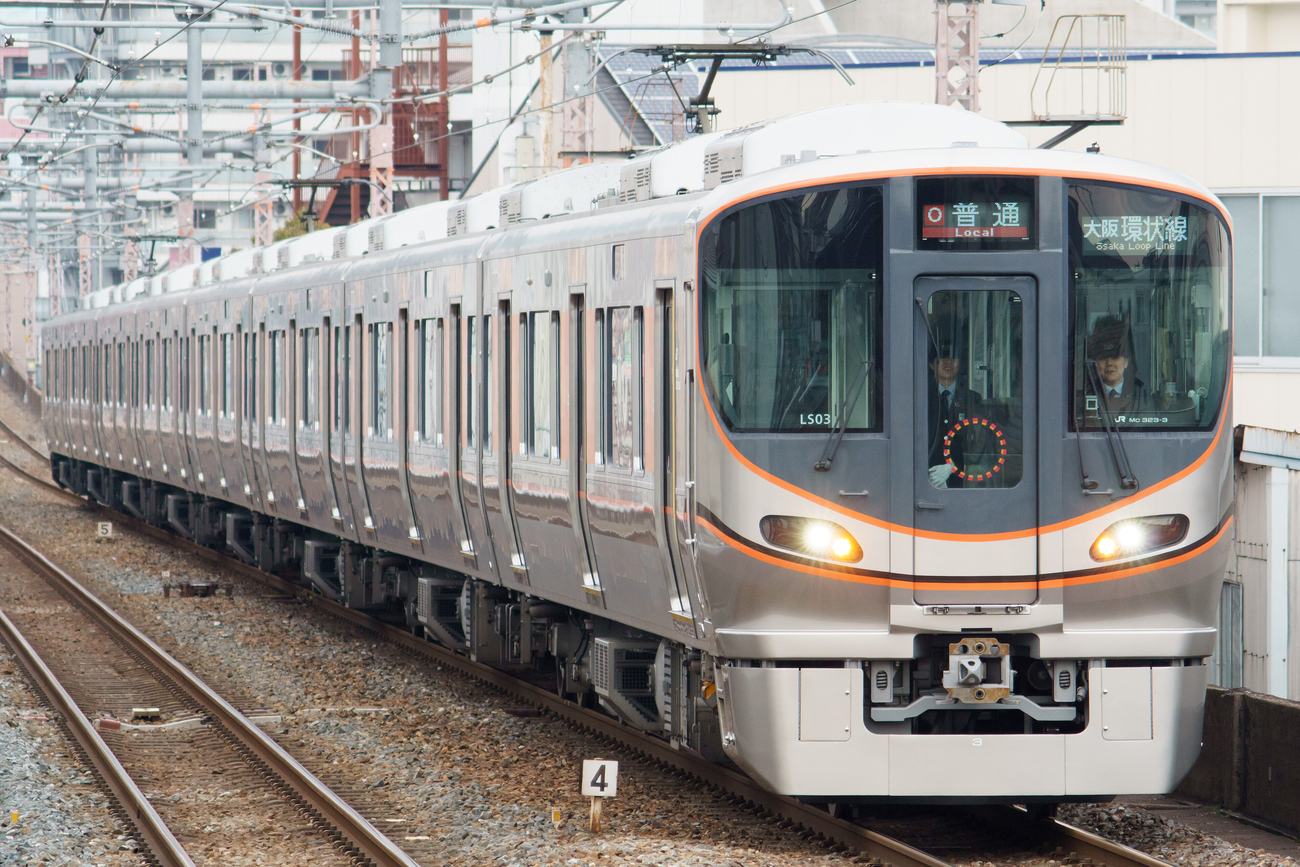
| JR West | ❌ No all-night running, but service to about 03:00 | Official: all-night operation is not implemented. Osaka Loop Line both directions 00:00–03:00, about every 10 min (some through-running to Yumesaki); JR Yumesaki Line, Sakurajima–Nishikujo, 23:30–03:00, about every 10 min; Manyo Mahoroba Line, Nara–Sakurai, 23:30–03:00 about every 40 min. Outside these sections there are no extra services after the last train. Holiday timetable Dec 30 to Jan 3 |
| Keihan | ✅ Genuine all-night | Special timetable 18:00 Dec 31 to 07:00 Jan 1, all-night running on the Keihan lines; limited express from Yodoyabashi to the 23:00 hour about every 20 min, express to the 01:00 hour about every 20–30 min, from Demachiyanagi to the 02:00 hour; Iwashimizu Hachimangu cable car also all night. The Otsu lines do not run all night |
| Nankai | ❌ No — not even extended running | December 31 is an ordinary Saturday-and-holiday timetable across the whole network. Its New Year addition is in daytime: Jan 1–4, 10:00–16:20, some airport express and section express services stop specially at Sumiyoshitaisha station |
| Kintetsu / Hankai Tramway | ⚠️ Check directly | The Hankai Tramway notice board carried no year-end items at all; these are typically published in December. Check both operators directly |
Turning three tiers into decisions
- Midnight to 03:00: the JR Loop Line. Namba and Shinsaibashi are not on the Loop, so budget the walk to a Loop station or to JR Namba into your plan.
- Leaving USJ: the JR Yumesaki Line, Sakurajima to Nishikujo, roughly every 10 minutes from 23:30 to 03:00, connecting to the Loop. That is the only route the operators give you.
- Still out after 03:00: Keihan only. Yodoyabashi, Kitahama, Temmabashi and Kyobashi are all in Osaka. Note the Otsu lines are excluded, so anyone heading back to Shiga after midnight has no train.
- Sumiyoshi Taisha is a daytime problem, not a midnight one. Nankai adds nothing on December 31; its New Year measure is those daytime special stops on January 1 to 4. Nankai is how you reach hatsumode, not how you get home from the countdown.
Which means where you sleep matters more than any rail pass: on the Loop Line you have trains until 03:00, on the Keihan corridor you have them all night, and on the Midosuji Line away from the Loop you are walking. New Year is also one of the tightest weeks of the year for Osaka rooms — check Osaka New Year availability on Trip.com to get a feel for prices and remaining stock before deciding.
A night when last-train times, crowd information and navigation all matter more than usual is also a night when connectivity earns its keep — a Japan data eSIM from KKday is the usual answer, with five brands compared in the Japan eSIM comparison. For HARUKA versus Nankai from the airport, see Kansai Airport: HARUKA or Nankai.
📌 Everything in that table is the 2025-26 season. Publication dates last time: JR West October 31, Nankai November 27, Osaka Metro December 1, Keihan December 11. Re-check between late November and mid December (list at the end of this guide). If you are spending the same night in Kyoto, municipal transport there also does not extend — see the Kyoto New Year guide. Both cities end up with the same answer: Keihan.
Hatsumode: four Osaka choices and one hard rule each
The general questions about hatsumode — when to go, whether there is a deadline, how many charms you may carry, how to return last year's — belong in the Japan hatsumode guide. This section covers what is specific to Osaka's four main choices, and each of them has one official fact worth knowing before you commit.
Sumiyoshi Taisha: two traps and one timetable
The shrine describes itself as receiving more than two million worshippers at the start of the year. One correction while we are here: the 2.3 million figure that circulates online is not the shrine's number, so only the official phrasing is used here.
Opening hours first, from the shrine's 2025-26 season New Year notice (normal hours are 06:00 to 17:00, with a 06:30 opening October through March):
| Date | Hours |
|---|---|
| Dec 31 | Opens 22:00 |
| Jan 1 | Closes 20:00 (22 continuous hours from 22:00 on Dec 31) |
| Jan 2–3 | 06:00–19:00 |
| Jan 4–5 | 06:00–18:00 |
| Jan 6 | 06:30–17:00 (back to normal winter hours) |
Now the two traps:
- Trap one: there are no food stalls. The shrine states that no stalls operate from December 31 to January 5, in the words "露店の出店はありません". The approach will be empty for all six days. Eat before you arrive.
- Trap two: the Godairiki stone charm is closed for the days you want. The shrine states that the Godairiki stone charm and the fishing-style omikuji are closed from December 31 to January 4. The famous ritual of hunting three pebbles marked go, dai and riki is therefore impossible on precisely the four days everyone visits. Schedule it for January 5 or later.
For drivers: the shrine car park closes December 31 to January 3 for traffic control, large vehicles are excluded December 31 to January 15, and while normal rates are 200 yen per 30 minutes (two hours free for prayer bookings) with around 200 spaces and coaches at 2,000 yen per hour by reservation, the shrine notes that rates differ during the busy period from January 4 to early February without publishing the amount. The conclusion writes itself: do not drive to Sumiyoshi Taisha at New Year. Use Nankai's Sumiyoshitaisha station or the Hankai tram stop at Sumiyoshi Toriimae.
🚨 Whether the arched Taiko-bashi bridge operates one-way flow, or is closed to climbing during the first three days, is not published anywhere on the shrine's home page, FAQ or New Year notice. Follow the on-site instructions.
Sumiyoshi Taisha's other strength is that it has the densest January calendar in Osaka, and most of it falls after the crush — which is good news if you want ritual without the queue. All of the following are fixed calendar items:
| Date and time | Rite |
|---|---|
| Jan 1, 05:00 | Wakamizu no gi (drawing the first water) |
| Jan 1, 06:00 | Saitansai |
| Jan 3, 08:00 | Genshisai |
| Jan 4, 13:00 | Toka shinji |
| Jan 7, 11:00 | Aoma shinji — the sacred horse Shirayuki-go appears; same-day-only charms and ema |
| Jan 9–10 | Ichi-Ebisu Daikokusha reisai, which the shrine calls the oldest Ebisu festival in Osaka (see Toka Ebisu) |
| Jan 12, 11:00 | Wakamiya Hachimangu reisai (yudate shinji) |
| Jan 13, 10:00 | Mikechi shinji |
| Jan 15, 09:00 | Old-charm burning rite |
If one date had to be picked, January 7 for the Aoma shinji is the better trip: an actual sacred horse, charms available only that day, and the crowd already gone. Squeezing into the first three days for a photograph of other people's backs is a poor trade.
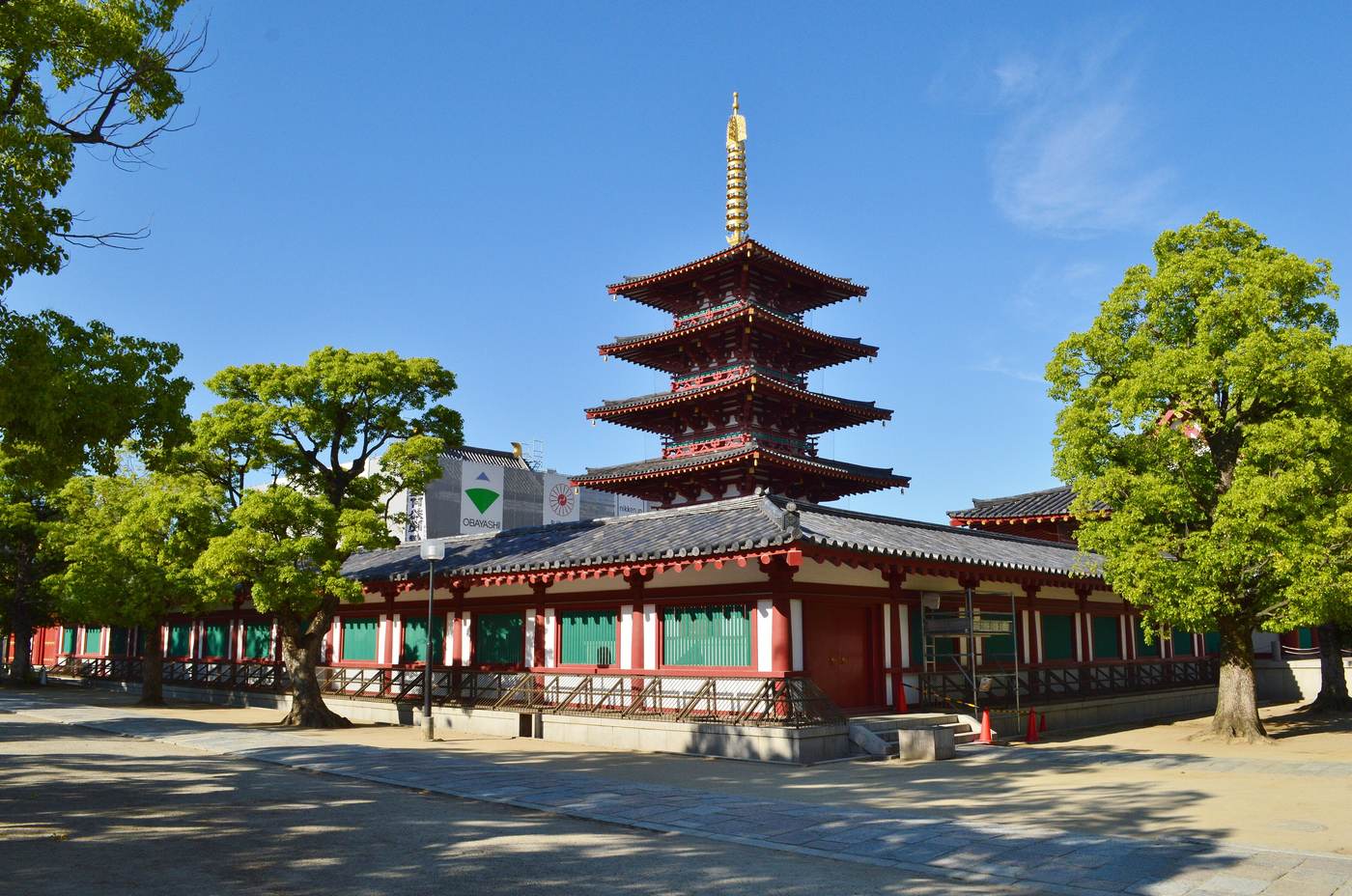
Shitennoji: free to enter, and January is its busiest calendar
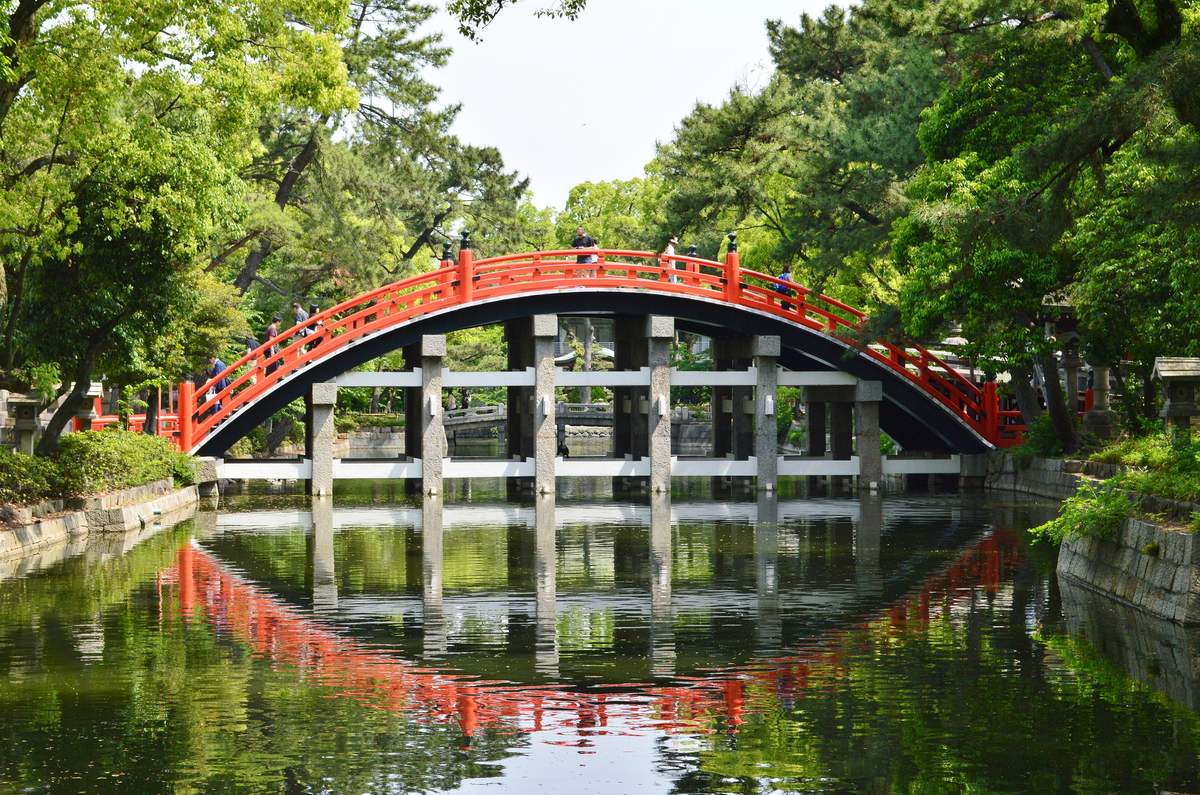
Shitennoji's advantage for visitors is that the precinct itself is free; only three areas are ticketed. The central garan is ¥500 for adults, the Honbo garden ¥300, and the treasure house ¥500 (high school students ¥300, ¥200 and ¥300 respectively; junior high age and under free at all three). Hours are 08:30 to 16:00 from October through March, 08:30 to 16:30 April through September, with an 08:00 opening on the 21st of each month.
January is the densest stretch in its calendar:
- Shushoe, January 1 to 14 — not a single-day event but fourteen consecutive days of prayers at the Rokujido, closing on the 14th with Doyadoya.
- Ganzan Daishi-e and exam-success goma rite, January 3 at 10:00 at the Ganzan Daishi hall — the day families with students turn up.
- Chona Hajime-shiki, January 11 at 16:00 at the Kondo — marked not open to the public, so do not make the trip.
- Shojingu, January 12 at 10:00 at the Gochikoin — capped at the first 250 people.
- Doyadoya on January 14, with a tondo bonfire 09:00 to 13:00 in front of the Nio gate.
⚠️ Shitennoji publishes nothing about a New Year's Eve bell or January 1 opening times — not on its admission page, its annual calendar or its January events page. Check the December announcements or ask on site. Separately, the Setsubun hoshi matsuri goma rite at Shitennoji is covered in the Japan Setsubun guide.
Osaka Tenmangu: the scholarship shrine, with one item suspended last season
From the shrine's year-end and New Year page for the 2025-26 season:
- December 31 from 17:00: the great purification rite, Gomon-sai, Daishogun-sha Michiae-no-matsuri and Joya-sai.
- Tenma Tenjin Ebisu Matsuri, January 9 to 11 (see the next section).
- New Year kagura dedication bookings: January 1 to 3, and January 24 to 25.
- Tondo rite, January 15, 09:00 to 15:00.
- Hatsu-Tenjin plum blossom festival, January 24 to 25.
- 🚨 The fukudama-maki was suspended: the shrine states it is not being held because of roof re-thatching work on the main hall. Whether it returns for 2026-27 depends on when that work finishes, and no completion date is published — one for the December re-check.
Osaka Tenmangu does not publish its New Year opening hours anywhere on its own site. The times circulating online come from a railway company's hatsumode feature, not from the shrine.
Naritasan Osaka (Myooin): read this before planning a New Year car blessing
Naritasan's Osaka branch temple is the region's best-known place for vehicle blessings, and many people assume New Year is the ideal time. One official rule kills that plan outright:
The temple states that there are no tokubetsu kito (special prayers) from January 1 to 15. The first half of January offers only the New Year prayer schedule (officially January 1 to 31, at special times); the special-prayer tier is simply unavailable. If that is what you want, book from January 16.
The standing figures: four-wheel prayer fees are 5,000 or 7,000 yen for standard, 10,000 yen for special and from 20,000 yen for the year-round tier; two-wheel fees are 3,000, 5,000 or 7,000 yen standard and 10,000 yen special. Normal reception runs from 07:00 to 16:00, starting at 20 and 50 minutes past each hour, with each prayer taking around ten minutes. Two dated rites: the Daihannya special goma on January 8 and Hatsu-Fudo on January 28. The temple publishes nothing about a New Year's Eve bell or seasonal shuttle buses, so neither is stated here.
First sunrise: two towers and a no-refund clause
The astronomy first: sunrise in Osaka on January 1, 2026 was 07:05 and sunset 16:58 per the National Astronomical Observatory of Japan. The 2027 data set was not yet published when this guide was verified, so no exact 2027 time is given — the variation is a matter of minutes and is not worth worrying about.
Osaka watches the first sunrise from towers, not beaches, and both main options are ticketed and go on sale in November or December. Everything below is last season's outcome; new plans are typically announced from late November.
Harukas 300 at Abeno Harukas
Last season's special sunrise opening ran 06:00 to 08:30 on January 1, with guests free to stay afterwards, and the operator quoted sunrise as around 07:05, citing the national observatory. Eight plans across two families:
| Plan family | Location | Places | Price (incl. tax) |
|---|---|---|---|
| Standard (includes ozoni) | Helipad (outdoor) | 56 | ¥8,500 |
| Floor 60, front-row seating | 26 | ¥7,500 | |
| Floor 60, standing | 150 | ¥6,500 | |
| Floor 59, indoor | 50 | ¥6,000 | |
| Kotatsu (osechi, ozoni, drink) | Paired kotatsu, 2 seats | 4 tables | ¥18,000 |
| Floor 58, semi-private sunken kotatsu, 4 seats | 2 tables | ¥18,000 | |
| Floor 58, sunken kotatsu, 4 seats | 2 tables | ¥17,000 | |
| Floor 60 front-row seat plus floor 58 sunken kotatsu | 6 tables | ¥16,000 |
All prices are the same regardless of age. Sunken kotatsu require a minimum of three people, maximum four per table. Sales ran from 10:00 on December 2 to 18:00 on December 31, first come first served, on the operator's own site.
🚨 Two official rules to know before booking.
① No refund if the sunrise is invisible. The operator states that the special opening goes ahead even when the sunrise is hard to see or not visible at all, and that no refunds are issued on that basis. In rain or strong wind, helipad holders are relocated to floor 59 and compensated with a voucher for a later ordinary visit (valid to March 31 last season) — still no refund.
② The kotatsu seats cannot see the sunrise. The operator states this explicitly, and all the kotatsu are outdoors. An 18,000 yen booking means walking to a designated viewing position, watching, then coming back to sit and eat. That misunderstanding is expensive, so it is worth stating twice.
Also: children aged three and under, and anyone unable to manage stairs unaided, cannot use the helipad.
Missing out is not fatal. Ordinary January 1 opening was 08:30 to 22:00 (same-day tickets from 08:20), returning to 09:00 to 22:00 from January 2. Two free extras also ran: shouting your New Year resolution from 300 metres up, 07:30 to 07:45 on January 1 for the first 10 helipad guests, and New Year calligraphy on the floor-60 corridor, from around 07:30 to 15:00 on January 1 and 10:00 to 15:00 on January 2 and 3.
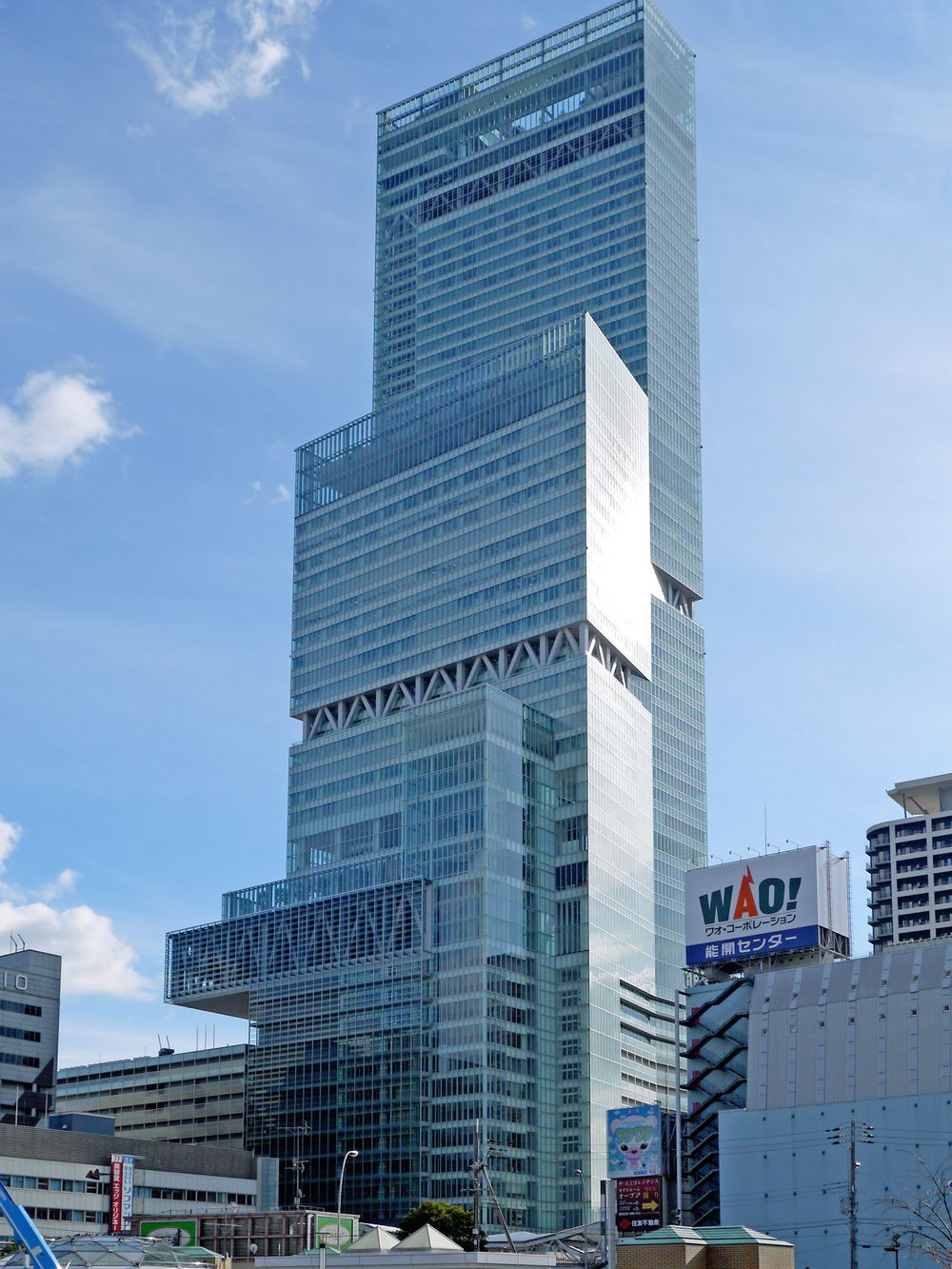
The Floating Garden Observatory, Umeda Sky Building
Last season: 06:00 to 08:00 on January 1, 6,000 yen, web-only, first 250 people, on sale from 12:00 on December 12 and marked sold out. The inclusions were unusually generous — admission plus a hinoki masu cup, a New Year goshuin paper from the Takimi Inari shrine on site, a matcha warabi-mochi and a voucher for zenzai.
Choosing between them is easy enough: the outdoor experience is the Harukas helipad at 8,500 yen for 56 places, and the value is Umeda Sky at 6,000 yen with the extras. But both sit at or below 250 places, so the sale date matters far more than the price. December 2 and December 12 are the dates to diarise, not the yen figures.
📌 What about Tsutenkaku? Its official site carries no New Year's Day early opening or sunrise announcement at all, so nothing is claimed here. Its standing admission is ¥1,500 for adults and ¥800 for children aged 5 to 14, open 09:00 to 21:45 with last entry at 21:15, and all ticket types require booking an entry time slot in advance. ⚠️ Tsutenkaku's year-end and New Year hours are also unpublished — check the official site in December.
Toka Ebisu: the real reason to be in Osaka in January
If only one thing in Osaka's new year could be seen, the better choice is Toka Ebisu, not January 1 hatsumode. Three reasons, none of them atmospheric filler.
Reason one: this is not one shrine's festival, it is the whole city on the same dates
Toka Ebisu is bigger than "the festival at Imamiya Ebisu Shrine." On the same dates, at least three major Osaka shrines run their own Ebisu festival, all three confirmed officially:
| Shrine | Official festival name | Dates |
|---|---|---|
| Imamiya Ebisu Shrine | Toka Ebisu | Jan 9, 10, 11 |
| Sumiyoshi Taisha | Ichi-Ebisu Daikokusha reisai (described by the shrine as the oldest Ebisu festival in Osaka) | Jan 9–10 |
| Osaka Tenmangu | Tenma Tenjin Ebisu Matsuri | Jan 9–11 |
Neither Tokyo nor Kyoto has anything structured like this. What it means for a visitor is simple: for three days in early January the whole city is doing the same thing at once — which is a very different experience from shuffling two metres at a time through a first-of-January queue.
Reason two: three days a year, that shrine does not close
Imamiya Ebisu's normal hours are 06:00 to 17:00, with the south gate open to 22:00; charm and telephone reception 09:00 to 17:00, prayer reception 09:30 to 16:30.
Toka Ebisu is different. Per the Osaka Convention and Tourism Bureau official event listing: yoi-ebisu on January 9 from 00:00, and nokori-ebisu on January 11 until 24:00 — which is 72 continuous hours, from midnight on the 9th to midnight ending the 11th.
📌 Two sources, kept separate. "06:00 to 17:00 normally" comes from the shrine's own page; "00:00 on January 9 through to 24:00 on January 11" comes from the city tourism bureau's official event listing. Those are two different official bodies. Check the shrine's own announcement before you travel.
One vocabulary fix while we are here: the official terms are yoi-ebisu (Jan 9), hon-ebisu (Jan 10) and nokori-ebisu (Jan 11) — not nokori-fuku, which appears widely in secondary coverage.
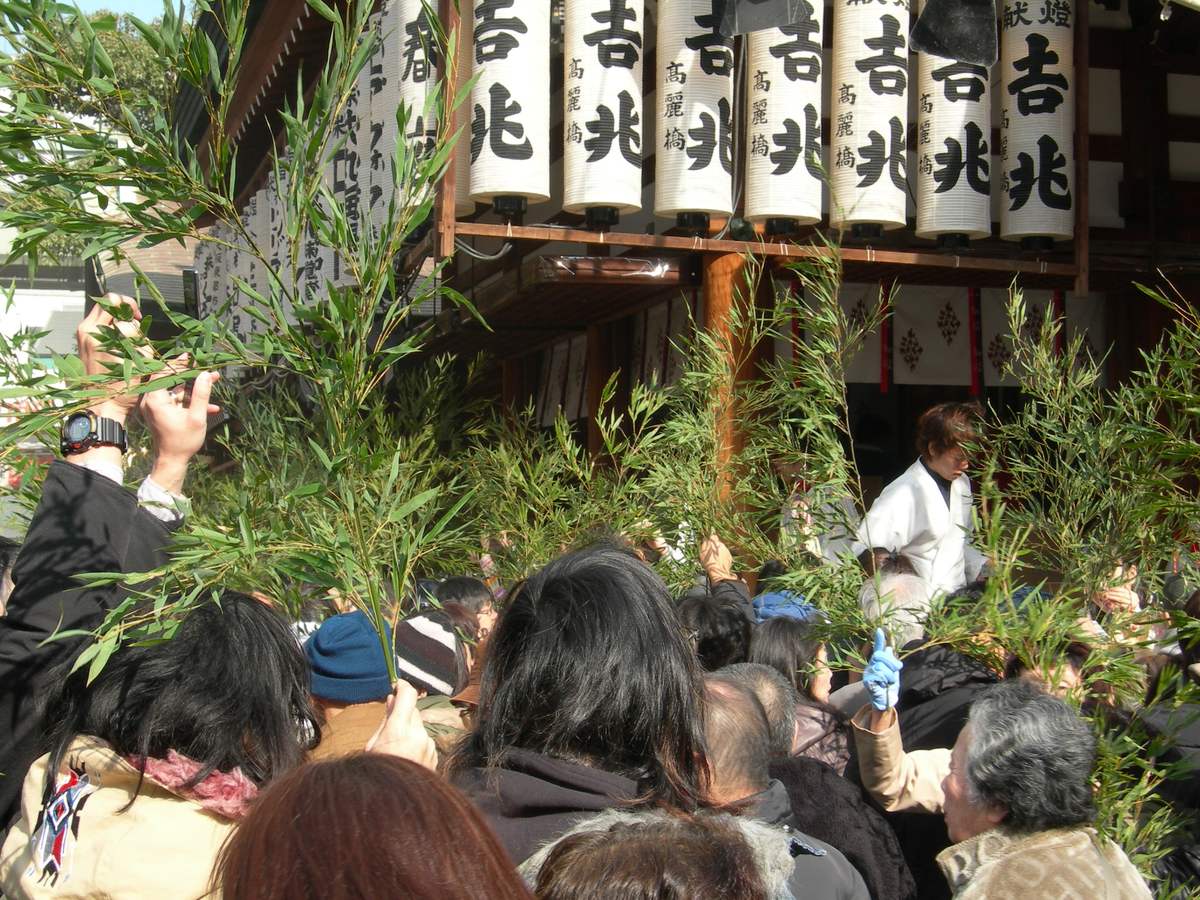
Reason three: no official page states what a fukuzasa costs
Here is the claim this guide refuses to repeat: the fukuzasa bamboo branch is free and only the kitcho charms hung on it cost money. It sounds plausible and it may well be true.
But the verification result was this: the shrine's home page, its Toka Ebisu page and its calendar page carry no amounts and no statement that anything is given without charge, and the city tourism bureau listing has none either. The "free fukuzasa" line appears only in secondary sources.
So this guide states neither a price nor that anything is free. Ask at the counter when you get there. That is not laziness: writing an unverifiable claim as fact sends readers to a shrine counter with the wrong expectation, and that is the actual harm. For the same reason, no attendance figure is quoted — the shrine publishes none, and the "one million visitors" number is secondary-source only.
The Hoekago procession is not run by the shrine
The most photogenic part of Toka Ebisu is the Hoekago procession, in which geiko and business figures ride decorated palanquins to the shrine. There is a structural misunderstanding to correct.
The city tourism bureau states plainly that the Hoekago procession is organised not by Imamiya Ebisu Shrine but by a local promotion association run by residents. Which means the common advice to "check the shrine's site for procession times" is wrong at the root — the shrine is not the organiser.
The published route is from the Dotonbori River Park to the shrine. Departure and arrival times are not published officially; the specific times circulating online have no official source, and are not stated here. Watch the promotion association and the tourism bureau from December into early January.
🗓️ The shrine itself has told you when information will exist. Its home page states that details of Toka Ebisu will be announced around November 1. That single line is the strongest possible endorsement of the check-back list below: if the shrine says information arrives on November 1, then any page currently stating firm 2027 Toka Ebisu details is not working from official information.
Two more official calendar items worth knowing: Imamiya Ebisu holds a great purification, an offering of fresh fish to Gion-sha in Kyoto, and a joya-sai on December 31, and a Senkyaku-Banrai rite on January 3. That fish offering is not one-directional — Yasaka Shrine's own annual calendar in Kyoto lists a tai offering to Imamiya Ebisu at 21:00 the same night, the two being brother shrines (see the calendar table in the Kyoto New Year guide). On the last night of the year, a fish travels between Osaka and Kyoto. It is probably the most obscure connection these two cities have.
The first three days: stores, markets, the Amazing Pass
The nationwide rules for the holiday period — convenience stores, ATMs, pharmacies, delivery services, fukubukuro culture, all-reserved shinkansen — are in what opens and closes in Japan at New Year. This section covers the Osaka specifics.
Department store first sales: Kansai is a January 3 city
Two items have official backing (both last season):
- Takashimaya Osaka: the group's official release dated December 4, 2025 gave fukubukuro sale dates of January 3 and 4, with some items by lottery (25 places for a parent-and-child railway experience, plus a banner) and others first come first served. Takashimaya stores nationwide have also closed on January 1 and 2 since the 2025 New Year, as verified in the nationwide guide.
- Hankyu Umeda Main Store: the official page is literally titled "entrance guidance for opening time on Saturday January 3, 2026," which confirms the January 3 first sale and that entrances are restricted for crowd control. ⚠️ That page does not state an opening time, nor whether the store closes on January 1 and 2, so neither is claimed here.
For Kuromon Market: a market is a collection of individual shops with no unified opening announcement, so checking shop by shop is the only reliable method. Broadly, the last days of December are the busiest of the year as households buy New Year food, and some shops close in early January, but do not treat any specific time as official. One more piece of etiquette that matters more in a packed market: eat what you buy in front of the shop or inside it rather than walking with it. The aisles are narrow and year-end crowds make eating on the move a genuine nuisance.
Osaka Amazing Pass: the first three days are its worst window of the year
The Amazing Pass earns its value by getting you into many attractions. Over the first three days a large share of those attractions are closed or on shortened hours — three examples make the point: Shitennoji's three ticketed areas close at 16:00 from October to March, Tsutenkaku does not publish New Year hours at all, and Osaka Castle's keep runs its own January arrangements. When half your facilities are unavailable and the rest close early, the break-even maths collapses.
So: do not buy the pass for January 1 to 3. Move it to a day from January 4 onward. Full break-even maths and the facility list are in the Osaka Amazing Pass guide, and the castle keep is covered in the Osaka Castle guide.
What to book now, and the November-December check list
Splitting what to do now from what only exists once operators announce it:
Lock these in now
- Accommodation, chosen by location before price. It is the one thing that genuinely runs out, and Osaka's transport structure turns location into a feasibility question: Loop Line = trains until 03:00; Keihan corridor (Kyobashi, Temmabashi, Yodoyabashi) = trains all night; Midosuji Line away from the Loop = walking after midnight. Check Osaka New Year rooms on Trip.com
- Decide which kind of New Year's Eve you want. The USJ countdown (party pass, first-come sales from October 7), Dotonbori (unorganised crowd), or a hotel event (least friction). That decision drives the hotel choice, so make it first.
- If the dates are flexible, shift the trip's centre of gravity from January 1-3 to January 9-11. Toka Ebisu is the least replaceable thing in Osaka's new year, and the crowd is festival energy rather than queue congestion.
- Diarise three dates: the Godairiki stone charm from January 5, Aoma shinji on January 7, Doyadoya on January 14. Those three alone prevent most wasted journeys.
Wait for the announcements (set a reminder)
| Item | Expected | Where |
|---|---|---|
| JR West New Year's Eve extra services | Late October (Oct 31 last season) | JR West press releases |
| Imamiya Ebisu Toka Ebisu details | Around November 1 (the shrine's own wording) | Imamiya Ebisu home page |
| Kintetsu year-end operating plan | Mid November | Kintetsu news releases |
| Nankai year-end plan (Sumiyoshitaisha special stops) | Late November (Nov 27 last season) | Nankai news |
| Harukas 300 sunrise plans and sale date | Late November (released Nov 28, on sale Dec 2 last season) | Harukas 300 official and Kintetsu Real Estate PR |
| Osaka Metro New Year's Eve operation | Early December (Dec 1 last season) | Osaka Metro news releases |
| Sumiyoshi Taisha New Year notice (hours, stalls, Godairiki closure) | Early December | Sumiyoshi Taisha official New Year page |
| Keihan New Year's Eve and New Year timetables | Early to mid December (Dec 11 last season) | Keihan press releases |
| Umeda Sky Building sunrise session | Early December (on sale Dec 12 last season, sold out fast) | Floating Garden official news |
| Osaka Tenmangu: is fukudama-maki back? (roof work) | December | Osaka Tenmangu official (new page each year) |
| Hankai Tramway New Year timetable | December (nothing published yet) | Hankai Tramway information page |
| Tsutenkaku year-end and New Year hours | December | Tsutenkaku official information page |
| Takashimaya Osaka and Hankyu Umeda first-sale dates | Early December | Store official pages |
| 2027 Osaka sunrise time | Once the 2027 data set is published | National Astronomical Observatory of Japan |
A workable shape for the trip
- Dec 30 to Dec 31 daytime — settle in; Kuromon Market is at its most seasonal now (individual shop hours vary). Base yourself on the Loop Line or the Keihan corridor.
- Dec 31 evening — pick one: USJ if you have a party pass (19:00 entry, exit via the Yumesaki Line); if not, do not plan to be at the USJ gates between 17:00 and 19:00. For the Dotonbori crowd, plan the return on the JR Loop Line before 03:00, or stay somewhere you can walk back to.
- Jan 1 — with a sunrise ticket, be up the tower at 06:00 (and accept the no-refund clause). Without one, sleep in and go to Sumiyoshi Taisha in the afternoon: it opened at 22:00 on Dec 31 and does not close until 20:00 on Jan 1, so late afternoon is far more comfortable than dawn.
- Jan 2-3 — Shitennoji (Ganzan Daishi-e at 10:00 on Jan 3) and Osaka Tenmangu. January 3 is the Kansai first sale if fukubukuro matter to you. Do not use the Amazing Pass on these days.
- Jan 7 — Aoma shinji at Sumiyoshi Taisha, 11:00: a real sacred horse, same-day-only charms, and no crush.
- Jan 9-11 — Toka Ebisu. Imamiya Ebisu (72 hours continuous), Sumiyoshi Taisha's Ichi-Ebisu reisai (Jan 9-10) and Osaka Tenmangu's Ebisu festival (Jan 9-11) — one shrine a day fits neatly.
- Jan 14 — Doyadoya at Shitennoji plus the tondo bonfire, 09:00 to 13:00 at the Nio gate, closing the fourteen-day Shushoe.
If what you want is a closed street, a countdown and official fireworks, Osaka is not that city — the subway stops, Dotonbori has no organiser, and even JR gives up around three in the morning. The value lies elsewhere. Sumiyoshi Taisha opens its gates at 22:00 on December 31 and does not close them until eight in the evening on January 1. And the real peak waits until 00:00 on January 9, when three major shrines start their Ebisu festivals on the same dates and one of them stays open for 72 hours straight. Osaka's new year is not compressed into one second at midnight; it is spread across two weeks. Travellers willing to stay past January 9 get a completely different city.
For how the same nights work elsewhere, see the Kyoto New Year guide and the Tokyo New Year and first sunrise guide. To fit these days into a wider trip, see the Osaka and Kyoto 5-day itinerary.
Frequently Asked Questions
- Q1:Does Osaka Metro run all night on New Year's Eve, and how do you get back from Dotonbori at midnight?
- No, and Osaka Metro has now said so in writing two years running. Its notices dated December 5, 2024 and December 1, 2025 use the same sentence: the subway and the New Tram do not operate all night. Both years the whole network also switches to a Saturday-and-holiday timetable from December 27 to January 4. So if your plan is to count down on Ebisubashi and then ride the Midosuji Line back to Umeda or Tennoji, that plan stops working after the normal last train. There are three fallbacks, in order of usefulness. First, JR West. Its official wording also says plainly that it does not run all-night services, but two lines do run deep into the night: the Osaka Loop Line in both directions from around 00:00 to 03:00 at roughly 10-minute intervals, with some services running through onto the JR Yumesaki Line, and the JR Yumesaki Line itself between Sakurajima and Nishikujo from about 23:30 to 03:00, also around every 10 minutes. Second, Keihan, which genuinely does run all night: a special timetable from 18:00 on December 31 to 07:00 on January 1 across the Keihan lines. Yodoyabashi, Kitahama, Temmabashi and Kyobashi are all in Osaka, so staying on the Keihan corridor is the least stressful choice for that night. Third, taxis, which are hard to get anywhere near Namba that night. Two warnings that come straight from the JR West notice: outside the sections listed above there are no extra services at all after the normal last train, and even the Loop and Yumesaki lines stop at around 03:00. Everything here is the 2025-26 season; operators publish the new versions between late October and mid December.
- Q2:Is there an official countdown event at Dotonbori?
- No, and the answer is cleaner than most travellers expect: it was not cancelled, there has simply never been an organiser. Neither the Osaka Convention and Tourism Bureau official site nor the Dotonbori shopping association material lists an organised countdown event of any kind. That is different from Tokyo, where Shibuya publishes an annual notice explaining that it is not holding a street countdown, which at least means an official body is speaking about it and managing the crowd. In Osaka there is no notice because there is no organiser. Three practical consequences. There is no official schedule, so any start time you read online is not official information. There is no official crowd-flow plan or safety arrangement, and the bridge closures, police deployments and similar details that circulate online appear on no Osaka Prefectural Police or Osaka City page. And most importantly, nobody is responsible for what happens on the ground, because nobody is running it. The only New Year event in Osaka with an official organiser, official hours and official tickets is the Universal Studios Japan countdown. Going to Dotonbori for the atmosphere is a perfectly reasonable choice, as long as you understand you are joining a spontaneous crowd rather than attending an event.
- Q3:Can you stay in Universal Studios Japan until midnight on a normal ticket?
- No. There is a two-hour clear-out in the middle of the evening, and it is designed that way. Per USJ’s official NO LIMIT! Countdown 2027 ticket page: on December 31, 2026 an ordinary annual pass or 1 Day Studio Pass is valid only until 17:00, and the park states in writing that 17:00 to 19:00 is outside park operating hours. From 19:00 the only way in is the separately sold Countdown Party Pass, now published at ¥16,900 including tax, one price for all ages. After midnight, ordinary admission on January 1 does not begin until 02:00. So the only route to being inside the park at midnight is the party pass, and this season it is first come, first served with no lottery: Grand Royal annual-pass holder presale from about 21:00 on October 7 to 23:59 on October 9, a Lawson Ticket pre-request first-come presale from 12:00 on October 23 to 23:59 on November 3, and general sale from about 21:00 on November 4, held only if tickets remain. Tickets cannot be cancelled or changed. Plan your exit as well: last season the JR Yumesaki Line that serves Universal City station ran roughly every 10 minutes from 23:30 to 03:00.
- Q4:What are Sumiyoshi Taisha hours over New Year, are there food stalls, and can you do the Godairiki stone ritual?
- Three things to know. Hours first, from the shrine official New Year notice for the 2025-26 season: the gates open at 22:00 on December 31 and stay open until 20:00 on January 1, a continuous 22 hours. January 2 and 3 are 06:00 to 19:00, January 4 and 5 are 06:00 to 18:00, and from January 6 the shrine returns to its normal winter hours of 06:30 to 17:00. Normal hours the rest of the year are 06:00 to 17:00, with a 06:30 opening from October through March. Second, food stalls. The shrine states outright that there are no stalls from December 31 to January 5, in those words. The approach will be empty of yatai for all six days, so eat before you go. Third: the Godairiki stone charm and the fishing-style omikuji are closed from December 31 to January 4 according to the shrine. The four days everyone wants to visit are exactly the four days you cannot hunt for the three go-dai-riki pebbles. If that ritual is why you are going, schedule it for January 5 or later. For drivers: the shrine car park is closed from December 31 to January 3 for traffic control, large vehicles cannot use it from December 31 to January 15, and during the busy period from January 4 to early February parking rates differ from the usual 200 yen per 30 minutes, with the actual figure not published. All New Year hours above are last season; the shrine refreshes the same page each December.
- Q5:What is Toka Ebisu, how much does a fukuzasa cost, and is it only at Imamiya Ebisu?
- Toka Ebisu is the New Year festival for the deity of commerce, held on January 9, 10 and 11, called yoi-ebisu, hon-ebisu and nokori-ebisu in that order. One framing correction first: this is not one shrine having a festival. On the same three dates at least three major Osaka shrines hold their own version, all three confirmed on official pages. Imamiya Ebisu Shrine holds Toka Ebisu on January 9, 10 and 11. Sumiyoshi Taisha holds the Ichi-Ebisu Daikokusha reisai on January 9 and 10, which the shrine itself calls the oldest Ebisu festival in Osaka. Osaka Tenmangu holds Tenma Tenjin Ebisu Matsuri from January 9 to 11. The timing detail that makes this worth building a trip around: Imamiya Ebisu normally opens 06:00 to 17:00, with the south gate to 22:00, but according to the Osaka Convention and Tourism Bureau official event listing the Toka Ebisu period runs from 00:00 on January 9 through to 24:00 on January 11, which is 72 continuous hours. Note that those two sets of hours come from two different official bodies, the shrine and the tourism bureau. On cost: the shrine home page, its Toka Ebisu page and its calendar page carry no prices and no statement that anything is free, and the tourism bureau listing has no prices either. No official source states that the fukuzasa bamboo branch is free, or that only the kitcho charms cost money. Ask at the shrine counter. One vocabulary correction as well: the official term for January 11 is nokori-ebisu, not nokori-fuku. And the shrine states that details for the 2027 festival will be announced around November 1.
- Q6:Where can you watch the first sunrise in Osaka, and do you get a refund if clouds hide it?
- Start with the astronomy: the National Astronomical Observatory of Japan gives sunrise in Osaka on January 1, 2026 at 07:05 and sunset at 16:58. The 2027 data set is not published yet; year-to-year variation is a matter of minutes. Osaka does first sunrise from towers rather than beaches, and both main options are ticketed. Harukas 300, the observatory at Abeno Harukas, ran a special sunrise opening from 06:00 to 08:30 on January 1, 2026, and its own material quoted sunrise as around 07:05 citing the observatory. Eight plans were offered in two families. The standard plans, all including a bowl of ozoni soup and all priced the same regardless of age, were the outdoor helipad at 8,500 yen for 56 places, front-row seating on floor 60 at 7,500 yen for 26 places, standing room on floor 60 at 6,500 yen for 150 places, and indoor floor 59 at 6,000 yen for 50 places. The kotatsu plans, including osechi, ozoni and a drink, ran from 16,000 to 18,000 yen. Two official rules matter more than the prices. First, there is no refund if the sunrise is obscured or invisible; the special opening runs regardless, and in rain or high wind helipad ticket holders are moved to floor 59 and compensated with a voucher for a later ordinary visit, still with no refund. Second, the kotatsu seats cannot see the sunrise at all according to the operator, and all the kotatsu are outdoors, so an 18,000 yen booking means walking to a designated viewing spot first and returning to the kotatsu afterwards. Children aged three and under, and anyone who cannot manage stairs unaided, cannot go up to the helipad. The other option is the Floating Garden Observatory at Umeda Sky Building, which last season ran 06:00 to 08:00 on January 1 at 6,000 yen for 250 web-only places, went on sale at 12:00 on December 12 and sold out; extras included a hinoki masu cup and a New Year goshuin paper from the Takimi Inari shrine on site. All of the above is last season. New plans and prices are typically announced from late November into early December.
- Q7:Does Shitennoji charge admission over New Year, and what can only be seen in January?
- Money first: the Shitennoji precinct itself is free to enter, and only three areas are ticketed. The central garan is ¥500 for adults, the Honbo garden ¥300, and the treasure house ¥500; high school students pay 300, 200 and 300 yen respectively, and junior high school age and under are free at all three. The central garan price was revised on October 1, 2024 and the treasure house on September 14, 2024. Viewing hours are 08:30 to 16:00 from October through March, 08:30 to 16:30 from April through September, with an 08:00 opening on the 21st of each month. January is the densest month in the temple calendar. Shushoe runs from January 1 all the way to January 14, with daily prayers at the Rokujido and a closing rite on the 14th tied to Doyadoya. On January 3 at 10:00 the Ganzan Daishi-e and a goma rite for exam success are held at the Ganzan Daishi hall, which is why you will see families with students that day. The Chona Hajime-shiki on January 11 at 16:00 is marked not open to the public, so do not make a trip for it. The Shojingu on January 12 at 10:00 is capped at the first 250 people. January 14 is Doyadoya, with a tondo bonfire in front of the Nio gate from 09:00 to 13:00. The temple publishes nothing about a New Year Eve bell or January 1 opening times, on its admission page, its annual calendar or its January events page. Ask on site, or watch for the December announcements.
Read next
Kyoto New Year 2026-27: Joya no Kane & Okera Mairi
Chion-in’s bell is now a paid, pre-booked affair, city buses and subways do not run late on New Year’s Eve, and Keihan is your way home.
Osaka & Kyoto 5-day itinerary
Dotonbori, Kiyomizu, Arashiyama — full tested route.
Hatsumode 2027: Your First Shrine Visit in Japan
There is no official deadline for hatsumode, and you may pray from the side when it is packed — both straight from the Shinto authority itself.
📊 See the 2026 Price Index (JR Pass, DPA, eSIM, Airport Transport) →