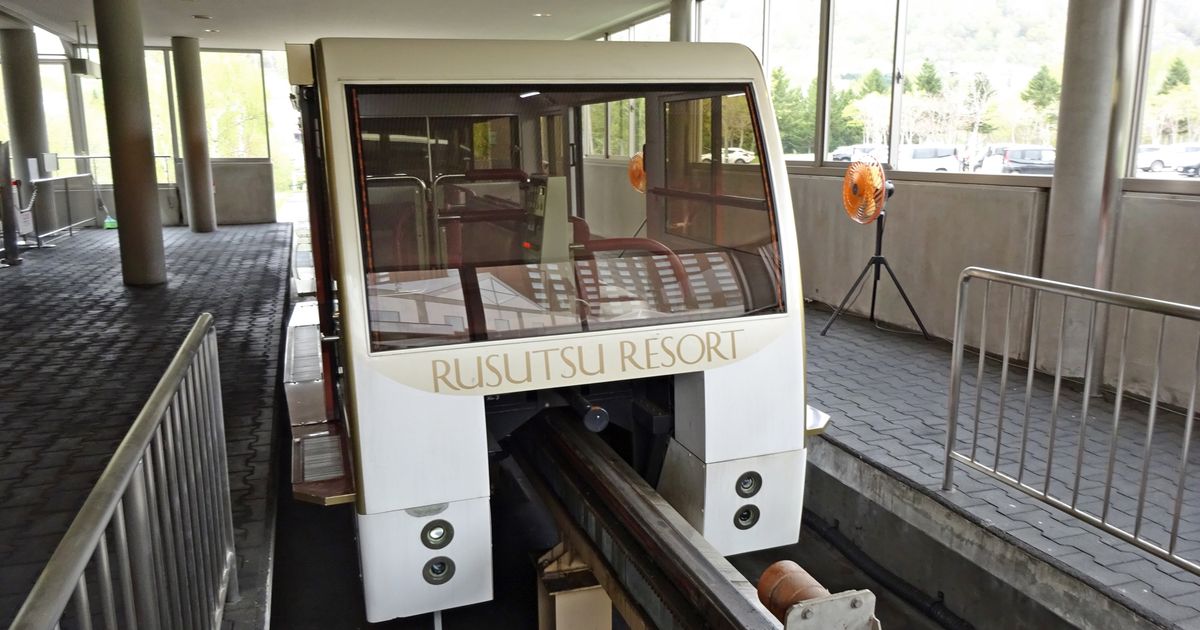
If your group has one person chasing powder and another who just wants to bring the kids swimming, Rusutsu is about the only Hokkaido resort built to satisfy both at once. It's three connected peaks with an official average of 14m of annual snowfall, snow quality that rivals Niseko's, but the resort also hides a rare-for-Japan indoor amusement park and indoor heated pool, so non-skiing family time is fully covered. This guide covers how to pick between the three peaks, the Rusutsu-vs-Niseko trade-off, and how to get there from New Chitose Airport. It's the Rusutsu deep-dive companion to the guide on how to choose a Japan ski resort.
- Three peaks linked by gondola: West Mt (gentle runs + night skiing), East Mt (Mt Yotei views), Mt Isola (advanced terrain) — 37 courses total
- 14m of annual snowfall (official), dry powder on par with Niseko, season runs roughly late November to end of March
- Family-friendliness is the trump card: an indoor amusement park plus an indoor heated pool open year-round, free for overnight guests
- vs Niseko: comparable snow but more spread-out crowds and a self-contained resort; Niseko wins on international feel and nightlife
- Access is by shuttle bus: roughly 2 hours from New Chitose Airport or Sapporo, no direct rail link
📖 Table of contents
- 1. Why choose Rusutsu
- 2. Which of the three peaks to choose
- 3. Season and snow (vs Niseko)
- 4. Access and lodging
- 5. Indoor amusement park, pool and off-snow
- 6. Budget: is Rusutsu cheaper than Niseko
- 7. Which peak fits your needs
- 8. Season planning and lift ticket notes
- 9. A simple first-trip checklist for families
- 10. FAQ
Why choose Rusutsu
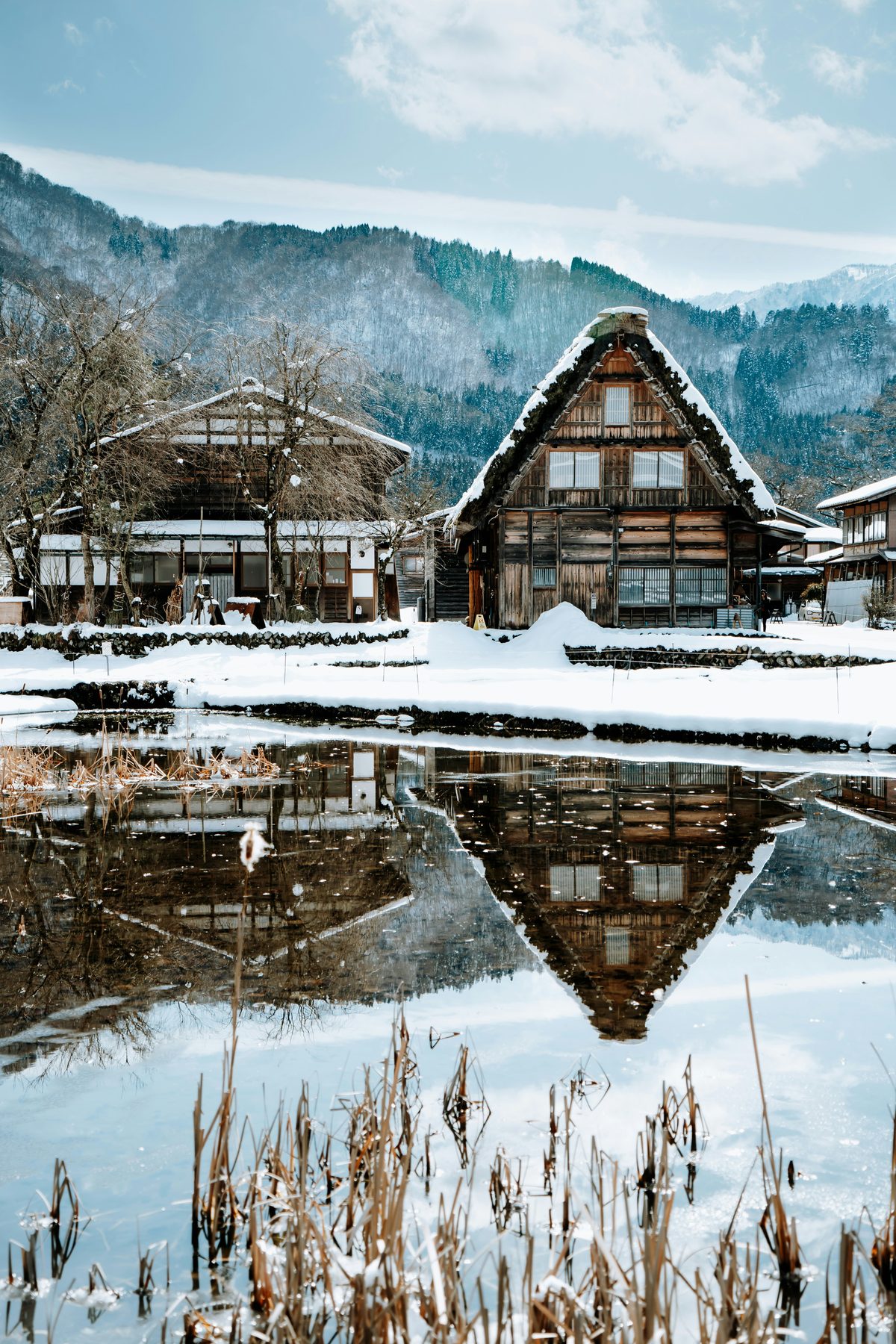
Rusutsu sits in southern Hokkaido on the south-east side of Mt Yotei, catching the same Sea of Japan moisture as Niseko, so the snow quantity and quality are on par — the resort publishes an average annual snowfall of 14m, the same order of magnitude as Niseko's own 10-15m, of the same dry, soft powder that's easy to fall into. What actually sets Rusutsu apart is that it's built as a full self-contained resort rather than just a ski area: ski-in/ski-out hotels, restaurants, an indoor amusement park and an indoor heated pool are all on the same property, so anyone in the group who isn't skiing has somewhere to go without arranging separate transport.
The trade-off is that Rusutsu is less international and has quieter nightlife than Niseko — there's no Hirafu-style strip packed with bars and international restaurants, and evenings are noticeably calmer. Anyone wanting a lively international nightlife scene may find it too quiet, but for a family who wants to "ski all day, then head back to the resort pool without going anywhere else," Rusutsu is actually the easier option. For a fuller side-by-side, see our Niseko ski guide.
One more practical point worth knowing: Rusutsu is a partner resort on Vail Resorts' Epic Pass, which includes five consecutive days of unrestricted access to Rusutsu during the winter season. The resort itself is run by the Japanese operator Kamori Kanko, not by Vail directly, but if you or anyone in your group already holds an Epic Pass from a trip to North America or Europe, it's worth checking whether those days can be used here before buying a separate lift ticket.
Which of the three peaks to choose
Rusutsu is made up of three connected peaks, linked by through-gondolas so a single lift ticket covers the whole resort:
- West Mt: the most gentle runs and the bulk of the beginner terrain, home to the ski school and night skiing; its base has ski-in/ski-out hotels and a kids' snow park, making it the usual base for beginners and families.
- East Mt: mixed-grade terrain, beginner through intermediate, with panoramic views of Mt Yotei (Ezo-Fuji); linked to West Mt by the East No. 1 through-gondola.
- Mt Isola: the largest of the three peaks and also the most challenging, with tree runs and steeper terrain concentrated here — the advanced skier's home base.
Altogether the resort has roughly 37 courses and 18-19 lifts, including 4 through-gondolas, with a combined uphill capacity of around 30,000 skiers per hour — an efficient system that makes moving between peaks easy rather than a bottleneck. The resort's base sits at about 400m elevation, with the highest lift-served point around 994m, giving a vertical drop of roughly 594m — noticeably less than Hakuba's advanced terrain in Nagano, but with a wider spread of easier and intermediate runs across the three peaks. That means a mixed-ability group can each choose their own peak and regroup at the same resort in the evening — one of the most practical things about Rusutsu for families and groups of friends.
Season and snow (vs Niseko)
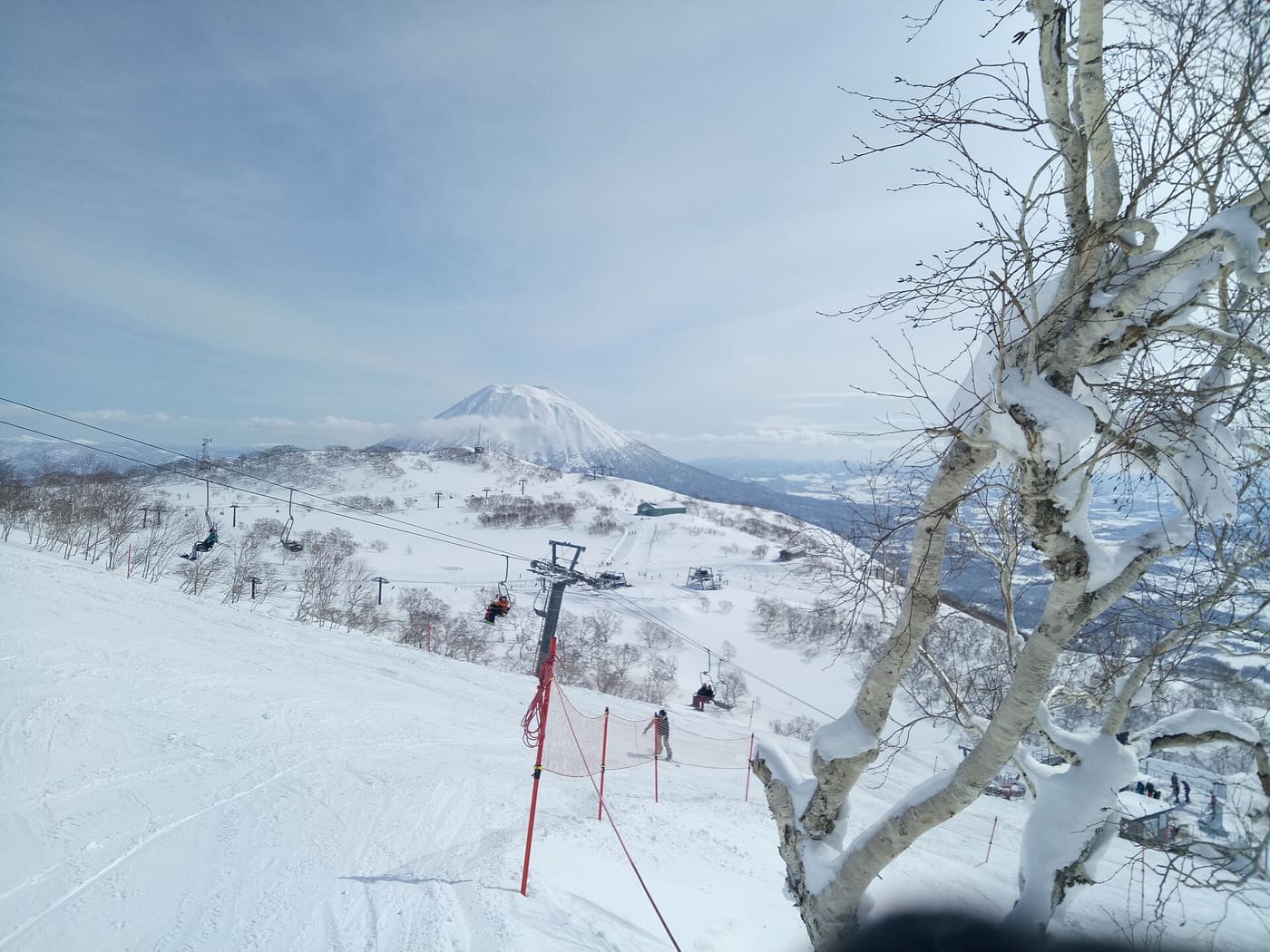
Per recent official announcements, the season runs roughly late November to the end of March (the 2025-26 season opened November 29 and closed March 31), and the exact 2027 season dates have not been published yet — check the official Rusutsu site before you travel. Daily operating hours run from around 9am to 8pm, shortened to about 5pm during the early and tail ends of the season. The most reliable, driest snow falls in the same core window as Niseko's: January through February. Rusutsu and Niseko both sit on Hokkaido's windward side, so snow quantity and quality are close between them; the real deciding factor is whether you want international nightlife or a self-contained resort, not a meaningful gap in the snow itself.
| Factor | Rusutsu | Niseko |
|---|---|---|
| Layout | Three connected peaks, one integrated resort property | Four connected ski areas across a village-style valley |
| Snowfall | 14m annually (official), dry powder | 10-15m annually (official), dry powder |
| International feel | Quieter, more Japanese in atmosphere off the slopes | Highly international, English near-universal |
| Nightlife | Limited, centered on the resort itself | Hirafu village has Japan's liveliest ski nightlife |
| Non-skier facilities | Indoor amusement park + indoor heated pool on-site | Onsen, restaurants, cafes spread through the village |
| Access | Shuttle bus only, ~2 hrs from New Chitose or Sapporo | Shuttle bus, ~2.5-3 hrs from New Chitose |
| Best for | Families wanting a self-contained, weather-proof trip | First-timers and anyone wanting zero language friction |
Access and lodging
Access: Rusutsu has no direct train station, so access is mainly by reservation-based shuttle bus — roughly close to 2 hours from New Chitose Airport, and about 70km (also roughly 2 hours by road) from central Sapporo, with multiple daily departures each way in winter; book through the official site or the operator's system. A couple of private operators run this route, generally departing every two hours or so through the day during peak season, with a reduced schedule in the shoulder months of November and April. Private taxis are the fastest option if your group can split the cost, and rental cars work for confident winter drivers, but neither beats the shuttle for simplicity if this is your first Hokkaido winter trip. Self-driving is an option, but winter mountain road conditions are a real challenge for travelers unused to snow driving, so most international visitors take the shuttle instead. If you're routing through Sapporo, see our Sapporo travel guide for how to connect the rest of your Hokkaido trip.
Lodging: Rusutsu's biggest convenience is that the resort itself is the lodging option — the ski-in/ski-out hotels at the base put you steps from the gondola station and lift ticket counters, with direct access to the indoor pool and amusement park, cutting out any daily commute to the slopes. Winter is peak season, so book good rooms 8-12 weeks out. To slot Rusutsu into a full Hokkaido winter trip, see our Hokkaido winter 7-day itinerary.
Indoor amusement park, pool and off-snow
What puts families most at ease about Rusutsu is that the trip doesn't hinge on the weather: the on-site indoor amusement park has roller coasters and other big rides, plus a two-story carousel that younger kids love. The indoor heated pool (with a water slide) runs year-round until 10pm and is free for overnight guests — perfect for warming up after a full day on the slopes, or as a backup plan entirely if conditions turn bad. If you're bringing kids who want to learn to ski, the Samurai Kids ski program is built for ages 4-14, and hourly-billed childcare is available so adults can get in more runs without watching the kids the whole time. Snowmobiling, snow rafting and dog sledding are also available as standalone activities. Set up a KKday Japan eSIM before you land so you can check shuttle bus schedules and resort facility notices the moment you arrive. Warm, waterproof packing tips are in our Japan packing and weather guide.
Budget: is Rusutsu cheaper than Niseko?
Generally, yes — Rusutsu tends to run a bit friendlier on lodging and dining than Hirafu village at Niseko, partly because it isn't competing on the same international resort-town pricing, and partly because staying inside the resort itself (rather than renting a standalone chalet) is often the default option. That said, don't assume it's dramatically cheaper: peak-season rooms at the ski-in/ski-out hotels still command resort rates, and lift tickets follow the same dynamic pricing model most Japanese resorts have moved to, so a late January weekend can cost noticeably more than a weekday in early December or March. A few ways to keep the budget down:
- Travel outside the January-to-Lunar-New-Year window: late November through early December and March both still deliver solid snow at a fraction of the peak crowd and price.
- Book the on-site hotel package with lift tickets included where available, rather than buying accommodation and lift access separately.
- Use the indoor pool and amusement park as your "bad weather day" instead of booking a separate paid activity elsewhere — it's included or free for overnight guests, so a stormy day doesn't have to mean idle time or extra spend.
- Check Epic Pass eligibility first if anyone in your group already holds one — it can offset the cost of a lift ticket entirely for up to five days.
Which peak fits your needs
Each of the three peaks has a role — figure out which type of trip this is first:
- First time skiing / traveling with kids → West Mt: the most gentle runs, the ski school is here, and the base has both a kids' snow park and ski-in/ski-out hotels.
- Want Mt Yotei views, intermediate level → East Mt: mixed-grade terrain with the best views, linked to West Mt by the through-gondola.
- Intermediate-and-up, wanting steeps and tree runs → Mt Isola: the largest and most challenging of the three, the advanced skier's home base.
- Mixed-ability group → use one lift ticket to split up by peak and regroup at the same resort in the evening, no need for separate lodging.
Season planning and lift ticket notes
A few practical tips to make a Rusutsu trip smoother:
- Lift tickets use dynamic pricing: Rusutsu's lift passes vary by date, weekday vs. weekend, and how far ahead you buy, typically split into single-day, multi-day and night-skiing tiers — always confirm the current week's price on the official site before you travel rather than relying on last year's numbers or someone else's figure.
- Rent on-site — and here "full set" genuinely means full: at Japanese resorts a "set" normally covers hardware only, skis, boots and poles (¥10,400 for an adult at Rusutsu), with outerwear a separate ¥7,500. Rusutsu's Full Set at ¥21,400 folds in jacket, pants, helmet, gloves and goggles — the only genuinely all-inclusive package among the four resort-style mountains we checked, and the official page notes gloves and goggles are not returned, meaning you keep them. Arriving empty-handed, it works out cheaper than renting item by item. (2025-26 rates; 2026-27 not yet published. Cross-resort cost breakdown in our Japan skiing guide for beginners.)
- Sign kids up for Samurai Kids or a general lesson: families can hand kids off to the children's ski program while adults book their own lesson or ski independently — more efficient for everyone. One caveat: Rusutsu's own ski school teaches in Japanese. If that rules it out for you, Trip.com sells private lessons with English- and Chinese-speaking instructors: Rusutsu private ski lesson, English/Chinese (Trip.com) →. Being straight with you: private tuition is not cheap, and on a tight budget the resort's own group lesson is better value — this route is for people who genuinely need the language.
- Avoid Lunar New Year and the January peak: late November into early December, and March, still have good snow with calmer crowds and rates — better value.
- Book the shuttle bus ahead: winter departures are frequent, but seats sell out in peak season, so book as soon as your dates are set.
Overall, Rusutsu fills the family-flexibility gap that Niseko lacks with its "one-stop resort plus indoor attractions" model — a genuinely worthwhile option for a family trip that still wants Hokkaido-grade powder.
A simple first-trip checklist for families
If this is your first time bringing kids to a Japanese ski resort, a Rusutsu trip is easier to plan around than most, precisely because so much of it is under one roof. A workable structure looks like this:
- Arrive and settle in: take the shuttle bus in from New Chitose or Sapporo, check into a ski-in/ski-out room, and use the first afternoon to rent gear and walk the resort layout rather than rushing straight onto a lift.
- Split the group by ability the next morning: put beginners and young kids on West Mt with a lesson booked, send intermediate-and-up skiers to East Mt or Mt Isola, and agree on a lunch meeting point back at the base.
- Reserve an afternoon for the indoor pool or amusement park: rather than treating these as an afterthought, block out real time for them — they're a core part of what makes Rusutsu worth choosing over a ski-only resort, and kids tend to remember the carousel and water slide as much as the snow.
- Keep one day flexible: if the group's ability levels are very different, or the weather turns, having a day with no fixed plan lets you lean harder on the indoor facilities or let the stronger skiers get an extra day on Mt Isola.
- Confirm shuttle times home early: build your return shuttle booking into your plan on day one rather than leaving it to the last day, since seats in peak season can sell out days in advance.
Frequently Asked Questions
- Q1:Who is Rusutsu best for? Is it good for families?
- Rusutsu's biggest strength is being family-friendly — the resort has its own indoor heated pool and amusement park on-site, plus a "Samurai Kids" ski program built for ages 4-14 and hourly-billed childcare, so a non-skiing toddler in the group isn't left with nothing to do. On the slopes, all three peaks have terrain from beginner to advanced: West Mt has the most gentle runs, while Mt Isola is the most challenging, so a mixed-ability family or group of friends can each pick suitable terrain and regroup at the same resort in the evening without splitting up lodging.
- Q2:How do the three peaks (West Mt, East Mt, Mt Isola) compare?
- The three peaks are linked by connecting gondolas, so one ticket covers all of them: West Mt has the most gentle runs, houses the ski school and night skiing, and its base has ski-in/ski-out hotels and a kids' snow park — the natural base for beginners and families. East Mt has mixed-grade terrain with panoramic views of Mt Yotei, connected to West Mt by the East No. 1 gondola. Mt Isola is the largest of the three and the most challenging, the advanced skier's home turf. Altogether the resort has roughly 37 courses and 18-19 lifts, including 4 gondolas.
- Q3:How does Rusutsu's snow compare with Niseko's?
- Both are in Hokkaido and get comparably huge snowfall — Rusutsu publishes an average of 14m of snow a year — with dry powder quality that's just as good as Niseko's. The real difference is character and positioning: Niseko is the most international, with the liveliest nightlife in Hirafu village, but also the biggest crowds and highest prices. Rusutsu is more of a self-contained resort, with lodging, dining, the indoor amusement park and pool all built into one property, and crowds spread out more across three peaks rather than concentrated in one village center. It suits travelers who want a "one-stop" family trip and would rather avoid the busiest scenes. Snow quality and terrain variety are close between the two; on family facilities built directly into the resort, Rusutsu has the clearer edge.
- Q4:How do I get to Rusutsu from New Chitose Airport or Sapporo?
- Rusutsu has no direct train station, so access is mainly by reservation-based shuttle bus: the ride from New Chitose Airport takes close to 2 hours, and from central Sapporo — about 70km away — the drive is also roughly 2 hours, with multiple daily departures each way in winter. A couple of private operators run this route on a schedule that's frequent in peak season and lighter in the shoulder months of November and April. Renting a car and self-driving is an option too, but winter mountain road conditions are challenging for travelers unused to snow driving, so most international visitors take the shuttle. Book ahead once your dates are set, since seats fill up in peak season, especially around weekends and Japanese national holidays.
- Q5:What can non-skiers do at Rusutsu?
- Rusutsu's biggest draw for non-skiers is its indoor amusement park and indoor heated pool — the amusement park has roller coasters and other big rides, plus a two-story carousel that's a hit with younger kids. The indoor heated pool (with a water slide) runs year-round until 10pm and is free for overnight guests, so you can warm up mid-ski-day or switch to indoor activities entirely if the weather turns. There's also snowmobiling, snow rafting and dog sledding for anyone who wants a change of pace from the slopes.
- Q6:Can I use an Epic Pass at Rusutsu?
- Yes — Rusutsu is a partner resort on Vail Resorts' Epic Pass network, and the pass includes five consecutive days of unrestricted skiing at Rusutsu during the winter season. The resort is still Japanese-operated day to day (by Kamori Kanko), so this is a pass benefit rather than Vail ownership, but if you or someone in your group already holds an Epic Pass from a North American or European trip, it's worth checking your pass benefits before buying a separate lift ticket here.