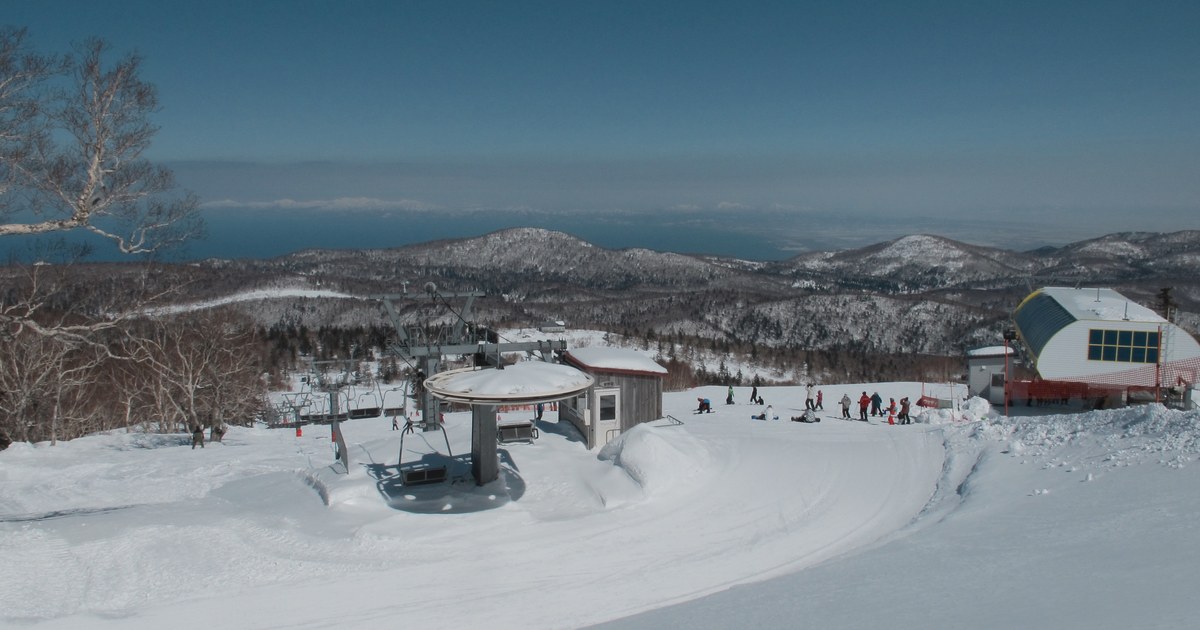
Open the Japanese, English and traditional-Chinese versions of the Sapporo Kokusai website side by side on 8 August 2026 and the same lift-ticket table gives you two different answers. The Japanese and English pages are headed "2026-2027 season" and price an adult day pass at ¥7,000 at the window, ¥6,700 online. The Chinese page still shows ¥6,000 and ¥5,700 — last season's numbers. The gondola single is starker still: ¥2,000 on the Chinese page against ¥3,000 on the Japanese one, a 50% increase in a single year.
Nobody is being deceived here. No resort has an obligation to keep every language edition current, and the Chinese page is a real, properly translated site — it is simply a season behind. But anyone budgeting from it will be wrong by ¥1,000 per adult per day, and almost nobody writing about this resort in Chinese has noticed, because that page is where the numbers usually come from. The second thing nobody spells out is geographic: the resort is called Sapporo Kokusai, its address is 937 Jozankei, Minami-ku, Sapporo, and while the ward is genuinely part of the city, the mountain sits in the Jozankei hot-spring valley. The official access page offers three ways in — bus, car, taxi — and never once mentions a train. That famous "about 60 minutes from central Sapporo" line? It is printed under access by car.
What follows uses the resort's published 2026-27 figures to work through lift tickets, the season-pass early-bird window, transport, rentals, the ski school, the rulebook and the food — with the year attached to every number, because this guide handles two vintages: the 2026-27 prices the resort has published, and the bus data that is still stuck on 2025-26. Cross-resort cost structure and rules live in our guide to what skiing in Japan actually costs, the head-to-head of the big resorts is in how to choose a ski resort in Japan, and the closest comparison — same city, four rules reversed — is Sapporo Teine.
- The official Chinese page is a season out of date — Japanese and English list a 2026-27 day pass at ¥7,000 (¥6,700 online); the Chinese page still says ¥6,000 / ¥5,700. Gondola single ¥2,000 to ¥3,000. Budget from the Japanese page.
- No train, and the bus needs booking — the resort warns in writing that arriving without a return reservation may leave you with no way home. 2025-26 actuals: Sapporo Station to the resort 1h37m, ¥1,800 one way. 2026-27 fares are not out yet.
- One date you can act on right now — season-pass early-bird sales run online 10 Sep 2026 10:00 to 30 Sep 15:00, on-site 3 to 20 Oct. Adult new pass ¥83,000 against ¥92,500 at full price.
- Four things run opposite to Teine — no night skiing, a ¥500 refundable IC-card deposit, lessons that do not include a lift ticket, and non-skiers who are allowed up the gondola.
- Two widely repeated claims that are now wrong — the ski-and-onsen combination ticket was discontinued after the 2025-26 season, and you do not need to buy the online ticket in advance: the resort states you can buy it on your phone after you arrive and still get the ¥300 discount.
📖 Contents
- Sapporo in the name, Jozankei on the map
- Lift tickets: the Chinese page is a season behind
- Packs: the family bundle wins, the onsen one is gone
- Season-pass early bird: the one deadline in this guide
- Getting there, and getting back
- Skiing two days? Do not stay in the city
- Driving: free parking, but the Otaru road shuts at night
- Seven runs, 470 m vertical: what "Kokusai" really means
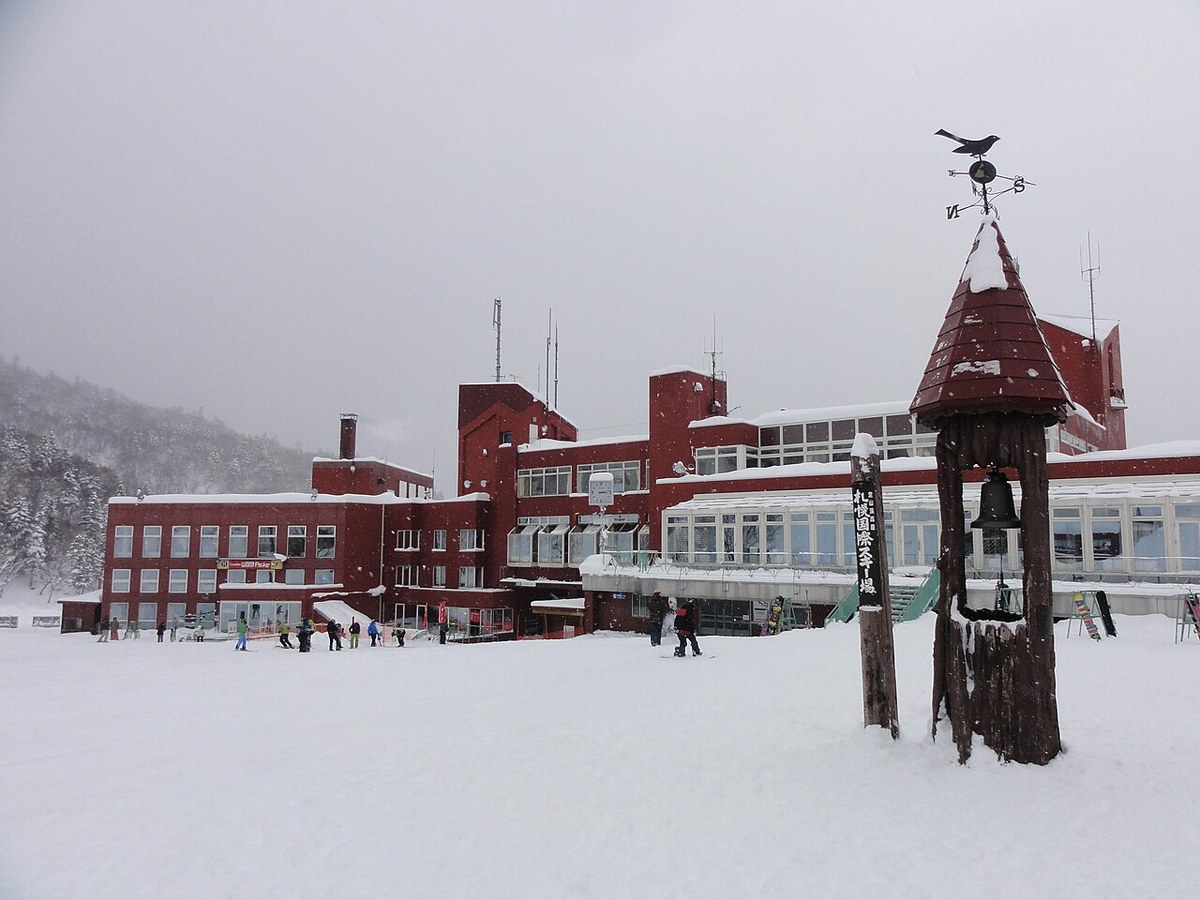
- Rentals: goggles yes, gloves no
- The ski school, and the translation-device caveat
- No gate: the first exception we have found
- Eating on the hill, including a retired gondola cabin
- With kids: two snow-play areas, only one of them free
- It opens twice a year: the October foliage gondola
- Sapporo Kokusai vs Sapporo Teine
- How I would plan the day
- FAQ
Sapporo in the name, Jozankei on the map
Fix the location first, because every planning decision below depends on it. Three sets of official figures together give the whole answer:
| What the resort publishes | What it means in practice |
|---|---|
| Address: 937 Jozankei, Minami-ku, Sapporo | The ward really is Sapporo, but the postcode sits in the Jozankei hot-spring valley, heading uphill |
| "About 60 min from central Sapporo", "about 20 min from Asari I.C.", "about 100 min from New Chitose Airport", "about 40 min from central Otaru", "about 30 min from Jozankei Onsen" | All five sit under the heading access by car. These are driving times, not travel times |
| The access page lists only bus, car and taxi | Zero railway references site-wide. No train reaches this resort. |
Administratively Sapporo, experientially not — that gap is where day plans fall apart. This is not the same shape of trip as Sapporo Teine, where you leave a city hotel, take an 11-minute train and stand at the lift queue 40 minutes later, even though both addresses say Sapporo.
The third layer is unusual transparency: the resort publishes taxi estimates. From the ski area it is about ¥10,500 to Jozankei Onsen, about ¥18,500 to Makomanai subway station and about ¥12,500 to JR Otaru (cash, credit card and PayPay accepted). In other words, "worst case I will just take a taxi" is a five-figure decision here. That is why, in the transport section below, booking the return leg comes before deciding how many runs you want.
Lift tickets: the Chinese page is a season behind
This is the most valuable section in the guide, and it only becomes visible when you open three language editions at once. Measured on 8 August 2026:
| Ticket | Official JP / EN pages (2026-27) | Official Chinese page (still 2025-26) | Gap |
|---|---|---|---|
| Day pass, adult (window / online) | ¥7,000 / ¥6,700 | ¥6,000 / ¥5,700 | +¥1,000 (+16.7%) |
| Day pass, senior 60+ (online) | ¥5,700 | ¥4,700 | +¥1,000 |
| Day pass, junior/high school (online) | ¥3,700 | ¥3,700 | no change |
| Day pass, elementary (online) | ¥2,500 | ¥2,500 | no change |
| 4-hour pass, adult (online) | ¥6,200 | ¥5,200 | +¥1,000 |
| Sky Cabin one way, adult | ¥3,000 | ¥2,000 | +¥1,000 (+50%) |
| Sky Cabin return, adult | ¥3,200 | ¥2,500 | +¥700 |
The 2025-26 column does not rest on the Chinese page alone. The resort's own 2025-26 Japanese PDF brochure carries the identical lift-ticket table — adult ¥6,000 window and ¥5,700 online, senior ¥5,000 and ¥4,700, students ¥4,000 and ¥3,700, elementary ¥2,800 and ¥2,500 — so two independent official sources agree on the old prices and, by subtraction, on the increase.
One structural detail that is easy to miss: only the adult category has a separate spring price (1 Apr to 5 May 2027, ¥6,200 online). Senior, grand senior, student and elementary day passes cost the same all season, with no spring discount at all. That is a different structure from Teine's four seasonal bands, so do not carry assumptions across.
The rest of the 2026-27 ticketing rules, filtered to what actually changes your day:
- Online is ¥300 cheaper, and you can buy it after you arrive. The webshop page says it plainly: "you can also purchase after arriving at the ski area on the day." No pre-commitment, no platform, no voucher to redeem — buy it on your phone in the car park and pay the online rate.
- The IC card carries a ¥500 deposit, refunded on return. The official wording adds it to the lift fee at purchase and returns it when you hand the card back. Sapporo Teine states outright that it takes no deposit — two resorts in the same city, opposite policies.
- Online sales are credit card only, and not every card. The resort lists VISA, Mastercard and JCB; AMEX is not on the list, debit cards are excluded, and there is a note that Rakuten cards sometimes fail even though they are nominally supported. The 2026-27 web shop is scheduled to open at 15:00 on 19 November 2026.
- No half-day pass, no hour-bank pass, no night pass. The table is day passes, four-hour passes, single-ride tickets and the escalator pass. The four-hour clock is "four consecutive hours from your first gate pass."
- Single-ride and multi-ride tickets are window-only — the resort states they are not sold online. Points equivalents: Sky Cabin 4, Marchen Quad 2, Echo Quad 2, Woody Pair 1, at ¥750 per point.
- The cancellation policy contradicts itself on one page. One line says purchases cannot be changed, cancelled or refunded; the next says lift tickets and rentals can be cancelled from My Page until the end of the season. Both are official. Verify before you buy.
Packs: the family bundle wins, the onsen one is gone
Only two value packs survive into 2026-27, and both have published prices:
| Pack | Contents | Main season 20 Nov 2026 – 31 Mar 2027 | Spring 1 Apr – 5 May 2027 |
|---|---|---|---|
| Lunch pack | Day pass + ¥1,200 meal voucher | ¥7,600 | ¥7,200 |
| Parent-child pack | 1 adult day pass + 1 elementary day pass | ¥8,800 list, ¥8,000 online | ¥7,500 online |
Run the arithmetic on the official numbers. The lunch pack at ¥7,600 against an online day pass plus a ¥1,200 voucher bought separately (¥7,900) saves ¥300, or ¥600 if you would otherwise have paid the window rate. The parent-child pack at ¥8,000 against online adult plus online elementary (¥9,200) saves ¥1,200 — the single best-value line item on the whole price list, and a straightforward yes for anyone bringing one primary-school child. Both packs are issued as new cards only; you cannot load them onto an IC card you already own.
Separately, the bus pack (return coach plus day pass) still shows "Coming soon" against all four 2026-27 price bands as of 8 August 2026. The operating period is published (20 Nov 2026 to 5 May 2027); the prices are not. Any source quoting a 2026-27 bus pack price is not quoting the resort.
Season-pass early bird: the one deadline in this guide
Everything else here can wait. This cannot, and the window is close:
| Channel | Window | Payment |
|---|---|---|
| Online | 10 Sep 2026 10:00 – 30 Sep 2026 15:00 | Credit card only |
| On site | 3 Oct – 20 Oct 2026, 9:00–15:00 (during the autumn festival, at the resort) | Cash, card, e-money, PayPay |
The saving is real: a new adult pass drops from ¥92,500 to ¥83,000, with renewals at ¥78,000. Senior (60+) new early-bird is ¥76,000, grand senior (65+) ¥71,000, students ¥34,000 and elementary ¥13,000. There is also a weekday-only pass at ¥55,500 — no age bands, no early-bird discount, sold at the information desk once the resort opens — and a spring pass at ¥20,500 in the early sales window. All of these already include the ¥500 IC-card deposit.
The five early-bird perks are documented in more detail than the prices: discount vouchers letting you buy a ¥7,000 day pass for ¥4,500 (five with an online purchase, two on site, and seniors qualify too); restaurant vouchers worth ¥2,500 online or ¥1,500 on site, usable on bills over ¥1,200 and excluded for elementary purchasers and at the summit cafe; a rental discount taking a ski or snowboard set from ¥7,000 to ¥6,000 for up to four companions on the pass-holder's card; access to the Hokkaido Season Net scheme for discounted tickets at member resorts; and a sticker.
Honest assessment: on a five-to-fourteen-day independent trip, an ¥83,000 season pass almost never pays back, because you would need a dozen-plus ski days. Three groups should read this section anyway: anyone spending the whole winter in Hokkaido, anyone aged 60 to 64 who wants to lock in the senior rate before the age rules change, and anyone already planning an October visit for the foliage gondola, since the on-site sales window sits entirely inside the autumn festival. Note also that the online application needs a registration photo and ID (residence card front and back for foreign residents, student ID for school-age applicants) — not a two-minute checkout.
Getting there, and getting back
A year label first, because it governs this whole section: every bus fare, journey time and timetable shape below is a 2025-26 actual. On 8 August 2026 the Chuo Bus page carried a banner reading "the information on this page is from last season; reservations for this season are planned for around October", and the resort's own access page had nothing under its bus heading except the reservation warning — no route name, no operator, no fare, no timetable. Treat the numbers as the shape of the service, and re-check before you travel.
One piece of structure that is rarely explained: Hokkaido Chuo Bus takes the reservations, but Jotetsu and Sapporo Daiichi Kanko actually drive the buses. Three company names, one service.
| Boarding point | Journey (2025-26) | One way, adult (2025-26) | Child |
|---|---|---|---|
| Sapporo Station (plus Keio Plaza, Odori and Tokyu REI stops) | 1 h 37 min | ¥1,800 | ¥900 |
| Makomanai subway station | 1 hour | ¥1,600 | ¥800 |
| Jozankei Jinja-mae | 30 min | ¥1,100 | ¥550 |
The booking rules, in usable form (2025-26 official; whether 2026-27 carries them over is unpublished):
- Reserve by 18:00 the day before, or 17:00 online. Online means prepayment by credit card, and an unpaid booking cancels itself. Phone booking (Chuo Bus, 0570-200-600) means paying cash on board on the day — and that cash option exists only if you booked the previous day.
- You cannot buy at a counter. The operator states that neither Chuo Bus nor Jotetsu ticket windows handle reservations or ticket sales for this service.
- There is no return ticket. Each leg is separate — which is exactly why the resort tells you to book the way home first.
- Seating is unreserved within a capped booking, jump seats are possible, and a full bus means you do not travel.
- No intermediate stops on the way up (uphill services run to the terminus only) and no intermediate boarding on the way back (Sapporo-bound services pick up only at the resort).
- You may not board wearing ski or snowboard boots, and skis and boards must be in a proper bag or cover. People discover this at the stop.
- Reservations open late October to early November, and only once the opening date is confirmed.
If that list is what defeats you — the 2026-27 Chuo Bus page is not up yet, counters cannot sell you a ticket, and the reservation site is Japanese-only — there is a third-party route. Trip.com sells a Hokkaido ski shuttle ticket covering 33 routes, and the list does include Sapporo city centre to and from Sapporo Kokusai Ski Resort (route list expanded and checked on 13 August 2026; the same ticket also covers New Chitose and Sapporo to Rusutsu, Niseko, Furano and Tomamu, but not Kiroro):
Hokkaido ski shuttle tickets, incl. Sapporo ↔ Sapporo Kokusai (Trip.com) →
What it buys you is a card payment, an English interface and free cancellation up to four days before use — it solves the language and payment barrier of the official reservation channel, not the price. The official fare, ¥1,800 one way in 2025-26, is hard to beat, and the third-party fare varies by route and only appears once you pick one. Try the official channel first when reservations open in late October, and fall back to this if you cannot book it or cannot read the Japanese. Note too that it only goes on sale on 1 December, so it may not cover the very start of the season.
Timetable shape (2025-26 actuals — these are not 2026-27 departures, do not copy them across): in the main 1 Dec to 31 Mar period there were up to six morning departures, the last two running only at weekends, holidays and new year, with arrivals between 9:07 and 11:37; return departures from the resort started at 15:50 and the last one left at 17:40, reaching Sapporo Station at 19:12. So the widest possible day was roughly 9:07 to 17:40 — about eight and a half hours. But in the shoulder periods, late November and April onwards, there were only two services a day and the last bus left at 16:30, which compresses the skiing to something closer to six hours. On 31 December and 1 January the return departures moved earlier, finishing at 16:15.
One thing I could not verify, stated plainly rather than guessed: the 2025-26 official brochure lists stops at "Otaru Chikko Station and near Otaru Station (NEW)", so an Otaru-origin service does exist — but the Chuo Bus reservation page the resort links to shows only the Sapporo route, and the Otaru fares, timetable and booking channel were not findable in August 2026. If you are based in Otaru, call Chuo Bus on 0570-200-600 (7:30–18:00) or Jotetsu on 011-572-3131 (7:30–17:30).
Connectivity is worth sorting before you go, too. Live lift status, wind holds, and confirming a bus reservation are all things that happen on the day, and while the resort offers free Wi-Fi at the base area, on ski-centre floors 1 and 2 and at the summit Kakko building, none of that helps once you step outside. If this is your first Hokkaido winter trip on a foreign SIM, sort out mobile data before you fly.
Skiing two days? Do not stay in the city
One row of the official fare table quietly rewrites your accommodation decision: Jozankei Jinja-mae to the resort is ¥1,100 and 30 minutes (2025-26 actual), against ¥1,800 and 1 hour 37 minutes from Sapporo Station.
Staying in Jozankei therefore costs 61% as much in fare and 31% as much in time. The second-order effect matters more: the last-bus anxiety disappears entirely. Miss the final departure from a city-centre base and you are looking at the resort's own taxi estimate of ¥10,500 to Jozankei, or ¥18,500 to Makomanai. Miss it from a Jozankei hotel and you take a short taxi ride home.
So the call is straightforward. Skiing one day: stay in the city, since the rest of your itinerary is there anyway. Skiing two or more days, or travelling with children you would rather not march through a car park at dusk: stay in Jozankei Onsen, which is a hot-spring town in its own right — and although the resort's onsen combination ticket is gone, the baths at your own ryokan obviously are not.
The limit of what I can tell you: this guide did not verify Jozankei accommodation names or room rates, so there are no hotel recommendations and no price ranges here. The conclusion above rests purely on published transport costs. The listings for both bases are below; compare rates and availability for the same nights:
| Where to stay | Platform | Before you click |
|---|---|---|
| Jozankei Onsen (two or more ski days) | Booking.com Jozankei stays → | The list opens on today's date; change it to your nights first |
| Agoda Jozankei stays → | The list may include nearby areas; check each hotel on the map | |
| Rakuten Travel Jozankei Onsen stays → | The property count is this platform's inventory, not every inn in town, and the first card can be a hotel in central Sapporo; check each location | |
| Central Sapporo (one ski day) | Trip.com Sapporo stays → | Covers the whole city; the ski bus boards at Sapporo Station and Makomanai Station, so staying near either keeps the morning simple |
For how the city itself fits together — getting around, what else to do with the non-ski days — see our complete Sapporo guide.
Driving: free parking, but the Otaru road shuts at night
Driving is the smoothest way in, and the official numbers are generous: 1,850 parking spaces, all free, with quoted drive times of about 20 minutes from Asari I.C., 60 from central Sapporo, 40 from central Otaru, 100 from New Chitose Airport and 30 from Jozankei Onsen. (One correction to a widely copied error: the interchange 20 minutes away is Asari, on the Otaru side — not Asahikawa, which is more than 130 km away.)
Two things the resort does not publish, so I will not either: there is no official statement about winter tyre or chain requirements on the site — for the general rules see our winter driving in Japan guide and Japan self-drive guide — and while the access page does carry a Toyota Rent a Car coupon link, I did not verify the discount terms, so no figure appears here.
Seven runs, 470 m vertical: what "Kokusai" really means
The word "international" in the name sets an expectation the mountain does not try to meet, and the official figures are more honest than any adjective: summit 1,100 m, base 630 m, 470 m of vertical; seven runs; 3.6 km maximum descent; four lifts plus a snow escalator. Against Teine in the same city — 15 runs, 683 m vertical, 6 km top to bottom, nine lifts — this is a compact resort. The operator's own positioning is not about size either: the 2025-26 brochure headline reads "aiming to be the number one day-trip ski area" — note the aiming, which is a stated goal rather than a claim of fact.
| Run | Grade | Max pitch | Average | Length |
|---|---|---|---|---|
| Rinkan | Beginner | 12° | 8° | 1.2 km |
| Marchen | Beginner | 12° | 8° | 2.4 km |
| Woody | Intermediate | 16° | 11° | 1.2 km |
| Swing | Intermediate | 28° | 10° | 2.0 km |
| Family | Intermediate | 20° | 11° | 1.6 km (officially over 100 m wide) |
| Echo | Advanced | 22° | 12° | 1.0 km |
| Downhill | Advanced | 30° | 15° | 2.2 km |
Three planning conclusions fall straight out of that table. First, there are only two beginner runs — but linked together they are the 3.6 km top-to-bottom the resort advertises, at an average of 8 degrees. A first-timer here is not confined to a nursery slope; the main beginner line is the longest run on the hill. Second, the steepest pitch anywhere is 30 degrees on the advanced Downhill run, against 38 at Teine — quantified evidence for "small but beginner-friendly" rather than an adjective. Third, intermediate Swing tops out at 28 degrees, only two degrees off the advanced runs, so the step from beginner to intermediate here is a real one.
The lifts are the Sky Cabin 8 (eight-person gondola, 2,000 m), Marchen Quad (1,300 m), Echo Quad (1,005 m) and Woody Pair (810 m), plus the snow escalator. There are four terrain-park lines.
Published 2026-27 operating dates and hours: main season 20 Nov 2026 (planned opening) to 31 Mar 2027, 9:00 to 17:00 daily; spring season 1 Apr to 5 May 2027, 9:00 to 16:00; and 15:00 closes on 31 Dec and 1 Jan. The resort calls this "a long season of about five and a half months", and its 20 November opening beats Teine's 21 November by a day, making it the earliest opener in the Sapporo area.
On night skiing, the answer is a clean no, and it is verifiable rather than impressionistic: hours stop at 17:00 and no night ticket exists in the price table. If skiing after dark matters to you, the Sapporo-area option is Teine, where the Shirakaba No.1 lift runs to 20:00.
On snow quality I will only repeat what the resort has actually said: the 2025-26 brochure cover claims "100% natural snow", the snow-play page cites "4 m of snowpack" while itself noting that figure is the seasonal maximum, and the Echo run is described as offering good powder near the summit. There are no published monthly snowfall statistics, and the resort has never compared its snow with anyone else's — so this guide makes no such ranking either.
Rentals: goggles yes, gloves no
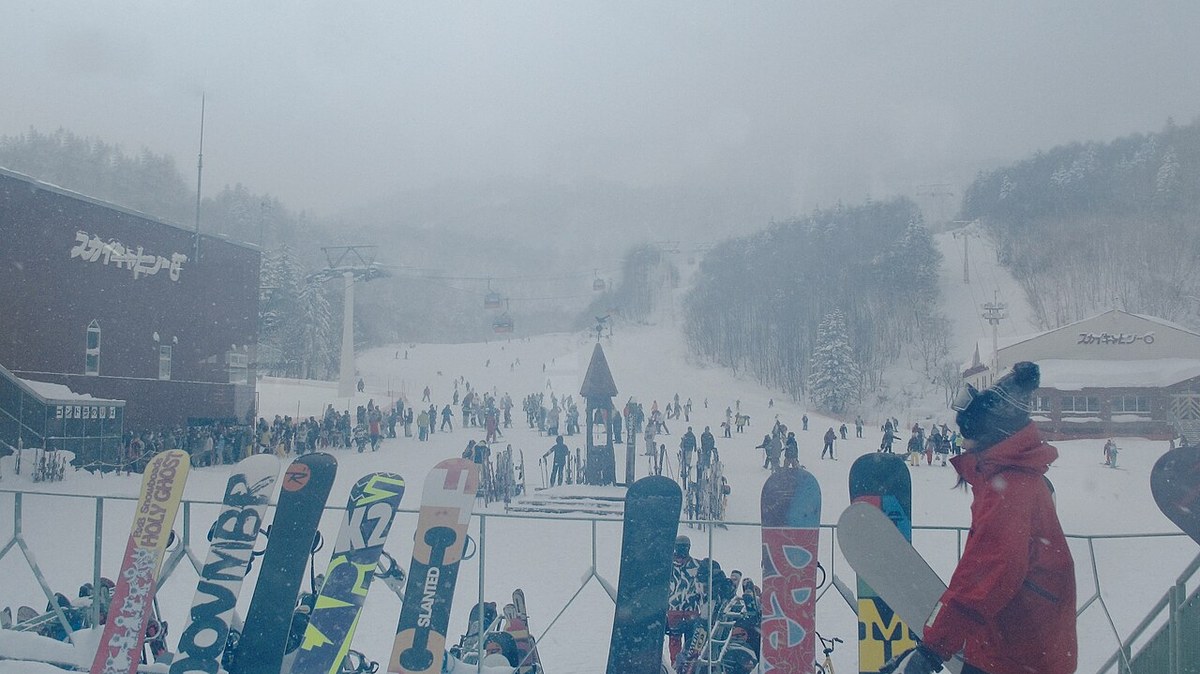
Small-item rental policy varies resort by resort in Japan, and Sapporo Kokusai is a third pattern, matching neither of the two we had documented:
| Resort | Gloves | Beanie | Goggles | Helmet |
|---|---|---|---|---|
| Sapporo Teine | Rentable | Rentable | Rentable | Rentable |
| Sapporo Kokusai | Sold only, ¥1,500 | Sold only, ¥1,000 | ¥1,000, free with outerwear | ¥2,500 |
| GALA Yuzawa / Kiroro | Sold only | Sold only | Sold only | (see beginner guide) |
The set definitions are spelled out: a ski set is skis, boots and poles; a board set is board, bindings and boots; a wear set is jacket and trousers, with the explicit note that "the wear set does not include hat, gloves or goggles". But a second line under the item list changes the conclusion — goggles are "lent free of charge to customers renting jacket and trousers". Rent the outerwear and the goggles come with it. (The Chinese page attaches that same sentence to goggles, children's gloves and children's beanies alike, while the Japanese page attaches it only to goggles. Ask at the counter.)
Current 2026-27 rates from the Japanese rental page — dated by the 27 July 2026 early-bird announcement, which lists a perk taking "ski or snowboard set from ¥7,000 to ¥6,000", confirming ¥7,000 as this season's rate against ¥6,000 in 2025-26:
| Item | Adult (1 day) | Age 12 and under (1 day) |
|---|---|---|
| Ski set (skis, boots, poles) | ¥7,000 | ¥5,000 |
| Board set (board, bindings, boots) | ¥7,000 | ¥5,000 |
| Wear set (jacket and trousers) | ¥6,000 | ¥4,500 |
| Goggles / helmet | ¥1,000 / ¥2,500 | Same |
| Advanced skis (latest model) / sledge | ¥9,000 / ¥1,500 | — |
Turning that into "what does arriving empty-handed cost", all on 2026-27 official figures: skis, boots, poles and outerwear with goggles thrown in comes to ¥13,000; add gloves and a beanie, which you buy and keep, and it is ¥15,500; add a helmet and it is ¥18,000. The online day pass that same day is ¥6,700 plus the refundable ¥500 deposit. In other words gear runs about 1.94 times the lift ticket, or 2.69 times with a helmet — a ratio that is normal in Japan rather than particular to this resort, as the beginner cost guide sets out. The practical advice follows: bring outerwear, gloves and a beanie from home (the wear set alone is ¥6,000), and rent the helmet — that is the last thing to economise on.
Two more details. Rental is full-day only, with no half-day rate, and the counter opens at 8:30 (a figure that appears in the 2025-26 brochure, not on the current web page). And the sizing detail that matters most to families: children's snowboard boots start at 18.0 cm, with nothing smaller listed. Pre-schoolers who want to snowboard cannot be fitted here — switch them to skis, where children's boots start at 16.0 cm, or take them to the snow-play area instead.
The ski school, and the translation-device caveat
The school holds both SAJ and JSBA certification, sits on the first floor of the ski centre, takes registrations from 9:00 with a 13:15 cut-off, and can be reached directly on 011-598-4519. Current 2026-27 pricing:
| Lesson | Price |
|---|---|
| Graded group, 2 hours (morning or afternoon) | ¥6,500 |
| Graded group, 4 hours | ¥8,500 |
| Group with rental included, 2 h / 4 h (adult) | ¥13,500 / ¥15,500 |
| Private, 1 person, 2 h / 4 h | ¥21,000 / ¥29,000 |
| Kids private, 1.5 hours | ¥16,000 |
| Inbound private, 1 person, 2 h / 4 h | ¥31,000 / ¥42,000 |
The fair summary: the course exists, it is priced, and the resort is candid about the translation device — but there is no mention anywhere of Chinese-language instruction. Compared with Teine, whose school states in writing that lessons are for people who communicate comfortably in Japanese and whose English page returns a server error, this is honest versus more honest, not good versus bad.
If you genuinely need instruction in Chinese — an absolute beginner parent or child for whom a translation device would stall the lesson — you have to go outside the resort's own school. Trip.com sells a private lesson in Chinese and English that meets at Sapporo Kokusai itself: the listing gives the meeting point verbatim as "Sapporo Kokusai Ski Resort, 937 Jozankei, Minami-ku, Sapporo", matching the resort's address exactly. The instructor team says it is formally registered at Hoshino Tomamu, Rusutsu, Sapporo Kokusai and Sapporo Teine, and the lesson runs 9:30 to 15:30 with an hour for lunch, priced in tiers from one or two people up to six:
Sapporo Kokusai private ski lesson, Chinese/English (Trip.com) →
Now the rest of the picture. This costs far more than the resort's own group lesson — the Trip.com listing starts at TWD 16,196 against ¥6,500 for a two-hour graded group class — so it is not the cheaper option, it is the language option. If budget leads, book the resort's group lesson. One thing we checked and could not resolve: the listing's "what's included" box names a cable car ticket and equipment rental, while the course notes say that if the instructor has to help you with rentals the time counts against your lesson hours — the two statements contradict each other and the page never clears it up, so we will not vouch for what is included. Ask the seller before you book. It also opens for sale on 1 December and allows free cancellation up to four days before use.
Do lessons include a lift ticket? The 2025-26 brochure states "lift ticket separate" in the school column, and the certification schedule repeats "lift fee separate" — so this resort sits on the not included side, opposite Teine. But the 2026-27 lesson pages do not restate that note, so I will not assert it for this season; ask when you book.
On insurance, the school states that accidents during lessons are covered "within the following accident insurance: outpatient ¥1,500 per day, inpatient ¥2,000 per day", and recommends that participants also insure themselves. No death or permanent-disability figure is published, so none appears here. That level of cover is nowhere near real medical costs; how ski cover actually works is in our Japan travel insurance guide.
Finally, a cross-reference that is genuinely useful. The official lesson day runs 9:00 registration, 9:30 changing, 10:15 meeting, 10:30 start, 12:30 lunch, 13:15 afternoon meeting and 15:30 finish — and the official FAQ contains an entry literally titled "I am on a tour bus, will I be late for lesson registration?", answered with "the meeting time is 15 minutes before, but if registration looks tight, go and register at the school desk first as soon as the bus arrives." Line that up with the 2025-26 timetable and the conflict is obvious: the first bus arrives at 9:07 and morning registration is at 9:00. The resort knows, and has published the workaround — go to the school counter before anything else.
No gate: the first exception we have found
Across Niseko, Hakuba, Kiroro and Teine, one conclusion has held: the gate system is the Japanese norm, not a Niseko quirk — a resort designates one or more official gates and formalises "outside is your own responsibility". Sapporo Kokusai is the first exception.
Article 4 of the terms of use (in force 1 Nov 2024, revised 15 Oct 2025) lists prohibited acts, and the first is "entering or skiing in areas outside the managed zone or in prohibited zones". The second covers closed runs; the seventh forbids hiking up inside the pistes. The slopes page adds that "the orange and pink areas on the piste map are no-ski zones and outside the managed area. Never cross ropes, nets or signage into them."
The entire site contains no gate of any kind, no backcountry page and not one use of the word. So do not carry Niseko or Teine gate procedure across to this mountain — the question is not where the gate is, it is that there isn't a door. Equally, I will not describe out-of-bounds routes or exits, because there is nothing official to describe. None of this makes the resort backward; it simply chose a different regulatory route.
- Base charge ¥50,000 per hour
- Labour ¥5,000 per hour per person
- Snowcat ¥50,000 per hour per vehicle
- Snowmobile ¥10,000 per hour per vehicle
- Gondola ¥2,500 per round trip per person
- Labour surcharges: 25% from 17:00 to 22:00, 50% from 22:00 to 10:00
Get the penalty wording right, because it is routinely muddled elsewhere: confiscation appears only in the season-pass rules — a pass holder who skis out of bounds or ignores the rules has the pass voided and confiscated, as does anyone reselling, lending or commercially using one, with unauthorised usage billed separately. For a regular lift ticket, Article 16 specifies suspension of use, alongside eight grounds including refusing patrol instructions and intoxication. So "you will have your day ticket confiscated" is not accurate here; the real exposure is the tariff above.
Helmet wording has a layer to it as well. Article 12 asks general users to "make an effort to wear a helmet and other safety equipment", but Article 7(3), covering the four terrain-park lines, says park users "shall wear a helmet and other necessary protective equipment" — a requirement, not a suggestion. Helmet rental is ¥2,500.
Eating on the hill, including a retired gondola cabin
A small thing the resort itself has not reconciled: the number of food outlets is given as "6 outlets, 1,000 seats" on one page, "four restaurants and two cafes" on another and "five restaurants and two cafes" in the brochure. Since the total is unreliable, here are the names instead — with 2026-27 official operating periods:
| Venue | Type and location | Seats | Hours | 2026-27 period |
|---|---|---|---|---|
| Rabbit | Family restaurant, ski centre 2F | 480 | 10:30–16:00 (LO 15:30) | 20 Nov – 5 May (longest) |
| Woodpecker | Pizzeria, ski centre 2F | 280 | 10:30–16:00 (LO 15:30) | 5 Dec – 28 Mar |
| Squirrel | Western restaurant, ski centre 2F | 180 | 10:30–16:00 (LO 15:30) | 5 Dec – 28 Mar |
| Owl | Ramen specialist, ski centre 1F | 40 | 10:30–16:30 (LO 15:30) | 28 Nov – 4 Apr |
| Elm | Crepes and fried bread, ski centre 1F | 30 | 9:00–16:30 (LO 15:30) | 28 Nov – 4 Apr |
| SKS INTERNATIONAL | Summit cafe, 1,100 m | 30 | 10:00–15:30 | 20 Nov – 5 May |
| Lounge THE 6 | Restaurant (entry fee), old gondola station | — | 10:30–15:30 (LO 15:00) | 19 Dec – 28 Mar |
Two planning points fall out of that table. At the very start and end of the season only Rabbit and the summit cafe are open — the three second-floor venues are shut in late November and after early April. And Elm is the only place open at 9:00, which makes it the sole option if you want something to eat between the first bus and the first lift.
The most memorable thing on the menu is not a dish but a room. Owl runs what the resort calls the "freezing gondola ramen": retired gondola cabins parked outside and used as private booths, where you sit down and eat your ramen. The official text reads "ramen inside a gondola!", notes there are only three cabins, tells you to order at the Owl ramen shop, and warns that bad weather can cancel it. You sit to eat, which is how it should be — carrying a bowl through a boot room or a stairwell is neither polite nor safe. Buy it, sit down, finish it, then move.
Dishes the resort names in its own copy: Owl's spicy miso ramen with three heat levels, slow-simmered kakuni shoyu ramen, tantanmen, and a miso-butter-corn ramen made with Toyako-grown "Megumi Gold" corn that the resort says often sells out before the season ends — with broth started "about three hours before opening, every day". Rabbit's signature is what the resort calls a house speciality, the Kokusai curry ramen. Woodpecker builds its pizzas around ingredients from Toyako in southern Hokkaido and quotes professional snowboarders calling its pizza the best on the hill. Squirrel hand-forms every hamburg steak and grills it in front of you to order. And SKS INTERNATIONAL at the summit is an outpost of a popular Jozankei soft-serve specialist, recommending an additive-free milk soft-serve from Ise Farm in Etanbetsu, with a view the resort says reaches the sea on a clear day.
One transparency note: individual menu prices for those six venues are not published in the page text (each menu opens as a separate image file), so this guide names dishes but quotes no prices for them. The exception is Lounge THE 6, where three prices appear in the body copy: sauce-katsu don ¥2,000, a six-way Hokkaido tasting set ¥3,000 and a Shiraoi wagyu sukiyaki don ¥4,000.
Lounge THE 6 deserves its own paragraph. It is the station building of a six-person gondola that ran from 1984 until 2020, converted into a lounge — the "6" also nods to the hexagonal snow crystal. Entry is ¥1,000 including a drink (beer, alcohol-free beer, coffee or a soft drink), the terrace holds an actual retired gondola cabin and a fire pit with marshmallows, and there is a single private room for up to six at ¥11,000 a day, booked by phone on 011-598-4511. It also contains something we have not found at any other ski resort in Japan: a prayer room. The official line is "a first for a Sapporo ski area — a prayer room so that guests visiting from around the world can enjoy the mountain with peace of mind (advance reservation required)." A seven-run resort building that is a concrete signal about who it expects to serve.
For shopping, the Gelespo sports shop and the store beside it on ski-centre 1F (9:00–16:30, seasonally variable) carry Hokkaido produce, a Susukino specialities corner, "Genghis-man" mutton-filled steamed buns, an Otaru Music Box Museum counter and an own-brand butter cake made with Poisson d'Avril, a patisserie in Sapporo's Minami-ku. It is a more unusual souvenir mix than you will find downtown.
With kids: two snow-play areas, only one of them free
There are two places to play in the snow here and they get confused constantly:
- Snow Playground (paid): an all-you-can-play day pass at ¥6,000, including unlimited snow-escalator rides and unlimited use of the equipment, opening in late December, 10:00 to 15:00. Kit includes snow racers (steerable sledges), snowshoes, an item the resort calls a Hokkaido first — a snowboard with a handlebar needing neither boots nor bindings, in adult and child sizes, plus assorted sledges and tubes. The minimum age is inconsistent across official sources — the current web page says 5 and over, the 2025-26 brochure said 3 and over. This guide follows the current page; confirm before you go.
- Beginner and sledge course (free): listed on the slopes page as a free sledging space, and entirely separate from the paid area above. If your child just wants to slide down something, you do not have to pay.
Other official details families need: changing rooms and lockers on B1 and 1F at ¥300 to ¥500 a use, with coin lockers sized large ¥500 (60×50×57 cm), medium ¥400 (81×42×48 cm) and small ¥300 (40×42×42 cm); a cloakroom from ¥500 for anything that will not fit; and a free luggage area on 2F from 9:00 to 16:00, with the resort stating plainly that it takes no responsibility for theft. The nursing room and changing table are on the B1 women's changing-room floor. If you are shipping gear ahead, the delivery address is the B1 cloakroom desk and the resort asks that parcels arrive two to three days before you do. And the bus stop, per the official FAQ, is immediately outside the B1 rental-floor exit.
It opens twice a year: the October foliage gondola
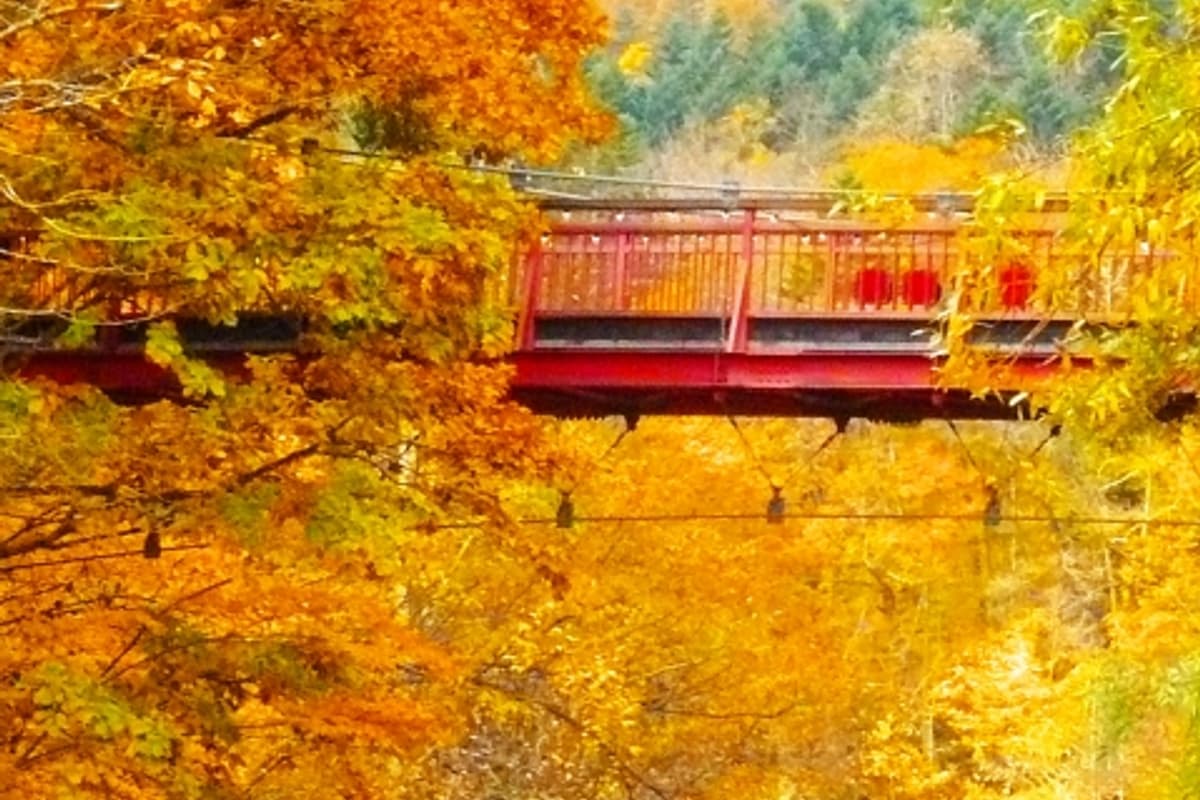
English and Chinese coverage treats this as a winter-only mountain. It also opens for 20 days every October. The 2026 autumn festival is confirmed: 1 to 20 October 2026, foliage gondola 9:30 to 15:30 with the last ride up at 15:00, free entry and free parking, and only the gondola charged: ¥1,500 return for adults (junior high and up), ¥800 for primary-school children, ¥1,300 for over-65s and free for pre-schoolers. Payment is cash or PayPay only — cards do not work, unlike in winter.
During the festival the summit cafe (9:45–15:30) and Rabbit (10:30–16:00) open daily, alongside an outlet corner and original merchandise. Pets travel free in a carrier that covers the head, though they cannot be let out at the summit. There is a gondola pack combining the return ride with a Hokkaido beef curry — swappable for soba or udon, or upgraded to katsu curry for ¥300 — but the resort does not publish its price, so none appears here.
Two scheduling links worth noticing. First, the autumn festival overlaps exactly with the on-site season-pass early-bird window (3 to 20 October), so foliage and pass purchase are the same trip. Second, Jozankei is itself one of Sapporo's closest autumn-colour destinations, and pairs with our Daisetsuzan autumn guide — Daisetsuzan turns first in all Japan, with Jozankei and the Sapporo outskirts following later.
Sapporo Kokusai vs Sapporo Teine
These two get lumped together as "the ski areas near Sapporo", but four of their rules are exact opposites. This table is the decision:
| Factor | Sapporo Teine | Sapporo Kokusai |
|---|---|---|
| Train access | Yes: JR Teine (11 min from Sapporo) plus a route bus | None; bus, car or taxi only |
| Bus reservation | Regular route bus, just turn up | Capped and reservation-only; full means no ride |
| Scale | 15 runs, 683 m vertical, 6 km, 38° max | 7 runs, 470 m vertical, 3.6 km, 30° max |
| Night skiing | Yes (Olympia to 20:00) | None (closes 17:00, no night ticket) |
| IC card deposit | None | ¥500, refundable |
| Lessons include lift ticket | Yes | No (2025-26 official note) |
| Non-skiers on the lifts | Not allowed (official FAQ) | Allowed (return ticket note) |
| 2026-27 lift prices | Not yet published | Published (¥7,000 window, ¥6,700 online) |
| Out-of-bounds | One official Teine Gate | No gate; managed area is closed, full stop |
| Small-item rental | Gloves, beanie and goggles all rentable | Goggles rentable (free with outerwear); gloves and beanies sold only |
| 2026-27 opening date | 21 November | 20 November (earliest near Sapporo) |
How I would choose: a packed itinerary with only half a day free, a desire to ski after dark, or a companion who wants to stay in the city — take Teine. A full day committed to skiing, a preference for natural snow and a long season, a non-skiing companion you want at the summit cafe with you, or a base already in Jozankei — take Sapporo Kokusai. If what you actually want is the other model entirely, moving once and skiing for several days from the mountain itself, read the Niseko guide or the Tomamu guide instead.
How I would plan the day
Condensing every official figure above into decisions:
- Book the return bus before anything else — not the outbound. The resort itself warns you may lose your way home, and a taxi to Makomanai is ¥18,500. Reservations via Chuo Bus close at 18:00 the previous day, 17:00 online, and no counter will sell you one.
- Do not buy the lift ticket in advance anywhere else. The resort's own online price is ¥300 lower and it explicitly allows purchase after you arrive — buy it on your phone in the car park, provided your card is VISA, Mastercard or JCB. Travelling with one primary-school child? Take the parent-child pack and save ¥1,200.
- Carry cash. The bus is cash only, the mountain is nearly all card, and the ¥500 IC deposit is cash. Two payment systems, one day.
- Do not economise on: the helmet (¥2,500) and, for a genuine first day on snow, the group lesson (¥6,500 — remembering the lift ticket is likely extra).
- Do economise on: outerwear (¥6,000), gloves and a beanie. Bring those three from home and you save more than the price of a lift ticket. Skip packing goggles — renting outerwear gets you a pair free.
- Dates to watch: 31 December and 1 January close at 15:00 with earlier return buses; the snow escalator and snow-play area only open in late December; in late November and after 1 April there are two buses a day and the three second-floor restaurants are shut.
- The only time-sensitive decision: the season-pass early bird, online 10 Sep 2026 10:00 to 30 Sep 15:00, on site 3 to 20 Oct. Everything else — 2026-27 bus fares, timetables, bus-pack pricing — is published by the operators in October, and I am not going to let last year's numbers make this year's decision for you.
Which brings this back to where it started. The hard part of this resort is not the terrain, it is the name. "Sapporo" makes people assume they can treat it like the city — turn up when they like, leave at the last minute. Every page the resort publishes is quietly saying the same three things instead: book the way back, read the Japanese prices, bring cash. Handle those and what is left is 100% natural snow, a 20 November opening, 470 metres of vertical, and a cafe at 1,100 m that on a good day looks out to the sea.
Frequently Asked Questions
- Q1:Is Sapporo Kokusai actually in Sapporo, and how do I get there from Sapporo Station?
- Administratively yes, practically no — and no train goes there. The official address is 937 Jozankei, Minami-ku, Sapporo, which puts the resort in the Jozankei hot-spring valley rather than anywhere near the city grid. The access page lists exactly three ways in: bus, car and taxi. There is not one railway reference anywhere on the site. The much-quoted official line "about 60 minutes from central Sapporo" sits under the heading access by car — it is a driving time. By bus, the 2025-26 official timetable shows 1 hour 37 minutes from Sapporo Station, ¥1,800 one way for an adult (2025-26 actuals; 2026-27 not yet published). Boarding at Makomanai subway station cuts it to an hour, and from Jozankei itself it is 30 minutes.
- Q2:Do I have to reserve the ski bus, and what happens if I do not?
- Yes, and the resort spells out the worst case itself. This is a reservation-only service with a seat cap, not a regular route bus. The official access page states that "if you arrive without having reserved the return leg, the bus may be full, you may not be able to board, and you may lose your means of getting home." Reservations go through Hokkaido Chuo Bus, although the buses are actually operated by Jotetsu and Sapporo Daiichi Kanko. The deadline is 18:00 the day before (17:00 for online bookings), and the operator notes explicitly that tickets and reservations cannot be bought at Chuo Bus or Jotetsu ticket counters — online or phone only. There is no return-ticket product either, so each leg is booked separately. Taxis are not a fallback: the resort publishes estimates of roughly ¥18,500 to Makomanai subway station and ¥12,500 to JR Otaru, and warns that "in many cases we cannot arrange a taxi for your return."
- Q3:How much is a 2026-27 day pass, and why does my source say something different?
- Because your source is probably the resort's own traditional-Chinese page, which as of 8 August 2026 was still showing 2025-26 content. The Japanese and English pages are both headed "2026-2027 season" and price an adult day pass at ¥7,000 at the window, ¥6,700 online. The Chinese page still shows ¥6,000 / ¥5,700 for the same row — a ¥1,000 gap, or 16.7%. The gondola single is worse: ¥2,000 on the Chinese page against ¥3,000 on the Japanese one, a 50% increase. The old figures are not sourced from that page alone; the resort's own 2025-26 Japanese PDF brochure carries an identical lift-ticket table, so two independent official sources agree. No resort is obliged to keep every language version in sync. The practical takeaway is simply this: budget from the Japanese or English page.
- Q4:Is there night skiing, and do lessons include a lift ticket?
- No night skiing at all; and per the resort's own 2025-26 note, lessons do not include lift access. Published 2026-27 hours are 9:00 to 17:00 in the main season and 9:00 to 16:00 in spring, and the ticket table contains no night pass — nor any half-day pass. The school is certified by both SAJ and JSBA, with graded group lessons at ¥6,500 for two hours and ¥8,500 for four. On lift tickets: the 2025-26 official brochure states "lift ticket not included" in the school column, and the certification page repeats "lift fee separate". That is the opposite of Sapporo Teine, where group and private lessons both explicitly include lift access. The 2026-27 lesson pages do not repeat the note, so confirm when you book (school direct line 011-598-4519).
- Q5:Can non-skiers ride the gondola up?
- Yes — and the resort says so on the price list itself. Under the Sky Cabin 8 return ticket the official note reads "people who are not skiing may also ride as sightseers." The summit sits at 1,100 m and has a 30-seat cafe, SKS INTERNATIONAL, which the resort says looks out to the sea on a clear day; in winter there is also a torii gate and a snow hut up there. This is the exact reverse of Sapporo Teine, whose official FAQ states that boarding on foot is not permitted. So if you are travelling with someone who does not ski, the answer differs between the two Sapporo-area resorts — and only one of them lets them come up the mountain with you.
- Q6:Can I rent gloves, a beanie and goggles?
- Goggles yes — free if you rent outerwear. Gloves and beanies are sold, not rented. The rental page prices goggles at ¥1,000 a day but adds that "customers renting jacket and trousers may borrow them free of charge." Hats at ¥1,000 and gloves at ¥1,500 sit under retail, with the resort explaining that these items touch the skin directly and are therefore supplied new. That makes Sapporo Kokusai a third pattern in Japan: Sapporo Teine rents gloves, beanies and goggles alike, GALA Yuzawa and Kiroro sell all three without renting any, and this resort sits between the two. The cross-resort breakdown of what a rental set does and does not cover is in our guide to what skiing in Japan actually costs.
- Q7:Are there lessons in English or Chinese?
- There is an inbound private lesson, it costs 45 to 48% more than the Japanese one, and the resort has never claimed Chinese-speaking instructors. The official description frames it as a beginner course "for overseas customers who have never skied or snowboarded, or have been once or twice," and then adds the line that matters: "depending on the language, the lesson will be conducted using a translation device." On price, a one-person Japanese private lesson is ¥21,000 for two hours and ¥29,000 for four; the inbound version is ¥31,000 and ¥42,000 — 47.6% and 44.8% more. A separate page on the same site calls the identical product an "English private lesson". The honest summary: the course exists, it is priced, and the resort is upfront about the translation device — but there is no documented Chinese-language instruction of any kind.
- Q8:What happens if I ski outside the boundary — is there a gate?
- There is no gate here at all, and the rescue charges are published line by line. Article 4 of the resort's terms of use prohibits "entering or skiing in areas outside the managed zone or in no-ski zones" outright, and the site has no backcountry page and never uses the word. That makes it a genuine exception among Japanese resorts: Niseko, Hakuba, Kiroro and Sapporo Teine all institutionalise out-of-bounds access through a designated gate, and this one simply does not open a door. Article 14 goes further: if you are injured or lost inside a prohibited area, the resort "bears no responsibility and will not conduct search or rescue at the user's request"; if police or fire services require the resort to act, it bills a base charge of ¥50,000 per hour, ¥5,000 per hour per staff member, ¥50,000 per hour for a snowcat, ¥10,000 per hour for a snowmobile and ¥2,500 per person per gondola round trip, with labour surcharges of 25% between 17:00 and 22:00 and 50% between 22:00 and 10:00. One wording detail worth getting right: confiscation applies only to season passes; for a regular lift ticket the stated penalty is suspension of use.
Read next
Sapporo Teine Ski Guide: 40 Minutes from the City
The official line is 16 minutes by bus from JR Teine — but that gets you to Olympia, not Highland. And Olympia is shut for 52 days of the 166-day season.
Skiing in Japan for Beginners: What a Day Really Costs
A rental "set" means skis and boots, never outerwear. At Niseko for 2026-27 the jacket-and-pants hire costs more than the skis themselves.
Sapporo Travel Guide 2027: Odori Park, Snow Festival & Mt. Moiwa
Hokkaido's gateway and food capital — Odori Park and the Snow Festival, the Clock Tower, Mt. Moiwa's night view, miso ramen, Genghis Khan and soup curry.