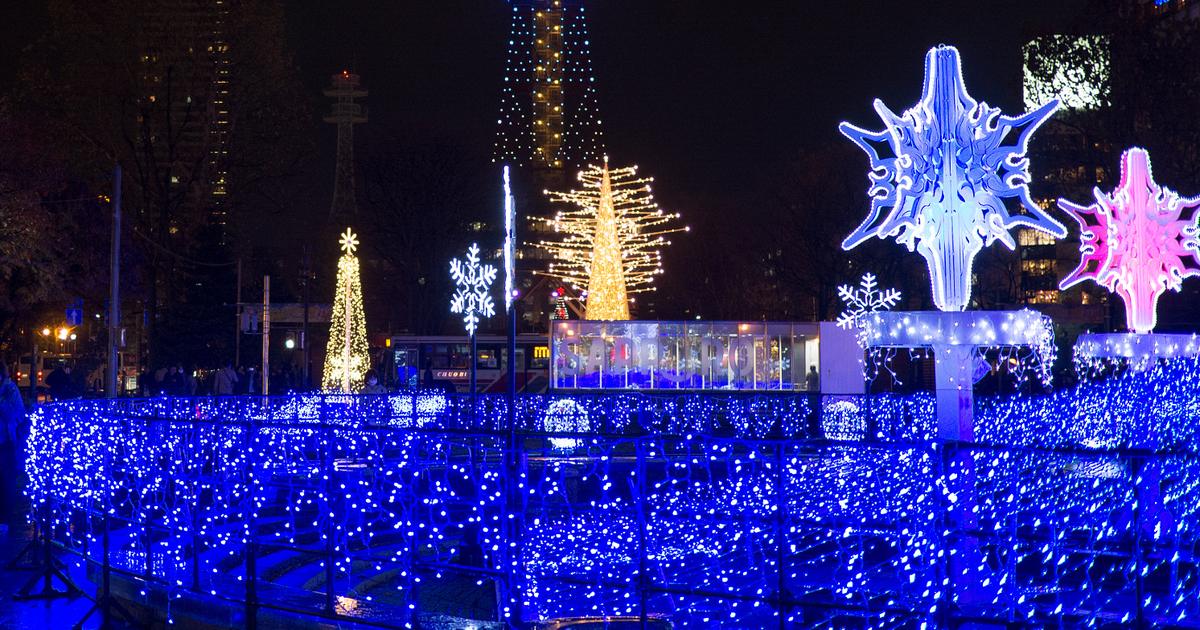
The 46th Sapporo White Illumination switches on Friday, November 20, 2026. The Odori site runs only to December 25, Ekimae-dori to February 11, 2027, and Minami 1-jo dori plus two more sites to March 14. The layout has changed from last season: the Odori lights shrink to blocks Nishi 3 to 5, the Munich Christmas Market expands into the neighbouring blocks Nishi 1 and 2, and a sixth site at Nakajima Park is added for January. It is a separate event from February's Sapporo Snow Festival, and the two are easy to conflate when planning. Below: how long each of the six sites runs, where to spend a single evening, and how to fit it together with the market and the snow festival.
- Opening day: Friday, November 20, 2026 (46th edition); the Odori, Ekimae-dori, Minami 1-jo dori, Akaplaza and station south exit sites are free
- Each site ends on a different date: Odori on December 25, Ekimae-dori on February 11, 2027, Minami 1-jo dori, Akaplaza and the station plaza on March 14, 2027; the new Nakajima Park site is scheduled only for early to late January 2027
- The layout changed this season: the Odori lights are in blocks Nishi 3 to 5 and the Munich Christmas Market (November 20 to December 25) is in blocks Nishi 1 and 2 — adjacent, not the same block
- One evening: up to December 25, walk market → Odori → Ekimae-dori; after that, pair Ekimae-dori with Minami 1-jo dori
- Lighting hours are published shortly before opening — check the official site pages rather than planning a last train around last season's hours
- Pairs naturally with the snow festival and Otaru's Snow Light Path: set up a KKday Japan eSIM before you land to check official updates on the go
Table of Contents (click to expand)
- Japan's oldest citywide illumination: what White Illumination is
- The six sites: dates and locations (46th edition)
- One evening: Odori + Ekimae-dori, or save it for Minami 1-jo
- The Munich Christmas Market: November 20 to December 25, Odori blocks Nishi 1 and 2
- What changed for 2026-27 (46th edition)
- Pairing it with the Sapporo Snow Festival and Otaru's Snow Light Path
- Cold-weather gear and getting between sites
- Side trips: Otaru, Asahikawa, and the full itinerary
- FAQ
Japan's oldest citywide illumination: what White Illumination is
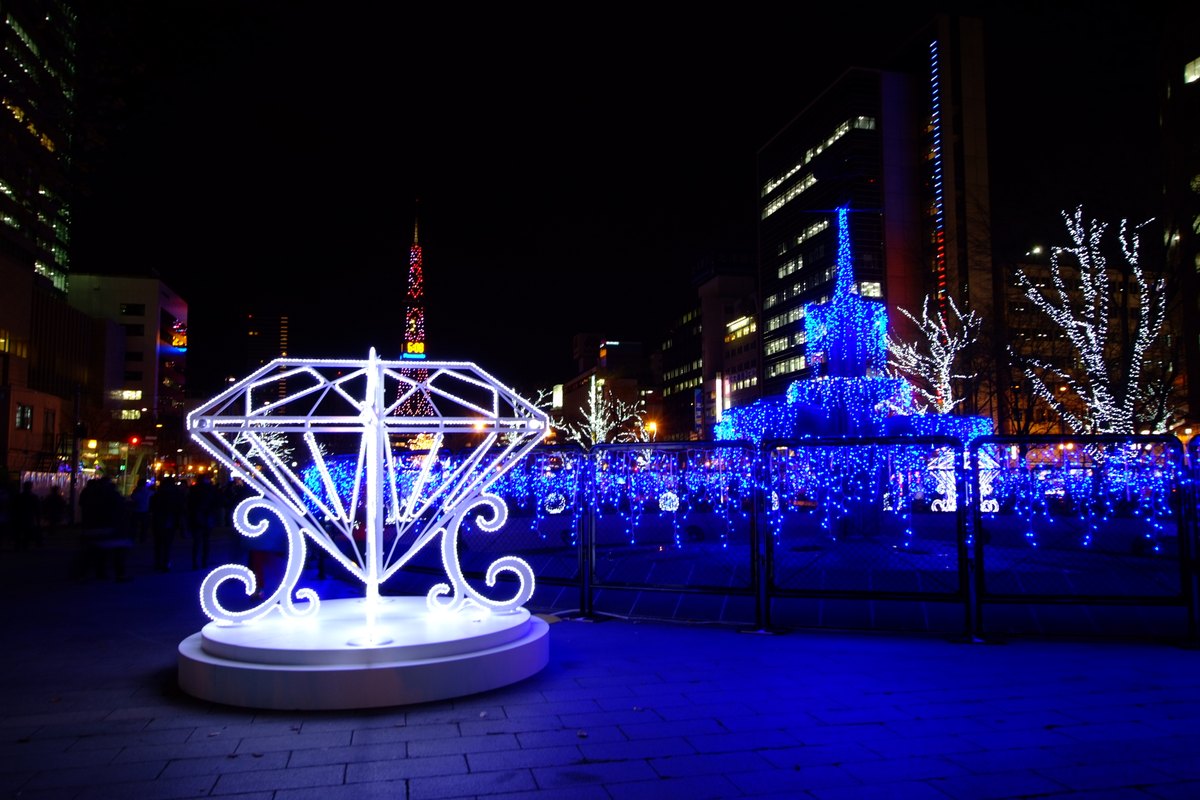
Sapporo White Illumination traces back to December 12, 1981, when it launched with roughly 1,048 bulbs lit in Odori Park block 2 — Japan's first large-scale citywide illumination event. The reasoning behind it was straightforward: Sapporo's tourist season peaks in spring and summer around landmarks like the Clock Tower, Odori Park and the TV Tower, and its winter identity leaned almost entirely on the February Snow Festival, leaving late autumn into early winter with no real draw. White Illumination was built to fill that gap, and it naturally became the bridge event that carries the city from autumn into the snow festival season.
Over four-plus decades the footprint kept expanding, from that single spot in Odori block 2 to six sites in the 46th edition (2026-27). Compared with the Sapporo Snow Festival held in the same city, the two events serve completely different purposes: the festival's headline act is snow and ice sculpture, a tightly scheduled 8-day event you either catch or miss for a year. White Illumination's headline act is street lighting and a market atmosphere spread across months rather than days, which gives it far more scheduling flexibility — you don't need to lock in a specific weekend the way the festival demands.
The six sites: dates and locations (46th edition)
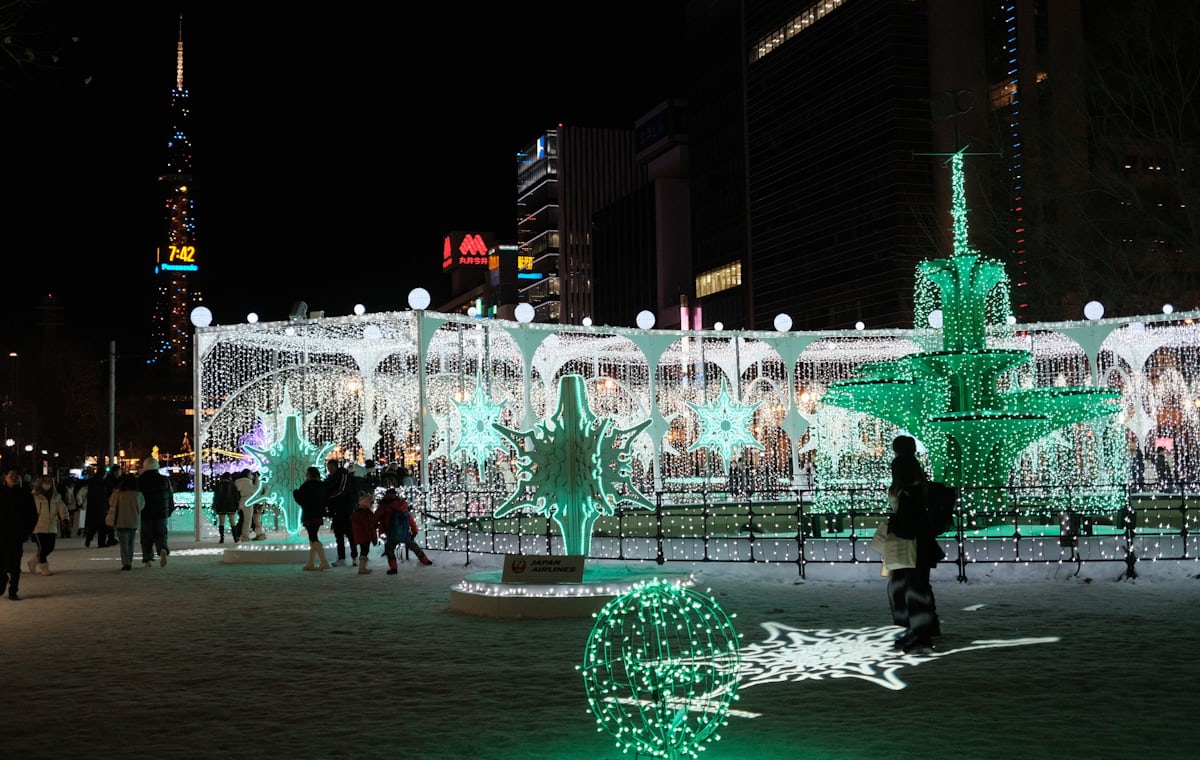
The five standing sites all start on Friday, November 20, 2026 and end on one of three dates — December 25, February 11 or March 14; the sixth, Nakajima Park, is January only. The 46th edition lays out like this:
| Site | Location | Lighting period (46th edition) | What it's known for |
|---|---|---|---|
| Odori | Odori Park (blocks Nishi 3-5) | Nov 20, 2026 (Fri) - Dec 25 (Fri) | Where it all started; the Munich Christmas Market is next door to the east, in blocks Nishi 1-2 |
| Ekimae-dori | Central median of Sapporo Ekimae-dori (Kita 4 - Minami 4) | Nov 20, 2026 (Fri) - Feb 11, 2027 (Thu, holiday) | A continuous light corridor running straight from the station to Odori |
| Minami 1-jo dori | Minami 1-jo dori (Minami 1-jo Nishi 1-3) | Nov 20, 2026 (Fri) - Mar 14, 2027 (Sun) | Shopping-district street lighting; easy to catch mid-errand |
| Kita 3-jo Plaza (Akaplaza) | Kita 2-jo Nishi 4 and Kita 3-jo Nishi 4 | Nov 20, 2026 (Fri) - Mar 14, 2027 (Sun) | The plaza in front of the red-brick Former Hokkaido Government Office; good for an unhurried walk |
| Sapporo Station south exit plaza | JR Sapporo Station, south exit | Nov 20, 2026 (Fri) - Mar 14, 2027 (Sun) | Right outside the station exit; easy to catch during a transfer |
| Nakajima Park (new in the 46th edition) | Nakajima Park | Early to late January 2027 (scheduled) | Exact dates, hours and any fee are announced separately |
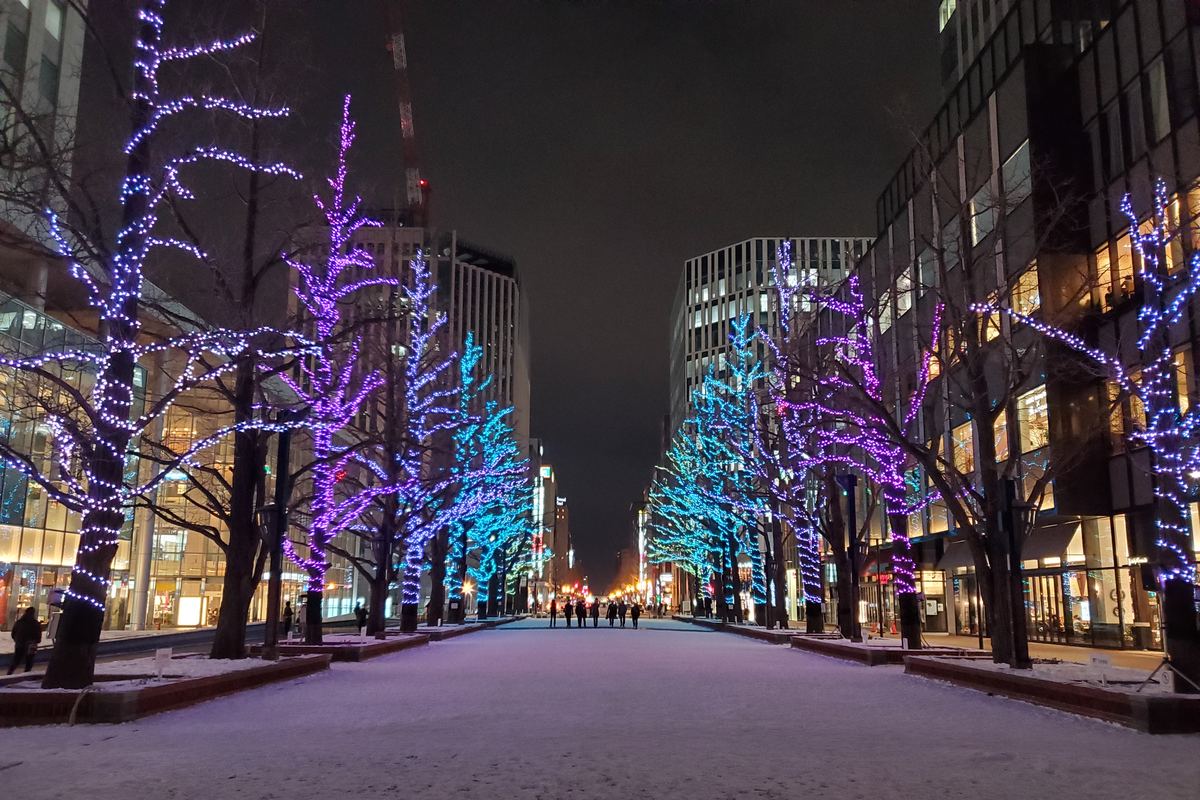
The first five sites are free to walk through — no ticket, no reservation. Lighting hours are published shortly before each season opens. Last season (the 45th) Odori ran 16:30-22:00, extended to 24:00 on December 23-25; use that as a reference only, and check the individual site pages on the official website for this season's hours before you go.
Odori ends on December 25, Ekimae-dori on February 11, and the other three standing sites on March 14. If your trip lands in January or February, Odori is already dark — the sites actually lit are Ekimae-dori and Minami 1-jo dori. Check which month you're traveling before you pick a site.
It's worth putting White Illumination's 1981 start date in context. Tokyo's better-known winter illuminations — Marunouchi, Roppongi Hills, the Tokyo Midtown displays that now draw huge crowds every December — all launched decades later, mostly from the late 1990s onward. Kobe's Luminarie, another well-known Japanese illumination event, began in 1995 as a memorial project after the Great Hanshin earthquake. Sapporo's event predates all of them by well over a decade, and that head start is part of why the format still feels distinct: rather than one concentrated light tunnel, it's spread across a working city center that residents pass through on ordinary errands, which is exactly why sites like Minami 1-jo dori and the station plaza are built for incidental viewing rather than a single dedicated visit.
One evening: Odori + Ekimae-dori, or save it for Minami 1-jo
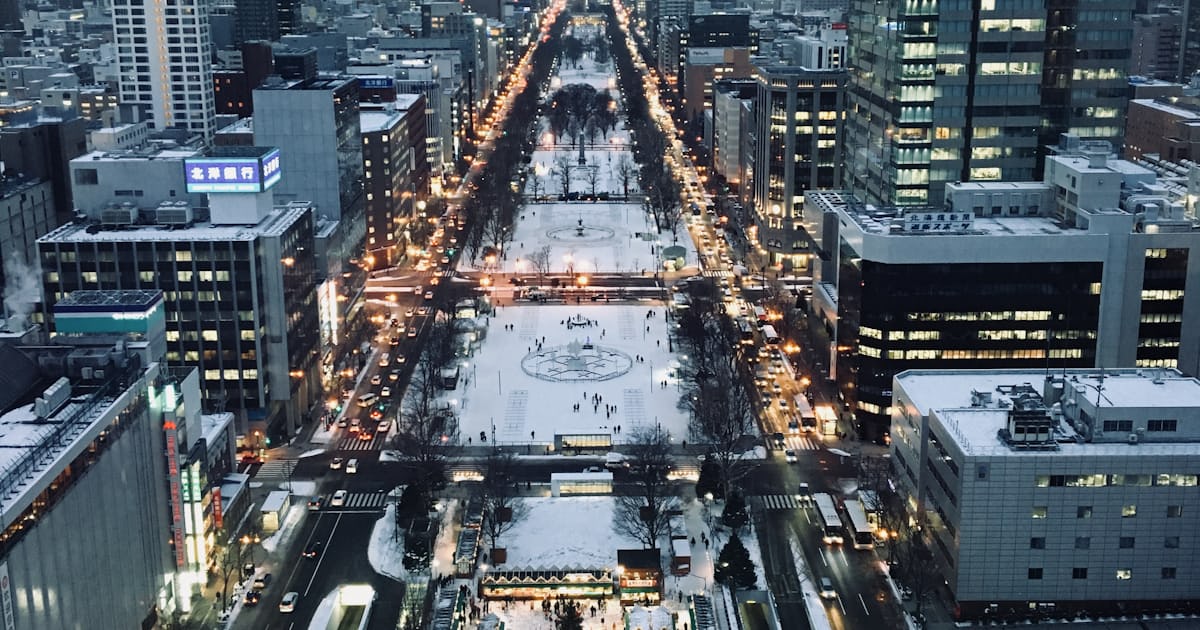
If you only have one evening between November 20 and December 25, I would pair Odori with Ekimae-dori — don't try to squeeze every site into one night. This season's route starts at the Munich Christmas Market in Odori blocks Nishi 1 and 2, heads west to the lights in blocks 3 to 5 once it is dark, then joins Ekimae-dori, which connects to Odori on foot. Together they fill exactly one evening without needing extra transit or rushing photos to make the next stop.
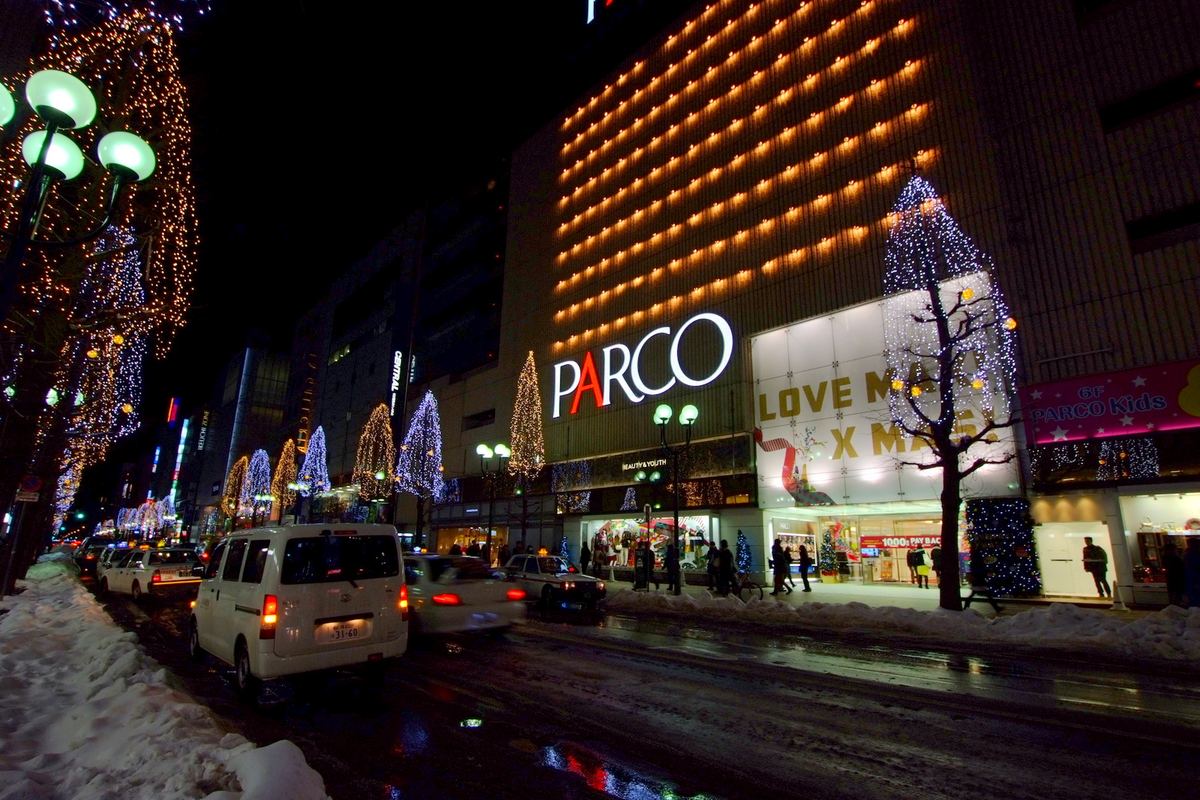
Minami 1-jo dori, Akaplaza and the station south exit plaza serve a different purpose — they're not "settle for this if you miss Odori" backups, but sites with a much longer season built for running into naturally over the course of a whole trip. Catching Minami 1-jo dori's lights while out shopping for souvenirs, or glancing up at the station plaza mid-transfer — that incidental, unplanned encounter is exactly what these sites are for, not a dedicated evening. If your trip lands after December 25, Odori has already gone dark, and Ekimae-dori plus Minami 1-jo dori naturally become the main event instead.
For photos, timing matters more than which site you pick. Full daylight washes out most string-light displays, and full darkness loses the sky entirely, so the "blue hour" — the 15 or so minutes right after the lights switch on, while the sky still holds a trace of blue — is consistently the strongest window for a balanced shot. That timing is roughly the same at every site: aim to be in position a little before the official lighting time so you're not scrambling to find an angle once the display is already lit. Weeknight evenings are also noticeably calmer to shoot than weekends, simply because Odori and Ekimae-dori sit along routes that locals use for after-work errands and dinner, not just tourist foot traffic — a Tuesday or Wednesday evening gives you more breathing room than a Friday or Saturday night.
The Munich Christmas Market: November 20 to December 25, Odori blocks Nishi 1 and 2
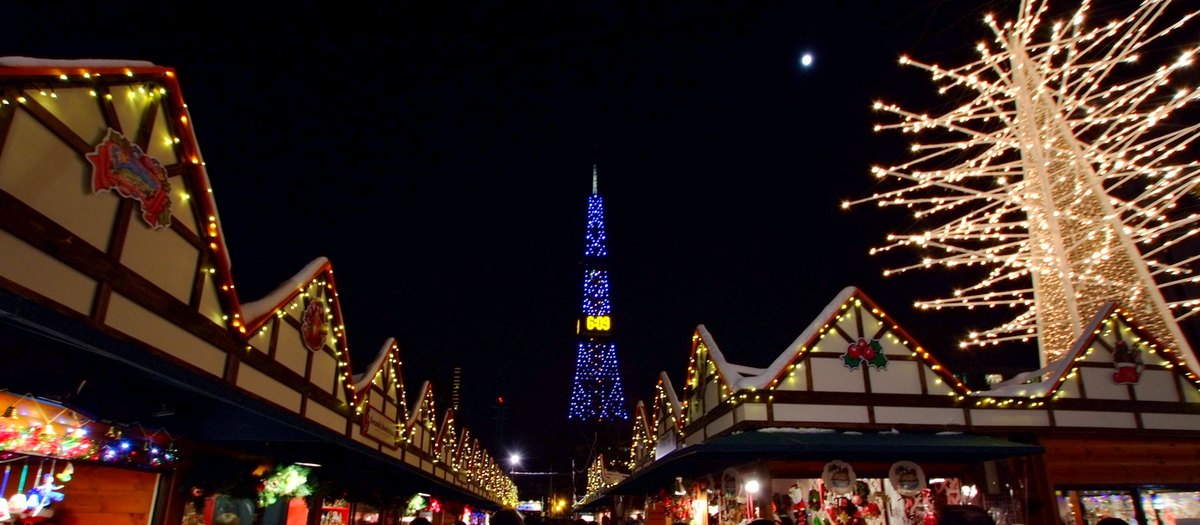
The 25th Munich Christmas Market in Sapporo runs Friday, November 20 through Friday, December 25, 2026, in Odori Park blocks Nishi 1 and 2. Its dates match the Odori illumination site exactly, but it sits immediately east of that site (blocks Nishi 3 to 5) rather than inside it. The market is free to enter; the stalls selling German mulled wine (Glühwein), Christmas sausages, roasted chestnuts and wooden Christmas crafts charge for what you buy — figure roughly ¥1,000-2,000 for a hot food-and-drink combo. Opening hours follow the official market page for the current season; last season they were 11:00-21:00 daily, last orders 20:45.
Browse the market for food and small crafts before dark, then walk west to block 3 for the Odori lights once they switch on — one evening covers both, with no need for two separate trips. The stalls are chalet-style huts, and daylight versus after-dark lighting produce two different scenes, so if you have the time, give it a stretch of each.
What changed for 2026-27 (46th edition)
Three things, and all three change how you walk Odori Park.
- A new Nakajima Park site. The organizers now count six sites. Nakajima Park is scheduled only for early to late January 2027, not the whole season; exact dates, hours and any fee follow the official site page.
- The Odori site shrinks to blocks Nishi 3 to 5. Last season it covered blocks 1 to 5.
- The Munich Christmas Market expands to blocks Nishi 1 and 2. Last season it occupied block 2 only, inside the illuminated stretch; this season the market and the Odori lights are two adjacent stretches.
So last season's plan of finishing the market and waiting in the same spot for the lights becomes market first, then a walk west to the lights. Only two things still need a look at the official pages before you go: each site's lighting hours (including whether late December is extended) and the details of the Nakajima Park site.
Pairing it with the Sapporo Snow Festival and Otaru's Snow Light Path
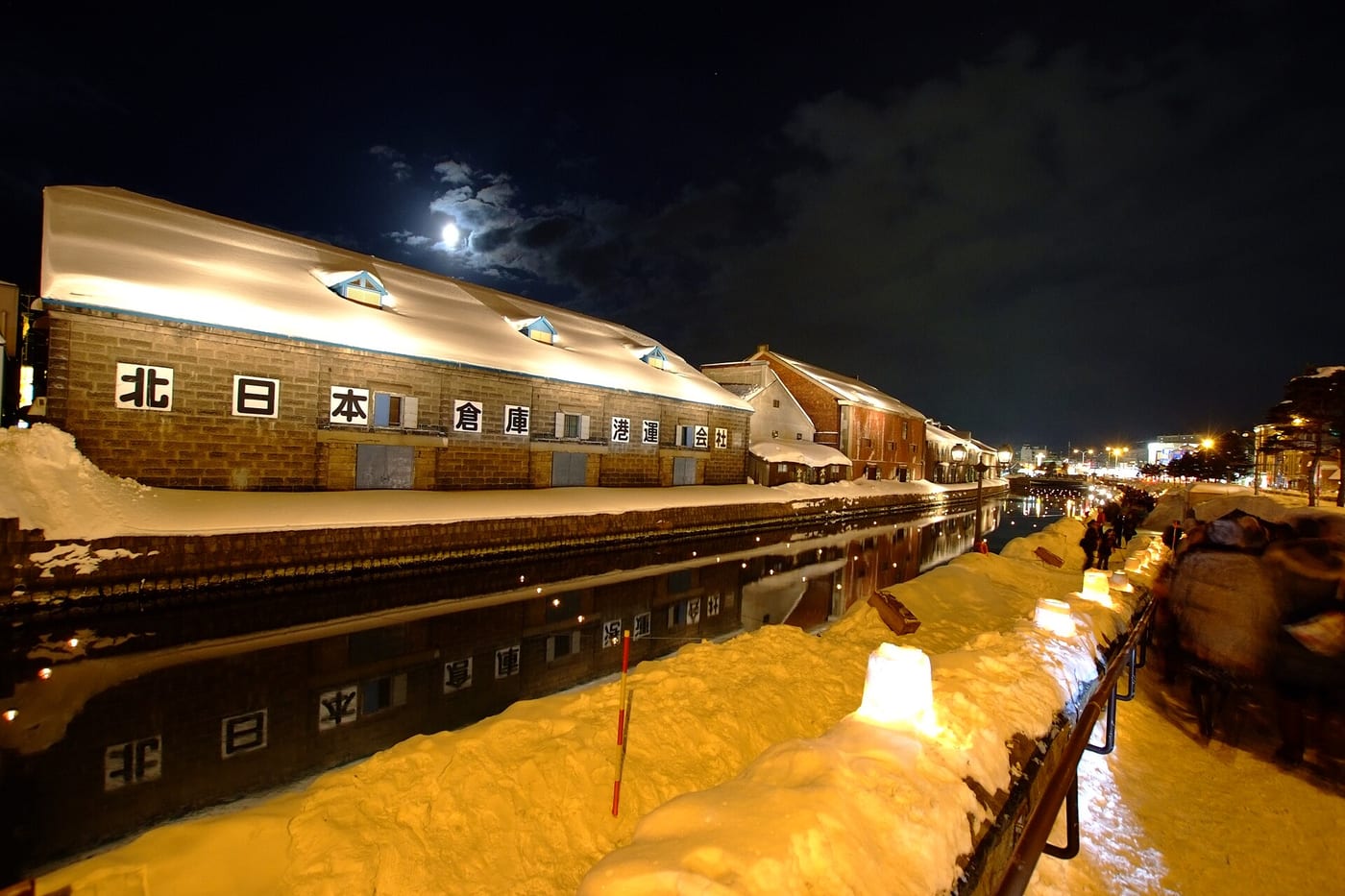
White Illumination's season runs the longest of any Hokkaido winter event — late November into mid-March — which means it naturally overlaps two other headline events: the Sapporo Snow Festival in early February, and, in the same window, the Otaru Snow Light Path. The 2027 festival runs Thursday, February 4 to Thursday, February 11: Ekimae-dori stays lit through the festival's final day and Minami 1-jo dori, Akaplaza and the station plaza are lit throughout, while the Odori lights and the Munich market have already ended. Time a trip for early February and one visit can catch all three: illuminations along Ekimae-dori and Minami 1-jo dori, sculptures at Odori and Susukino, and the candlelit canal at Otaru — without running three separate trips.
In practice, because White Illumination is the "catch it along the way" event and doesn't need a dedicated evening, it slots into the gaps between the snow festival and an Otaru day trip — spend the day in Otaru walking the canal, come back to Sapporo in the evening and take in a stretch of Ekimae-dori or Minami 1-jo dori on the way, then give the festival's Odori and Susukino sites a full evening the next night. That rhythm gets more out of the trip than giving each event its own dedicated night. Our Hokkaido winter 7-day itinerary already lays out a route and day count that fits all three in; if you're short on time and just want the essentials of downtown Sapporo first, start with our Sapporo travel guide.
Cold-weather gear and getting between sites
Because the season spans late November through mid-March, Sapporo's temperature range varies a lot within it — evenings hover around 0°C in late November, and it's not unusual to drop to −6 to −10°C after dark in January and February, with icy, slick sidewalks the norm rather than the exception. Grip-soled snow boots, layered thermal base layers, fleece and a windproof-waterproof shell, plus a beanie, gloves and hand warmers are the baseline for a night out at the lights. See the Hokkaido section of our Japan climate and clothing pillar guide for the full gear list and a four-season packing checklist.
Odori, Ekimae-dori and Minami 1-jo dori are all walkable from each other, with no transit ticket needed. At Odori subway station, exits 6 and 8 come up at block 3 (exit 8 has an elevator), exit 5 at block 4 and exit 2 at block 5; for the market first, use exit 27 for block 1. Ekimae-dori starts outside exits 3 and 4 of Sapporo subway station or the south exit of JR Sapporo Station, and its southern end is at Susukino Station exits 1 and 2. For Akaplaza, take the underground walkway from Sapporo or Odori station and come up at exit 2 or 4, about 2 minutes on foot. The January Nakajima Park site is on the Namboku Line: Nakajima-koen Station exits 1 and 3, or Horohira-bashi Station exits 1 and 2.
Phones drain fast in sub-zero cold, so set up a KKday Japan eSIM before you land — you can check the latest official lighting hours and any last-minute notices the moment you step off the train, rather than hunting down store Wi-Fi. If you're extending the trip to Otaru, Asahikawa or Hakodate, it's worth comparing whether a Hokkaido Rail Pass pays off — see our Hokkaido JR Pass complete guide for the route-by-route math. Walking the illumination sites themselves needs no transit ticket at all; the pass is purely for the inter-city legs of the trip.
Side trips: Otaru, Asahikawa, and the full itinerary
White Illumination doesn't need a full day on its own, which leaves plenty of time once you've walked the downtown sites. Otaru is about 30 minutes by JR from Sapporo, and the canal in winter light is worth a half-day by itself — more so if your dates overlap the Snow Light Path; see our Otaru Snow Light Path guide for the full breakdown. If you want to build a longer Hokkaido winter trip that strings together White Illumination, the Sapporo Snow Festival, Otaru's Snow Light Path, and even Asahikawa's winter-only attractions, our Hokkaido winter 7-day itinerary already has the day count and route worked out. If you just want to nail down central Sapporo first — Odori Park, and how to fit in the Mount Moiwa night view — our Sapporo travel guide is the better starting point.
For a different angle on Odori's lights entirely, the Sapporo TV Tower sits right at the eastern end of the park and its observation deck looks straight down the length of the park — a good option if you'd rather see the layout from above before deciding where to walk at street level, or if you've already covered Odori on foot and want one more view before moving on to Ekimae-dori.
It's worth keeping the different logic of these winter events in mind when you plan: White Illumination is the "long season, catch it whenever it's convenient" type, the snow festival is the "eight fixed days, block out a specific evening" type, and Otaru's Snow Light Path sits somewhere between the two. Factoring that difference in is more useful than just listing all three names on an itinerary — White Illumination can flex around your schedule, while the snow festival and Snow Light Path need their official dates locked in before you book flights and hotels.
Sapporo White Illumination FAQ
- Q1:What is Sapporo White Illumination, and how is it different from the Sapporo Snow Festival?
- Sapporo White Illumination is a citywide light display that switches on every year from late November, first held on December 12, 1981 in Odori Park block 2 with roughly 1,048 bulbs — making it Japan's first large-scale citywide illumination event. It is an entirely separate event from the Sapporo Snow Festival the following February: the festival's draw is snow and ice sculptures, while White Illumination's draw is street lighting and a Christmas-market atmosphere. The two only briefly overlap in early February.
- Q2:Do all the sites run for the same length of time?
- No. In the 46th edition (2026-27) the standing sites all switch on Friday, November 20, 2026, but the Odori site ends on Friday, December 25, the Ekimae-dori site runs to Thursday, February 11, 2027 (a public holiday), and the Minami 1-jo dori, Kita 3-jo Plaza (Akaplaza) and Sapporo Station south exit plaza sites run to Sunday, March 14, 2027. The new Nakajima Park site is scheduled only for early to late January 2027.
- Q3:Is there an admission fee, and what hours does it run?
- The Odori, Ekimae-dori, Minami 1-jo dori, Akaplaza and station south exit sites are free to walk through — no ticket, no reservation; the fee for the Nakajima Park site is announced separately. Lighting hours are published shortly before each season opens. Last season (the 45th) Odori ran 16:30-22:00, extended to 24:00 on December 23-25 — treat that as a reference only and check the site pages on the official website before you go.
- Q4:Is the Munich Christmas Market a separate paid event?
- Admission is free; the stalls selling German mulled wine, festive food and wooden Christmas crafts charge for what you buy. The 25th Munich Christmas Market in Sapporo runs Friday, November 20 to Friday, December 25, 2026 in Odori Park blocks Nishi 1 and 2 — next to the Odori illumination site in blocks Nishi 3 to 5, not inside it. Check the official market page for opening hours; last season they were 11:00-21:00.
- Q5:I only have one evening — should I go to Odori, Ekimae-dori, or Minami 1-jo?
- Up to December 25, I would pick Odori paired with Ekimae-dori: start at the Munich market in Odori blocks Nishi 1 and 2, walk west to the lights in blocks 3 to 5, then join Ekimae-dori — all on foot. Minami 1-jo dori, Akaplaza and the station south exit plaza stay lit to mid-March, so catch them while shopping or changing trains rather than on your first night.
- Q6:What is different about the 2026-27 (46th) edition?
- Three things. A new Nakajima Park site (scheduled for early to late January 2027) takes the official count to six sites; the Odori site shrinks to blocks Nishi 3 to 5 (last season it was blocks 1 to 5); and the Munich Christmas Market expands to blocks Nishi 1 and 2 (last season it was block 2 only). The market and the Odori lights are now two adjacent stretches rather than the same block.
- Q7:Can I combine this with the Sapporo Snow Festival and the Otaru Snow Light Path?
- Yes. The 2027 Sapporo Snow Festival runs Thursday, February 4 to Thursday, February 11; Ekimae-dori stays lit through the festival's final day and Minami 1-jo dori, Akaplaza and the station plaza are lit throughout, while the Odori lights and the Munich market have already ended. The Otaru Snow Light Path is also in February — our Hokkaido winter 7-day itinerary lays out a route that fits all three.
- Q8:Is there anything left to see once Odori closes on December 25?
- Yes. The Odori lights and the Munich market end on December 25, but Ekimae-dori continues to February 11, 2027 and Minami 1-jo dori, Akaplaza and the station plaza continue to March 14. Visit in January or February and the center of gravity simply shifts from Odori toward Ekimae-dori and Minami 1-jo dori.
- Q9:How do I get between the sites, and do I need a transit pass?
- Odori, Ekimae-dori and Minami 1-jo dori are all walkable from one another — no transit needed. Ekimae-dori connects directly to Sapporo Station, so you can start walking the moment you step out. If your trip extends to Otaru, Asahikawa or Hakodate, it's worth checking whether a Hokkaido Rail Pass pays off; walking the illumination sites themselves needs no ticket at all.
- Q10:What should I wear, and how do I keep my phone from dying in the cold?
- Across the late-November-to-March season, Sapporo's temperatures swing widely — evenings hover around 0°C in late November and commonly drop to −6 to −10°C in January and February, with icy sidewalks. Grip-soled snow boots, thermal layering under a windproof-waterproof shell, plus a beanie, gloves and hand warmers are the baseline for an illumination walk; see the Hokkaido section of our Japan climate and clothing pillar guide for the full list. Phones drain fast in sub-zero cold, so set up a KKday Japan eSIM before you land — you can check the latest official hours the moment you step off the train instead of hunting for store Wi-Fi.
Read next
Sapporo Snow Festival 2027: Which of the 3 Sites Is Worth It?
Official 2027 dates: Feb 4–11 across three sites. One evening only covers two — which to pick, when to dodge crowds, and why lodging needs booking now.
Otaru Snow Light Path 2027: Canal vs Temiya Line
A free candlelit event with two venues — Canal reflections vs Temiya Line stalls, best timing, and how to pair it with the Sapporo Snow Festival.
Hokkaido Winter 7-Day Itinerary 2026
Sapporo → Otaru → Biei → Hakodate over 7 days, with JR Pass math, how to reach the Furano slopes, and a real two-person budget.