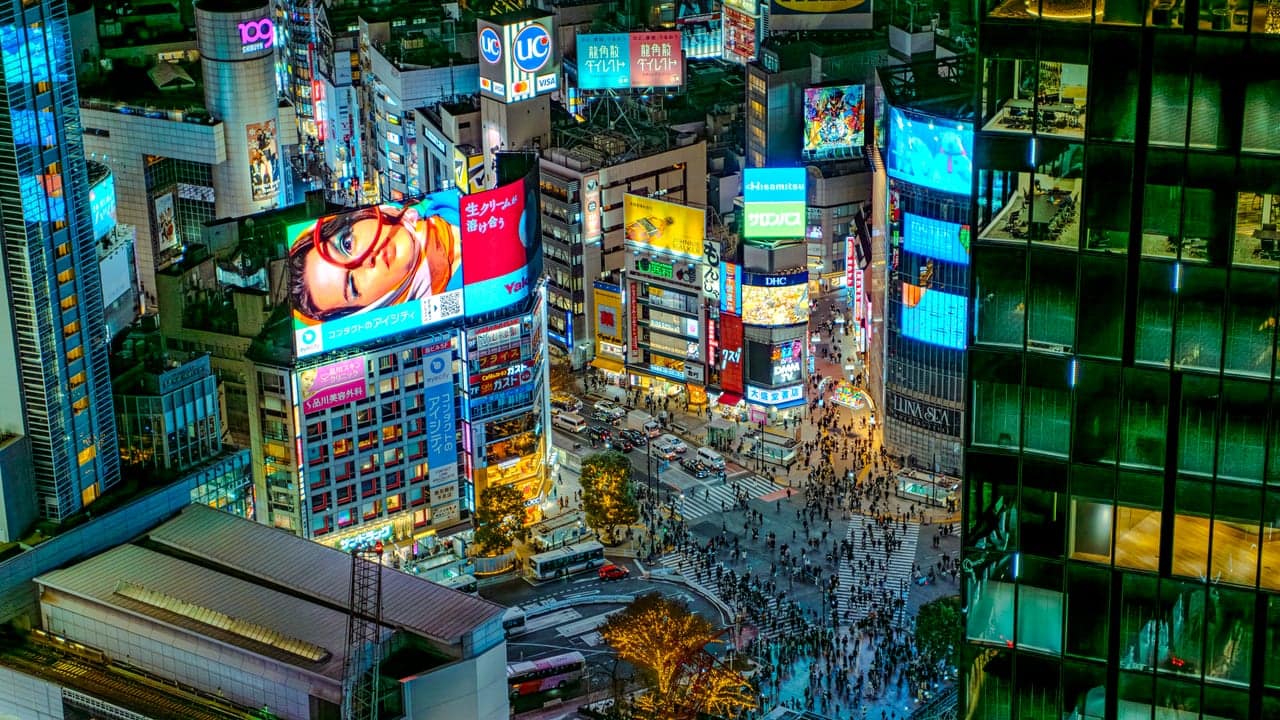
Tokyo has at least six observatories for night views, and pick the wrong one and you've paid for a ticket but missed the photo you came for. Shibuya Sky is the open-air 230m rooftop over the Crossing — the iconic shot — but you fight for tickets weeks ahead. Skytree is the tallest at 450m but sits far from the center. The prettiest way to shoot Tokyo Tower is actually to not go up it. And the Tokyo Metropolitan Government deck at 202m is completely free, no reservation. This guide lays out price, height, indoor vs outdoor, whether you can frame the Crossing / Mt. Fuji / Tokyo Tower, and booking difficulty in one table — then tells you straight: which to pick for the IG shot, which on a budget, which for older relatives. Planning a first Tokyo trip? Slot the observatory into the right evening with our Tokyo 5-day itinerary.
- For the iconic Shibuya aerial: Shibuya Sky (open-air 230m, facing the Crossing) — but tickets only go on sale two weeks out, so grab sunset the moment the window opens
- On a budget / free night view: Tokyo Metropolitan Government deck, 202m, totally free, no reservation, indoor with elevators
- To frame Tokyo Tower in your night shot: Roppongi Hills Tokyo City View (faces the tower, the classic photo spot)
- Highest, and a rainy-day backup: Skytree at 450m, indoor — the best wet-weather plan
- Easiest for elderly parents: Skytree or Tocho (indoor, elevator-served, seating and climate control)
📖 Table of contents
- 1. Six observatories at a glance
- 2. Shibuya Sky: the open-air IG king
- 3. Skytree: tallest, but far from center
- 4. Tokyo Tower: the best shot is not going up it
- 5. Roppongi Hills City View: the spot for Tokyo Tower
- 6. Tocho: the free 202m value champion
- 7. Other Shibuya options: around the Scramble
- 8. Best timing: nailing sunset magic hour
- 9. Booking difficulty and saving money
- 10. Which should you pick? By scenario
- 11. FAQ
Six observatories at a glance
Let's lay the six options side by side. Prices reflect official 2026 figures (Shibuya Sky online ¥2,700, counter ¥3,000; Skytree combo ¥3,200–4,400 online for October–December 2026; Tokyo Tower Main Deck ¥1,500); height and indoor/outdoor are each venue's fixed reality:
| Observatory | Adult ticket | Height | Indoor/Outdoor | Best feature |
|---|---|---|---|---|
| Shibuya Sky | Online ¥2,700 (by 14:59) / ¥3,400 (from 15:00) | 230m (open rooftop) | Open-air roof + indoor floors | Faces Shibuya Crossing, open-air 360°, best at sunset |
| Skytree | ¥3,200–4,400 (combo, online, Oct–Dec 2026; priced by entry date) | 350m / 450m | Indoor | Tallest in Tokyo, rain-proof, Sumida River angle |
| Tokyo Tower | Main Deck ¥1,500 / Top Deck ¥3,300 | 150m / 250m | Indoor | The landmark itself photographs well; near Zojoji; easy access |
| Roppongi Hills City View | ¥2,200 online / ¥2,400 at the counter | 250m (52F) | Indoor (rooftop Sky Deck conditions apply) | Faces Tokyo Tower — best spot for the tower night shot |
| Tokyo Metropolitan Govt (Tocho) | Free | 202m (45F) | Indoor | Totally free, no reservation, Shinjuku skyline view |
| Umeda Sky Building (Osaka comparison) | ¥2,000 | 173m | Open-air ring rooftop | Osaka's open-air deck, the Floating Garden |
(🔴 Correction: Roppongi Hills is not dynamically priced. This guide previously said "around ¥2,200 in certain periods, around ¥2,800 on standard weekdays." Checked against the official fare table on August 21, 2026: there is no ¥2,800 general rate. Adults pay ¥2,400 at the counter or ¥2,200 booking online — a flat ¥200 online discount, not a date-driven swing. What does change is the period: the operator posts one fare table per exhibition window rather than a single annual price, so still check your own date. The rooftop open-air Sky Deck opens subject to weather and operations, is not guaranteed, and is not included in the fares above — confirm on site. Umeda Sky Building is included as Osaka's open-air counterpart for a cross-city comparison.)
Shibuya Sky: the open-air IG king
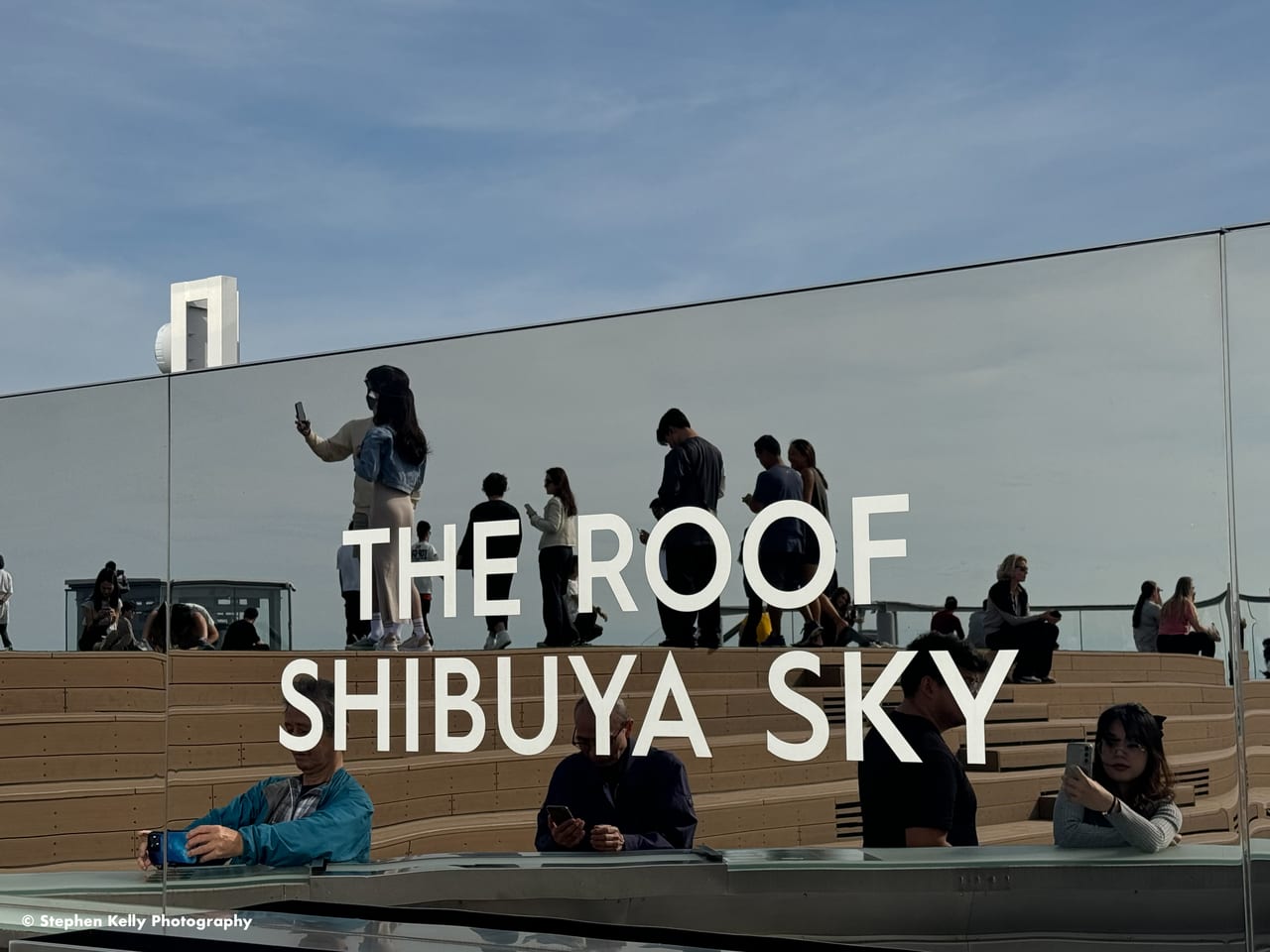
Shibuya Sky sits atop Shibuya Scramble Square, and its biggest draw is one sentence: it's open-air, and it faces Shibuya Crossing. You enter on the 14th floor and ride the elevator to the rooftop SKY STAGE on the 46th, where there's no glass underfoot and open sky above — a 230m open platform that puts you face-to-face with Tokyo in 360°. North are the Shinjuku skyscrapers and distant Mt. Fuji (on a clear day); south, Tokyo Tower lit on the skyline; and directly below, the most famous pedestrian crossing in the world.
That "open-air + facing a landmark street scene" combination is something no other Tokyo deck offers. Skytree is taller, but it's behind glass and farther from the center east of the Sumida River; Tocho is free, but you're looking at Shinjuku towers, not the Crossing. So if the photo in your head is "a person on the rooftop with all of Shibuya behind them," the answer isn't in doubt — it's Shibuya Sky, provided you can get a ticket.
Honestly, the cost of Shibuya Sky is that it's too popular: sunset slots are brutally hard to book, the rooftop often means queuing for photos, and because it's open-air, the roof closes in wind and rain (you view from the indoor floors instead). But when the weather cooperates and you've secured a slot, it's still the single most worthwhile observatory in Tokyo. Sales only open for dates two weeks ahead, so for sunset you act the moment that window opens — and sold out means sold out, since the official site says a web sell-out means the counter is sold out too.
Book Shibuya Sky tickets online (avoid sellouts) →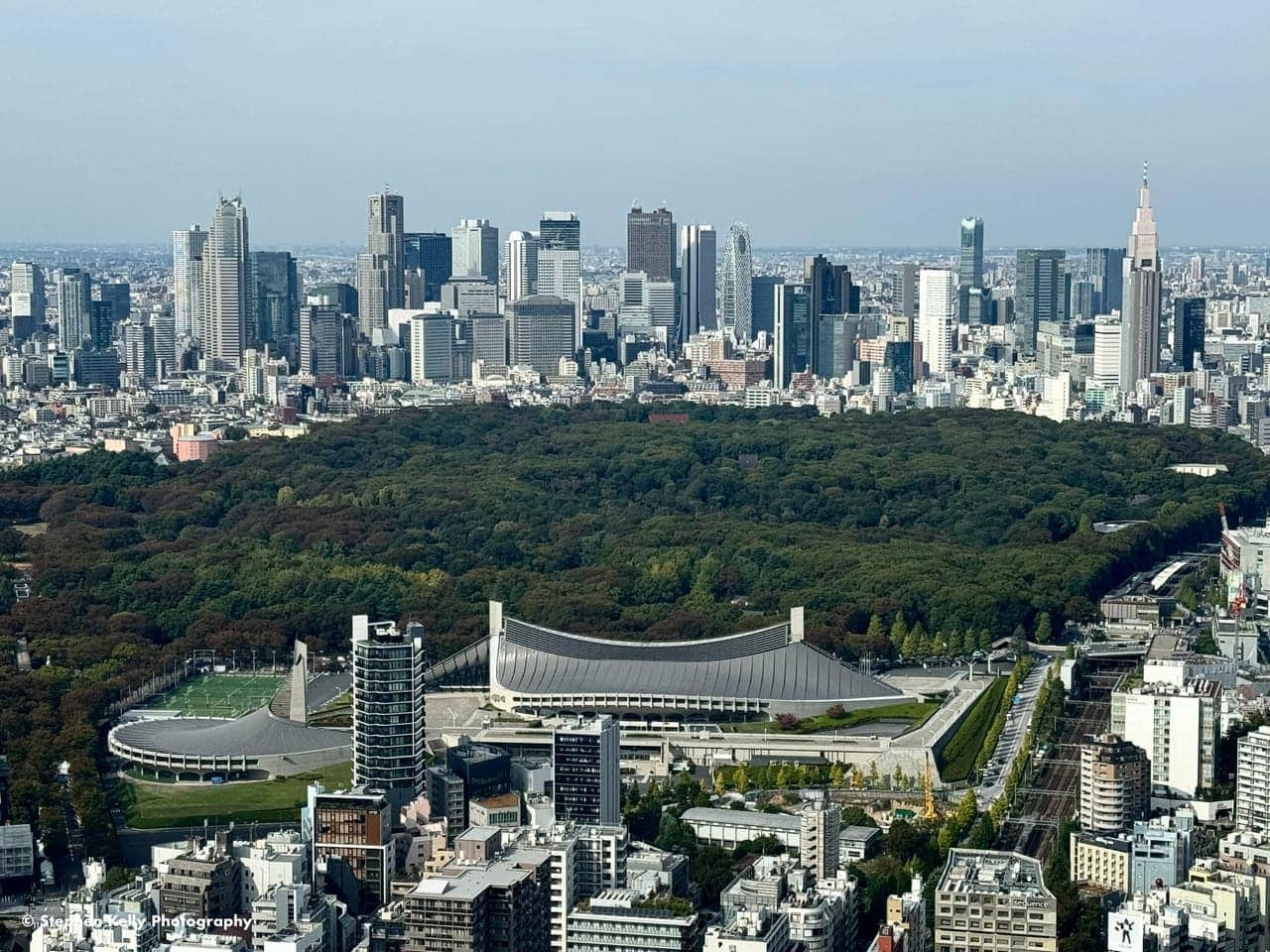
Skytree: tallest, but far from center
Tokyo Skytree stands 634m and is certified by Guinness World Records as the world's tallest tower, with two observation levels: the 350m Tembo Deck and the 450m Tembo Galleria. The price is set by entry date — every time slot on a given day costs the same, and it is not a weekday/holiday split. The official ticket page shows an adult combo from-price of ¥3,000+, but no day in October–December 2026 sells at it: online the combo runs ¥3,200–4,400, highest on long weekends and at year-end, and dates from January 2027 are not on sale yet. The 4F counter and ticket machines add ¥500 per ticket, so online is the base price, and a ticket cannot be moved to another date or slot — only cancelled and rebought. Its advantage is blunt — you stand higher than anywhere else in Tokyo, and at 450m the whole Kanto Plain spreads out below, with a one-of-a-kind angle over the Sumida River, Asakusa and the Tokyo Skytree Town complex.
But two trade-offs to know up front: first, it's in Sumida Ward, relatively far from the Shibuya–Shinjuku tourist core, so most people pair it with Asakusa; second, it's indoor, behind glass, missing the open-sky rush of Shibuya Sky. The upside: precisely because it's indoor and weather-proof, Skytree is the best insurance for a rainy-day night view. If rain washes out your outdoor plans, Skytree (or Tocho) is the backup you can reliably execute. For a wet-weather Tokyo day, our Tokyo rainy-day guide strings the indoor sights into a route.
Book Skytree observation deck tickets online →Tokyo Tower: the best shot is not going up it
Here's the thing many people don't think through: Tokyo Tower itself — Japan's first-generation TV tower, that iconic red-and-white landmark — is at its best "photographed into someone else's night view," not stood on top of. The reason is simple: when you're on the tower, you can't capture the tower's signature silhouette.
If you still want to go up, the Main Deck (150m) is ¥1,500 for adults, and the Top Deck Tour (250m, with a guided experience) is ¥3,300 (web booking is ¥200 cheaper than the counter). The plus side: easy access, right beside Zojoji Temple, and the tower's internal lattice itself photographs well, with a sense of occasion for kids seeing "the Tokyo landmark." But if your goal is that classic shot of the red tower lit up in a night view, read the Roppongi Hills section below — that's the real answer. For Tokyo Tower's own full guide and how it stacks up against Skytree, see Tokyo Tower vs Skytree.
Roppongi Hills City View: the spot for Tokyo Tower
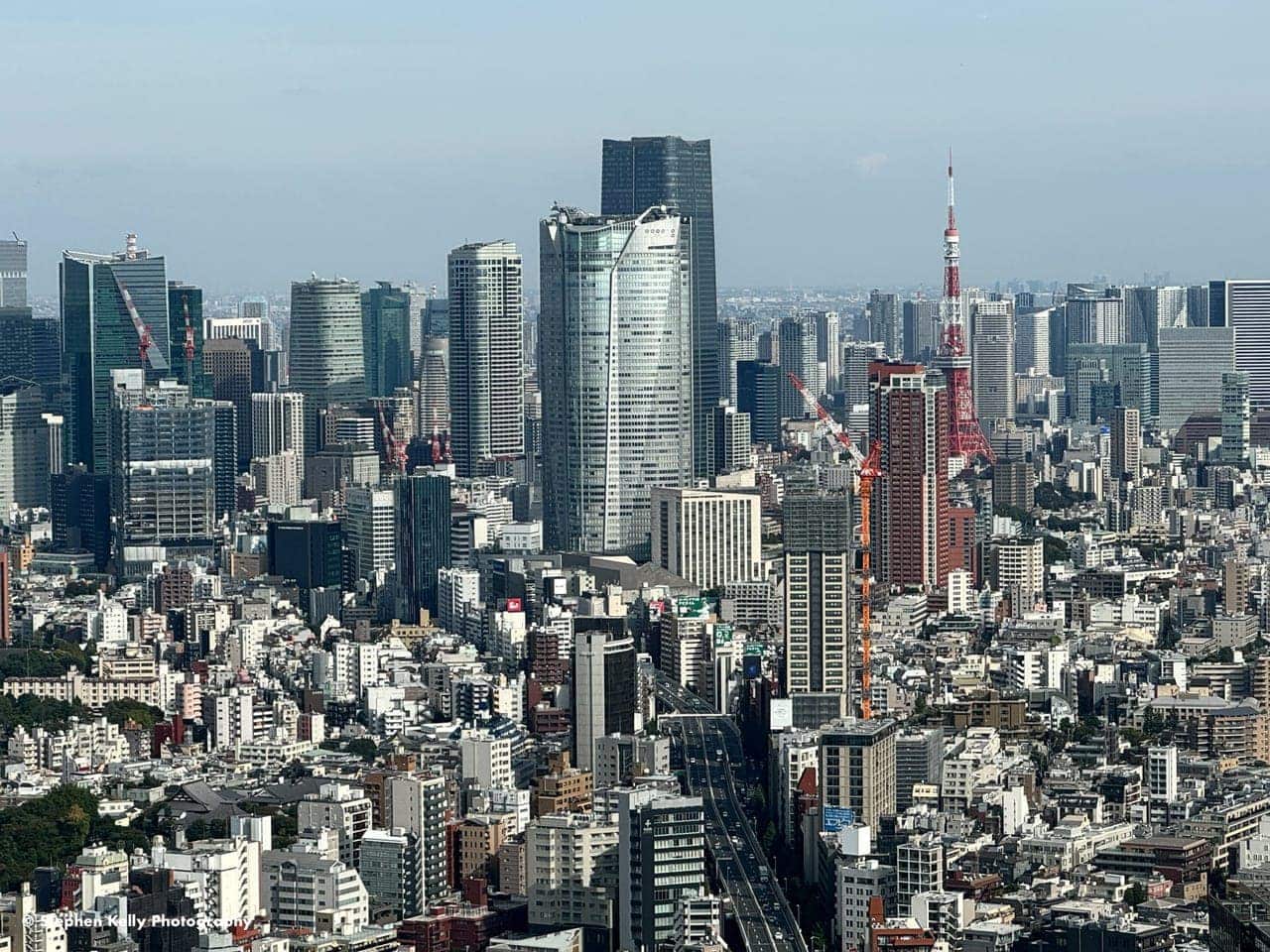
The Tokyo City View at Roppongi Hills Mori Tower sits on the 52nd floor at 250m, and its role on this list is crystal clear: the best spot for a Tokyo Tower night shot. It faces Tokyo Tower almost head-on, at just the right distance and angle — the red tower in the foreground, the sea of Minato and Odaiba lights behind — the composition the photography community treats as the definitive "Tokyo Tower night view." If your trip only needs to nail "that night shot with the tower," City View beats both Shibuya Sky and Tocho for it.
Pricing is simpler than most people expect: adults are ¥2,200 booking online or ¥2,400 at the counter — a flat ¥200 online discount, not a figure that swings by date. High-school and university students are ¥1,600 online, ages 4 through junior high ¥1,000, and over-65s ¥1,900 — worth knowing if you're bringing kids or older relatives, because judging the venue on the adult rate alone overstates it. The one caveat: the operator publishes fares per exhibition period rather than as a single annual table, so check your own date, and note that when a special exhibition is running there's a separate combined exhibition-plus-observatory ticket that is not the same as the deck-only fare above. It's an indoor deck with climate control and seating, unaffected by weather, with a simple route — friendly for older relatives or anyone who just wants to sit and take in the night view. The rooftop open-air Sky Deck opens subject to weather and operations, so confirm on site rather than assuming it's available.
Tocho: the free 202m value champion
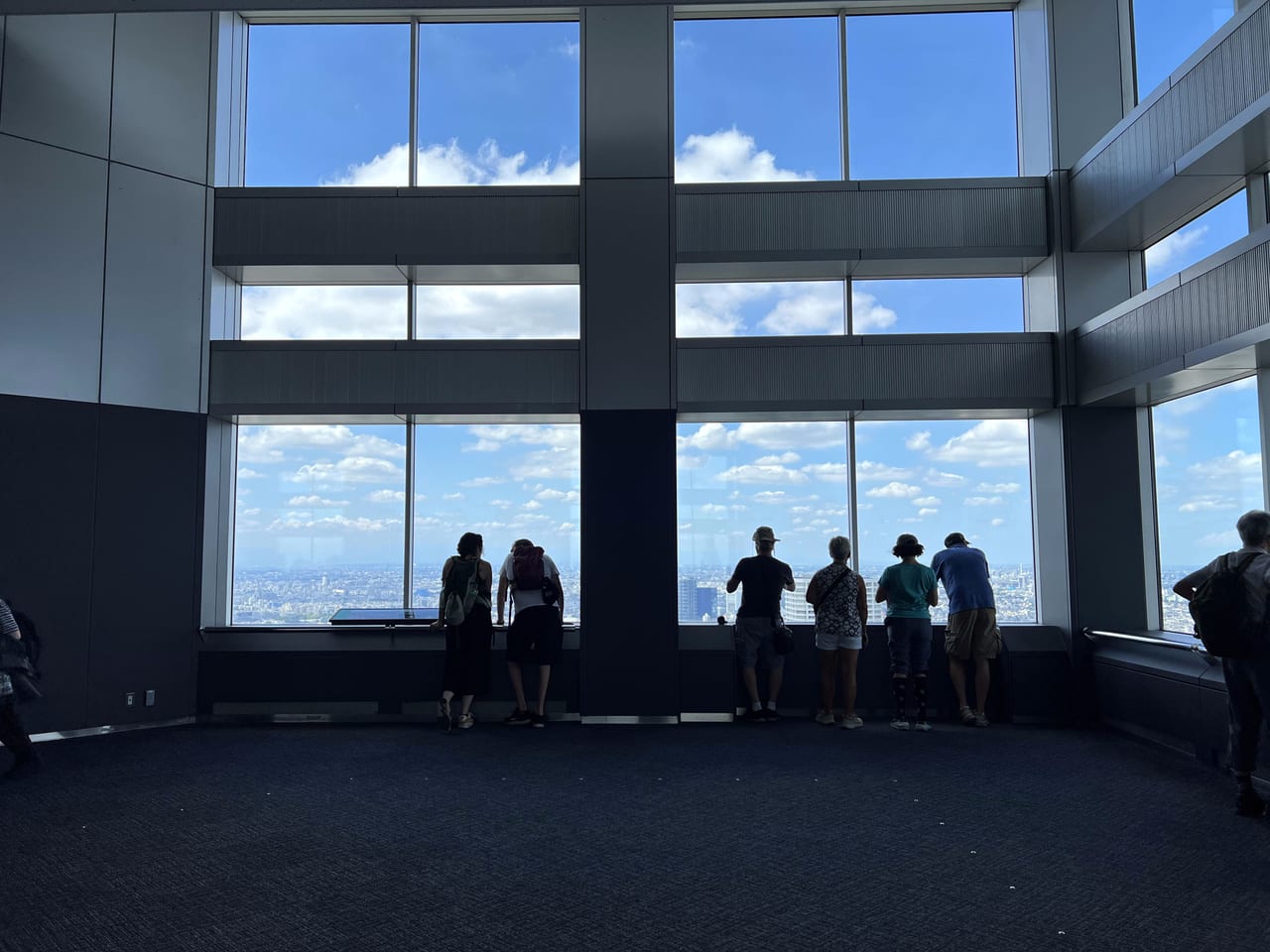
If you're on a budget, or just want one more night view without paying again, the Tokyo Metropolitan Government Building (Tocho) is the answer, and it's completely free. Honestly: this is the best-value observatory in Tokyo, no contest. Tocho's two towers in Shinjuku each have a 45th-floor, 202m-high observatory, reached by a dedicated elevator in about 55 seconds, with no ticket and no reservation — just go up.
On a clear day you can see Mt. Fuji, Skytree, Tokyo Tower and the Shinjuku skyscrapers from Tocho — the view is genuinely expansive. Its limits: first, you're mainly looking at Shinjuku's skyscraper skyline, without Shibuya Sky's dramatic street scene over the Crossing; second, the north and south observatories take turns closing (the south usually closes the 1st and 3rd Tuesday each month, the north the 2nd and 4th Monday, shifting if a holiday falls then), so check the official site for which tower is open the day you go. None of that dents its unbeatable value of a 202m night view for free.
Practical advice: treat Tocho as a "free warm-up or bonus round" — spend your money on Shibuya Sky or Roppongi for the headline photo, then use free Tocho for one more evening of skyline from a different angle, catching both. It's right in Shinjuku, perfect to add after exploring the area. The full Shinjuku–Shibuya play is in our Tokyo 5-day itinerary.
Other Shibuya options: around the Scramble
If you only want to see Shibuya Crossing but don't want to pay for Shibuya Sky, the area has a few free or low-cost alternative angles:
- MAGNET by SHIBUYA109 rooftop (MAG'S PARK): shoot the Crossing from directly above, the classic angle, for a small photo fee — the spot behind many of the Crossing shots on Instagram.
- Cafes overlooking the station: the Starbucks above Tsutaya by the station lets you watch the crowds through the window for the price of a drink — good for unhurried observation.
- Shibuya Scramble Square's mall floors: before Shibuya Sky, the mall itself has window areas with street views.
These angles show "the Crossing itself" rather than a sweeping night skyline — a different role from Shibuya Sky. Shibuya Sky sells the open 230m rooftop expanse; MAG'S PARK sells the top-down shot of the crowds. For a close-up of the crossing's pedestrian flow, the latter is actually more direct, and cheaper.
Best timing: nailing sunset magic hour
Whichever observatory you choose, the most valuable window for a night view is the 40 minutes around sunset, what photographers call magic hour or blue hour. In that window the sky isn't fully dark yet — it still holds the warm afterglow — while the city lights are already on, and that interplay of blue and orange is something neither full daylight nor full night can give you.
How to time it? The rule is enter about 30 minutes before sunset, so you capture all three stages: blue sky, afterglow, then the lights coming on. Tokyo's sunset shifts a lot with the season: around 19:00 near the summer solstice, around 16:30 near the winter solstice, so check the exact sunset time for your date and work backward to pick your entry slot. Plan to stay 60-90 minutes to shoot the full light transition before heading down.
In practice: Shibuya Sky's open rooftop is the most sought-after — and most worth timing to magic hour; at Roppongi Hills the process of Tokyo Tower shifting from bright to dark is gorgeous; and Tocho is free, so you can linger until full dark without watching the clock. The one thing to avoid is heavy overcast or rain — when visibility is poor, even the tallest deck just shows a gray smear, and you're better off swapping in an indoor plan and going up when the weather clears.
A small but real factor: the open-air decks (Shibuya Sky and, in Osaka, Umeda Sky Building) read very differently across seasons. On a clear winter evening the air is crisp and the lights are razor-sharp, but the rooftop wind at 230m is genuinely cold — bring a layer you wouldn't otherwise carry. Summer evenings are warmer and more comfortable up top, but haze and humidity often soften the distance, and Mt. Fuji is far less likely to show. If catching Fuji from the rooftop matters to you, aim for the clear, dry days of late autumn through winter, and check the forecast the morning of rather than locking a non-refundable sunset slot blind.
Booking difficulty and saving money
Ranking the six by "booking difficulty" and "cost" to speed up your decision:
- Hardest to book: Shibuya Sky sunset slots (sold only two weeks out, gone within hours of the window opening). Set an alarm for release day; if you can't get sunset, settle for a fully-dark night slot.
- Reservation needed but easier: Roppongi Hills, Skytree. Booking online ahead is usually smoother than walk-up and sometimes cheaper, but not the instant sellout Shibuya Sky is.
- No reservation, cheapest: Tocho (free, just go up). On a budget, or wanting one more view without paying again, it's the no-brainer.
- The money-saving combo: pay for one observatory for the "headline shot" (Shibuya Sky for the Crossing, or Roppongi for the tower), then use free Tocho for a different night angle — least spent, most seen.
The benefit of booking online isn't just the small price difference — more importantly it locks your timed slot and avoids a wasted trip to a sold-out counter, especially for Shibuya Sky and Skytree in peak season, where same-day counter tickets often sell out early. Sort entry, tax-free shopping and a SIM in one go with our Japan trip essentials checklist.
Which should you pick? By scenario
No fluff — straight to the verdict for your situation:
- Want the iconic Shibuya aerial, want the open-air vibe → Shibuya Sky. Book sunset the moment the two-week window opens for your date; if you miss it, take a night slot.
- On a budget, want a free night view → Tocho. Free, no reservation, indoor with elevators, easy to add in Shinjuku.
- Want the red Tokyo Tower as the star of your night shot → Roppongi Hills City View, the classic photo spot.
- Want the highest in Tokyo, or a rainy-day backup → Skytree, 450m indoor, weather-proof.
- Bringing elderly or less-mobile relatives → Skytree or Tocho, indoor, elevator-served, seating and climate control, simple routes.
- Only want the crossing crowds, on the cheap → MAG'S PARK (MAGNET by SHIBUYA109 rooftop) for a small photo fee, the most direct top-down shot.
- Traveling with kids → Tokyo Tower (landmark occasion, easy access) or Skytree, routed with our Tokyo family guide.
The smartest play, really, is one paid + one free: spend the budget on Shibuya Sky or Roppongi for the must-have photo, then add free Tocho for a different-angle night view. Two observatories in one evening for the price of one ticket — and you've seen Tokyo's night view properly. These decks across Shibuya, Shinjuku and Roppongi are mostly linked by the JR Yamanote line and the subways, so if you're not yet fluent in the network, our Tokyo trains and subway guide makes the hops between them painless.
Frequently Asked Questions
- Q1:Is Shibuya Sky worth it, and how does it compare to the others?
- If your goal is "that iconic aerial shot over Shibuya Crossing, or standing on an open-air rooftop in the wind at sunset," Shibuya Sky is absolutely worth it — it's one of the few open-air decks in Tokyo, 230m up and facing the Crossing, with Mt. Fuji and Tokyo Tower in the same frame on a clear day. No other Tokyo deck gives you that combination. But it isn't the tallest (Skytree's 450m is), nor the cheapest (the Tokyo Metropolitan Government deck at 202m is free). So the answer depends on what you want: the photo and the vibe, choose Shibuya Sky; sheer height, Skytree; a free night view, Tocho. See the comparison table below.
- Q2:How far ahead should I book Shibuya Sky, and does it sell out?
- Yes — sunset slots are among the hardest observatory tickets in Tokyo. Shibuya Sky uses timed entry, and the official wording is that tickets are sold only up to dates two weeks ahead — so booking a month out is impossible; what you have to catch is the moment that two-week window opens for your date. The adult fare splits at 15:00: ¥2,700 online for entry by 14:59 and ¥3,400 from 15:00 (walk-up counter ¥3,000 and ¥3,700 respectively), so any sunset slot sits in the pricier tier. The "magic hour" slots around sunset often sell out within hours of release, especially on weekends — and the official site states that once the web allocation sells out, the counter is sold out too, so there is no walk-up fallback. If you miss sunset, settle for a fully-dark night slot. Weekday daytime is the easiest to get.
- Q3:With elderly parents or kids, which observatory is easiest to do?
- By facility design, Skytree and Tocho are the most senior-friendly: both are indoor, elevator-served decks with seating and climate control, unaffected by wind and rain, with simple routes. Shibuya Sky also rides an elevator up, but the rooftop SKY STAGE is open-air, involves a short outdoor walk, is windy and cold in winter, and you often stand a long time for photos — harder for anyone with limited mobility (you can still view from the indoor floors). On a budget and wanting an easy night view, Tocho — free, with elevators, indoors — is the top pick for taking older relatives.
- Q4:Which observatory should I use to get Tokyo Tower into my night shot?
- To make the red Tokyo Tower the star of your frame, do not go up Tokyo Tower itself (you can't photograph the tower while standing on it). The best choice is Roppongi Hills Tokyo City View — it faces Tokyo Tower almost head-on, at a flattering distance and angle, and is the classic spot photographers use for the Tokyo Tower night shot. Shibuya Sky can fit Tokyo Tower into a wide skyline too, but it's farther away and the tower looks small. Tocho is too far west. In short: a tower close-up from Roppongi, the tower as a skyline accent from Shibuya Sky.
- Q5:Is the Tokyo Metropolitan Government observatory really free? What can you see?
- Yes — completely free, no reservation needed, and it's the best value night view in Tokyo, full stop. The Tokyo Metropolitan Government Building (Tocho) in Shinjuku has two towers, each with a 45th-floor, 202m-high observatory reached by a dedicated elevator in about 55 seconds. On a clear day you can see Mt. Fuji, Skytree, Tokyo Tower and the Shinjuku skyscrapers. The catch: it sits on the west side in Shinjuku, so you see a skyscraper skyline rather than the dramatic street scene of Shibuya Crossing, and the north and south observatories take turns closing (check the official site for the day you go). On a budget, or just to add one more free view, it's a must.
- Q6:What time should I go up for sunset magic hour, and how long should I stay?
- The golden window is arriving about 30 minutes before sunset, so you catch blue sky, the afterglow, and the "blue hour" when the city lights come on — the most valuable 40 minutes for night photography. Tokyo's sunset is roughly 19:00 in summer and 16:30 in winter, so check the exact time for your date and pick your entry slot around it. Plan to stay 60-90 minutes to shoot the whole light transition. Shibuya Sky's open rooftop is the one to nail this window on (and the hardest to book); Tocho is free, so you can linger until full dark.