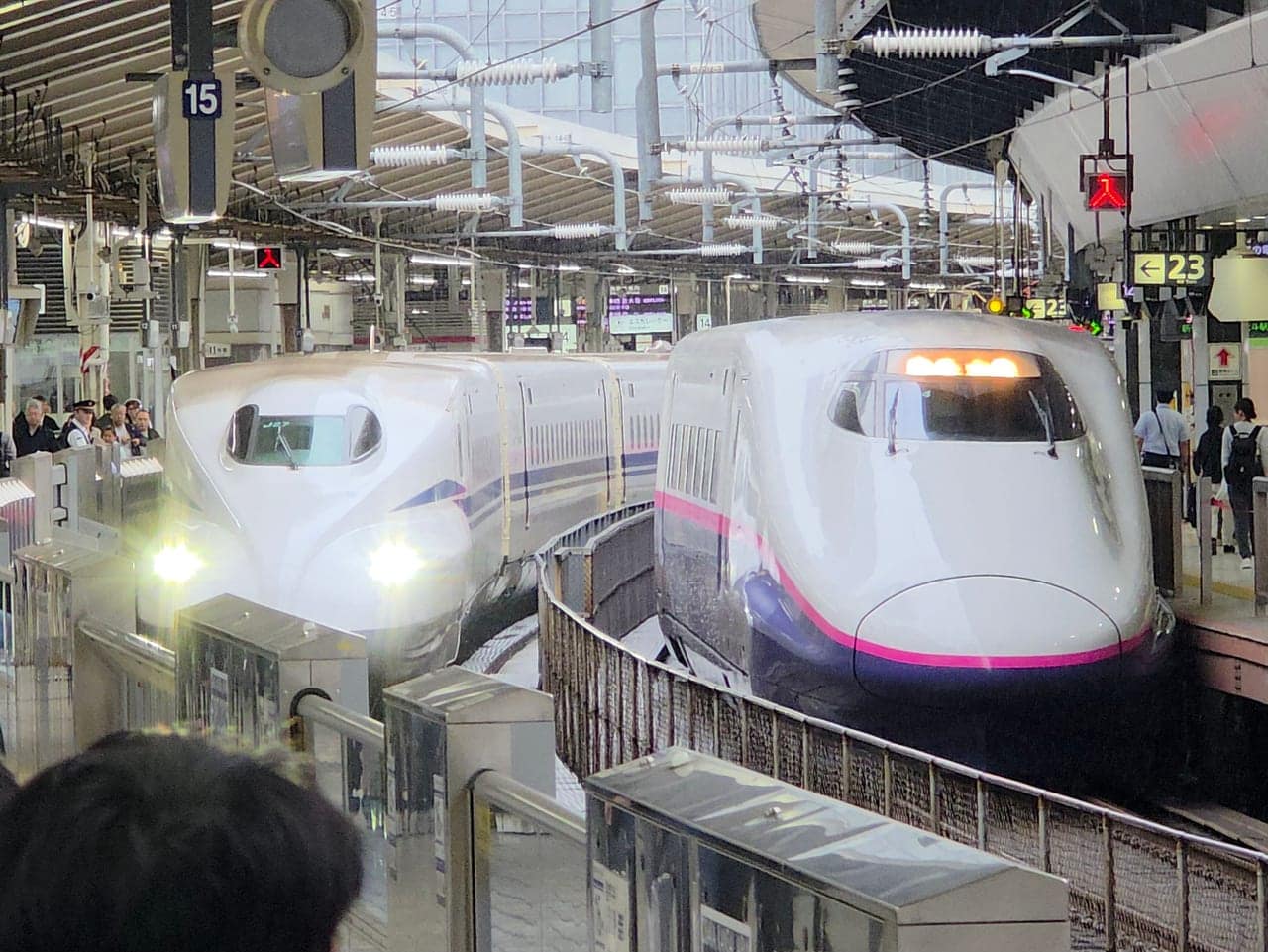
Let's lead with the verdict: per 2026 official fares, Tokyo to Shin-Osaka on EX Hayatoku 21 is ¥12,980, or ¥25,960 round trip. Buy a 7-day nationwide JR Pass for the same trip and you'll pay ¥50,000. In other words, if your trip is "back and forth between two cities," grabbing a shinkansen early-bird fare — the official JR product family is called "EX Hayatoku" (EX早特) — saves you close to half the pass price and you never need to touch a Pass. What trips most people up isn't whether to save — it's untangling smartEX, the four Hayatoku tiers (21 / 7 / 3 / 1), and the JR Pass: who can use what, how to book, and which fits which trip.
This guide lays the numbers out across the three most common itineraries — Tokyo–Osaka round trip, Tokyo–Kyoto one-way, and a multi-stop loop with stopovers — comparing EX Hayatoku, walk-up reserved seats, and a JR Pass, with one clear cheapest answer for each. By the end you'll know whether to open the smartEX app or head to the green ticket window. Every fare below is checked against 2026 official sources (the smartEX product pages and their fare-table PDFs, plus JR Central), labeled as per official fares — no recycled old prices.
- Tokyo–Osaka/Kyoto round trip: grab EX Hayatoku 21 (per 2026 official fares ¥12,980 / ¥12,430 one-way), about ¥25,000–26,000 round trip — beats the JR Pass at ¥50,000 outright.
- One-way or last-minute: missed the 21-day window? Use EX Hayatoku 7 (Hikari/Kodama, on sale until 7 days out) or the standard smartEX fare (¥200 off paper tickets) — still cheaper than walk-up, still no Pass.
- Hayatoku 1 doesn't sell Tokyo–Kansai: it's a Hikari/Kodama unreserved fare capped at Tokyo–Maibara, and Hayatoku 3 is a Green Car product (Tokyo–Shin-Osaka from ¥13,870). For pure savings, stick to Hayatoku 21 or 7.
- Three-plus cities across regions in one week (Tokyo + Kyoto + Hiroshima/Kanazawa): when every leg is a long shinkansen run, the JR Pass finally earns its cost. That's its only clear win.
- With stopovers: EX Hayatoku can't do a stopover — buy leg by leg or weigh a regional pass, don't force one ticket to cover it all.
- EX Hayatoku is bought in the official smartEX app / EX Yoyaku, with no affiliate channel; grabbing releases needs data, so get connected before you land.
📖 Contents (tap to expand)
- What are smartEX and EX Hayatoku, exactly?
- The EX Hayatoku family: 21 / 7 / 3 / 1 explained
- How foreign travelers use it and grab releases
- Three buying routes: EX Hayatoku vs walk-up vs JR Pass
- Three routes calculated: the cheapest answer for each
- The core table: 3 routes × 3 buying methods
- 4 traps when grabbing EX Hayatoku
- Frequently Asked Questions
What are smartEX and EX Hayatoku, exactly?
People overthink "EX." In one sentence: it's the online shinkansen booking system run by JR Central and JR West, selling tickets for the Tokaido/Sanyo shinkansen (Tokyo ↔ Nagoya ↔ Shin-Osaka ↔ Okayama ↔ Hiroshima ↔ Hakata). You pick a train, reserve a seat, and pay in the app, then tap through the gate on arrival — no ticket queue, no paper exchange.
There are two front doors to the system; get them straight and the rest is easy:
- smartEX: free, register with a credit card and go. Tourists use this one, full stop.
- EX Yoyaku (Express Reservation): ¥1,100/year for fares that are a hair lower — built for business travelers who ride often enough to clear the fee.
And "EX Hayatoku" is the early-bird discount product inside the smartEX/EX Yoyaku system — not a separate app, just the cheaper fare class that appears when you book far enough ahead. Put simply: smartEX is the channel, EX Hayatoku is the fare type. Hold that distinction and the fare table below reads cleanly.
The EX Hayatoku family: 21 / 7 / 3 / 1 explained
EX Hayatoku isn't one ticket — it's a family, and the number at the end is simply the booking deadline in days before travel. JR overhauled the lineup in May 2025 (the old "EX Hayatoku 21 Wide" and "EX Kodama Family Hayatoku" were retired and folded into the current names), so older guides you find elsewhere may no longer match. The four current tiers, per the official smartEX fare tables, using Tokyo–Shin-Osaka:
| Fare type | Sales window | Trains | Seat | Tokyo–Shin-Osaka | Best for |
|---|---|---|---|---|---|
| EX Hayatoku 21 | 1 month before (10:00) to 21 days before (23:30) | Nozomi | Ordinary reserved | ¥12,980 | Dates locked early, fastest train, biggest saving |
| EX Hayatoku 7 | Until 7 days before (23:30) | Hikari/Kodama (Nozomi version only Tokyo–Okayama and beyond) | Ordinary reserved | ¥12,490 | Missed the 21-day cutoff, trading 15–30 min |
| EX Hayatoku 3 | Until 3 days before (23:30) | Nozomi/Hikari/Kodama | Green Car | ¥13,870–16,560 | Cheap upgrade to the big seats |
| EX Hayatoku 1 | 6 days before (0:00) to the day before (23:30) | Hikari/Kodama | Ordinary unreserved | Not sold (max Tokyo–Maibara ¥11,090) | Short/mid hops, last-minute |
Compare these to the undiscounted fares and the saving is obvious: per 2026 official fares, the walk-up Nozomi reserved seat (normal season) is ¥14,720 Tokyo–Shin-Osaka and ¥14,170 Tokyo–Kyoto (¥14,520 / ¥13,970 with the standard smartEX fare, which knocks ¥200 off paper tickets); a Tokyo–Shin-Osaka unreserved seat is ¥13,870. EX Hayatoku 21 at ¥12,980 undercuts the Nozomi reserved fare by about ¥1,740; EX Hayatoku 7 at ¥12,490 is cheaper than even an unreserved seat — you pay less than standing-room price for a reserved seat.
Two members of the family are widely misunderstood. EX Hayatoku 3 is not a cheaper ticket — it's a discounted Green Car product: Tokyo–Shin-Osaka runs ¥13,870 on Kodama (first-class seat for unreserved-seat money), ¥14,670 on Hikari (below the ¥14,720 walk-up Nozomi reserved fare), or ¥16,560 on Nozomi (about ¥1,840 over walk-up reserved for the Green Car). And EX Hayatoku 1 is an unreserved-seat fare that, per the official route list, simply isn't sold for Tokyo–Kyoto or Tokyo–Shin-Osaka — its longest Tokaido section is Tokyo–Maibara (¥11,090), and its real use cases are hops like Tokyo–Atami (¥3,390) or Tokyo–Shizuoka (¥5,490). If you searched "Hayatoku 1" hoping for a cheap Tokyo–Kansai ride, that section doesn't exist — go back to Hayatoku 21 or 7.
My call is blunt: if your dates are set three weeks out, grab EX Hayatoku 21 — fastest Nozomi and the biggest saving. Missed the cutoff? Fall back to Hayatoku 7: an extra 15–20 minutes on a Hikari, but the fare is actually lower, so you lose nothing. Groups of two or more can also look at "EX Family Hayatoku 7" (Hikari/Kodama reserved, until 7 days out) — just remember Kodama stops at every station and takes four hours Tokyo to Shin-Osaka, so it only suits families who genuinely aren't in a hurry.
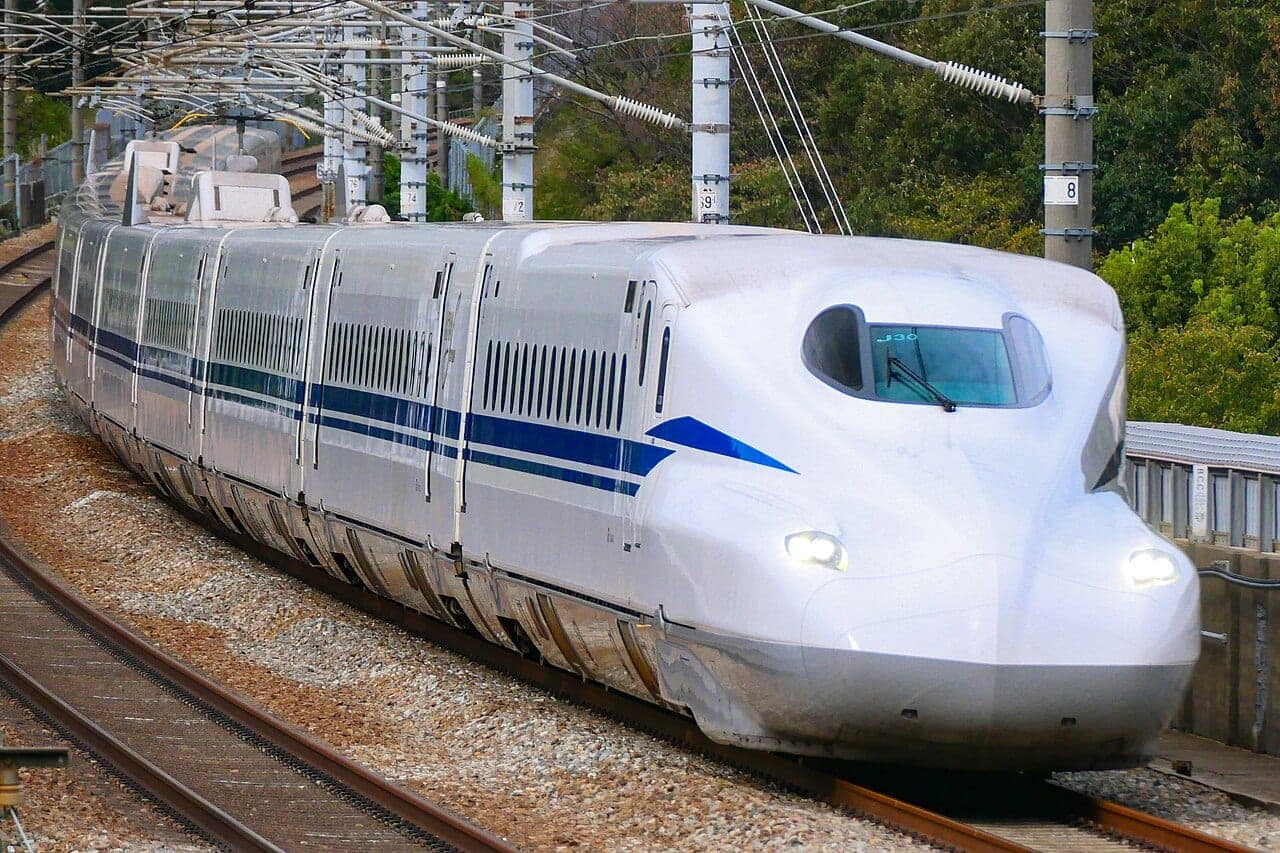
How foreign travelers use it and grab releases
The recurring question is "I have no Japanese credit card or phone — can I use smartEX?" The answer is yes. smartEX accepts overseas-issued Visa/Mastercard/JCB/Amex, registers with an email, and needs no Japanese account or number. The flow looks like this:
- Before you fly, download the smartEX app, register with email, and link a credit card.
- Pick your travel date, section, train, and seat. The system shows the cheapest fare available right now (book early enough and EX Hayatoku 21 appears).
- Pay online and confirm the reservation.
- At the gate, choose one: link a Suica/ICOCA IC card and tap through, or collect a paper ticket from a station machine.
The single most overlooked point: grabbing EX Hayatoku needs data. Popular trains releasing 21 days out can sell out fast — you might still be home, or already on the road in Japan, but either way your phone must be online in real time to catch them; changing tickets and checking platforms later also needs connectivity. So sort out a data plan before you leave rather than scrambling for airport WiFi on arrival.
For how to pick a connectivity option (eSIM vs pocket WiFi vs local SIM) and what else to prep before you go, see our Japan trip essentials checklist for the full pre-departure sequence.
Three buying routes: EX Hayatoku (early bird) vs walk-up vs JR Pass
Boil every option down and shinkansen travel really has just three routes. Set this frame first and the math gets simple:
- Route 1: EX Hayatoku (early bird). Book 7–21 days ahead via smartEX. Cheapest, but needs early planning, allows no stopover, and isn't sold on blackout dates.
- Route 2: Walk-up reserved seat. Buy at the counter, or via smartEX at its standard fare (¥200 below paper tickets). Most flexible, buy on the spot — but most expensive.
- Route 3: JR Pass. One ticket, unlimited rides while valid; only earns its cost across multiple long shinkansen legs spanning several regions. Point-to-point round trips almost always lose money.
One mantra: the JR Pass is a "cross-region loop specialist," EX Hayatoku is a "point-to-point money saver" — they solve differently shaped trips. Whether your itinerary hops between two or three cities or stretches a giant loop across half of Japan decides which route you take. For the Pass's full six alternatives and four-route breakeven math, see our JR Pass guide 2026; this article keeps the focus on the EX early-bird route.
Three routes calculated: the cheapest answer for each
These three itineraries cover most travelers' shinkansen needs. All one-way figures are per 2026 official fares (normal season, ordinary reserved seat), excluding local transit; the JR Pass is figured at ¥50,000.
Route A: Tokyo–Osaka round trip (the classic Kanto + Kansai pairing)
| Buying method | Round-trip price | Notes |
|---|---|---|
| EX Hayatoku 21 (Nozomi) | ~¥25,960 | ¥12,980 × 2, fastest train, cheapest |
| Walk-up Nozomi reserved | ~¥29,440 | ¥14,720 × 2, buy on the spot |
| 7-day nationwide JR Pass | ¥50,000 | Only two shinkansen rides used — heavily wasted |
Cheapest answer: EX Hayatoku 21. For a plain Tokyo–Osaka round trip, EX Hayatoku round trip runs about half the pass price — there's nothing to debate. The Pass simply shouldn't appear here; you'd use at most half its value. Even if you miss the early bird and can only buy walk-up reserved seats, ¥29,440 is still under 60% of the pass. Never buy the nationwide Pass for this route.
Route B: Tokyo–Kyoto one-way (fly home from Kansai Airport)
| Buying method | One-way price | Notes |
|---|---|---|
| EX Hayatoku 21 (Nozomi) | ¥12,430 | Fastest and cheapest, grab 21 days out |
| EX Hayatoku 7 (Hikari/Kodama) | ¥11,940 | 15–25 min slower, even lower fare |
| Walk-up Nozomi reserved | ¥14,170 | Buy on the spot |
| 7-day nationwide JR Pass | ¥50,000 | One ride only — absurdly wasteful |
Cheapest answer: EX Hayatoku (21 or 7). A one-way single shinkansen ride against a nationwide Pass means swapping the whole pass price for a ¥12,000-ish ticket — absurd. The fun twist: here EX Hayatoku 7 (¥11,940) is cheaper than 21 (¥12,430), because 7 maps to the slower Hikari/Kodama. If you don't mind the extra 20 minutes, missing the 21 release is no loss — switch to 7 and save more. This "Tokyo-in, Kansai-out" open-jaw itinerary is exactly where EX early bird shines.
Route C: Tokyo → Kyoto (two days) → Osaka → Tokyo (with stopovers)
This is the most misjudged itinerary. Many think "I'll get off at Kyoto, then go to Osaka, then back to Tokyo — three legs, surely a Pass is cheaper?" Here are all three ways to do it:
| Approach | Total | Notes |
|---|---|---|
| Leg-by-leg EX Hayatoku | ~¥26,000 | Tokyo→Kyoto ¥12,430 + Kyoto–Osaka local ~¥570 + Osaka→Tokyo ¥12,980 (Hayatoku 21) |
| Leg-by-leg walk-up reserved | ~¥29,460 | Tokyo→Kyoto ¥14,170 + local ¥570 + Osaka→Tokyo ¥14,720 |
| 7-day nationwide JR Pass | ¥50,000 | "Unlimited rides" sounds great, but only 2 shinkansen legs used |
Cheapest answer: leg-by-leg EX Hayatoku. The key is that Kyoto to Osaka doesn't need a shinkansen at all — the local line (JR Kyoto Line Special Rapid) is about ¥570 and 29 minutes, cheaper and more convenient than the shinkansen. So the only real long shinkansen legs are "Tokyo→Kyoto" and "Osaka→Tokyo," about ¥26,000 leg by leg — roughly half the Pass price. A stopover is not a reason to buy a Pass. Unless all three legs are long shinkansen hops (e.g. Tokyo→Kyoto→Hiroshima→Tokyo, each several thousand yen), the Pass never recovers its cost.
The core table: 3 routes × 3 buying methods
Here's the whole article condensed into one table — save it and compare against it next time you plan:
| Itinerary | EX Hayatoku | Walk-up reserved | JR Pass (7-day) | Cheapest answer |
|---|---|---|---|---|
| Tokyo–Osaka round trip | ~¥25,960 | ~¥29,440 | ¥50,000 | EX Hayatoku 21 |
| Tokyo–Kyoto one-way | ¥11,940–12,430 | ¥14,170 | ¥50,000 | EX Hayatoku |
| Tokyo→Kyoto→Osaka→Tokyo (stopovers) | ~¥26,000 | ~¥29,460 | ¥50,000 | Leg-by-leg EX Hayatoku |
| Tokyo→Kyoto→Hiroshima→Tokyo (3-city loop) | ~¥38,000+ | ~¥45,000+ | ¥50,000 | Pass only if the total exceeds its price |
The pattern at a glance: two long shinkansen legs or fewer, EX Hayatoku always wins; three-plus legs across regions, then bring the JR Pass into the math. Most travelers on a one-week, Tokyo- or Kansai-centered trip land in the first three rows — meaning most people don't need a nationwide Pass at all. Still unsure about the Pass? Lay out your itinerary and check it line by line against the four-route math in the JR Pass guide 2026.
Only consider a JR Pass if your trip spans three cities
If the math genuinely calls for a nationwide Pass, prices are near-identical across channels right now (online platforms win on cancellation terms, not on price). From 2026-10-01, though, where you buy sets the price: overseas JR-designated agents go up (7-day ordinary ¥53,000, 14-day ¥84,000), while the official JAPAN RAIL PASS Reservation web-sales site is not changing this round. Don't read that as "official is permanently cheaper" — the JR press release freezes that price for "a certain period" and says the end date will be announced later. KKday, Klook and similar resellers sit in the agent channel, and JR has not published whether they follow the increase, so open the official site's price page and compare before you order. Then exchange at an airport green window on arrival. For any of the three point-to-point itineraries above, save the money and grab EX Hayatoku via smartEX instead.
Compare JR Pass versions and current price →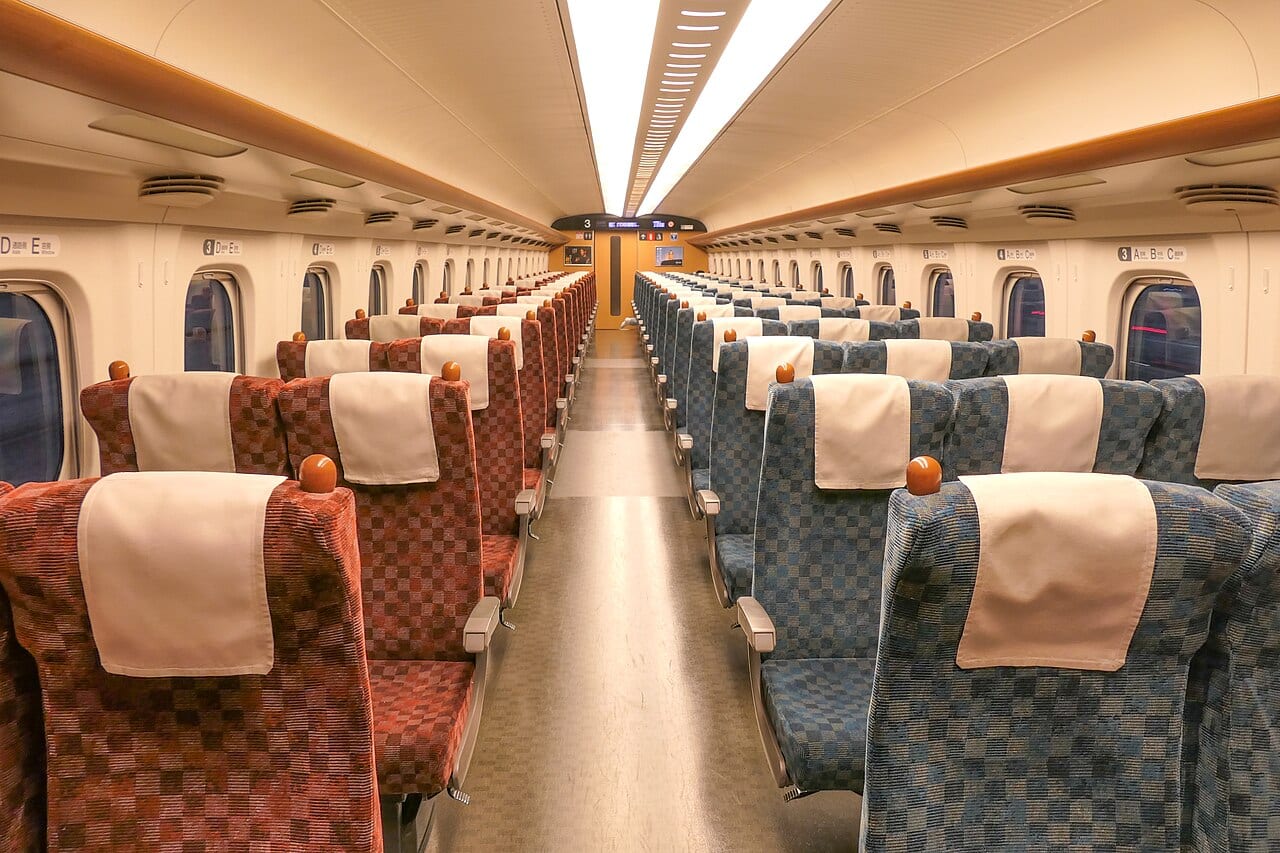
4 traps when grabbing EX Hayatoku
- Seat quotas — it sells out. EX Hayatoku isn't unlimited; popular Nozomi trains around long weekends and cherry-blossom/autumn peaks often vanish the moment the 21-day release opens. If you miss it, don't wait it out — step down to Hayatoku 7 or the standard smartEX fare.
- Changes = cancel and rebook. Under the rules in force since the May 2025 revision, an EX Hayatoku 21 booking cannot be changed to another train after purchase — changing plans means canceling the original (with a fee) and rebooking, and if you're now outside the Hayatoku window, you can't get the early-bird price back. So don't grab the cheapest 21 fare until your dates are firm; keep some flexibility. (That is about you wanting to change; if the train is cancelled or runs two or more hours late, an entirely different set of rules and refunds applies — see our guide to Japanese train delays and suspensions.)
- Fare covers the shinkansen segment only. EX Hayatoku is a station-to-station shinkansen ticket; the local/subway legs from your accommodation to the shinkansen station, and onward at the other end, are paid separately with Suica/ICOCA. Don't forget them in your total budget. Note too that luggage space on reserved cars is limited and oversized bags need a reserved "oversized baggage" seat — if you're carrying large suitcases, forwarding them to your next hotel beats dragging them on the platform; see our Japan luggage forwarding guide.
- No stopovers. One more time: an EX Hayatoku leg is one leg — get off at Kyoto and it's spent. Multi-stop itineraries must be bought leg by leg; don't expect one ticket to cover everything.
- One seat class the early-bird fares cannot reach at all. The Shinkansen Supreme Class cabin launching 1 October 2026 states verbatim in its annex that e-limited-express tickets and early-bird products are not configured — no Hayatoku fare applies, and you cannot bring your own basic fare ticket and top up the express portion either. That room is full price or nothing.
Keep those four in mind and EX Hayatoku has almost no other traps. Its logic is clean: book early, point to point, cheap. As long as your trip hops between cities, this is the cheapest way to ride the shinkansen in 2026. For a full pre-trip cost breakdown (transport, lodging, food totals), see our Japan trip cost and budget guide; for how these shinkansen legs slot into a real seven-day plan, our 7-day first-timer itinerary, Tokyo 5-day itinerary, and Osaka–Kyoto 5-day itinerary all show practical routings.
Frequently Asked Questions
- Q1:EX Hayatoku or JR Pass — which is actually cheaper?
- It depends on the shape of your trip. For a plain Tokyo–Osaka (or Kyoto) round trip, EX Hayatoku 21 works out to roughly ¥25,960 round trip per 2026 official fares — about half the price of a 7-day nationwide JR Pass. Never buy a Pass for that. The Pass only earns its cost back when you run a three-city, cross-region loop inside one week (e.g. Tokyo + Kyoto + Hiroshima) where every leg is a long shinkansen hop. Rule of thumb: two long legs or fewer, use EX Hayatoku; three-plus legs across regions, then run the Pass math.
- Q2:What's the difference between EX Hayatoku 21 and EX Hayatoku 7?
- The purchase deadline and the trains. EX Hayatoku 21 goes on sale one month before travel (10:00) and closes 21 days out at 23:30; it covers the fastest Nozomi reserved seat and is cheapest (Tokyo–Shin-Osaka ¥12,980 per 2026 official fares). EX Hayatoku 7 sells until 7 days out — on the Tokyo–Kansai corridor it maps to the slower Hikari/Kodama at ¥12,490 Tokyo–Shin-Osaka, even cheaper but 15–30 minutes slower (a Nozomi version exists only for Tokyo–Okayama and beyond). Dates locked in early, grab 21; booking later, fall back to 7. Both are blacked out during Golden Week, Obon, and New Year.
- Q3:What's the difference between EX Hayatoku 21 and EX Hayatoku 1?
- Mostly the seat and the routes. EX Hayatoku 21 is a Nozomi ordinary reserved seat bought at least 21 days ahead, sold on long sections like Tokyo–Kyoto (¥12,430) and Tokyo–Shin-Osaka (¥12,980). EX Hayatoku 1 is a Hikari/Kodama unreserved-seat fare you can buy from 6 days out until 23:30 the day before — but per the official 2026 route list it is simply not sold for Tokyo–Kyoto or Tokyo–Shin-Osaka. Its longest Tokaido section is Tokyo–Maibara (¥11,090); it is really for short-to-mid hops like Tokyo–Atami (¥3,390) or Tokyo–Shizuoka (¥5,490). If you want a cheap Tokyo–Kansai ticket, Hayatoku 1 cannot help — go back to Hayatoku 21 or 7.
- Q4:What is EX Hayatoku 3 and why is it a Green Car fare?
- EX Hayatoku 3, bookable until 3 days before travel (23:30), is the odd one out: on the Tokaido line it is a discounted Green Car (first class) product, not a cheap ordinary seat. Per 2026 official fares for Tokyo–Shin-Osaka: ¥13,870 on Kodama (Green Car for the price of a Nozomi unreserved seat), ¥14,670 on Hikari (less than the ¥14,720 walk-up Nozomi reserved fare), ¥16,560 on Nozomi (about ¥1,840 over walk-up reserved to sit in the Green Car). Simple split: to save money, take Hayatoku 21; to upgrade cheaply on short notice, take Hayatoku 3.
- Q5:How is smartEX different from EX Yoyaku (Express Reservation)?
- Both are the online shinkansen booking systems run by JR Central/West. smartEX is free — register with a credit card and you're done; it suits tourists visiting once or twice a year. EX Yoyaku charges ¥1,100/year for fares that are a touch lower, which only pays off for frequent business travelers. As a tourist, just use free smartEX — the fare gap is usually only a couple hundred yen, not worth an annual fee.
- Q6:Can foreign tourists use smartEX? Do I need a Japanese credit card?
- Yes, you can. smartEX accepts overseas-issued Visa/Mastercard/JCB/Amex and does not require a Japanese bank account or phone number — you register with an email. At the gate, either link a transit IC card (Suica/ICOCA) to tap through, or collect a paper ticket from a machine. The one real requirement is mobile data to check times and grab releases the moment they open, so set up an eSIM or pocket WiFi before you land.
- Q7:Can I make a stopover (tochu-gesha) with EX Hayatoku?
- No. EX tickets are single point-to-point fares. Get off at Kyoto and the ticket is spent — continuing to Shin-Osaka means buying a fresh leg. This is the biggest gap versus a JR Pass, which lets you hop on and off unlimited times while valid. So for a Tokyo-in, Kyoto-two-days, then Osaka, then back-to-Tokyo itinerary, you either buy EX Hayatoku leg by leg or weigh a regional pass — one EX ticket can't cover the whole thing.
- Q8:What if EX Hayatoku is sold out or it's a blackout date?
- Hayatoku has seat quotas, popular trains sell out, and blackout dates simply aren't on sale. Three fallbacks: (1) use the quota-free standard smartEX fare (¥200 below the paper walk-up fare — Tokyo–Kyoto ¥13,970 instead of ¥14,170; small but reliable); (2) switch to a cheap Hikari/Kodama unreserved seat or a Platto Kodama package (Tokyo–Shin-Osaka from around ¥11,000); (3) if your trip happens to span three cities, go back and run the JR Pass math. A sold-out Hayatoku doesn't mean no cheap ticket — just step down a tier.
Read next
JR Pass 2026: Is It Still Worth It?
Four real routes calculated, six alternatives that may beat the Pass.
How Much Does a Trip to Japan Cost? 2026 Breakdown
A full 2026 cost breakdown by trip length and travel style — flights, hotels, transport, food, tickets, shopping — with yen conversions and where budgets blow up.
Japan 7-Day Itinerary 2026: First-Timer Tokyo + Kansai
First trip to Japan with only 7 days? A clean split — 3 days Tokyo, 1 transit day, 3 days Kyoto-Osaka — with day-by-day routes, bullet train vs budget flight, JR Pass advice and a real budget.