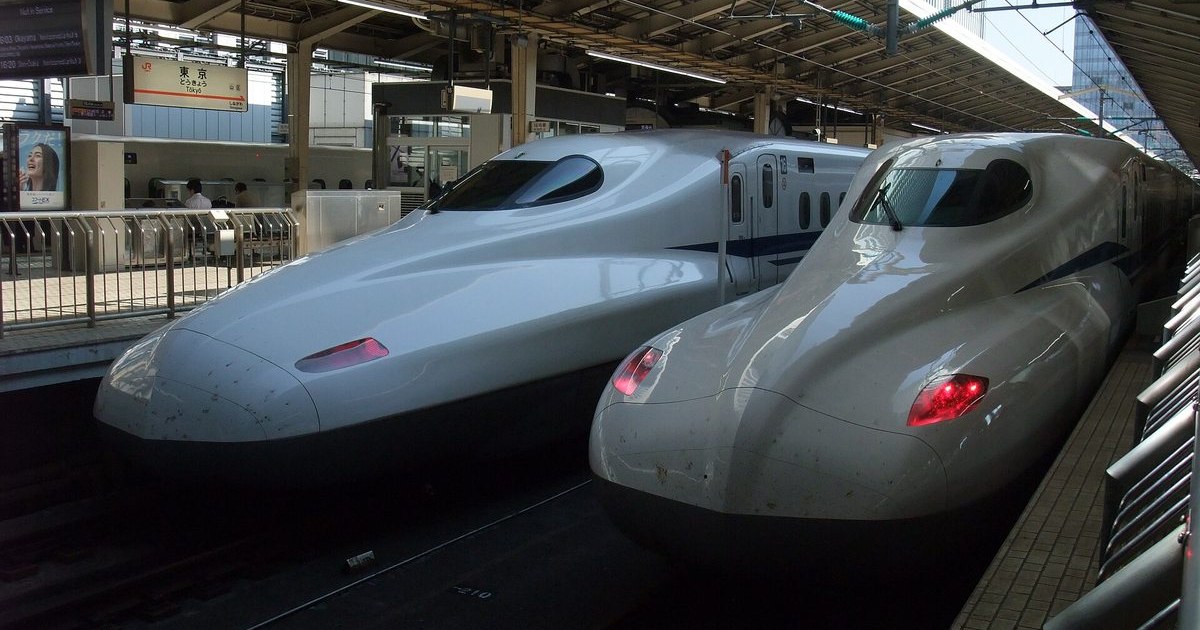
On a sixteen-car N700S there are exactly two of these rooms: one in Car 7, one in Car 10. Tokyo to Shin-Osaka runs ¥42,390 for the single cabin and ¥60,790 for the larger one, from 1 October 2026. At that level of scarcity the instinctive worry is availability - but the thing that will actually stop you is a rule buried in an annex: this ticket has no paper form. JR states plainly that you cannot collect a physical ticket and board with it. That one sentence closes the staffed window, the vending machine, the travel agent, and the pay-the-difference-on-your-pass route, all at once. And the fallback Smart EX normally reserves for travellers without a Japanese IC card - collect a paper ticket using a pickup code - is exactly what this product removes. For a first-time visitor, the point of failure is the ticket gate, not the checkout page. What follows is every cell JR has actually published: the fare arithmetic including one trap that runs in the opposite direction to intuition, the sale date, what is inside the room, and one thing you can do free this month.
- It is a ticketless product and JR says you cannot board on a collected paper ticket: window, machine, agent and pass top-up all closed in one line
- Without a pre-registered transit IC card you may not get through the gate: the usual "skip registration, collect paper" escape hatch does not exist here
- "Up to 2 people" in Car 7 is not a split fare: ¥60,790 is one person's total, and the companion buys a separate ticket
- Sales open 05:30 on 15 September 2026, with no one-year-ahead booking - and that date has only been published in Japanese
- You can sit in one for free this month: five station mock-up venues, two of which need no reservation
📖 Contents
- 1. What Supreme Class actually is
- 2. This ticket has no paper form
- 3. Where travellers without an IC card get stuck
- 4. What the second person in Car 7 pays
- 5. What a journey costs
- 6. Where it sells, and which fare types do not exist
- 7. When sales open
- 8. What is inside the room
- 9. The station cannot sell the ticket, but it is displaying the room
- 10. What JR still has not published
- 11. FAQ
What Supreme Class actually is
A new set of facilities on N700S trains running the Tokaido and Sanyo Shinkansen, in two forms - private cabin and semi-private seat - with the cabin arriving first on 1 October 2026.
The naming works in three layers. Supreme Class is the umbrella name for the facility. The fully enclosed version is the Cabin; the semi-enclosed version is the Seat. October brings the Cabin. The Seat is scheduled for service some time during fiscal 2027, occupying the space of five Green Car rows at the Tokyo end of Car 10, converted into six berths.
| Item | Supreme Class Cabin (Car 7) | Supreme Class Cabin (Car 10) |
|---|---|---|
| Rooms per trainset | One | One |
| Occupancy | Up to 2 people (seat does not rotate) | Single occupancy (seat does not rotate) |
| Tokyo to Shin-Osaka Smart EX, Nozomi, regular season, one adult, one way | ¥60,790 | ¥42,390 |
| Service begins | Thursday 1 October 2026, described by JR as planned; the first service is scheduled to be Nozomi 1, departing Tokyo at 06:00 | |
So a full sixteen-car N700S carries two of these rooms in total. The operating section is the whole Tokaido and Sanyo Shinkansen line, Tokyo to Hakata.
How many services a day, and why the qualifiers matter
The official wording is roughly twelve services a day, counting both directions - and it arrives wrapped in two further qualifiers: as of October 2026, and installation happening progressively across the sixteen-car N700S fleet. Drop any of the four and the sentence changes meaning:
- It is an approximation, not a fixed twelve.
- It counts both directions. Up and down services combined make roughly twelve, so a given direction sees around half that.
- It is dated to October 2026. This is the starting figure, not a steady state.
- Installation is progressive. JR says so explicitly, which means the number is designed to grow.
Which specific services carry the rooms is left as "details to be announced on the product site in due course", and that site currently runs to three pages - top, facilities, onboard service - with no timetable and no service list. So the question "will the train I want have one" has no answer available right now, JR's own included.
This ticket has no paper form
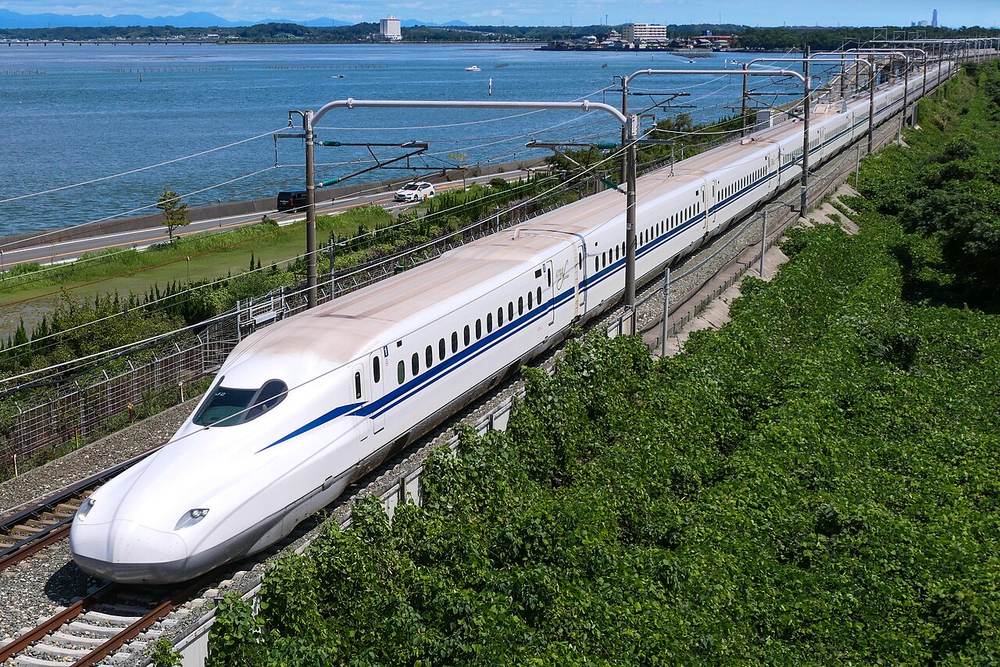
JR states that you cannot collect a ticket and board with it - a line that reaches further, and rests on firmer ground, than "the station window does not sell it".
A note on evidence first, because the sentence circulating in travel coverage is not the sentence JR wrote. The familiar phrasing is that station windows and vending machines do not sell this product. That exact wording I could not find in JR Central or JR West documents. What JR does provide is a different pair, and a stronger one:
- This is a ticketless product in which the basic fare and the limited express ticket are combined into one.
- You cannot collect a ticket and board with it.
(Japanese originals for both sit in the appendix, if you want to check them yourself.)
The second line is the one doing the work. Run it against four common ways of buying a Shinkansen ticket:
| What you planned to do | Outcome | Why |
|---|---|---|
| Have staff issue it at a ticket office | 🔴 Not possible | A counter issues paper, and this product has no paper form |
| Collect it from a machine with a pickup code | 🔴 Not possible | Same reason - and this is precisely the route Smart EX normally leaves open |
| Ask a travel agent to buy it for you | 🔴 Nothing to hand over | The named sales channels are two online systems, and no physical ticket can reach you |
| Buy a JR Pass and upgrade by paying the difference | 🔴 Not possible | JR separately states this service cannot be combined with other tickets including the Japan Rail Pass |
The fourth row deserves a sentence of its own, because it is the one carrying the most hope. Our breakdown of whether the Japan Rail Pass still pays for itself handles the economics of the pass itself; here the conclusion is narrow and flat. Smart EX states verbatim that this service cannot be combined with other tickets including the Japan Rail Pass, and that a seat reserved through this service cannot be used as a pass reserved seat after arrival. The pass does nothing at this door - it neither discounts nor converts.
Where travellers without an IC card get stuck
At the gate, not at the checkout page. If a first-time visitor takes one thing from this guide, take this.
JR lists three ways to board: an Express Reserve member IC card, a pre-registered transit IC card, or a boarding QR code. None of the three is paper.
The weight of that only becomes visible next to how Smart EX normally behaves. Ordinarily the rule reads: registering a transit IC card number is optional, though required if you want to travel ticketless; those who do not register should collect a ticket and board with that. The English FAQ says the same thing more directly - skip registration and pick up your tickets with a pickup code. In other words, Smart EX permanently keeps a lane open for visitors who do not yet hold a Japanese IC card.
That lane is what the no-paper rule closes. Put the two rules side by side and the consequence writes itself:
| Ordinary Smart EX product | Supreme Class | |
|---|---|---|
| Registering a transit IC card | Optional | One of the three listed credentials |
| If you do not register one | 🟢 Collect a paper ticket and board | 🔴 Cannot collect a ticket and board |
| What remains | — | An Express Reserve member IC card (which means joining Express Reserve first) or a boarding QR code |
The door design confirms the logic from the other side. JR writes that the electronically locked door is released with the transit IC card or QR code you used to board, and that it locks automatically. One credential is simultaneously your ticket and your room key. A paper ticket has nowhere to fit in that arrangement.
So the practical instruction is short. If you intend to ride this, get a transit IC card in hand after landing, tap it once at an ordinary station gate, register it to your account - and only then deal with the Supreme Class booking. Reverse that order and you end up holding a reservation you cannot open a door with. The eligibility thresholds and payment requirements across the three online booking systems - 3D Secure, the restrictions on mini and virtual cards, the variables around overseas-issued cards - are covered end to end in our comparison of Japan's three online rail booking systems.
What the second person in Car 7 pays
A separate ticket of their own. The ¥60,790 is one person's total.
Car 7 is labelled as taking up to two people, and the instinctive reading is a shared fare - roughly ¥30,395 each, which would undercut the ¥42,390 single cabin in Car 10 and make travelling as a pair the cheaper move. JR's documents overturn that reading, and they overturn it in the more expensive direction.
The official wording: a customer travelling with the person who reserved the Car 7 Supreme Class Cabin and using the same facility separately requires a basic fare ticket and a limited express ticket valid for that train - ordinary non-reserved, ordinary reserved or Green Car, any of which is accepted.
So the arithmetic goes:
| Scenario | What you pay |
|---|---|
| One person, Car 10 | ¥42,390 (Tokyo to Shin-Osaka) |
| One person, Car 7 | ¥60,790 (Tokyo to Shin-Osaka) |
| Two people, Car 7 | 🔴 ¥60,790 plus a separate Tokyo to Shin-Osaka basic fare and limited express ticket for the companion |
Framed another way: the second person is not buying half a room. They are buying the ticket they would have needed anyway, plus permission to walk through that door. Whether that is worth it is a judgement call, but make it with the right number in front of you.
"Up to 2" is not the same as "two humans maximum"
The stated cap is two, counting adults and children together. The same PDF immediately attaches an exception that matters a great deal to anyone travelling with small children: companions who travel free under standard JR ticket rules do not count toward the cap - each adult or child may bring up to two toddlers, and infants are uncapped. One of the worked examples in the official document shows one adult, two toddlers and one infant sharing the cabin, entirely within the rules. One more rule to carry: a toddler travelling alone must be booked as a child.
The age bands themselves: adult means 12 or older, except that a 12-year-old still in elementary school counts as a child; child means 6 to under 12, except that a 6-year-old who has not started school counts as a toddler; toddler means 1 to under 6; infant means under 1.
What a journey costs
Every published figure is a complete fare including the basic fare and the limited express ticket - not a supplement. Get that straight first and the rest of the comparisons hold.
JR states it in both languages: the published prices include the basic fare and the limited express ticket fare. So each number below is the entire cost of getting from A to B, with no second ticket to buy underneath it. The unit is one adult, one way.
The full table of major sections
| Section | Car 7 (up to 2 people) | Car 10 (single) | ||
|---|---|---|---|---|
| Express Reserve | Smart EX | Express Reserve | Smart EX | |
| Tokyo to Nagoya | ¥46,840 | ¥47,060 | ¥32,440 | ¥32,660 |
| Tokyo to Shin-Osaka | ¥60,500 | ¥60,790 | ¥42,100 | ¥42,390 |
| Tokyo to Okayama | ¥74,090 | ¥74,440 | ¥51,490 | ¥51,840 |
| Tokyo to Hiroshima | ¥86,240 | ¥86,620 | ¥59,640 | ¥60,020 |
| Tokyo to Hakata | ¥90,220 | ¥90,670 | ¥63,620 | ¥64,070 |
| Shin-Osaka to Hakata | ¥72,510 | ¥72,690 | ¥49,910 | ¥50,090 |
Nozomi, regular season, one adult one way, basic fare and limited express ticket included. JR dates these figures to 17 June 2026; this guide was verified on 3 September 2026. ⚠️ The Tokyo to Hakata row appears only in the press release - the table on the product site omits it.
Three readings come out of that grid.
First, Smart EX costs more in every single cell, by ¥180 to ¥450. Before you rush to join Express Reserve on the strength of that, look at where its barrier actually sits - next section.
Second, Hikari and Kodama run ¥320 cheaper than Nozomi. Tokyo to Shin-Osaka on Smart EX, adult, regular season: Car 7 is ¥60,790 on Nozomi against ¥60,470 on Hikari and Kodama; Car 10 is ¥42,390 against ¥42,070. That ¥320 is the Nozomi limited express surcharge. ⚠️ The saving has a cost written elsewhere: Kodama carries no welcome service (see section 8).
Third, seasonal adjustments run on separate scales. Adults pay ¥200 less off-peak, ¥200 more in peak and ¥400 more in super-peak. Children pay ¥100, ¥100 and ¥200.
Children are not half price, and the gap is suspiciously tidy
Cell by cell on the official matrix, Tokyo to Shin-Osaka, Nozomi, regular season, Smart EX: Car 7 is ¥60,790 adult against ¥53,790 child, Car 10 is ¥42,390 against ¥35,390. Both cars differ by exactly ¥7,000. The other sections behave identically - same gap in both cars, varying only with distance: ¥5,290 to Nagoya, ¥8,530 to Okayama, ¥9,520 to Hiroshima.
That regularity supports a conclusion you can budget against: only the basic fare and limited express portion halves. The Supreme Class facility itself costs a child exactly what it costs an adult. Travelling with children does not make this room meaningfully cheaper, so budget at adult rates.
Where it sells, and which fare types do not exist
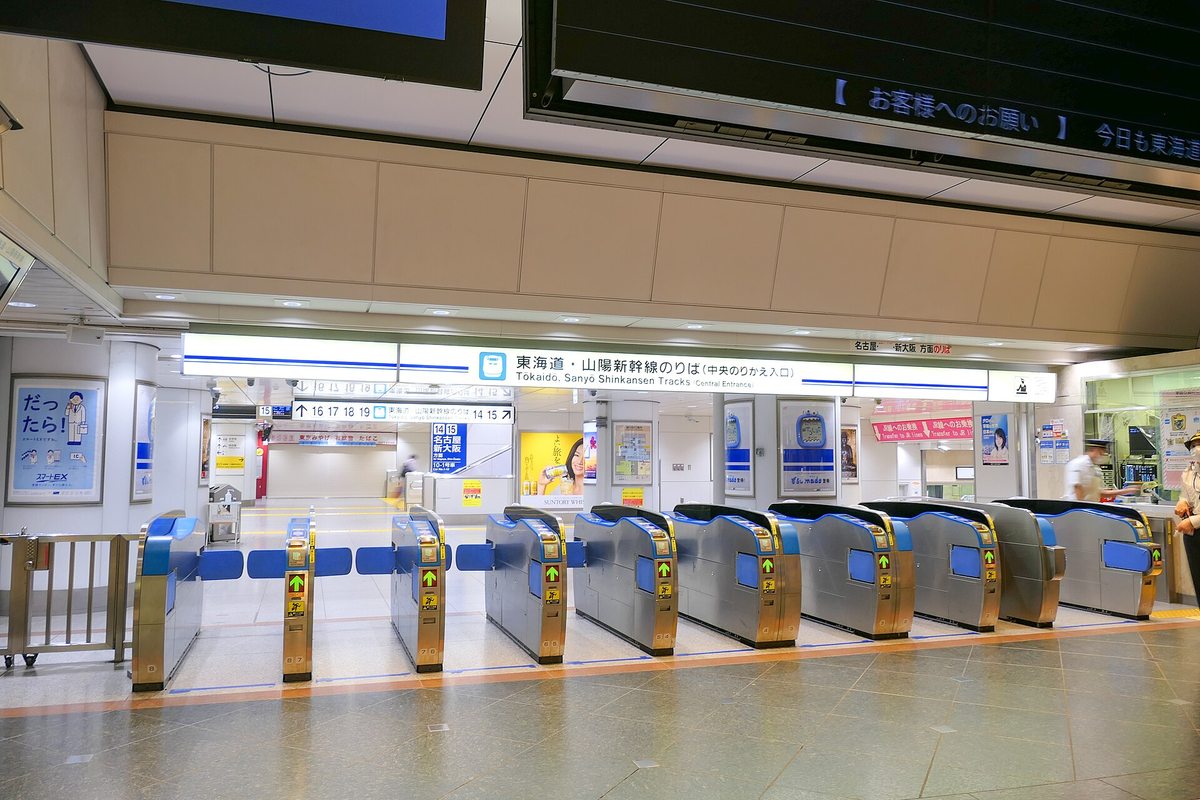
Two online systems, and no discounted fare type of any kind.
The named sales channels are Express Reserve and Smart EX, with a note on the same line that the LINE-based booking channel is not configured for this product. Beyond that, the annex carries a line that is easy to skim past: e-limited-express tickets and early-bird products are not configured either. That has two consequences:
- There is no discounted fare. The genuine money-saver on the Tokaido and Sanyo Shinkansen is the EX Hayatoku early-bird family, and the guide to how EX Hayatoku works and what it actually saves runs those numbers - but none of those discounts reach Supreme Class.
- Bringing your own basic fare ticket and buying only the express portion is closed off. With no e-limited-express ticket configured, holding a basic fare ticket already does not let you top up to this facility. That is the same structural fact as the no-paper rule, seen from a second angle.
How the two systems differ where it counts
Express Reserve is ¥180 to ¥450 cheaper per journey, which naturally prompts the thought of joining it. Look at the barrier before deciding:
| Smart EX | Express Reserve | |
|---|---|---|
| Fare | ¥180-450 more per journey | 🟢 The cheaper column |
| Annual fee | None listed on the official page | 🔴 ¥1,100 including tax |
| Eligibility | The English FAQ names exactly two conditions: 18 or older, and you have a credit card | The membership page contains no residency clause anywhere in its text |
| What you must obtain | Register with a credit card you already hold | 🔴 A Japanese-issued credit card (JR Central Express Card, J-WEST, JQ CARD Express or View Card), or a paid add-on to an existing Japanese card |
Precision matters in this cell, because the version circulating online is stricter than what JR wrote. The claim that foreign visitors are not eligible for Express Reserve has no basis on any official page I checked - the membership page carries no residency wording at all. The real barrier is that you need a Japanese-issued credit card first, and then pay ¥1,100 a year. That is a cost and paperwork threshold, not a prohibition, and the two are different things. ⚠️ The application conditions for each individual card sit on the issuing companies' own sites, which I did not pursue - so whether a foreign visitor can obtain one of those cards is left unasserted in both directions.
For almost anyone visiting once, the answer stays simple: obtaining a Japanese credit card and paying an annual fee to save ¥290 is not worth it. Use Smart EX.
Read this before booking a journey with a change
JR restricts connections more tightly than most travellers expect: when connecting between multiple trains, the facilities you may reserve are limited to the same facility, or a combination with an ordinary non-reserved seat. It then names the excluded pairs explicitly - Car 7 Cabin cannot connect to Car 10 Cabin, and Supreme Class cannot connect to a Green Car or an ordinary reserved seat.
In practice: if your Tokyo to Hakata run involves a change, the second leg offers two options only - the identical Supreme Class Cabin, or an ordinary non-reserved seat. There is no middle option. Settle your leg structure before you open the booking screen.
When sales open
05:30 on Tuesday 15 September 2026, and the one-year-ahead window does not apply.
Both expy.jp and smart-ex.jp published identical notices on the same day: sales open 15 September 2026 at 05:30, sold via Express Reserve and Smart EX, with an explicit note that one-year-ahead booking is excluded.
| Moment | What it lets you do |
|---|---|
| 15 Sep 2026, 05:30 | Sales open |
| After 15 September | Normal rule resumes: purchasable from 10:00 one month before travel |
| 05:30 on the travel day | 🔴 Trains whose operation is only confirmed that day go on sale at this moment |
| One year ahead | 🔴 Not applicable |
The third row rewards a second look. Because installation is progressive across the N700S fleet, which formation runs a given service is sometimes settled only on the morning itself - hence JR's separate rule that trains confirmed on the day go on sale at 05:30 that morning. Meaning a portion of services simply cannot be booked a month out, because at that point they do not yet exist as an option. The same structural cause shows up elsewhere: some N700S wheelchair spaces also release only on the morning of travel for exactly this reason, and the knock-on effects of that are laid out in the guide to booking accessible travel in Japan.
One more thing to file: Smart EX's one-year-ahead booking is normally one of its best features, but JR already maintains a list of exclusions from it - the EX Hayatoku early-bird family, S Work seats, wheelchair spaces and oversized-baggage seats. Supreme Class now joins that list.
Whether to race for it is not a call made here
None of the three official documents contains the word ballot, and none publishes a headcount cap or any sales figures. With nothing citable, "it sells out instantly" and "set an alarm" do not appear in this guide. You can draw your own conclusion from two rooms per train, but that conclusion is yours, not an announcement.
What is inside the room
An electronically locked door, a luggage space sized for cabin baggage only, and a welcome service that two of the three train types carry.
JR has published relatively little on the fittings, but each item affects a planning decision:
- The door has an electronic lock, released by a transit IC card or QR code, and it locks automatically. Covered above - it is also the answer to why this ticket cannot be paper.
- The seat does not rotate - stated for both Car 7 and Car 10.
- 🔴 The luggage space takes cabin-sized bags only. The stated dimension is within 55cm x 40cm x 25cm, beside the seat.
- The welcome service is a drink and a sweet, once per person, and JR states it applies only on Nozomi and Hikari services.
The luggage dimension deserves a pause. 55 x 40 x 25 is carry-on size; a 25-inch checked suitcase does not go in. JR adds that passengers with oversized baggage can also use Supreme Class - and then writes that details will be announced later. So all that is known is "you may travel with it", not where it goes or whether it needs a separate reservation. If you are travelling with a large case and want this room, wait for the October announcement rather than assuming. Luggage forwarding and storage alternatives are covered in a separate guide.
The welcome service line has a direct bearing on whether to save ¥320 by taking Kodama: Kodama has no welcome service. What that ¥320 buys back is the drink and the sweet - and the identity of that sweet turns out to be the best detail in section 9.
One more change landing the same day on the Sanyo Shinkansen
On 1 October the Sanyo Shinkansen ends its onboard trolley service and switches to mobile ordering. It was announced in the same press release and takes effect the same day, but it affects every Sanyo Shinkansen passenger, not just the two people in the cabins. If your habit is to board and then buy a drink, from October you buy before boarding or learn the ordering app.
The station cannot sell the ticket, but it is displaying the room
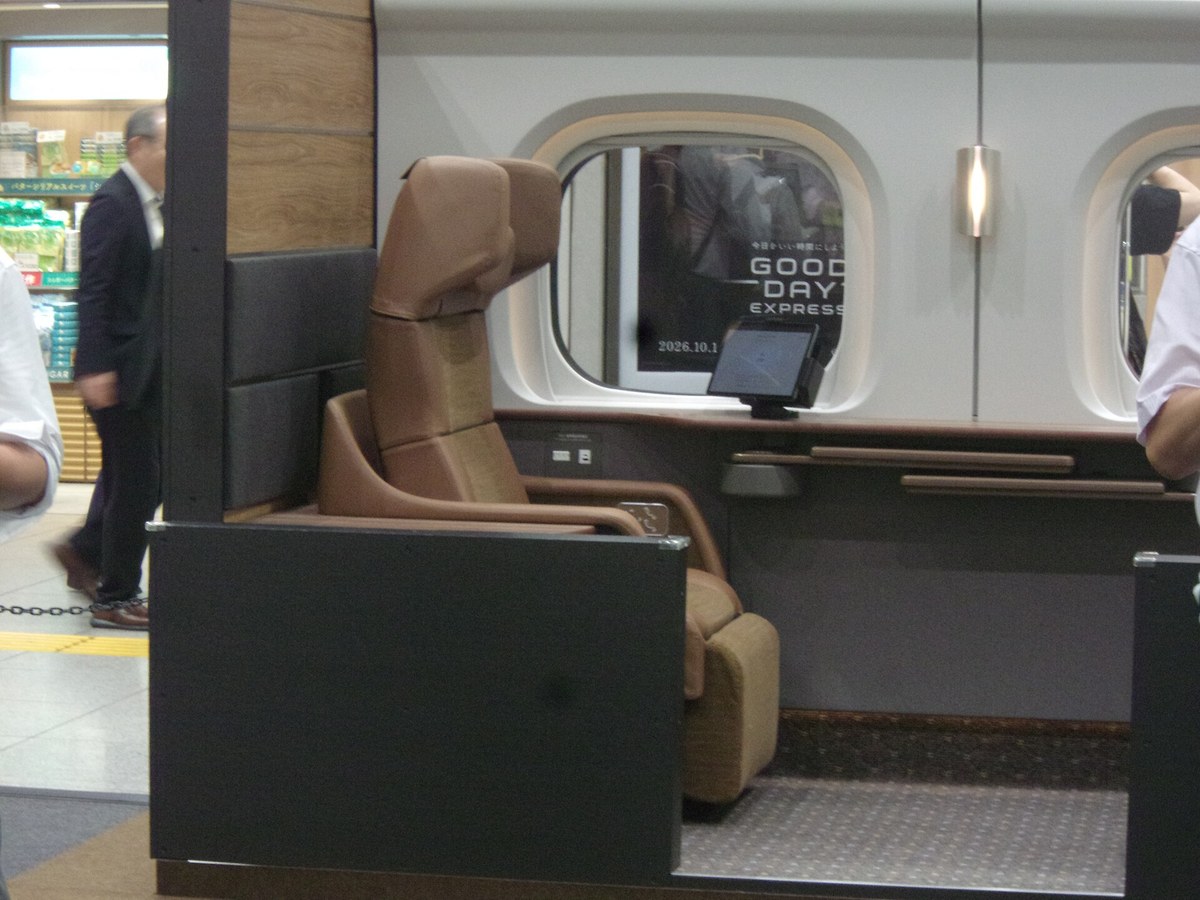
Five stations, free of charge, and two of them let you walk up and sit down. This is the one part of the whole story you can act on this month.
JR Central and JR West jointly announced a mock-up experience event on 18 August 2026, stating that participation is free. The schedule as published:
| Station and location | Dates | What is shown | Reservation |
|---|---|---|---|
| Tokyo Station, Yaesu Central Gate event space | 1-13 Sep, 11:00-19:00 daily (9:30-17:00 on 1 September) | 🟢 Cabin and Seat | Advance booking |
| Shin-Osaka Station, Central Gate special event space | 15-20 Sep, 11:00-19:00 | Cabin | Advance booking |
| Hiroshima Station, North Exit 1F Ekikita Plaza | 22-27 Sep | Cabin | 🟢 None needed - view and sit freely |
| Hakata Station, Hakata Exit 1F indoor atrium | 29 Sep - 4 Oct | Cabin | 🟢 None needed - view and sit freely |
| Nagoya Station, Central Event Space (central concourse) | 1-8 Nov | 🟢 Cabin and Seat | Advance booking |
Two things to carry away.
First, the Seat appears only at Tokyo and Nagoya. That semi-private form does not enter service until fiscal 2027, so these two venues are the only current opportunity to see it at all. Shin-Osaka, Hiroshima and Hakata show the Cabin alone.
Second, seat trials at Tokyo, Shin-Osaka and Nagoya run by advance reservation, 5 to 10 minutes each (same-day booking possible where space allows), while Hiroshima and Hakata require no reservation and let you view and sit down freely. ⚠️ And the press release gives no reservation URL and no phone number. The product site says nothing about the event either - a full-text search of its three pages finds one instance of the relevant Japanese word, inside a cookie banner - and the English site does not mention it at all. So if certainty matters, aim for Hiroshima or Hakata.
The cake you get free at the station is the cake served in the room
JR spells it out. At Tokyo, Shin-Osaka and Nagoya, each experience booking comes with a bottle of Supreme Class branded mineral water, and anyone completing a short questionnaire afterwards receives a Tsujirihei Honten Kyo-matcha bamboo baumkuchen. The next sentence of the same release identifies what that cake actually is: it is scheduled to be the Supreme Class welcome sweet once service begins on 1 October 2026.
Which produces a pleasing symmetry: the station cannot sell you the ticket, but this month the station gives you the room, the chair and the cake for nothing.
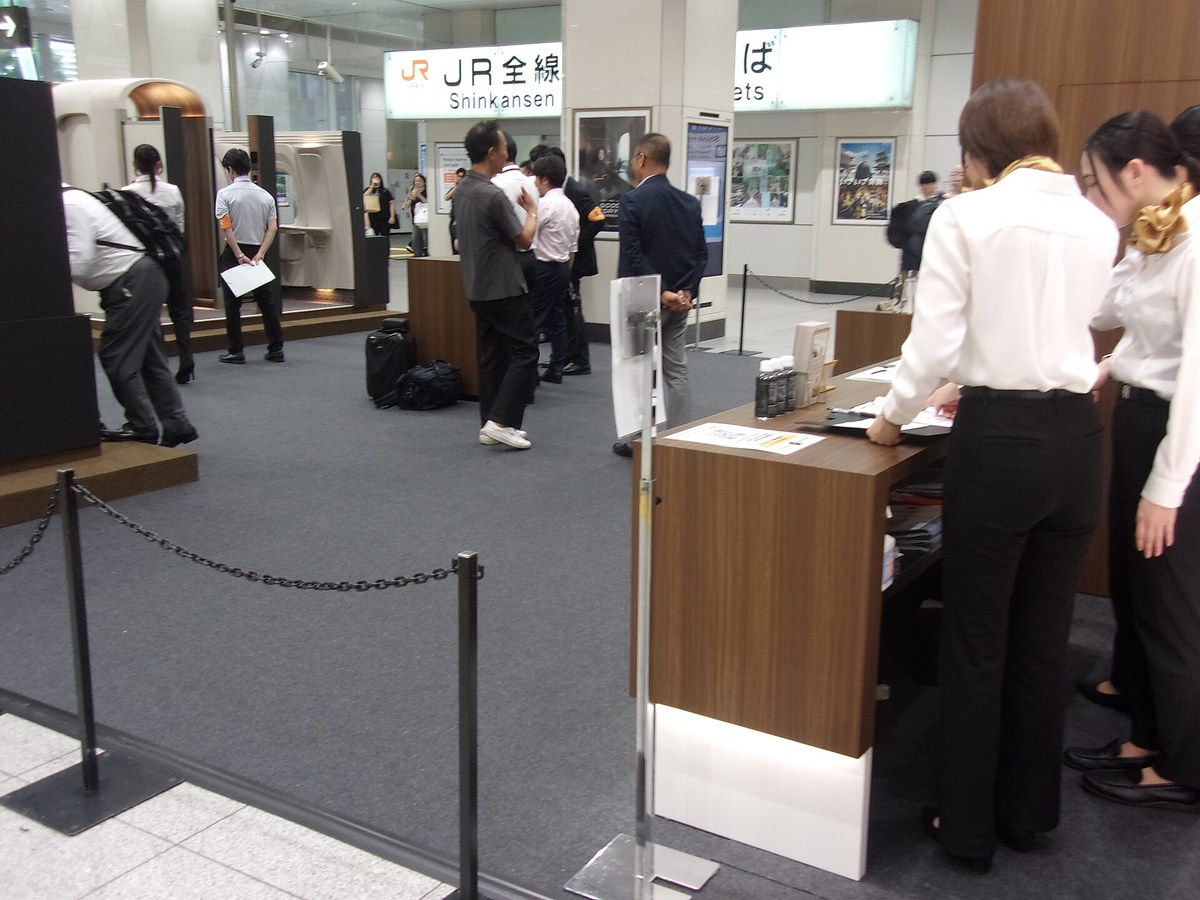
What JR still has not published
Everything published is above. This section is the rest - and several cells bear directly on whether to commit now.
| What you want to know | Current official status |
|---|---|
| 🔴 Refund and change charges | The product summary and notes in the press release annex make no mention of cancellation fees, change limits or refund handling fees, and neither does the product site. Whether ordinary Smart EX rules carry over is not stated. So no Supreme Class refund or change figure appears anywhere in this guide |
| How purchasing and boarding actually work | Both official sources say details will be announced in due course. Nothing before 1 October |
| Which specific services carry the rooms | Deferred to the product site; that site has three pages, no timetable and no service list |
| What happens to oversized luggage | Only that you may travel with it. Where it goes and whether it needs a separate booking are unwritten |
| Payment and door access for onboard sales | The annex says only that the seat may be sold. Payment method and unlocking procedure are undocumented |
| Age classification for foreign children | Pinned to elementary schools established under Japan's School Education Act, with no mapping to other systems |
| Whether a JR Pass holder can be the Car 7 companion | Entirely unstated. Neither direction is asserted here |
Two limits on what I could verify, stated plainly so you know how far to trust the above:
- The official sources are the joint JR Central and JR West press releases plus the Smart EX and Express Reserve sites. JR Kyushu was not verified independently (the EX services are jointly operated by three companies, but Supreme Class runs only as far as Hakata).
- JR East's site returned 403 for me, so no comparison is drawn with GranClass. Its current fares were not retrieved, and comparing against a figure that could be stale would be worse than not comparing.
- JR dates the fare snapshot to 17 June 2026; verification for this guide was done on 3 September 2026, with no revision notice published in between.
Three closing sentences
One: sort out a registered transit IC card before deciding anything else. This ticket has no paper form and JR says you cannot collect one and board; the escape route Smart EX normally leaves for card-less travellers - pickup code, vending machine, paper ticket - is closed on this product. The cabin door unlocks with that same card, so the credential is the ticket is the key. Get the card first, then handle the reservation.
Two: Car 7 is not a shared fare - it is the most expensive way to do this. The ¥60,790 is one person's total, and the companion buys their own basic fare and limited express ticket on top. Two people means that figure plus another ticket, not that figure divided by two. Children are not half price either: the adult-child gap sits at a flat ¥7,000 in both cars.
Three: sales open 05:30 on 15 September, but the better use of this month is a station visit. All five mock-up venues are free, Hiroshima (22-27 Sep) and Hakata (29 Sep - 4 Oct) need no reservation at all, and Tokyo and Nagoya show the Seat that does not enter service until fiscal 2027. Refund rules, purchase mechanics and the actual service list all remain unpublished - so until they appear, five minutes in the chair tells you more than any article can, this one included.
Appendix: official source text in Japanese and English (click to expand)
The longer official passages quoted above are collected here so you can check them yourself. All retrieved 3 September 2026.
1. No paper form (the two sentences this guide turns on)
Source: JR Central and JR West joint press release PDF, 17 June 2026, annex 4
乗車券と特急券が一体となったチケットレス商品です。
※きっぷを受け取ってご乗車いただくことはできません。
2. Sales channels and onboard sales
Source: as above, annex 4
発売箇所 ・「エクスプレス予約」および「スマートEX」にて発売します。※「LINEからEX」の設定はございません
・Supreme Class Cabin に空席があり、ご利用上支障がない場合に限り、車内において Supreme Class Cabin の座席を発売することがあります。
※e特急券や早特商品の設定はございません
エクスプレス会員様のEX予約専用ICカード、事前に登録された交通系ICカードまたは乗車用QRコードにてご乗車ください
3. The Car 7 companion buys a separate ticket
Source: product site and press release p.2, p.7
Supreme Class Cabin(7 号車)を予約したお客様に同行して同設備を利用されるお客様については、当該列車をご利用可能な乗車券・特急券(普通車自由席・普通車指定席・グリーン席のいずれでも可)が別途必要です
乗車券・特急券を含む発売価格です。
Fares shown include the basic fare and the limited express ticket fare.
4. Headcount cap and the free-companion exception
Source: PDF attached to the Smart EX notice
利用には、「おとな」「こども」合わせて2名までという制限があります
※JR のきっぷのルールで定める無料の同伴者(「おとな」「こども」1名に対して、「幼児」2名まで、「乳児」何名でも)については、2名の上限には含みません
※「小学校」とは、日本の学校教育法に基づき設置された小学校を指します
5. Daily services (all four qualifiers live in this one sentence)
Source: press release p.2
設置列車 サービス開始日以降、N700S(16 両編成)に順次導入 ※2026 年10 月時点で、1日あたり12 本程度(上下計)の運行を予定しています(「のぞみ」「ひかり」「こだま」の各列車で運行。詳細は特設サイトで今後ご案内)
6. Connection restrictions
Source: press release p.7
複数の列車を乗り継いでご乗車になる場合、ご予約いただける設備は同一設備または普通車自由席との組み合わせに限ります
※Supreme Class Cabin(7号車)と Supreme Class Cabin(10 号車)を乗り継いでご利用いただくこと、および Supreme Class(7号車または 10 号車)とグリーン車または普通車指定席を乗り継いで利用いただくことはできません
7. Sale timing
Source: identical notices on expy.jp and smart-ex.jp; press release p.7
発売開始日:2026 年9月15 日(火)5:30
※一年前予約は対象外です。
発売期間 2026 年9月15 日(火)5 時 30 分より発売開始 ※発売開始以降、乗車日1カ月前の 10 時 00 分より購入できます
※当日に運行が確定した列車は、乗車日当日の5時 30 分から発売します
8. Fittings and onboard service
Source: product site facilities and service pages; press release p.5, p.6
鍵(電子錠)付き扉は、乗車時にご利用いただく交通系ICカードやQRコードで解錠いただけます。また、オートロック機能が付いています
座席横の荷物スペースには航空機への持ち込みサイズのスーツケースをご収納いただけます(55cm×40cm×25cm 以内)
Supreme Class は特大荷物をお持ちのお客様もご利用いただけます。詳細は今後お知らせします。
ウェルカムサービスとしてお飲み物とお菓子をご用意します(お一人様1回まで)/のぞみ号・ひかり号にご乗車の場合に限ります
10 月1日以降、山陽新幹線のワゴンサービスを終了し、モバイルオーダーサービスを開始します
Supreme Class Seat は、2027 年度中にサービス開始予定です
9. Mock-up experience event
Source: JR Central and JR West joint press release PDF, 18 August 2026
モックアップを駅で体験いただけるイベントを開催します/イベントへの参加は無料です
東京駅・新大阪駅・名古屋駅での座席体験は事前予約制(空きがあれば当日予約も可能)で、体験時間は各回5 分~10 分程度を予定しております。広島駅・博多駅では事前予約は不要で、ご自由に見学、ご着席いただけます
※展示するモックアップは実車と一部仕様が異なります。
「辻利兵衛本店 京抹茶竹バウム」は、2026 年 10 月 1 日のサービス開始以降、「Supreme Class」のウェルカムサービスとして提供予定です
10. Ordinary Smart EX rules (the fallback this product removes)
Source: smart-ex.jp registration guide and English FAQ
交通系ICカード番号の登録は任意ですが、チケットレス乗車する場合には登録が必要です。登録しない場合はきっぷを受け取って乗車してください
You may apply if you are 18 or older and you have a credit card.
This Service cannot be combined with other tickets including the Japan Rail Pass. Also, the reserved seat you booked using this Service cannot be used as a reserved seat etc. of Japan Rail Pass after coming to Japan.
11. The English product site (the page with no sale date)
Source: JR Central global site, English Supreme Class page
Introducing Supreme Class — 1 October 2026
Details on how to purchase and board will be announced in due course.
Frequently Asked Questions
- Q1:Can I buy Supreme Class at a ticket window or a machine?
- The only two sales channels JR names are the two online systems, Express Reserve and Smart EX. But the sentence worth memorising is not that list. It is the harder pair sitting in the same document: this is a ticketless product combining the basic fare and the limited express ticket, and you cannot collect a physical ticket and board with it (Japanese originals in the appendix at the foot of this guide). That second sentence closes four doors at once - the staffed window, the vending machine, a travel agent buying on your behalf, and topping up from a pass you already hold. JR also notes that the LINE-based booking channel is not configured for this product. One documented exception: JR states that where a Supreme Class Cabin has a free berth and it does not disrupt operations, the seat may be sold on board. So "there are only two places to buy it" is a claim JR's own annex contradicts. How you would pay on board, and how the electronic lock is handled in that case, is not written anywhere.
- Q2:Car 7 says "up to 2 people". Does that mean two of us split the fare?
- No, and the real answer is the expensive one. JR states that a companion travelling with the person who reserved Car 7 and using the same facility separately needs their own basic fare ticket and limited express ticket valid for that train (ordinary non-reserved, ordinary reserved or Green Car - any of the three is accepted). So the ¥60,790 for Tokyo to Shin-Osaka is the total for the one person who books, not for the pair. Your companion pays for their own ticket and that ticket buys them the right to sit in the same room. Reading it as "¥30,395 each, cheaper than the ¥42,390 single" runs in exactly the wrong direction. The headcount cap is 2 counting adults and children together - but that cap is not the same as "two humans maximum". JR notes that companions who travel free under standard JR ticket rules do not count toward it: one adult may bring up to two toddlers, and infants are uncapped. One worked example in the official PDF shows one adult, two toddlers and one infant sharing the cabin.
- Q3:Can I upgrade to Supreme Class with a Japan Rail Pass?
- No. This is one of the few things stated flatly. The Smart EX English FAQ reads: this service cannot be combined with other tickets including the Japan Rail Pass, and the reserved seat booked using this service cannot be used as a Japan Rail Pass reserved seat after arriving in Japan. Combine that with the no-paper rule and the popular idea of "buy the pass, then pay the difference at a window" has no official basis at all - there is no window transaction to make and no ticket to hand over. Booking the cabin means buying a complete fare that already contains the basic fare and the limited express ticket. If you are still deciding whether the pass itself earns its price, that arithmetic sits in a separate guide. One thing genuinely unstated: whether a pass holder may be the companion in Car 7. JR only says the companion needs a valid basic fare and limited express ticket for that train, and says nothing about whether a pass counts. Neither direction is asserted here.
- Q4:I do not have a Japanese transit IC card. Can I still ride?
- You can buy it, but all three boarding credentials JR lists are non-paper. The listed options are an Express Reserve member IC card, a pre-registered transit IC card, or a boarding QR code. Put that beside how Smart EX normally works and the trap becomes obvious: ordinarily, registering an IC card is optional, and JR explicitly writes that anyone who does not register should collect a paper ticket and board with that. That fallback - the one reserved for travellers who do not yet own a Japanese IC card - is precisely what this product removes. So for a first-time visitor, the point of failure is the gate, not the checkout page. The cabin door design confirms the logic: the electronic lock is released by the same transit IC card or QR code used to board, so a single credential is simultaneously your ticket and your room key. As for how the QR route actually works in practice, JR writes only that details of purchasing and boarding will be announced in due course. There is no answer before October.
- Q5:When do sales open, and should I set an alarm?
- 05:30 on Tuesday 15 September 2026 - but this guide will not tell you to race for it. Both expy.jp and smart-ex.jp published the same notice on the same day: sales open 15 September 2026 at 05:30, sold through Express Reserve and Smart EX, and the one-year-ahead booking window does not apply. After 15 September the normal rule resumes: purchasable from 10:00 one month before the travel date. Separately, trains whose operation is only confirmed on the day go on sale at 05:30 that morning. All three official documents - the press release, the expy notice and the smart-ex notice - contain no mention of a ballot, no headcount cap and no published sales figures. With nothing verifiable to cite, phrases like "sells out in seconds" or "set an alarm" are not used here. One asymmetry does deserve flagging: 15 September has only ever been published in Japanese. The English product site carries 1 October 2026 and nothing else - no September, no 15, no mention of a sale date.
- Q6:Do children travel at half price?
- Not half, and the gap is oddly consistent. Read the official fare matrix cell by cell for Tokyo to Shin-Osaka, Nozomi, regular season, Smart EX: Car 7 is ¥60,790 adult against ¥53,790 child; Car 10 is ¥42,390 adult against ¥35,390 child. Both cars differ by exactly ¥7,000. The other city pairs behave the same way - identical gap across both cars, varying only with distance: ¥5,290 to Nagoya, ¥8,530 to Okayama, ¥9,520 to Hiroshima. That pattern supports one budgeting conclusion: only the basic fare and limited express portion halves. The Supreme Class facility itself costs a child the same as an adult. Seasonal adjustments are also split - adults pay ¥200 less off-peak, ¥200 more in peak and ¥400 more in super-peak; children ¥100, ¥100 and ¥200. One caveat: the age bands are pinned to the Japanese school system. An adult is 12 or older, except that a 12-year-old still in elementary school counts as a child - and JR defines elementary school as one established under Japan's School Education Act. Where a foreign 12-year-old falls is not written, and is not guessed at here.
- Q7:If I change trains mid-journey, can both legs be Supreme Class?
- Not necessarily, and the restriction is stricter than most people expect. JR states that when connecting between multiple trains, the facilities you may reserve are limited to the same facility, or a combination with an ordinary non-reserved seat. It then names the excluded combinations outright: you may not connect a Car 7 Supreme Class Cabin with a Car 10 Supreme Class Cabin, and you may not connect Supreme Class with a Green Car or an ordinary reserved seat. In plain terms, if your Tokyo to Hakata run involves a change, the second leg offers you exactly two options - the identical Supreme Class Cabin, or an ordinary non-reserved seat. Nothing in between. Work out your leg structure before you book, not after.
- Q8:Is there any way to see the cabin before committing?
- Yes, free, and inside the stations themselves. JR Central and JR West jointly announced a mock-up experience event on 18 August 2026, stating explicitly that participation is free. The schedule: Tokyo Station, Yaesu Central Gate event space, 1-13 September, 11:00-19:00 daily (9:30-17:00 on 1 September); Shin-Osaka Station, Central Gate special event space, 15-20 September, 11:00-19:00; Hiroshima Station, North Exit 1F Ekikita Plaza, 22-27 September; Hakata Station, Hakata Exit 1F indoor atrium, 29 September to 4 October; Nagoya Station, Central Event Space, 1-8 November. Tokyo and Nagoya are the only two venues showing the Seat as well as the Cabin - the other three show the Cabin only. Seat trials at Tokyo, Shin-Osaka and Nagoya are by advance reservation (same-day possible if space allows), running 5 to 10 minutes each; Hiroshima and Hakata need no reservation and let you sit down freely. Note that the press release gives no reservation URL or phone number, so if certainty matters, aim for Hiroshima or Hakata. JR also states that the mock-ups differ in some specifications from the actual cars.