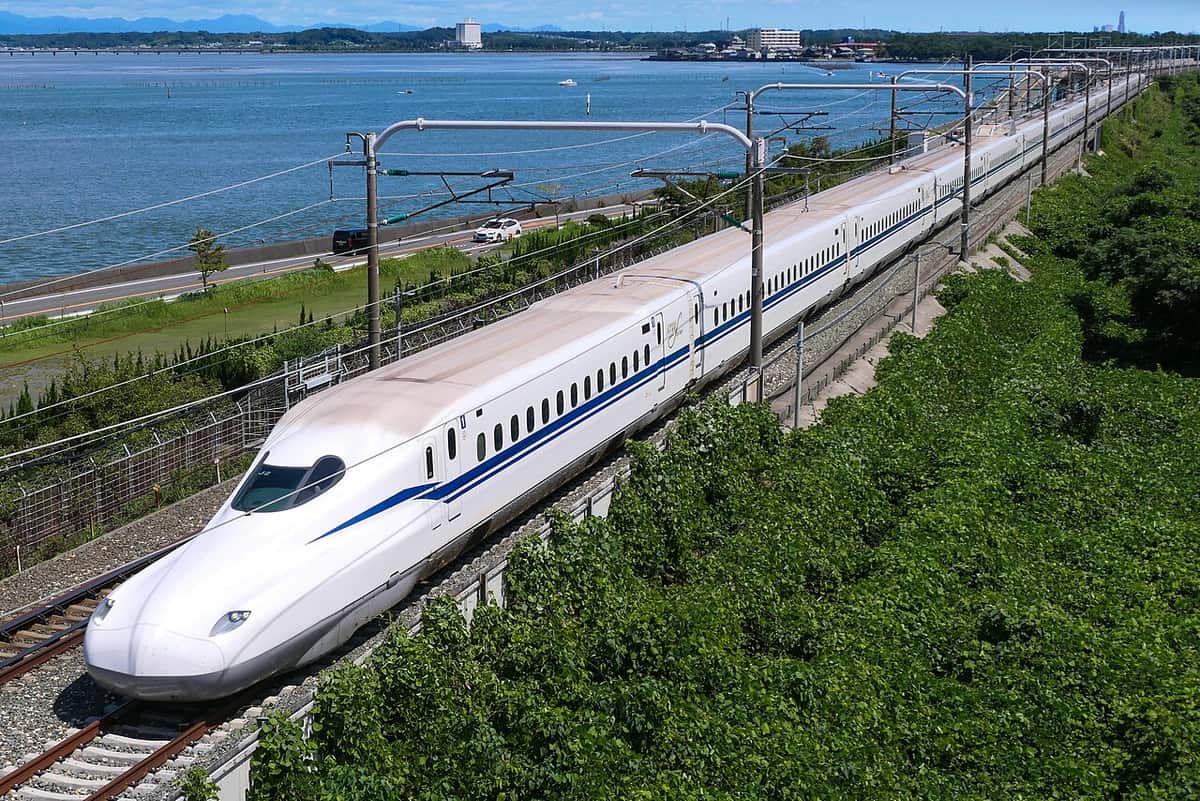
Should I fly or take the train in Japan? Plenty of travelers get fooled by the "the flight is only about an hour" figure, then find the door-to-door trip slower than a 2.5-hour shinkansen. You only need one rule to settle it: if the shinkansen ride is 3 hours or under, the train almost always wins; once it passes 4 hours, flying takes over. The reason isn't how fast the plane flies - it's that shinkansen stations sit downtown, with no early check-in and no security. Those overlooked "hidden minutes" decide the race.
This guide applies that rule to the routes you'll actually travel: Tokyo↔Osaka (train wins clean), Tokyo↔Hakata (the genuine toss-up), Tokyo↔Sapporo (fly only), Tokyo↔Okinawa (fly only), Tokyo↔Sendai (train), and Osaka↔Fukuoka. For each I'll lay out door-to-door time, fares (budget carriers and reserved shinkansen alike), luggage and scenery, and whether a JR Pass covers it - finishing with a quick-reference table so you know exactly how to choose each leg.
- The "3-hour rule": shinkansen ride ≤ 3h → train; ≥ 4h → fly. What you're really comparing is door-to-door time, not flight time.
- Tokyo↔Osaka: take the shinkansen (Nozomi ~2h27, city center to city center). Flying plus airport transfers is actually slower and more tiring.
- Tokyo↔Hakata: genuine toss-up. Fukuoka Airport is unusually close to the center (subway 5 min); fly if you're in a hurry or grab a budget fare, take the train for no security, big bags, scenery, or a Pass.
- Tokyo↔Sapporo and ↔Okinawa: fly only. The Hokkaido Shinkansen stops at Shin-Hakodate-Hokuto and doesn't reach Sapporo - the extension has slipped to around end of FY2038.
- With a JR Pass, don't just default to "I have a Pass so I'll train it" - the nationwide Pass excludes Nozomi and loses money on most trips after the hike. Check break-even first.
Table of Contents (click to expand)
- The core: why the 3-hour rule holds
- Tokyo↔Osaka: the shinkansen wins clean
- Tokyo↔Hakata / Hiroshima: the real middle ground
- Tokyo↔Sapporo: fly only (the Hokkaido line isn't there yet)
- Tokyo↔Okinawa, Osaka↔Fukuoka: how to choose
- Quick-reference table: every major route at a glance
- JR Pass, luggage, scenery: three overlooked variables
- Frequently Asked Questions
- Verdict: measure door-to-door time first
The core: why the 3-hour rule holds
Let's nail this rule down, because it's the spine of the whole article. The "3-hour rule" says: when the shinkansen ride is 3 hours or under, door-to-door it almost always beats the plane; once it passes 4 hours, the plane pulls ahead. The 3-to-4-hour band is the fuzzy zone, decided by how close the airport is to the center and whether you caught a cheap fare.
Why ride time, not flight time? Because that "barely over an hour" is pure air time - the real time sink is the ground process. Across typical airports and carriers, the "hidden time" of a domestic flight breaks down roughly like this:
- City to airport: Haneda is about 30-45 min, Narita longer; Itami is closer to central Osaka than Kansai Airport. This leg alone often eats half a shinkansen ride.
- Recommended early check-in: domestic flights generally suggest arriving 45-60 minutes before departure, earlier if you're checking bags.
- Security + walk to the gate: security queues at peak are unpredictable, and big airports take time to traverse.
- Baggage claim + into the city on arrival: add another 30-60 minutes.
Add it up and the "airport end" of a domestic flight often consumes 2.5-3 hours - nearly as much as the flight itself. The shinkansen is the opposite: the station is downtown, you can reach the platform minutes before departure, there's no security, and you step off right into the city. So on a 2.5-hour route like Tokyo↔Osaka, the plane essentially cannot win door-to-door; only at a Tokyo↔Fukuoka distance, where the train takes 5 hours, does the plane's raw speed finally outweigh the ground-process waste.
Tokyo↔Osaka: the shinkansen wins clean
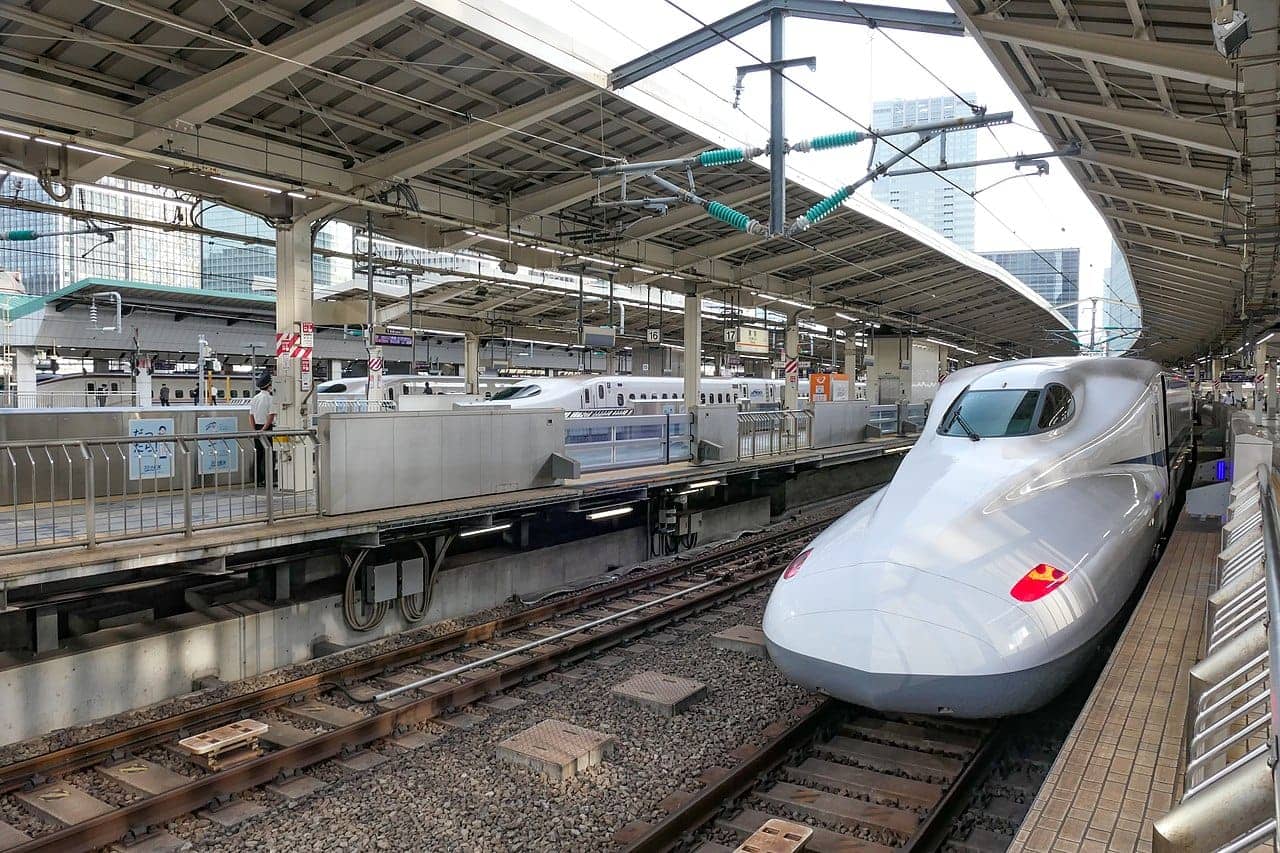
No debate here - take the shinkansen. The fastest Nozomi from Tokyo to Shin-Osaka is about 2h27, stopping only at Shinagawa, Shin-Yokohama, Nagoya, and Kyoto. And it's Tokyo/Shinagawa Station to Shin-Osaka Station - both downtown, a few subway minutes from Namba or Umeda.
The plane? Haneda to Itami is about 1h15 in the air, which looks far faster, but you first spend 30-45 min getting to Haneda, check in 45-60 min early, clear security, board, and then spend 30-40 min from Itami into central Osaka. Door-to-door usually tops 4 hours - nearly two hours slower than the train, with the added grind of hauling bags and queueing at security.
On price, a reserved Nozomi single Tokyo→Shin-Osaka is roughly ¥14,000-¥14,720. Budget carriers (Peach, Jetstar to Kansai Airport) occasionally drop a single under ¥10,000, but Kansai Airport is farther from central Osaka than Itami, so the transfer eats the savings. Unless you happen to live near Haneda or catch an extreme deal, Tokyo↔Osaka is the textbook 3-hour-rule case: take the train. Booking EX Hayatoku 21 ahead pushes this leg down to ¥12,980 - see our EX Hayatoku (early-bird) fare guide.
Check nationwide JR Pass prices online →Tokyo↔Hakata / Hiroshima: the real middle ground
This is the stretch that actually needs calculating. Start with Tokyo↔Hakata (Fukuoka).
Tokyo↔Hakata (Fukuoka)
The Nozomi from Tokyo to Hakata runs about 4h45-5h, with a reserved single around ¥23,000. That ride time is past 4 hours, squarely in the zone where the plane pulls ahead. The flight Haneda→Fukuoka is about 1h50 in the air, and Fukuoka has an advantage rare in Japan - the subway reaches Hakata Station in roughly 5 minutes, one of the closest big-city airports anywhere.
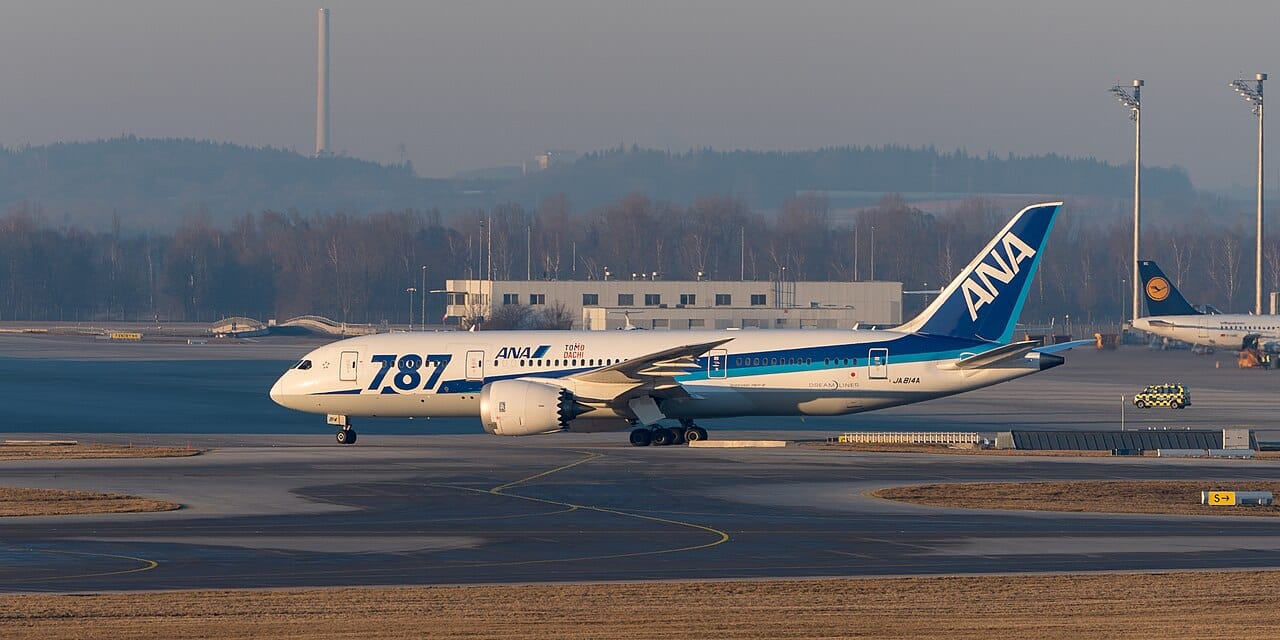
So even with the airport transfer, flying is door-to-door about 3.5-4 hours, clearly faster than 5+ on the train. On fares, ANA and JAL's unrestricted fare types often cost more than the shinkansen — note that ANA rebuilt its entire domestic fare lineup on 19 May 2026, so older fare names no longer apply; see our guide to buying Japanese domestic flights — but booking early or using budget carriers (Peach, Jetstar, Skymark to Fukuoka) can undercut it. Verdict: purely on time, flying edges the win Tokyo↔Hakata; but if you want no security, no checked bags, the Sanyo sea views, or a JR Pass you'll use anyway, the shinkansen is entirely reasonable. This is one of the few routes where both answers are right.
Tokyo↔Hiroshima
Hiroshima follows the "one stop before Hakata" logic. The shinkansen Tokyo→Hiroshima is about 4 hours, right at the upper edge of the fuzzy zone. The flight Haneda→Hiroshima is about 1h25 in the air, but Hiroshima Airport is fairly far from the center (bus about 45-50 min), so its airport-end advantage is weaker than Fukuoka's. So for Tokyo↔Hiroshima I lean toward the shinkansen - a 4-hour ride plus an inconvenient airport transfer means the plane's time savings are limited, and the train's no-security, downtown-to-downtown ease still flows better. Unless you find a really cheap flight, the train is the safe pick.
Tokyo↔Sapporo: fly only (the Hokkaido line isn't there yet)
Many people ask whether they can take the shinkansen straight to Sapporo. The answer is not yet. The Hokkaido Shinkansen currently terminates at Shin-Hakodate-Hokuto and does not reach Sapporo.
And that extension is a long way off. Per Japan's transport ministry (MLIT) in December 2024, the Sapporo extension has been pushed back significantly - the three main tunnels (Oshima, Shiribeshi and others) hit giant boulders and poor geology, and with labor and work-hour constraints on top, the target opening has slipped from the original end of FY2030 (spring 2031) to around the end of FY2038, at least 8 years later. In other words, Tokyo to Sapporo is fly-only for the rest of this decade.
In practice, Haneda→New Chitose is about 1h35 in the air, one of the busiest domestic routes in Japan. ANA, JAL, and budget carriers (Peach, Jetstar, AirDo, Skymark) all run dense schedules with competitive fares, so cheap tickets are easy to find. Forcing a rail route means riding the Tohoku + Hokkaido Shinkansen to Shin-Hakodate-Hokuto, then transferring to a limited express to Sapporo - 7-8+ hours total, expensive and exhausting, and not recommended. Tokyo↔Sapporo equals fly, full stop. For how rail works once you're in Hokkaido and whether a JR Pass pays off, see our Hokkaido JR Pass guide.
Tokyo↔Okinawa, Osaka↔Fukuoka: how to choose
Tokyo↔Okinawa (Naha): fly only
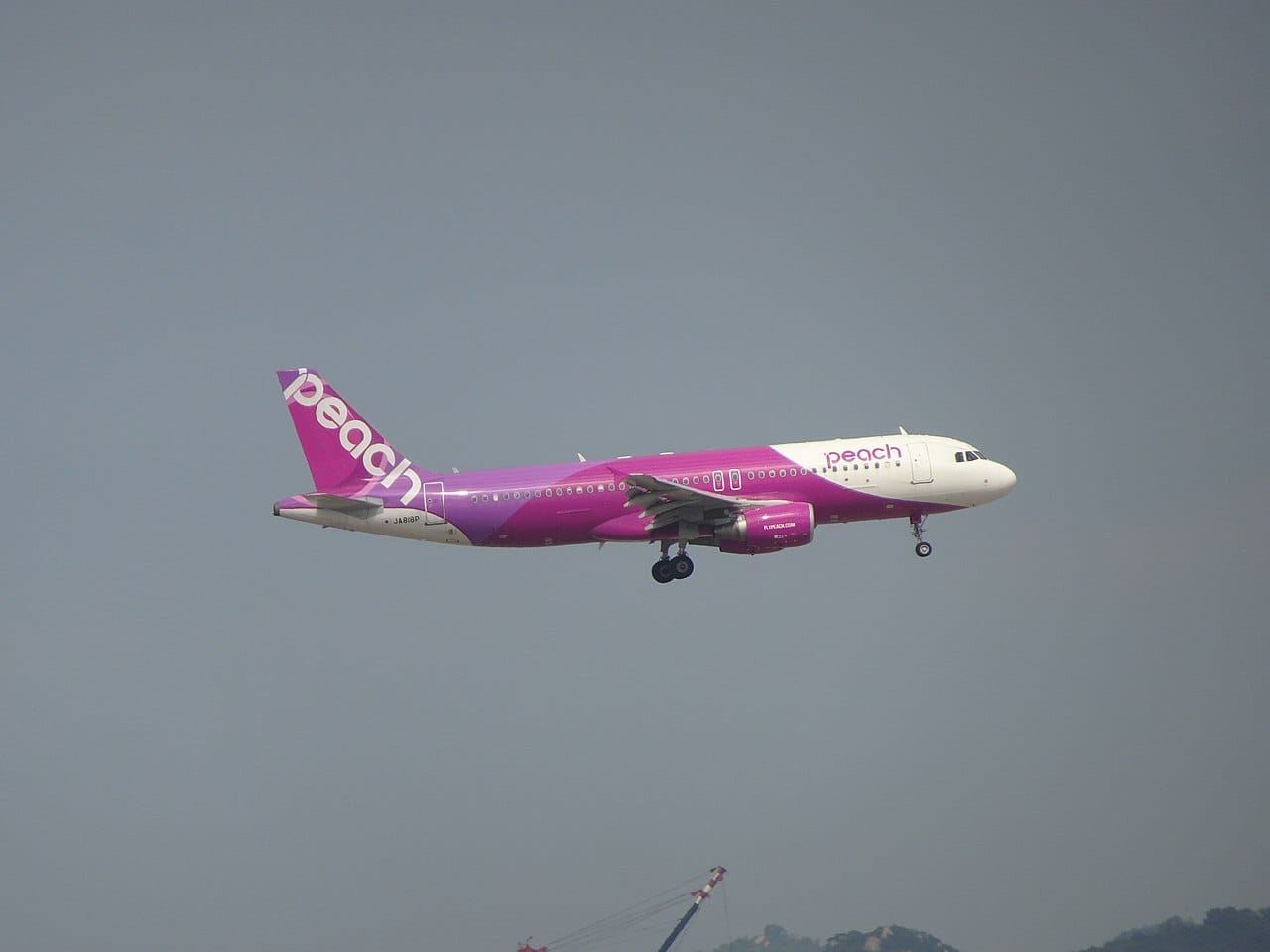
No discussion needed - Okinawa is an island with no rail link to Honshu, so Tokyo (or any Honshu city) to Naha can only be flown. Haneda→Naha is about 2h40 in the air, served by ANA, JAL, Peach, Jetstar, and Skymark, with cheap budget fares on sale. Naha Airport has the Yui Rail monorail into the city for an easy transfer. Getting around Okinawa itself relies mainly on a rental car - a separate topic.
Osaka↔Fukuoka: shinkansen edges it
From Shin-Osaka to Hakata on the Sanyo Shinkansen, the Nozomi is about 2h30 - back in the "train zone" of the 3-hour rule. The flight Itami/Kansai→Fukuoka is about 1h10 in the air, but with airport transfers and check-in at both ends, door-to-door it's roughly the same as the train or slower. So for Osaka↔Fukuoka I'd take the shinkansen - 2.5 hours, downtown to downtown, no security, clearly the smoother flow. Only consider flying if you snag an extreme budget fare.
Tokyo↔Sendai: take the shinkansen
The Tohoku Shinkansen from Tokyo to Sendai is about 1h30 at its fastest, well inside the 3-hour rule and firmly the train's territory. Sendai doesn't even have convenient nonstop flight competition, so don't hesitate - take the shinkansen. By the same logic, Tokyo↔Kanazawa (Hokuriku Shinkansen, about 2.5-3 hours), Tokyo↔Nagano, and similar medium-distance routes are all shinkansen-first.
Quick-reference table: every major route at a glance
| Route | Shinkansen ride | Flight time | Take | Why |
|---|---|---|---|---|
| Tokyo↔Sendai | ~1h30 | —(no convenient nonstop) | Shinkansen | Well under 3h, train wins clean |
| Tokyo↔Osaka | ~2h27 | ~1h15 | Shinkansen | Door-to-door ~2h faster, downtown to downtown |
| Osaka↔Fukuoka | ~2h30 | ~1h10 | Shinkansen (edge) | Still in the train zone; airport transfers cancel the flight |
| Tokyo↔Kanazawa | ~2.5-3h | ~1h | Shinkansen | Direct Hokuriku line, downtown arrival |
| Tokyo↔Hiroshima | ~4h | ~1h25 | Shinkansen (lean) | Hiroshima Airport is far out, flight edge limited |
| Tokyo↔Hakata (Fukuoka) | ~4h45-5h | ~1h50 | Toss-up (flight edges) | Fukuoka Airport subway 5 min to Hakata; fly if rushed |
| Tokyo↔Sapporo | No direct (7-8h+ by rail) | ~1h35 | Fly | Hokkaido line doesn't reach Sapporo (extension ~end FY2038) |
| Tokyo↔Okinawa (Naha) | No rail | ~2h40 | Fly | Island - fly only |
Ride and flight times follow 2026 operators' typical timetables (fastest shinkansen service; flight = pure air time, excluding airport transfers and check-in). Fares shift with season and policy, so reconfirm via our 2026 Price Index or the official site before you travel.
JR Pass, luggage, scenery: three overlooked variables
The 3-hour rule gives you a "time" answer, but three more variables can tip the scale toward the train.
JR Pass coverage: don't just default to "I have a Pass, so I'll train it"
A JR Pass (nationwide or regional) covers most shinkansen, so in theory riding with a Pass costs near zero at the margin. But two traps: first, the nationwide Pass excludes the fastest Nozomi and Mizuho, so you pay a surcharge (about ¥4,960 Tokyo–Shin-Osaka) or take the slightly slower Hikari/Sakura; second, after the 2023 hike the nationwide 7-day Pass is ¥50,000 and loses money on most trips. So the right order is: first decide whether to buy a Pass at all and which one, then decide what to take on each leg. For the full break-even math, see our JR Pass vs regional passes guide and the complete JR Pass guide. If your Pass already covers this long leg, then of course take the shinkansen.
Luggage: the shinkansen has almost no limits
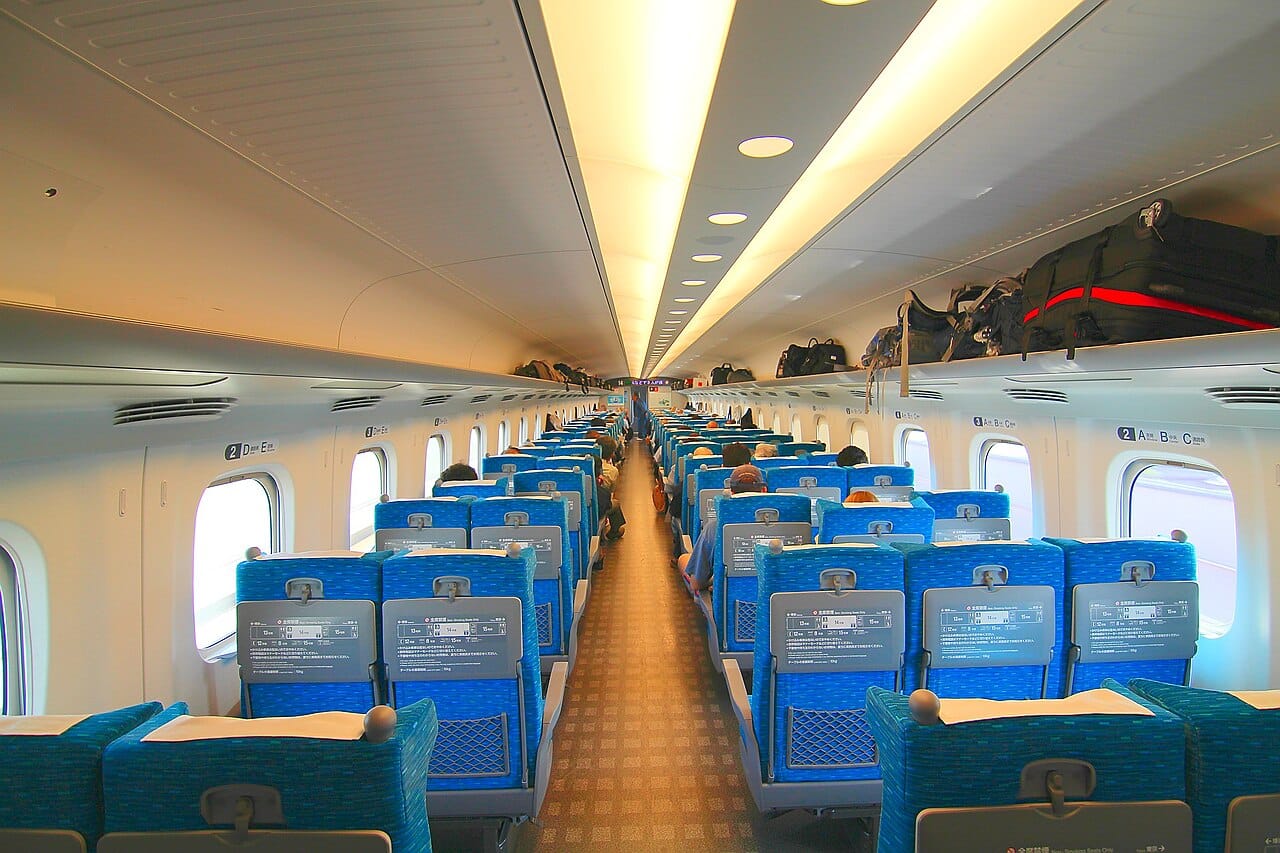
With big bags, the shinkansen clearly wins: no weight limit, no checked-bag step, no waiting at the carousel - you just carry bags on board, overhead or by your feet (only oversized items, over 160 cm total dimensions, need an advance "oversized baggage" seat reservation). Budget carriers enforce strict weight limits with steep overweight fees, and cabin-bag dimensions often get flagged. That applies to budget carriers only, though: ANA and JAL domestic economy now includes two 23 kg checked bags free, so the real cost is time at the counter and the carousel, not weight. That said, if you forward your big bag to the next hotel and travel light, this advantage is offset - Japan luggage forwarding is excellent and, used well, lets you have it both ways. For how forwarding works and what it costs, see our Japan luggage forwarding guide.
Scenery: the train's exclusive bonus
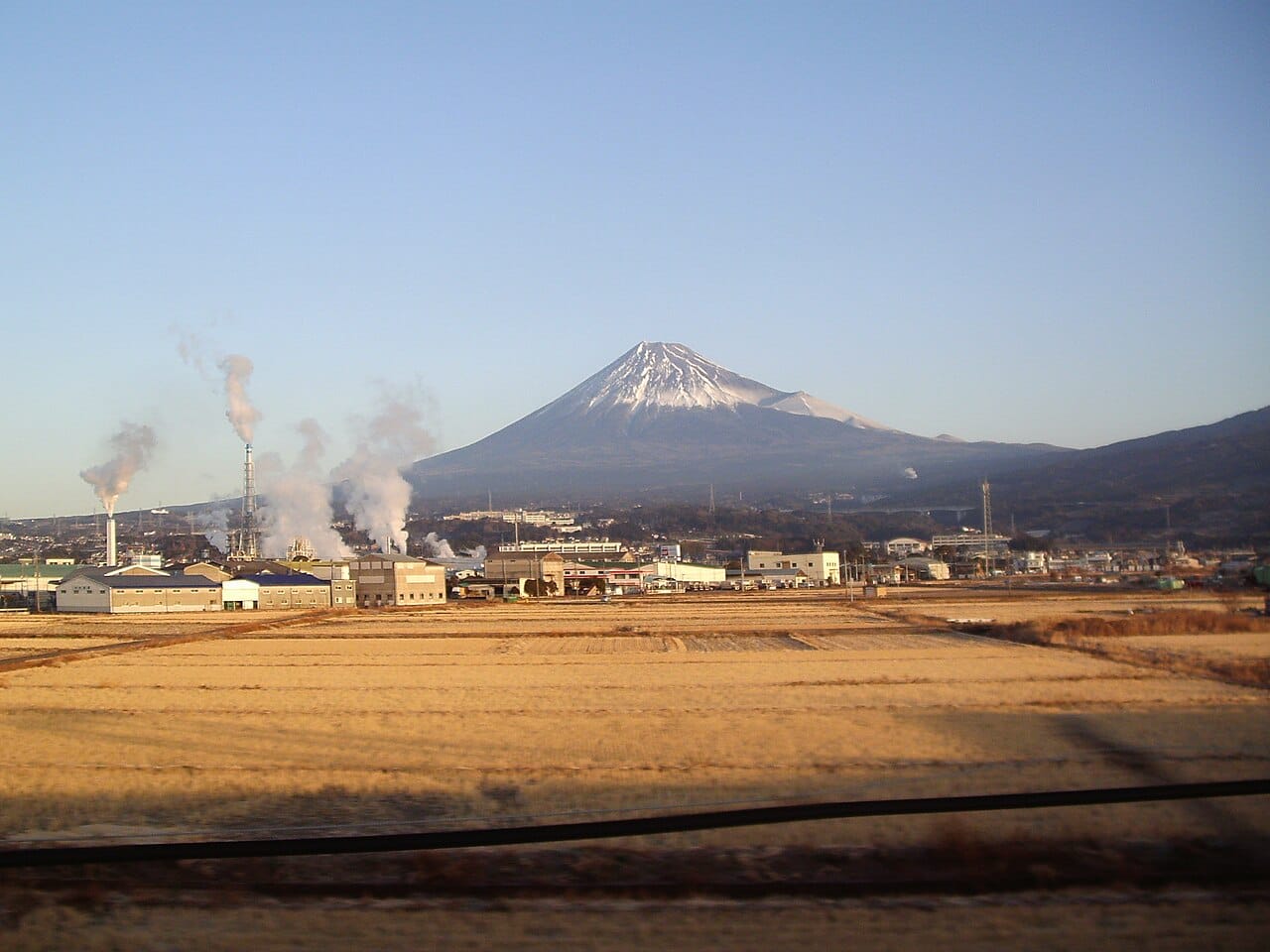
On a clear day, the Tokaido shinkansen gives you Mt. Fuji from the E seats (right side heading to Osaka), with sea views on the Sanyo stretch too. This trackside scenery is something a plane simply can't offer - a hidden plus for travelers who treat the journey itself as part of the trip. If you're torn on a middle-ground route and you like scenery and aren't rushed, this pushes you toward the shinkansen.
One last detail unrelated to the mode but worth sorting for any traveler: whether you take the shinkansen or fly, get connectivity working the moment you land. Checking timetables, changing trains on the fly, scanning a QR through the gate after an online seat reservation, hailing a ride - all of it needs data. An eSIM that works on landing, with no physical card to swap, is the easiest option these days. For how to thread the legs into a full route, see our 2-week Japan itinerary and the Japan travel essentials roundup.
Check unlimited Japan eSIM (works on landing) →Frequently Asked Questions
- Q1:When should I take the shinkansen and when should I fly between cities in Japan?
- The "3-hour rule" is all you need. If the shinkansen ride is 3 hours or under, the train almost always wins door-to-door, because stations sit in the city center, there is no early check-in, and no security queue. Once the ride stretches past 4 hours, flying starts to win: even though the flight itself is barely over an hour, adding the airport transfer, check-in, security, and baggage claim only matches a 4-5 hour train. Tokyo-Osaka (about 2h27 by Nozomi) is a clear train win; Tokyo-Sapporo and Tokyo-Okinawa are fly-only. The Tokyo-Hakata middle ground is the one route worth doing the math on.
- Q2:Tokyo to Osaka: is the shinkansen or the plane faster and cheaper?
- The shinkansen wins outright, no contest. The fastest Nozomi from Tokyo to Shin-Osaka is about 2h27, city center to city center. The flight is only about 1h15 in the air, but once you add getting to Haneda or Narita, the recommended early check-in, security, and the trip from Itami into central Osaka, door-to-door is usually over 4 hours - slower than the train and far more hassle. A reserved Nozomi seat runs roughly ¥14,000-¥14,720; budget carriers occasionally undercut that, but the time cost is not worth it. Take the train here.
- Q3:Tokyo to Hakata (Fukuoka): shinkansen or fly?
- This is the genuine middle ground and worth calculating. The Nozomi from Tokyo to Hakata is about 4h45-5h with a reserved single around ¥23,000; the flight Haneda to Fukuoka is about 1h50 in the air, and Fukuoka has a rare advantage - the subway reaches Hakata Station in roughly 5 minutes, one of the closest big-city airports in Japan. So even with airport transfers, flying is clearly faster door-to-door (about 3.5-4 hours versus 5+ on the train). Verdict: fly if you are in a hurry or snag a budget fare; take the shinkansen if you want no security, no checked bags, the Sanyo coast scenery, or a JR Pass you will use anyway. Both choices are reasonable.
- Q4:Can I take the shinkansen all the way to Sapporo (Hokkaido)?
- Not yet. The Hokkaido Shinkansen currently terminates at Shin-Hakodate-Hokuto and does not reach Sapporo. Per the Japanese transport ministry (MLIT) announcement in December 2024, the Sapporo extension has been pushed back substantially due to difficult tunnel geology and labor constraints - the target opening has slipped from the original end of FY2030 (spring 2031) to around the end of FY2038, at least 8 years later. So for the foreseeable future, Tokyo to Sapporo means flying: Haneda to New Chitose is about 1h35 in the air, one of the busiest domestic routes, with dense service and competitive fares. Forcing a rail route means transferring at Shin-Hakodate-Hokuto and totaling 7-8+ hours - not worth it.
- Q5:With a JR Pass, is the shinkansen always cheaper than flying?
- It depends on whether the Pass actually pays off, not "I have a Pass so the train is automatically cheaper." A JR Pass (nationwide or regional) covers most shinkansen, but the nationwide Pass excludes the fastest Nozomi and Mizuho, so you either pay a surcharge or take the slightly slower Hikari/Sakura. After the 2023 hike, the nationwide 7-day Pass is ¥50,000 and loses money on most trips, so run the numbers first - our JR Pass vs Regional Passes guide does the full math. If your Pass already covers this long leg, the marginal cost of riding is near zero, so take the train; if you would be buying a Pass just for this segment, a single point-to-point ticket or a flight is often cheaper.
- Q6:For big luggage or scenery, train or plane?
- The shinkansen wins clearly on both. Luggage: no weight limit, no checked-bag step, no waiting at the carousel - you simply carry bags on board (only oversized items, over 160 cm total dimensions, need an advance "oversized baggage" seat reservation), whereas budget carriers enforce strict limits and steep overweight fees. Note that this contrast holds for budget carriers only: ANA and JAL now include two 23 kg checked bags free in domestic economy, so weight is rarely your problem — the cost is the check-in queue and the carousel wait. Scenery: on a clear day the Tokaido shinkansen gives you Mt. Fuji from the E seats (right side heading to Osaka), plus sea views on the Sanyo stretch - things a plane simply cannot offer. That said, if you forward your big bag to the next hotel and travel light, the luggage edge is offset; Japan luggage forwarding is excellent and worth using.
Verdict: measure door-to-door time first
The whole article boils down to one line: don't be fooled by "the flight is only an hour" - measure door-to-door. Under a 3-hour shinkansen ride the train almost always wins; over 4 hours the plane takes over; in the middle band it comes down to how close the airport is to the center. Applied to real routes: take the shinkansen for Tokyo↔Osaka, ↔Sendai, ↔Kanazawa, and Osaka↔Fukuoka; fly Tokyo↔Sapporo and ↔Okinawa; Tokyo↔Hakata is the toss-up where both answers are right, and for Tokyo↔Hiroshima I lean train.
When you actually decide, three steps are enough: (1) check the fastest shinkansen ride time and apply the 3-hour rule for a first answer; (2) for middle-ground routes, also check "how long from the destination airport to the city center" to fine-tune; (3) layer on the three variables - a Pass that pays off, big luggage, or wanting to see Fuji all push you toward the train. Run those three steps and you'll choose right on every intercity leg in Japan.
Read next
JR Pass 2026: Is It Still Worth It?
Four real routes calculated, six alternatives that may beat the Pass.
Shinkansen EX Early-Bird vs JR Pass 2026: Which Is Cheaper?
Are shinkansen early-bird fares cheaper than a JR Pass? Three real routes calculated against EX Hayatoku, walk-up seats, and the Pass — per 2026 official fares.
Hokkaido JR Pass Complete Guide 2026
Five routes recalculated with 2026 fares — all-reserved limited expresses and the post-2024 Furano line closure change the math.