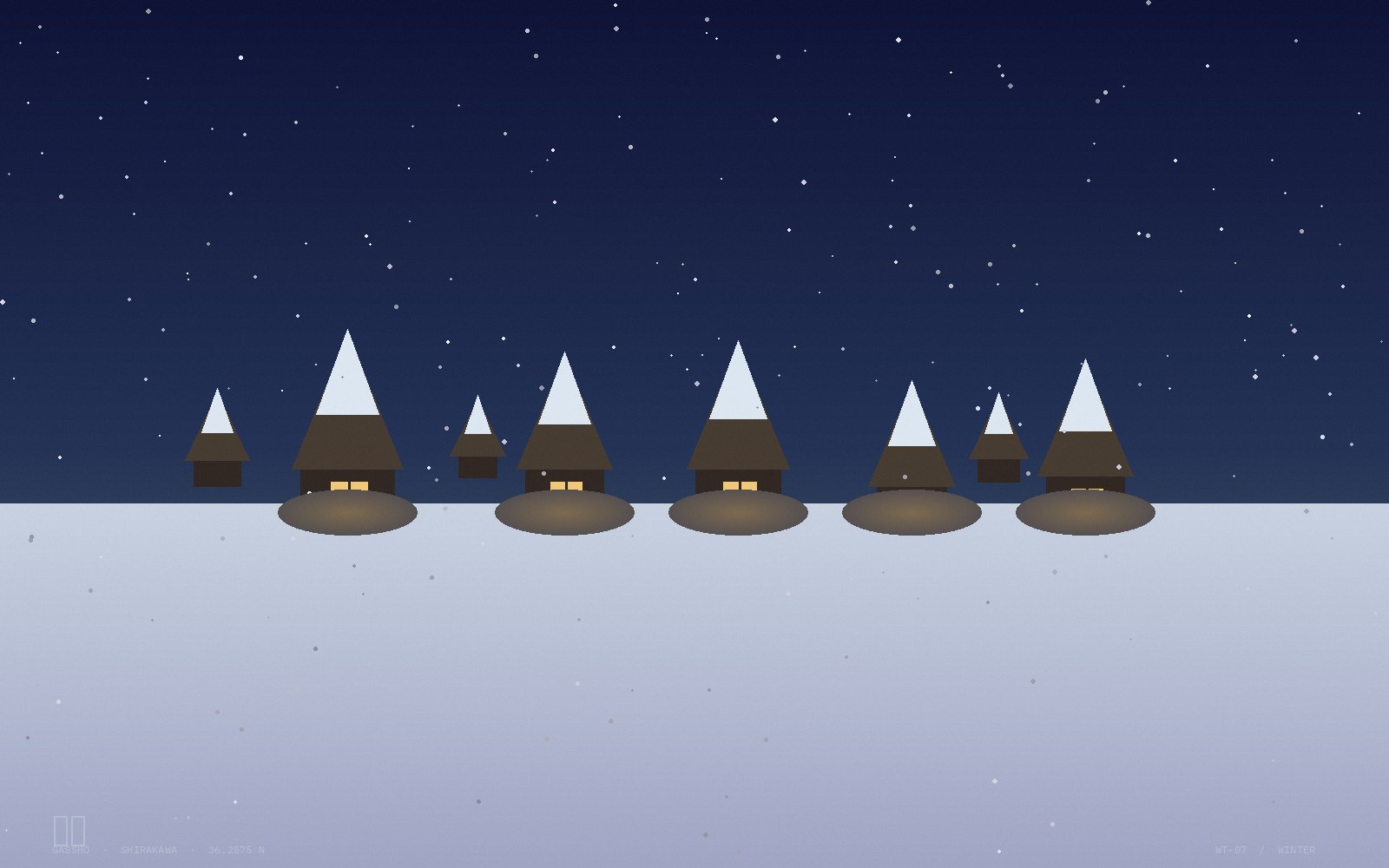
At 16:30 on 28 January 2024 the snow in Shirakawa-go was knee-deep and the thermometer read -6°C. I stood on the observation deck waiting for the 17:30 lighting cue. Next to me, a couple from Kyoto who had taken three trains and a bus to arrive said, shivering, "this is our third lottery entry in four years — we finally won." When the lights clicked on and 70 thatched farmhouses turned warm yellow against a deep blue sky, the crowd went completely silent. That silence is something almost no other Japan destination produces. This guide compresses two trips (2023 day-visit, 2024 inn-stay) into a 2026 playbook you can actually execute — including what to do when the lottery rejects you, which is statistically the most common outcome.
The six 2026 dates
The Shirakawa-go Tourist Association publishes the following year's six dates in mid-September. Based on five years of historical scheduling (always Sunday evenings across late January through mid-February), our 2026 forecast is:
- Session 1: Sunday 11 January 2026, 17:30–19:30
- Session 2: Sunday 18 January 2026, 17:30–19:30
- Session 3: Sunday 25 January 2026, 17:30–19:30
- Session 4: Sunday 1 February 2026, 17:30–19:30
- Session 5: Sunday 8 February 2026, 17:30–19:30
- Session 6: Sunday 15 February 2026, 17:30–19:30
Treat these as planning placeholders until the official announcement. The lighting never extends beyond 19:30 — the village has been firm about protecting residents' evening life since the 2018 overtourism incidents.
Understanding the observation-deck lottery
Before 2019, the observation deck was first-come-first-served. The result was 20,000-plus visitors per session, private homes trespassed for photo angles, and snow-compacted roads closed for safety. The current lottery was introduced as damage control. The mechanics:
- Late September: official registration portal opens.
- Late October: registration closes — one application per session.
- Mid-November: results emailed. Winners pay ¥1,000 per person; losers get nothing.
- December: winners plan transport; losers pivot to bus tours or inn stays.
My observed rates after monitoring forums across three years: per-session win rate is 15–25%, with the popular January 25 and February 8 sessions dropping below 10%. If you apply to all six sessions (allowed and encouraged), you usually land 2–3 confirmations. Flexibility on which Sunday you travel is the single biggest lever to increase your odds.
Three fallback plans if you don't win
- Plan A — in-village gassho inn. Ideal: you watch from inside a thatched farmhouse window, walk the main street after the crowds thin, and sleep in the village. The catch: 28 inns, two-hour sell-out on March 1.
- Plan B — KKday or Klook bus tour. Takayama or Kanazawa departure, returns same night, includes an external viewpoint tour operators negotiate privately. NT$3,500–4,800.
- Plan C — free ground-level viewing. Walk the main street around Myozenji temple and the Wada House. No panoramic shot, but atmospheric and costs nothing.
Getting there: Tokyo, Osaka, Nagoya compared
Shirakawa-go has no rail station — every route ends with a Nohi Bus. From the three major arrival points:
From Tokyo (longest)
- Hokuriku Shinkansen to Kanazawa (2h30, ¥14,380)
- Nohi Bus Kanazawa to Shirakawa-go (1h20, ¥2,000)
- Total: 4 hours, roughly USD 125 one-way
- Alternative via Toyama takes similar time with fewer buses
From Nagoya (cheapest)
- JR Wide View Hida limited express to Takayama (2h20, ¥6,140)
- Nohi Bus Takayama to Shirakawa-go (50 min, ¥2,600)
- Total: 3h10, roughly USD 65 one-way
- Best route overall — pairs with a Takayama Old Town side-trip
From Osaka or Kyoto
- Thunderbird limited express Osaka to Kanazawa (2h45, ¥7,990)
- Nohi Bus Kanazawa to Shirakawa-go (1h20, ¥2,000)
- Total: 4h15, roughly USD 75 one-way
- Slots cleanly into a Kanazawa Kenrokuen + Omicho Market multi-day loop
Day tours: Takayama departure vs Kanazawa departure
If you didn't win the lottery and couldn't book an inn, a guided bus tour is the most realistic option. The two major departure cities compared:
- Takayama departure: 13:30 departure, arrive Shirakawa-go 15:00, four hours free time, depart 21:00, back in Takayama 23:00. NT$3,500–4,200. Shortest bus leg, longest on-site window — the better pick for first-timers.
- Kanazawa departure: 14:00 departure, arrive 16:00, three and a half hours free time, depart 22:00, back in Kanazawa 00:00. NT$4,200–4,800. Better if you're basing in Kanazawa for Kenrokuen and Omicho Market anyway.
We recommend the Takayama-departure option: KKday Shirakawa-go Light-Up day tour from Takayama. The shorter bus leg leaves more on-site time, which matters when you're already battling freezing temperatures and short daylight hours.
Booking a gassho inn: five field-tested tactics
There are 28 licensed gassho-style inns inside the village. Illumination-night beds are the single most competitive lodging in Japan. From the 2023 experience of finally booking Koemon after two failed attempts:
- Set a calendar reminder for March 1, 09:00 Japan time. Every inn opens next-year reservations at this exact moment. By 09:02 half the village is booked; by 10:00 it's sold out.
- Be ready to fax. Roughly half the inns still only accept fax reservations. Use a Japanese fax-sending service (¥500 per transmission) if you're overseas.
- Book as 2 guests or more. Most inns don't accept single-occupancy. Families of three or four get the best availability because the inn rents by room, not by person (¥15,000–20,000 per person with dinner and breakfast).
- Watch JapaniCan and Booking in February. These two platforms occasionally release cancellation rooms two to four weeks out. Refresh daily.
- Read the fine print on dinner timing. Some inns require guests to eat dinner in-house during the illumination hour, meaning you can see the lights from the window but can't be out on the main street photographing.
Full day schedule (inn-stay version)
The timeline I actually followed on 28 January 2024:
- 13:00 Arrive Ogimachi lot, shuttle into the village, inn check-in
- 14:00 Drop bags, walk the white village — Wada House, Myozenji, three-house gassho cluster
- 15:30 Lottery winners shuttle to the observation deck (¥500 shuttle)
- 16:30 Stake out a viewing position; endure subzero wind for an hour
- 17:30 Lights fire; 30 minutes of shooting
- 18:00 Return to inn for country-style dinner (¥3,500 kaiseki)
- 19:00 Back out along the main street for the low-level reflected-light shots
- 19:30 Lights extinguish; village returns to silence
- 20:00 Back at the inn for a Japanese bath and starry sky
Budget reality check: three profiles
Per-person cost for a 2-day, 1-night trip from Nagoya:
- Premium (inn stay): transit ¥6,000 + inn with dinner and breakfast ¥18,000 + observation deck ¥1,000 + incidentals ¥2,000 = roughly USD 185 per person
- Value (day bus tour): Nagoya-Takayama ¥6,140 + Takayama hotel ¥8,000 + day tour NT$3,800 = roughly USD 170 per person
- Luxury (private charter, 4 people split): two-day car charter ¥80,000 + inn ¥18,000 + extras ¥10,000 = roughly USD 260 per person
Surprising takeaway: the inn stay costs roughly the same as the day-tour option. If you can secure a March 1 booking, the inn is the superior experience at essentially the same price.
Chaining itineraries: Takayama, Kanazawa, Gokayama
Shirakawa-go alone takes 3–4 hours to walk, so flying in just for the illumination is a lot of cost per minute. Three proven chained routes:
- 3-day classic. Day 1 Nagoya to Takayama, Hida beef dinner, Old Town walk. Day 2 Takayama to Shirakawa-go illumination. Day 3 Takayama to Gero Onsen to Nagoya.
- 4-day deep. Day 1 Tokyo to Kanazawa, Kenrokuen. Day 2 Kanazawa to Shirakawa-go, in-village stay. Day 3 Gokayama's Ainokura cluster (quieter UNESCO twin site). Day 4 Kanazawa Omicho Market to Tokyo.
- 5-day Hokuriku loop. Add Toyama and the Noto Peninsula — best for confident winter drivers with studded tires.
Kenrokuen's yukitsuri (winter rope-pine supports, visible only in winter) and the Ainokura gassho cluster (70% fewer visitors than Shirakawa-go) pair beautifully with the main light-up. The meta-rule: unless you're a confident snow driver with studded tires, use public transit plus a day tour. Snow-covered switchbacks punish novice drivers.
Photography: five timing tricks the tutorials miss
- Bring a tripod. Warm incandescent light on deep snow demands 1–3 second exposures. Hand-held shots will smear regardless of stabilization.
- Shoot 17:00–17:25 blue hour. Sky still blue, rooftops still snow-bright, lights just warming up. Post 17:50 the sky goes pure black and contrast collapses.
- ISO 400–800 at f/5.6. Preserves shadow detail. Most smartphones' night mode plus a small tripod deliver publication-quality frames here.
- Keep spare batteries warm. Below -5°C, battery life halves. Carry spares and a phone in an inside pocket with a hand warmer.
- Compose low and foreground-first. Snow as foreground, gassho rooftops in mid-ground, sky on top. Layered compositions beat flat panoramics every time.
The less-photographed windows
Every guide tells you to race for the 17:30 moment. My 2024 observation was the opposite: 17:50 onward, crowds thin, your composition becomes more flexible. Three overlooked windows:
- 17:00–17:25 pre-lighting blue. Observation-deck positioning is easy; few photographers camp early.
- 18:30 post-peak dip. First-wave photographers leave for dinner. Best tripod positions open up.
- 19:25 last-five-minutes. Lights fading, half the visitors gone. A chance to capture the village nearly empty.
If you're staying in the village, walking the main street at 20:30 — after the lights are off — is the hidden highlight. Moonlight on fresh snow, window glow from the inns, no other visitors. That 20 minutes is what inn guests actually remember; day-trippers never see it.
Ten first-timer mistakes
- Waiting until April to book inns — they've been full for a year.
- Assuming you can drive into the village — illumination-day traffic control blocks private cars.
- Regular sneakers — deep snow soaks socks and risks frostbite.
- No lottery win + no tour = standing at a fence with no panoramic shot.
- Picking illumination day just for snow — non-illumination days are 80% less crowded and equally pretty during daylight.
- Forgetting hand warmers — your phone dies 30 minutes in.
- Not booking the return bus — the last Nohi Bus leaves at 20:20, and missing it strands you in the village.
- All-black outfits — you photograph as a shadow in deep snow. Bring one red or white accent piece.
- Expecting international food — dinners are Hida beef, hoba miso, and soba. Embrace it.
- No cash — some inns and shops don't accept credit cards.
Traveling with elders or kids
- Skip the observation-deck shuttle. The shuttle stop-to-deck walk is five minutes of snow path — punishing for weak knees. Book a village-window inn instead.
- Arrive by 13:00. Daytime white-village walking is gentler than evening light-up chaos.
- Pick an inn with attached heated dining. After 19:30 small children and older adults need immediate warmth; attached onsen is the best insurance.
What we got wrong: four Januarys of lessons
We have been to Shirakawa-go in four different Januaries between 2020 and 2024, and each trip taught us something that no guide had told us in advance. Writing these down is the most honest thing we can do for a first-time reader.
2020 — the lottery confidence trap. We assumed that because we entered early on the first day the lottery opened, we had some kind of advantage. We did not. The lottery is random; all entries in the window are equal. We learned to build a fallback plan the same day we submit the lottery form, not after the rejection email lands. If you treat the lottery as a bonus rather than a plan, you will never feel the disappointment that ruins a trip.
2022 — the Takayama bus timing error. We booked a Takayama day bus that departed at 12:20 and returned at 20:30. On paper the three-and-a-half-hour village window looked generous. In practice, sunset at 16:55 plus illumination turn-on at 17:30 meant we had exactly 35 minutes of peak blue-hour light to photograph, and we spent 20 of those minutes queueing for the observation-deck shuttle. If you go on the Takayama route, prioritize the 11:10 departure and skip the shuttle entirely — shoot from the village path near Wada House instead, where the foreground thatch-and-snow composition is actually better than the crowded deck shot.
2023 — the cash reserve mistake. The gassho inn we booked accepted only cash. We had budgeted ¥8,000 for the night. The actual bill, including the 10% service charge, the ¥500 bath tax, and two bottles of local sake we did not intend to order but the host warmly poured, came to ¥14,200. The village has exactly one ATM, inside the JA post office, and it closes at 17:00. We had to walk back in the snow to find it before check-out. Always carry at least ¥15,000 in cash per person for an inn night, and assume you will spend ¥3,000 more than your quoted room rate.
2024 — the clothing overconfidence. We wore what we considered "Tokyo winter heavy" — a puffer jacket, wool sweater, jeans, and regular leather boots. We were fine until 19:15, when the temperature at the observation deck dropped to −7°C with a valley wind. Within 20 minutes, the jeans became rigid, the boots soaked through at the ankle, and one of us started shivering uncontrollably. The next morning we bought proper snow pants at the Takayama Montbell for ¥12,000 — money we would not have spent if we had packed correctly. Rent or buy snow pants and waterproof above-ankle boots before you get to Japan; the markup inside Japan is brutal, and the stores near the village sell mostly souvenirs, not serious outdoor gear.
The food question: what inns actually serve
Every first-timer asks what dinner will be like. The honest answer: it will be heavier and more rural than you expect, and the pace will feel slow compared to Tokyo ryokan kaiseki. A typical gassho inn dinner starts at 18:00 around a sunken hearth called an irori, served over roughly 90 minutes. You can expect seven to ten small dishes: a sashimi plate with river fish like ayu or iwana; a locally made miso called hoba miso, grilled on a magnolia leaf over coals; mountain vegetables including fiddlehead ferns and burdock; a small hot pot of Hida beef with winter greens; pickles that are sharper and saltier than city versions; rice from the host family's own paddy; and a simple dessert, often persimmon or a sweet-bean mochi.
Two things surprise guests. First, portions are substantial — the irori dinner is closer to a farmhouse harvest meal than a refined kaiseki. If you are a light eater, tell the host at booking and ask for the "light set" (軽めコース), which most inns will prepare for ¥1,000 less. Second, breakfast at 07:30 is often as elaborate as dinner: grilled fish, natto, hot tofu, miso soup, a small salad, a soft-boiled egg, and rice, plus local pickles. Do not plan a heavy lunch on your departure day — you will not be hungry until at least 13:00.
Dietary restrictions are hard in a gassho inn. Vegetarian is possible with 10 days' notice but will involve mountain vegetables and tofu in every dish, with little variety. Vegan and gluten-free are genuinely difficult — the soy sauce, dashi, and miso bases are fundamental to the cooking. If you have strict requirements, consider a Takayama or Kanazawa day-trip structure rather than a village overnight, and eat at Kanazawa's vegan-friendly restaurants before or after.
Fourteen-day pre-departure checklist
- [ ] Lottery result received (winners have paid)
- [ ] Bus tickets or inn reservations screenshotted for offline access
- [ ] Waterproof snow boots (above-ankle) + three pairs of merino socks
- [ ] Down parka + thermal base layer + beanie + insulated gloves
- [ ] Minimum 10 hand warmers (village konbini sells out)
- [ ] Japan eSIM activated (mountain signal is variable)
- [ ] 20,000 mAh power bank + hand warmer to protect it
- [ ] ¥15,000 cash reserve (some inns are cash-only)
For the eSIM that held up best in the Shirakawa-go mountain valley, see the best Japan eSIM for 2026. For broader trip prep, the Japan essentials checklist covers winter insurance, Visit Japan Web and cash-card-Suica ratios.
Read next
JR Pass 2026 full analysis
Does the JR Pass pay off for Tokyo-Kanazawa-Takayama-Shirakawa-go loops?
Japan essentials checklist 2026
Winter-specific packing, insurance, Visit Japan Web.
Best Japan eSIM 2026
Which eSIM had working signal inside the Shirakawa-go valley?