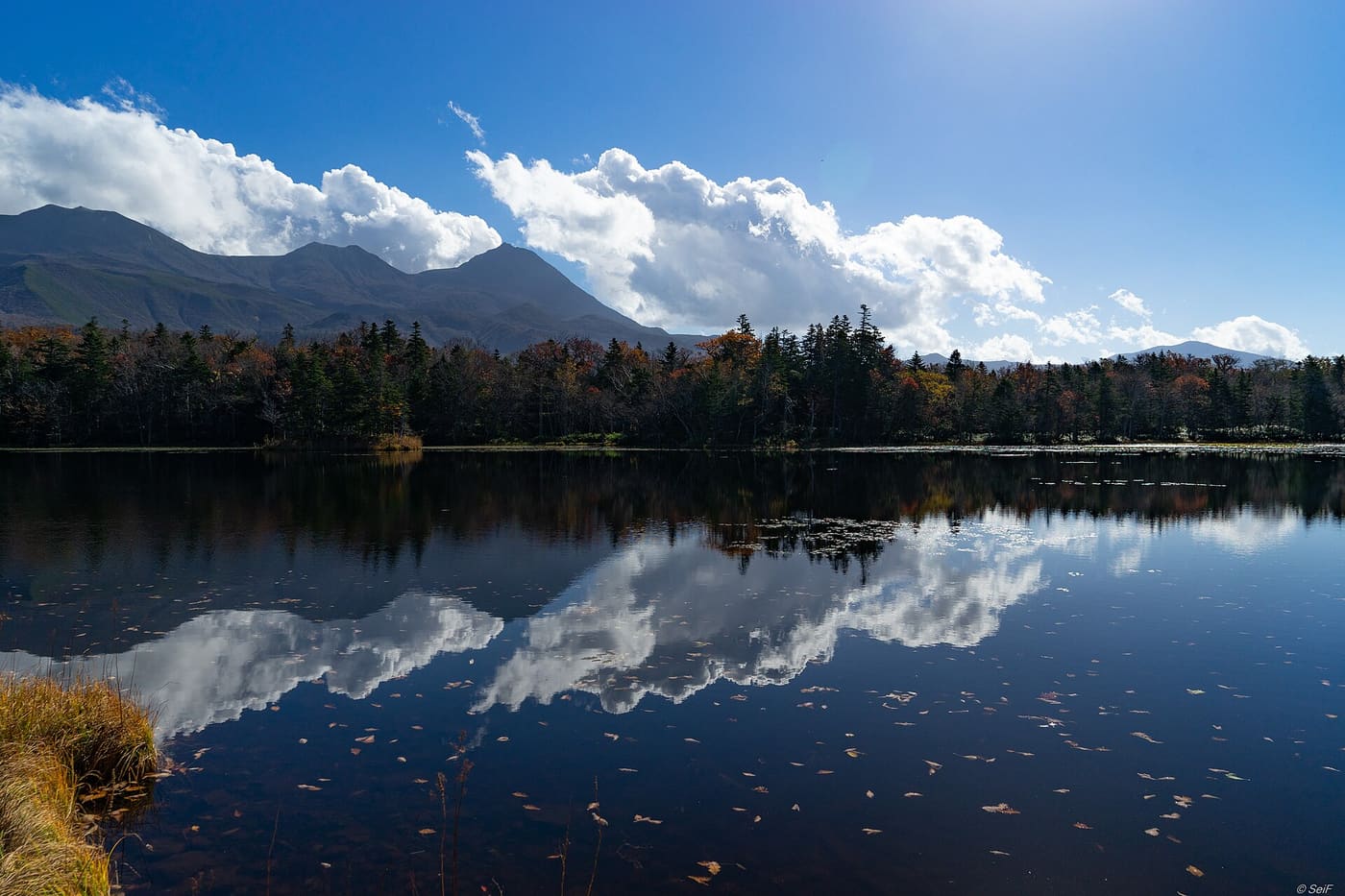
Start with the fact that reshapes the whole day: there is no season in which you can walk the Shiretoko Five Lakes ground trail for free. The 2026 park season runs April 20 to November 8, and it is cut into three periods. From April 20 to May 9 and again from August 1 to November 8 you pay ¥450 for a ten-minute lecture before you may set foot on the trail. From May 10 to July 31, the brown bear active period, walking it yourself is not permitted at all and the only legal access is a paid guided tour at roughly ¥6,000 to ¥7,000 per adult for the large loop. The only genuinely free option here, open every day of the season, is the elevated boardwalk. This guide covers the system, the timetable, the fees, the booking routes and the bear rules, all checked against the operator's own pages in July 2026.
📍 This guide covers the Five Lakes park only. For the two Utoro cruise routes, the Kamuiwakka hot waterfall, the drift-ice season and where to stay, see the Shiretoko peninsula guide, which is not repeated here.
- No free-walk period exists: the ground trail always costs something — vegetation protection period (spring), brown bear active period, vegetation protection period (summer and autumn)
- The boardwalk is the free part: about 800 m one way, 1.6 km and 40 minutes return, a 7,000-volt fence, wheelchair accessible — but not connected to the ground trail
- Lecture fee: ¥450 for ages 12+, ¥200 for ages 0–11, cash only, paid on the day at the Field House
- Bear season is guide-only: large loop ¥6,000–7,000 and about 3 hours, small loop ¥4,000 and about 1 hour 45 minutes, groups capped at 10
- The late-autumn cut-off: from Oct 21 the final large-loop lecture is 14:00 — arrive in the afternoon and the loop is gone
📖 Table of Contents (click to expand)
- The three-period system, and why it exists
- The boardwalk: the only free 800 metres
- The lecture system: what ¥450 actually buys
- Bear season: large loop or small loop
- 2026 season dates and the month-by-month timetable
- Bear safety: seven official rules
- Getting there from Utoro
- Why you should eat in Utoro first
- Is it worth it? An honest verdict
- FAQ
The three-period system, and why it exists
One number explains everything about how this park is run. In 2007, closures caused by brown bear activity meant the ground trail system could only open for 98.5 days that year. The operator states this plainly on its own manner-guide page. A World Heritage site's signature trail, shut for most of a season — unworkable for the managers and heartbreaking for anyone who had flown a long way for it.
The answer was regulation. The Five Lakes were designated a use-adjustment district under Japan's Natural Parks Act, a system certified by the Minister of the Environment, which formalises who may enter, when, and what they must do first. What you deal with as a visitor is the resulting three-period calendar.
| Period | 2026 dates | How you walk the ground trail |
|---|---|---|
| Vegetation protection (spring) | Opening (Apr 20) – May 9 | Attend a ~10-minute lecture, pay the fee, then walk it yourself |
| Brown bear active period | May 10 – Jul 31 | Registered-guide tours only, paid |
| Vegetation protection (summer/autumn) | Aug 1 – closing (Nov 8) | Same as spring: lecture, fee, then walk it yourself |
Read that table twice, because of what is not in it. A widely circulated idea holds that "after August it's open and free" — it is not. What returns on August 1 is your right to walk unaccompanied, not your right to walk without paying. You still buy a ticket, you still sit through ten minutes of instruction.
My guess at the source of the confusion is the naming. "Vegetation protection period" sounds like the stricter regime, so people invert it and assume the non-bear months must be the unregulated ones. In fact the two period names describe different reasons for the restriction — one protects the plants from being trampled, the other protects you from meeting a bear — not the presence or absence of restriction.
One more clarification worth holding onto: the three-period system governs the ground trail only. The elevated boardwalk sits outside it entirely, because it solves the safety problem with hardware rather than paperwork. That is the next section.
The boardwalk: the only free 800 metres
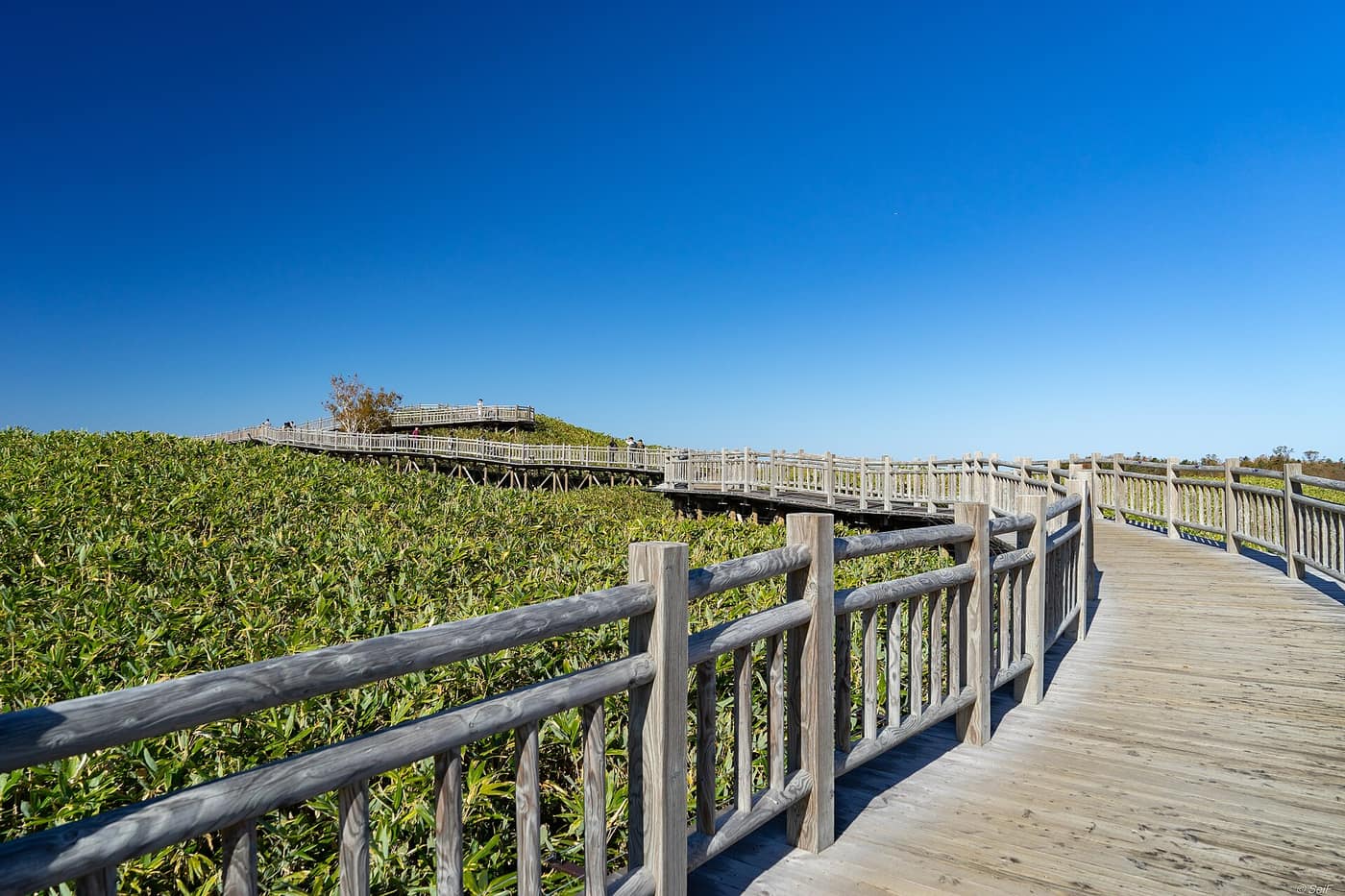
If you have 40 minutes rather than half a day, or you are travelling with older relatives or a pushchair, or you simply have no appetite for the paperwork, the answer is easy: walk the elevated boardwalk, and it costs nothing. The operator's wording is that it can be used free of charge from opening to closing, every day of the season.
| Item | Official detail |
|---|---|
| Cost | Free, no procedure of any kind |
| Length | About 800 m one way (the operator also gives about 1.6 km and 40 minutes return) |
| Safety | A 7,000-volt electric fence runs the full length; the operator states this is why it is safe |
| Accessibility | Step-free, gentle gradients, wheelchair accessible; free wheelchair loans at the Field House |
| Relation to ground trail | Not interconnected — an out-and-back to the final observation deck |
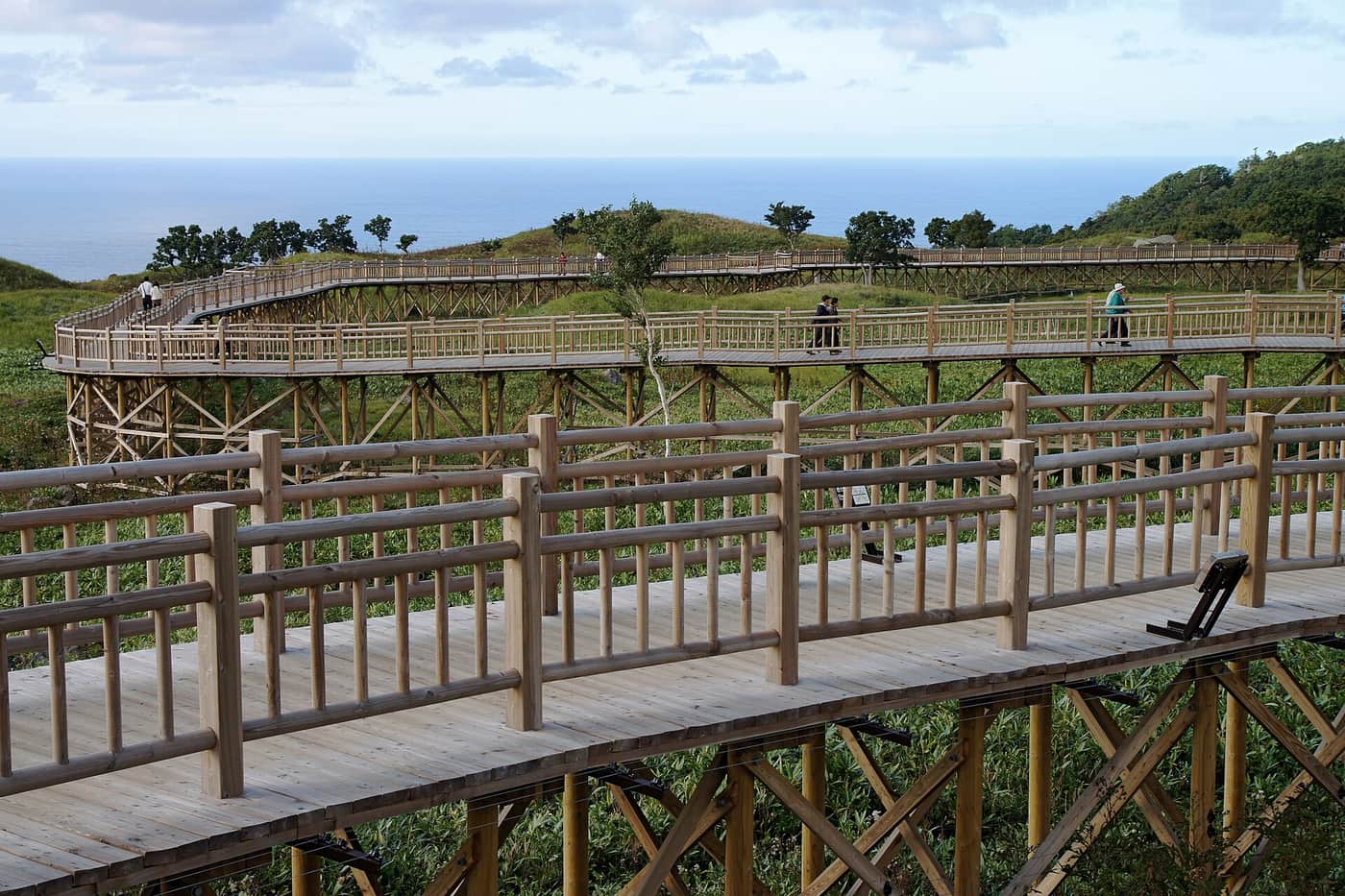
That 7,000-volt fence is the key to understanding how the whole park is designed. It is not reassurance theatre; it is a physical barrier that keeps bears off the structure. It is precisely why the boardwalk stays open through June and July, the height of bear activity, while the ground trail a few metres away is closed to unaccompanied walkers in the same weeks. Same forest, same day, completely different rules — and the difference is the fence.
Now the honest limitation. The two routes do not connect. Plenty of visitors only discover this on site: you cannot walk out along the boardwalk and return via the ground trail on a whim. The ground trail's loops feed back onto the boardwalk to return to the entrance, but there is no reverse option of stepping off the boardwalk into the forest halfway along. Budget your time as if these were two separate outings, because functionally they are.
A second honest note: the only observation deck name this guide can verify from the operator's own pages is the "final observation deck." Three other individually named viewpoints circulate, and I could not confirm any of them on the official site, so this article says only that there are several viewpoints along the route with the final deck at the end, rather than repeating names that may be nicknames or may have changed.
The lecture system: what ¥450 actually buys
During the two vegetation protection periods — April 20 to May 9 and August 1 to November 8 in 2026 — the sequence for the ground trail is:
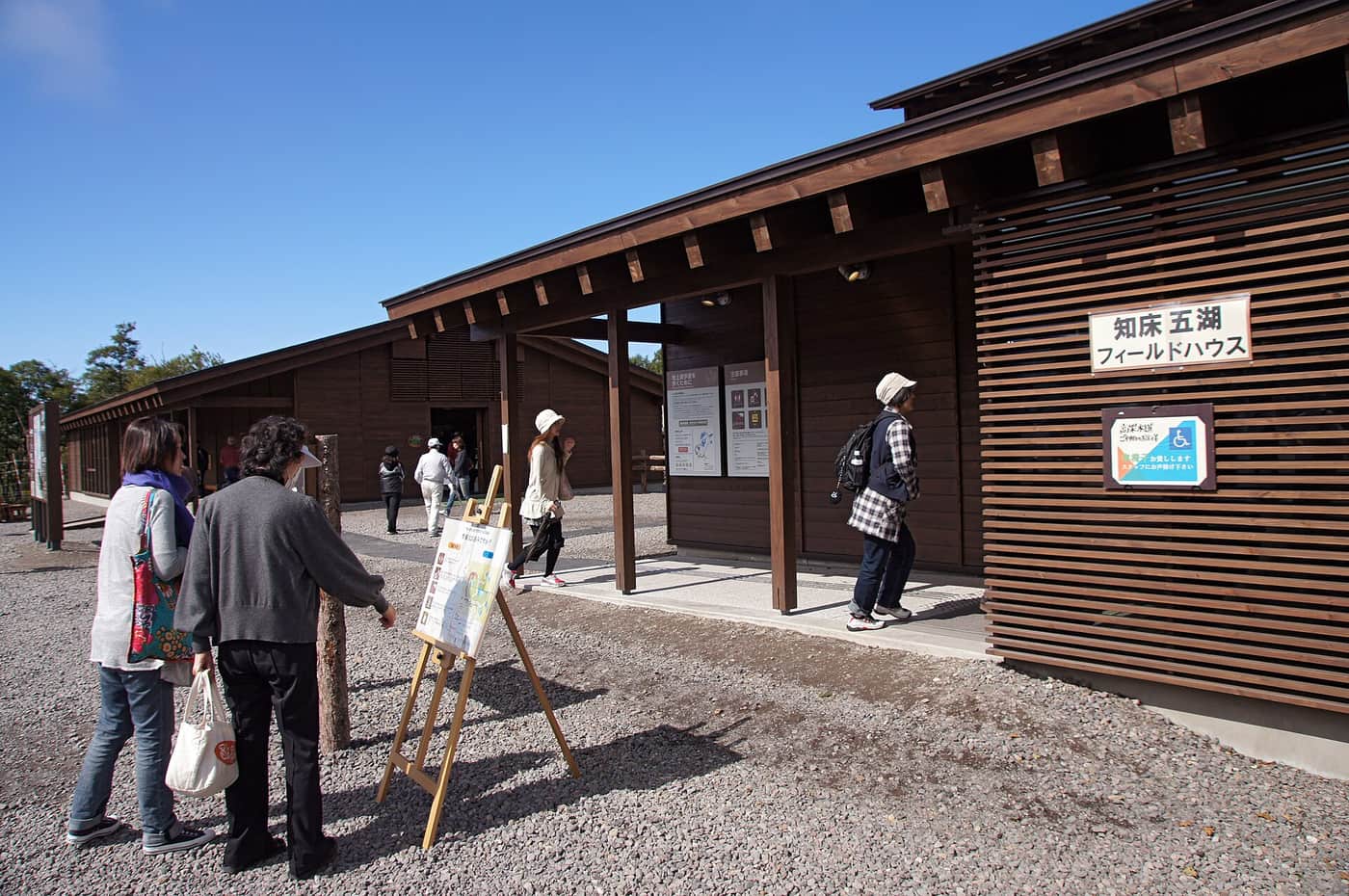
- Go to the Shiretoko Goko Field House, the trailhead facility (tel. 0152-24-3323)
- Buy a lecture ticket from the machine inside and complete an application form
- Attend the roughly ten-minute lecture
- Head straight out through the adjacent trailhead
| Who | Lecture fee |
|---|---|
| Adults (12 and over) | ¥450 |
| Children (0–11) | ¥200 |
A correction is needed here. Several figures circulate online for this fee — ¥500/¥250 and ¥250/¥100 both circulate, and the Shiretoko peninsula guide carried an outdated pair until this update. The operator's current page states ¥450 and ¥200. Those figures are now managed centrally, so a future revision updates every article at once.
Three practical details, each of which is the kind of thing you regret on site rather than in advance:
- Cash only. The official reservation guidance rules out travel vouchers and coupons, and there is no card option. ATMs are thin on the ground out here, so sort your cash in Utoro or earlier.
- You depart immediately after the lecture. Water, toilet, insect repellent, footwear — all of it happens before you sit down, not after.
- Food may not be carried onto the ground trail (water and tea are fine), because food smells draw bears. This one rule quietly dictates the order of your whole day; see the Utoro section below.
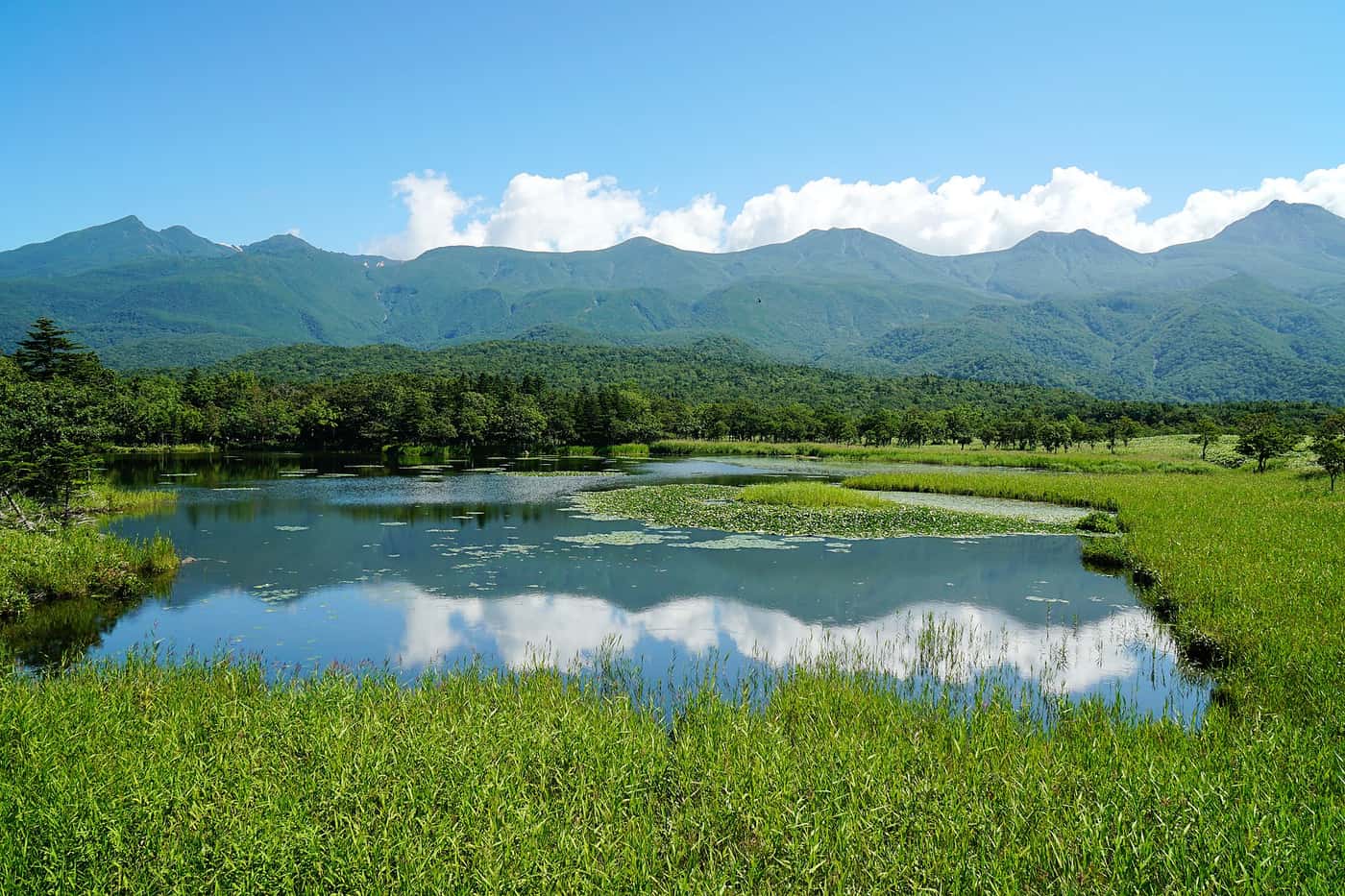
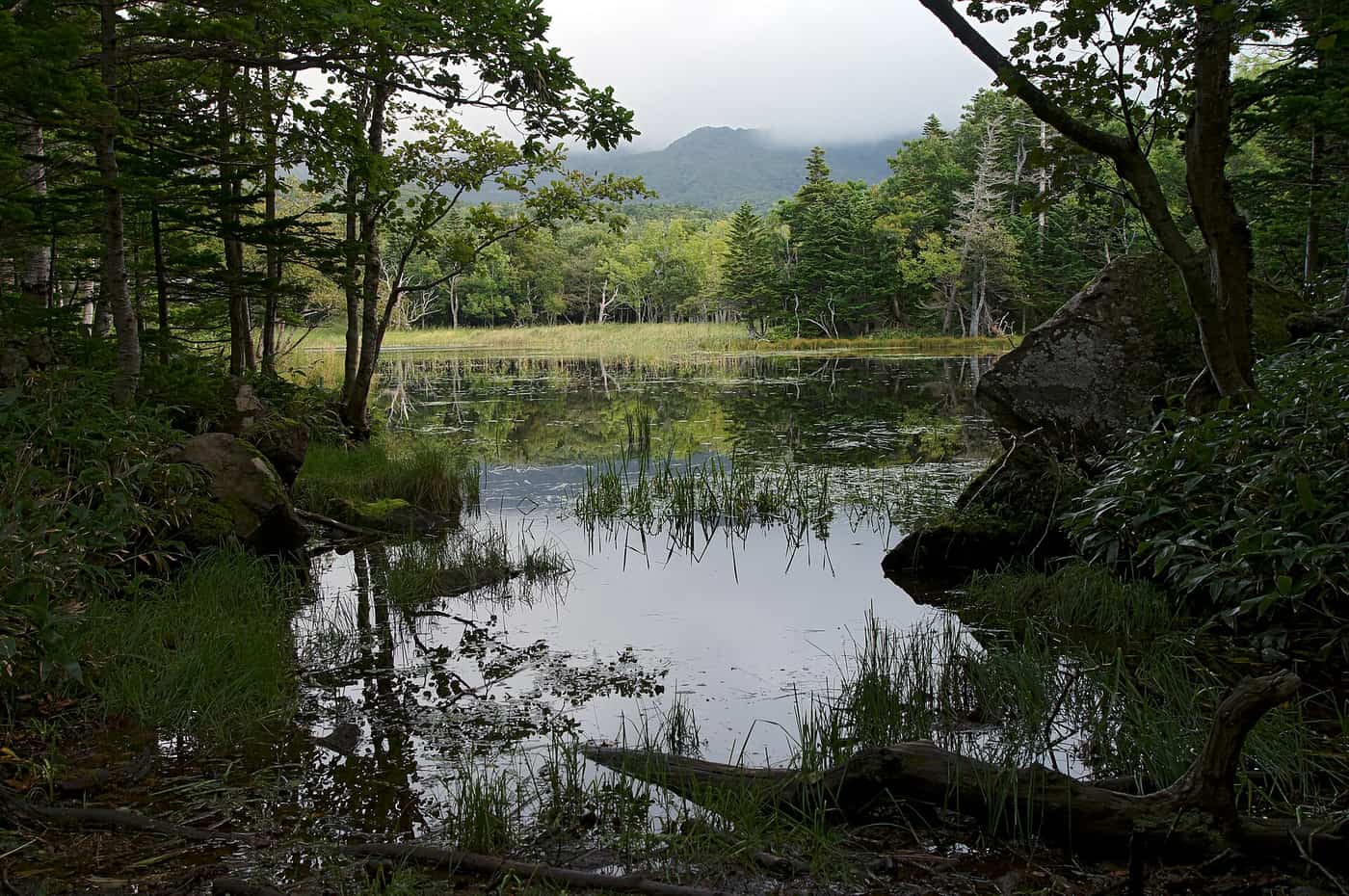
Is the fee worth paying? Yes, and it is not close — provided you have the time to use it properly. The boardwalk gives you the postcard: Lake One, the Shiretoko range behind it, the Sea of Okhotsk beyond, all viewed from a wooden platform. The ground trail puts you inside the forest with earth underfoot, walking lake to lake. For the price of a coffee, that is an easy call. The real cost was never the money; it is the time — 3 km for the large loop, 1.6 km for the small — and the willingness to follow the rules.
Bear season: large loop or small loop
From May 10 to July 31 the ground trail is guided-tour-only. That is a regulation, not a recommendation, and there is no self-guided alternative during those weeks.
The operator publishes a price band and accredited companies set their own rates inside it:
| Who | Large loop | Small loop |
|---|---|---|
| Adults (12 and over) | ¥6,000–7,000 | ¥4,000 |
| Children (6–11) | ¥3,000–3,500 | ¥2,500 |
| Pre-school (0–5) | Consult in advance | ¥2,000 |
| Distance / duration | 3 km / about 3 hours | 1.6 km / about 1 hr 45 min |
Which one? If you have travelled here specifically for the Five Lakes, take the large loop. The small loop only reaches part of the lake system, while the large loop is the version that earns the name. Three hours sounds long, but it includes interpretation, stops to look at animal signs, and pauses to keep clear of other groups, so the actual walking effort is milder than the number suggests. Conversely, with small children, a cruise or flight to catch later the same day, or any doubt about stamina, the ¥4,000 small loop is the honest choice rather than something to feel short-changed by.
Let us be blunt about the money: bear season is expensive. Two adults on the large loop is ¥12,000 to ¥14,000, more than ten times the lecture-period cost. But there is no cheaper route to the same trail, so the real question is not "tour or no tour" — it is "do I walk the ground trail at all on this trip?" If the answer is no, that is entirely reasonable: take the free boardwalk and put the money into a sightseeing cruise instead, which is the strongest thing Shiretoko offers in June and July anyway.
Two design details are worth knowing before you dismiss the tours as crowded. Groups are capped at ten people and depart at intervals of at least ten minutes. That spacing is deliberate, and it means the trail is quiet for most of the walk rather than a queue of tour parties — the opposite of what "guided tour" usually implies.
Three booking routes:
- Advance reservation with an accredited operator — the safe option, especially in peak weeks.
- Same-day phone standby: call 080-8293-0343 from 8:00.
- In person at the Field House, subject to space.
If you cannot identify an operator, the Shari Town Tourist Association (0152-22-2125) will refer you to one. If you would rather not make a phone call in Japanese, Five Lakes guided tours can also be booked on travel platforms; all three below run roughly three hours:
| Platform | Product | How you meet | Check before booking |
|---|---|---|---|
| KKday | Shiretoko Five Lakes guided tour (May–July plan) | Make your own way to the Field House | The earliest bookable date is 10 May 2027; the same page also has an August–October plan, but in that period you can walk on your own after the lecture |
| KKday | Shiretoko Five Lakes guided hike with transfer | Pickup from Utoro hotels | The price covers the transfer as well as the guide; runs all season |
| Klook | Shiretoko Five Lakes half-day guided hike | Hotel pickup (optional) | Guides are Japanese, commentary in Japanese and English; the listing only states departure times for 1 October–8 November, so pick a date to confirm it runs in bear season before you book |
These also run after August, but that period is lecture-only and you can walk it yourself — paying for a guide is only necessary in bear season.
2026 season dates and the month-by-month timetable
The 2026 season runs April 20 (Monday) to November 8 (Sunday). These dates shift every year because they are tied to the opening period of the prefectural park road that serves the site, a dependency the operator states in its own FAQ. Treat April 20 to November 8 as the 2026 figure and re-check before travelling in any other year.
(For completeness: one official reservation PDF carries the string "Aug 1 – Nov 20," but the timetable in that same document and the operator's access page both end the season on November 8. That reads as a leftover from an older revision, and this guide uses November 8 throughout.)
Park and facility opening hours
| Period | Park | Field House | Park Service Center |
|---|---|---|---|
| Apr 20 (opening day) | 11:00–18:30 | 11:00–18:00 | 11:00–17:00 |
| Apr 21 – Jul 31 | 8:00–18:30 | 8:00–18:00 | 8:00–17:00 |
| Aug 1 – Aug 31 | 8:00–18:30 | 8:00–18:00 | 8:00–17:00 |
| Sep 1 – Sep 15 | 8:00–18:00 | 8:00–17:30 | 8:00–17:00 |
| Sep 16 – Sep 30 | 8:00–17:30 | 8:00–17:00 | 8:00–17:00 |
| Oct 1 – Oct 20 | 8:00–17:00 | 8:00–16:30 | 8:00–17:00 |
| Oct 21 – Oct 31 | 8:30–16:40 | 8:30–16:00 | 8:30–16:30 |
| Nov 1 – Nov 8 | 8:30–16:30 | 8:30–16:00 | 8:30–16:30 |
Note that opening day itself starts at 11:00, unlike every other date on the calendar. If your trip lands on April 20, do not plan a morning at the lakes.
Lecture times: first and last (the table that matters)
| Period | First | Last (large loop) | Last (small loop) | Interval |
|---|---|---|---|---|
| Apr 20 | 11:10 | 16:00 | 17:00 | 10 min |
| Apr 21 – May 9 | 8:10 | 16:00 | 17:00 | 10 min |
| May 10 – Jul 31 | Brown bear active period — guided tours only, no lecture system | |||
| Aug 1 – Aug 31 | 8:10 | 16:00 | 17:00 | 10 min |
| Sep 1 – Sep 15 | 8:10 | 15:30 | 16:30 | 10 min |
| Sep 16 – Sep 30 | 8:10 | 15:00 | 16:00 | 10 min |
| Oct 1 – Oct 20 | 8:10 | 14:30 | 15:30 | 10 min |
| Oct 21 – Nov 8 | 8:40 | 14:00 | 15:00 | 20 min |
⚠️ The late-autumn trap: from October 21 the final large-loop lecture is at 14:00. Arrive at the Five Lakes at two in the afternoon during the foliage season and the boardwalk is all that is left. If you want the loop in late autumn, make this your first stop of the day and push the cruise and the viewpoints later.
One more detail from that last row: after October 21 the interval stretches from ten minutes to twenty, so missing the 14:00 slot does not mean waiting ten minutes. It means tomorrow.
Outside the season
The Five Lakes do not simply get colder in winter; the park closes entirely from November 9 until the following spring. The one way in during that stretch is a midwinter Shiretoko Goko eco-tour, which is a separate scheme run by operators. I did not check those operators or their prices, so this guide notes only that the option exists and points you to the official site for detail. If you are coming to Shiretoko in winter, the real headline act is the drift ice — see the icebreaker comparison and the Hokkaido winter itinerary.
Bear safety: seven official rules
The official Shiretoko Goko manner guide lists seven rules, and each one has a reason behind it:
- Do not feed wildlife (the park's own slogan is "stop the feeding")
- Do not drop litter
- Do not cook or eat inside the park
- Do not smoke
- Do not leave the trail to walk or rest, to protect the wetland and vegetation
- Do not deliberately bring in animals or plants — no pets, on either the boardwalk or the ground trail
- Do not fly drones
Rules one, two and three are three phrasings of a single idea: never let a brown bear associate humans with food. Once a bear learns that approaching people produces a meal, that bear's story rarely ends well, and the trail closes because of it. These are not fussy tourist regulations; they are the terms on which the trail continues to open at all.
The food rule is specific: no food may be carried onto the ground trail; water and tea are fine. The single place to eat inside the park is the shop at the Park Service Center, which sells light meals and souvenirs and opens at 9:00. If you want something before your lecture, buy and finish it there before you go into the Field House.
And if you actually meet a bear, the official instruction is one line:
🐻 Official wording: do not panic, do not make a fuss, and move away from the bear slowly.
It sounds almost too simple, but every word is written against a human instinct: do not run, because running triggers pursuit; do not shout, because commotion provokes; do not step closer for the photograph. On a guided tour you follow the guide. On the lecture system, you follow that sentence.
Worth being clear that this system covers the Five Lakes area only. Other routes on the peninsula sit outside it — the fatal brown bear attack on the Rausu-dake trail on 14 August 2025 happened beyond these controls, and it became the trigger for the environment ministry's first nationally unified handbook on bears in national parks. For the national statistics, where incidents actually occur and what to do after an encounter, see bears in Japan and visitor safety.
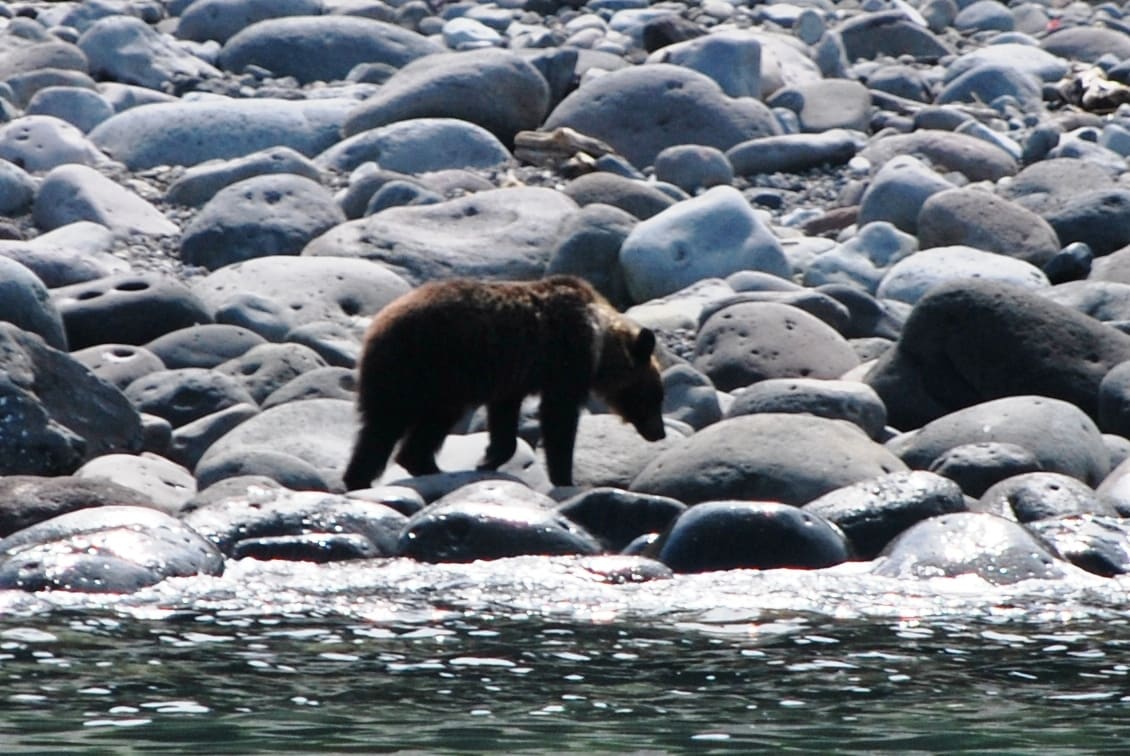
One thing this guide will not give you is a percentage. There are no official bear-sighting statistics for the Five Lakes, so any "X% chance of seeing a bear" figure you find online is unverifiable and is not repeated here. What can be stated is the institutional fact: 98.5 open days in 2007, and the entire three-period system built in response. That tells you more about what lives in this forest than any probability would.
Getting there from Utoro
The Five Lakes are not in Utoro village; they are further out along the peninsula, so access is the second thing that shapes your day.
By bus (Shari Bus Shiretoko Line)
| Section | Adult fare |
|---|---|
| Utoro Onsen → Shiretoko Goko | ¥1,000 (about 25 minutes per the operator timetable) |
| Utoro Onsen → Shiretoko Nature Center | ¥500 |
| Shiretoko Nature Center → Shiretoko Goko | ¥700 |
| Shari Bus Terminal → Utoro Onsen | ¥1,650 |
| Shari Bus Terminal → Shiretoko Goko | ¥2,600 |
The seasonal constraint is the important part. Only the summer timetable runs through to the Five Lakes, and in 2026 that period is April 28 to October 31. The winter timetable, running November 1, 2025 to April 27, 2026, terminates at the Shiretoko Nature Center. Lay that over the park season of April 20 to November 8 and two gaps appear at either end: April 20–27, when the park is open but the summer buses have not started, and November 1–8, when the park is still open but the summer timetable has ended. Travellers without a car in those windows should confirm the day's service directly before committing.
Frequency is thin regardless — roughly three round trips a day. This guide deliberately does not print individual departure times: the official timetable is published as an image file and is adjusted year to year, so reproducing it would mislead more than it helps. Check the current schedule on the Shari Bus site before you travel. Extra Five Lakes services are laid on in peak weeks: in 2026 those are August 12–15 and September 20–22.
By car
There is a paid car park with roughly 100 spaces. The operator does not publish the rate. The most authoritative document available is an Environment Ministry Shiretoko Data Center council paper, which records the April 2016 revision as ¥200 for motorcycles, ¥500 for cars, ¥1,000 for microbuses and ¥2,000 for large buses (up from ¥100, ¥410, ¥820 and ¥1,630 respectively). To be straight about it: whether that has changed since 2016 could not be confirmed against any current official page, so treat ¥500 for a car as a working figure and go by the signage on the day.
The Shiretoko Pass road matters less than you think
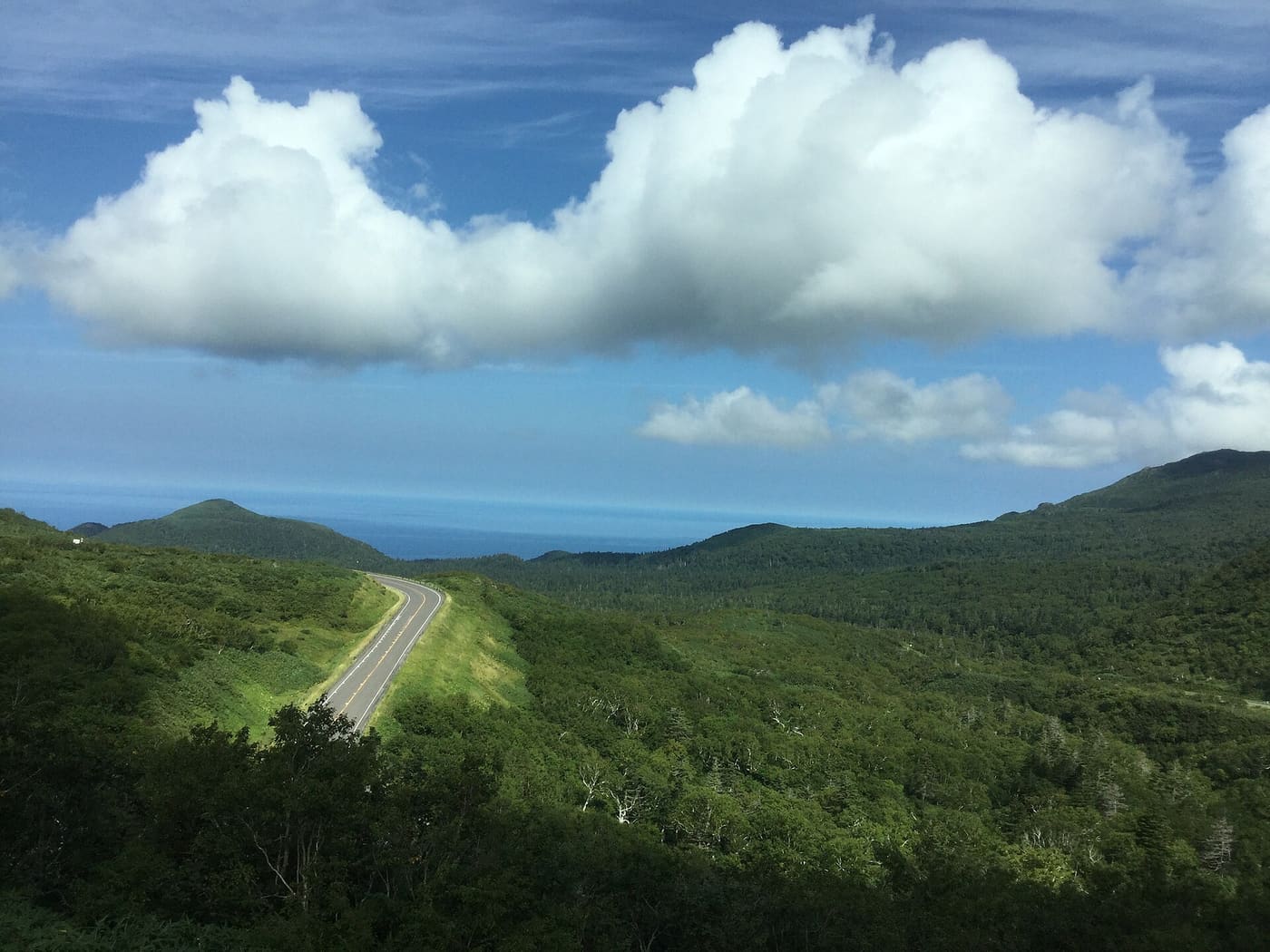
The Shiretoko Crossing Road, National Route 334, closes each winter. In 2026 it reopened on April 28 (Tuesday) at 9:30, having closed from November 4, 2025 (the roughly 23.8 km between the Shari-side and Rausu-side gates). Early in the season there are night-time restrictions because of ice, easing in stages from 9:30–16:00 to 8:00–17:00 and then to full-day access.
For a Five Lakes visit, though, it is largely irrelevant: the lakes sit on the Utoro side of the peninsula and you reach them without using the crossing road at all. That road governs access to and from the Rausu side and the Shiretoko Pass, which belongs to the wider peninsula itinerary covered in the Shiretoko peninsula guide.
For chaining the wider eastern Hokkaido route, see the eastern Hokkaido drive; for the rail maths, the Hokkaido Rail Pass guide.
Why you should eat in Utoro first
That food rule has a practical consequence people rarely plan for: you cannot carry a packed lunch into the forest, and there is nowhere on the trail to sit down and eat one. The only place to eat inside the park is the Park Service Center shop, which does light meals and souvenirs from 9:00 and has a limited range.
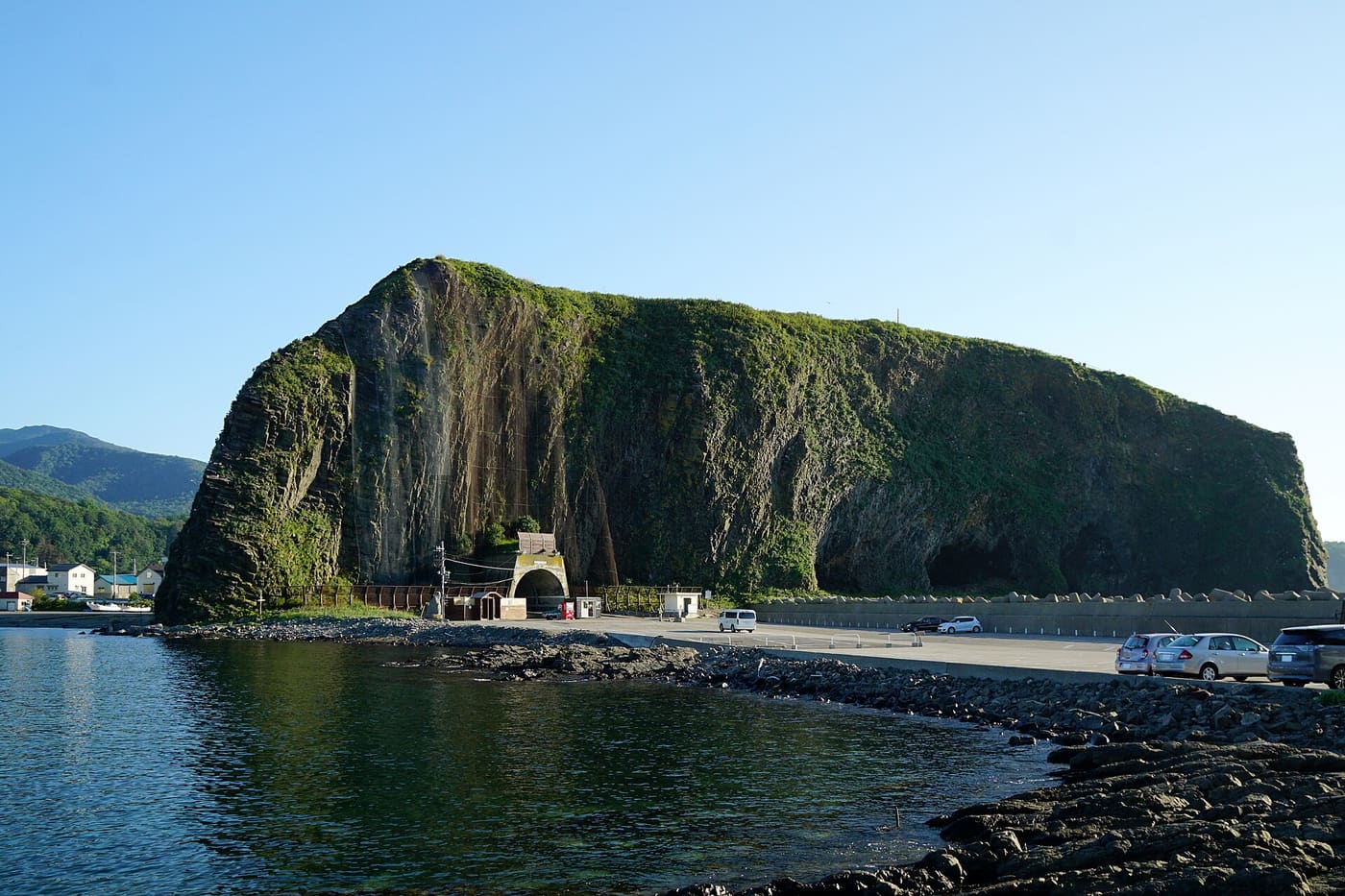
So the sensible order is eat in Utoro, then go up to the lakes, then come back down. Here are Utoro establishments listed by the Shari Town Tourist Association:
| Restaurant | What it does |
|---|---|
| Tabi no Eki | Central Utoro; seafood including sea urchin, crab and salmon roe rice bowls |
| Michi-no-Eki Utoro Shirietok restaurant | Inside the roadside station; seasonal salmon and other local produce |
| Shiretoko Kaninoya | Crab, seafood, noodles and set meals |
| Namishibuki | Tonkotsu ramen |
| Shokudo Leonardo | Salmon dishes |
No opening hours are printed here on purpose. I did not verify them individually, and a fair number of Utoro places trade seasonally, so publishing times would send readers to locked doors. Check on the day, or ask your accommodation the night before.
One more courtesy that doubles as a safety rule: if you buy something to eat, finish it where you bought it rather than carrying it towards the lakes. That is ordinary manners in Japan, and in Shiretoko it is more than manners — food smells arriving at the park entrance are exactly what those seven rules exist to prevent.
Is it worth it? An honest verdict
Straight answer: yes, but not in the way most itineraries assume.
Plenty of visitors treat the Five Lakes as a photo stop — drive up, walk the free boardwalk, photograph the reflection of the Shiretoko range in Lake One, drive away, fifty minutes door to door. There is nothing wrong with that, and the photograph really is one of Hokkaido's signature images. But if that is your entire visit, you never actually entered the forest. The value of the ground trail is that it is a way in rather than a way of looking on: earth underfoot, old-growth forest either side, lake after lake — and the whole regulatory apparatus exists to let you do that safely in a place where bears live.
So, the calls I would make:
- August to mid-October: walk the large loop under the lecture system. This is the best value combination on offer — ¥450 for a self-guided walk, flexible timing, negligible cost. September is the sweet spot: fewer people than the school holidays, comfortable temperatures.
- Mid-May to end of July (bear season): decide whether the tour fee is in your budget. Access to the ground trail means a tour, full stop, and ¥6,000–7,000 for the large loop is a real number. My view: on a one-day Shiretoko visit, put the money into a cruise and keep the Five Lakes to the free boardwalk; with two days, spending the second on a guided large loop is worth it, because a registered guide reading this forest for you is not something you can replicate alone.
- Late October to November 8: go, but go early. Final large-loop lecture at 14:00, twenty-minute intervals, park closing around 16:30. Late-autumn Five Lakes is a morning activity, not an afternoon one.
- April 20 to 27: I would skip it. The park is open, but the summer bus timetable does not start until April 28 and the crossing road reopens the same day, which leaves car-free travellers boxed in.
As for shaping the day, the order I would use is: Five Lakes first thing in the morning — lecture and large loop, or the guided tour in bear season — then back to Utoro for lunch, then a cruise in the afternoon. Two reasons. The lecture cut-offs get earlier as the season goes on, so doing that part in the morning is always the safe side of the risk. And cruises are at the mercy of sea conditions; if the afternoon sailing is cancelled, at least the lakes are already done. Reverse the order and a late-autumn 14:00 cut-off takes the loop away from you entirely.
Last thought. The paperwork here — the ticket machine, the form, the lecture, the guide requirement, no food, no pets, no drones — is not bureaucracy for its own sake. It is the answer to those 98.5 days in 2007. Treat it as the price of admission rather than an annoyance and the day gets considerably better. For the rest of the peninsula, carry on to the Shiretoko travel guide.
Frequently Asked Questions
- Q1:Is there a season when you can walk the Shiretoko Five Lakes ground trail for free?
- No, and this is the single most common misunderstanding about the place. The current official system splits the season into three periods, and none of them is a free-for-all. During the vegetation protection periods, which in 2026 run April 20 to May 9 and August 1 to November 8, you must attend a roughly ten-minute lecture at the Field House and pay a lecture fee of 450 yen for ages 12 and over or 200 yen for ages 0 to 11 before you may walk the trail on your own. During the brown bear active period, May 10 to July 31 in 2026, walking on your own is not an option at all: the only legal way onto the ground trail is a paid tour led by a registered Shiretoko Goko guide. So there is genuinely not one day in the year when the ground trail is both free and procedure-free. What is free is the other route entirely, the elevated boardwalk, which is open every day of the season at no cost and with no paperwork.
- Q2:What is the difference between the elevated boardwalk and the ground trail?
- They are two separate experiences that happen to share a car park. The elevated boardwalk is a raised wooden walkway roughly 800 metres one way, which the operator also describes as about 1.6 km and 40 minutes return. A 7,000-volt electric fence runs its whole length and physically keeps bears off it, which is why it stays open every day of the season regardless of bear activity. It is step-free with gentle gradients, wheelchairs can use it, and the Field House lends wheelchairs free of charge. The ground trail is the earth path that loops through old-growth forest past the lakes themselves, and it is the one governed by the three-period system: paid, procedure-bound, and guide-only in bear season. One structural detail that surprises people on arrival: the two routes are not interconnected. The boardwalk is an out-and-back, so you cannot start on it and drop down onto the ground trail partway. Plan them as two separate activities.
- Q3:How much does a bear-season guided tour cost, and how do you book one?
- The operator publishes a price band and each accredited guiding company sets its own rate within it. For the large loop, adults aged 12 and over pay 6,000 to 7,000 yen and children aged 6 to 11 pay 3,000 to 3,500 yen, while pre-school children require prior consultation. For the small loop it is 4,000 yen for adults, 2,500 yen for children and 2,000 yen for pre-schoolers. The large loop is a 3 km circuit taking about three hours; the small loop is 1.6 km and about one hour 45 minutes. Booking works three ways: reserve in advance directly with an accredited operator, phone 080-8293-0343 from 8:00 on the day for a standby place, or ask in person at the Field House, where availability is not guaranteed. If you cannot find an operator, the Shari Town Tourist Association on 0152-22-2125 can refer you. Groups are capped at ten people and depart at intervals of at least ten minutes, which is deliberately designed so that tours rarely encounter each other on the trail.
- Q4:What is the procedure for the lecture, and can I pay by card?
- Bring cash. Payment is cash only, and the official reservation guidance explicitly states that travel vouchers and coupons are not accepted, so do not count on a card or a phone wallet. The process itself is short: go to the Shiretoko Goko Field House, buy a lecture ticket from the machine inside, fill in an application form, sit through the roughly ten-minute lecture, and then walk straight out of the adjacent trailhead. That last part matters more than it sounds, because you head out immediately after the lecture rather than at your leisure, so buy water, use the toilet and apply insect repellent before you go into the lecture room. One further rule shapes your whole day: food may not be carried onto the ground trail. Water and tea are fine. The reason is simply that food smells attract brown bears.
- Q5:How late can I arrive and still walk the large loop?
- This is the most useful number in the whole timetable, and it moves earlier as the season progresses. From October 21 to November 8 the final lecture for the large loop is at 14:00, with the small loop at 15:00. In other words, if you turn up at the Five Lakes at two in the afternoon in late autumn, the boardwalk is all you have left. Working backwards: throughout August the final lectures are 16:00 for the large loop and 17:00 for the small loop; September 1 to 15 it is 15:30 and 16:30; September 16 to 30 it is 15:00 and 16:00; October 1 to 20 it is 14:30 and 15:30. The first lecture of the day is 8:10 through most of the season, 11:10 on the April 20 opening day, and 8:40 from October 21, when the interval between lectures also stretches from ten minutes to twenty. If you want the large loop in autumn, make the Five Lakes your first stop of the day.
- Q6:How do you reach the Five Lakes from Utoro without a car?
- Take the Shari Bus Shiretoko Line. The current official fare table lists Utoro Onsen to Shiretoko Goko at 1,000 yen, and the operator timetable works out to roughly 25 minutes. The constraint that catches people is seasonal: only the summer timetable runs as far as the Five Lakes, and in 2026 that period is April 28 to October 31. The winter timetable terminates at the Shiretoko Nature Center and does not continue to the lakes. Overlay that on the park season of April 20 to November 8 and you get two awkward gaps at either end, April 20 to 27 and November 1 to 8, when the park is open but the summer bus service is not running. Services are sparse in any case, roughly three round trips a day, so build the day around the timetable rather than the other way round, and check the Shari Bus site before you travel. In 2026 extra Five Lakes services are laid on for August 12 to 15 and September 20 to 22.
- Q7:What should you do if you meet a brown bear at the Five Lakes?
- The official instruction is one sentence, deliberately simple: do not panic, do not make a fuss, and move slowly away from the bear. Do not run, do not shout, and do not edge closer for a photograph. Beyond that, the official Shiretoko Goko manner guide lists seven rules: do not feed wildlife, do not drop litter, do not cook or eat inside the park, do not smoke, do not step off the trail to walk or rest, do not deliberately bring animals or plants in, which means no pets on either the boardwalk or the ground trail, and do not fly drones. Worth knowing as background: in 2007, closures caused by bear activity meant the ground trail system could only open for 98.5 days that year. That is what prompted the designation of the Five Lakes as a use-adjustment district under the Natural Parks Act, which is the legal basis of the three-period system you deal with today.
Read next
Shiretoko Travel Guide 2026: Five Lakes, Cruises & Drift Ice
A UNESCO World Heritage wilderness — the free Five Lakes boardwalk, cruises past waterfalls and shore bears, and a February drift-ice walk. Remote enough that a car is the honest answer.
Hokkaido Central-East 5-Day Autumn Drive 2026 Guide
Six weeks of foliage across 600 km — 3-rental comparison, toll math, central-east loop.
Hokkaido JR Pass Complete Guide 2026
Five routes recalculated with 2026 fares — all-reserved limited expresses and the post-2024 Furano line closure change the math.
📊 See the 2026 Price Index (JR Pass, DPA, eSIM, Airport Transport) →