Shiretoko is "Japan's last wild frontier," a UNESCO World Natural Heritage site since 2005: a peninsula jutting into the Sea of Okhotsk, home to one of Japan's densest brown-bear (higuma) populations, and washed each winter by the lowest-latitude shore-fast drift ice in the Northern Hemisphere. Two blunt things up front: first, the Five Lakes boardwalk is free and open year-round, but the full five-lake ground loop is guide-only during the bear active period (~May 10–Jul 31); second, public transport between the sights is thin, so going without a car will tie your hands. This guide lays out how to choose between the two Five Lakes routes, between the ¥10,000 Shiretoko-Cape cruise and the ¥5,000 Kamuiwakka-Falls cruise, the drift-ice walk that only runs February to March, the Kamuiwakka hot waterfall's summer traffic control, and transport and lodging. If the Five Lakes is the only thing you came to look up, go straight to the Shiretoko Five Lakes three-period rules, lecture timetable and bear-season tour fees — that guide has the procedures down to the minute. To string together eastern Hokkaido, see our eastern Hokkaido drive; winter visitors can pick up the Hokkaido winter 7-day itinerary.
- Two Five Lakes routes: the boardwalk is free and open year-round; the ground trail is guide-only in bear season (~May 10–Jul 31)
- Pick one cruise: Shiretoko Cape ~3.75 hrs ¥10,000, Kamuiwakka Falls ~1 hr 30 min ¥5,000 — the sea is the safest place to watch bears
- Drift-ice walk runs Feb–Mar only: a drysuit on shore-fast ice, and cancellations are normal when the sea won't cooperate
- Kamuiwakka hot waterfall opens to climbers in summer (~Jul 1–Sep 30); private cars are restricted Aug 8–15 (shuttle instead)
- Rent a car: arrive via Memanbetsu Airport or Shiretoko-Shari Station; transport between sights is sparse
📖 Contents
- 1. What kind of place Shiretoko is
- 2. The Five Lakes: boardwalk vs. ground trail
- 3. Cruises: Shiretoko Cape vs. Kamuiwakka Falls
- 4. Brown bears & wildlife
- 5. The Kamuiwakka hot waterfall & summer rules
- 6. The drift-ice walk: a Feb–Mar-only thing
- 7. Transport & lodging (why a car helps)
- 8. A summer two-day plan
- 9. FAQ
What kind of place Shiretoko is
Calibrate your expectations first. Shiretoko is not a dense, one-sight-after-another destination. What it sells is raw nature itself — a roughly 70 km peninsula whose deep interior has no road and can only be seen by boat from the sea, where brown bears, Yezo deer, and Steller's sea eagles live and the water freezes solid in winter. It moves two kinds of traveler: nature lovers willing to spend a little extra on transport for genuine wilderness, and people who want wildlife and drift ice — things you cannot see elsewhere. If you want a dense checklist, easy transit, everything walkable, Shiretoko will frustrate you (out here you plan your fuel stops). But if you want the closest thing in Japan to undeveloped wild, nothing replaces it. My framing is simple: Shiretoko is a "nature experience," not a "sight-ticking" destination — plan it at central-Sapporo density and you will jam. For the Sapporo end and the rest of the east, see our Sapporo travel guide.
The Five Lakes: boardwalk vs. ground trail
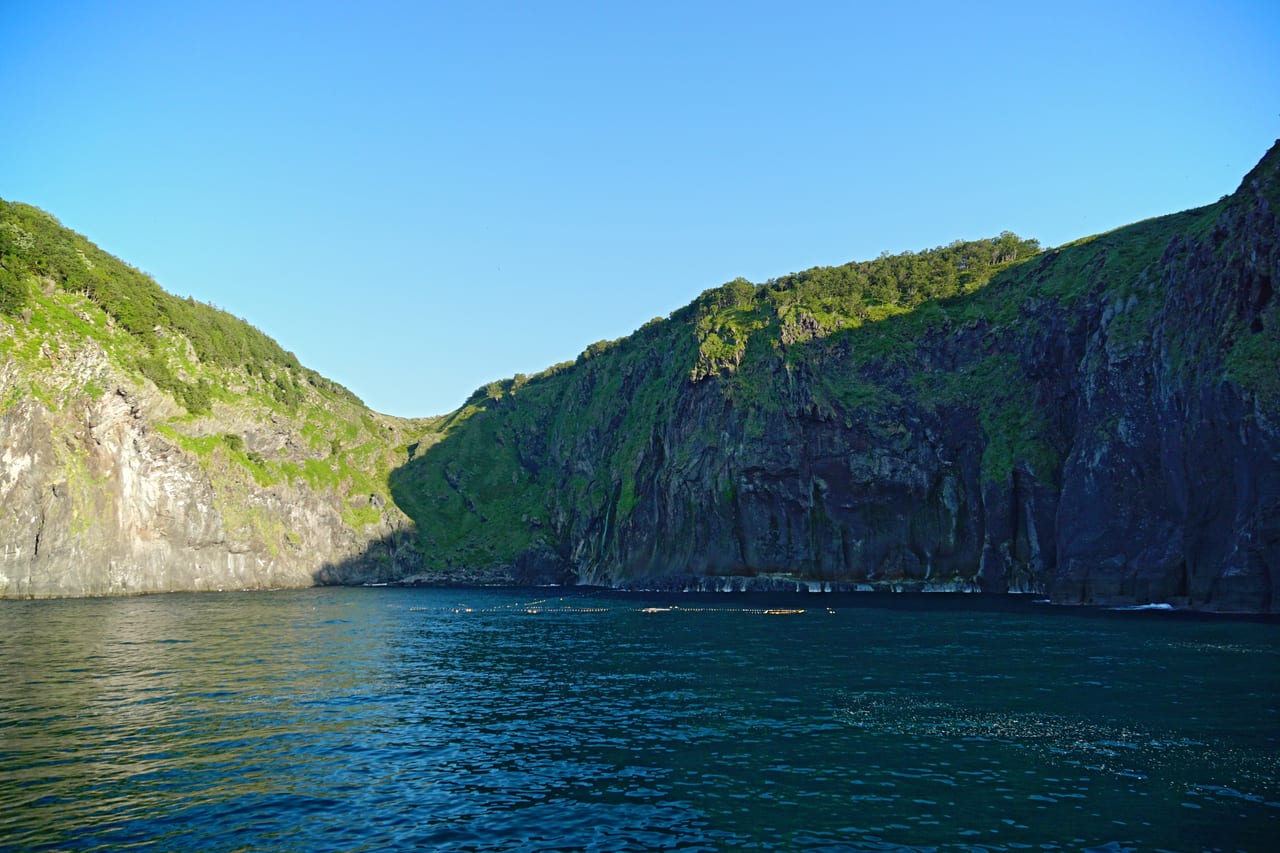
The Shiretoko Five Lakes are the heart of a visit — five primeval lakes scattered through old-growth forest beneath the Shiretoko range. There are two completely different routes, and understanding the difference saves a wasted trip:
- The elevated boardwalk: about 800 m long (~1.6 km round trip), free year-round with no procedure, lined the whole way with a 7,000-volt electric fence that physically keeps bears off it — so it is unaffected by bear activity and always open. The end viewpoint looks over Lake One, the Shiretoko range, and the Sea of Okhotsk. Short on time and just want the classic lake shot? This is enough.
- The ground trail: the full path that loops all five lakes, regulated by season (you register at the facility by the Five Lakes entrance either way):
- Vegetation-protection period (Apr 20–May 9, Aug 1–Nov 8 in 2026): sit through a ~10-minute lecture and pay the lecture fee, then walk it yourself. Currently ¥450 for ages 12+ and ¥200 for ages 0–11, cash only.
- Brown-bear active period (May 10–Jul 31 in 2026): you must join a paid tour led by a registered guide — the official band is ¥6,000–7,000 for the large loop and ¥4,000 for the small loop, groups capped at 10, so book ahead.
How to choose? My take is direct: first time here and it isn't bear season — walk the free boardwalk, get the classic shot of Lake One mirroring the range, and call it well spent; want the full loop, or you've landed in bear season — book the guide. The guide system isn't a tourist gimmick; it exists because bears genuinely come through here. One more note: the ground trail can close on short notice when bears are around — that is a real safety closure, not a "the affiliate ran out of stock" situation — so check the official Five Lakes site for the day's status before you go.
📍 The full three-period calendar, the month-by-month lecture timetable (including the 14:00 large-loop cut-off from late October), the cash-only lecture procedure, the guided-tour price table and same-day standby number, plus Utoro bus fares and parking, are all in the Shiretoko Five Lakes guide. Read that one first if you intend to walk the ground trail.
The bear-season guided walk does have an online channel — just be clear which segment it sells. The KKday listing is the bear active period one: a registered guide leads it, it runs about 3 hours and covers about 3 km, matching the official large loop. The vegetation-protection period, when you walk it yourself after the lecture, is a separate system with a separate fee; don’t conflate the two. The guide fee is also not the Five Lakes entry procedure — you still complete that on site. And the thing that matters most right now: this is a seasonal product, and the earliest departure date is May 10, 2027. The 2026 bear season is over, so today the calendar only opens from next May onward. Shiretoko Five Lakes bear-season guided walk on KKday (from May 2027) →
Cruises: Shiretoko Cape vs. Kamuiwakka Falls
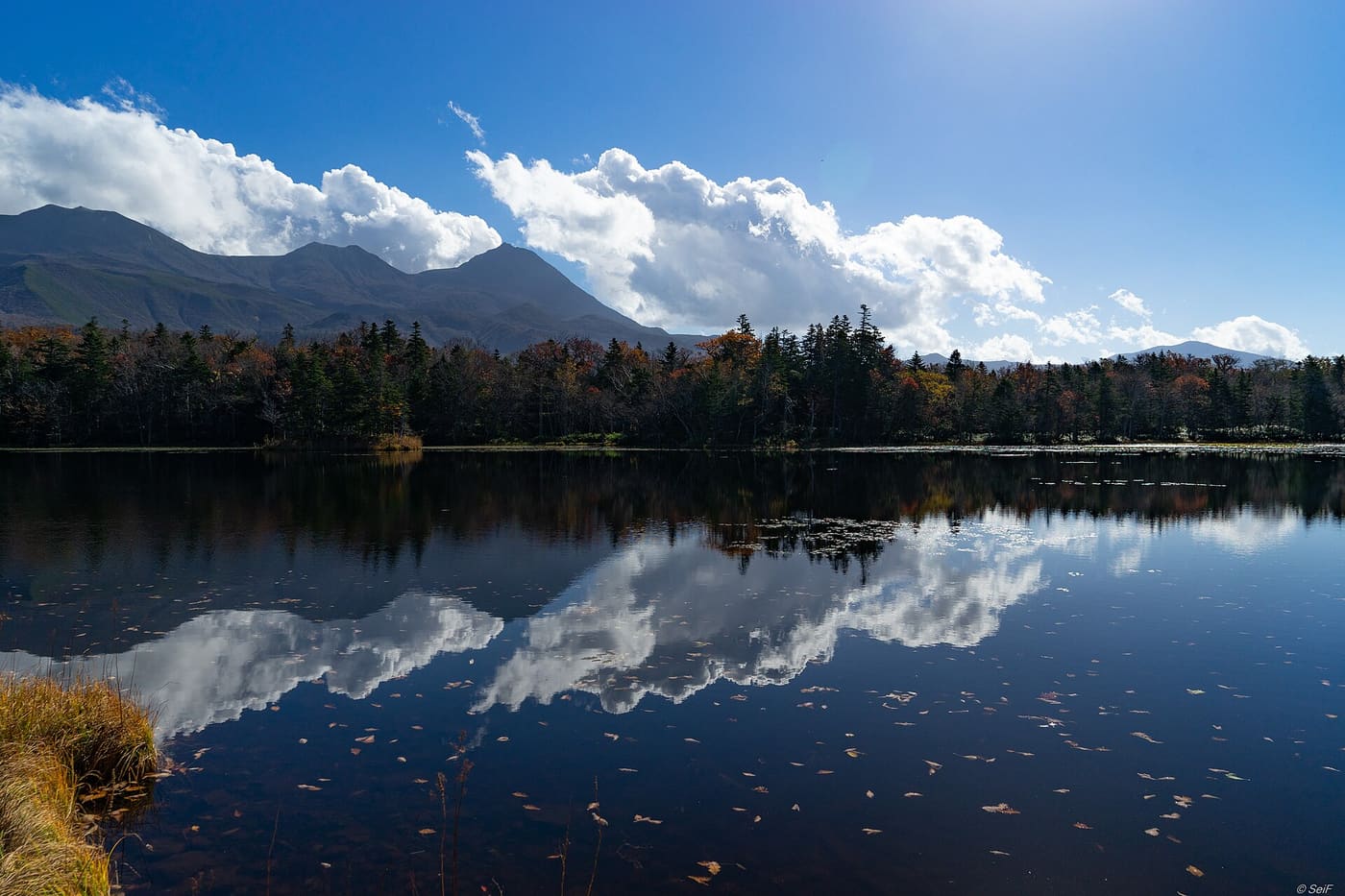
The deep tip of the peninsula has no road — you cannot drive in, so the only way to see Cape Shiretoko and the cliff coast is by cruise. For many travelers, that boat ride is the actual reason to come. Cruises leave Utoro Port on two main routes and two boat types; lock in the practical differences:
- Shiretoko Cape route: runs all the way to the very tip and back, taking in the cliffs, the waterfalls, and the coastline; per the Aurora operator it is about 3 hours 45 minutes, roughly ¥10,000 for adults. It mostly runs once daily from June to October (around 10:15, dates shift by year) — the full-coast "tasting menu."
- Kamuiwakka Falls route: the shorter run, turning back around the falls in about 1 hour 30 minutes per the Aurora operator, roughly ¥5,000 for adults, with more frequent departures (2–4 a day in peak). Tight on time or budget, or just sampling it — take this one. That duration is the large Aurora’s; the small boats are a different operator running a different length, so don’t read the two sets of numbers as one.
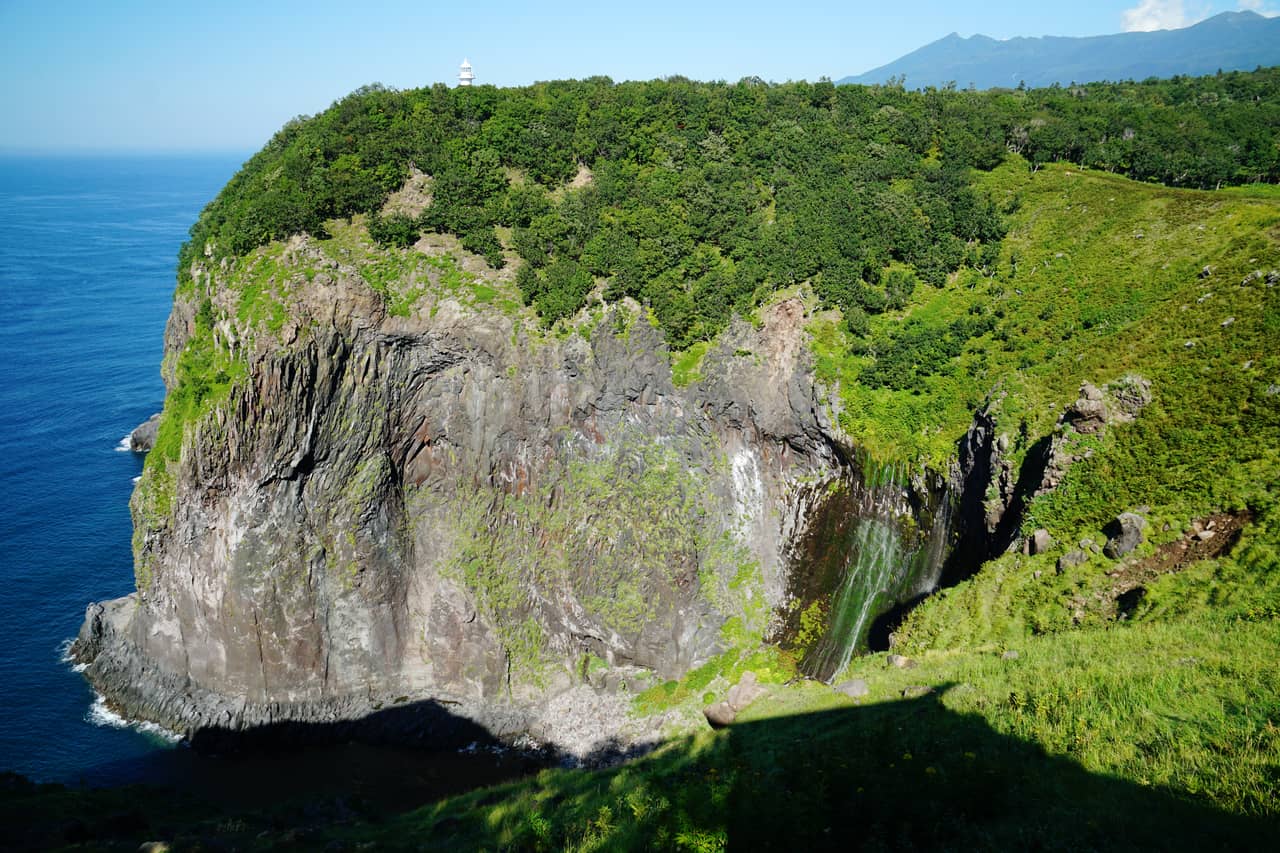
The boat type matters too: the large Aurora is steady with indoor seating, good if you get seasick or travel with elders; the smaller boats (Gojiraiwa and others) hug the shoreline and let you see foraging bears, sea-cut cliffs, and waterfalls in far more detail — more immediate, but rougher in swell. My call: first time, going for the whole coast, take the longest Cape route on a small boat to watch the shore for bears; short on time, take the falls route on the big Aurora. Either way, rough seas mean no sailing — like the drift ice, it's weather-dependent, so don't pin the trip to one half-day. Along the way, Furepe Falls (about 100 m high, seeping from a cliff crack — the "maiden's tears") is one of the Shiretoko Eight Views, visible both from the cruise and a short land trail.
You can buy at the pier or online. All three Aurora routes are on Klook, split by route (Shiretoko Cape / Rusha Bay / Kamuiwakka Falls), and what it sells is the boat fare itself — no transport, nothing beyond the ticket. You meet at the Aurora ticket office in Utoro, and whether the boat sails is still the operator’s call on the day’s sea state. The three Aurora cruise routes on Klook →
Brown bears & wildlife
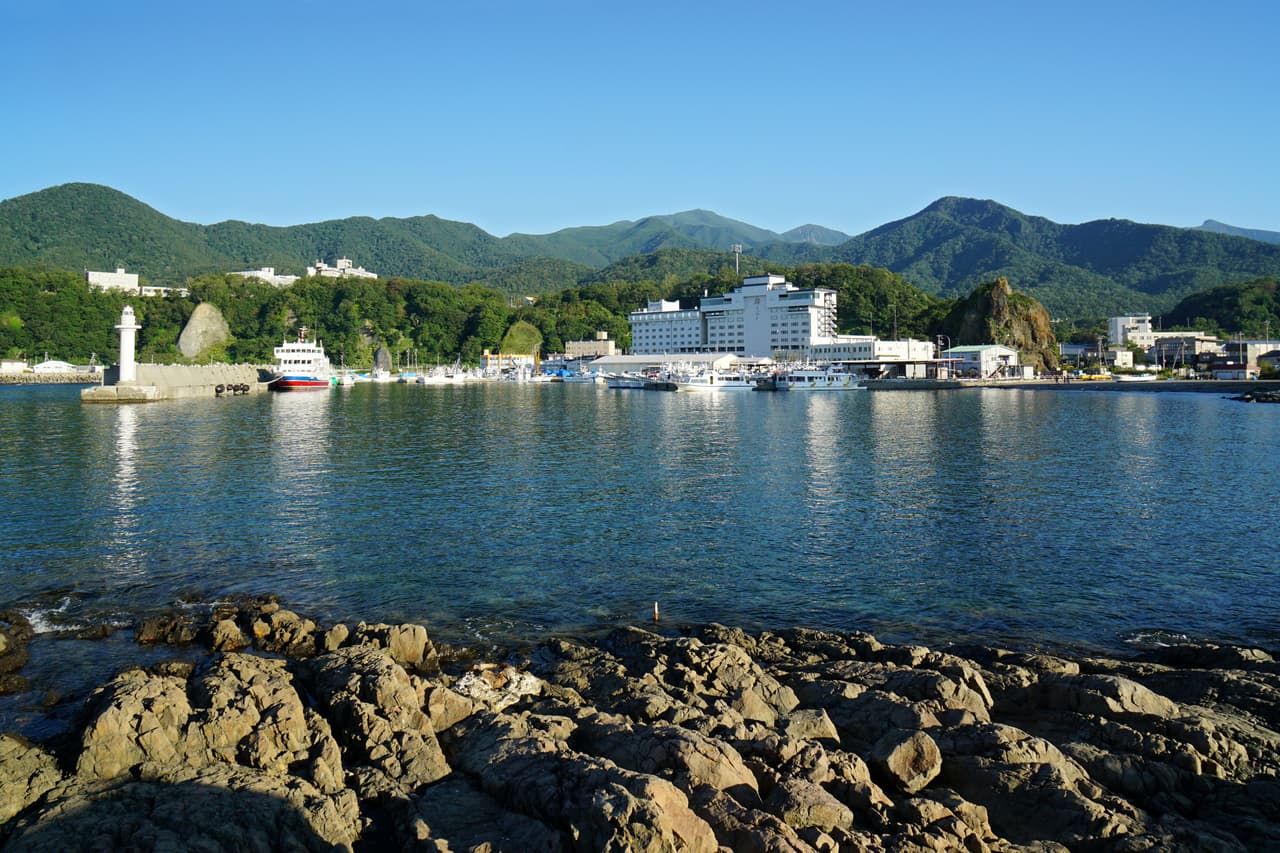
Shiretoko has one of Japan's highest brown-bear (higuma) densities, and that is central to its World Heritage value. For a visitor, two things matter: how to watch safely, and how not to disturb them.
The safest, highest-odds way is to watch from a cruise, from the sea — you're on the water while bears turn over rocks for food on the shore, a safe distance that still gives a close look, with frequent peak-season sightings (still no guarantee — nobody can promise a bear). On land, the Five Lakes ground trail is guide-only in bear season precisely because you really can meet one here. Follow the iron rules: do not feed, leave no food waste, do not approach brush or riverbanks alone at dawn or dusk, and carry a bear bell or make noise when hiking. Beyond bears, Shiretoko offers Yezo deer (common roadside), summer dolphins and whales offshore, and winter Steller's and white-tailed sea eagles perched on the drift ice. Treat this as the animals' home and yourself as the guest — a sighting is a bonus, and a no-show is no reason to push or feed.
The Kamuiwakka hot waterfall & summer rules
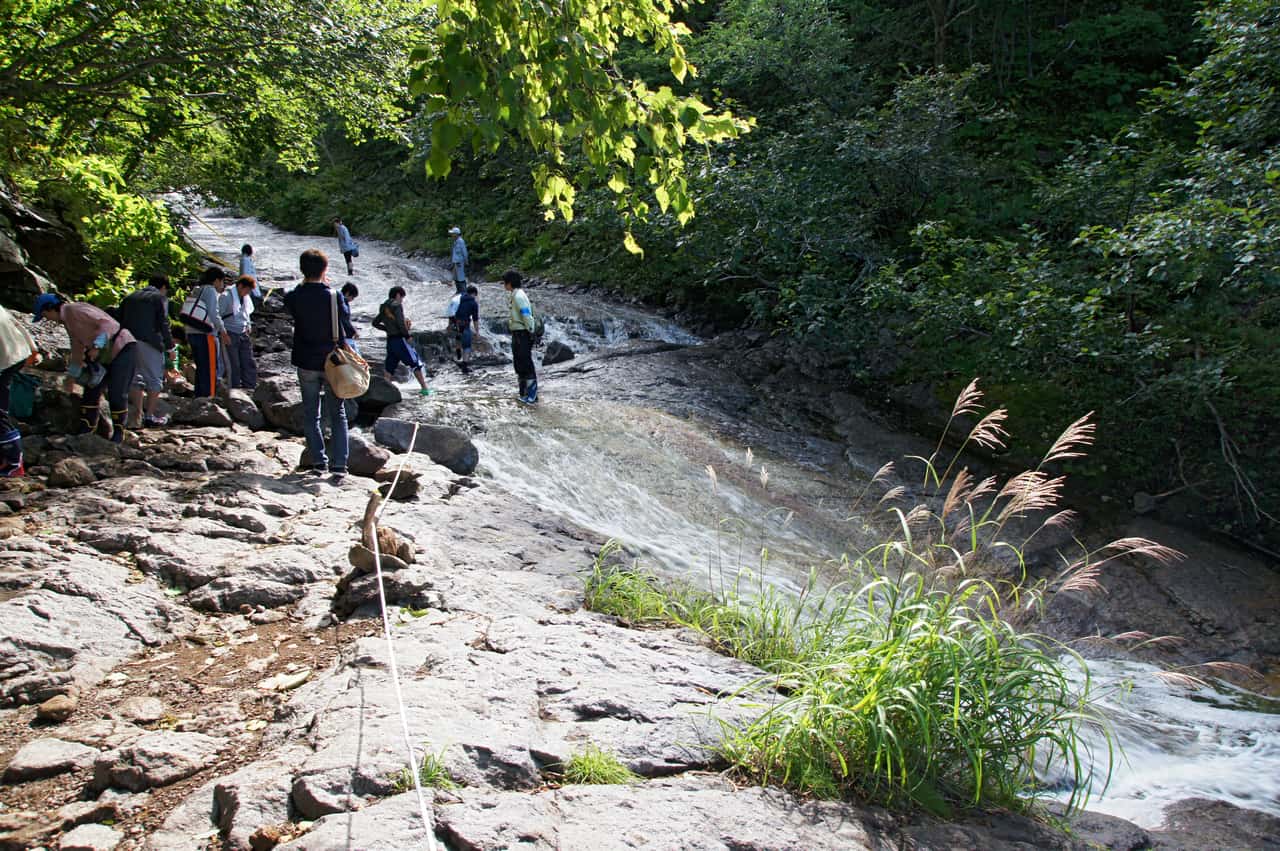
The Kamuiwakka hot waterfall (Kamuiwakka-yu-no-taki) is one of Shiretoko's most distinctive experiences — a natural "hot waterfall" of warm onsen water running down a rock face, which you climb barefoot or in grip shoes up the streambed. It's a wet, mildly strenuous outdoor activity, not casual sightseeing. Get the 2026 rules straight first (per the official notice, nudged each year):
- Climb period: roughly July 1 to September 30; outside this, the climb is closed.
- Private-car restriction: Aug 8–15, private cars are barred on the prefectural park road to the falls and you switch to a shuttle bus; the rest of the period is mostly drivable (per the year's notice).
- Shuttle: if you book the "hot-waterfall climb," the shuttle fare is included in the experience and runs from the Shiretoko Nature Center.
Know the road, too: from the Nature Center to Kamuiwakka is about 19 km and 30–35 minutes, and the 10 km from the Five Lakes onward is a narrow gravel road — drive slowly and pass with care. Put another way, that road surface is exactly why I keep stressing "rent a car for Shiretoko, and pad your transfer times." It is nothing like driving around a city.
The drift-ice walk: a Feb–Mar-only thing
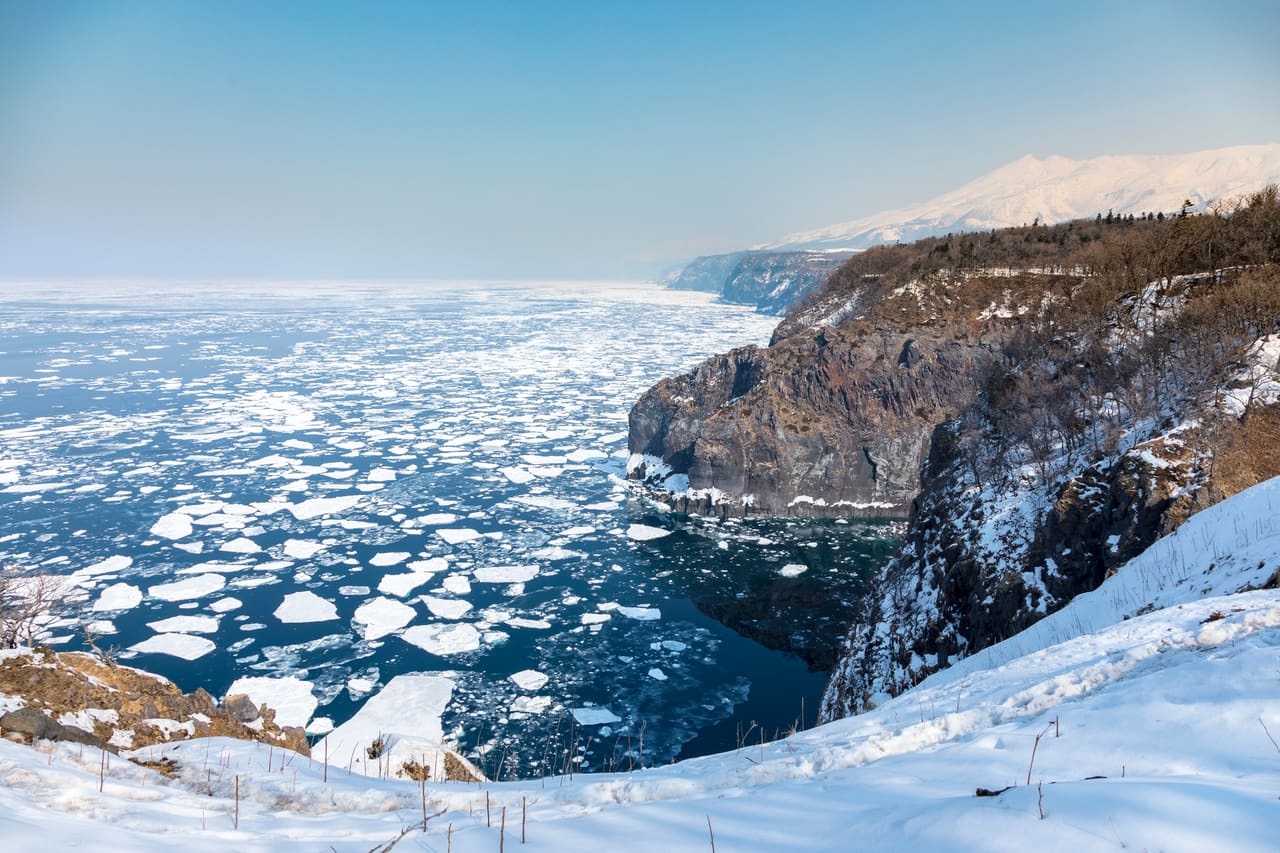
Shiretoko's winter star is the drift ice — sea ice from the Sea of Okhotsk drifting in until the whole sea is a white field, one of the lowest-latitude places in the Northern Hemisphere to see shore-fast ice, and the single best reason to make the winter trip. But the timing is rigid: the drift-ice season is February to March only, and it is weather-dependent. Per traveler reports and past observations, the ice usually starts arriving late January to early February and settles from mid-February — the safest window if you want it. Still deciding which boat to take, see how to pick a drift-ice icebreaker comparing Abashiri and Mombetsu.
The signature activity around Utoro is the drift-ice walk: you suit up in a waterproof drysuit and a guide leads you out onto the shore-fast ice — you can lie on it, and if you drop into a gap the drysuit's buoyancy keeps you up — for about 1.5 hours including hotel or bus-terminal pickup. To stress it again: whether the ice arrives, and whether you can go on it that day, is entirely down to sea conditions, and cancellations are normal — so build in some slack and don't pin the trip to one day of ice. The other common mix-up: the Abashiri icebreaker "Aurora" (pushing through the ice from Abashiri Port while you stay aboard) and the Utoro drift-ice walk (you, in a drysuit, walking on the ice) are two completely different things — same "Aurora" name, don't book the wrong one. For sequencing the whole winter east, pick up the Hokkaido winter 7-day itinerary.
Transport & lodging (why a car helps)
This is the most important section for planning Shiretoko, so read it before you build the itinerary. Getting in runs two main ways:
- Memanbetsu Airport (the nearest): in summer and the drift-ice season (~June–Sept, late Jan–early March), the seasonal "Shiretoko Airport Liner" runs direct to the Utoro Onsen bus terminal in about 2 hours, ¥3,500 one way (2026 official timetable), only 2–3 departures a day — the 2026 winter timetable (Jan 17–Mar 8, no reservation needed) runs just two. It's not frequent — you work to the timetable.
- JR Senmo Line to Shiretoko-Shari Station: then transfer to the Shari Bus Shiretoko Line to Utoro in about 50–60 minutes. If the wider east leans on JR, the Hokkaido Rail Pass is worth pricing — though the honest answer up front is that buying one just for the Shiretoko leg never pays: Senmo Line service is thin and point-to-point fares are low, so a pass only breaks even off long Sapporo-to-eastern-Hokkaido runs. Run the numbers with our Hokkaido Rail Pass guide. ⚠️ Note also that a rail pass covers rail only — the Shari-to-Utoro bus and every shuttle inside Shiretoko are outside it and paid separately.
The real problem is the "last mile": the Five Lakes, the Kamuiwakka hot waterfall, and the viewpoints are spread out with no frequent public transport between them. Summer sightseeing shuttles (Nature Center–Five Lakes–Kamuiwakka) connect some, but on a thin timetable you have to hit. So honestly: to roam freely between the lakes, Kamuiwakka, the cliff viewpoints, and your cruise time, renting a car at Memanbetsu or in Shari is the realistic plan. You can do it carless, but you'll be chained to bus times and won't go deep. If you drive, take the Kamuiwakka gravel section slowly, and watch for Yezo deer crossing the road at dusk.
For lodging, stay right in Utoro Onsen — it's the gateway, with the cruises, the Five Lakes, and Kamuiwakka all radiating from it, so you can catch the earliest boat and the lakes the next morning without long drives. Utoro Onsen has sea-facing onsen ryokan and hotels where you can soak while the sun sets over the Sea of Okhotsk; rooms get tight in peak (summer, drift-ice season), so book early. For pre-trip weather and packing — especially the extreme insulation layers a winter drift-ice walk needs — see our Japan packing & weather guide.
A summer two-day plan
Here's the same content shaped into a route that flows (written for a rental car, summer outside bear season; in bear season, book the Five Lakes guide first, and bus travelers should pad the transfers):
- Day 1 (cruise + lakes): pick up the car at Memanbetsu → Utoro → morning Shiretoko Cape cruise (~3.75 hrs, the full run of cliffs, waterfalls, and shore bears) → lunch → afternoon at the Five Lakes, walk the free boardwalk or loop the ground trail (register per season) → late afternoon to the Furepe Falls trail for sunset → check into a Utoro onsen ryokan, soak as the sun drops over the Sea of Okhotsk.
- Day 2 (Kamuiwakka + viewpoints): morning at the Kamuiwakka hot-waterfall climb (mind the Jul 1–Sep 30 window and the Aug 8–15 car restriction / shuttle) → on the way back, stop at the viewpoints and the Shiretoko Pass (Mt. Rausu in clear weather) → after lunch, return the car as time allows and carry on toward Abashiri or Kawayu for more of the east.
Coming in winter, swap the spine to the drift-ice walk (Feb–Mar, sea-dependent) plus Utoro Onsen, and keep the plan loose to absorb a last-minute ice cancellation. West of Shiretoko you can chain Abashiri (the icebreaker), Kawayu, and Lake Mashu; for the full eastern Hokkaido drive, see our eastern Hokkaido drive, and decide on a rail pass with the Hokkaido Rail Pass guide before you buy.
FAQ
- Q1:Do I have to join a guided tour for the Shiretoko Five Lakes? Is the boardwalk free?
- It depends which trail and which season. The Five Lakes has two routes. The elevated wooden boardwalk is free year-round and needs no procedure — a 7,000-volt electric fence runs its length to keep bears out, so you can walk safely to the viewpoint over Lake One, the Shiretoko mountains, and the Sea of Okhotsk. This is how most visitors do the Five Lakes. The other route is the ground trail that loops all five lakes, and it is regulated by season: per the official system, during the vegetation-protection period (Apr 20–May 9 and Aug 1–Nov 8 in 2026) you sit through a roughly 10-minute lecture and pay a lecture fee (currently ¥450 for ages 12+, ¥200 for ages 0–11, cash only) before walking it yourself; but during the brown-bear active period (May 10–Jul 31 in 2026) you must join a paid tour led by a registered guide, with an official price band of ¥6,000–7,000 for the large loop and ¥4,000 for the small loop. Short version: if you just want the lake views and you are short on time, the free boardwalk is enough; if you want the full five-lake loop and you have landed in bear season, book a guide. The full system, timetable and booking routes are in our guide to the Five Lakes lecture and permit system.
- Q2:How do I choose between the "Shiretoko Cape" cruise and the "Kamuiwakka Falls" cruise?
- Decide on time and what you want to see. Cruises leave Utoro Port on two main routes. The Shiretoko Cape route runs all the way to the very tip of the peninsula, taking in the cliffs, the waterfalls, and the whole coastline; per the Aurora operator it is about 3 hours 45 minutes, roughly ¥10,000 for adults, and mostly runs once a day from June to October (departing around 10:15, dates shift by year). The Kamuiwakka Falls route is shorter, turning back around the falls in about 1 hour 30 minutes per the Aurora operator, roughly ¥5,000 for adults, with more frequent departures. My call: first time here and you want to see the whole Shiretoko coast, take the longest Cape route; tight on time or budget, take the falls route. Boats come in two kinds — the large Aurora (steady, good if you get seasick) and the smaller Gojiraiwa boats that hug the shoreline, which feel far more immediate for spotting bears on the rocks and the sea-cut cliffs up close.
- Q3:Can you see wild brown bears in Shiretoko? Is it dangerous?
- Your odds are better than almost anywhere in Japan, but do it the right way. Shiretoko has one of the highest brown-bear (higuma) densities in the country, and the safest and most reliable way to watch them is from a cruise, from the sea — you stay on the water while bears forage on the shore, a safe distance that still gives a close look, and sightings are common in peak season. On land, the Five Lakes ground trail is guide-only during the bear active period (~May 10–Jul 31) precisely because bears genuinely move through here; this is not a formality. Follow the rules: do not feed them, leave no food waste, do not approach brush alone at dawn or dusk, and carry a bear bell when hiking. Treat the bears as the residents of this World Heritage site and yourself as a guest — seeing one is luck, and not seeing one is no reason to push.
- Q4:When should I go for the drift ice, and how does the drift-ice walk work?
- The drift-ice season is only February to March, and it is weather-dependent. The Sea of Okhotsk ice usually starts reaching the shore in late January to early February and settles from mid-February onward, which, per traveler reports, is the safest window. The signature activity around Utoro is the drift-ice walk: you suit up in a waterproof drysuit and a guide leads you out onto the shore-fast ice — you can even lie on it, and if you slip into a gap the drysuit keeps you afloat — for about 1.5 hours including transfers. Note that whether the ice arrives, and whether you can go on it on a given day, depends entirely on sea conditions, and cancellations are normal, so do not stake the whole trip on one day of ice. Separately, the Abashiri icebreaker (also confusingly named "Aurora") is a different thing — it pushes through the ice from Abashiri Port while you stay aboard — so do not mix it up with Shiretoko's on-the-ice walk.
- Q5:Can you visit the Kamuiwakka hot waterfall, and how do you get up there?
- Yes, but only during a set summer window, and with traffic control. It is a natural "hot waterfall" of onsen water running down a rock face, which you climb barefoot or in grip shoes. Per the official 2026 information, the "hot-waterfall climb" period is roughly July 1 to September 30; on the prefectural park road to the falls, private cars are restricted Aug 8–15 and you switch to a shuttle bus, while the rest of the period is mostly drivable (check the year's notice). If you book the "hot-waterfall climb," the shuttle fare is included in the experience and runs from the Shiretoko Nature Center. From the Nature Center it is about 19 km and 30–35 minutes to Kamuiwakka; the 10 km from the Five Lakes onward is a narrow gravel road, so drive slowly.
- Q6:Can you do Shiretoko without a car? How do you get there from the airport or station?
- You can, but honestly it ties your hands — a car is far more convenient. Getting in runs two ways: (1) Memanbetsu Airport is the nearest, and in summer and the drift-ice season (~June–Sept, late Jan–early March) the seasonal "Shiretoko Airport Liner" runs direct to the Utoro Onsen bus terminal in about 2 hours, around ¥3,300 one way, roughly three times a day; (2) take the JR Senmo Line to Shiretoko-Shari Station, then the Shari Bus Shiretoko Line to Utoro in about 50–60 minutes. The catch is that the Five Lakes, Kamuiwakka, and the viewpoints have no frequent public transport between them — summer sightseeing shuttles connect some of them, but on a thin timetable. To roam freely between the lakes, Kamuiwakka, and the cliff viewpoints, renting a car at the airport or in Shari is the realistic plan. For chaining the wider eastern Hokkaido loop, see our eastern Hokkaido drive; for the rail math, start with the Hokkaido Rail Pass guide.
Related reading:
Hokkaido Central-East 5-Day Autumn Drive 2026 Guide
Six weeks of foliage across 600 km — 3-rental comparison, toll math, central-east loop.
Hokkaido Winter 7-Day Itinerary 2026
Sapporo → Otaru → Biei → Hakodate over 7 days, with JR Pass math, how to reach the Furano slopes, and a real two-person budget.
Sapporo Travel Guide 2027: Odori Park, Snow Festival & Mt. Moiwa
Hokkaido's gateway and food capital — Odori Park and the Snow Festival, the Clock Tower, Mt. Moiwa's night view, miso ramen, Genghis Khan and soup curry.