Okinawa's most photographed building comes back on November 23, 2026 — and if you turn up that morning you will spend three and a half hours outside a locked gate. Okinawa Prefecture's own announcement puts it in writing: the free zone inside the castle walls closes at 11:15 and the paid zone at 12:00, the 9:00 ceremony is strictly by invitation, and general access starts at noon. But the date that should actually be in your calendar is not November 23. It is October 1 at 13:00 Japan time, the last ticket release covering entry in 2026. This guide covers how the timed-entry system works, which of the two same-priced tickets you need, what hour to pick, and what you are really walking in to see — plus the reason the English pages on the official site will give you the wrong price if you trust them.
📍 This guide is about getting into the Seiden. For planning a day in central Naha — Kokusai-dori, Makishi Market, getting around on the monorail — see the Naha travel guide. For the New Year week specifically, see New Year's Eve in Okinawa 2026-27.
- November 23 is the worst possible day to visit. Closed all morning, invitation-only ceremony, opens at noon — and the park's own crowd forecast rates 8:30 to 11:00 as "very crowded".
- October 1, 13:00 JST is the last ticket release for 2026 entry. There is no third batch; the next mechanism starts with January 2027 entry.
- Both ticket types cost exactly the same. The timed slot is free of charge, and you pay the same whether or not you go inside.
- Look for the Japanese words, not the translation. The machine-translated pages garble the one sentence that tells you a ticket excludes the interior.
- Free-entry visitors and pass holders still need a reservation. Only pre-school children are exempt, and you remove your shoes inside — bring a bag for them.
- You are going in to look at the floor. The World Heritage element is the stone platform beneath the hall, buried for protection since 2019 and displayed again from 2026.
📖 Contents
- What time can you actually get in on November 23?
- When do tickets go on sale, and what is your deadline?
- Which of the two tickets do you need?
- What the official English and Chinese pages get wrong
- What are you walking in to see?
- What time is quietest, and how long does it take?
- What else is in the paid zone?
- The Seiden is finished — what comes next?
- Appendix: official Japanese wording
What time can you actually get in on November 23?
Noon. The whole walled area is shut that morning.
Okinawa Prefecture's July 31, 2026 release sets out three times at once. The opening ceremony runs 9:00 to 9:45 in the Shicha-nu-Una, the lower courtyard inside the walls. To stage it, the free zone inside the walls closes at 11:15 and the paid zone at 12:00. General public access to the Seiden begins at noon.
Do not plan around the ceremony either. The official wording is kanzen shotaisei — strictly by invitation, with even Okinawa residents admitted through a lottery. It is not an event you can watch from the edge of a crowd; it happens behind a wall you are on the wrong side of. The day before, November 22, there is a separate completion ceremony hosted by the Cabinet Office's Okinawa General Bureau, and how anyone attends that has not been published at all — the official line is still "details will be announced separately once decided".
Put those pieces together and opening day looks like this: nobody gets in before noon, everyone gets in at the same moment, and because group reservations are suspended until December 6 the crowd is entirely independent travellers. If the atmosphere of day one is the point for you, arrive after 12:00 and expect to queue. If seeing the Seiden properly is the point, pick a different day.
Two official pages disagree, and the wrong one is easier to find
This is worth its own heading, because following the wrong half costs you a morning.
The Shuri Castle Park FAQ still states, as of this article's verification date, that "the start time for general public access to the Seiden is currently undecided" and that the viewing start time will be announced "once decided". Okinawa Prefecture's dedicated site fixed it at 12:00 back on July 31, 2026.
The dated announcement is newer than the general guidance page. That gap is a recurring feature of Japanese official sites: press releases and fare tables get updated, while the "access guide" and FAQ pages drift. When two pages from the same organisation say different things, prefer the one carrying a date. There is a second example on the same site — a page carrying a fiscal-2026 heading whose content is entirely from the previous year, down to a date that lands on the wrong weekday and an admission price that has since been superseded. For the November festival schedule, trust the dated event pages published from late August 2026 onward.
When do tickets go on sale, and what is your deadline?
For entry in 2026, there are exactly two releases, and October 1 at 13:00 is the second one.
Seiden interior viewing runs on advance reservation. The stated reason is worth quoting because it explains everything else about the system: the park limits numbers "to ensure safety during Seiden viewing and to prevent overtourism before it happens", implemented as timed entry in 30-minute slots.
| Entry date | On sale | Method |
|---|---|---|
| Nov 23 – Dec 31, 2026 | Sep 1, 2026, 13:00 JST | First-come (batch 1) |
| Oct 1, 2026, 13:00 JST | First-come (batch 2, final) | |
| From Jan 1, 2027 | 13:00 on the 1st of the month two months prior | First-come |
| From Apr 1, 2027 | Not yet announced ("will be announced on the website in due course") | |
The operator states that the two batches hold "roughly the same number of tickets each", so missing the first one is not fatal. But there is no third batch. After October 1, the next mechanism to open is the two-months-ahead rule that starts with January 2027 entry, and nothing bridges the gap.
Three practical rules on top of that. Online purchases are capped at nine tickets per transaction. If a slot still has capacity on the day, you can buy online or at the Kofukumon ticket window up to 15 minutes before your entry window — so a spontaneous visit is not impossible, just not guaranteed. And changes and refunds only work on tickets bought through the official page, which is covered below.
On how hard the tickets are to get, an honest answer: the official sales page sits behind a virtual queue system, which tells you the operator expects simultaneous demand, but this article has no data on slot availability or sell-outs — entering that queue during verification would have meant occupying a place ahead of someone actually buying a ticket. So do not read "there is a queue system" as either "you will not get one" or "you will". Check the official sales page yourself; it is the only source that is current.
Travelling with a tour? This one is not in your hands
Groups and individuals run on different systems, and for the first two weeks groups are not processed at all. The notice states that because heavy congestion is expected, advance group reservations for the Seiden interior are not accepted from November 23 to December 6, 2026, with phased acceptance from December 7 entry.
Groups are also allocated by lottery rather than first-come: applications go through a group reservation form, and for January 2027 entry the window was September 1 to 7, 2026 with results notified September 14 to 16. If your itinerary lists Shuri Castle, ask the operator whether they drew a slot — the word "Shuri Castle" on a tour sheet does not mean the interior.
The flip side is genuinely useful: between November 23 and December 6, no coach groups are holding Seiden slots.
Which of the two tickets do you need?
They cost the same, so the price will not tell you which one you bought.
The two types are "admission with Seiden interior reservation" and "without reservation". The park makes the pricing point on three separate pages: the paid-zone fee "is uniform regardless of whether you view the interior of the Seiden", there is "no additional charge to view the Seiden", and "no additional charge arises from the timed reservation".
| Visitor | From Nov 23, 2026 entry | Until Nov 22, 2026 |
|---|---|---|
| Adult | ¥1,000 | ¥400 |
| High school student | ¥760 | ¥300 |
| Elementary / junior high | ¥370 | ¥160 |
| Adult, group / Yui Rail discount | ¥800 | — |
Children under six are free. The operator gives two reasons for the revision: strengthened fire and disaster prevention measures, and increased operating costs from recent inflation. The first is not boilerplate — the new Seiden carries surveillance cameras that swivel automatically to face a fire when the detectors trigger, sprinklers with false-activation prevention, a connected water supply pipe feeding the walled area, indoor hydrants operable by one person, and analogue smoke detectors that read smoke by concentration.
There is exactly one discount, and it has a condition attached: showing a Yui Rail 1-day or 2-day pass at the ticket window gets you the group rate. Note the words "at the ticket window" — Seiden reservation tickets are bought online in advance, so in practice this discount belongs to people buying the no-reservation ticket in person.
Three conditions people miss
- Free-entry visitors still need a reservation. Disability certificate holders and prefectural residents aged 70 and over normally enter without paying, but the Seiden reservation is separate. Only pre-school children are exempt.
- Annual passport holders need one too. The wording is that pass holders must, for the time being, book the "admission with Seiden interior reservation" ticket. That qualifier means the rule is provisional and could change.
- You take your shoes off inside, and the park asks you to bring your own shoe bag. Nothing suggests bags are handed out.
Changes and refunds: two tickets, two deadlines
| Date / time change | Refund | |
|---|---|---|
| With reservation | Until the day before; not on the day | Until 2 days before |
| Without reservation | Until the day of use | Until the day of use |
And the condition that governs both: changes and refunds are possible only for tickets purchased through the official sales page (Webket). On a dated, timed-entry ticket bought weeks ahead of a flight, that right is worth more than a friendlier checkout screen.
What the official English and Chinese pages get wrong
The English pages have not been updated since before the fire, and they will quote you a price that no longer exists.
This is not a small drift. As of this article's verification date, the English static admission page still lists ¥400 / ¥300 / ¥160 and an ¥800 annual pass — the pre-revision figures. Worse, it lists the paid zone as including the Seiden, Nanden, Hokuden, Shoin, Okushoin and several other halls. Those are among the nine buildings that burned down in 2019. The page also carries a leftover untranslated Japanese sentence, and the English news feed stops at June 2, 2026: no November 23, no reservation system, no fee revision.
The Chinese side fails differently and, if anything, more dangerously. There is no human-written Chinese version — the Traditional Chinese URL returns a 404 and the language switcher is a live machine-translation widget, so the November 23 noon announcement reaches Chinese readers only as machine output. The translated page carries its own disclaimer saying translation results cannot be 100% accurate. And the sentence it mangles is the decisive one: the Japanese Seiden nai wa go-kanran itadakemasen means "this ticket does not admit you to the Seiden interior", and the machine translation turns the negative into something that reads as an invitation to go in.
Because both tickets cost the same, a reader working from a translated page has no price signal to catch the mistake. The practical rule for any language:
- Use translated pages to find your way around — building names, map, walking routes.
- Check prices, times and reservation rules against the Japanese page. Machine translation got the numbers right; it is the yes/no sentences that break.
- Buy by the Japanese label: yoyaku ari = with Seiden reservation, yoyaku nashi = without. Those two strings usually survive translation intact.
Okinawa has form on this. At JUNGLIA, the new theme park in the north, the condition that decides which ticket price you are even allowed to buy lives in the Japanese terms of use and not in the foreign-language pages — that story is here. When you are booking something in Japan that involves eligibility or a reservation, opening the Japanese page once is a cheap habit.
What are you walking in to see?
The floor. The World Heritage element at Shuri is the stone platform under the hall, not the hall.
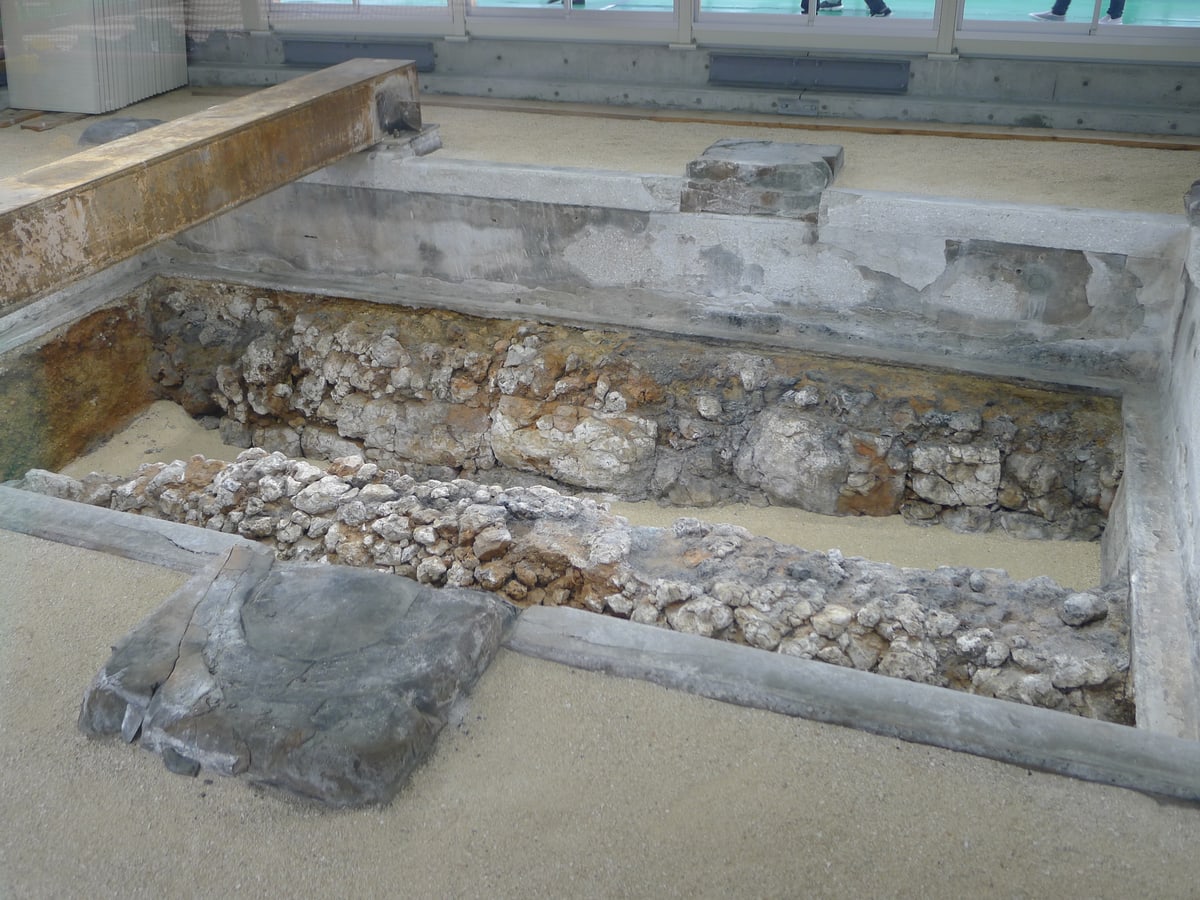
The inscribed property is Shuri Castle Site, listed in 2000 as one of nine components of "Gusuku Sites and Related Properties of the Kingdom of Ryukyu". The park's wording is that the Seiden's kidan — its stone platform — and the archaeological remains within it "are registered as a World Cultural Heritage and are an extremely important cultural property symbolising the Shuri Castle Site, itself a nationally designated historic site". The vermilion building above is a reconstruction.
Those remains have spent the last seven years underground. After the fire, the charred timbers and ash were cleared and the remains were buried back under soil to protect them, roofed over and shown that way. The plan then states: "from now on, they are scheduled to be displayed again inside the Seiden completed in 2026".
So what happens on November 23, 2026 is not really "a new building opens". It is a World Heritage element coming back out from under seven years of protective soil, inside a hall built over it. That is also why the interior has a headcount limit and 30-minute slots — the constraint is not queue management, it is what is under the floor.
The platform has something else to say. The official reading is that the platform remains, combined with buried roof tiles and historical records, "tell us that the Seiden at Shuri Castle was rebuilt at least seven times". The park's own chronology backs it: destroyed by fire in 1453, again in 1660, again in 1709, burned in the Battle of Okinawa in 1945, and burned again in 2019.
Most visitors arrive thinking of 2019 as the aberration in Shuri Castle's history. The platform says the opposite. Burning down and being rebuilt is what this building does. What opens in 2026 is the eighth time.
The 2019 fire: cause never determined
The official account is short and worth reproducing exactly: a fire that broke out from inside the Seiden in the early hours of October 31, 2019 destroyed nine facilities including the Seiden; it burned for about 11 hours before being extinguished; police and fire service investigations followed, but the cause was never determined.
None of the theories circulating online has official backing, so this article does not carry one.
How the Reiwa reconstruction differs from the Heisei one
The building that burned in 2019 was itself a reconstruction, completed in 1992 as part of the projects marking Okinawa's return to Japan. The hall designated a National Treasure in 1925 had burned in 1945. "Reconstruction" at Shuri is a recurring verb, not a one-off.
This time the differences from the previous version were deliberate, and documented:
- Structural timber is domestic Japanese cypress as a rule, with some inumaki and Okinawan evergreen oak; Taiwanese red cypress is used for carving material.
- Red roof tiles use materials from Okinawa's main island, and some incorporate crushed fragments of the burned Seiden's damaged tiles, reused as grog.
- Pigments and carving finishes draw on local materials including Kushi-magiri bengara and Kume red clay.
- The onigawara ridge-end tiles were remade from Kamakura-era archive photographs and are a size larger than the Heisei version.
- The carving behind the front canopy was reanalysed from old photographs, and its "peony with lions and arabesque" design was updated.
The park has designed the Yohokoriden specifically so visitors can "experience the differences between the Heisei and Reiwa reconstructions from various angles" — and the Yohokoriden is in the paid zone, so you do not need a Seiden reservation to see it.
Specifications, for scale: timber, three storeys with double roof, irimoya hipped-and-gabled roof, formal tiling; building area 636.56 m², total floor area 1,199.24 m² (516.86 on each of the first and second floors, 165.52 on the third). That third-floor figure is the argument for timed entry in one number — this is not a hall that absorbs a crowd.
What time is quietest, and how long does it take?
The park's own crowd forecast inverts the usual advice: midday to 2pm is the quiet window.
| Time | Official crowd forecast |
|---|---|
| 08:30 – 11:00 | 🔴 Very crowded |
| 11:00 – 12:00 | 🟡 Crowded |
| 12:00 – 14:00 | 🟢 Relatively quiet |
| 14:00 – 17:00 | ⚪ Normal |
| 17:00 – closing | 🟢 Relatively quiet |
The reason is not mysterious: most people make Shuri Castle the first stop of the day, and coach groups tend to arrive in the morning. Slot it after lunch, or use it to close the day.
How much time to allow? The park publishes an unusually granular breakdown, totalling about 90 to 120 minutes:
| Segment | Official time |
|---|---|
| Shuri Station ⇔ Suimuikan | approx. 20 min |
| Suimuikan → Shureimon gate | approx. 5 min |
| Shureimon → ticket office / gate | approx. 15 min |
| Ticket office → Seiden entrance | approx. 15 min |
| Inside the Seiden | approx. 15 min |
| Rest of the paid zone → Suimuikan | approx. 40 min |
Note the ratio. The Seiden interior is 15 minutes, and getting from the monorail station to its entrance is 55. This is not a site to wedge into a gap between two other bookings.
Which slot should you book? The park does the arithmetic for you: monorail users should pick a slot 40 to 50 minutes after their planned arrival at Shuri Station; drivers should pick 30 to 50 minutes after their planned arrival in the area. The wider range for drivers absorbs parking and the walk in — for parking and driving in Okinawa generally, see the Okinawa car rental guide.
On transport for opening day, the only official statement is that congestion on surrounding roads is expected and public transport is recommended, plus a note that entry may be temporarily restricted for safety depending on crowding. No traffic restrictions, extra monorail services or shuttle buses have been announced by anyone — not the park, the prefecture, the city or the monorail operator. This article does not invent any.
Opening hours and the last slot
| April – November | December – March | |
|---|---|---|
| Paid zone | 8:30–19:00 (last entry 18:30) | 8:30–18:00 (last entry 17:30) |
| Free zone | 8:00–19:30 | 8:00–18:30 |
| Final entry slot | 18:00–18:29 | 17:00–17:29 |
The final slot carries extra cut-offs: from April to November you must pass the Hoshinmon gate by 18:30 and enter the Seiden by 18:40; from December to March, 17:30 and 17:40. Book the last slot and you have to run those 55 minutes of approach backwards from the cut-off, not from closing time.
One piece of good news: the park states that no closure days are set for fiscal 2026. Fiscal 2027 has not been announced.
What else is in the paid zone?
Enough that the no-reservation ticket is not a wasted purchase.
The park spells out what that ticket covers: the Seiden exterior from the elevated viewing deck, the Yohokoriden, the exhibits inside the Shuri Castle Reconstruction Exhibition Room, the Agari-no-Azana lookout, the former ladies' quarters (now the Kyuyo museum shop) and the rest of the paid zone excluding the Seiden interior — all without a time slot, so you can wander it at your own pace.
The paid zone currently comprises the Hoshinmon, the Yohokoriden and the Agari-no-Azana. The free zone includes the Kankaimon, Kobikimon, Kyukeimon and Keiseimon gates, and Shureimon needs no ticket at all.
Two current-status items, so you do not go looking for things that are gone:
- The temporary-shelter viewing area has closed. The "visible reconstruction" experience — watching timber being assembled and lacquered from a viewing deck inside the works enclosure — ended on June 8, 2025. It still appears in a lot of travel writing; it no longer exists.
- The repaired great dragon pillar is on display in the lower courtyard. The park describes it as shown at the repair workshop in the Shicha-nu-Una "for about two years, until it is used as the model for the new Reiwa dragon pillars". No start date is given for that two years, so treat it as a display that could end without notice.
Whether the elevated viewing deck survives past November 23 has not been stated either way. Structures built to watch construction often go when the construction does, but since the park has said nothing, this article does not guess.
Photography: personal shots need no permission, drones are banned outright
The rules are unusually generous at the personal end. Personal photography, press coverage and school-trip group photos all require no application. What does require one is commercial location shooting: apply at least 10 days before the date you want, and credit the location as "国営沖縄記念公園(首里城公園)" when the images are published. Shoots promoting a specific product or company are not accepted at all.
Drones are a prohibited item — you cannot bring one in, and filming with one is banned. No exceptions are listed. Note that this rule governs entry rather than flight; site rules and the Civil Aeronautics Act are separate layers, and the four gates you clear before bringing a drone to Japan covers how they stack.
Whether additional rules apply inside the Seiden specifically I could not establish; check the signage on site or ask staff.
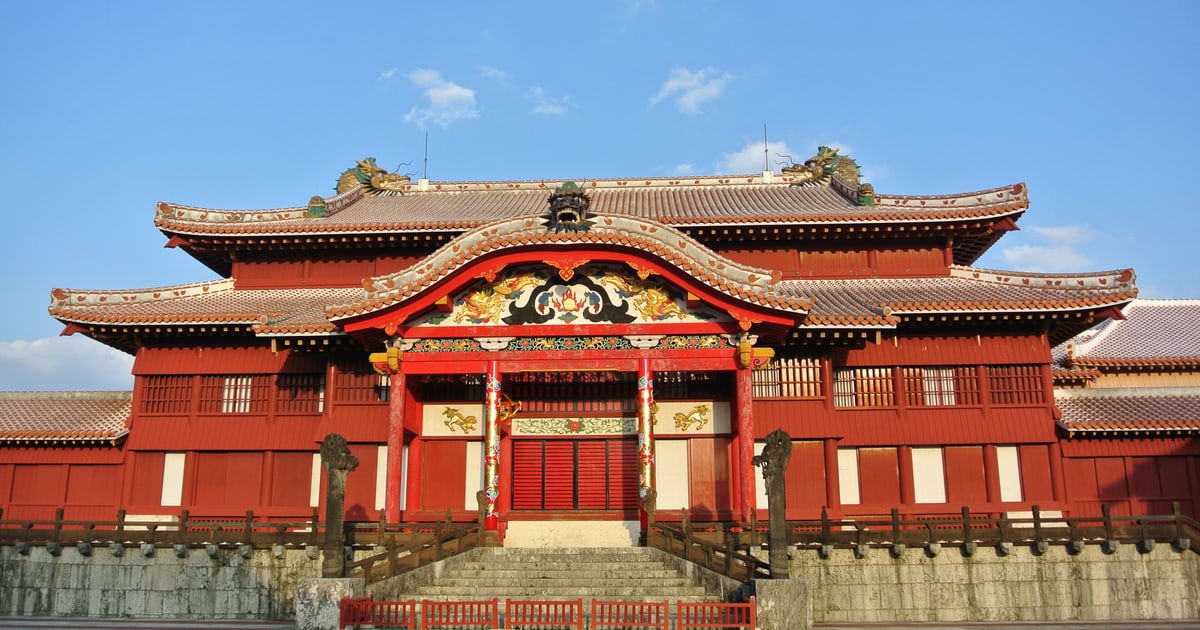
One note about the photograph at the top of this article: it was taken in February 2015, and the building in it is the Heisei reconstruction that burned down in 2019. No freely licensed photograph of the completed Reiwa Seiden exists yet — the only one available still shows the construction site, and running that would leave readers expecting scaffolding on November 23. How closely the new hall resembles the one that burned is not something the official material states in a quotable way, so this article does not vouch for it either.
Early November: the Shuri Castle Festival
If your trip lands in early November instead, the 2026 Shuri Castle Festival runs November 1 (Sun) to 3 (Tue, holiday): the Ryukyu Dynasty Picture Scroll Procession along Kokusai-dori on November 1 from 12:30 to 15:00, the king and queen's ceremonial appearance on November 2, and the classical procession on November 3.
One number from that festival is the only officially published demand signal available right now. Public applications to walk in the procession opened on September 1 with a stated deadline of September 30 — and the official notice reads that applications closed at 9:30 on the morning of September 2. They filled in a day.
Do not extrapolate that to the Seiden tickets. Procession places and timed Seiden slots are different products with different capacities; one filling fast says nothing reliable about the other.
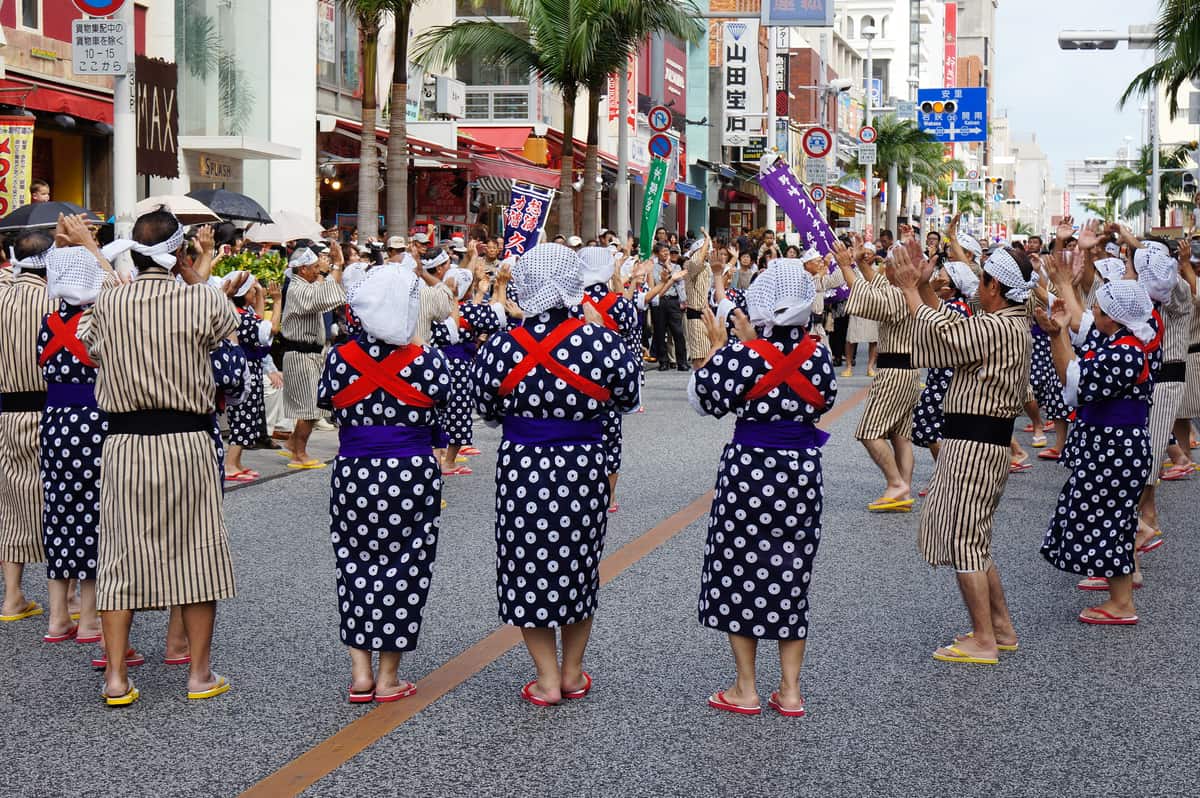
If the October 1 wave sells out and you would rather not just walk the grounds unguided, tours of the park and its surroundings are bookable — a guided tour of Shurijo Castle and the Tamaudun royal mausoleum is one, covering the walls, where the Seiden platform sits and the mausoleum in one walk. Two things to know first. Tours like this do not include the timed Seiden interior reservation — that is sold only through the official Webket system, so booking a tour does not get you inside. And as of September 2026 the listing text still describes the Seiden as destroyed by fire: that page has not been updated for the November reopening, so the contradiction is on their side, not this article's.
The Seiden is finished — what comes next?
The Hokuden and Nanden, on a schedule with no completion year in it.
The March 2020 ministerial decision was specific about the Seiden: enter design early in fiscal 2020, start main construction during 2022, aim to complete the reconstruction by 2026. That line has now been walked. The same document continues: "advance efforts toward reconstruction including the Hokuden, Nanden and other buildings".
After that, the numbers stop. The attached schedule places "Hokuden, Nanden etc." across study, basic design, detailed design and construction phases, with construction sitting in a column labelled "fiscal 2027 onward" — a column with no end. Annual reports give progress rather than dates: basic design for the Hokuden commenced in fiscal 2024, detailed design was slated to commence in fiscal 2025.
So the only supportable statement is this: the Hokuden follows the Seiden, and the official schedule contains no completion year. Any date you see attached to it did not come from that document.
For trip planning that is actually reassuring. Shuri Castle is not a "wait until it is finished" destination, because finished has no date — but from November 23, 2026 you can walk into the Seiden and stand over a platform that has been under soil for seven years. What changes from here is the buildings around it, not the one you came for.
To compress the whole thing into one instruction: book a "with reservation" ticket for a slot 40 to 50 minutes after your arrival at Shuri Station, make it an afternoon stop, bring a shoe bag, and do not pick November 23. For the rest of the island — the aquarium, Kouri Island, the northern resort coast — see the Churaumi and northern Okinawa guide.
Appendix: official Japanese wording (click to expand)
The Japanese originals quoted above, collected here so you can check them. Two sources dominate: the Shuri Castle Park site (oki-park.jp/shurijo/, operated by the Okinawa Churashima Foundation) and the Okinawa Prefecture commemorative-project site (shurijocastle.okinawa, run by a liaison council of Okinawa Prefecture, Naha City and the Okinawa Churashima Foundation), plus documents from the Cabinet Office's Okinawa General Bureau and the Ministry of Land, Infrastructure, Transport and Tourism.
1. Opening day closure and ceremony (Okinawa Prefecture, 2026-07-31)
本イベント開催にあたりまして、城郭内無料区域は 11:15 まで、城郭内有料区域は 12:00 まで閉園いたします
本イベントは、県民の皆様も抽選等によりお招きする「完全招待制」にて実施いたします
首里城正殿一般公開の時間/時間: 2026年11月23日(月・祝) 正午(12:00)から
2. Completion ceremony and start of use (Shuri Castle Park, 2026-06-04)
令和8年11月22日(日)に正殿復元の完成式を開催し、11月23日(月・祝日)に正殿の供用を開始する運びとなりました
主催:内閣府沖縄総合事務局/※詳細は決まり次第、別途お知らせします
3. Why reservations exist
正殿観覧時の安全性確保およびオーバーツーリズムの未然防止を図るため、正殿内の観覧人数を制限させていただきます。そのため、正殿内部の観覧は来場者の集中を防ぐための「事前予約制(30分ごとの日時指定)」となります
4. Same price, no surcharge
正殿のご見学に追加料金はございません。有料エリアの入場料金でご見学いただけます
正殿内観覧予約の日時指定に伴う追加料金は発生しません
有料区域の入場料金は、正殿内観覧の有無にかかわらず一律となります
5. Sales schedule and limits
【令和8年11月23日~令和8年12月31日分】○第1弾販売日時 : 9月1日(火)13:00~ ○第2弾販売日時 : 10月1日(木)13:00~/各回の販売枚数は、それぞれ同数程度を予定しています
【令和9年1月1日以降入場分】○販売日時 : 入場予定日の2か月前の1日13:00~
WEB購入(購入上限:1決済につき9枚)/当日予約に空きがある場合に限り、当日入場時間枠の15分前までWEB購入、および広福門券売所窓口でも購入いただけます
2027年4月1日以降の入場分の申込については、順次ホームページでお知らせします
6. Free-entry visitors, pass holders, shoes
未就学児を除き、入場料無料のお客様(手帳所持者、70歳以上の県民等)、年間パスポート所持のお客様もご予約が必要です
年間パスポートをお持ちの方も、当面の間「入場券(正殿内観覧予約あり)」の予約が必要です
正殿内は靴を脱いでご観覧いただきます。靴袋のご持参をお願い致します
7. Groups: suspended Nov 23 – Dec 6, lottery allocation
以下の期間は大変な混雑が予想されるため、安全確保の観点から、団体の正殿内観覧の事前予約受付はいたしません。・令和8年11月23日〜12月6日/令和8年12月7日入場分より段階的に受入を開始します
団体のお客様による正殿内観覧は、当面の間、団体予約フォームによる抽選制となります
8. Fee revision and the Yui Rail discount
正殿の一般公開開始に伴い、防災・防火対策の強化に加え、近年の物価上昇による施設運営経費の増加を踏まえ…2026年(令和8年)11月23日入場分より有料区域の入場料金を改定いたします
チケット窓口で1日券・2日券を提示したお客様には、団体料金が適用されます
9. World Heritage is the site and the platform remains
首里城正殿基壇(きだん)の遺構(いこう)は世界文化遺産に登録され、国指定史跡でもある首里城跡を象徴する大変重要な文化財です
首里城跡は、『琉球王国のグスク及び関連遺産群』の一つとして、ほかの8つの遺産とともに2000年に登録されています
これらの基壇遺構は、ほかの瓦等の埋蔵物や歴史的な情報と合わせて、首里城が少なくとも7回にわたって正殿建物が建て替えられたことを伝えています
10. Buried for protection, displayed again in 2026
火災後、焼け落ちた正殿の部材や灰等を撤去し、遺構を保護するために土で埋め戻し、屋根をつけて公開していました。今後は、2026年に完成する正殿の内部で再び公開予定です
11. The 2019 fire (cause never determined)
令和元年10月31日未明に、正殿内部から発生した火災により、正殿をはじめとする9施設が焼失しました。火災は約11時間にわたり燃え続けた後に、鎮火されました。火災後には、警察及び消防による調査が行われましたが、火災原因の特定には至りませんでした
12. Materials and updates in the Reiwa reconstruction
構造材は国産ヒノキを原則とし、一部にイヌマキ、オキナワウラジロガシを使用。台湾産ベニヒを彫刻材に使用
赤瓦には、沖縄本島産の材料を使用するほか、一部に正殿の破損瓦を粉砕(シャモット)して再利用
鎌倉古写真を基に平成の復元より一回り大きく造られました/『牡丹に獅子・唐草』の意匠がアップデートされました/平成と令和の復元の違いを様々な角度から体感できます
13. Crowd forecast and timings
08:30〜11:00 かなり混雑/11:00台 混雑/12:00〜14:00 比較的空いている/14:00〜17:00 ふつう/17:00〜閉場 比較的空いている
首里杜館から正殿内の観覧を含めた全体の所要時間は…約90〜120分
モノレールをご利用の場合:首里駅到着予定時刻の40〜50分後/お車をご利用の場合:首里城公園周辺到着予定時刻の30〜50分後
14. Transport and entry restriction (the only official statement)
周辺道路の混雑が予想されるため、ご来園の際は公共交通機関のご利用をおすすめします
当日の混雑状況によっては安全確保のため一時的に入場制限を行う場合があります
15. Closure days, no-reservation coverage, viewing area, dragon pillar
2026年度の休園日は設けておりません
高台見学デッキから正殿の外観や、世誇殿・首里城復興展示室内の展示物、東のアザナ、女官居室(ミュージアムショップ球陽)等、正殿内を除く有料区域を時間指定なくご観覧いただけます
素屋根見学エリア(6月8日をもって閉鎖)
補修された大龍柱は、新しい令和の大龍柱の見本として活用するまでの約2年間、下之御庭の補修作業場で公開しています
16. Photography
ドローンは持込禁止品となっており、撮影も禁止しています
クレジットとして『撮影場所:国営沖縄記念公園(首里城公園)』の記載が必要
17. Hokuden and Nanden (no year)
首里城正殿について、令和2年度(2020年度)早期に設計に入り、令和4年(2022年)中には本体工事に着工し、令和8年(2026年)までに復元することを目指すこととし、北殿や南殿等を含め復元に向けた取組を進めることとする
正殿完成後に整備を行う北殿の基本設計に着手(令和6年度)/北殿の実施設計に着手予定(令和7年度)
18. The disclaimer the machine-translated pages carry themselves
這個網頁是被機器進行翻譯的。翻譯結果不可能100%正確。望您多理解而利用。
Frequently Asked Questions
- Q1:Can you visit Shuri Castle on opening day, November 23, 2026?
- Only from noon. Okinawa Prefecture's July 31, 2026 announcement is explicit: because the opening ceremony is held that morning, the free zone inside the castle walls closes at 11:15 and the paid zone closes at 12:00, and general public access to the Seiden begins "from noon (12:00)" on Monday, November 23. The ceremony itself runs 9:00 to 9:45 in the Shicha-nu-Una courtyard and is described in the official wording as "kanzen shotaisei" — strictly by invitation, with even Okinawa residents admitted by lottery. There is no public viewing area. One trap: the Shuri Castle Park site's own FAQ still says the start time is "currently undecided". That page is stale; the prefecture's dated news release is the current answer.
- Q2:When do Seiden interior tickets go on sale?
- It depends on your entry date, and the rules change on January 1. For entry between November 23 and December 31, 2026, tickets are released in two first-come batches: September 1, 2026 at 13:00 and October 1, 2026 at 13:00, with the operator stating that each batch holds roughly the same number of tickets. There is no third batch — October 1 is the last release covering 2026 entry. For entry from January 1, 2027, the rule becomes "13:00 on the 1st of the month two months before your entry date", so January 1 entry went on sale November 1, 2026. Web purchases are capped at nine tickets per transaction. If a slot still has space on the day, you can buy online or at the Kofukumon ticket window up to 15 minutes before your entry window. Arrangements for entry from April 1, 2027 have not been published.
- Q3:What is the difference between the two Shuri Castle tickets?
- The price is identical; the only difference is whether you get inside the Seiden. The two types are "admission with Seiden interior reservation" and "without reservation", and the park states plainly that the paid-zone admission fee "is uniform regardless of whether you view the interior of the Seiden", with no surcharge for the timed slot. The no-reservation ticket still gets you the paid zone: the Seiden exterior from the elevated viewing deck, the Yohokoriden, the displays in the Shuri Castle Reconstruction Exhibition Room, the Agari-no-Azana lookout and the former ladies' quarters (now the Kyuyo museum shop), all without a time slot. The only thing it excludes is the Seiden interior. Because both cost the same, the price gives you no clue that you bought the wrong one — check for the Japanese words yoyaku ari (with reservation) or yoyaku nashi (without).
- Q4:Is Shuri Castle a UNESCO World Heritage site?
- The site is; the building standing on it is not. What was inscribed in 2000, as one of nine components of "Gusuku Sites and Related Properties of the Kingdom of Ryukyu", is Shuri Castle Site — and its heart is the stone platform (kidan) beneath the Seiden. The park's wording is that the Seiden platform remains "are registered as a World Cultural Heritage and are an extremely important cultural property symbolising the Shuri Castle Site". The building above them is a reconstruction. This matters for your itinerary because those remains were buried under soil for protection after the 2019 fire, and the official plan states they will be "displayed again inside the Seiden completed in 2026". In other words, from November 2026 the way to see the World Heritage element is to walk into the Seiden and look at the floor.
- Q5:Does entering the Seiden cost extra?
- No. The park states it twice: "there is no additional charge to view the Seiden — you can view it with the paid-area admission fee", and "no additional charge arises from the timed reservation". What you pay is the paid-zone admission, revised from entry on November 23, 2026 to ¥1,000 for adults, ¥760 for high school students and ¥370 for elementary and junior high students; under-sixes are free. The operator gives two reasons for the increase: stronger fire and disaster prevention measures, and rising operating costs from recent inflation. Two things catch visitors out: people who normally enter free (disability certificate holders, prefectural residents aged 70 and over) and annual passport holders still have to make a Seiden reservation, with only pre-school children exempt. Showing a Yui Rail 1-day or 2-day pass at the ticket window gets you the group rate.
- Q6:Can you change or refund a Shuri Castle ticket?
- Yes, but the two ticket types follow different deadlines and the reservation ticket is stricter. With reservation: the date and time can be changed up to the day before, not on the day itself, and refunds are only accepted up to two days before your booked date. Without reservation: the date can be changed and the ticket refunded right up to the day of use. One official condition governs both, and it decides where you should buy: changes and refunds are possible only for tickets purchased through the official ticket page (Webket). Buying this ticket through any other channel means giving up the right to reschedule or refund it, which on a timed-entry ticket is a real cost.
- Q7:Can tour groups see inside the Seiden?
- Not during the first two weeks. The official notice states that because severe crowding is expected, advance group reservations for Seiden interior viewing are not accepted for November 23 to December 6, 2026, with phased acceptance beginning from December 7 entry. Groups and individuals also run on completely different systems: individuals buy first-come, while groups apply through a form and are allocated by lottery. For January 2027 entry, for example, group applications ran September 1 to 7, 2026 with lottery results notified September 14 to 16. If you are travelling with a tour, ask the operator whether they actually drew a slot rather than assuming "Shuri Castle" on the itinerary means the interior. For independent travellers the same rule reads as good news: for those first two weeks, no coach groups are competing for slots.
Read next
Naha Travel Guide 2027: Shuri Castle, Kokusai-dori & Okinawan Food
Okinawa's gateway and old Ryukyu capital — the rebuilt Shuri Castle, Kokusai-dori and Makishi Market, plus Okinawa soba and taco rice.
New Year's Eve in Okinawa 2026-27: Sunrise & Hatsumode
The first New Year since Shuri Castle’s main hall returned — 7:17 sunrise, Sefa-utaki’s 9:00 opening, where the fireworks really are and what shuts.
JUNGLIA Okinawa Tickets 2026: You Pay the Higher Tier
The same 1Day ticket is ¥6,930 for Japan residents and ¥8,800 for you — residency is a purchase condition in the terms, and one ¥800 car park is Japanese-site only.
📊 See the 2026 Price Index (JR Pass, DPA, eSIM, Airport Transport) →