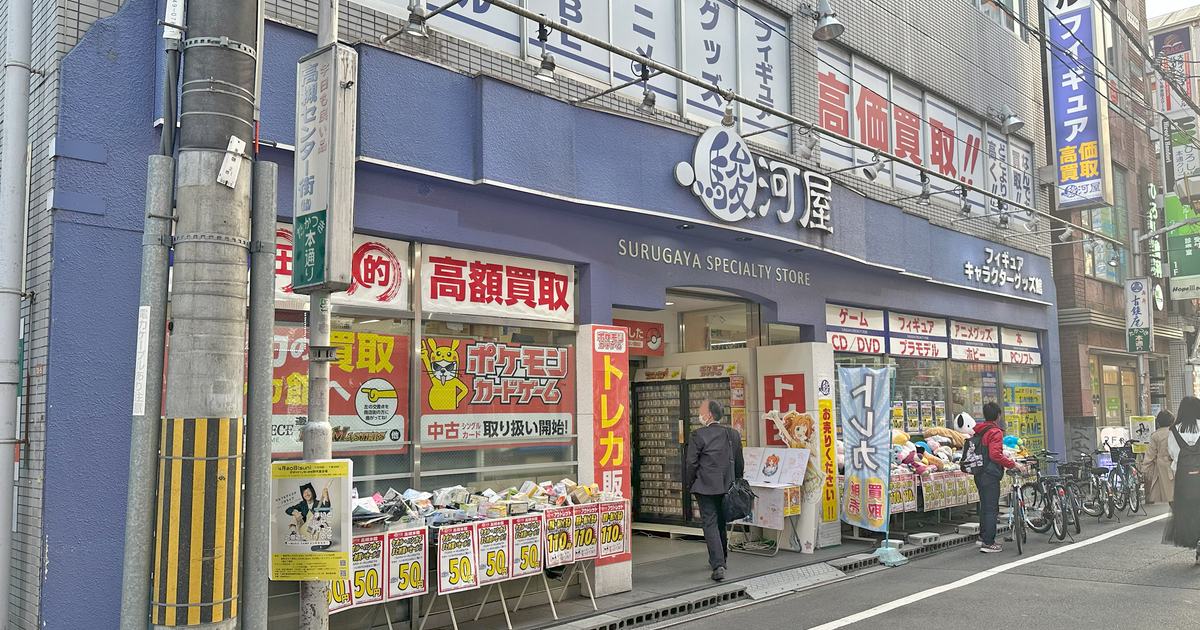
If you're planning to raid Suruga-ya — Japan's roughly 160-branch secondhand empire of used figures, retro games, manga and trading cards — and you're wondering whether your haul qualifies for the 10% tax-free refund, here's the honest answer nobody else spells out: some branches offer tax-free, but Suruga-ya itself has published exactly nothing about it. We checked the official EC site, the corporate site and the store pages for Akihabara, Nipponbashi and Osu in August 2026 — the word "tax-free" appears zero times. That makes Suruga-ya the odd one out among Japan's big secondhand chains, and it means the blog claim "spend ¥5,500 and get a refund" needs serious correcting. This guide covers what the rules actually say (yes, used goods are tax-free-eligible under national law), how to tell on the spot whether a branch qualifies, how Suruga-ya stacks up against Mandarake, BOOKOFF and Lashinbang, and a trap almost no one warns you about: tourists cannot sell to Suruga-ya. For the tax-free system itself, our Japan tax-free guide is the full reference.
- Suruga-ya is not blanket tax-free: the company publishes no tax-free info at all; some branches qualify — look for the Japan Tax-free Shop sign and ask before paying
- The threshold is the national rule: ¥5,000 pre-tax (≈¥5,500 with tax), same store, same day — and the branch must hold a permit
- Used goods are eligible — the exclusions are bullion, plus gold and platinum coins and non-taxable items from Nov 1, 2026; secondhand is not the problem, branch status is
- You cannot sell to Suruga-ya as a tourist: every acceptable buyback ID is Japan-issued
- Guaranteed tax-free → Mandarake (official all-store support); selection and price → Suruga-ya; BOOKOFF deducts a 3% fee (through Oct 31, 2026)
- From November 1, 2026 you pay the tax and reclaim it on departure (judged by purchase date, not travel date) — but the refund still comes from the shop, so “which branch qualifies” matters just as much
📖 Contents
- 1. The official silence, and how to judge a branch on the spot
- 2. The real rules: the ¥5,500 myth and secondhand eligibility
- 3. The November 2026 reform and what it changes here
- 4. Suruga-ya vs Mandarake vs BOOKOFF vs Lashinbang
- 5. The trap: tourists can't sell to Suruga-ya
- 6. Store guide: Akihabara's specialist annexes, Nipponbashi, Osu
- 7. How to actually save money here
- 8. FAQ
The official silence, and how to judge a branch on the spot
Suruga-ya is one of the largest used anime/game/hobby chains in Japan — per the official corporate store list (July 2026 snapshot), about 110 directly run stores plus 50 franchise shops, roughly 160 locations. On price and depth of inventory it's a legend among collectors. On tax-free shopping, it's a black box. Here's what our August 2026 source-by-source check found:
- The official consumption-tax FAQ page covers exactly one topic: the 2019 rate change from 8% to 10%. No tax-free section exists.
- The store pages for Akihabara Main, Akihabara Ekimae, Osaka Nipponbashi Main and Nagoya Osu Main: the words "免税" (tax-free) and "Tax" appear zero times.
- The corporate store directory has no tax-free flag or filter of any kind.
To appreciate how unusual that is: Loft, Don Quijote, Bic Camera and Matsumoto Kiyoshi all maintain official tax-free pages, and fellow secondhand giant Mandarake publishes an English page declaring tax-free support at every store. Suruga-ya says nothing — not "yes," not "no," nothing.
But official silence is not the same as "not available." Two independent signals show that at least some branches hold tax-free permits. First, TAXFREESHOPS.JP — a third-party database of licensed tax-free shops — lists the Suruga-ya Takasaki OPA branch, which means the company does obtain export-sales permits for some locations. Second, the Akihabara branches are commonly described as processing tax-free at the register — tell the cashier, show your passport. Which annexes qualify and by what procedure has never been stated by the company.
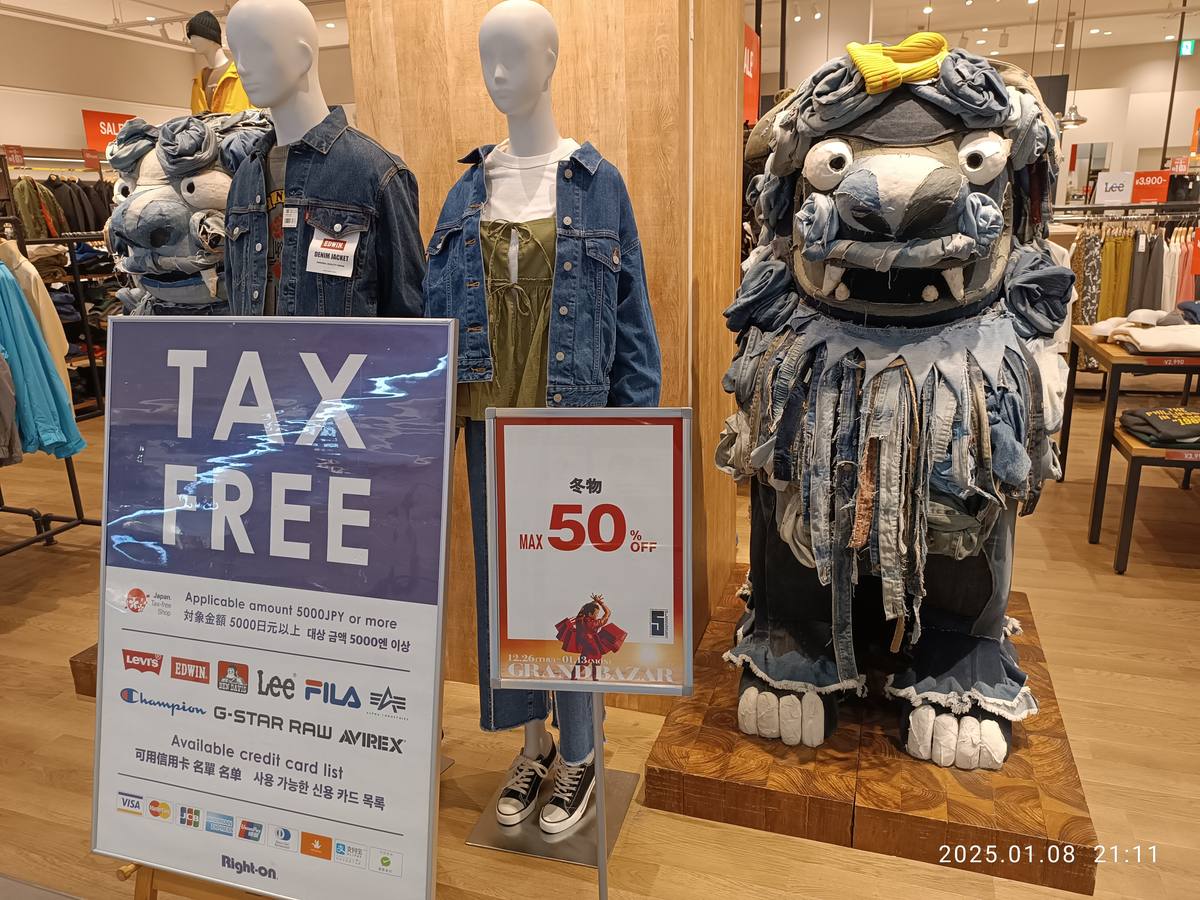
Which leaves you with one reliable field method, and it's the sentence this whole article exists to deliver: look for the red cherry-blossom "Japan Tax-free Shop" sign at the entrance or the register, and ask the staff before you pay ("menzei dekimasu ka?" works fine). Don't assume a branch qualifies because a blog said Akihabara does, and don't build your budget around the refund. Suruga-ya's secondhand prices are the real discount; tax-free is a bonus when you can get it, and you haven't overpaid when you can't.
The real rules: the ¥5,500 myth and secondhand eligibility
Two corrections to the versions floating around aggregator blogs.
Myth one: "spend ¥5,500 and you qualify." The national threshold is ¥5,000 pre-tax, combined at the same store on the same day — the ¥5,500 figure is just that amount with 10% tax added, presented backwards. At Suruga-ya two extra conditions bite. The branch must hold an export-sales permit (the exact thing the company never discloses), and "same store" is literal: Suruga-ya's Akihabara presence is a cluster of separate specialist stores, so receipts from the main building and the games annex don't combine. If you want the refund, concentrate your buying in one branch, one day, one checkout.
Myth two: "used goods can't be sold tax-free." Secondhand has never been on the exclusion list, under either system. Through October 31, 2026, the National Tax Agency's export-sales rules define eligible items as ordinary goods for personal use, and the exclusion list contains exactly two entries: gold or platinum bullion, and items evidently purchased for business or resale purposes. From November 1, 2026 that purpose test is abolished outright and the exclusions become bullion, gold and platinum coins, and non-taxable items. A used figure, an out-of-print Super Famicom cartridge, a stack of doujinshi — none of them appears on either list, same ¥5,000 pre-tax bar as new merchandise. The industry proves the point daily: BOOKOFF, Mandarake and Lashinbang are all secondhand businesses with official tax-free programs.
That second exclusion deserves a direct warning for one type of reader while it lasts, i.e. through October 31, 2026: card-box hunters and resellers. Goods "evidently purchased for resale" are ineligible by law — buy out an entire shelf of the same trading card box and the store is within its rights to refuse tax-free processing. That's not a grumpy clerk; that's the National Tax Agency's rule. Normal collection-building doesn't trigger it.
From November 1 the rule changes shape rather than disappearing. With the purpose test and the non-business check gone, what replaces them is a quantity limit: you may only buy what you can personally carry out of the country yourself when you leave. The test shifts from what you intend to do with the goods to whether you can physically take them with you — the bulk buyer still hits a wall, just a different one.
The rest of the standard conditions, briefly (full detail in our breakdown of Japan's tax-free system):
- Who qualifies: non-resident foreign nationals on short-stay and similar statuses, within six months of entry. Japanese nationals are not automatically excluded — a Japanese national who is a non-resident, has had a domicile or residence outside Japan continuously for two years or more, and is within six months of a temporary return, is also eligible, on a passport plus one of: a copy of the family-register attachment, a certificate of residence abroad, or a My Number card. The hard line, stated officially: a single instance of Japanese resident registration during those two years disqualifies you.
- The entry stamp governs whether the shop may sell to you tax-free, not whether you get a refund at the airport. Foreign nationals need one of three at the register: the landing-permission sticker, a Trusted Traveler (TTP) card, or the tax-free QR code from Visit Japan Web; with none of them the shop cannot process the sale. Japanese nationals are checked on the re-entry stamp only, with no Visit Japan Web alternative — clear immigration through an automated gate with no stamp and tax-free is off, though you can ask an immigration officer to stamp the passport afterwards.
- The ¥5,000–¥500,000 consumables band and the sealed-bag rules only run through October 31, 2026 — from November 1 they go, along with the general-goods/consumables distinction itself. Used hobby goods were classed as general goods anyway.
System details re-verified against official sources on September 7, 2026.
The November 2026 reform and what it changes here
Traveling after autumn 2026? The whole mechanism changes underneath you. From November 1, 2026, Japan switches to a refund-style tax-free system. What decides which system applies is the purchase date — the day the goods change hands — not your departure date, and there is no transition period at all: buy on October 31 and you are on the old rules, buy on November 1 and you are on the new ones, even within a single trip. You pay the full tax-inclusive price in the store, then — within 90 days counted from the day after purchase, when you leave Japan — read your passport at a tax-free terminal, customs confirms the goods are leaving with you, and the consumption-tax amount is refunded. The general/consumables split, the ¥500,000 consumables cap and the sealed bags are all abolished; the ¥5,000 pre-tax minimum, combined per store per day, stays.
⚠️ One thing not to misread: this does not make the branch's permit irrelevant. Under the new system the refund is still paid by the permit-holding tax-free store, or a refund operator acting for it — the kiosk and customs pay nothing, the terminal only confirms that the goods are actually leaving. Walk into a branch without an export-sales permit and there is no refund, old system or new. For Suruga-ya shoppers, the advice in this article — look for the sign, ask before you pay — carries over unchanged after November 1. Only the question changes, from “can you deduct the tax here?” to “can you process tax-free here, and how does the refund reach me?”
Three genuinely new pieces of homework. First, your purchases must physically leave Japan with you — ship a box home or give something away before departure and that refund is gone; and the receipt is all-or-nothing: if a single item from one purchase transaction is missing at the check, every other item on that receipt fails with it. Second, the customs check moves earlier in the airport: it now happens in the international departures hall before you check your bags and before security, outside the restricted area — and once a bag is checked in you cannot get it back, so doing this in the wrong order means the refund is lost. Third, you register how you want to be refunded in the store, not at the airport (credit card or similar) — each shop's refund operator sets the deadline for that, so it is not always due at the till, but doing it there is safest. What that refund actually looks like — the method and the number of days — is not regulated by law and carries no official figure; on fees the government says only that who bears them is "not specifically prescribed" and that it charges nothing itself, leaving the rate to the shop. Every tax-free retailer sets its own, which is precisely why this article will not tell you how Suruga-ya will do it. The company has never documented even the current procedure, so we won't speculate about the next one. Our full walkthrough of the new refund system has the rest.
Suruga-ya vs Mandarake vs BOOKOFF vs Lashinbang
Four chains dominate the secondhand anime/game circuit, and their tax-free positions could hardly be more different. This table is the most useful thing in this article (verified against each chain's official pages, August 2026). ⚠️ The Fee and Procedure columns describe the instant in-store system that runs through October 31, 2026 — from November 1 all four charge the tax-inclusive price and refund on departure, and none has published its new-system procedure. The Tax-free support and Minimum columns are unaffected by the reform: the store permit and the ¥5,000 pre-tax bar both survive it.
| Chain | Tax-free support | Minimum | Fee | Procedure |
|---|---|---|---|---|
| Suruga-ya | Nothing published (some branches qualify in practice) | ¥5,000 pre-tax | No official info | Branch-by-branch — check the sign, ask first |
| Mandarake | Official: all stores | ¥5,000 pre-tax | None listed on the official page | Nakano/Shibuya: pay tax, refund in cash at the service counter (Nakano until 19:30); all other stores: instant tax-free at checkout with passport |
| BOOKOFF | Selected stores (official inbound page lists them by region) | ¥5,000 pre-tax | 3% (since Sep 2, 2025) | At checkout; bags, snacks, alcohol excluded |
| Lashinbang | Most large stores (Akihabara annex, Ikebukuro, Nipponbashi Main, etc.; some small branches excluded) | ¥5,000 pre-tax | None listed | Tell the cashier before checkout |
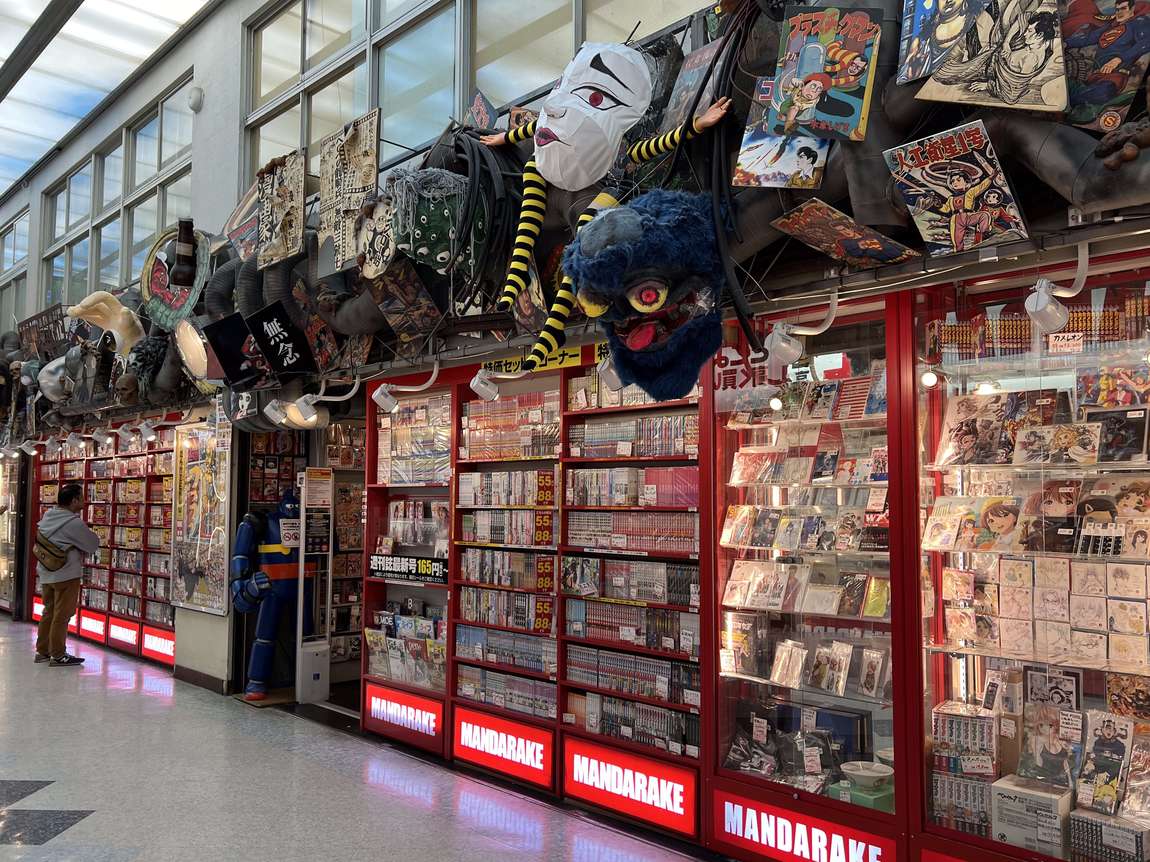
Our call, stated plainly. When the refund matters — a single-store haul clearing ¥5,000 pre-tax — go to Mandarake. All-store support declared in writing by the company beats branch roulette every time. When selection and price matter more, Suruga-ya usually wins: bigger used inventory, frequently lower prices, and if the branch happens to fly the tax-free sign, that's 10% on top. For purchases through 31 October, do the fee math at BOOKOFF: 10% minus the 3% commission leaves about 7% — the same logic as Loft's 1.55% counter fee (also through 31 October) but twice as heavy, noticeable on big spends. And note the fine print even at the "guaranteed" chain: Mandarake itself runs two different procedures depending on the branch (Nakano/Shibuya refund at a counter, everyone else at the register). The universal survival habit in Japanese secondhand stores is simply: ask before you pay. For the wider map of which chains hand out actual tourist coupons — Suruga-ya has none, and neither do Loft or Hands — see our Loft tourist discount guide and the Japan discount coupons guide.
The trap: tourists can't sell to Suruga-ya
This section may save you from hauling a very heavy, very pointless suitcase. A plan we see floated in collector communities all the time: bring your retired figures and finished games to Japan, sell them to Suruga-ya, fund the trip, fly home light. It doesn't work.
Suruga-ya's official buyback FAQ lists the acceptable identity documents: driver's license ("Japan-issued only," verbatim), passport (also "Japan-issued only," with a current-address page), Japanese health-insurance certificate, special permanent resident certificate or residence card, student/employee ID, My Number card. Every item on the list is a Japanese domestic document. A foreign passport isn't there. On top of that, in-store buyback requires a Suruga-ya membership card, and the mail-in buyback services need a Japanese shipping address plus the same IDs.
The practical conclusion: Suruga-ya's buyback is effectively residents-only. Exchange students and workers holding residence cards can sell; short-stay tourists cannot. If you're looking to thin your collection, sell it at home before the trip and bring the proceeds as shopping budget — that's the version of the plan that actually works. It also settles the perennial luggage question from the other direction: leave empty space in your case on the way out, because you won't be clearing space by selling old stock once you're there.
Store guide: Akihabara's specialist annexes, Nipponbashi, Osu
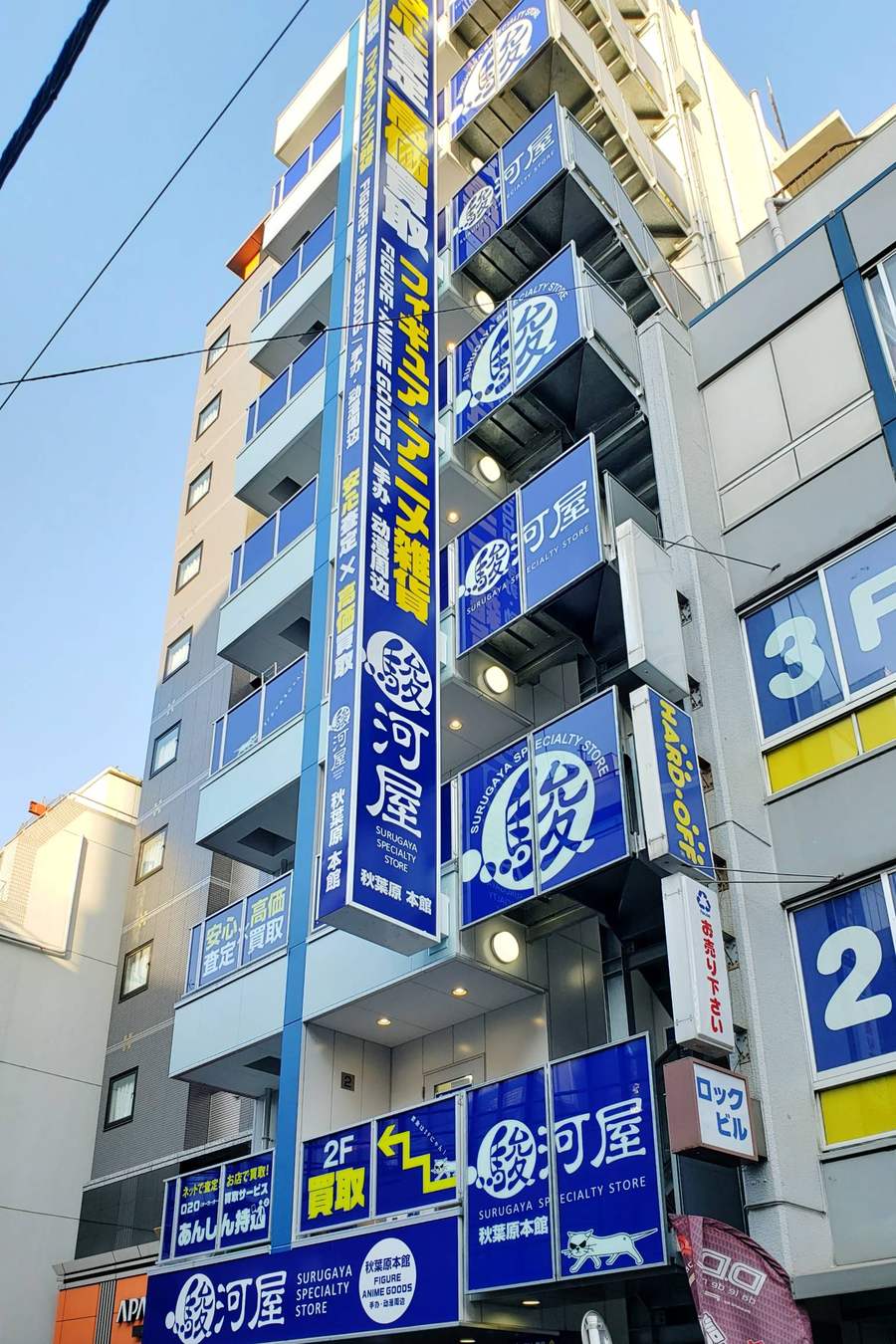
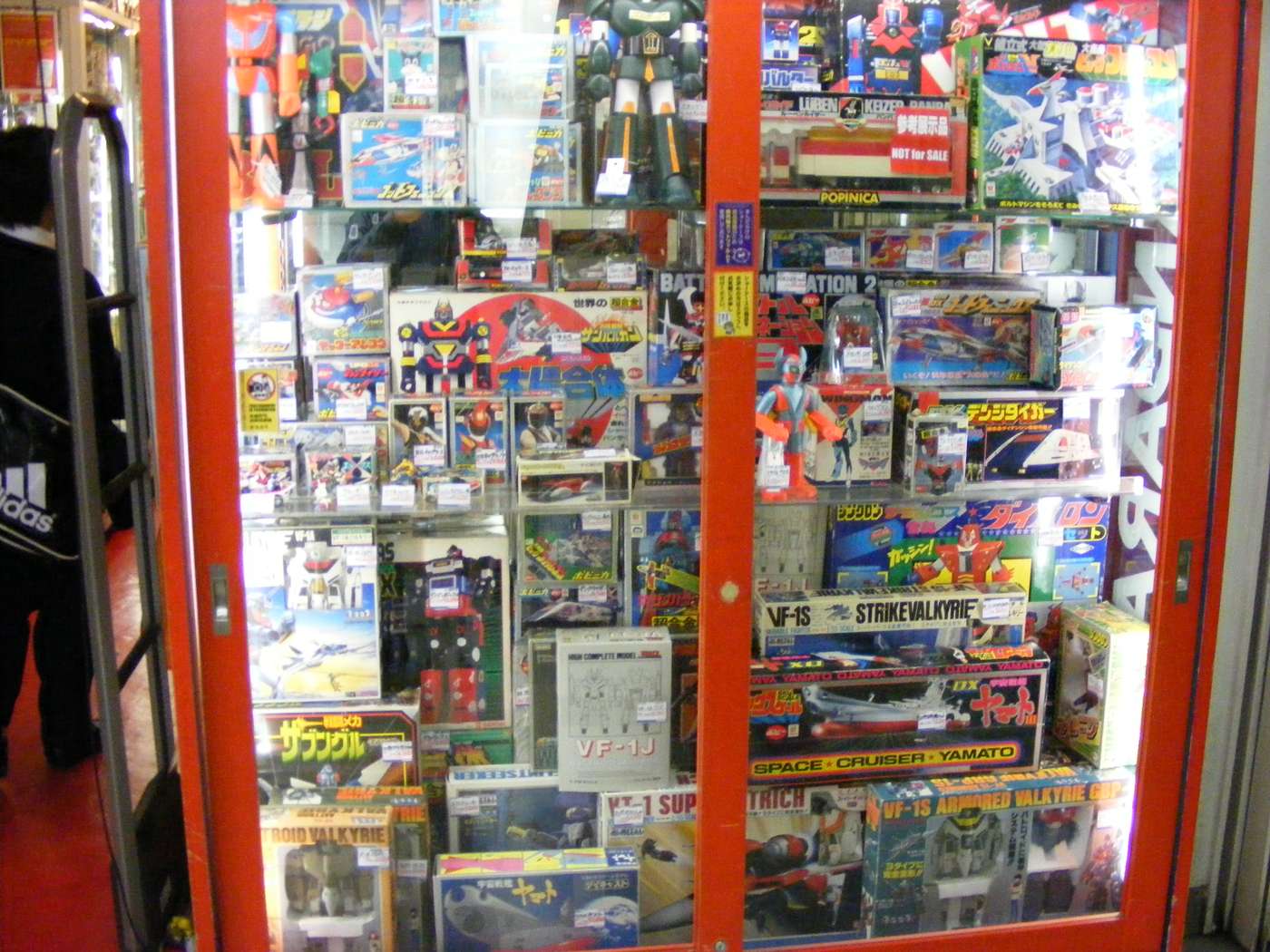
Of Suruga-ya's ~160 locations, three clusters matter for most visitors: Tokyo's Akihabara, Osaka's Nipponbashi, and Nagoya's Osu. One structural quirk to understand before you go: in Akihabara, Suruga-ya splits by category into separate specialist stores — seven locations at last count: the Main building, the Ekimae (station-front) store, a games annex, a plamo (plastic model) annex, an anime/hobby annex, a trading-card & board-game annex, and a buyback center. Unlike Mandarake Complex, which stacks everything in one tower, Suruga-ya makes you pick the right building first. Store data below comes from the official store pages (snapshots from November 2025 to February 2026) — confirm current hours on the official store pages before you go:
| Store | Location | Hours | Nearest station | Notes |
|---|---|---|---|---|
| Akihabara Main | 3-11-3 Sotokanda, Chiyoda (8 floors) | Weekdays 11:00–21:00 / weekends & hols 10:00–21:00 | JR Akihabara stn, 5 min walk | On Junk Street; floors 5–6 are adult-only — note if traveling with kids |
| Akihabara Ekimae | 1-15-15 Sotokanda, Yamamoto Musen Bldg B1–3F | Weekdays 11:00–21:00 / weekends & hols 10:00–21:00 | JR Akihabara stn, 1 min walk | Retro and current games, figures, doujinshi; free Wi-Fi |
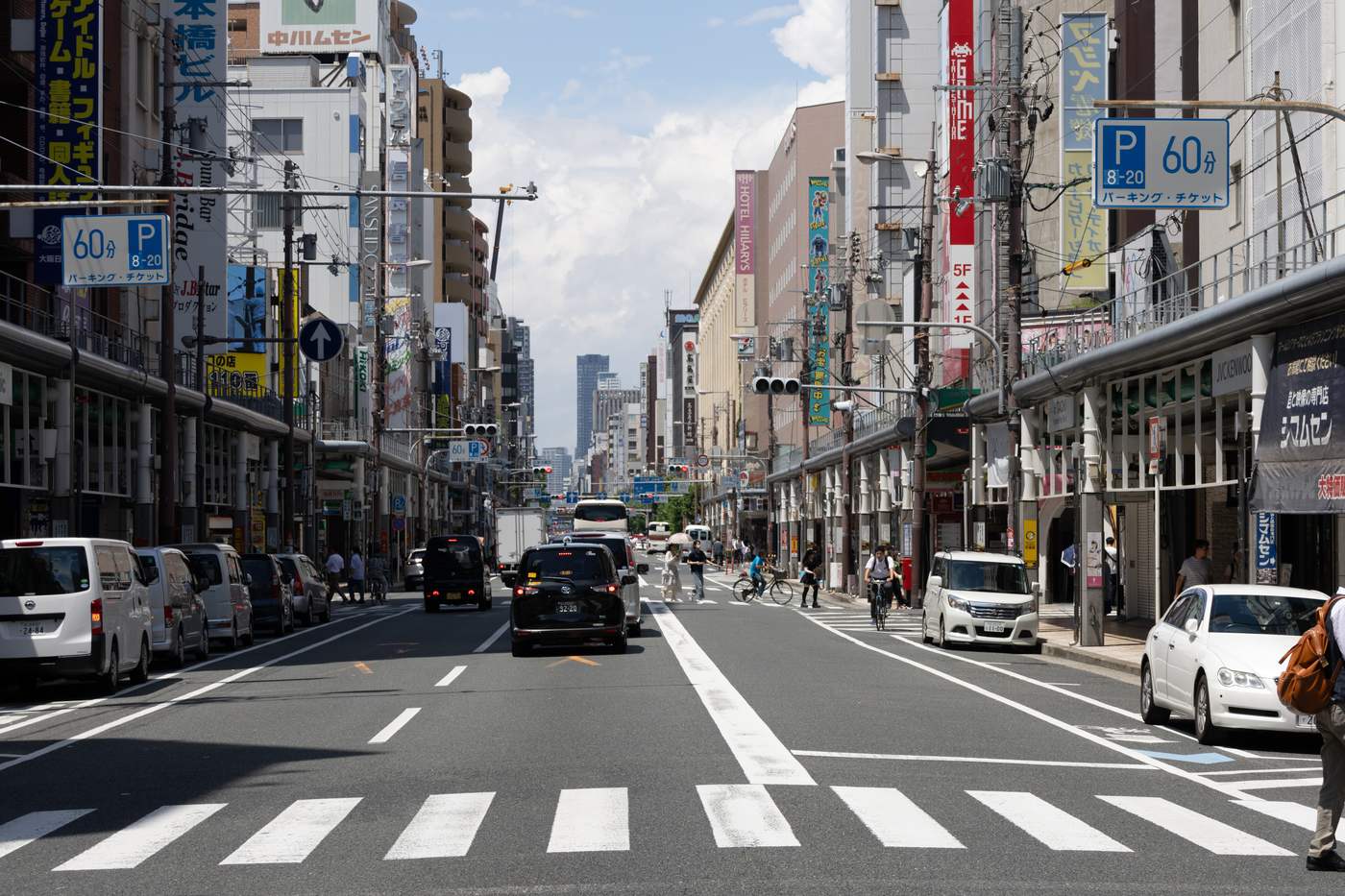
| Osaka Nipponbashi Main | 4-11-3 Nipponbashi, Naniwa-ku | 10:00–21:00, open year-round | Nankai Namba stn 7 min / Nipponbashi subway stn 10 min | On Ota Road, with separate otome and anime/hobby annexes nearby |
| Nagoya Osu Main | 3-32-23 Osu, Naka-ku (floors 3–5) | 10:00–21:00, no closing days | Kamimaezu subway stn exit 8, 2 min | 3F anime goods / 4F games, books, CDs & video / 5F figures, models, toys; a card & board-game annex sits in the same district |
Routing advice. In Akihabara, block out an afternoon and run Suruga-ya's annexes, Mandarake Complex and Lashinbang as one circuit — write your want list before entering, because secondhand stock is one-of-a-kind and hesitation means someone else's trophy. For fitting Akihabara into a wider Tokyo route, see our Tokyo 5-day itinerary. In Osaka, Nipponbashi's Ota Road is a linear strip — Suruga-ya Main, Lashinbang and Animate sit on the same walk, comfortably cleared in half a day. Nagoya's Osu mixes a covered shopping arcade with an electronics district; the Main store's floor split is clean, two minutes from Kamimaezu station. And if you're the kind of traveler who pairs shopping raids with location hunting, our anime pilgrimage hub maps 88 real-world spots nationwide, with a worked example in the Your Name Hida pilgrimage guide.
One field habit worth copying from the veterans: used items are priced individually by condition, and the same figure can differ by double-digit percentages between box grades — so regulars stand in the aisle checking Suruga-ya's own online prices and other branches' stock before committing. That requires a working connection.
How to actually save money here
Readers of our coupon guides will ask the obvious next question: does Suruga-ya offer a tourist coupon? No — and unlike Loft, there isn't even a rumored one to debunk. Suruga-ya's savings logic has exactly two layers: secondhand pricing itself, plus the 10% tax-free refund where a branch supports it. Set your expectations there and the shopping gets simpler — no coupon research, just price comparison. The honest footnotes:
- The Suruga-ya Epos card (a Marui co-branded credit card with double points in-store) requires a Japanese address — tourists can't apply, mentioned only so you can skip it.
- EC-site coupons and campaigns apply to the domestic online store, not to your in-person visit.
- Payment-app campaigns (PayPay and others) have run in the past as limited-time events — check your own wallet app's Japan page before flying; treat a hit as a bonus, never a plan.
- Can't make the trip? Suruga-ya operates an official overseas web store with international shipping — a legitimate way to stalk out-of-print items from home; shipping and handling per the official help pages.
And a closing note on the brand's overseas footprint: Suruga-ya currently lists two POPUP stores in Taipei (Eslite Spectrum Ximen B1 and the Zhongshan Metro Mall, per the official store pages as of November 2025) — pop-up format, mostly new goods, current status best confirmed via the official social accounts. Fun to browse; not a substitute. The thing that makes Suruga-ya worth a flight — warehouse-scale used inventory at Japanese secondhand prices — only exists in Japan. For the broader picture of what's worth carrying home, our Japan souvenirs and shopping guide covers the field.
Frequently Asked Questions
- Q1:Is Suruga-ya tax-free for tourists?
- Some stores are — but Suruga-ya has never published a word about it. As of our August 2026 check, the official EC site, corporate site and individual store pages contain no tax-free page, no eligible-store list, and zero occurrences of the word "tax-free" — an anomaly among Japanese secondhand chains (Mandarake declares all-store support in English; BOOKOFF runs an official inbound page). Yet a third-party tax-free shop database lists the Suruga-ya Takasaki OPA branch, and traveler reports consistently describe paying tax-free with a passport at the Akihabara branches. The practical rule: look for the red Japan Tax-free Shop cherry-blossom sign at the entrance or register, and ask the staff before you pay. Never assume a given branch qualifies.
- Q2:What is the tax-free minimum at Suruga-ya — is it ¥5,500?
- The "spend ¥5,500 with your passport and you get a refund" version you see on blogs is an oversimplification. The national rule is ¥5,000 pre-tax — about ¥5,500 with tax — combined at the same store on the same day. Two catches apply at Suruga-ya specifically. First, the branch itself must hold a tax-free permit, which the company never confirms publicly — and the November 1, 2026 reform does not remove that requirement, because under the new system the refund is still paid by the permit-holding tax-free store or the refund operator it appoints. The kiosk and customs pay nothing; only the timing of the money changes. Second, the Akihabara branches are separate stores: ¥3,000 at the main building plus ¥2,500 at the games annex does not combine. Consolidate your haul into one branch, one visit.
- Q3:Can secondhand goods be sold tax-free in Japan?
- Yes — used items are eligible under the national system, before and after the reform. Through October 31, 2026, the National Tax Agency excludes only two categories from tax-free sales: gold and platinum bullion, and goods evidently bought for business or resale. From November 1, 2026 the exclusion list becomes gold and platinum bullion, gold and platinum coins, and non-taxable items. “Secondhand” appears on neither list, so used figures, retro games, manga and doujinshi qualify with the same ¥5,000 pre-tax threshold as new products (the general-goods/consumables split itself is abolished on November 1). The proof is the industry itself: BOOKOFF, Mandarake and Lashinbang — all secondhand businesses — run official tax-free programs. The variable at Suruga-ya is never the merchandise; it's whether the individual branch holds the permit.
- Q4:Can I sell my old figures or games to Suruga-ya as a tourist?
- No — and this catches a lot of visitors off guard. Suruga-ya's official buyback FAQ lists the acceptable IDs: driver's license (Japan-issued only), passport (Japan-issued only, with the address page), Japanese health-insurance certificate, residence card, My Number card and similar — every single one is a Japanese domestic document. A Taiwanese, US or European passport is not on the list; in-store selling also requires a Suruga-ya membership card, and mail-in buyback needs a Japanese address. In practice, selling to Suruga-ya is open only to Japan residents (exchange students and workers with residence cards qualify). Sell your collection at home before you fly — don't haul a suitcase of figures to Japan on the assumption you can trade it for travel money.
- Q5:Suruga-ya vs Mandarake: which should I choose for tax-free shopping?
- Decide by priority. If the tax-free refund is the point, go to Mandarake: its official English page declares "tax free shopping is now available in all Mandarake stores" (same ¥5,000 pre-tax minimum). Note the split procedure — Nakano and Shibuya are pay-first-then-refund at the service counter (Nakano handles refunds until 19:30), while other branches deduct the tax at checkout with your passport. If selection and price matter more, Suruga-ya usually wins — larger used inventory, often cheaper — but tax-free is branch roulette. BOOKOFF offers tax-free at selected stores but charges a 3% fee (September 2025 through October 31, 2026). Big hauls you want guaranteed tax-free: Mandarake. Bargain hunting: Suruga-ya, and treat any refund as a bonus. ⚠️ The procedures and fees described here are the instant in-store system running through October 31, 2026. From November 1 all four chains charge the tax-inclusive price and refund you on departure — but the store still has to hold a tax-free permit, and none of the four has published how it will handle refunds under the new rules.
- Q6:Does Suruga-ya have stores outside Japan?
- Yes — per the official store pages (as of November 2025), Suruga-ya runs two POPUP stores in Taipei: inside Eslite Spectrum Ximen (B1) and in the Zhongshan Metro Mall. Both are pop-up format and stock mostly new merchandise — figures, acrylic stands, badges — rather than the deep used inventory that makes the Japan stores worth a pilgrimage; check Suruga-ya Taiwan's official social accounts before visiting, as pop-ups can close. There is also an official overseas web store that ships internationally (fees per the official help pages). But for rare out-of-print games and secondhand figures at Japanese secondhand prices, the physical stores in Akihabara, Nipponbashi and Osu remain the real destination.