Takamatsu and Naoshima are the rare pairing that satisfies both the art lover and the garden lover in one trip. The JR Marine Liner crosses the Seto Ohashi bridge from Okayama in just 55 minutes to reach Takamatsu, and a ferry of about an hour beyond it lies the Seto Inland Sea’s most famous art island, Naoshima. On one side sits the nationally designated Special Place of Scenic Beauty Ritsurin Garden (¥500 admission) and bowl after bowl of springy Sanuki udon; on the other, Tadao Ando’s buried Chichu Art Museum, Yayoi Kusama’s red and yellow pumpkins, and the Art House Project that turns an entire village into art. This guide covers Ritsurin, Yashima, the Naoshima ferries and reservation rules, the Chichu Art Museum, the Art House Project, Sanuki udon, and a two-day route. Heading on to Honshu? See our Okayama & Kurashiki guide.
- Shikoku’s easiest gateway: 55 min from Okayama to Takamatsu on the Marine Liner over the Seto Ohashi
- Ritsurin Garden is ¥500: a Special Place of Scenic Beauty, raised from ¥410 in June 2025; a stroll garden borrowing Mt. Shiun
- Chichu Art Museum is reservation-only: about ¥2,060, 15-minute slots, closed Mondays; Ando plus Monet’s Water Lilies
- Kusama’s red & yellow pumpkins: the red one at Miyanoura you can step inside; the yellow on a seaside pier — both free, outdoors
- Two days is most comfortable: half-to-full day in Takamatsu, all day on Naoshima; ferry 50–60 min
📖 Contents
- 1. Why visit Takamatsu & Naoshima
- 2. Takamatsu: Ritsurin, Yashima & the port
- 3. Sanuki udon, Takamatsu’s other signature
- 4. Getting to Naoshima: ferries, island transport & the Monday trap
- 5. Naoshima: Chichu, Benesse & the pumpkins
- 6. The Art House Project
- 7. Transport & lodging
- 8. A two-day Takamatsu + Naoshima plan
- 9. FAQ
Why visit Takamatsu & Naoshima
Many travelers assume Shikoku is far and hard to reach, but Takamatsu is the most accessible corner of the island: it sits at the Shikoku end of the Seto Ohashi bridge, and a single Marine Liner from Okayama on Honshu crosses the water in 55 minutes — far closer than it sounds. Its value is not in a dense checklist of sights but in a contrast of moods. Takamatsu offers slowness: the stroll paths of Ritsurin Garden, the Seto Inland Sea panorama from Yashima’s flat-topped plateau, a steaming bowl of Sanuki udon. Naoshima offers strangeness: a museum buried underground, a pumpkin on a seaside pier, an old village turned into walk-in art.
The trade-off most travelers settle on is this: if you simply want a taste of Shikoku with limited time, Takamatsu plus Naoshima is exactly enough — exciting without being scattered. My clear advice is to weight Naoshima if you love art, Takamatsu if you love gardens and food, but as long as you can spare two days, do both, because they complete each other. There is one more factor: the Setouchi Triennale, held every three years, links Naoshima, Teshima, Inujima, and other islands into one art network. When a session is on (split across spring, summer, and autumn), crowds and the number of installations both surge, so plan further ahead if your dates overlap.
Takamatsu: Ritsurin, Yashima & the port
Takamatsu has only a handful of sights, but the headline one is substantial: Ritsurin Garden. It was the daimyo garden of the Matsudaira lords of Takamatsu, broadly completed in 1745, and today it is a nationally designated Special Place of Scenic Beauty — a rank above ordinary "scenic site," held by only a tiny number of gardens nationwide, which is why people often say it surpasses Japan’s "three great gardens." It uses the wooded Mt. Shiun behind it as borrowed scenery, with six ponds and thirteen artificial hills laid out as a classic stroll garden, so the composition shifts at every bend. The signature views are the look down over the South Pond and the crescent Engetsu bridge from Hiraiho, and the lakeside Kikugetsu-tei teahouse, where you can pay extra for matcha while you take in the scene.
The practicalities: admission is ¥500 for adults and ¥170 for school-age children, free for pre-schoolers; that ¥500 only rose from ¥410 in June 2025 (the first increase in 25 years apart from tax adjustments), and entry is free on New Year’s Day (Jan 1) and the garden’s anniversary (Mar 16). Hours shift by month, roughly sunrise to sunset: longest in summer (about 5:30–18:30) and shortest in winter (about 7:00–17:00), open year-round. A relaxed loop runs 60–90 minutes — go early when it is quiet and the light is low.
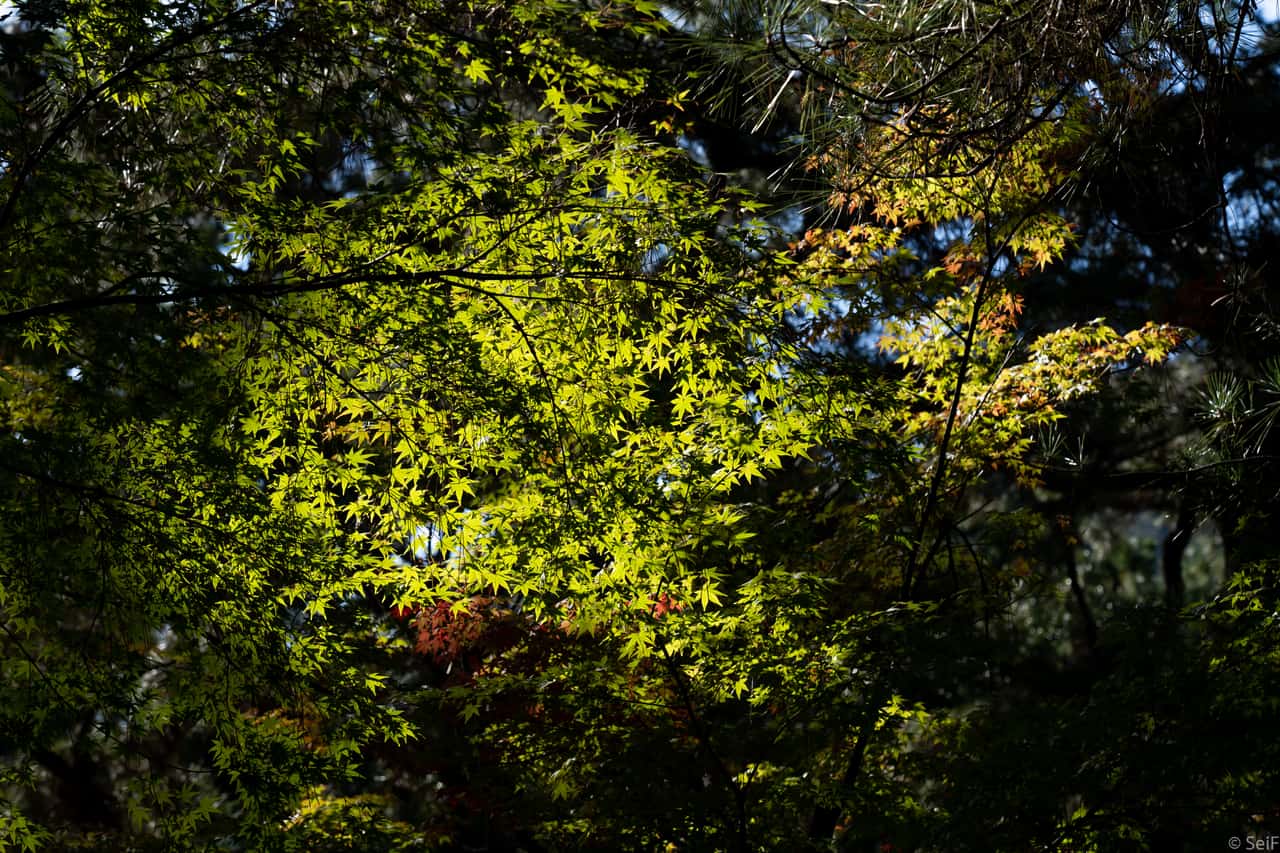
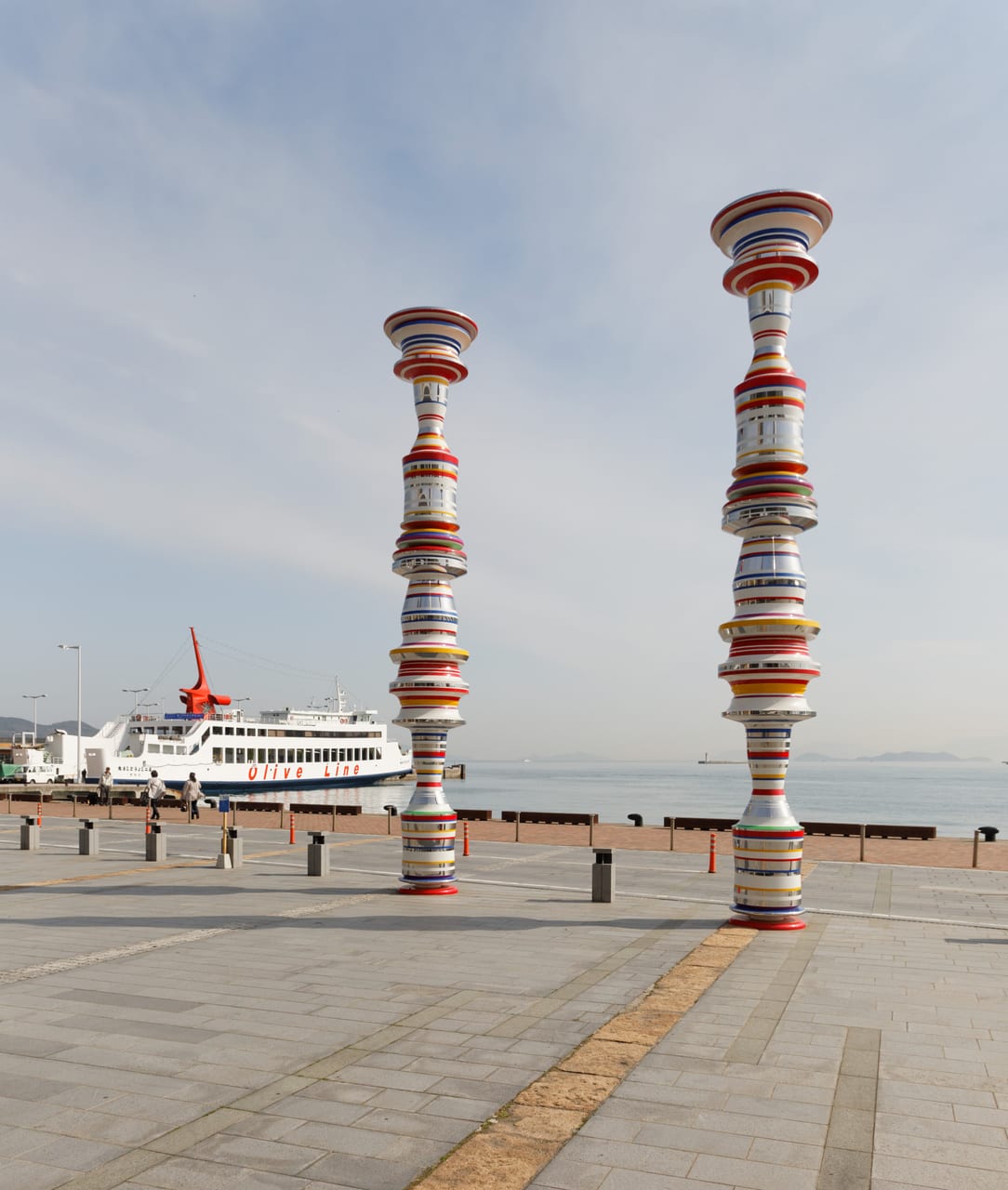
If you have time to spare, Yashima is worth adding. It is a flat-topped mesa-like plateau east of central Takamatsu, with a summit observation deck taking in the island-studded Seto Inland Sea and the city below; the Genpei War battlefield lies in this area, and Yashima-ji at the top is the 84th temple of the Shikoku pilgrimage. You can drive up or take the Yashima Sanjo shuttle bus, and sunset is especially popular. Back in town, Sunport Takamatsu is the gateway for ferries and the Triennale, with a Yoshio Taniguchi glass tower and large public artworks — a pleasant place to wander by the water while you wait for a boat.
Sanuki udon, Takamatsu’s other signature
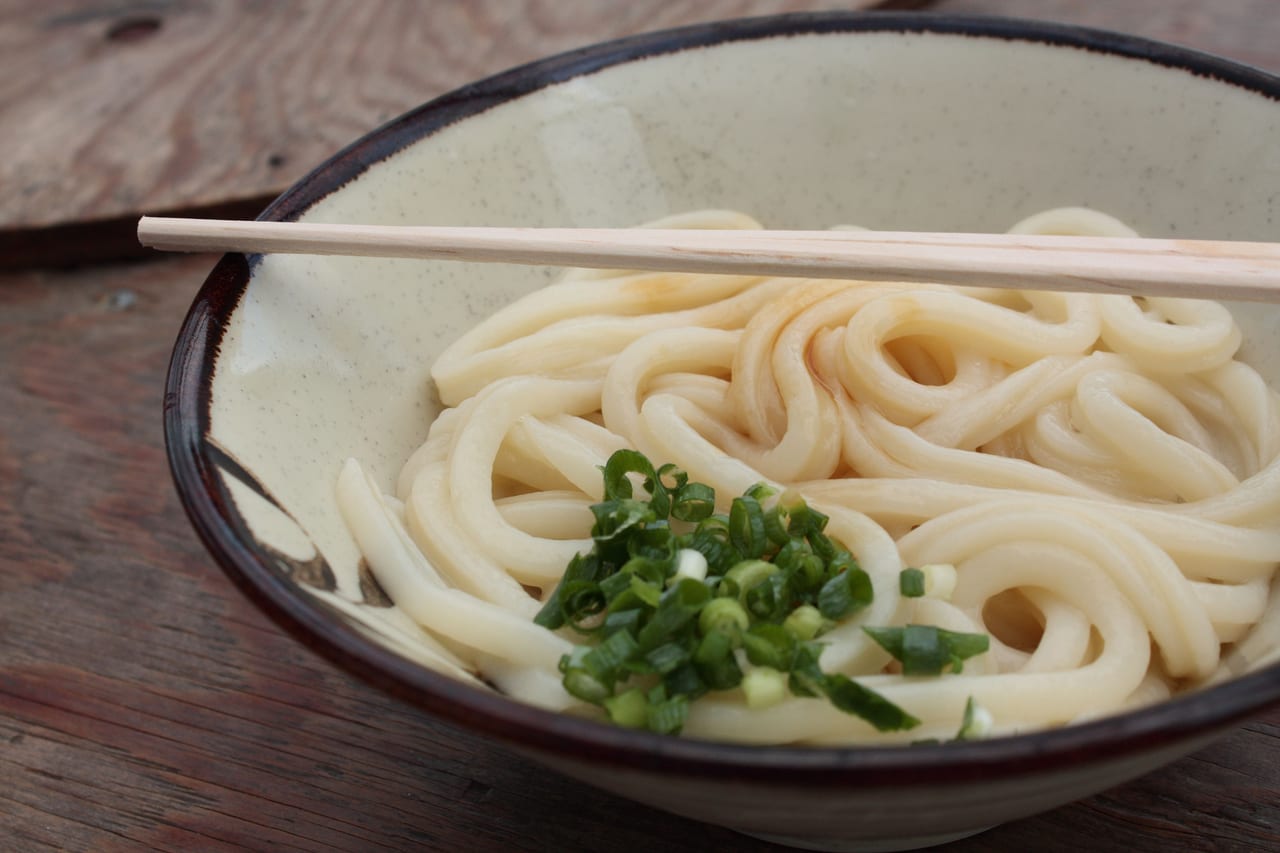
Kagawa (old Sanuki) is Japan’s acknowledged udon kingdom, with the highest density of udon shops per capita in the country — coming to Takamatsu and skipping Sanuki udon is missing the point. Its hallmark is a thick noodle with an intense chew (koshi), achieved through resting and foot-kneading the dough, paired with Shodoshima soy sauce and local dashi. The styles run wide: the basic kake (in hot broth), kamatama (with a raw egg), kamaage (fresh from the pot, dipped straight into soy sauce), and chilled zaru / hiyashi in summer. It is astonishingly cheap — many shops serve a bowl for ¥300–500, the best-value meal in Takamatsu.
The local way is the self-service (serufu) udon shop: you carry your own bowl, ladle your own broth, pick your tempura toppings, and pay at the end — a flow a bit like a school canteen that can fluster first-timers, but that is the spirit of Sanuki udon. There are famous shops in town and out in the countryside; per traveler discussions, many people make a deliberate run on an "udon bus" or "udon taxi" circuit of popular rural shops (a lot of them sit in the middle of rice fields, unreachable without wheels). If you are staying central, there are plenty of self-service shops around Takamatsu Station and the shopping arcade — perfect for a quick bowl before or after a train.
Getting to Naoshima: ferries, island transport & the Monday trap
There are two main ferry routes to Naoshima — pick by where you are coming from:
- Takamatsu Port ↔ Miyanoura (Naoshima): the regular boat is about 50–60 min, ¥680; a high-speed boat is about 30 min for ¥1,590. Use this from the Shikoku side if you base yourself in Takamatsu.
- Uno Port (Tamano, Okayama) ↔ Miyanoura: about 15–20 min, the shortest crossing from the Honshu side. Take the JR Uno Line from Okayama to Uno Station and walk a few minutes to the port — ideal for "into Okayama, day trip to Naoshima, back to Okayama."
Ferries are not frequent (several sailings a day), so check the Shikoku Kisen timetable in advance and lock in your return — miss one and you may wait an hour or two. Once on the island, you get around by the town bus (red-dot livery, about ¥100 a ride) or a rented bicycle / e-bike. Naoshima is small but hilly, and the Chichu cluster is at the far end of the island, so an e-bike or the bus is the practical choice; within the Benesse Area there is also a free shuttle linking the venues.
The single most important warning: most Naoshima museums close on Mondays (Chichu, Lee Ufan, Valley Gallery, etc., usually shifting to the next day if Monday is a holiday), so do not schedule Naoshima on a Monday. Closing days are not identical across venues, so check each one against the official "opening calendar" before you go.
Naoshima: Chichu, Benesse & the pumpkins
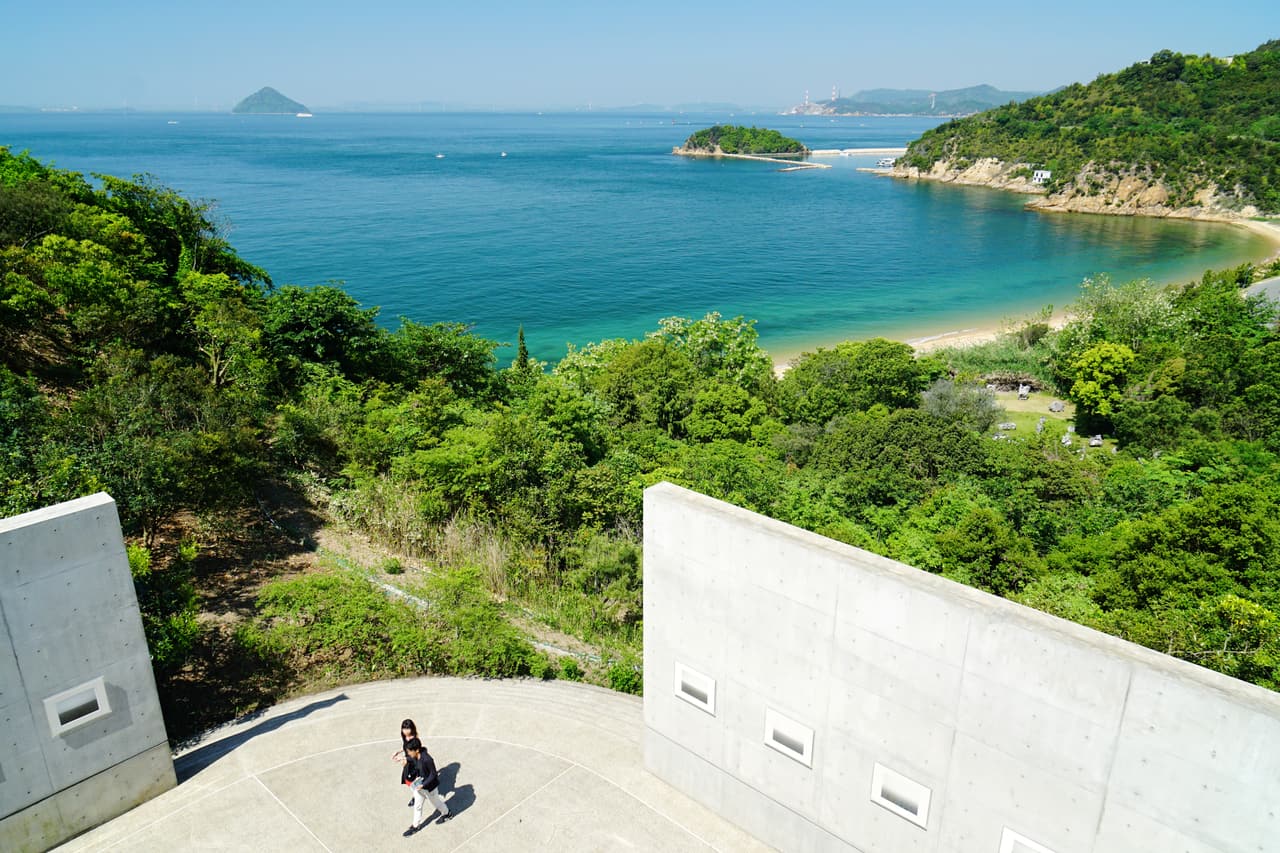
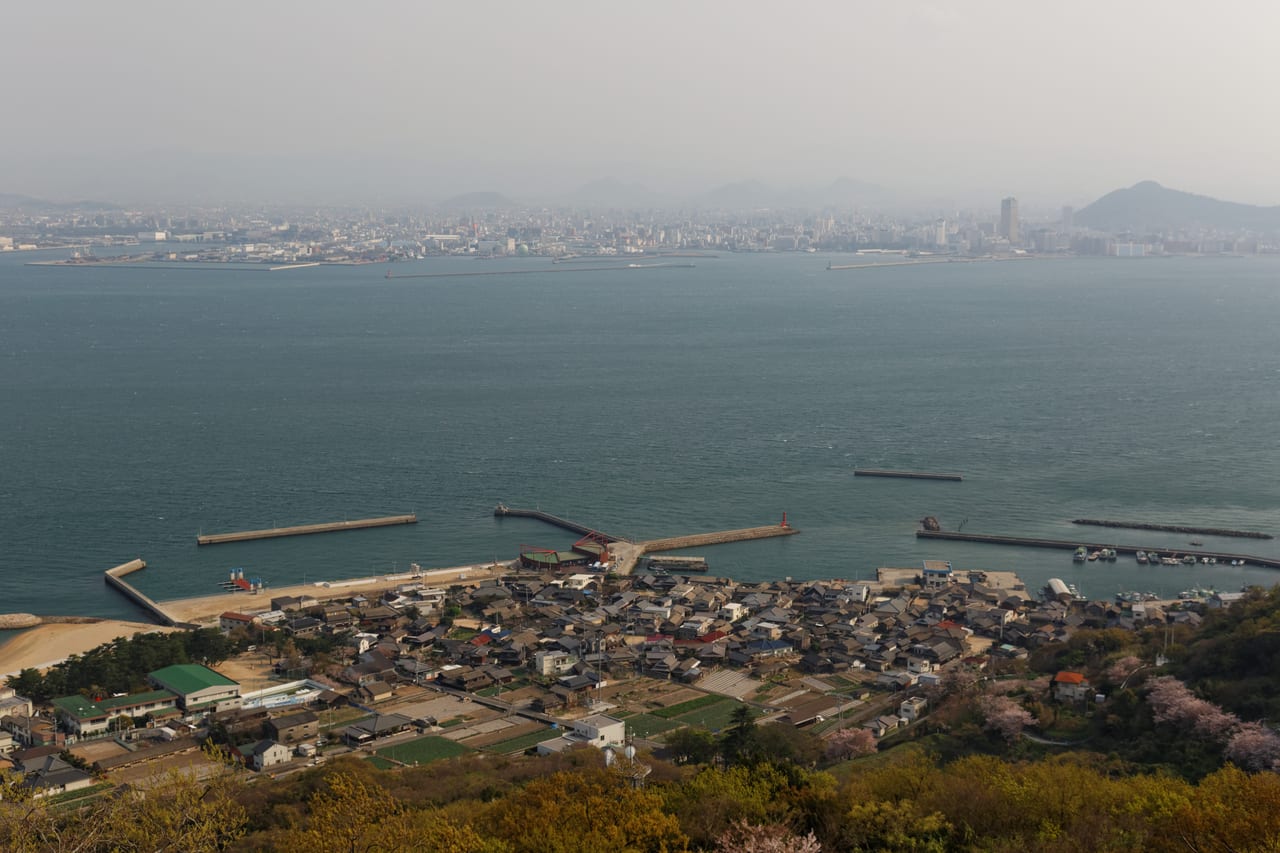
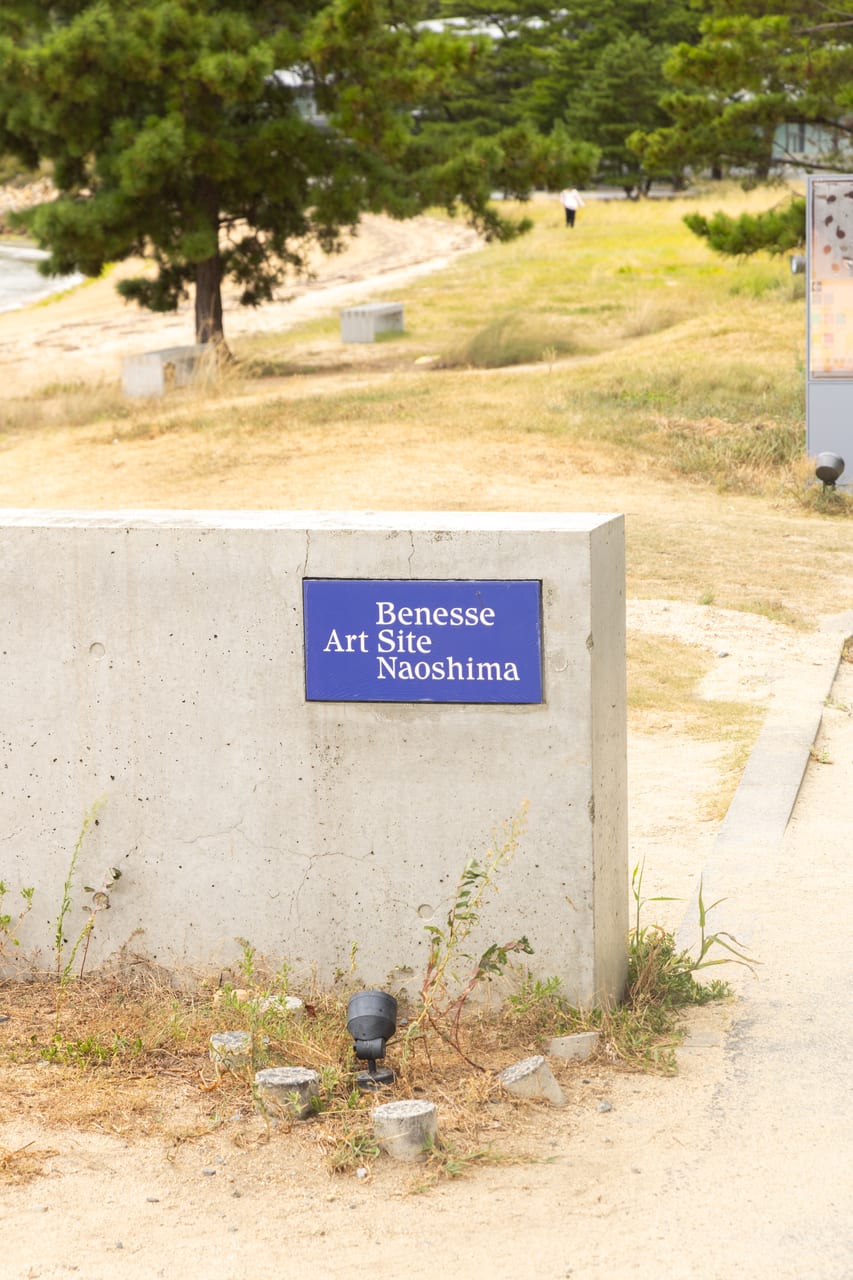
Naoshima is the "art island" the Benesse group has been building since the 1980s, stitching contemporary art, architecture, and the Seto Inland Sea landscape together, with the core in the Benesse Art Site at the island’s south end. The crown jewel is Tadao Ando’s Chichu Art Museum — as the name (literally "underground") suggests, the whole museum is buried, almost invisible from outside, lit by skylights so the light and shadow shift with the time and weather. Inside are Monet’s Water Lilies, a James Turrell light space, and Walter De Maria’s monumental stone installation — a design that makes the architecture itself the largest exhibit.
Pin down the practicalities: the Chichu Art Museum is reservation-only, with entry slots every 15 minutes, admission about ¥2,060 (per the official notice), and it is closed Mondays; if the day’s slots sell out you cannot enter, so reserve ahead on benesse-artsite.jp. Per Benesse’s January 2026 notice, the reservation system changes from August 1, 2026, so check the latest version before booking. Nearby, the Benesse House Museum (a museum-cum-hotel, open Mondays) and the Lee Ufan Museum are both worth adding — the three can fill an afternoon at the island’s south end.
As for the Kusama pumpkins most people come for, Naoshima has two, both outdoors and free to see: the Red Pumpkin at Miyanoura Port, in view the moment the ferry lands, hollow inside so you can step in and shoot out through the holes; and the Yellow Pumpkin at the end of an old seaside pier near Benesse House, installed in 1994 and the island’s most iconic image against the Seto Inland Sea. An honest caveat: outdoor works are occasionally removed or relocated for maintenance, weather, or typhoons (the Yellow Pumpkin was once damaged by a typhoon and sent for repair), so "is the pumpkin there" is a real facility-status question — check the official site beforehand. That is separate from whether the indoor venues are open. Outdoor photography is fine, but indoor spaces like the Chichu Art Museum prohibit photography entirely.
The Art House Project
If Chichu and Benesse are the "big venues," the Art House Project (Ie Project) is Naoshima’s most human side. It hands the old houses, vacant homes, and even a shrine of the central Honmura district to artists, who turn them into permanent works scattered through the lanes — ticket in hand, you go from one to the next like a treasure hunt. Among the better-known are "Kadoya," a former home turned into a numeric light installation, a work by Tatsuo Miyajima, and "Go’o Shrine" (Hiroshi Sugimoto), rebuilt with a glass staircase.
The Art House Project plays completely differently from the big museums: there is no grand architectural mass, just slow movement through the narrow lanes of a traditional settlement, pushing open an old door to an unexpected space. Honmura is small and walkable — take the town bus to the "Honmura" stop and continue on foot. Note that each work has its own open and closed days, some need a separate combined ticket, and you should confirm against the official site before you go. Another low-key but fun stop is "Naoshima Bath I♥湯" at Miyanoura — an art bathhouse you can actually soak in, often open on Mondays when many big venues are shut, making it a good backup.
Transport & lodging
Getting to Takamatsu is smoothest by the JR Marine Liner across the Seto Ohashi bridge from Okayama, about 55 minutes to Takamatsu Station. Okayama is a major Sanyo Shinkansen stop: Shin-Osaka → Okayama about 45 min, Tokyo → Okayama about 3 hr 10 min, Hakata → Okayama about 1 hr 40 min — so from either Kansai or Kanto the line is "to Okayama, then Marine Liner across the water." There are also direct flights into Takamatsu Airport and highway buses and ferries from Kansai and Kobe, but for most independent travelers the Marine Liner is the simplest.
Whether a JR Pass pays off depends on your route: if you are only doing "Okayama ↔ Takamatsu" return, paying for the Marine Liner leg by leg (about ¥1,660 one way, reserved seats extra) usually beats a pass; but if your trip spans Kansai, Sanyo, and Shikoku with many Shinkansen and limited-express legs, a nationwide or Shikoku pass may break even — run your actual route through the break-even math in our JR Pass guide rather than buying on a hunch.
For lodging, it depends on where you put your weight. Basing in Takamatsu is most flexible — the area around Takamatsu Station and the port is convenient for both the Marine Liner and the ferries, has plenty of business hotels at gentler prices than Kyoto or Osaka, and suits "two nights in Takamatsu, Naoshima as a day trip." If you want to soak in the art-island atmosphere, you can also stay a night on Naoshima itself (Benesse House is a hotel, and the island has guesthouses and hostels too): the upside is the pumpkins and the village in the empty hours after the day-trippers leave and at dawn, which you cannot get on a same-day return; the downside is that island lodging is limited and books out far ahead in peak season and during the Triennale. Triennale sessions (the spring, summer, and autumn of every third year) tighten rooms region-wide, so reserve early.
A two-day Takamatsu + Naoshima plan
Here is the same content shaped into a route that walks well (remember to avoid Mondays for Naoshima):
- Day 1 (Takamatsu): Marine Liner across from Okayama, drop bags → morning at Ritsurin Garden (60–90 min, Hiraiho and Kikugetsu-tei) → self-service Sanuki udon lunch → afternoon at the Yashima observation deck or a port stroll, energy permitting → dinner in the arcade, early night before the island.
- Day 2 (Naoshima all day): early ferry from Takamatsu Port to Miyanoura (shoot the Red Pumpkin first) → rent an e-bike or take the town bus to the south end → enter the Chichu Art Museum at your reserved slot first → Benesse House Museum, Lee Ufan Museum → the seaside Yellow Pumpkin → afternoon back to Honmura for the Art House Project → evening ferry back to Takamatsu, or via Uno Port onward to Okayama.
If you only have one day, choose "Naoshima for art, Takamatsu for garden and food" rather than cramming both and skimming each. From here the route extends to Honshu via Okayama and the Kurashiki Bikan district (see our Okayama & Kurashiki guide), or deeper into Shikoku to soak at Matsuyama’s Dogo Onsen (see our Matsuyama & Dogo Onsen guide). Staying in Kagawa, you are about an hour by train from the 785 steps of Konpira-san and the Kanamaru-za theater; further into Shikoku, the east holds the Naruto whirlpools, the Iya Valley vine bridges, and Oboke gorge, and the south runs to Kochi Castle, Katsurahama, and the Shimanto River. Pre-trip weather and packing are in our Japan packing & weather guide.
FAQ
- Q1:How many days do you need for Takamatsu and Naoshima? Is one day enough?
- Honestly, cramming both into one day is very rushed — plan at least two days. The ferry to Naoshima alone is about an hour each way, the Chichu Art Museum requires a timed reservation, and you move between venues by bus or bike, so the island deserves a full day. Takamatsu’s Ritsurin Garden, Sanuki udon, and Yashima fill another half to full day. The clean split is day one in Takamatsu (Ritsurin, udon, Yashima), day two entirely on Naoshima, then a ferry back to Takamatsu or onward via Uno Port to Okayama. If you truly have one day, pick one: Naoshima for art, Takamatsu for garden and udon — do not try to do both.
- Q2:How much is Ritsurin Garden, what are the hours, and is it worth it?
- Very much worth it — it is a nationally designated Special Place of Scenic Beauty (a rank above an ordinary scenic site), and many argue it beats Japan’s "three great gardens." Admission is ¥500 for adults and ¥170 for children (school age), free for pre-schoolers; that ¥500 only rose from ¥410 in June 2025, the first increase in 25 years outside of consumption-tax adjustments. Hours shift with the season, roughly sunrise to sunset: longest in summer (Jun–Aug, about 5:30–18:30) and shortest in winter (about 7:00–17:00), open year-round (it closes only when Takamatsu issues a storm warning). A relaxed loop of the stroll garden takes 60–90 minutes; go early when it is quiet.
- Q3:Do I have to reserve the Chichu Art Museum online? How much is admission?
- Yes. The Chichu Art Museum uses a full reservation system (timed online tickets), with entry slots every 15 minutes; if the slots sell out you cannot enter on the day, so book ahead on the official site. Admission is about ¥2,060 per the official notice (under-15s are free of viewing fee but still need a reserved slot). Two things to note: (1) it is closed on Mondays (moved to the next day if Monday is a holiday — though the Benesse House Museum stays open Mondays), and (2) per Benesse’s January 2026 notice, the reservation system changes from August 1, 2026, so confirm the latest version on benesse-artsite.jp before booking. Tadao Ando’s buried concrete spaces and Monet’s Water Lilies are the island’s signature — popular slots fill fast, so reserve early.
- Q4:Where are Naoshima’s Kusama pumpkins, and can I photograph them?
- Naoshima has two Kusama pumpkins, both outdoors, free to see and photograph: the Red Pumpkin at Miyanoura Port (right where the ferry lands — it is hollow, and you can step inside to shoot out through the openings), and the Yellow Pumpkin at the end of an old pier near Benesse House (installed in 1994, the island’s most iconic view). One honest caveat: outdoor works are occasionally removed or relocated for maintenance, weather, or typhoons (the Yellow Pumpkin was once damaged by a typhoon and sent for repair), so check the official site beforehand to confirm it is in place. Outdoor photography is fine, but indoor venues like the Chichu Art Museum prohibit photography — keep the two separate.
- Q5:How do I get to Takamatsu and Naoshima from Okayama, Osaka, or Tokyo?
- The easiest way to Takamatsu is the JR Marine Liner across the Seto Ohashi bridge from Okayama, about 55 minutes to Takamatsu Station, with a double-decker observation car and great Seto Inland Sea views. Okayama is a major Sanyo Shinkansen stop: Shin-Osaka → Okayama about 45 min, Tokyo → Okayama about 3 hr 10 min, so "Tokyo/Osaka → Okayama → Takamatsu" flows well. For Naoshima there are two ferry lines: Takamatsu Port ↔ Miyanoura (Naoshima) about 50–60 min (¥680, or a high-speed boat about 30 min for ¥1,590), or from the Honshu side Uno Port (Okayama) ↔ Miyanoura about 15–20 min. If your trip spans Honshu and Shikoku with several JR legs, set up data first with a KKday Japan eSIM so you can check timetables on the move; whether a JR Pass pays off is in the transport section and our JR Pass guide.
- Q6:Many Naoshima museums close on Mondays — what if my visit lands on one?
- This is the classic Naoshima trap. The Chichu Art Museum, Lee Ufan Museum, Valley Gallery, and most venues close on Mondays (usually shifting to the next weekday if Monday is a holiday), so never schedule Naoshima on a Monday. If you cannot avoid it, the outdoor Red and Yellow Pumpkins, the "Naoshima Bath I♥湯" at Miyanoura, and some Art House Project works may still be open, but the headline Chichu and Benesse venues will be shut. The safest move is to check the "opening calendar" on benesse-artsite.jp before you go — closing days are not identical across venues, so match each one against your dates.
Related reading:
Matsuyama & Dogo Onsen Guide 2026: Honkan, Castle, Train
Dogo Onsen Honkan fully reopened in July 2024 (bathing from ¥700), and Matsuyama Castle is one of Japan's 12 original keeps — plus Asuka-no-Yu, the castle ropeway, the Botchan train, and access from Okayama.
Okayama & Kurashiki Guide 2026: Korakuen, Bikan & Denim
Korakuen (one of Japan's three great gardens), the white-walled Kurashiki Bikan quarter and Kojima denim — the best stop on the Sanyo Line.
JR Pass 2026: Is It Still Worth It?
Four real routes calculated, six alternatives that may beat the Pass.