Hida-Takayama is the best-preserved Edo old town in the mountains of central Japan, known as "the little Kyoto of Hida." Its appeal is concentrated: rows of dark wooden merchant houses on the Sanmachi old streets, the only surviving Takayama Jinya in Japan, the morning market laid out along the river, melt-in-your-mouth Hida beef, and the Takayama Festival, ranked among Japan's most beautiful. Better still, it's superbly placed as the base for Shirakawa-go and Okuhida. This guide covers the old streets, the jinya, the market, Hida beef and the festival, plus how to use Takayama as a base, access and day-trip vs overnight. It's the Hida deep-dive for Chubu; the gateway is in our Nagoya guide.
- Little Kyoto of Hida: a beautifully preserved Edo town and the best base for Shirakawa-go and Okuhida
- Free Sanmachi old-street stroll: dark wooden merchant houses, sake breweries, artsy cafes
- Takayama Jinya ¥430: the only surviving Edo government office in Japan
- Hida beef: nigiri, skewers, hoba-miso — stall-hop the old streets, eating each bite by the counter
- Takayama Festival: April and October; miss it and still see real floats at the Exhibition Hall
📖 Table of contents
What kind of place Takayama is
Takayama lies in the Hida region of northern Gifu, cradled by mountains and long famous for woodwork and sake brewing. In the Edo period the shogunate ruled it directly, leaving a complete merchant town and administrative buildings, and it escaped wartime bombing — so today you can still see a whole sweep of authentic Edo townscape, rare in Japan and the source of its "little Kyoto of Hida" name.
For travelers Takayama has two kinds of value. One, the town itself rewards slow wandering: the old streets, the jinya, the market, Hida beef — half a day to a day. Two, it works as the base for the Hida region: west to Shirakawa-go, east to the Okuhida onsen villages and the Shinhotaka Ropeway, all easiest from Takayama. Below, the town first, then how to extend.
The Sanmachi old-street stroll
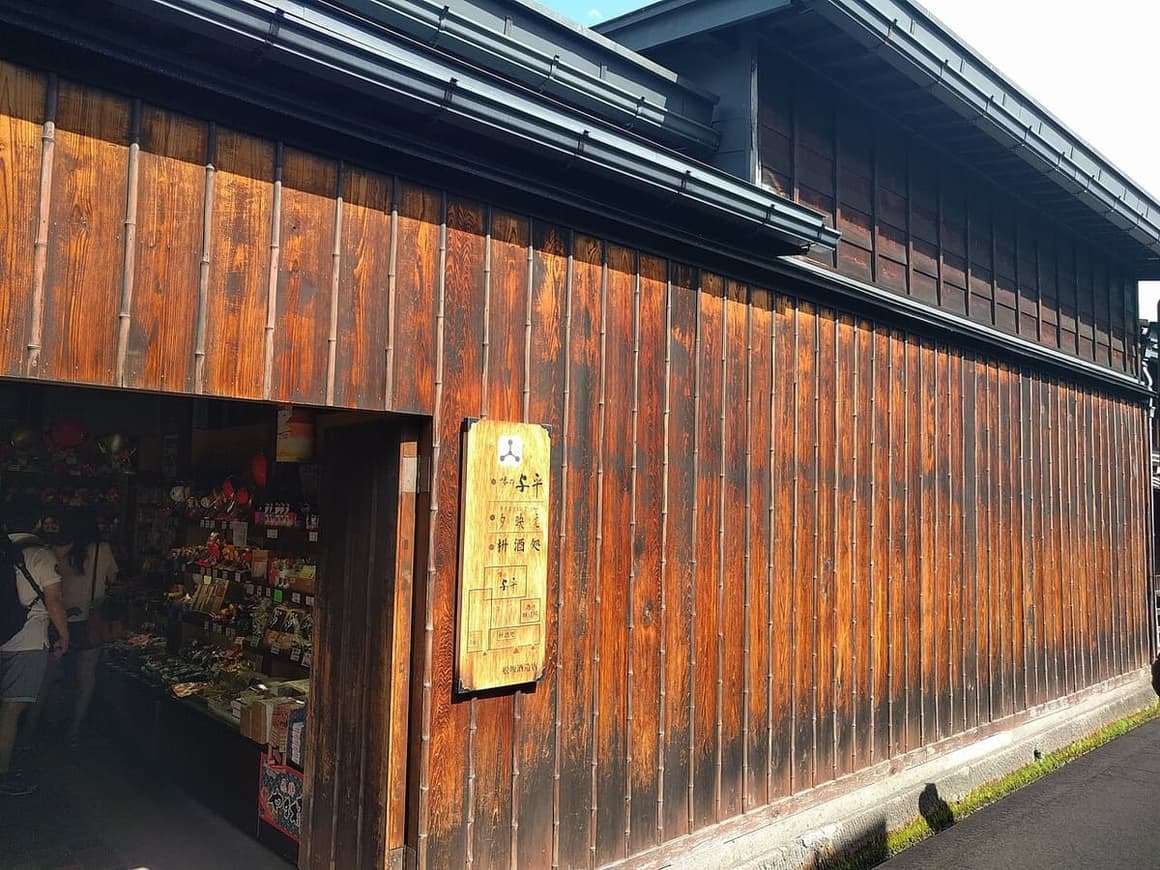
Takayama's heart is the old streets known as "Sanmachi" — around Kami-Sannomachi, where rows of Edo-era dark wooden merchant houses line the narrow lanes with lattice windows, noren curtains and understated wooden signs, the atmosphere thick enough to feel like stepping into a period drama. Once Hida's commercial center, the houses now hold cafes, craft shops, miso makers and artisans, and strolling, photographing and snacking here is delightful — and the walk itself is free.
A local tip: a house with a big green or brown ball over the door (a sugidama, a cedar ball) is a working sake brewery — Takayama's good water made it a brewing town, and the old breweries usually offer tastings, so sake lovers shouldn't miss them. The streets are best photographed early morning or evening when quiet; midday they fill with tour groups. If this Edo post-town atmosphere is your thing, an even better-preserved stretch of Nakasendo waystations lies south in the Kiso valley — see our Kiso valley Magome-Tsumago walk.
Takayama Jinya
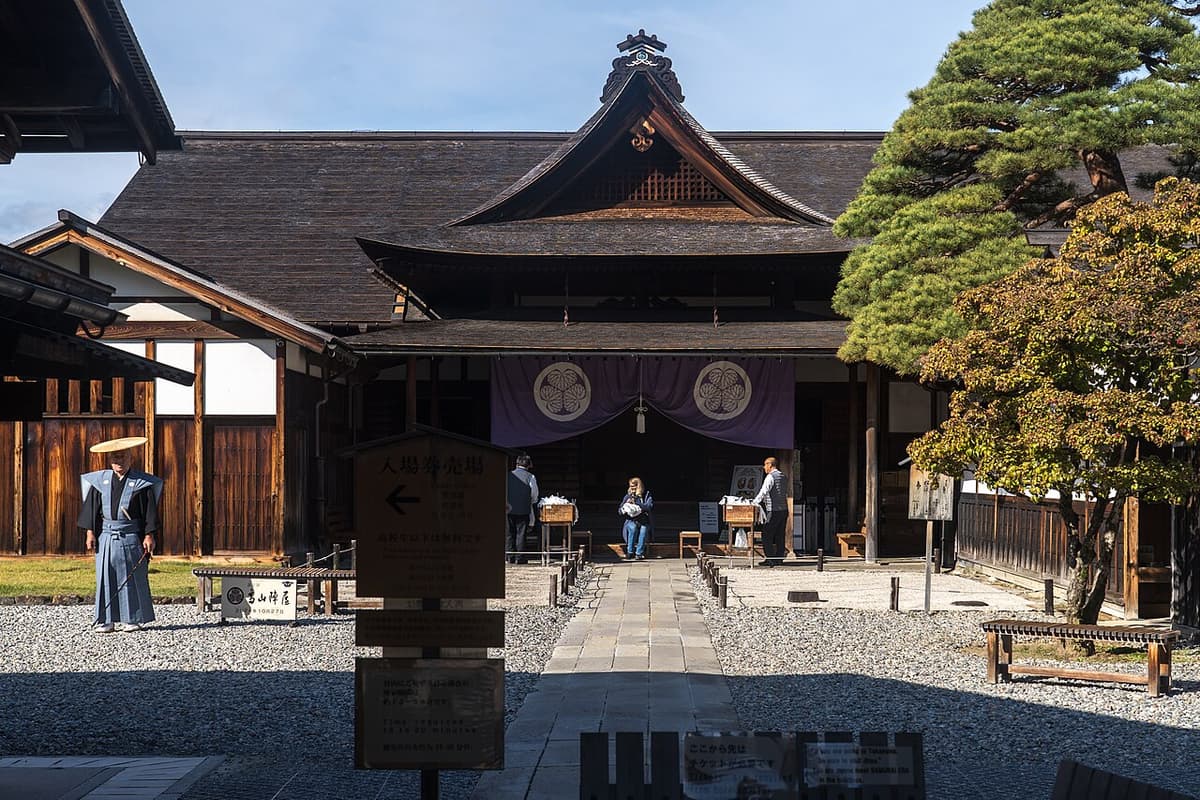
Right by the market, Takayama Jinya is the most historically weighty stop in town. It was the regional government office established when the Edo shogunate ruled Hida directly, and it's the only surviving jinya building in all of Japan — genuinely rare. Step inside to see the period offices, the "shirasu" interrogation court, and the storehouses for the rice tax — a concrete way to grasp how Edo local rule worked. Admission is ¥430 for adults, free for high-schoolers and under. Pair it with the old streets and the market for a half-day history walk.
The Miyagawa morning market
Takayama's mornings belong to the markets. The Miyagawa morning market along the riverbank and the Jinya-mae market in front of Takayama Jinya run each morning (about 7am to noon), where local farmers and shops set out seasonal produce, pickles, miso, flowers and Hida crafts. The pleasure isn't only buying — it's chatting with the vendors and feeling the rhythm of the small town. Get up early and make the market your first stop, then the jinya and old streets, the smoothest routing and a way to beat the midday crowds on the old streets.
Hida beef
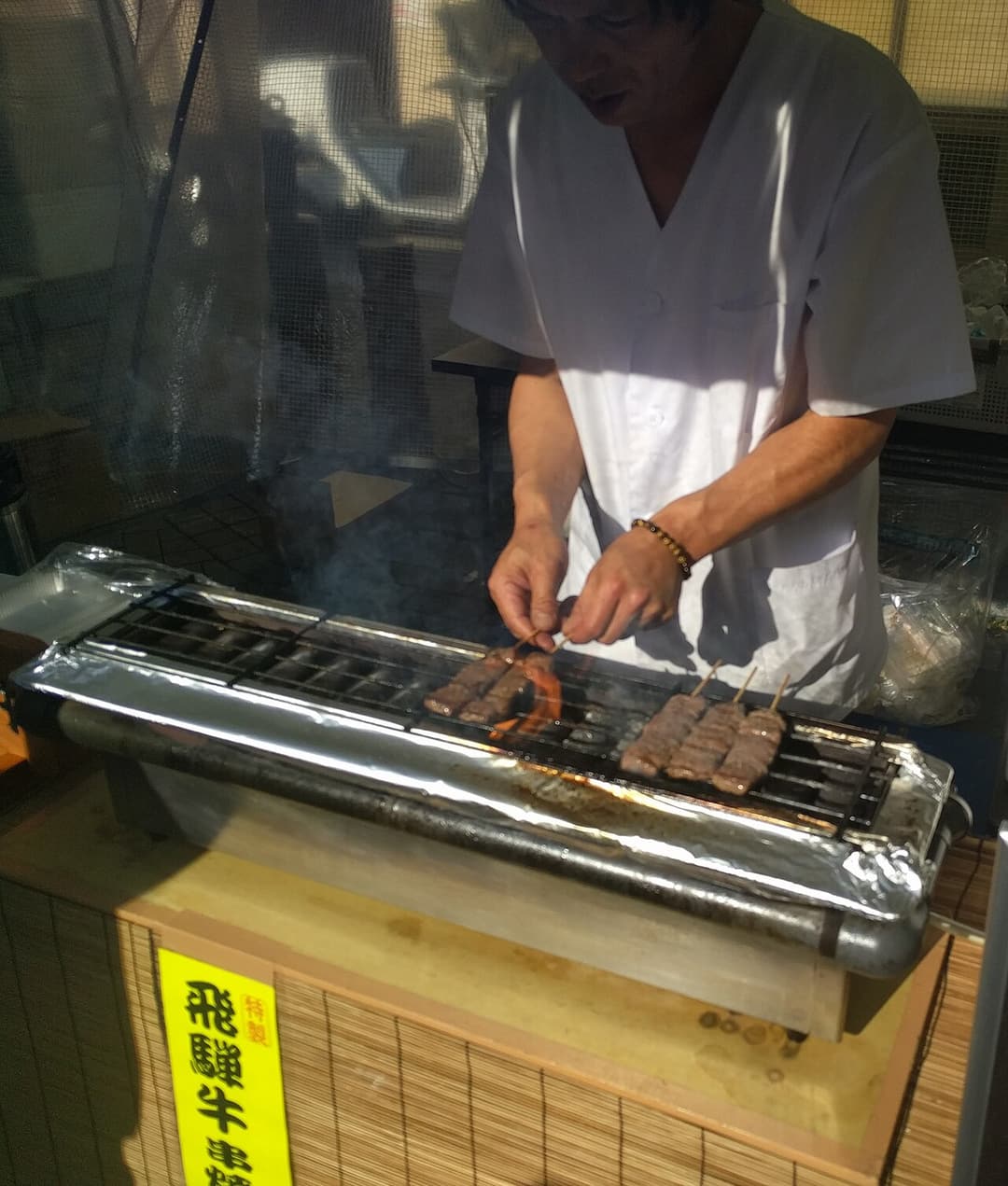
A visit to Takayama means eating Hida beef — Gifu's proud top-grade wagyu, finely marbled and melting. The beauty of Takayama is the range of ways to eat it, at any budget: Hida-beef nigiri (seared and set on a rice cracker or rice, eaten standing — the most popular street snack on the old streets), skewers, hoba-miso (beef grilled with miso on a magnolia leaf, a Hida country style), and proper steak or sukiyaki.
My advice: stall-hop the old streets for nigiri and skewers — eaten standing at each shop, since eating while walking is frowned upon — then sit down at a specialist for a proper meal. The streets are packed with stalls and the aroma is everywhere — one of the happiest stretches of a Takayama visit. On a budget you needn't commit to a full course; even the nigiri alone shows off Hida beef's finesse.
The Takayama Festival and Float Hall
The Takayama Festival ranks with Kyoto's Gion Festival and the Chichibu Night Festival among Japan's three most beautiful (we cover Gion Matsuri paid grandstand seats separately), in two halves — the spring Sanno Festival (April 14-15) and the autumn Hachiman Festival (October 9-10). During the festival, ornately decorated yatai floats with karakuri puppets parade the old town, the night festival lit with lanterns even more magical — Takayama's grandest moment, with the biggest crowds and highest room rates, so book very early to attend: the official Q&A states in writing that town-centre lodging fills from more than six months out. One more thing worth knowing before you plan around it: the festival has no reserved seats at all — the organisers state officially that viewing seats do not exist, so every event is free and standing-room only. For both schedules, the karakuri dedication times, the no-postponement rain rule and how to position yourself, see our Takayama Festival guide to the spring and autumn dates.
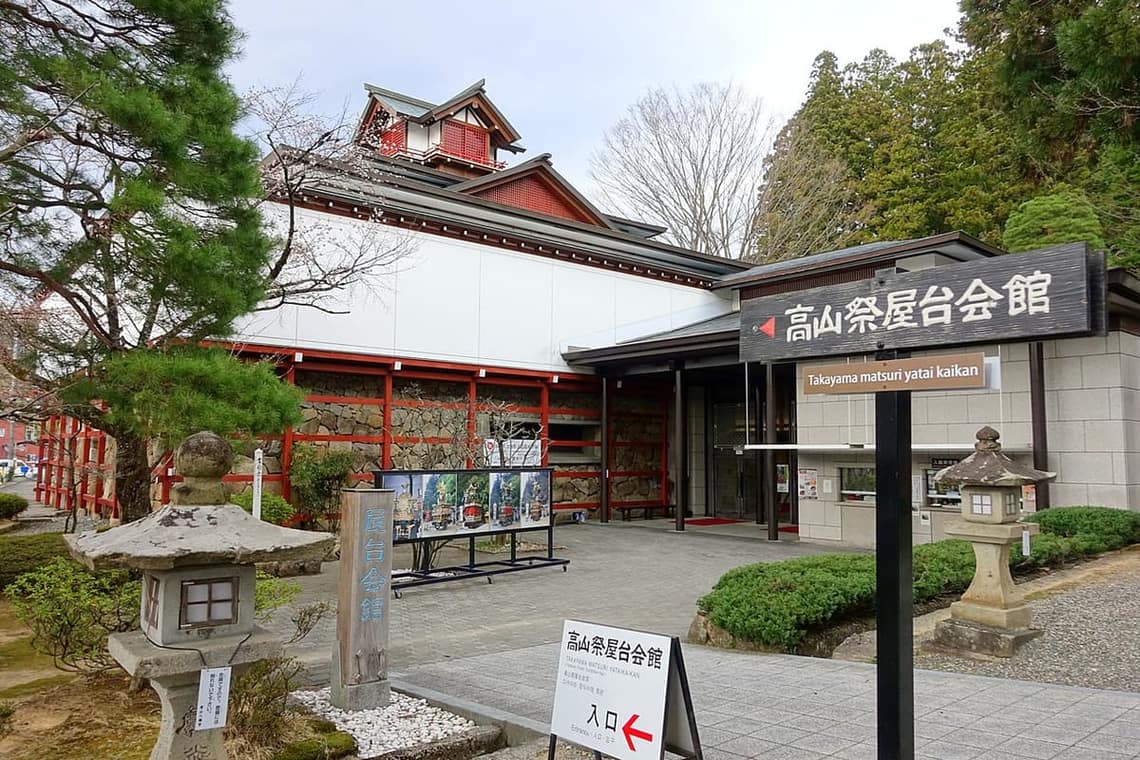
Miss the dates and don't despair: the "Takayama Festival Float Exhibition Hall" keeps real floats on permanent display, so you can admire the exquisite carving, lacquerwork and metalwork — sometimes called "moving Yomeimon" — up close year-round, admission ¥1,000 for adults, ¥600 for high school students and ¥500 for elementary and junior high students, covering the adjoining Sakurayama Nikko-kan on the same ticket. Even if you're not in town on festival day, the hall lets you appreciate the splendor of the tradition.
Using Takayama as a base: Shirakawa-go, Okuhida
The smartest way to do Takayama is to make it your lodging base for the Hida region and extend in two directions. West — Shirakawa-go: from the Takayama Nohi Bus Center the express bus reaches the gassho village in about 50 minutes, an easy day trip and a classic during the winter illumination; from there you can continue to Kanazawa or Toyama. For the winter illumination and the gassho village, see our Shirakawa-go winter illumination guide.
East — the Okuhida onsen villages and Shinhotaka Ropeway: take the bus up into the mountains past Okuhida's five onsen areas to the Shinhotaka Ropeway, a rare double-decker car, whose 2,000-meter-plus deck looks out over the snow-walled peaks of the Northern Alps — spectacular on a clear day. Carry on east through the Abo Tunnel and the same corridor delivers you to Kamikochi on the Nagano side — Nohi Bus runs a round-trip set ticket from Takayama with a transfer at Hirayu, valid seven days, which suits basing in Takayama and going up on the clear day. What to do there is in our Kamikochi hiking guide; the season dates, shuttle fares and last buses are in our Kamikochi season and access guide. String the daytime old streets, an evening Okuhida soak and a next-day Shirakawa-go into one full Hida journey. Cross the range into Toyama and the Kurobe Gorge trolley train and the Gokayama gassho villages are an easy continuation — see our Toyama, Kurobe Gorge & Gokayama guide. The Takayama area is also anime-pilgrimage country; see our Hida anime pilgrimage guide.
South — Gero Onsen on the way up from Nagoya: every down Hida limited express from Nagoya stops at Gero, 44–51 minutes short of Takayama, so a ryokan night in Gero the evening before you reach Takayama costs no detour. There is no direct bus from Gero to Shirakawa-go, though — you ride back up to Takayama and change — so the Shirakawa-go night belongs in Takayama.
One more stop close to town is Hida no Sato (Hida Folk Village), an open-air museum of relocated gassho-zukuri and old Hida farmhouses around a pond, about 10 minutes by bus from the station — a quieter, less crowded way to see thatched houses than Shirakawa-go itself, and lovely in any season. On seasons: spring brings the festival and cherry blossoms; summer is green and cool relief from the lowland heat; autumn turns the surrounding mountains and the Okuhida valleys to brilliant foliage (one of Chubu's best); and winter blankets the old streets and gassho roofs in snow, the most atmospheric — and the season of the Shirakawa-go illumination. Whichever month, the Hida highlands run far colder than Nagoya, so layer up and check bus schedules, which thin out in deep winter. If you are on the Shoryudo route in November, detour to Korankei’s night illumination near Nagoya.
Access and day-trip vs overnight
Access: from Nagoya the Hida limited express runs straight to Takayama in 2 hours 15 minutes to 2 hours 42 minutes depending on the train, along the scenic Takayama-line gorge; from the Toyama side it's about 1 hour 30 minutes. The old streets, market and jinya are walkable from Takayama Station, and the town is fine on foot. For a multi-leg Chubu rail loop, compare a JR Takayama-Hokuriku Area Tourist Pass; mountain buses and illumination-season seats often need checking online in advance.
Day-trip vs overnight: the town core fits a tight day, even a same-day round trip from Nagoya; but Takayama's real value is as a Hida base, and I'd strongly suggest an overnight — staying gives you the early-morning market and the old streets after the crowds leave, and makes the next-day extension to Shirakawa-go or Okuhida easy. The smoothest plan: a night in Takayama (old streets, jinya, Hida beef, market) paired with a day at Shirakawa-go or an Okuhida soak, 2-3 days in all. Before you go, see our Japan packing & weather guide — the Hida mountains are cold and snowy in winter.
For the early market and the emptied-out old streets at night, stay within walking distance of Takayama Station and the old town. Around the spring and autumn festivals the organisers say town-centre rooms fill more than six months out, so check dates before prices. Listings on three platforms; compare the same night:
| Platform | Before you click |
|---|---|
| Booking.com Takayama stays → | Takayama City covers a huge area and the list can include inns out toward Okuhida; check each location |
| Agoda Takayama stays → | The list opens on today's date; change it to your nights first |
| Rakuten Travel Takayama stays → | The property count is this platform's inventory, not every inn in town |
Frequently Asked Questions
- Q1:How many days does Takayama need?
- The town highlights (the Sanmachi old streets, Takayama Jinya, the morning market, the Float Exhibition Hall, Hida beef) fit a tight day, or better an overnight to take it slow. But Takayama's real value is as a base for the Hida region — west by bus about 50 minutes to Shirakawa-go, east into the Okuhida onsen villages and the Shinhotaka Ropeway for the Northern Alps. So the common plan is a night in Takayama paired with a day at Shirakawa-go or an Okuhida soak — 2-3 days is most comfortable.
- Q2:What is Takayama Jinya, and is it worth entering?
- Takayama Jinya was the regional government office of the Edo shogunate when it directly ruled Hida, and it's the only surviving jinya building in all of Japan — genuinely rare. Inside you see the period offices, the "shirasu" interrogation court, the rice storehouses and more, a concrete way to understand how Edo local governance worked. Admission is ¥430 for adults (free for high-schoolers and under). It sits right by the morning market, perfect to string with the old streets into a half-day history walk.
- Q3:How is Hida beef best eaten?
- Hida beef is Gifu's top wagyu, finely marbled, and Takayama offers many ways to eat it: Hida-beef nigiri (seared and set on a rice cracker or rice, eaten standing — the most popular street snack on the old streets), skewers, hoba-miso (beef grilled with miso on a magnolia leaf), and proper steak or sukiyaki. On a budget, the nigiri and skewers let you taste it; to indulge, sit down at a specialist. The old streets are lined with stalls, so hopping from stall to stall — eating each piece standing by the counter, as the vendors expect — is the most fun.
- Q4:When is the Takayama Festival, and can I see the floats outside festival days?
- The Takayama Festival is one of Japan's three most beautiful festivals, in two halves — the spring Sanno Festival (April 14-15) and the autumn Hachiman Festival (October 9-10) — and the two are genuinely different events, with a different shrine, district and set of floats each time. Ornate yatai floats and karakuri puppets parade the old town, drawing the year's biggest crowds. Two things to know before you plan: the organisers state officially that there are no viewing seats, so everything is free and standing-room only, and town-centre lodging is booked out from more than six months ahead. Full schedules, karakuri times, rain rules and where to stand are in our Takayama Festival guide. Miss the dates and you can still see real floats at the "Takayama Festival Float Exhibition Hall", on permanent display year-round — admission ¥1,000 for adults, covering the adjoining Sakurayama Nikko-kan on the same ticket.
- Q5:How do I get from Takayama to Shirakawa-go?
- From the Takayama Nohi Bus Center, the express bus to Shirakawa-go takes about 50 minutes (run jointly by Nohi Bus and Hokutetsu Bus), the easiest way; reserve seats in peak season and during the winter illumination. From Shirakawa-go you can continue to Kanazawa or Toyama. For Shirakawa-go's winter illumination and gassho houses, see our Shirakawa-go winter illumination guide.
- Q6:How do I get to Takayama from Nagoya?
- From Nagoya the Hida limited express runs straight to Takayama in 2 hours 15 minutes to 2 hours 42 minutes, depending on the train, along the scenic Takayama line gorge; from the Toyama side it's about 1 hour 30 minutes. The old streets and market are walkable from Takayama Station. For using Nagoya as the Chubu gateway, see our Nagoya travel guide. For a multi-leg rail loop, compare whether a JR Pass pays off.