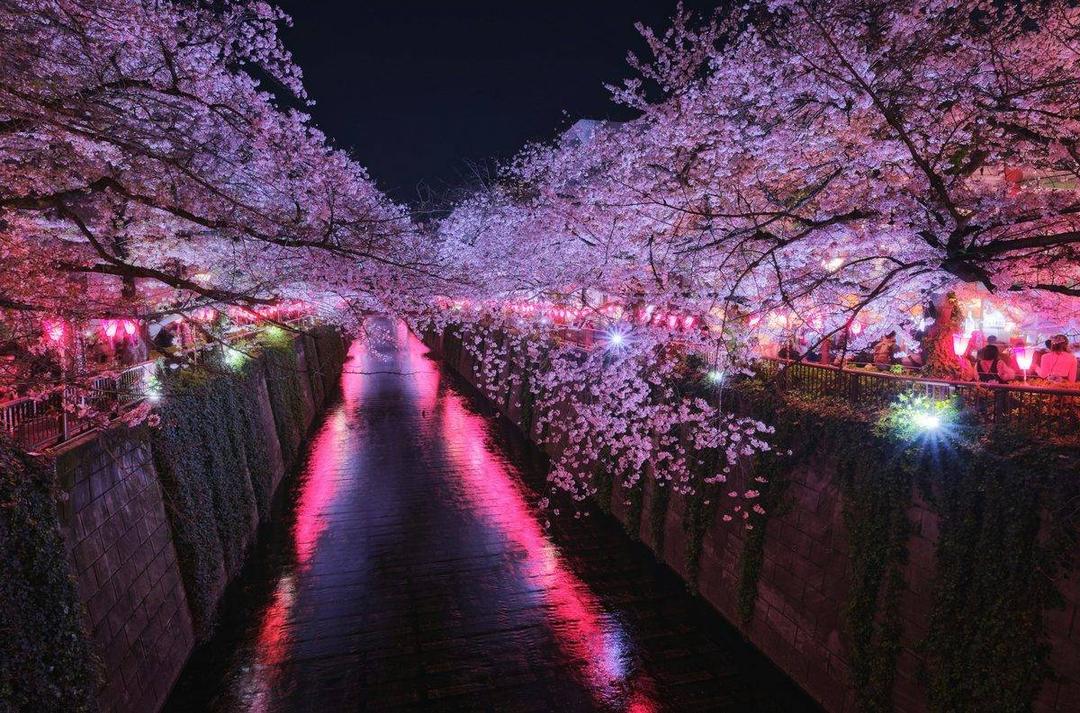
For a first sakura trip where you want certainty, Tokyo is the easiest city in Japan to actually hit full bloom: it peaks around late March — the same week as Fukuoka and 3-5 days ahead of Kyoto — and nearly all its spots sit along the Yamanote Line with direct subway access, so a misjudged week costs you the least. This guide lays out the best times for Meguro River, Chidorigafuchi, Shinjuku Gyoen and Ueno, the night illuminations, and a one-day route built to dodge the crowds. It's the Tokyo deep-dive companion to our Japan cherry blossom guide, and worth pairing with the cherry blossom front forecast before you lock your dates.
- Tokyo averages full bloom on March 31 (first bloom ~March 24), 3-5 days before Kyoto — aim for late March to the first week of April
- 6:30-8:30am is the key slot: Meguro River, Chidorigafuchi and Ueno are nearly empty with the softest light
- Each spot has a role: Chidorigafuchi for photos, Meguro River for night cherries, Shinjuku Gyoen for picnics, Ueno for hanami energy
- Night illuminations run only the full-bloom week — check the year's official dates
- Get around on the 72-hour ¥2,000 subway ticket (Metro + Toei)
Every spot sits on a subway line: the Tokyo Subway 72-hour pass pays off in ~4 rides a day →
📖 Table of contents
Tokyo's bloom timing: why it beats Kyoto
Most people assume sakura means Kyoto, but for odds of actually hitting it, Tokyo wins. By JMA 1991-2020 averages, Tokyo's benchmark tree (in the grounds of Yasukuni Shrine) first-blooms around March 24 and reaches full bloom about March 31 — 3-5 days ahead of Kyoto and Osaka (April 4) because of Tokyo's strong urban heat-island effect and warm Pacific exposure. In 2026, a mild winter pushed first bloom to March 21, Ueno March 22 (per Weathernews).
Remember the Somei-Yoshino rhythm: about a week from first bloom to full bloom, best from full-bloom day through the next 3-5 days, then the petal fall. So aim for the "late March to first week of April" window rather than a single date, and fine-tune two weeks out. The nationwide city-by-city timing is in the pillar's Japan cherry blossom guide.
Tokyo's 6 best cherry blossom spots
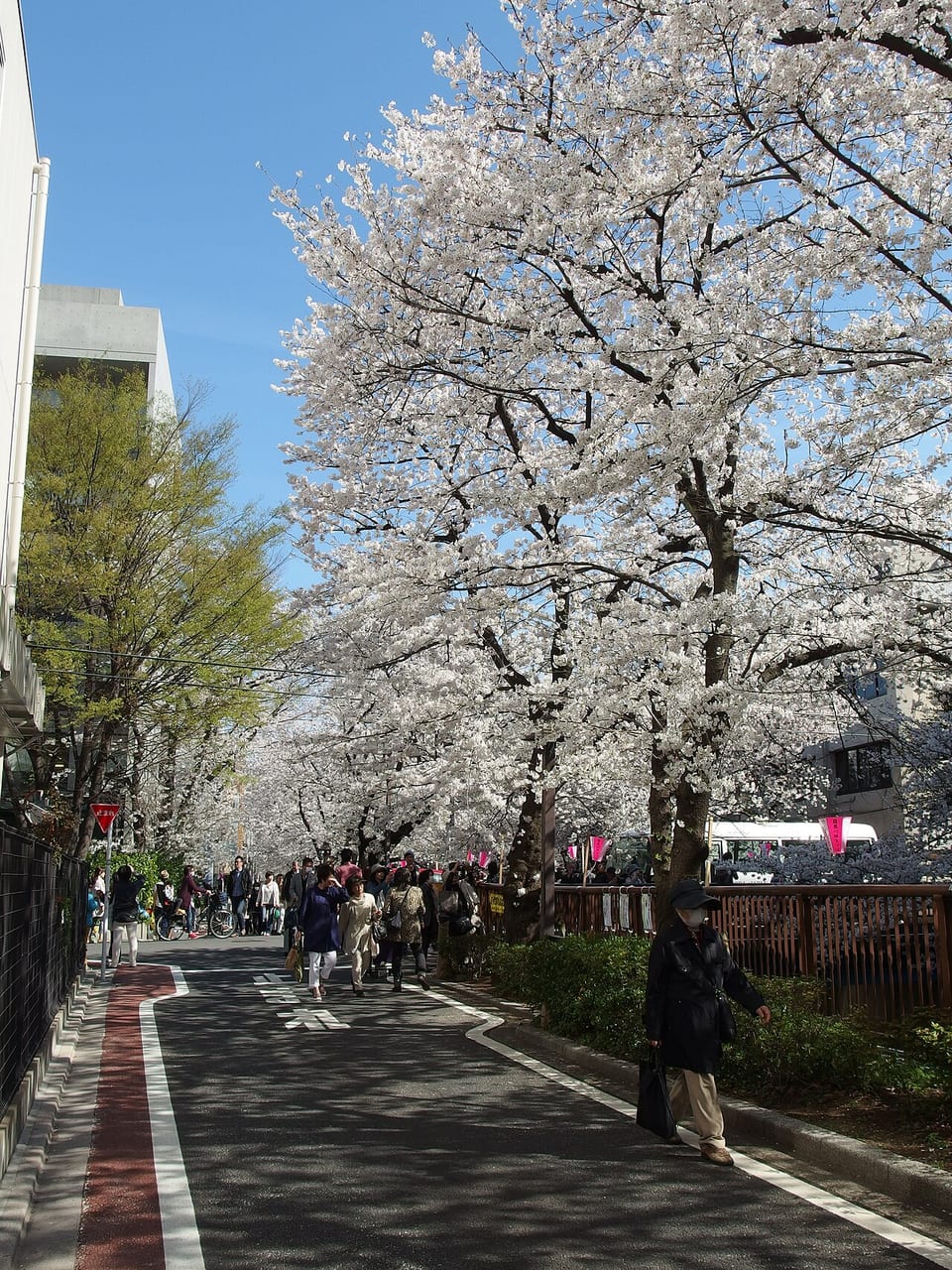
1. Meguro River — Tokyo's best night cherries
Right outside Naka-Meguro Station. About 800 trees arch over a 3.8 km canal, and after dark the lantern light reflecting off the water is Tokyo's signature yozakura scene. The downside is the crowd — packed by day and on weekends. Go at dawn or after 8pm, and walk toward Ikejiri-ohashi where it thins out.
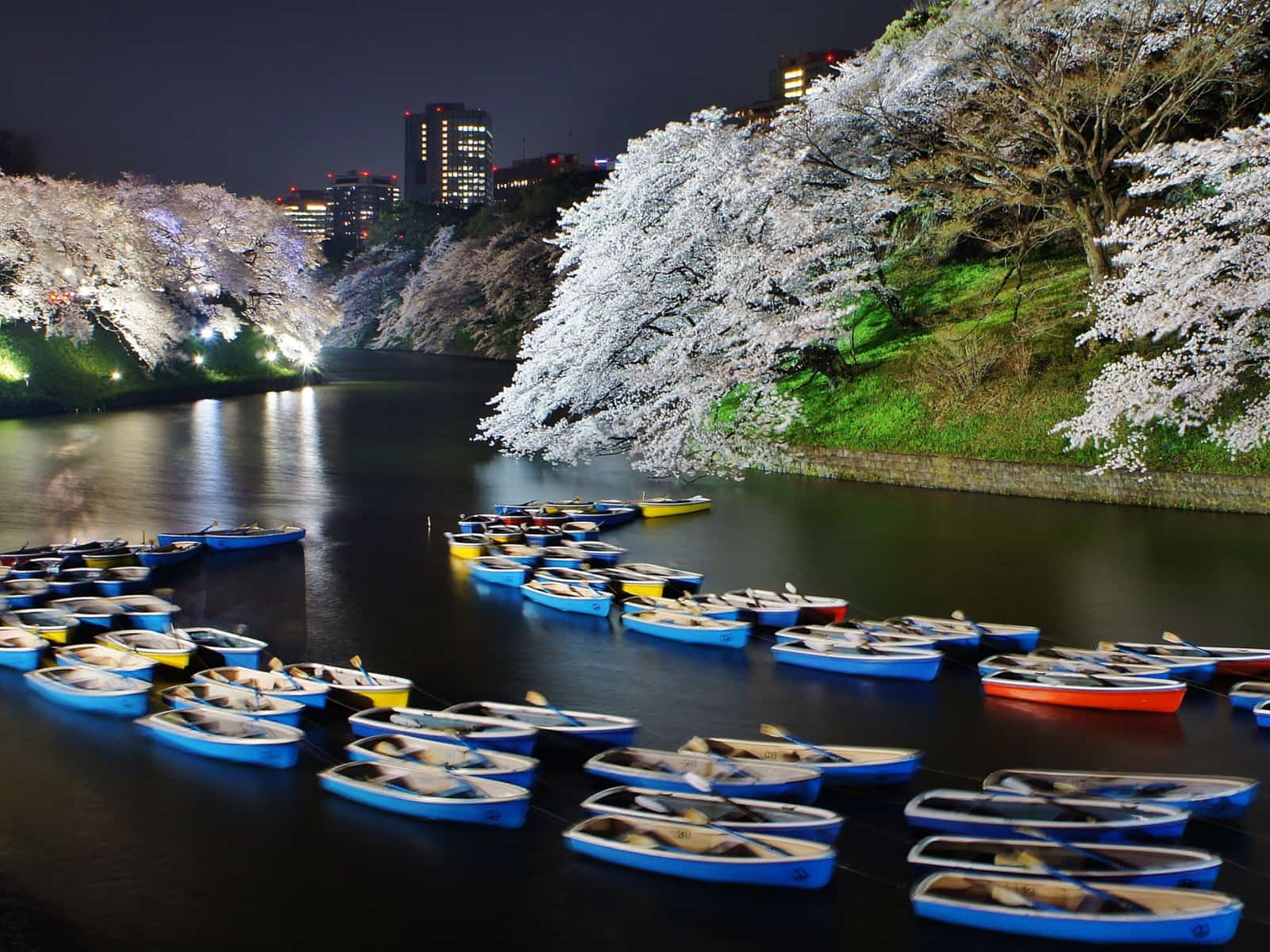
2. Chidorigafuchi — paddle under the blossoms
Five minutes from Kudanshita. On the west moat of the Imperial Palace, cherry branches lean to the water, and the signature move is renting a rowboat to paddle in under the blossoms and look up — after the 1 March 2026 revision, 30 minutes in blossom season costs ¥1,500. ⚠️ The ¥800 figure still circulating online is now the Chiyoda residents' rate; visitors pay the former, so older guides understate it by half. ⚠️ The other common error is timing: the boathouse opens at 10:00 normally, closes Mondays, and shuts entirely December–February, and even the extended blossom-season hours start only at 9:00 — so an early-morning row is not possible here. The promenade has no such limit and is nearly empty before 8am. See the hanami rules guide for the full picture.
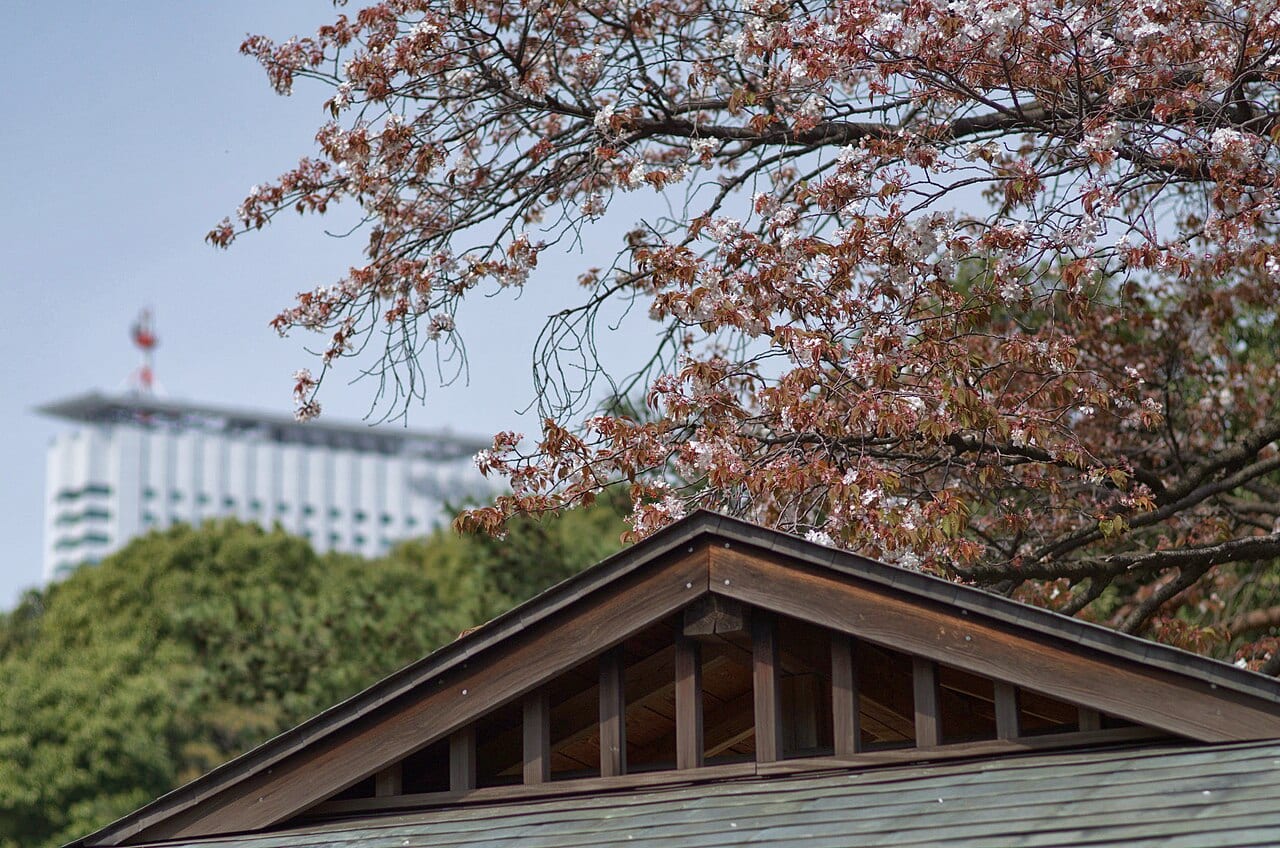
3. Shinjuku Gyoen — the longest window, best for picnics
Ten minutes from Shinjuku Station. Its edge is variety — from early-blooming kanzakura to late double cherries — so its overall season runs longer than single-variety spots, widening your odds of hitting bloom. The big lawns are made for a picnic, entry is ¥500, and the alcohol ban keeps it calmer than the free spots, making it the top pick with elderly travelers or kids.
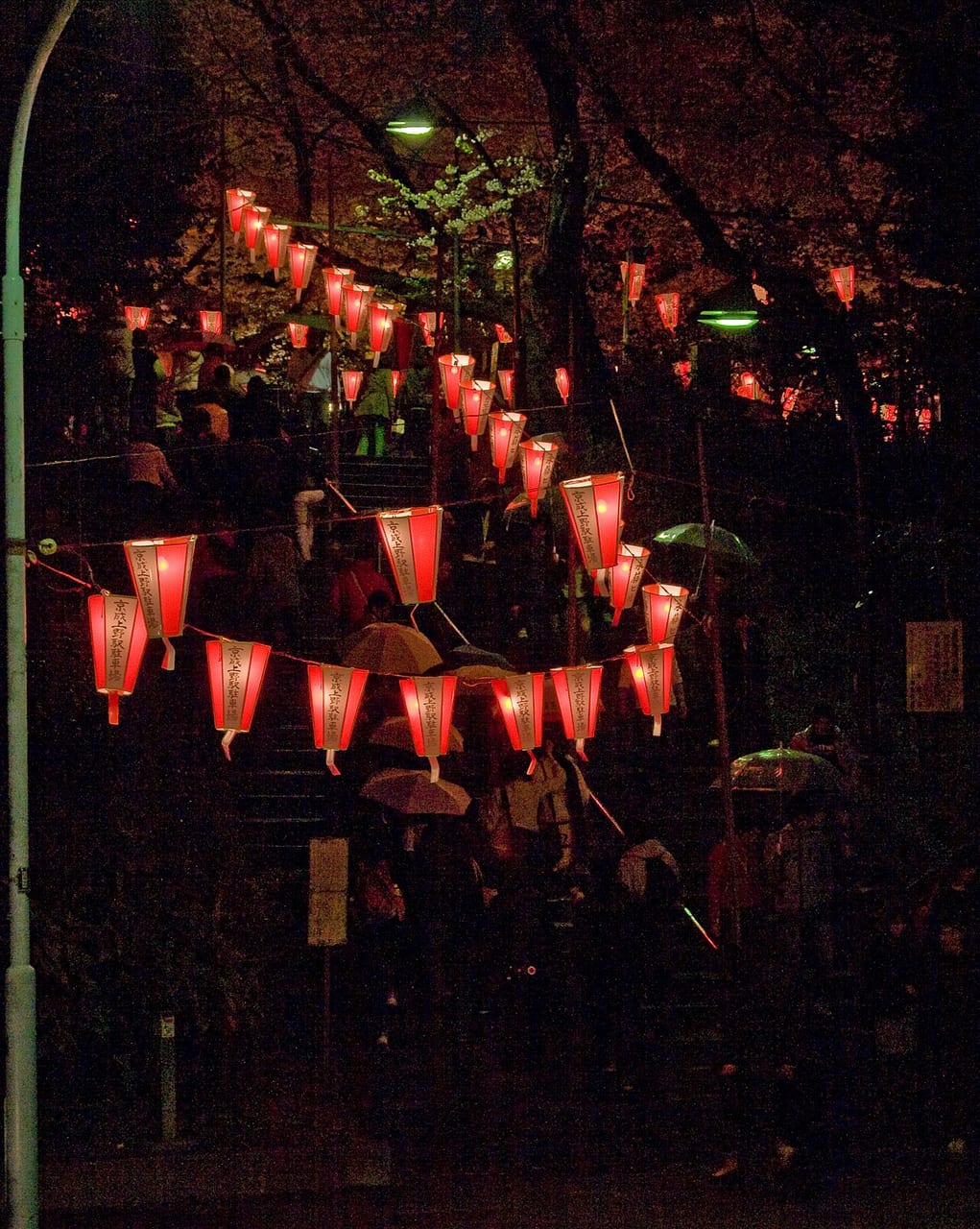
4. Ueno Park — the most hanami energy
Right at Ueno Station. The central avenue has ~800 Somei-Yoshino and is Tokyo's liveliest people's hanami — stalls, tarps, drinking, crowd energy. If you want to experience Japan's spring culture of eating and drinking under the trees, this is the place. It's also the most crowded, so a clean photo means arriving with the first wave at dawn.
5. Roppongi (Tokyo Midtown & Mohri Garden) — urban night cherries
For a "skyscrapers + night cherries" city feel, Roppongi is the pick. Sakura-zaka beside Tokyo Midtown and the pond-side cherries of Mohri Garden against the Roppongi Hills night view are a completely different mood from the traditional riverbanks. Shopping, dinner and night cherries in one stop — good for your last evening.
6. Sumida Park — cherries with the Skytree
Beside Asakusa Station, along both banks of the Sumida River, Sumida Park's draw is cherry blossoms framing the Tokyo Skytree — plus the golden Asahi building across the water, a combination only Tokyo can offer. You can also view the cherries from a Sumida River cruise — but during the sakura period tickets are sold only by advance online booking, not at the pier on the day, and the Hama-rikyu route is suspended for that stretch. Asakusa is a must on any Tokyo trip anyway, so the sakura is an easy add-on.
A one-day route: morning + afternoon + night
The golden structure for a sakura day is "dawn photos + afternoon stroll + a night finale" — don't overload it. A sample route:
- 6:30-8:30 Chidorigafuchi promenade: empty-scene shots. ⚠️ No boats at this hour — the boathouse opens at 9:00 in blossom season, 10:00 otherwise
- 9:30-11:30 Shinjuku Gyoen: lawn picnic, slow-walk the varieties
- 14:00-16:00 Ueno or Asakusa/Sumida Park: hanami energy / Skytree framing
- After 18:30 Meguro River: illumination and water reflections to finish, dinner in Naka-Meguro
How to fit a full Tokyo trip around this — where to stay, how to plan the days — is in our Tokyo 5-day itinerary; slotting sakura into Days 2-3 works best.
Timing strategy to dodge crowds
At the same spot, 7am versus 2pm means 50x the crowd and a completely different photo. This is the single most important decision in Tokyo sakura planning. Three rules:
- Mornings first: Meguro River, Chidorigafuchi and Ueno are still empty before 8:30am; after 9 the tour groups and after-work hanami crowds pour in.
- Weekdays over weekends: these spots are a sea of people on a sakura-season weekend. Go midweek if you can.
- Night cherries at the tail end: the last 30 minutes before the illumination closes clear out fastest.
Transit and lodging
Tokyo's sakura spots sit almost entirely along the Yamanote Line and subway, so the 72-hour ¥2,000 ticket (Tokyo Metro + Toei) is the best value — it pays off after about four rides a day: KKday Tokyo Subway Ticket. The cheapest way in from the airport is in our Narita & Haneda transit guide.
Stay around Shinjuku or Tokyo Station (easy Metro + JR); sakura is a top peak season, so book 8-10 weeks out: compare Tokyo hotels on Trip.com. Don't buy a SIM on arrival — counters are jammed in sakura season; set up a KKday Japan eSIM first. March-April has big day-night temperature swings; packing is covered in our Japan packing & weather guide.
Hanami picnics and practical tips
The heart of Tokyo's hanami culture is eating and drinking on a tarp under the cherry trees. A few things to know first, so you play it smooth and polite:
- Tarps and spot-saving: at popular parks like Ueno and Yoyogi, locals stake out spots ("basho-tori") early in the morning, so arrive early for a good one. Cheap picnic sheets are easy to find at 100-yen shops (Daiso) — no need to pack your own.
- Where to buy food cheaply: konbini and the supermarkets near each spot are easiest — rice balls, karaage, seasonal sakura-flavored sweets and beer, noticeably cheaper than the stalls. Hot food sells out by evening, so go early.
- Pack out your trash: most spots have few bins; in Japan you carry your own rubbish out, so bring a bag and don't leave food scraps on the grass.
- Rules vary by spot: the Chidorigafuchi promenade bans parties and smoking outright, and Shinjuku Gyoen bans bringing alcohol in — check before you go. Shaking trees, snapping branches, or climbing trunks is a serious no. ⚠️ That said, the widely repeated “you can be fined” has no official basis: the strongest published measure is being asked to leave the park. Rules sort into five regimes by who manages the land — see the hanami rules guide.
Frequently Asked Questions
- Q1:When is the best time to see cherry blossoms in Tokyo?
- By JMA 1991-2020 averages, Tokyo's benchmark tree (at Yasukuni Shrine) first-blooms around March 24 and reaches full bloom about March 31 — the same week as Fukuoka, and 3-5 days ahead of Kyoto. The best window is full-bloom day plus the next 3-5 days, so aim for "late March into the first week of April." In 2026, a mild winter pushed first bloom to March 21. Fine-tune two weeks out with the Weathernews and tenki.jp forecasts.
- Q2:If I only have half a day, which Tokyo spot should I pick?
- It depends what you want. Most photogenic and convenient — Chidorigafuchi (Imperial Palace moat, rowboats, 5 min from Kudanshita). Best night cherries — Meguro River (illuminated reflections, right at Naka-Meguro). Picnic with kids — Shinjuku Gyoen (big lawns, many varieties, a longer window). Classic hanami atmosphere — Ueno Park. One spot done well for 1.5-2 hours beats racing four in a day.
- Q3:How do I avoid the crowds for Tokyo cherry blossoms?
- Two rules. (1) Hit the busiest spots — Meguro River, Chidorigafuchi, Ueno — at 6:30-8:30am, when they're nearly empty and the light is soft. (2) Weekdays beat weekends; on a sakura-season weekend these places are a sea of people. For night illuminations, go in the last 30 minutes before closing when crowds thin fastest. Shinjuku Gyoen is calmer all day because it charges entry and bans alcohol.
- Q4:Where are Tokyo's best night cherry blossom (yozakura) spots?
- Meguro River (riverside lanterns + water reflections, Tokyo's best), Chidorigafuchi (moat illumination), Roppongi (Tokyo Midtown and Mohri Garden, skyscrapers with night cherries), and Ueno (park lanterns). Note that night illumination usually runs only the week around full bloom and start/end dates vary by spot, so check the year's official dates before you go.
- Q5:How early should I book a Tokyo hotel for sakura season, and how much pricier is it?
- Late March to early April stacks Japan's domestic hanami, Asian spring breaks, and Taiwan's Qingming long weekend — one of the year's peak windows. 4-star full-bloom-week rates often run 1.5-2x and sell out fast. Book 8-10 weeks out and stay around Shinjuku or Tokyo Station (easy Metro + JR access; most sakura spots sit along the Yamanote Line).