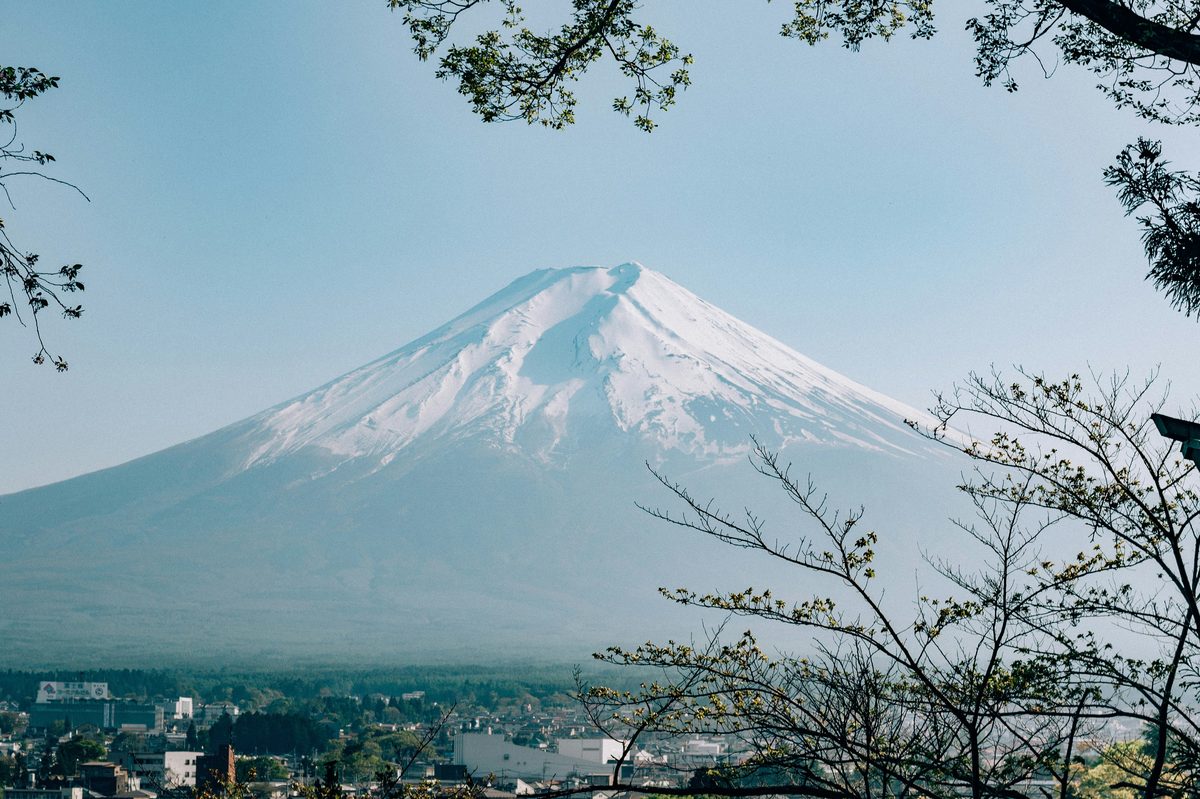
On a Tokyo-to-Fuji day trip the real variable is not which sights you pick but whether the mountain is showing when you get there. Fuji City's 35 years of daily observations, taken on the south side of the mountain, put a full view at 36.6% of days at 8:00 and 23.3% by noon. The first Shinjuku highway bus leaves at 6:45 and reaches Kawaguchiko Station at 8:30 (October 2026 timetable); a guided tour typically reaches its first stop around 10:30. To stand at Chureito Pagoda at dawn you have to sleep nearby the night before. This guide gives a clean comparison of four transport options, a visibility playbook, and a Kawaguchiko vs Oshino Hakkai vs Hakone routing framework so your one day on the mountain is not the one day Fuji hides.
- Four transport options: Shinjuku bus cheapest (¥2,200 / 1h45), JR Fujikaiyu most comfortable (¥4,200 / 2h), Klook/KKday tours zero-planning.
- Timing is everything: Depart before 7:45 to beat post-10:00 traffic; return before 5:00pm to avoid mountain-road congestion.
- Kawaguchiko vs Hakone: Kawaguchiko (Chureito Pagoda, Oshino Hakkai) best for first-timers; Hakone pairs with onsen towns but longer ride.
- Visibility window: Fuji shows most often on November–February mornings and least in June–August (Fuji City's observation records); check the Fujikawaguchiko town and Shizuoka Prefecture live cameras before you go.
- How early you can reach Chureito: on a same-day trip from Tokyo, about 8:10 by train or after 9:10 by highway bus; to be there around 7:00, stay the night before in Kawaguchiko or Fujiyoshida. In cherry-blossom season the deck runs on timed rotation, with 1–3 hour waits in past years.
Table of Contents (click to expand)
- The four ways, at a glance
- Option 1: Shinjuku highway bus (best value)
- Option 2: JR Fujikaiyu (most comfortable)
- Option 3: Local train with transfer (most flexible)
- Option 4: KKday / Klook day tour (first-timer pick)
- Which five spots to build the day around
- Visibility forecasting: the two-signal method
- Transport cost: bus, Fujikaiyu, day tour
- Fuji vs Hakone: which day trip wins?
- Ten beginner mistakes
- Traveling with kids or elderly parents
- Photography: five tactics for postcard-grade Fuji shots
- When to pivot from Kawaguchiko to Gotemba
- Three timing mistakes that ruin Fuji day trips
- Staying overnight: when the day trip isn't enough
- Cherry blossoms and Fuji: the April playbook
- A quieter lake: Lake Shoji in the afternoon
- Pre-departure checklist
The four ways, at a glance
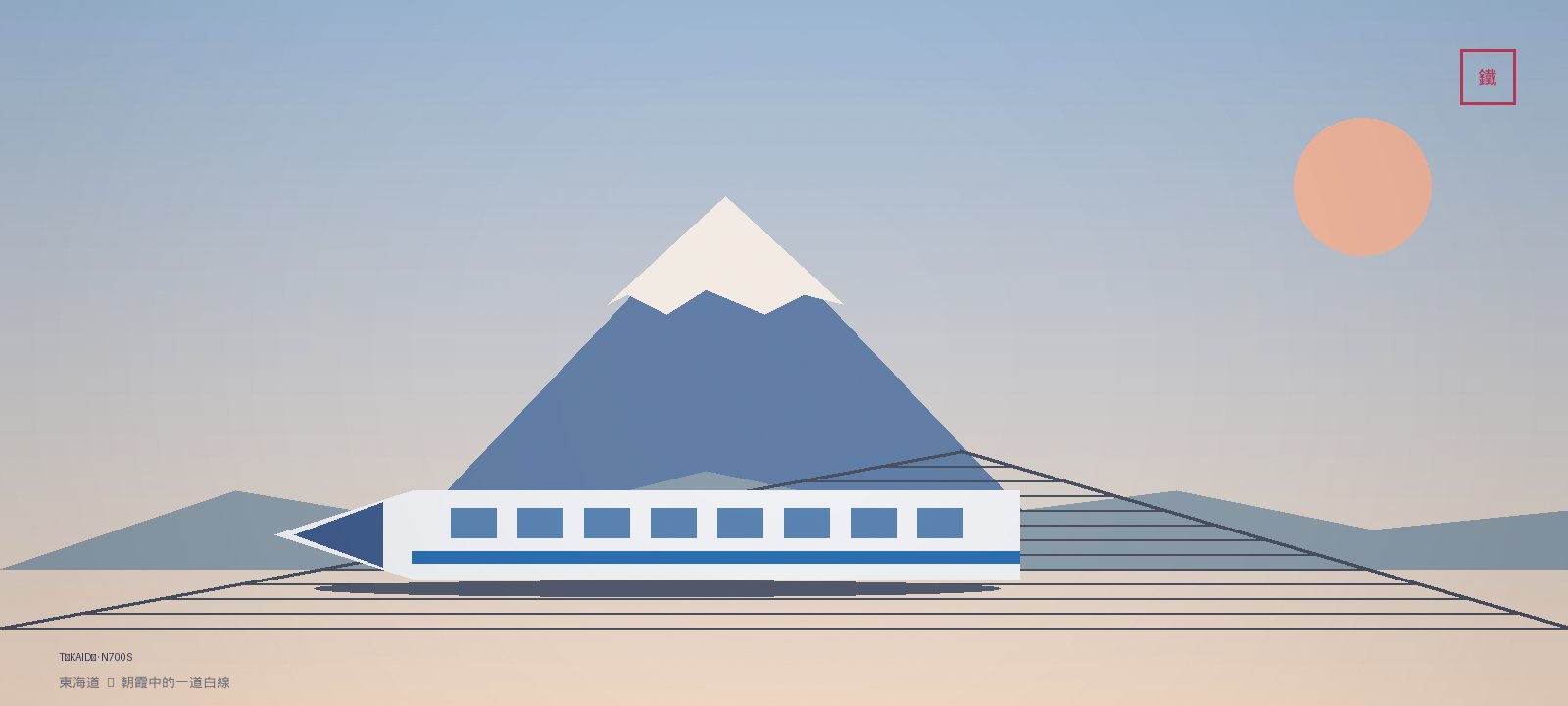
Only four transport options matter for a Tokyo-based Fuji day trip. Bus times below are from the October 2026 timetable; the Shinjuku route switches to a new timetable on 1 November, so check the official one before you go.
- Shinjuku highway bus: ¥2,200 / 1h45 / 55 departures a day — best value.
- JR Fujikaiyu limited express: ¥4,200 / about 1h55 / four round trips daily, plus one extra round trip in October–November — comfortable and punctual.
- Multi-transfer local train (Chuo Line + Fujikyu Line): ¥2,580 / about 2h45 — flexible but slow.
- KKday / Klook day tour: guided, door-to-door, zero planning; from-prices are in the channel table.
Real time comparison
Same destination — Kawaguchiko Station, leaving Shinjuku around 07:30:
- Bus 07:45 → 09:30 arrival (1h45)
- Fujikaiyu 07:30 → 09:28 arrival (1h58)
- Multi-transfer about 2h45, depending on which Fujikyu Line train you catch at Otsuki
- KKday tour 08:00 depart → 10:30 first stop (2h30)
Option 1: Shinjuku highway bus (best value)
Depart from Busta Shinjuku, the fourth-floor bus terminal directly above the JR Shinjuku south exit. ¥2,200 each way; book on Highway Bus or Japan Bus Online as soon as your date is fixed, especially for spring and autumn weekends.
Pros: cheapest option, highest frequency (55 departures a day, about every 10 minutes through the morning), sleep-through-the-ride comfort, no transfers.
Cons: expressway traffic can make you late, especially on Friday evening returns. Seats are tight.
Practical tip: take an outbound departure before 07:45 to beat the post-10:00 traffic build-up, and head back before 17:00 to avoid the post-sunset mountain-road congestion.
Shinjuku to Kawaguchiko bus fares & timetable (October 2026)
Fujikyu Bus and Keio Bus co-run the Shinjuku to Kawaguchiko highway bus. Departures and fares are the same on both, seats are reserved, and booking opens one month ahead. Booking online is ¥200 cheaper than buying at the counter.
| Route | Adult one-way fare (2026) | Travel time | Frequency |
|---|---|---|---|
| Shinjuku → Kawaguchiko Station | ¥2,200 (¥2,000 booked online) | 1h 45m | 55 a day, first 6:45, last 22:25; about every 10 min from 7:00 to 12:00, every 30 min from the afternoon |
| Shinjuku → Yamanakako Hirano | ¥2,650 (¥2,350 booked online) | About 2h 14m | Reserved seats, booking opens one month ahead; last bus back to Shinjuku leaves Asahigaoka at 19:40 |
| Shibuya Mark City → Kawaguchiko | ¥2,300 (¥2,100 paid online) | 2h 00m–2h 40m | 11 a day, first 6:05 arriving 8:05; useful from Shibuya hotels |
| Tokyo Station → Kawaguchiko | ¥2,300 | About 2h 05m–2h 10m | 17 a day (some seasonal); first from Yaesu South Exit 6:20, arriving 8:27 |
Recommended outbound departures (from Shinjuku):
- 6:45 Shinjuku → 8:30 Kawaguchiko Station — the first bus, and the one to take if the lake comes first; this one and the 6:55 and 7:05 do not stop at Chuo-do Shimo-Yoshida
- 7:15 Shinjuku → 8:50 Chuo-do Shimo-Yoshida — the one to take if Chureito Pagoda comes first: choose "Chuo-do Shimo-Yoshida" as your alighting stop when booking, then walk about 20 minutes to the park. The 7:25, 7:35 and 7:55 stop there too
- 7:25 Shinjuku → 9:10 Kawaguchiko Station — leave any later and you reach the lake close to 10:00
Recommended return departures (back in Shinjuku by 19:00):
- 15:30 Kawaguchiko → 17:15 Shinjuku — clears Yamanashi before sunset traffic
- 16:30 Kawaguchiko → 18:15 Shinjuku — sweet spot for golden-hour photographers
- Straight back from Chureito — buses to Shinjuku leave Chuo-do Shimo-Yoshida at 15:09, 15:24, 15:54, 16:24, 16:54 and 17:04, so you need not go back to Kawaguchiko Station
- Last bus 20:15 Kawaguchiko Station → 22:00 Shinjuku — Friday and Sunday evening returns are the most traffic-prone, so keep that night in Tokyo loose
How to book the Shinjuku highway bus: the official Highway Bus reservation site (highway-buses.jp) and the Japan Bus Online portal both accept overseas credit cards in English. Seats go on sale one month before the travel date; for cherry blossom (late March–early April), Golden Week (late April–early May), and koyo (mid-October through November), book the morning departures as soon as sales open. Walk-up tickets are available at Busta Shinjuku 4F if seats remain, but peak-week morning buses regularly sell out.
Option 2: JR Fujikaiyu (most comfortable)
A direct limited express that runs Shinjuku to Kawaguchiko without transfers, but only makes four round trips per day (the same on weekdays and weekends), plus one extra round trip in October–November. Reserved seats only, ¥4,200. Book via the JR East website or ticket offices. If you hold a JR Tokyo Wide Pass (3-day, ¥16,000), the Fujikaiyu is fully covered — which can tip the math toward rail.
Outbound trains leave Shinjuku at 7:30, 8:30, 9:30 and 10:30; the 7:30 reaches Shimo-Yoshida at 9:13 and Kawaguchiko at 9:28. Return trains leave Kawaguchiko Station at 14:08, 14:58, 16:48 and 17:41 — the 17:41 is the last, reaching Shinjuku at 19:48 on weekdays and 19:40 on weekends. The October–November extra train leaves Shinjuku at 11:34 and returns at 15:39 on designated weekdays, and leaves at 9:02 and returns at 16:12 on weekends and holidays (until 29 November). These are the times in force since 14 March 2026.
Pros: punctual, spacious seats, onboard toilet, scenic windows over the Katsura River gorge.
Cons: about double the bus price, only four outbound trains and all of them in the morning (nothing direct after 10:30), and reserved seats on popular dates go quickly.
If you're weighing the broader JR Pass question for your trip, see our JR Pass 2026 analysis.
Option 3: Local train with transfer (most flexible)
Take the JR Chuo Line to Otsuki Station (about 1h35) and transfer to the Fujikyu Line to Kawaguchiko (about 55 minutes). The base fare is ¥2,580; you can add a limited express ticket on the Chuo leg. This is also the earliest way in: the 5:15 Chuo Line train from Shinjuku connects with the 7:03 Fujikyu Line train at Otsuki. New to finding the right Chuo Line platform at Shinjuku and reading JR-vs-private-railway transfers? Our Tokyo trains and subway guide walks through it.
Pros: no seat reservation to hold you to one train, so you can reshuffle the day, and the Fujikyu Line itself is a scenic ride with panoramic-window "Fuji San Tokkyu" trains.
Cons: 2h45+ door-to-door, one mandatory transfer, difficult with large bags.
Only use this option when the Fujikaiyu is sold out and the bus is full too, or when you specifically want to ride the Fujikyu panoramic trains. Note that parts of the Fujikyu Line don't always accept Suica/PASMO tap-in — sort out where your IC card works first with our Suica/ICOCA IC card guide.
Option 4: KKday / Klook day tour (first-timer pick)
Guided tour bus with English or Chinese narration, door-to-door from Shinjuku. From-prices by channel are in the table below. A typical itinerary: Shinjuku 08:00 pickup → Kawaguchiko Music Forest → Chureito Pagoda → Oshino Hakkai → Kitaguchi Hongu Fuji Sengen Shrine → back in Shinjuku 19:00.
Pros: no thinking required, guided narration, hits multiple spots efficiently, no transit research.
Cons: fixed schedule (45–60 minutes per stop), set itinerary, occasional route reshuffles for traffic.
Best fit: first-time Japan travelers, families with kids or elderly parents, anyone with only one day to spare, anyone who doesn't want to parse transit schedules. Book the KKday Mt. Fuji day tour with English guide.
Four channels run this day trip — what differs is where it takes you
Day tours have no official list price to compare against, so the table below is not about which is cheaper. It is about which stops each one makes, what language it runs in, and what is included. Prices are the from-prices shown on each page within a single window on 9 September 2026.
| Channel | From-price, 9 Sep 2026 | Stops | Watch for |
|---|---|---|---|
| KKday | NT$ 1,597 | Ginza meet-up → Gotemba Premium Outlets → Oshino Hakkai → Oishi Park, 10 hours, Chinese/Japanese/Korean | This one goes to the outlet mall, not Chureito Pagoda; from 1–23 Nov the Oishi Park stop becomes the Kawaguchiko maple corridor. Tax, transport and liability insurance included, lunch on your own |
| Trip.com | TWD 1,516 per person | Arakurayama Sengen Park (Chureito Pagoda) → Oishi Park → the Hikawa clock shop → Oshino Hakkai; 9-seat small group or hotel pickup optional | Rated 4.9 from 3,344 reviews, 42,000 booked; free cancellation until 00:00 two days before |
| Klook | NT$ 1,602 | Arakurayama Sengen Park → the Hikawa clock shop → Oshino Hakkai → the Lawson shot → Lake Kawaguchi, lunch option available | Rated 4.8 from 3,361 reviews, 30,000+ joined; no choice of vehicle or seat, and you cannot leave the group mid-tour |
| GetYourGuide | US$ 84 → US$ 51 (page marks this Limited time) | Mt Fuji → Oishi Park → Lake Kawaguchi → Oshino Hakkai, 10 hours, English-speaking guide | Includes round-trip transfers and all taxes, parking and tolls, plus a free ticket to Saiko Iyashi-no-Sato Nemba; the page states it is not suitable for pregnant travellers, people with mobility impairments or wheelchair users |
Two things that will age that table: the US$51 is a limited-time discount and reverts to US$84 when it ends; and because the itineraries differ, the practical dividing line is whether you want the Chureito Pagoda shot — the KKday one doesn't stop there.
Which five spots to build the day around
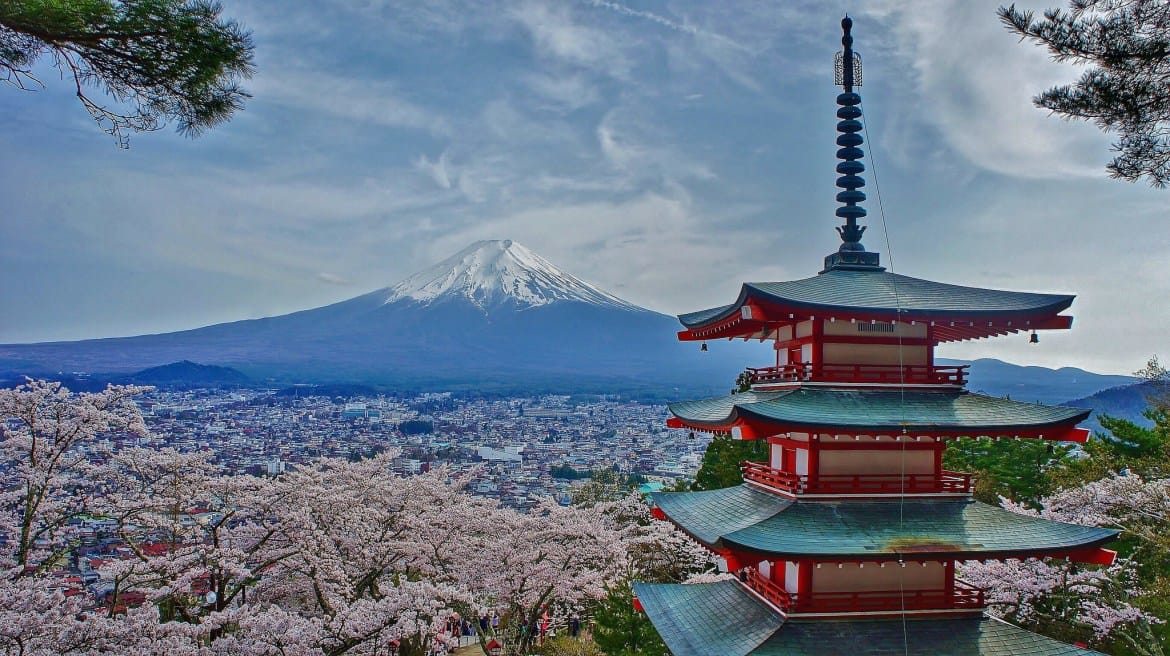
"Going to Fuji" doesn't mean climbing it. The photogenic sites cluster around Kawaguchiko; choose three out of five for a comfortable day:
1. Chureito Pagoda (Arakurayama Sengen Park) — unmissable
The single most iconic Fuji framing globally: 398 steps up to the observation deck, in a park that is open 24 hours. From Kawaguchiko Station you take the Fujikyu Line train to Shimo-Yoshida Station (13–15 minutes, ¥310), then walk about 25 minutes to the pagoda. There is no bus from Kawaguchiko Station to Shimo-Yoshida Station.
On a same-day trip from Tokyo the earliest you can stand at the pagoda is about 8:10: take the 5:15 Chuo Line train from Shinjuku, change at Otsuki to the Fujikyu Line, and reach Shimo-Yoshida Station at 7:45. By highway bus, pick a departure that stops at Chuo-do Shimo-Yoshida — the first leaves Shinjuku at 7:15 and arrives 8:50, then it is a 20-minute walk to the park. If you stay the night before in Kawaguchiko or Fujiyoshida, the 6:15 or 6:41 Fujikyu Line train from Kawaguchiko Station reaches Shimo-Yoshida in 13 minutes, which puts you on the observation deck around 7:00; from Fujisan Station it is 5–7 minutes and ¥230.
In cherry-blossom season the deck runs on timed rotation, with waits of 1–3 hours in past years. Fujiyoshida's tourism site has a live camera at Arakurayama Sengen Park you can check before leaving. For stair logistics, the 2026 festival cancellation, and shooting windows, see the dedicated Chureito Pagoda guide.
2. Lake Kawaguchiko (Music Forest, maple corridor, inverted Fuji)
The north shore's Oishi Park is the showpiece flower-and-Fuji angle in every season (lavender, kochia, cosmos). Windless mornings produce the "inverted Fuji" mirror reflection. The Music Forest European gardens with Fuji backdrop are also popular, admission from ¥1,800. Chasing the November maple corridor instead? Our Kawaguchiko autumn guide has the spot-by-spot peak-timing table and the ropeway math.
3. Oshino Hakkai — the postcard village
Eight crystal-clear spring ponds fed by Fuji snowmelt, part of the UNESCO World Heritage site. 23–29 minutes from Kawaguchiko Station on the Fujikko-go bus or the local bus bound for Gotemba (¥620). Allow 1–1.5 hours.
4. Kitaguchi Hongu Fuji Sengen Shrine
The formal start of the historical climbing trail, with a thousand-year cedar forest approach. Quieter than Chureito. From Kawaguchiko Station take the local bus bound for Gotemba, 14 minutes, and get off at Sengen-jinja-mae.
5. 5th Station
The fifth station sits at 2,305 m, 55 minutes by bus from Kawaguchiko Station (¥2,000 one way, ¥3,400 return, the return ticket valid for two days), and standing above the cloud layer is genuinely spectacular. From 1 October 2026 there are five buses a day, leaving Kawaguchiko Station at 9:40, 10:40, 11:40, 13:00 and 14:00, with the last bus down at 15:50; the bus does not run when the Fuji Subaru Line is closed, so from November check the Fujikyu Bus site before you go. Two things get conflated here and should not be. The climbing trails have an official season — in 2026, Yoshida and Subashiri opened 1 July, Fujinomiya, Gotemba and the summit on 10 July, all closing 10 September. Simply visiting the fifth station is not climbing, and officials state no toll is required for it. Separately, private vehicles are barred from the Fuji Subaru Line from 3 July 18:00 to 10 September 18:00, so during that window you shuttle up rather than drive. If you actually intend to climb, the Mt. Fuji climbing fee and rules guide explains the two very different ¥4,000s and their opposite refund terms.
Visibility forecasting: the two-signal method
Seen from Fuji City on the south side, the mountain is completely hidden at the 8:00 observation on about 150 days a year. A 72-hour forecast method:
- Live cameras: for Kawaguchiko, use Fujikawaguchiko town's live camera on the lake's north shore; Shizuoka Prefecture's Mt. Fuji live camera page adds three more at Shimizu Port, Fujinomiya and Gotemba. Three cloudy days in a row = reschedule.
- Season and time of day: in Fuji City's 35-year record, the whole mountain is visible at 8:00 on 53–62% of days in November–February, 27–41% in March–May and September–October, and only 10–15% in June–August. Within a day it is 36.6% at 8:00, 23.3% at noon and 22.5% at 16:00. These are Fuji City figures, not Kawaguchiko's, so read them as the direction of the season and the clock.
Practical rule: if 48 hours out the webcams are grey, shift the Fuji day to later in the trip. A wasted Fuji day in Japan is expensive — booked tickets, transit time, and the disappointment of photographing a grey lid. Build flexibility into the itinerary and treat Fuji as a "first clear morning" target rather than a fixed date.
Transport cost: bus, Fujikaiyu, day tour
Comparing the Tokyo round trip alone: the Shinjuku highway bus is ¥2,200 each way (¥2,000 booked online) and the Fujikaiyu is ¥4,200 each way, so the train costs roughly twice the bus once you double both. A day tour's price bundles the vehicle and the guide; the from-prices by channel are in the channel table.
Fuji vs Hakone: which day trip wins?
Travelers with one free day often agonize between the two. They are very different animals:
- Mt. Fuji: the mountain is the point; visibility is binary; photography is the payoff; winter is best.
- Hakone: onsen + Lake Ashi + Owakudani black eggs + Open-Air Museum; overnight is best; visibility is secondary.
Simple decision tree: one day with a good Fuji forecast, pick Fuji. Two days or more and you want to slow down, pick Hakone. With three days, combine — day trip to Fuji first, then overnight in a Hakone ryokan. In November, combine Fuji with Hakone fall colors by elevation.
Ten beginner mistakes
- Departing after 09:00 — you reach Kawaguchiko close to noon, when Fuji shows less often than in the morning.
- Not checking the live cameras before the trip — you find out about the cloud on arrival.
- Cramming Fuji-Q Highland + Kawaguchiko + Oshino Hakkai into one day — see the Fuji-Q deep-dive for how the three-layer ticket system actually works.
- Wearing sandals to Chureito — 398 steps say otherwise.
- Summer visitors in T-shirts alone — the 5th Station is 10°C even in July.
- Not pre-booking the return bus — in peak season the evening departures are often full.
- Assuming the 5th Station bus always runs — it stops whenever the Fuji Subaru Line is closed, so check before you go.
- Standing at the lake edge and expecting the "best" angle — the north-shore parks are actually better.
- Skipping motion-sickness pills — 1.5 hours of mountain switchbacks catches many out.
- Booking a late dinner in Tokyo the same night — return traffic gambles are a bad idea.
Traveling with kids or elderly parents
- Skip Chureito's 398 steps. Substitute Oishi Park (flat paths, same Fuji framing with better foreground).
- Take the KKday tour over DIY buses. Less walking and a waiting vehicle — a much gentler day.
- Book a lake-view restaurant for lunch. Hoto Fudo (thick udon in miso broth) or a classic yoshoku kitchen beats a 7-Eleven onigiri for energy and warmth.
Photography: five tactics for postcard-grade Fuji shots
Fuji often photographs as "a tiny bump in the distance" or "grey without depth." Five fixes:
- Shoot in the morning. Light rakes sideways, shadows give the peak volume, and Fuji shows more often than at midday or in the afternoon.
- Lock white balance at 5500K. Auto white balance neutralises the warm dawn tones.
- Add a foreground element. Chureito's cherry blossom branch, Oishi Park's lavender rows, a torii gate — any of them turns the mountain from backdrop to subject.
- Use 70–200mm equivalent (2x or 3x on phones). Wide-angle shrinks Fuji; compression makes it loom.
- Cloudy? Wait 15 minutes. Cloud windows open briefly. A small tripod earns its weight here.
When to pivot from Kawaguchiko to Gotemba
A quietly useful alternative if the Kawaguchiko side is fully booked or weather-flagged: base yourself near Gotemba instead. Gotemba is the southeast approach to Fuji, and the Odakyu highway bus from Busta Shinjuku reaches Gotemba Station in 1 hour 40 minutes. Upside: access to Gotemba Premium Outlets for a rainy-day pivot, and the Heiwa Park pagoda offers another Fuji angle. Downside: Kawaguchiko Station is 90 minutes away by local bus (a few direct runs a day take about 55 minutes), and Chureito needs a Fujikyu Line train on top of that. Treat Gotemba as a Plan B when your preferred dates show 80%+ rain in Kawaguchiko — not as a default. A smart workflow is to book a Kawaguchiko hotel with free cancellation 48 hours out, then decide two mornings before your trip whether the forecast justifies a last-minute Gotemba pivot. On the southern side the afternoon is the weaker bet — Fuji City's records show a full view at 16:00 on 22.5% of days against 36.6% at 8:00 — so shoot in the morning regardless.
Three timing mistakes that ruin Fuji day trips
Three things go wrong on Fuji day trips more than anything else. First, leaving Chureito for late morning — Fuji shows less often by noon than it does at 8:00, and in cherry-blossom season the observation deck runs on timed rotation. Second, ignoring the forecast and going to the 5th Station in August anyway — at 2,305 meters you can spend the whole visit inside a cloud and pay the round-trip bus fare for nothing. Third, wearing canvas sneakers on the January ice paths and inching along all day. Fuji punishes optimism: build visibility buffers, scout the weather 48 hours out, dress for the altitude, and book refundable transport whenever possible.
Staying overnight: when the day trip isn't enough
A same-day trip cannot put you at Chureito Pagoda at dawn: the earliest arrival from Tokyo is about 8:10. Stay the night before in Kawaguchiko or Fujiyoshida and the 6:15 or 6:41 Fujikyu Line train from Kawaguchiko Station gets you onto the observation deck around 7:00. A night also gives you a second morning if Day 1 is cloudy. What separates the three kinds of stay:
- Lakeside ryokan: dinner and breakfast are included; ask whether your room actually faces Fuji before you book.
- Hotel near Kawaguchiko Station: no meals and no view, but the shortest walk to the early train — the one I would pick for a dawn start at Chureito.
- Glamping around the lake: dinner is included; check how far the site is from the station before counting on the first train.
If visibility odds matter to you, two mornings instead of one is the best insurance against clouds.
Cherry blossoms and Fuji: the April playbook
The cherry-blossom-plus-Fuji combination is one of the most searched travel images on the planet. The problem is timing: Chureito cherry blossoms peak later than central Tokyo because of higher elevation and cooler nights.
So Tokyo blossom news does not mean you have missed Chureito — follow that year's bloom reports for Arakurayama Sengen Park rather than counting days from Tokyo. Book the bus as soon as your date firms up, because peak-weekend seats go early. During the bloom the observation deck runs on timed rotation, with waits of 1–3 hours in past years; in 2026 the reinforced crowd-control period was 1–17 April. Weekday weather windows are gold. Build in a two-day buffer so you can pivot if the forecast shifts.
A quieter lake: Lake Shoji in the afternoon
Most visitors stop at Kawaguchiko, but the Fuji Five Lakes have four more lakes. Lake Shoji (Shojiko) is the smallest of the five and far quieter than Kawaguchiko. The Blue Line sightseeing bus from Kawaguchiko Station takes 47 minutes and runs five times a day, at 9:35, 10:35, 11:35, 13:35 and 15:35. The catch is the ride home: the last bus back leaves Shojiko-iriguchi at 16:50 (16:56 from the Shoji stop) and reaches Kawaguchiko Station at 17:45. By public transport that makes Shoji an afternoon stop; staying for sunset means driving or sleeping at the lake, except in midwinter when the sun sets early enough.
Pre-departure checklist
- [ ] Fujikawaguchiko town / Shizuoka Prefecture live cameras checked across past three days
- [ ] Highway Bus round-trip booked (sales open one month ahead)
- [ ] Windproof jacket + waterproof shoes (mountain is 6–10°C colder than Tokyo)
- [ ] Power bank charged (heavy photo day)
- [ ] eSIM tested (signal drops at 5th Station and around Chureito)
- [ ] Motion sickness medication (1.5 hours of mountain switchbacks)
- [ ] Return departure times saved offline
For eSIM options and coverage in the Fuji area, see the best Japan eSIM for 2026. To build this day trip into a wider Tokyo plan, the 5-day Tokyo itinerary slots Fuji perfectly as Day 4.
🏨 The classic ryokan pairing for a Mt. Fuji trip is Hakone Gora Kadan — one of only 6 Michelin 3-Key hotels in all of Japan, 85 min on the Romance Car from Shinjuku to Hakone-Yumoto. Full picks at 5 Best Japanese Onsen Ryokans or Japan Hotel Picks.
Read next
Tokyo 5-day itinerary 2026
A clear 5-day plan: Shinjuku base, two zones per day, honest budget.
JR Pass 2026: Is It Still Worth It?
Four real routes calculated, six alternatives that may beat the Pass.
Best eSIM for Japan 2026: 5 Brands Compared
Airalo, Ubigi, KKday, Holafly and Jetfi compared on coverage, price and speed. Honest ranking.