Open the Tokyo rail map for the first time and a dozen colors stack into something that looks like a circuit board — I know the exact "there is no way I'm riding this" panic it triggers. Here's the truth: 90% of Tokyo's trains are solved by one tap-and-go Suica plus Google Maps on your phone, and you never have to decode that map at all. This guide is for the overwhelmed first-timer. We'll unpack why JR, Tokyo Metro, Toei and the private railways are split across so many companies, show you how to use the Yamanote Line as a mental map, and make the call clear on when the Tokyo Subway Ticket is worth buying (for most people, it isn't).
📍 Just landed and need to get from Narita/Haneda into the city? Start with Narita & Haneda to Tokyo: Six Options Compared — this guide picks up once you're already in town.
- Don't overthink it: get a Suica / PASMO on arrival — tap in, tap out, and 90% of your trains are sorted
- Let Google Maps navigate: type the station, and it gives you the line, the transfer, the exit number, and the fare
- Use the Yamanote Line as your mental map: a loop circling the center, linking Shinjuku, Shibuya, Ueno, Tokyo and more
- So many companies because they really are separate companies — JR, Metro, Toei, private rail each bill separately, but the IC card handles it
- Tokyo Subway Ticket 24h ¥1,000: only worth it at 6+ subway rides per day — otherwise just pay-as-you-go with the IC card
📖 Table of Contents (click to expand)
- The verdict first: don't overthink it
- Why is the Tokyo map so chaotic? The four operators
- The Yamanote Line: your mental map
- The IC card: the one thing that solves 90% of it
- Which pass? Tokyo Subway Ticket vs Tokyo Wide Pass
- Rush-hour crush, women-only cars, last train
- Essential apps: Google Maps vs Navitime
- FAQ
The verdict first: don't overthink it
I'll put the most important sentence up front: you do not need to understand the Tokyo rail map. Reading it is a job for residents who commute daily. For a short-term visitor, that map has exactly one function — generating unnecessary anxiety. What you actually need is two steps:
- Step one: get a Suica or PASMO the moment you arrive. Tap the card on the gate sensor going in, tap again going out, and the system figures out which companies you crossed and deducts the correct total. You never need to know whether the ride was JR or subway, or what the fare was.
- Step two: open Google Maps and type your destination (station name or attraction). It returns the full path — take Line X to Station Y, transfer to Line Z, use Exit N — with time and fare, and even which carriage puts you closest to the transfer.
That's it. Everything below is for readers who want to understand a little more and ride with more confidence — it's not a mandatory exam. You could genuinely memorize just those two steps and walk out the door; Tokyo's stations are almost universally signed in English with scrolling displays, and if you board the wrong train, you get off at the next stop and double back. You won't get hopelessly lost.
Why is the Tokyo map so chaotic? The four operators
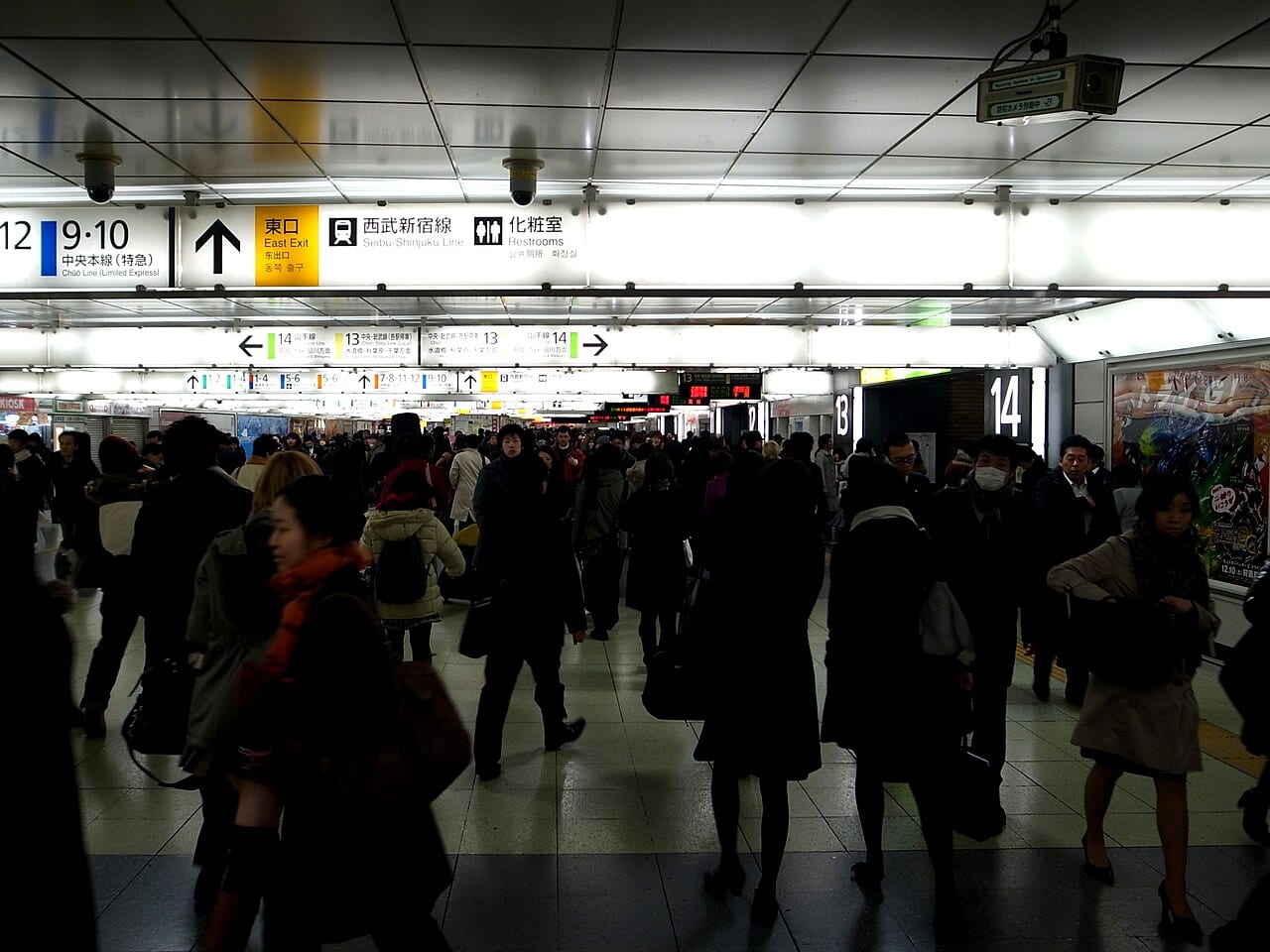
The map looks like a circuit board because it overlays several different companies' networks onto a single sheet. Understand this layering and the map turns from "hieroglyphics" into "four transparent sheets stacked together." Tokyo's rail breaks roughly into four kinds of operator:
| Operator | Key lines | What it does |
|---|---|---|
| JR East | Yamanote, Chuo-Sobu, Keihin-Tohoku | Above-ground JR lines — the backbone linking every major hub |
| Tokyo Metro | Ginza, Marunouchi, Hibiya + 9 lines total | The core subway, widest coverage of central attraction districts |
| Toei Subway | Asakusa, Oedo, Shinjuku, Mita (4 lines) | City-government subway filling gaps Metro doesn't reach |
| Private railways | Keio, Odakyu, Tokyu, Seibu, Tobu | Radiate from the city edge to suburbs and day-trip spots |
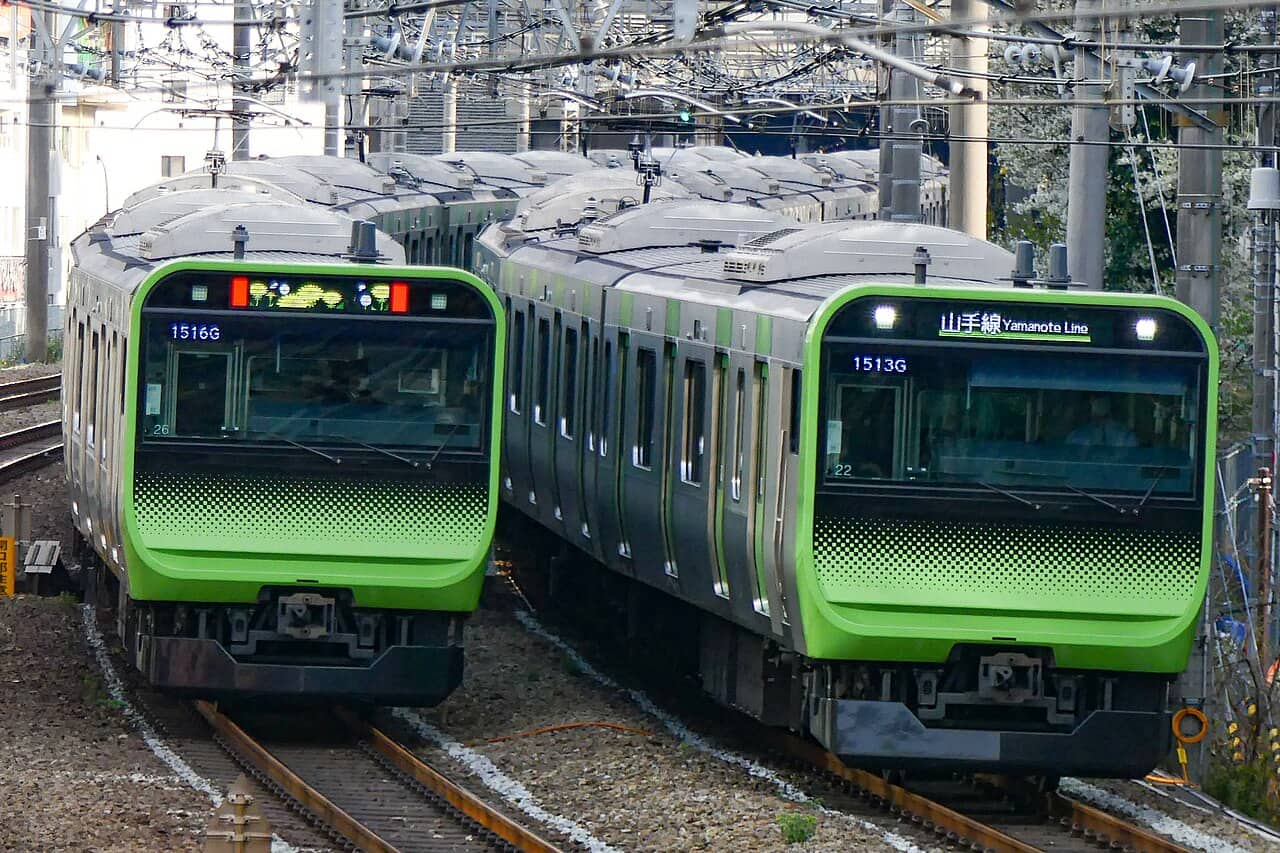
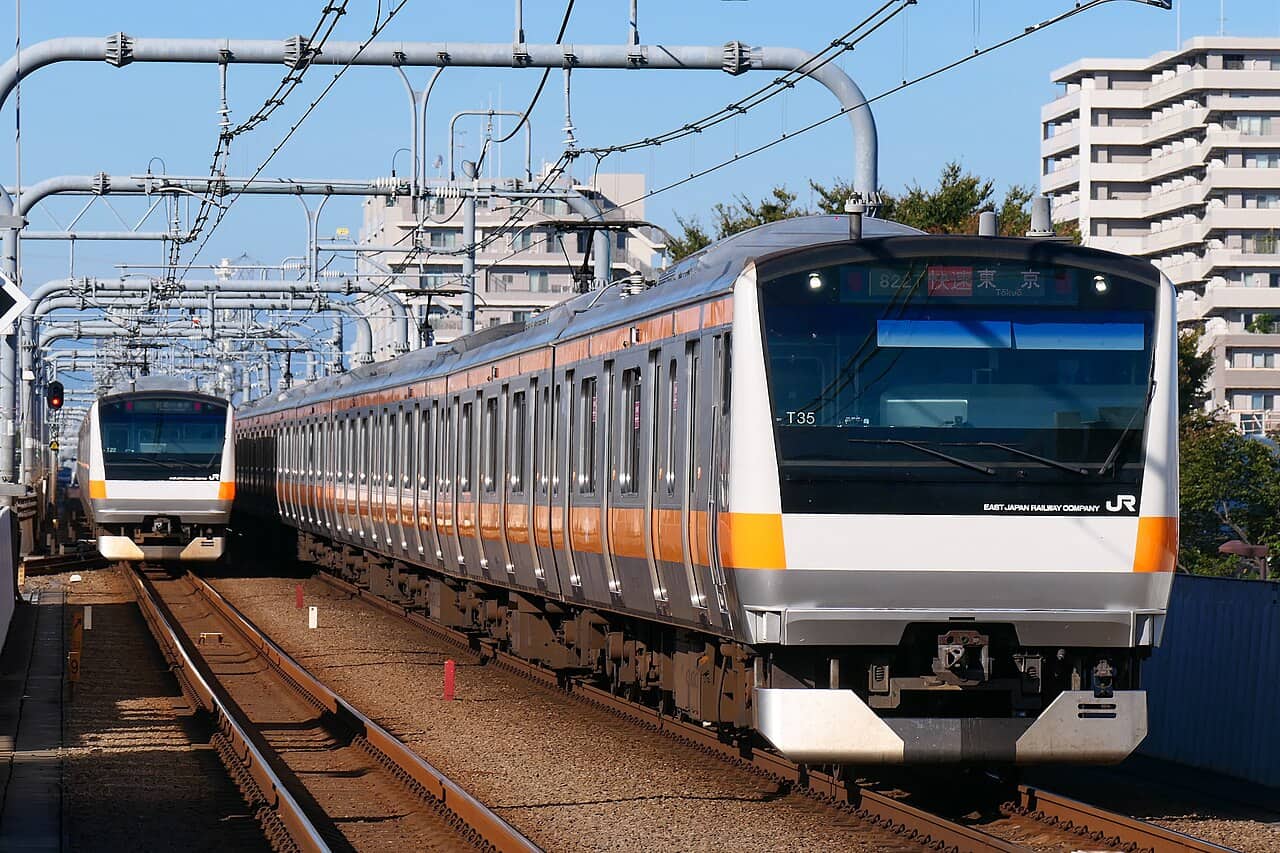
JR East is the above-ground arterial network. The two that matter most to travelers are the looping Yamanote Line (detailed next) and the east-west Chuo-Sobu Line. These aren't subways — they run at grade or elevated — and they connect Shinjuku, Tokyo, Shinagawa, Ueno and every hub you'll use. If you bought a nationwide JR Pass or the Tokyo Wide Pass, these JR lines are what you ride free (subways and private railways are not included).
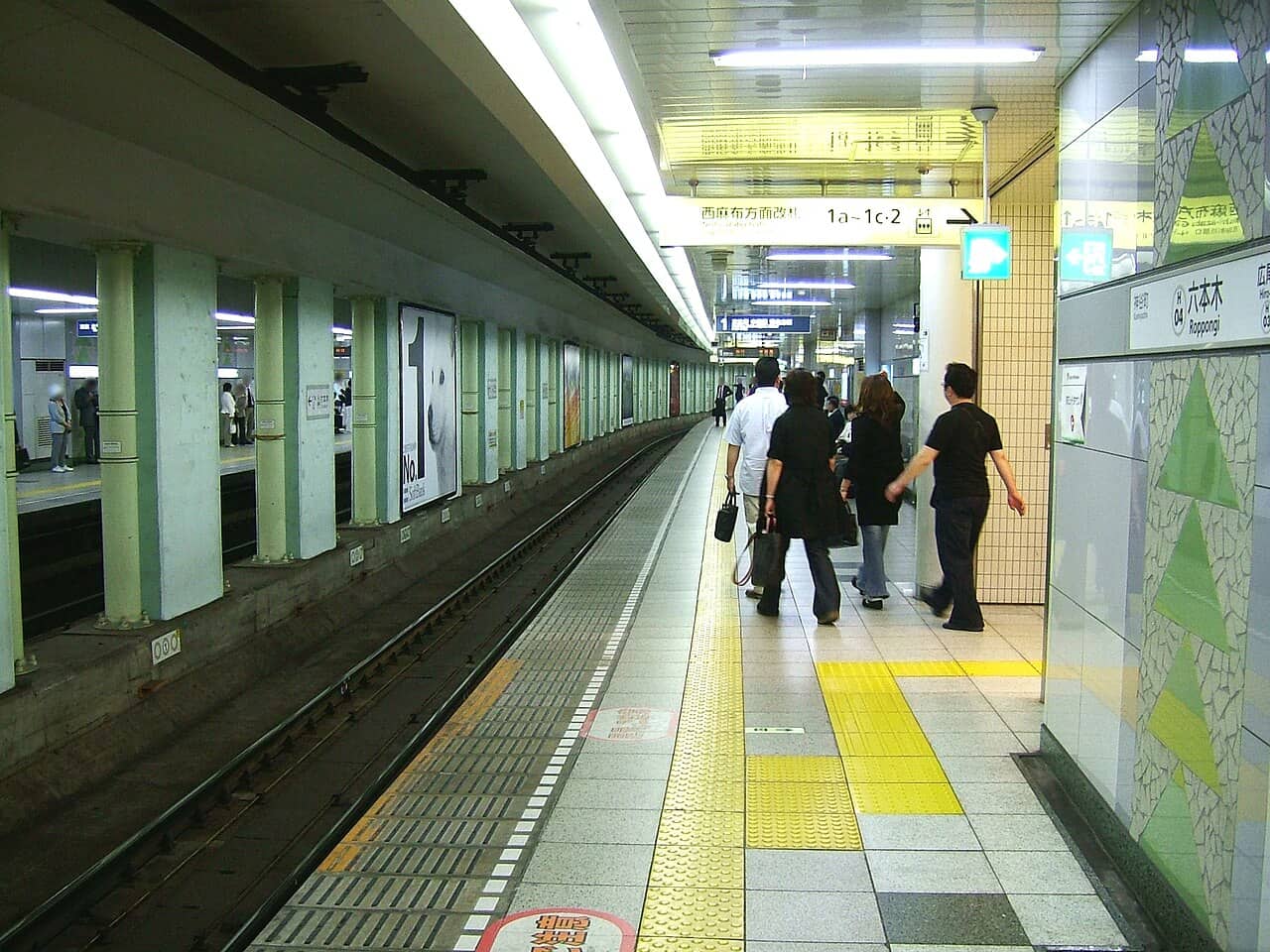
Tokyo Metro (9 lines) + Toei Subway (4 lines) together make up what everyone calls "the Tokyo subway." They're separate companies with separate ticketing, but the riding experience is identical and all signage is bilingual. The subway burrows into the side streets JR can't reach — Asakusa, Ginza, Omotesando, Roppongi all get door-to-door subway service. These two companies are exactly what the Tokyo Subway Ticket unlimited pass covers — JR is not included.
Private railways are the outermost layer. Keio, Odakyu, Tokyu, Seibu and Tobu each radiate from a city terminal out to the suburbs, carrying you out of Tokyo for day trips: Odakyu to Hakone, Keio to Mt. Takao, Tokyu toward Yokohama, Seibu toward Kawagoe, Tobu direct to Nikko and Kinugawa. You'll rarely touch a private railway hopping around the center — they only come into play when you leave Tokyo for a day trip. For Mt. Fuji specifically, see our dedicated Fuji guide.
So the truth behind "the map is chaotic" is that it's four separate companies' networks stacked together. You'll only ever travel one or two lines at a time, following the app, so you never need to untangle the whole sheet in your head. For which passes pay off and whether they fit your trip, see JR Pass vs Regional Passes: Which to Choose.
The Yamanote Line: your mental map
If you only memorize one line, make it the Yamanote. It's a loop line that circles central Tokyo in about 60 minutes, stringing together Shinjuku, Shibuya, Ikebukuro, Ueno, Tokyo, Shinagawa, Akihabara, Hamamatsucho — nearly every hub you'll visit. Think of it as Tokyo's "ring road":
- Build a sense of direction: memorize which side of the loop your hotel station sits on (Shinjuku is west, Ueno northeast, Shinagawa south), which side your destination is on, and whether clockwise or counterclockwise is shorter — and the whole city's geography clicks into place.
- Many itineraries never need the subway: hop between hubs on the outer loop, then walk or take one short subway leg to the finer points. On day one I'd lean on the Yamanote as much as possible and add subways once you're comfortable.
- Hardest line to ride wrong: every 2–4 minutes, no timetable needed; platforms and carriages show the next station in English on scrolling displays.
One small trap first-timers hit: the Yamanote has an "inner loop" (counterclockwise) and "outer loop" (clockwise), boarded from separate platforms. Glance at whether the next station shown is your direction before boarding — and if you go the wrong way, no harm done. There are plenty of hubs; get off at the next stop, cross to the opposite platform and ride back. A full loop is only an hour at most.
The IC card: the one thing that solves 90% of it
I said it earlier and I'll repeat it, because it's genuinely the first thing a first-timer should do: get an IC card. Suica (JR East) and PASMO (Tokyo's private/subway alliance) are the most common in Tokyo, are functionally identical, and a single one rides JR, Tokyo Metro, Toei, private railways and buses — and also pays at convenience stores, vending machines and many restaurants.
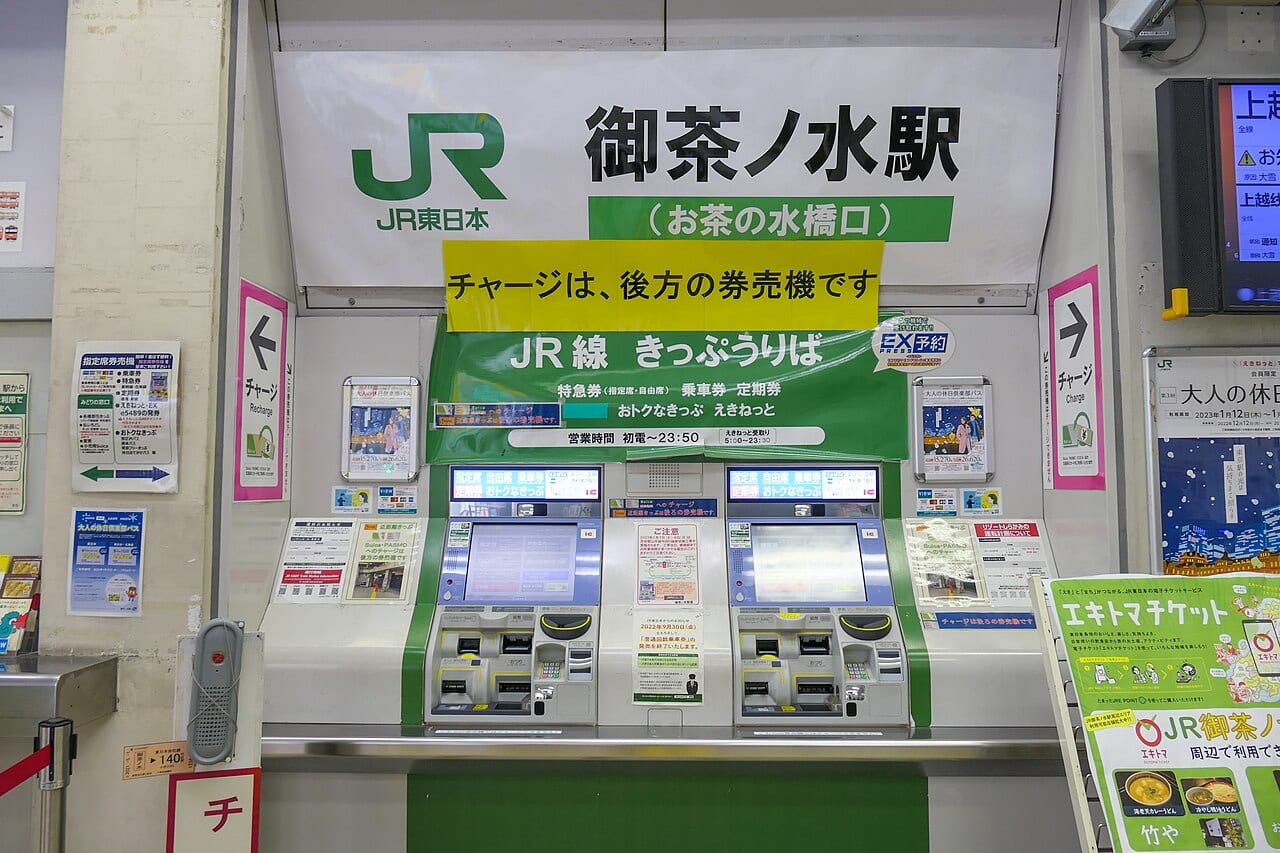
The IC card's real magic is that it quietly solves the single most stressful thing about Tokyo — the many-companies problem. Ride the JR Yamanote, transfer to Tokyo Metro, then to a Toei subway, and you've crossed three companies with three fare systems — but you only tap once in and once out, and the system splits and deducts the total. You don't need to know the fares, don't buy two paper tickets, and don't re-purchase at each transfer.
A few practical notes:
- Where to buy: airport JR service centers and ticket machines at every major station. To skip the queue, grab a no-deposit Welcome Suica at the airport (valid 28 days, balance non-refundable).
- Unregistered cards are back on sale: standard Suica/PASMO were suspended in the chip shortage but resumed unrestricted sale on 1 March 2025 — physical cards are normally available again.
- iPhone users have it easiest: add Mobile Suica to Apple Wallet and skip the physical card entirely, topping up with Apple Pay.
- Topping up: machines and convenience stores both add value; load ¥2,000–3,000 at a time and refill as needed rather than overloading up front (especially Welcome Suica, whose balance is non-refundable).
Suica, PASMO and ICOCA are all nationally interoperable; for a deep comparison, refunds and the mobile versions, see Japan IC Cards: Suica vs ICOCA vs PASMO. To weigh whether a nationwide pass is worth it for cross-region travel, see JR Pass vs Regional Passes.
Which pass? Tokyo Subway Ticket vs Tokyo Wide Pass
Lead with the most important judgment: most people in central Tokyo need no pass at all — pay-as-you-go with an IC card is cheapest. One caveat: the arithmetic behind that judgment changed on 14 March 2026, when JR East raised fares inside the Yamanote loop by 16.4% — a short hop is now ¥200 and crossing the loop ¥260. For the new section-by-section prices and day-pass break-even, see our breakdown of the JR East 2026 fare revision. Passes only make sense in two situations: a day of frenetic subway-hopping, or a day trip out of Tokyo. Here are the two most-asked-about tickets, made clear.
Tokyo Subway Ticket (unlimited subway)
This is a tourist-only unlimited pass for Tokyo Metro + Toei Subway (no JR, no private railways). 2026 adult prices:
- 24-hour ¥1,000
- 48-hour ¥1,500
- 72-hour ¥2,000
(These are the prices after the 2026-03-14 subway fare hike; they were previously ¥800 / ¥1,200 / ¥1,500.) A single subway ride is typically ¥180–330, so the 24-hour ticket breaks even at roughly 5–6 rides. My rule of thumb is blunt:
- Buy it: your day is dense subway-hopping like Ueno → Asakusa → Skytree → Ginza → Omotesando → Shinjuku, 6+ rides — guaranteed savings and no fare math each leg.
- Skip it: you leave early and return late but spend the day walking one neighborhood; or your day leans heavily on the Yamanote (this ticket can't ride JR). Here it's wasted money — the IC card is cheaper.
The ticket is sold only to overseas visitors holding a passport, at airports, some subway stations, and online. If you know your day will be dense subway-hopping, buy ahead to skip the queue: KKday Tokyo Subway 24/48/72h pass. If you're arriving from Narita on the Skyliner, you can bundle it with the train ticket to save more — the math is in Narita & Haneda to Tokyo.
JR Tokyo Wide Pass (3-day)
This one serves a completely different purpose — it's not a city subway ticket but a JR pass for day trips out of Tokyo. The 3-day adult price is ¥16,000 (raised on 2026-03-14 in JR East's fare revision, up from ¥15,000). It covers JR East's main region, reaching the Mt. Fuji area (including the Fujikyuko Line), Karuizawa, Nikko and GALA Yuzawa, and even some shinkansen segments.
The test is equally simple: if you'll visit two or more out-of-town destinations within three days (say, Lake Kawaguchiko for Fuji plus Nikko for Toshogu), it breaks even easily; if you're staying inside central Tokyo, you'll never use it. Don't confuse it with the Tokyo Subway Ticket — one covers suburban JR, the other covers city subways, and their uses don't overlap. For Mt. Fuji specifically, the routes and how this pass pairs with them are in Tokyo to Mt. Fuji: Complete Transport Guide.
💡 One-line decision: dense city subway-hopping → Tokyo Subway Ticket; heading out of Tokyo for suburbs → Tokyo Wide Pass; the other 90% of the time → just an IC card.
Rush-hour crush, women-only cars, last train
Three things first-timers should know about riding in Tokyo — knowing them spares you a lot of misery.
Rush hour: avoid it if you can
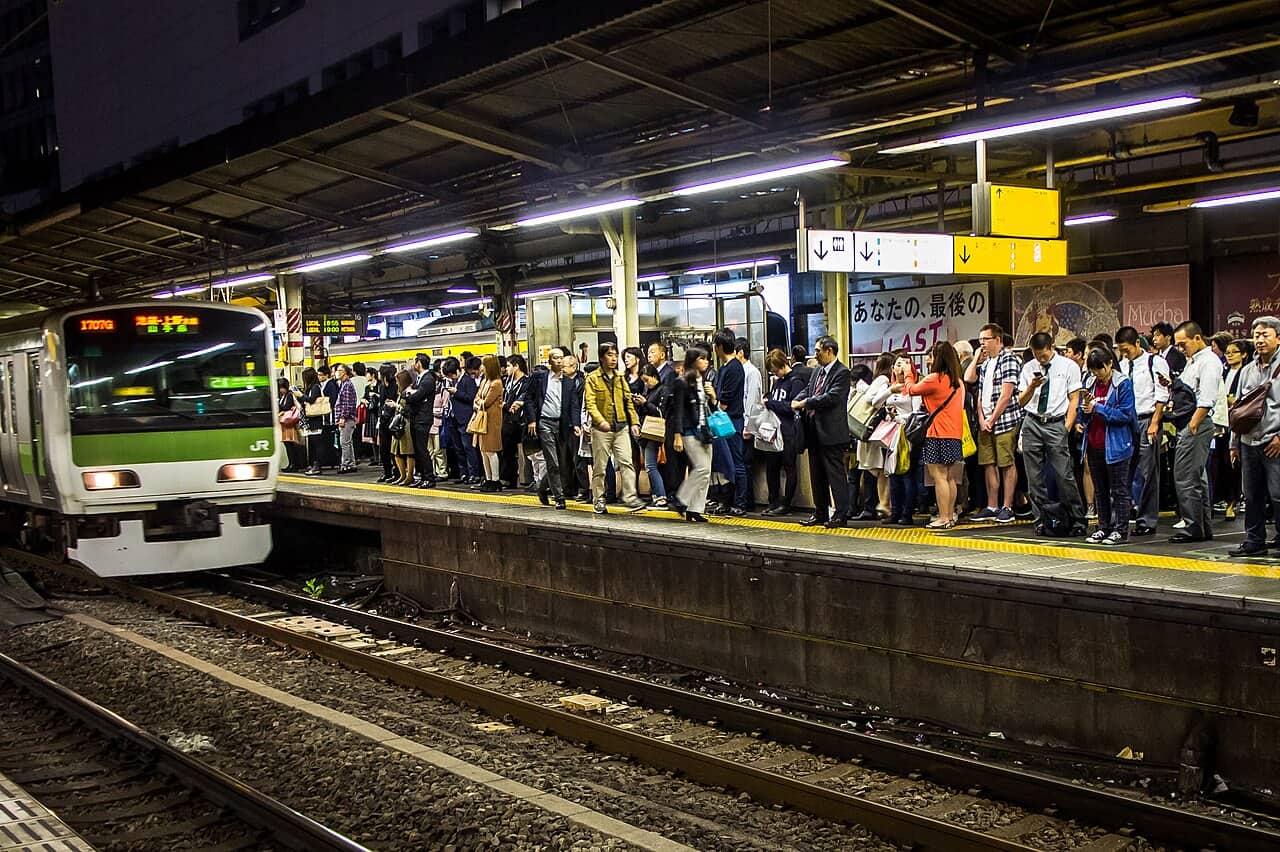
Tokyo rush hour is genuinely crush-loaded. The worst windows and directions:
- Weekday mornings 7:30–9:00, toward the center (the commute in)
- Weekday evenings 17:30–19:30, toward the suburbs (the commute out)
In those windows the Yamanote, Chuo and main subway trunks reach the "staff physically push people in so the doors close" level. Strategy: avoid dragging large luggage then — schedule airport runs and cross-city moves off-peak for comfort. If you must ride, stand at the car ends, grip a strap, and wear your backpack on your front.
Women-only cars
Many Tokyo lines run women-only cars in specific carriages during the weekday morning peak (some lines also late at night). The platform floor and that carriage's doors carry pink markings stating the applicable hours — male travelers, mind you don't stand in the wrong spot. Outside those hours, anyone may ride that carriage.
Last train: check before a late night
Tokyo's trains are not 24-hour. Last trains generally fall between 00:00 and 01:00 depending on line and direction — central hubs usually a little later, suburb-bound directions a little earlier. Before a late night, always check "the last train on this line tonight" in Google Maps or Navitime — and set the destination to the station you actually get off at, because central services frequently terminate short of the end of the line. Miss it and a taxi is the only option left, with a 20% late-night surcharge from 22:00 to 05:00 and a total driven entirely by distance: the modelled fares, and the call on when to ride versus book a room nearby, are in our guide to missing the last train in Japan. Ten seconds checking the last train is the most cost-effective homework you'll do.
Essential apps: Google Maps vs Navitime
If there's one thing I want loaded on your phone, it's this: the navigation app is the real solution to Tokyo transit; the rail map is just decoration. The two best:
- Google Maps: free, intuitive, and enough for the vast majority. Type your destination and it gives the line, the transfer, the exit number, the fare, the duration — even which carriage is closest to your transfer. The friendliest option for first-timers.
- Navitime (Japan Travel by NAVITIME): a local Japanese transit app whose route, last-train and transfer-platform precision sometimes edges ahead, with filters for fewest transfers / cheapest / fastest and flags for limited-express surcharges. Worth installing as a cross-check for heavy riders and complex itineraries.
Whichever you use, the prerequisite is the same — your phone needs data — which is why Tokyo transit guides always circle back to "sort out connectivity first." The easiest option for short-term visitors is an eSIM: scan on arrival, no physical SIM swap: KKday Japan unlimited-data eSIM. More must-have apps (translation, tax-free, weather, reservations) are gathered in Essential Japan Travel Apps; if your pre-trip checklist isn't sorted yet, see Japan Trip Essentials.
To close the whole thing in a sentence: don't let that rail map scare you. Get a Suica on arrival, open Google Maps, follow it; only reach for the Tokyo Subway Ticket if you'll take 6+ subway rides in a day. Everything else — leave it to the card and the app.
Frequently Asked Questions
- Q1:I am a first-timer and the Tokyo rail map terrifies me. What do I actually need to do?
- Honestly, you don't need to read the map. Two things solve 90% of the problem. First, get a Suica or PASMO (IC card) when you arrive — tap in at the gate, tap out at the gate, and the system charges the right fare automatically, even across different companies. You never calculate a fare or buy a ticket. Second, put Google Maps on your phone — type in any station or attraction and it tells you which line to take, where to transfer, which numbered exit to use, and the fare. The map looks scary only because it overlays a dozen companies (JR, Tokyo Metro, Toei, private railways) in clashing colors. When you actually ride, you only ever follow one line at a time, guided by the app. The single concept worth understanding is that Tokyo's rail is run by several separate companies, so cross-company fares are calculated separately — but the IC card handles that invisibly, so you barely need to think about it.
- Q2:Suica vs PASMO vs ICOCA — does it matter which one I buy?
- For a visitor, it barely matters; buy whichever is available. Since 2013, Japan's ten major IC cards have been nationally interoperable — a card bought in Tokyo works in Osaka and Sapporo, and vice versa. Suica (JR East) and PASMO (Tokyo's private/subway alliance) are the most common in Tokyo and are functionally identical: both ride JR, the subways, private railways and buses, and pay at convenience stores. One important update: unregistered standard Suica/PASMO were suspended during the 2023 chip shortage but resumed unrestricted sale on 1 March 2025, so physical cards are normally available again. If you'd rather skip the counter queue, grab a no-deposit Welcome Suica at the airport (valid 28 days, balance non-refundable). iPhone users should just add Mobile Suica to Apple Wallet and skip the physical card entirely. Full comparison in our dedicated IC card guide.
- Q3:What is the difference between JR, the subway, and private railways — and why are there so many companies?
- Because they genuinely are different companies. JR East runs the above-ground JR lines, with the Yamanote Line (loop) and Chuo-Sobu Line as the backbone connecting every major hub. Tokyo Metro runs 9 subway lines and Toei Subway runs 4 — together that's the "Tokyo subway" everyone means. Further out, private railways (Keio, Odakyu, Tokyu, Seibu, Tobu) radiate from the city edge to suburbs and day-trip destinations (Mt. Takao, Hakone, Kamakura, Nikko). The historical reason is a long coexistence of public and private rail. The only practical impact on you: cross-company transfers are billed separately, and sometimes you exit one gate and enter another. But with an IC card, all of that deduction is automatic and invisible. You'd only feel the friction buying paper tickets, where crossing companies means buying two fares — which is exactly why we tell you to just use an IC card.
- Q4:Do I need the Tokyo Subway Ticket? When is it actually worth it?
- Most people don't need it; a few people save real money. The dividing line is whether you'll take more than 6 subway rides in a day. The Tokyo Subway Ticket is a tourist-only unlimited pass for Tokyo Metro + Toei Subway (it does NOT cover JR). 2026 adult prices: 24h ¥1,000, 48h ¥1,500, 72h ¥2,000 (raised on 2026-03-14 alongside the subway fare hike). A single subway ride is typically ¥180–330, so the 24h ticket breaks even at roughly 5–6 rides. My rule: if your day is a dense subway-hopping itinerary like Ueno → Asakusa → Skytree → Ginza → Shinjuku, buy it — guaranteed savings. But if you leave early and return late and spend the day walking one neighborhood, or your day leans heavily on the Yamanote Line (this ticket can't ride JR), it's wasted money — the IC card pay-as-you-go is cheaper. The ticket is sold only to overseas visitors holding a passport, at airports, some subway stations, and online.
- Q5:What is the Yamanote Line and why does everyone say it unlocks Tokyo?
- The Yamanote Line is a loop that circles central Tokyo in about an hour, linking nearly every hub you'll visit — Shinjuku, Shibuya, Ikebukuro, Ueno, Tokyo, Shinagawa, Akihabara. Treat it as your mental map: memorize which side of the loop your hotel station sits on, which side your destination is on, and whether clockwise or counterclockwise is faster — and suddenly you have a sense of direction for the whole city. In practice, many itineraries never touch the subway at all: hop between major hubs on the Yamanote loop, then walk or take one short subway leg to the finer points. Trains run every 2–4 minutes (no need to check a timetable), and platforms and carriages have English next-station displays, making it the line first-timers are least likely to ride wrong. Master the Yamanote first, then layer in the subway — the learning curve flattens dramatically.
- Q6:How bad is rush hour? What about women-only cars and the last train?
- Rush hour is genuinely crush-loaded, but avoidable. The worst is weekday mornings 7:30–9:00 toward the center, and evenings 17:30–19:30 toward the suburbs — the Yamanote, Chuo and main subway trunks reach "staff push you in so the doors can close" levels. Strategy: avoid dragging large luggage during those windows, and schedule airport runs and cross-city moves off-peak. If you must ride, stand at the car ends and grip a strap. Women-only cars run on many lines during the weekday morning peak in specific carriages (look for pink floor and door markings stating the time window) — men, don't stand in the wrong spot. Last trains generally fall between 00:00 and 01:00 depending on line and direction, so before a late night, check that day's last train in Google Maps or Navitime — and set the destination to the station you actually alight at, because the final services often stop short of the terminus. Miss it and you are in a taxi: a 20% surcharge applies 22:00–05:00 and the total depends entirely on how many kilometres you have to cover. The modelled fares and a distance-by-distance decision table are in our guide to missing the last train in Japan.
Read next
Narita & Haneda to Tokyo: Complete Transit Guide 2026
Six options compared (N'EX, Skyliner, Limousine, Keikyu, Monorail) — pick by destination.
Suica vs ICOCA vs PASMO 2026: Which IC Card to Buy?
The chip shortage is over — unregistered Suica and PASMO went back on sale in March 2025, alongside the deposit-free Welcome Suica and phone options. Which to pick, and how they differ.
Tokyo 5-day itinerary 2026
A clear 5-day plan: Shinjuku base, two zones per day, honest budget.
📊 See the 2026 Price Index (JR Pass, DPA, eSIM, Airport Transport) →