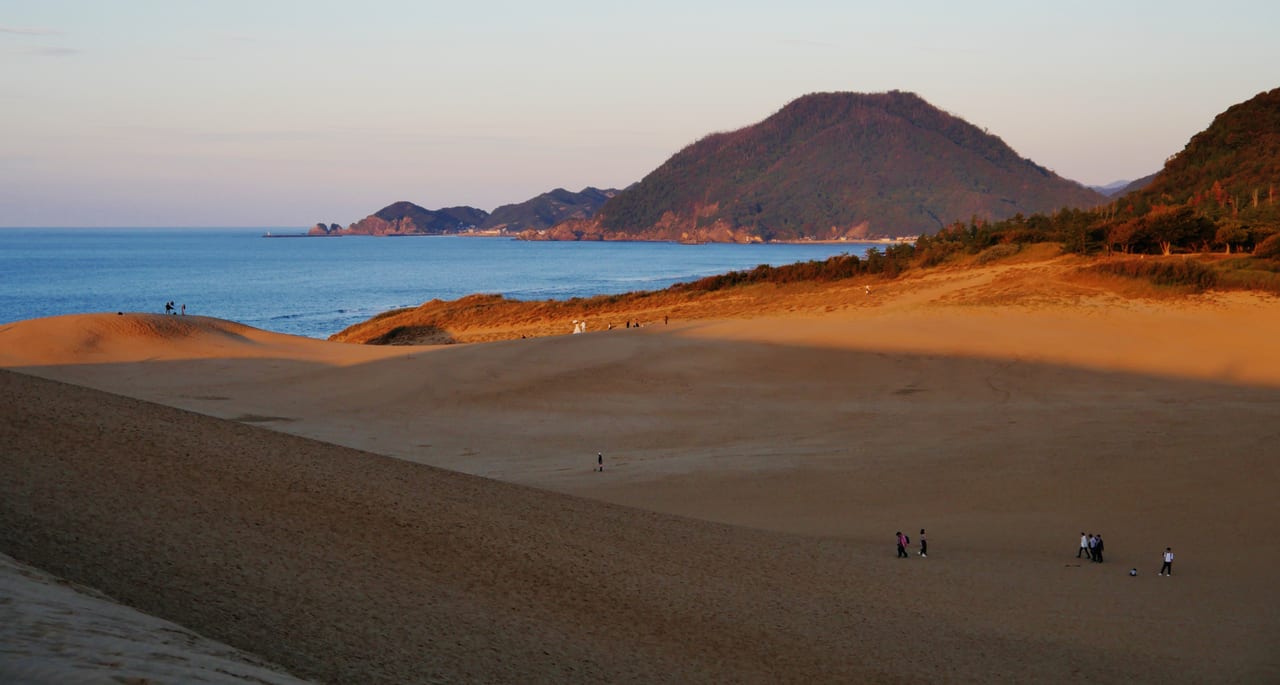
The Tottori Sand Dunes are Japan's largest dune system — about 16km wide, with a relief of up to 92m — but the first thing most people don't realize is this: the dunes themselves are free and open 24 hours, with no gate. You can walk straight in, sink your feet in the sand, and climb the roughly 47-meter "Uma-no-Senaka" wall to look out over the Sea of Japan. Getting here is closer than you'd think: about 2.5 hours from Osaka on the Super Hakuto limited express, or 1 hour 50 minutes from Okayama on the Super Inaba, then a 20-minute bus from Tottori Station. This guide covers how to climb the ridge, whether the camels are worth it (and why they're often photos-only in peak season), the Sand Museum at ¥800 and its long annual closure, the Uradome Coast cruise, Mt. Daisen, and — the part most visitors miss — the golden sunset window, facing west. To go deeper into San'in, chain it west with the Izumo Taisha guide, or south with Okayama & Kurashiki.
- Free, open 24/7: the signature is the ~47m Uma-no-Senaka sand wall; climb it for the Sea of Japan, allow 60–90 min round trip
- 2.5 hrs from Osaka, 1h50 from Okayama: then a ~20-min bus; the "Loop Kirin Jishi" sightseeing bus runs weekends/holidays
- Camels are often photo-only in peak season: ride ¥1,600/person, photo ¥650 — weekends/holidays usually no rides, to spare the animals
- Sand Museum ¥800, but closed each Jan–Apr to rebuild (2026: Jan 5–Apr 23) — visit Jan–Mar and you'll miss it
- Sunset facing west is the best moment; nearby, add the Uradome Coast cruise and Mt. Daisen
📖 Contents
Why visit the Tottori Sand Dunes
Let's clear up a common myth first: the Tottori Sand Dunes are not a desert. They are coastal dunes — the Sea of Japan and the wind worked sand washed down from the Chugoku mountains, carried out by the Sendai River and then blown back ashore, building up over roughly 100,000 years. So the sea is right at their foot and the air is salty; this is a different beast from an inland desert. The appeal is simple but strong: that sense of scale — an endless field of sand ending in the deep blue Sea of Japan — has no equal on Honshu. And it is free, open, and approachable: unlike so many Japanese landmarks that mean queuing for tickets, here you step off the bus and walk straight in, barefoot if you like.
My framing: the dunes work best as the anchor or the highlight of a San'in trip, not as an isolated special trip. The neighbors (Uradome Coast, Mt. Daisen) and the next prefectures over (Izumo, Kurashiki) all reward chaining — half a day on the dunes, the rest extending into the rest of San'in, is the smart play. If you only want to tick off that golden slope and the sea, a half day is ample; to go deeper, see the two-day version below.
Doing the dunes: Uma-no-Senaka & sunset
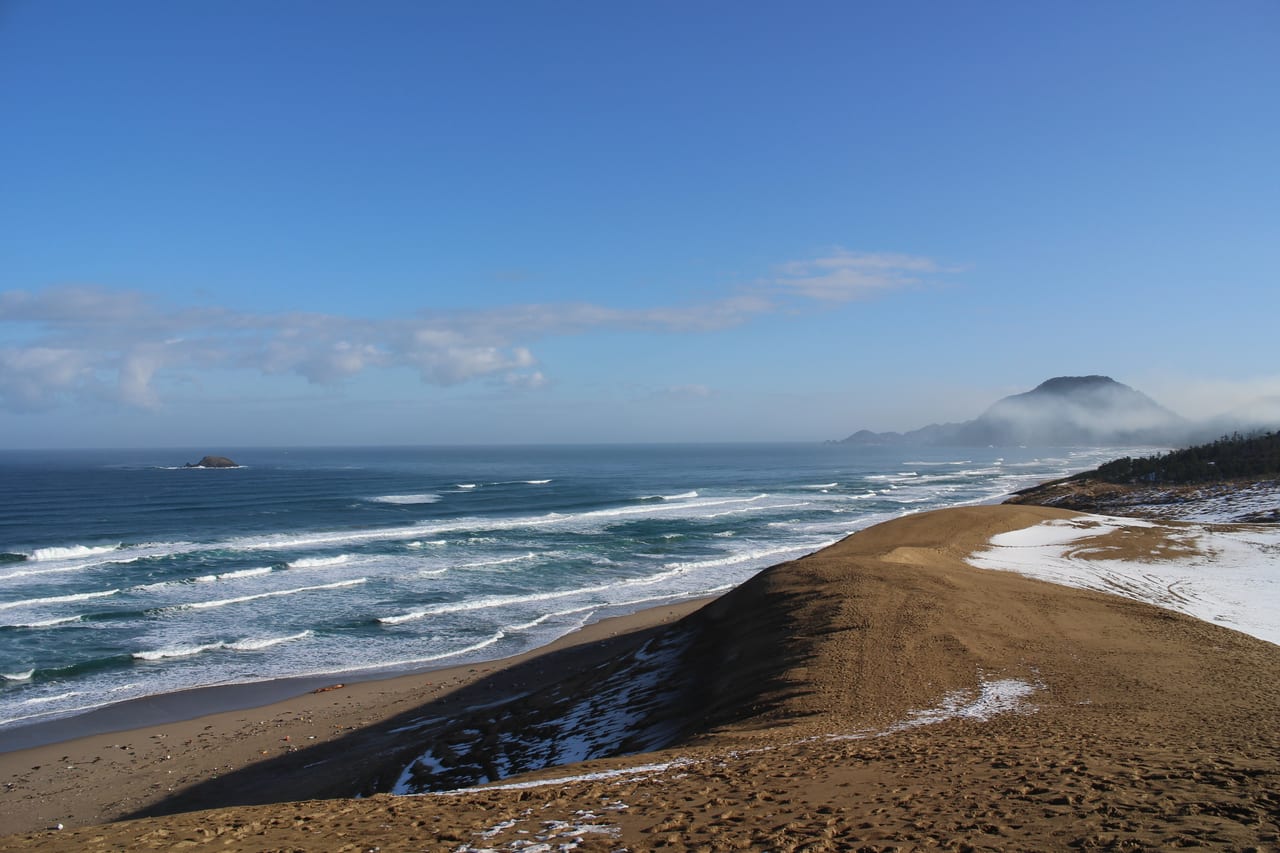
The classic target is Uma-no-Senaka — a giant sand wall about 47m high seen from directly below, named for its resemblance to the hump of a horse's back. From the entrance on the car-park side you cross a gentle stretch of sand, then that steep slope rises up in front of you. Climbing it is the most rewarding and the most exhausting stretch here: the slope is steep, the sand is soft, and every step slides back half a step — no stairs, no handrail, just legs. But the moment you crest it, the view opens out behind you — the whole Sea of Japan laid out — and it earns the sweat.
- Timing: just to the top for photos is about 30–40 minutes; top, then down to the shore and back, allow 60–90 minutes.
- Footwear: sand gets in. Wear shoes you can slip off, or sandals; barefoot works in summer, but watch the midday heat.
- Water: there's no shade and no vending machine out on the sand — carry water in summer.
Now the part most visitors overlook, and the one I think is most worth planning for — sunset. The dunes face west, straight at the Sea of Japan, so as the sun drops to the horizon the whole field turns gold-orange, the light raking long shadows across the ripples in the sand. It is the most beautiful moment of the day. Sunset falls around 18:30–19:00 in summer, 16:30–17:00 in winter (seasonal). My recommended plan: arrive at 3–4pm, climb Uma-no-Senaka and do the activities, then stay out on the ridge or the dune crest for sunset. Midday is the weakest window — glare, heat, exposure, and the flattest photos. Travelers willing to wait for sunset leave with a completely different Tottori.
Camels, the chairlift & sand activities
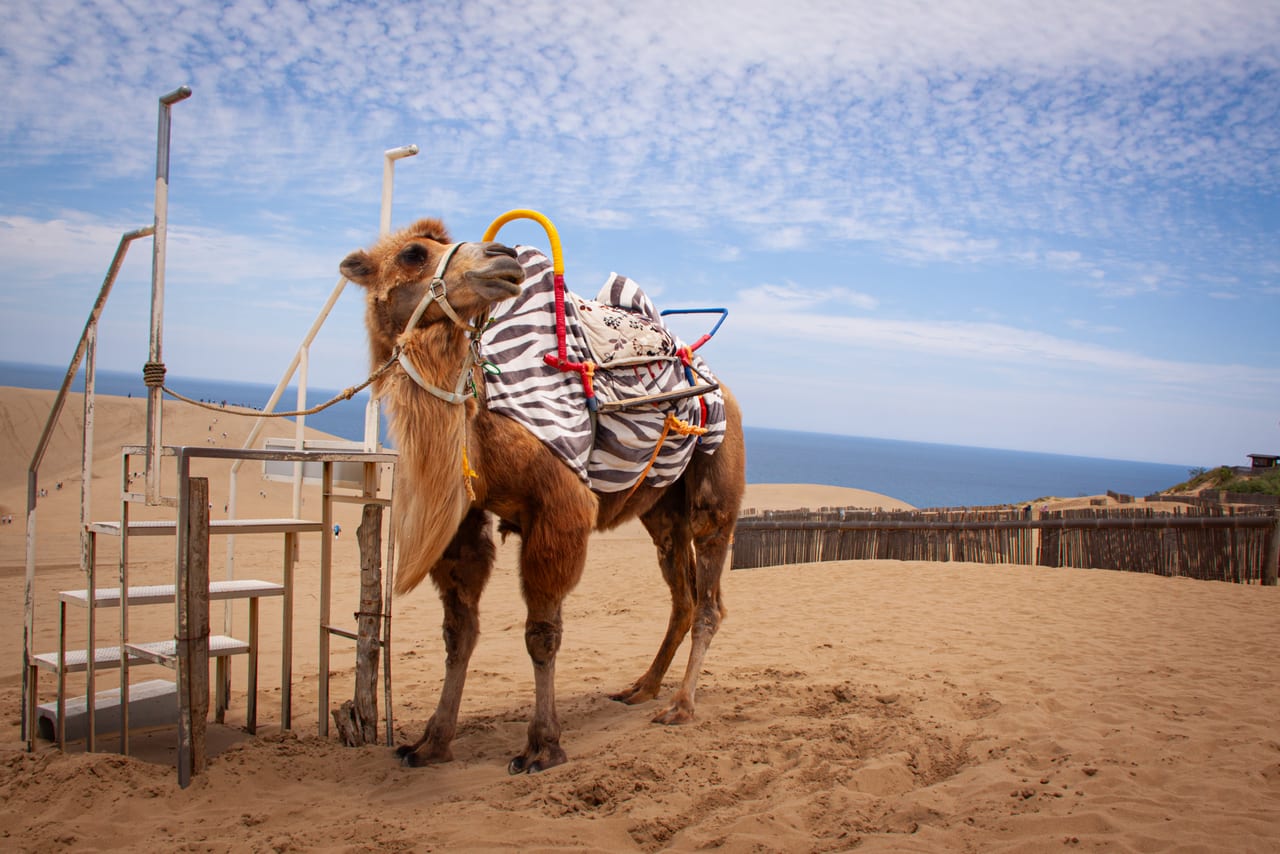
A lot of the dunes' "exotic" feel comes from those few camels. First, the thing everyone asks — are they worth it, and can you ride? Honestly, they're more of a "you're here, grab a photo" stop; the ride itself is short (led a little way and back), not a reason to plan around. Per the Rakudaya operator's posted rates (2024; confirm on site):
- Ride: ¥1,600 for one, ¥2,600 for two.
- Photo only: seated on the camel ¥650, standing beside it ¥100.
But here's the key line: availability changes. To ease the strain on the animals, on Saturdays, Sundays, public holidays, and during school breaks the operator often runs "photos only" and does not offer rides — so come on a weekend and you may not get to ride at all, only photograph. If actually riding matters to you, come on a weekday and check the official notice first. My call is simple: a seated photo (¥650) is enough; don't fixate on that short ride. Put the saved energy and time into climbing the dune and waiting for sunset — far better value.
If you'd rather not slog up the slope on foot, there's a sightseeing chairlift (sakyu lift) linking the car-park terrace to near the dune entrance, ¥500 round trip, ¥300 one way for adults (roughly 9:30–16:00), saving a climb and giving you a vantage over the sand. For more of a thrill, operators around the dunes offer sandboarding, paragliding, sand yoga, and fatbiking — most need advance booking and run by season and weather. These are add-ons; if time is tight, the dunes plus sunset plus the museum already make a full, satisfying visit, and you needn't do everything.
The Sand Museum (price & closure)
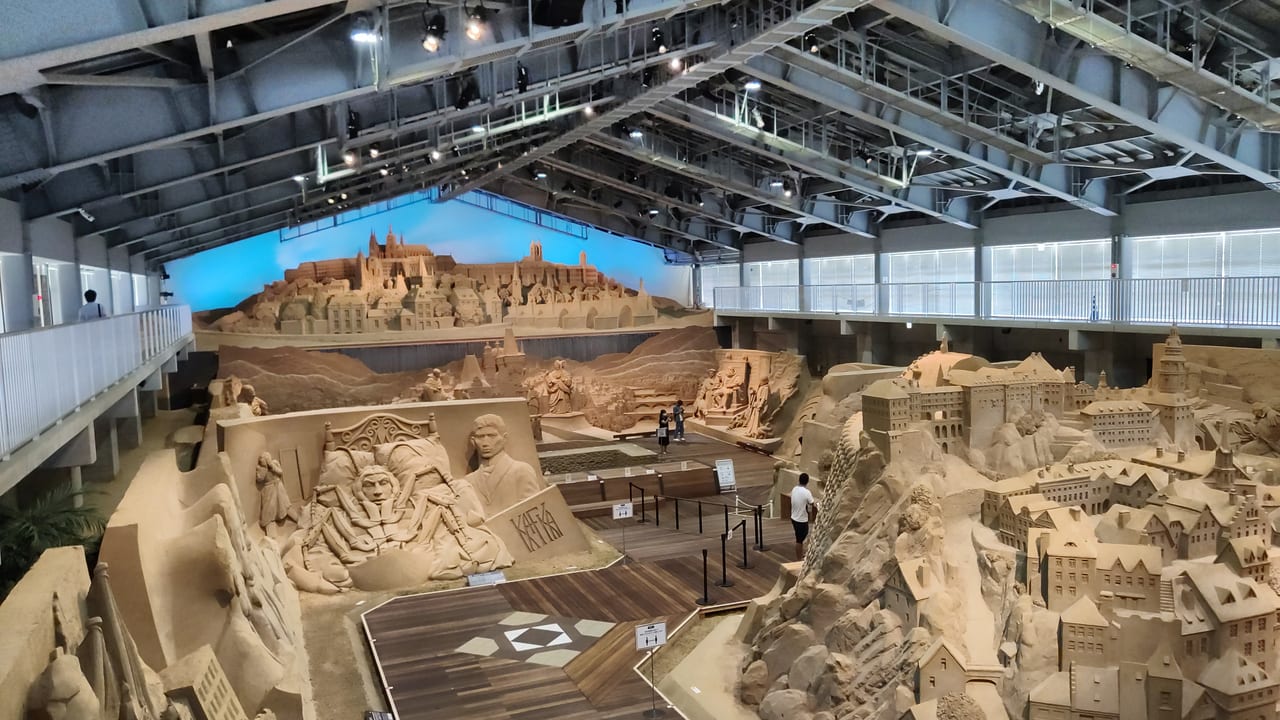
Right beside the dunes, an easy walk away, is the Sand Museum (Sunano-Bijutsukan) — the world's only permanent museum that uses sand as its medium. Inside, sand packed with a little water is built into vast sculptures of startling detail — faces, expressions, architectural lines — and the theme changes to a different country or region each year, so it never repeats. The practicals:
- Admission: ¥800 adults, ¥400 students (elementary–high school), free for pre-schoolers.
- Hours: 9:00–18:00 (last entry 17:30).
- Exhibitions & closure (the important bit): it takes a long annual shutdown to rebuild the sculptures. Per official notices, it is closed January 5 to April 23, 2026, reopening April 24 with its 17th exhibition, "Travel the World in Sand: Spain," through January 3, 2027.
So, one reminder: visit Tottori during the changeover (roughly January to March) and you simply can't see the Sand Museum — the dunes stay open and the camels run when they run, but the museum is shut, so don't plan around it then. Worth going in? In my view, very much: ¥800 for a hall of world-class sand sculpture, a great rainy-day or break-from-the-heat indoor backup, and a hit with kids.
Uradome Coast cruise
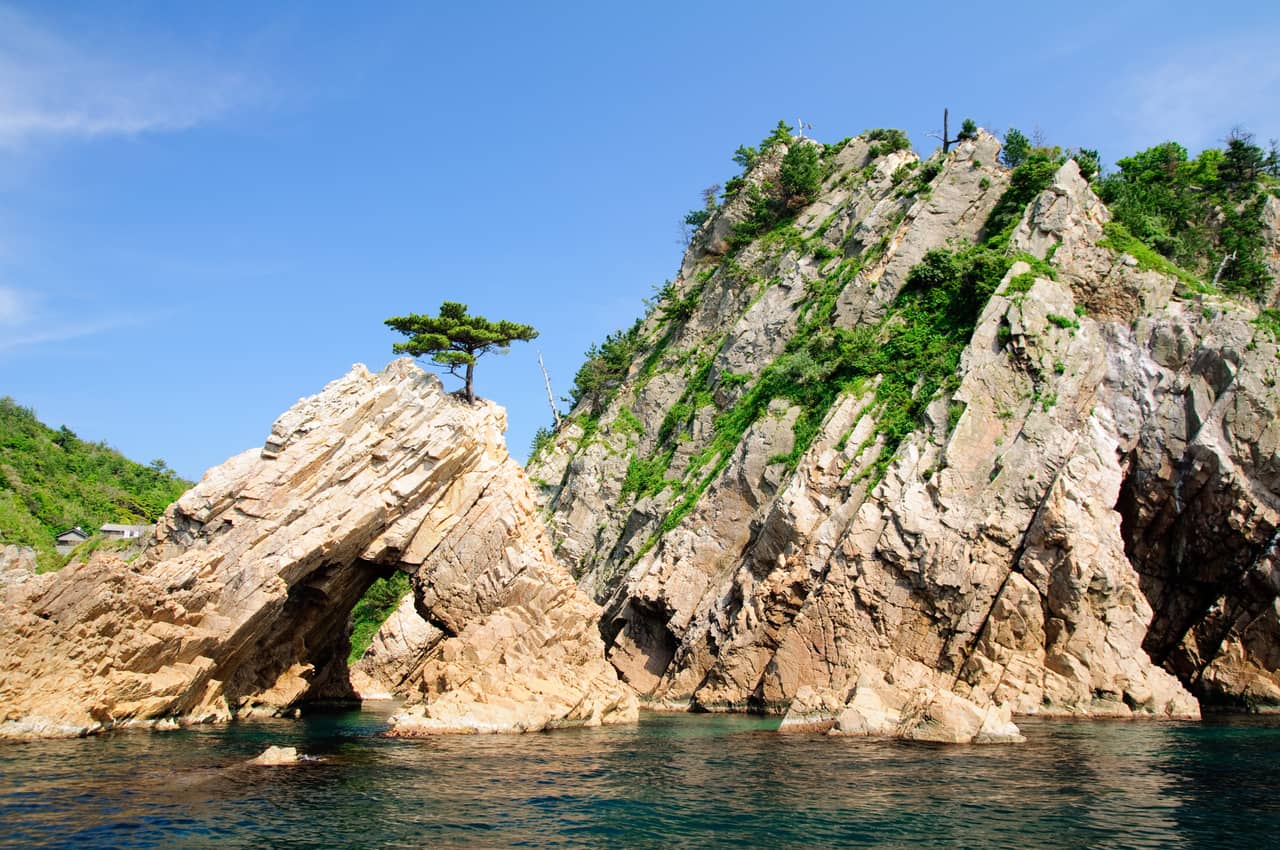
If you're willing to head a little east of the dunes (about 10 minutes by car), the Uradome Coast is an underrated stop. Nicknamed the "Matsushima of San'in," this stretch is a tangle of sea-carved crags, rock arches, white sand, and remarkably clear water, and the island-circuit sightseeing boat takes you weaving among the reefs and caves for views you can't get from land — including a much-photographed crag topped by a lone pine with an arch hollowed out beneath. The practicals: the cruise runs roughly March 1 to November 30 (closed in winter), about 40 minutes, ¥1,800 for adults (junior-high and up), ¥900 for elementary (rates from 2025; confirm on site).
Worth it? If you only want the dunes and time is tight, skip it; but if you've already stayed a night and want to work the San'in coastline, the clarity of the water and the rock formations at Uradome feel more like a "San'in hidden gem" than the dunes alone. It sits east while the dunes sit west, so the two chain neatly into a half-day on the coast.
Mt. Daisen ("Hoki-Fuji") & autumn
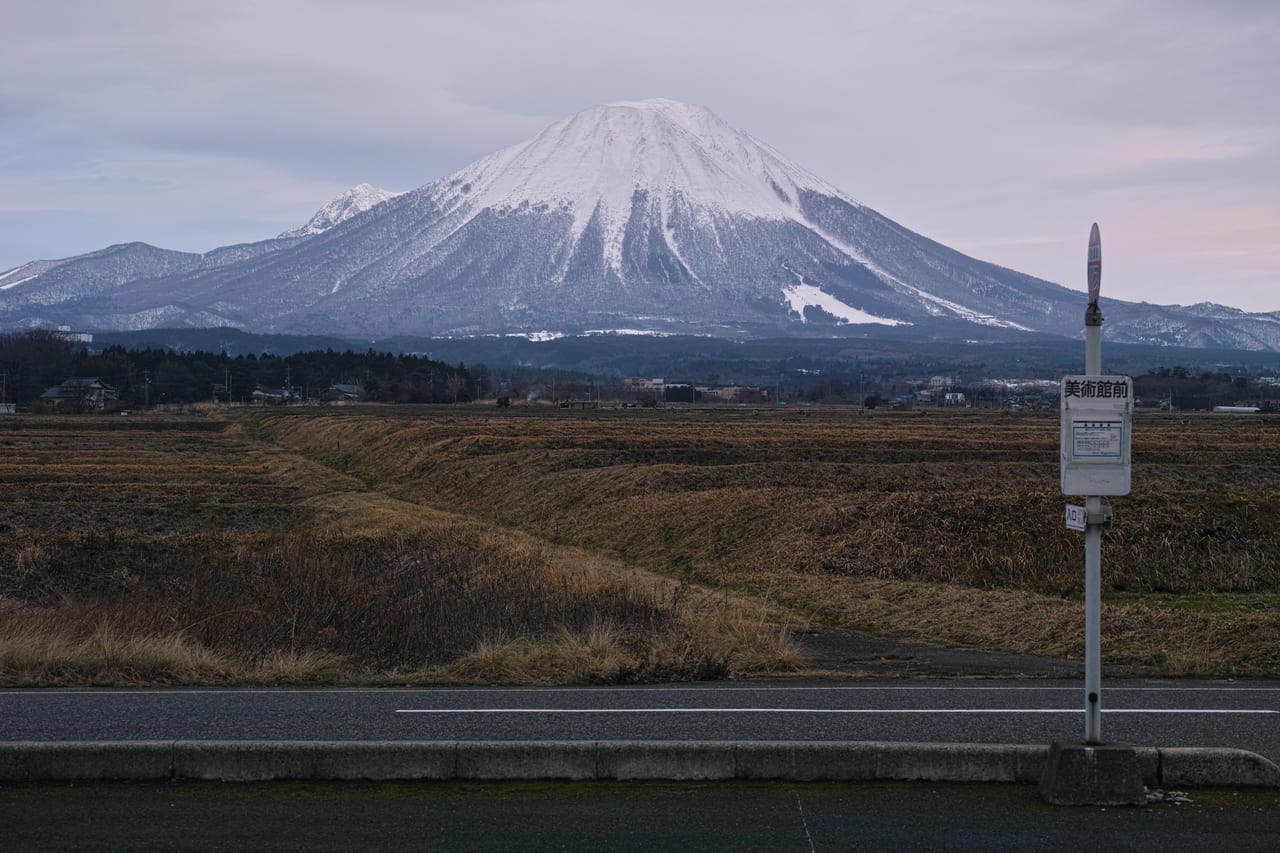
About an hour-plus west of Tottori city is Mt. Daisen — at 1,729 meters, the highest peak in the Chugoku region — and because its symmetrical, Fuji-like profile from the west earns it the name "Hoki-Fuji." It's a completely different register from the dunes: one is flat golden sand and sea, the other a towering volcanic ridge and forest. Daisen has two signature seasons:
- Autumn foliage: among the best in the Chugoku region. Per official sources, the summit area turns first, around early-to-mid October; the 500–800m belt around late October into early November; and the foothills (Daisenji temple, the approach) into early-to-mid November. Locals mark October 20 to November 5 as the prime "Daisen autumn-color week."
- Winter skiing: Daisen is one of western Japan's best-known ski areas, with reliable snow that draws skiers from Kansai and the wider Chugoku region.
For ways to do it: the approach to Daisenji temple and Ogamiyama Shrine is an easy walk with great foliage; to summit, the popular but demanding Natsuyama trail from the Daisenji trailhead leads to the Misen peak, so gauge your fitness and check the weather. Honestly, Daisen suits travelers with a car who want an extra night and like mountains and maples — day-trippers there only for the dunes can skip it and come back for it properly. For mountain weather and what to pack, see our Japan packing & weather guide.
Transport & lodging
This is the most important part of planning Tottori. Getting in has three routes:
- From Osaka: the JR limited express "Super Hakuto" runs direct to Tottori in about 2 hours 30 minutes — the most direct option from Kansai.
- From Okayama: the "Super Inaba" takes about 1 hour 50 minutes (around ¥5,400 reserved, fare plus surcharge). If you're working across from the San'yo side (Okayama, Kurashiki), this is the smooth line.
- By air: ANA flies from Haneda into Tottori Sand Dunes Conan Airport, then a bus into the city — handy from Tokyo when you want to save time.
From Tottori Station, the dunes are about 20 minutes away, with two bus options: a regular local bus (Sakyu line) on weekdays, and on weekends and holidays the sightseeing loop bus "Loop Kirin Jishi," which circles the dunes, Tottori Port, the castle ruins, and more, at ¥400 one way or a ¥700 day pass (weekends, holidays, and certain dates only — none on weekdays). Need a car? My advice: for the dunes, the Sand Museum, and the city, no — bus plus walking covers it. But the moment you want to chain Uradome Coast or Mt. Daisen, a rental car helps enormously, since buses out there are sparse and you'll wait at stops without one. If the wider San'in/San'yo trip leans on JR limited expresses, run the math in our JR Pass guide first (note the Chizu Express section and the dune buses may not be covered by the JR Pass — check separately).
Lodging: a day trip (round trip from Osaka or Okayama) is entirely feasible, but pre-check the last return limited express so you don't miss it waiting for sunset. To go deeper, stay in Tottori city or a nearby onsen town — the area has hot-spring spots like Yoshioka Onsen, so you can soak and pick up the dunes or Daisen the next morning. City hotels are plentiful and reasonably priced; peaks (summer, autumn weekends, long holidays) still warrant booking early.
One-day & two-day plans
The same content shaped into two versions:
- One-day highlights (day trip): morning limited express from Osaka or Okayama to Tottori → bus to the dunes → climb Uma-no-Senaka around midday for the Sea of Japan → a camel photo or the chairlift as available → into the Sand Museum for the sculptures and air-con → stay out on the ridge or crest for sunset (the golden window) → last limited express home. The point: build the sunset in; don't leave at midday.
- Two days, one night (deeper San'in): Day 1, dunes + Sand Museum + evening sunset, sleeping in Tottori city or an onsen town; Day 2, morning Uradome Coast cruise (Mar–Nov) for the crags, afternoon west to Mt. Daisen to hike or leaf-peep, or onward toward Izumo to fold in the Izumo Taisha guide.
To extend south, Tottori and Okayama/Kurashiki are linked by the Super Inaba, so you can string San'in (Tottori) and San'yo (Kurashiki, Okayama) into a 3–4 day cross-country run — see our Okayama & Kurashiki guide. As the face of San'in, the smartest way to do the dunes is to treat them as a starting point and fan out, rather than as a one-off special trip.
FAQ
- Q1:Is there an entry fee for the Tottori Sand Dunes? How long to climb Uma-no-Senaka?
- The dunes themselves are completely free and open 24 hours — no gate, no ticket booth, you just walk in from the car park onto the sand. The only paid extras are add-ons: the camels, the dune chairlift, and the Sand Museum. The signature target is Uma-no-Senaka ("the horse's back"), a sand wall about 47m high seen from directly below; climb it and the whole Sea of Japan opens up. The slope is steep and the sand is soft, so allow 60–90 minutes to walk from the entrance up the ridge, down to the shore, and back; just to the top for photos is about 30–40 minutes. Sand gets into everything, so wear shoes you can slip off, or sandals.
- Q2:Are the Tottori camels worth it, and can you actually ride them?
- Honestly, the camels are more of a "you're here anyway, grab a photo" thing than a reason to plan around. Per the Rakudaya operator, a ride is ¥1,600 for one person, ¥2,600 for two, a photo seated on the camel is ¥650, and a photo standing beside it ¥100 (2024 posted rates; confirm on site). The key catch: availability changes. To ease the strain on the animals, on Saturdays, Sundays, public holidays, and during school breaks they often run "photos only" and do not offer rides at all — so a weekend visitor may not get to ride. If riding matters to you, come on a weekday and check the operator's notice first. My take: a seated photo (¥650) is plenty; save the energy for climbing the dune and waiting out the sunset.
- Q3:Is the Sand Museum open in 2026? How much, and does it close?
- It does close, so check before you build your plan around it. The Sand Museum takes a long annual shutdown to rebuild its sculptures each year — per official notices, it is closed January 5 to April 23, 2026, then reopens April 24 with its 17th exhibition, "Travel the World in Sand: Spain," running until January 3, 2027. In other words, visit Tottori between January and March and the museum will be shut (the dunes stay open; only the museum is closed). Admission is ¥800 for adults, ¥400 for students (elementary–high school), free for pre-schoolers, open 9:00–18:00 (last entry 17:30). Worth it? It is the world's only permanent museum built around sand as a medium, the detail is far beyond what you'd expect, and the theme changes by country each year — for a rainy day or a break from the heat, ¥800 is a bargain.
- Q4:How do you get to Tottori from Osaka or Okayama? Do you need a car?
- Two main lines. From Osaka, the JR limited express "Super Hakuto" runs direct to Tottori in about 2 hours 30 minutes; from Okayama, the "Super Inaba" takes about 1 hour 50 minutes (around ¥5,400 reserved seat, fare plus surcharge). You can also fly ANA from Haneda into Tottori Sand Dunes Conan Airport. From Tottori Station, the dunes are about 20 minutes away: a regular local bus on weekdays, or the sightseeing "Loop Kirin Jishi" bus on weekends and holidays (¥400 one way, ¥700 day pass; runs weekends/holidays only). Do you need a car? For just the dunes plus the city, no — buses are fine. But to chain the outlying sights like Uradome Coast or Mt. Daisen, a rental car helps a lot, since service out there is sparse.
- Q5:What time should you visit, and is the sunset worth waiting for?
- Very much so. The dunes face west onto the Sea of Japan, so at dusk the sun drops into the horizon and the whole expanse turns gold — the best moment of the day. Sunset is roughly 18:30–19:00 in summer and 16:30–17:00 in winter (seasonal). My plan: arrive around 3–4pm, climb Uma-no-Senaka and do the activities first, then stay up on the ridge for the sunset, when the light is most dramatic and the photos best. Midday is the worst stretch — harsh glare off the sand, hot and exposed (the surface gets seriously hot in summer). Winter has its own draw: Tottori often snows, and the "snow dunes" — white sand under snow against the deep-blue sea — are a rare sight, though it gets windy, so bundle up.
- Q6:How many days do you need? Should you stay overnight?
- Depends on your ambition. Just the dunes, the Sand Museum, and the city is a half-day to a day, doable as a day trip from Osaka or Okayama (but the sunset runs late and you need to pre-check return times). To see San'in properly, stay a night: day one for the dunes, museum, and Uradome Coast cruise, sleeping in Tottori city or a nearby onsen town; day two heading west to Mt. Daisen ("Hoki-Fuji") for a hike or autumn color, or onward toward Izumo to fold in the Izumo Taisha guide. Tottori and Izumo are both San'in, strung together by the JR San'in Main Line — the natural pairing. South toward Okayama and Kurashiki, see our Okayama & Kurashiki guide.
Related reading:
Izumo Taisha 2026: Kamiari Festival Dates, Omamori & Rituals
Kamiari-sai 2026 dates are official — the gods land at Inasa Beach on Nov 18. Full schedule, night ritual etiquette, omamori picks and the four-clap ritual.
Okayama & Kurashiki Guide 2026: Korakuen, Bikan & Denim
Korakuen (one of Japan's three great gardens), the white-walled Kurashiki Bikan quarter and Kojima denim — the best stop on the Sanyo Line.
JR Pass 2026: Is It Still Worth It?
Four real routes calculated, six alternatives that may beat the Pass.