Toyama might be the most underrated stop in Hokuriku — the Hokuriku Shinkansen puts it about 2 hours 10 minutes from Tokyo and just 20 minutes from Kanazawa, yet most people blow through it as "the transfer station for the Alpine Route." That sells it short. Hidden here are a little red train that climbs deep into a canyon (the Kurobe Gorge torokko), a World Heritage thatched-roof village (Gokayama), a coast where you can photograph the 3,000-meter Tateyama range rising over the sea (Amaharashi), and an award-winning branch widely called "the world’s most beautiful Starbucks." First, the one thing you must know: from 1 October 2026 the torokko runs the full line to Keyakidaira again, but Nekomata closes to passengers the same day and Keyakidaira seats are phone-booking only — the ticketing and on-site restrictions are covered in full in our Kurobe Gorge Railway 2026 guide. Note this is a completely different line from the snow-wall alpine crossing, which is covered in our Tateyama Kurobe Alpine Route guide.
- Full line to Keyakidaira from 1 October 2026: Nekomata closes to passengers the same day; Unazuki–Keyakidaira is ¥2,480 one way, and Keyakidaira is phone-booking only
- Not the same as Tateyama Kurobe: this is a low-altitude canyon train, not the high-mountain snow-wall route
- Gokayama is the small, quiet World Heritage: inscribed with Shirakawa-go but far fewer crowds
- Amaharashi coast frames the range over the sea; Fugan Canal Park has the "world’s most beautiful Starbucks"
- 2h10 from Tokyo, 20 min from Kanazawa; plan 2–3 days and sleep a night at Unazuki Onsen
📖 Contents
Why visit Toyama
Honestly, Toyama is not a city that overwhelms you the moment you arrive — its best material is all in the surroundings. The center is small and walkable, finished in half a day; but head into the mountains and you get the deep Kurobe Gorge, head south and you reach World Heritage thatched villages, and head northwest and you find a coast that frames the 3,000-meter Tateyama range alongside the sea. In other words, the way to play Toyama is "use Toyama Station as a base and radiate in four directions," not cram yourself into downtown. Its other big strength is position: the Hokuriku Shinkansen pulls Tokyo to 2h10 and leaves only 20 minutes between it and Kanazawa, so the cost of stopping for a night or two is very low. Per official information, there is something here every season: spring snow on Tateyama, a cool canyon in summer, autumn foliage along the torokko line, and winter light-ups at the gassho villages — one of the few destinations in Japan that holds up year-round.
My advice is blunt: if you are only passing through with half a day, walk the city, eat white shrimp and trout sushi, photograph the canal park, and move on. But if you can stay 2–3 days, you must work in the two trump cards — the Kurobe Gorge torokko and Gokayama — because those are the real reasons to come on purpose. Below I break each down and lay out exactly what the 2026 limits are and how to work around them.
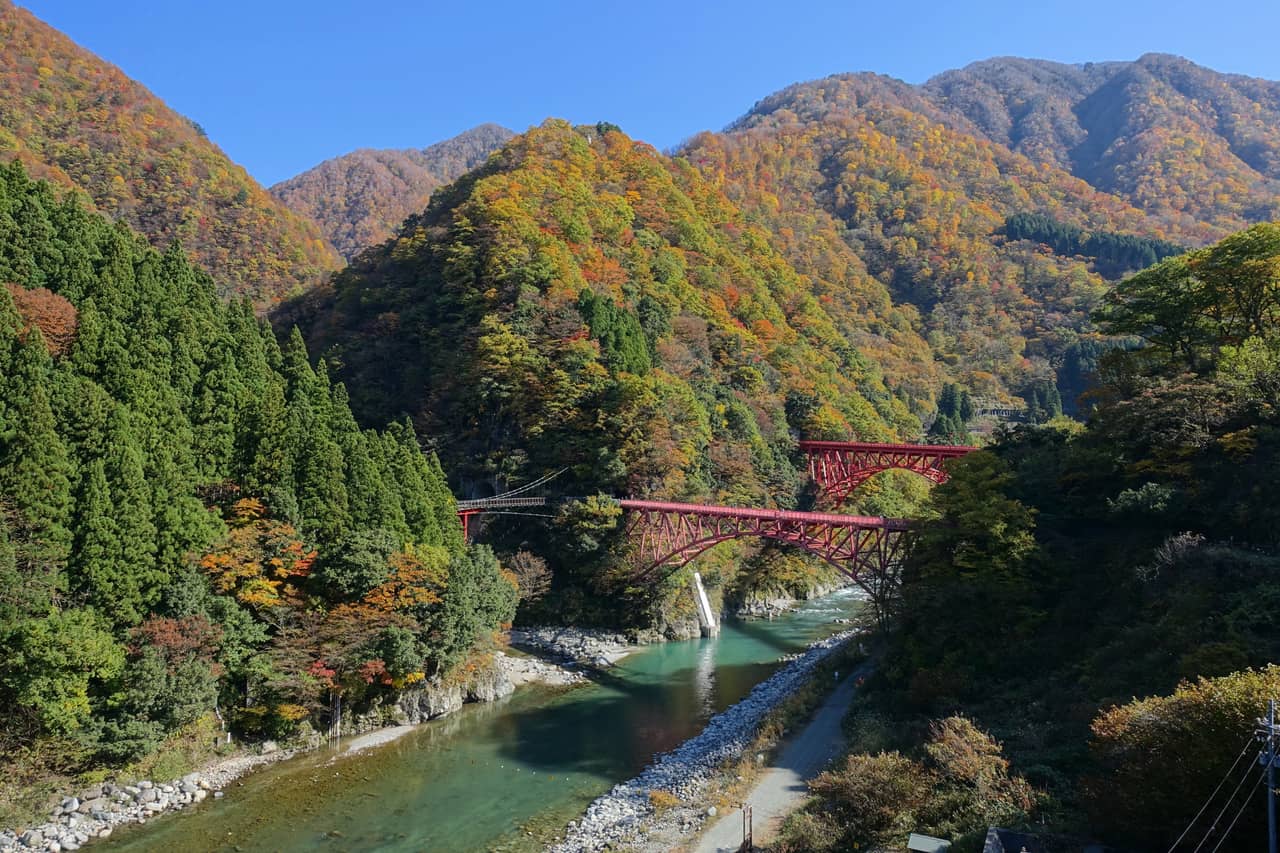
The Kurobe Gorge torokko (2026 status)
This is Toyama’s headline attraction and the one whose status you most need to understand first. The Kurobe Gorge torokko (Kurobe Gorge Railway) began as a works train that the power company laid to build the Kurobe River dams; it was later opened to tourists, climbing from Unazuki Onsen deep into the upper Kurobe River canyon. The carriages are open-sided, open-air cars — the wind brushes past your face as one red arch bridge after another spans the emerald water, one of the most dramatic rail rides in Japan. The full Unazuki–Keyakidaira run takes about 1 hour 20 minutes over roughly 20 kilometers.
The headline for 2026 is that the whole line is back. Kurobe Gorge Railway announced on 3 July 2026 that full-line service between Unazuki and Keyakidaira resumes from the first Unazuki-departing Keyakidaira train on Thursday 1 October, the first full line since the January 2024 Noto Peninsula earthquake damaged the Kanetsuri bridge and other structures. The operator words it as a prospect and adds that restoration may shift with weather and site conditions, so refresh the official site before you travel. From that same day, Nekomata no longer lets passengers on or off — the boarding stations from 1 October are Unazuki, Kuronagi, Kanetsuri and Keyakidaira. Read that precisely: it does not mean the line stops short of Nekomata. Trains run through and continue up the valley; Nekomata simply is not a place you can stand on any more. Through 30 September the service is still the Unazuki–Nekomata round trip, about 120 minutes. And accept one limit before you go: you cannot walk far at Keyakidaira. The operator says that for the time being only the station building (rooftop viewpoint included) and the Keyakidaira Visitor Center are open; Sarutobi Gorge, Okukane Bridge and Hitokui-iwa remain inside the restoration closure, and no end date has ever been published.
A few practical notes. Per the official fare page, from 1 October Unazuki–Keyakidaira is ¥2,480 one way for adults and ¥1,240 for children, with Unazuki–Kanetsuri at ¥1,780 and Unazuki–Kuronagi at ¥830; the operator publishes one-way fares only, and no return price is posted anywhere. Through 30 September the Unazuki–Nekomata adult return is ¥2,820. There are two carriage types and neither is a "special" or "panorama" car — those names do not appear on any current official page: standard cars have no windows and cost nothing extra, while the windowed Relax car adds ¥600 per one-way leg, charged twice on a round trip, and has no air conditioning, only heating in cold months. Reservations run from three months before travel to 15:00 the day before, with April–June rides opening on 1 April; but for the 2026 season Keyakidaira is telephone-only (0765-62-1011, 09:00–16:30, Japanese) and cannot be booked online at all, leaving only Kanetsuri and Kuronagi on the web. The canyon and tunnels run cooler than the lowlands, so pack a light jacket even in summer. One last warning: do not read the Relax car's ¥600 as a round-trip charge.
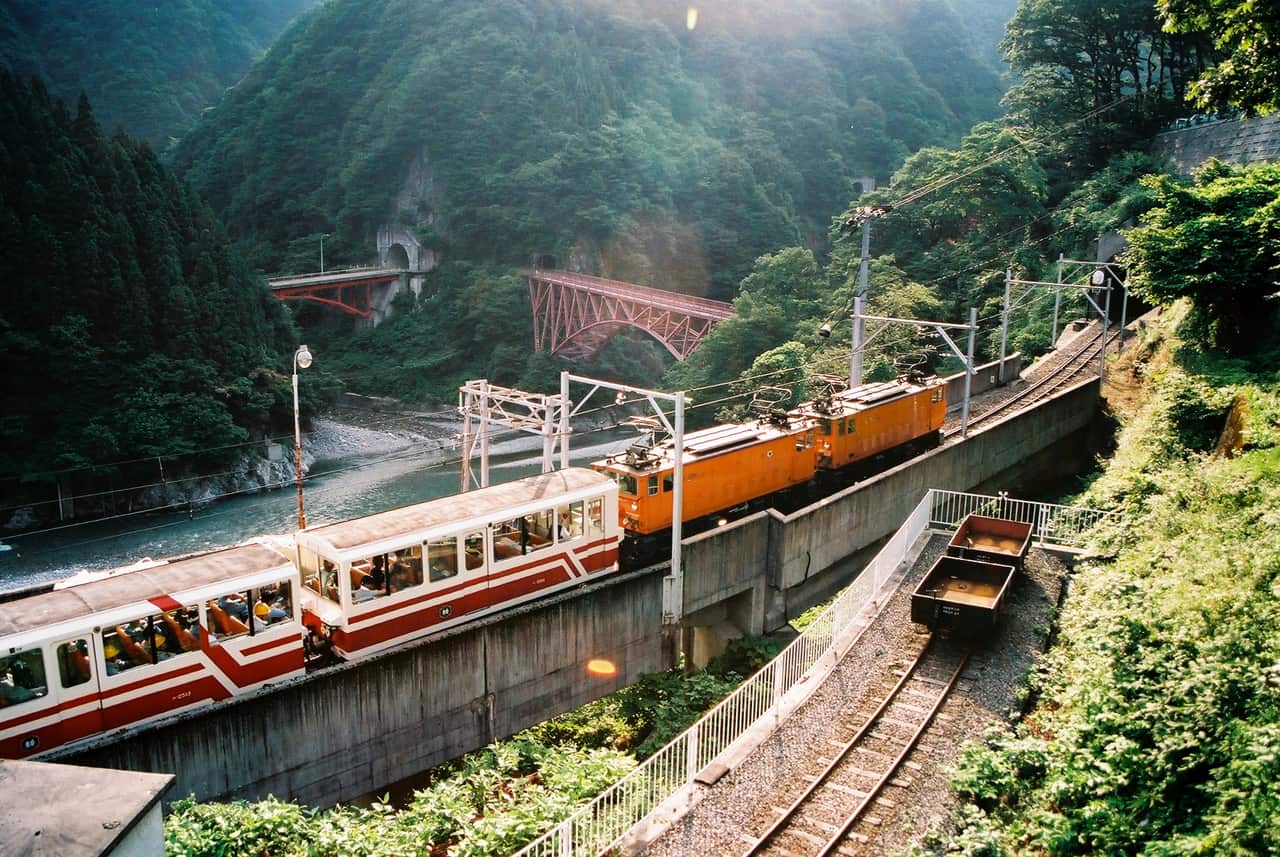
Unazuki Onsen
The torokko’s starting point, Unazuki Onsen, deserves a place in the plan in its own right, not just as "the parking lot before the train." It is Toyama Prefecture’s largest hot-spring resort, and the water is actually piped down from Kuronagi Onsen some 7 kilometers upstream — clear, colorless, and per traveler reports gentle on the skin and pleasant to soak in. The onsen street is compact, lined along the Kurobe River, with several ryokan where you can bathe while looking out over the canyon, plus free foot baths and hand baths to rest at any time.
My advice is to simply sleep a night at Unazuki Onsen on your torokko day: ride into the canyon during the day, soak in the evening, and leave at a relaxed pace the next morning — far more comfortable than a rushed same-day return, and it dodges the busiest torokko slots. Getting there is straightforward: take the Hokuriku Shinkansen to Kurobe-Unazuki-Onsen station, walk about 70 meters through a covered passage to the adjacent Toyama Chiho Railway Shin-Kurobe station, ride roughly 25 minutes to Unazuki-Onsen station, then walk a few minutes to the torokko’s Unazuki station. The transfer is clearly signed and you stay mostly dry even in the rain.
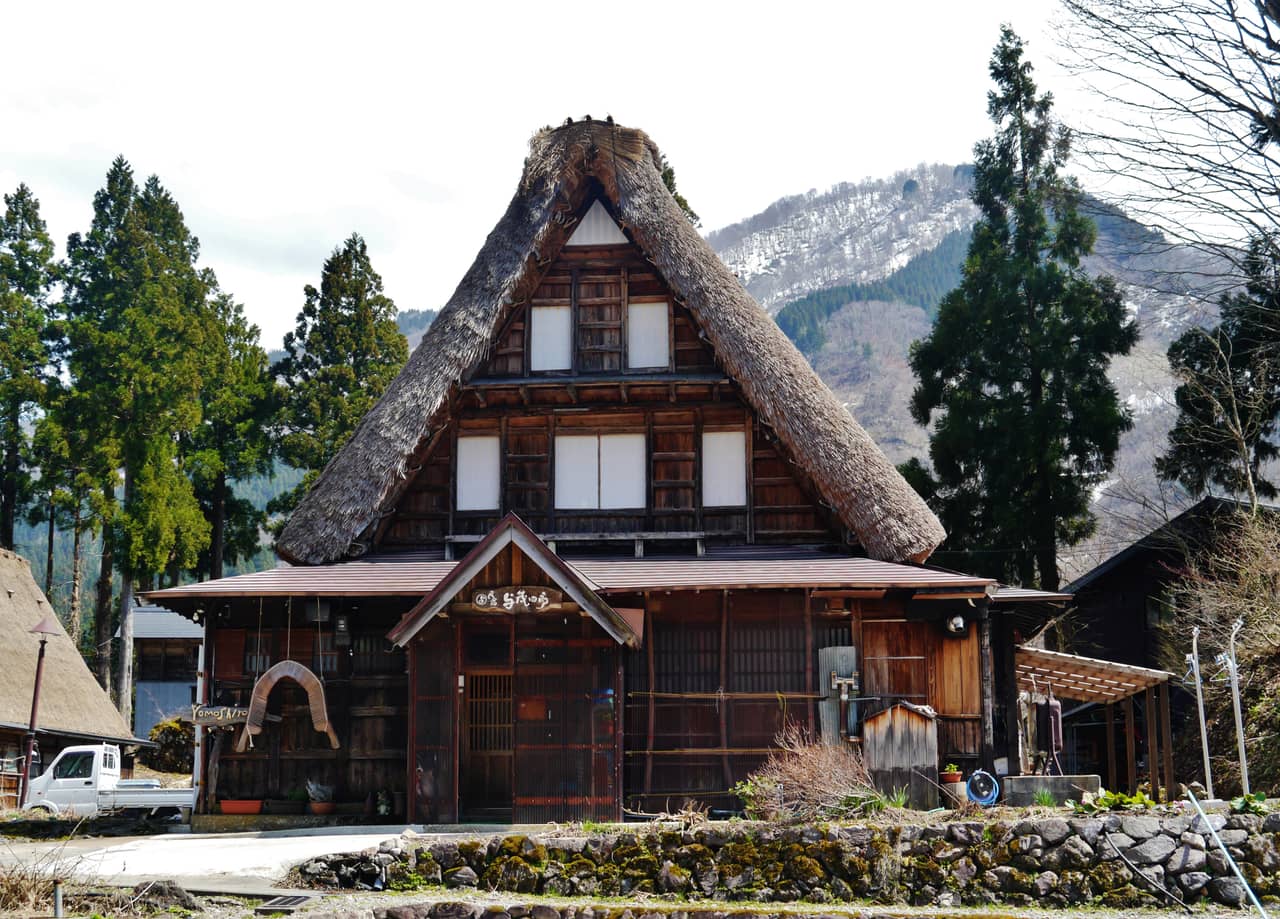
The Gokayama gassho villages
Many people assume the gassho-zukuri houses only exist at Shirakawa-go, but the Toyama-side Gokayama was inscribed together with it in 1995 as the World Heritage "Historic Villages of Shirakawa-go and Gokayama." Gokayama splits into two small hamlets: the larger Ainokura and the tinier Suganuma, both still genuinely inhabited, their steep-roofed gassho houses scattered across valley farmland.
So how does it differ from Shirakawa-go, and which do you pick if you only do one? My view is clear: Shirakawa-go (Ogimachi) is large, famous, and fully equipped for tourism, but the peak-season crowds are absurd; Gokayama is much smaller with far fewer visitors — quiet, original, more like a village where people actually still live their lives. If you want the classic postcard shot and a full slate of facilities, go to Shirakawa-go; if you are done with crowds and want the stillness of a mountain hamlet, Gokayama is the better fit. Light-up events run in spring, autumn, and winter (check the official dates each year rather than copying last year’s) — the "inverted gassho" reflected in the paddies and the houses glowing on a snowy night are both lovely. For access, Gokayama is reached by the World Heritage Bus from Takaoka or Shin-Takaoka station: Suganuma is right at its stop and Ainokura a few minutes’ walk from Ainokuraguchi; the same Tokai-Hokuriku expressway also links on to Shirakawa-go.
Amaharashi coast: the range over the sea
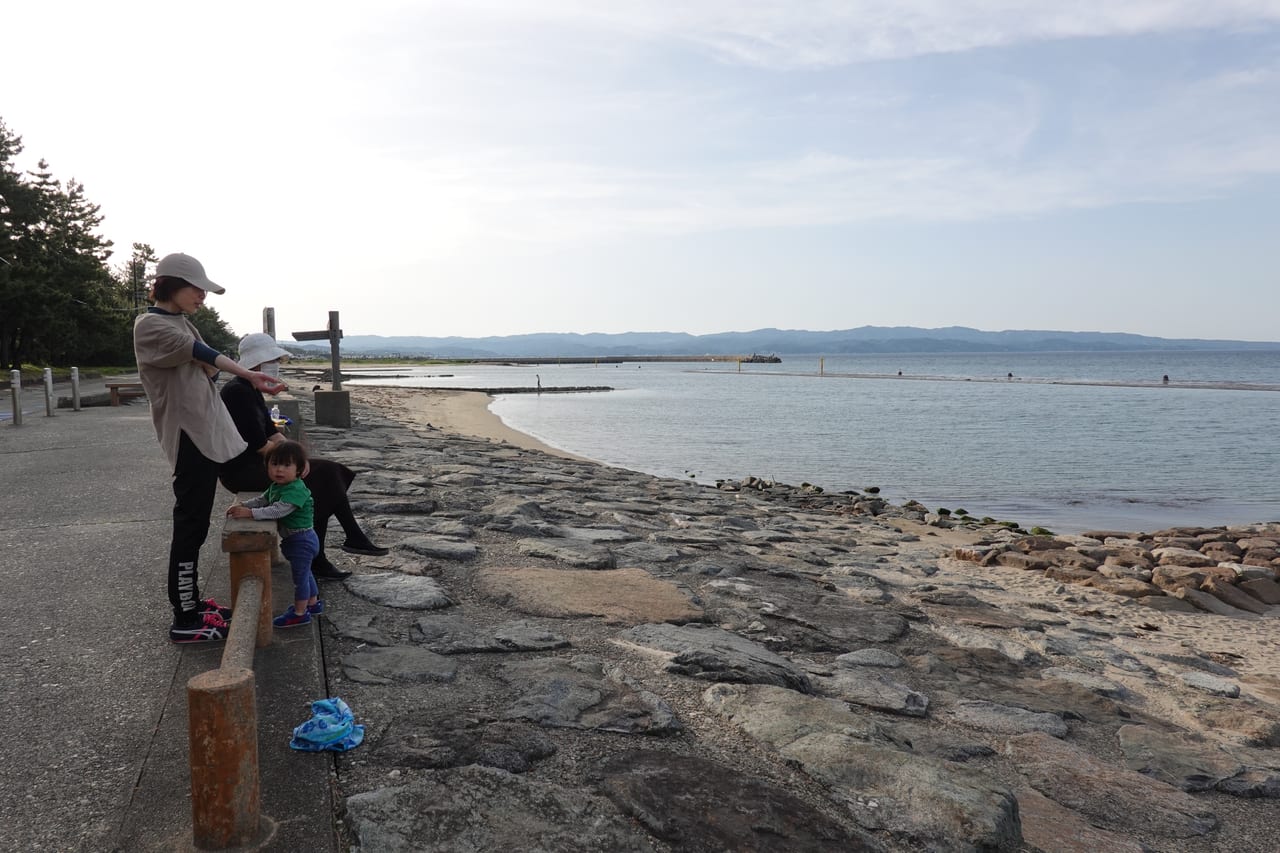
The Amaharashi coast in Takaoka is the Toyama spot most worth an early start. What makes it special? You can stand on the shore and see the 3,000-meter Tateyama range across Toyama Bay — sea and high mountains in one frame, snow peaks seeming to rise straight out of the water, a sight that is genuinely rare anywhere in the world. The "Yoshitsune Rock" on the shore is said to be where Minamoto no Yoshitsune’s party sheltered from rain, and the place name "Amaharashi" (rain-clearing) comes from it; from the viewing deck you can also catch the JR Himi Line trains running right along the sea, which railfans love.
Honestly, this spot lives and dies by weather and season: visibility of the Tateyama range is highest in winter (roughly November to March), when clear air gives you the best chance of the whole row of snow peaks, while summer haze often leaves only the sea. If you are lucky enough to catch the "kemuri-arashi" sea mist, that dreamlike scene is a rare gift. Come at dawn: the low sun is on the peaks and the first Himi Line trains have not arrived yet. For access, take the JR Himi Line to Amaharashi station and walk about 5 minutes to the shore; beside the station is the boat-shaped Michi-no-Eki "Amaharashi," whose second-floor cafe lets you watch the sea while you wait out a train or the cold. It pairs neatly with Gokayama or Takaoka (the Great Buddha, Zuiryuji) into a single "northwest line" day.
The city: canal park, castle, food
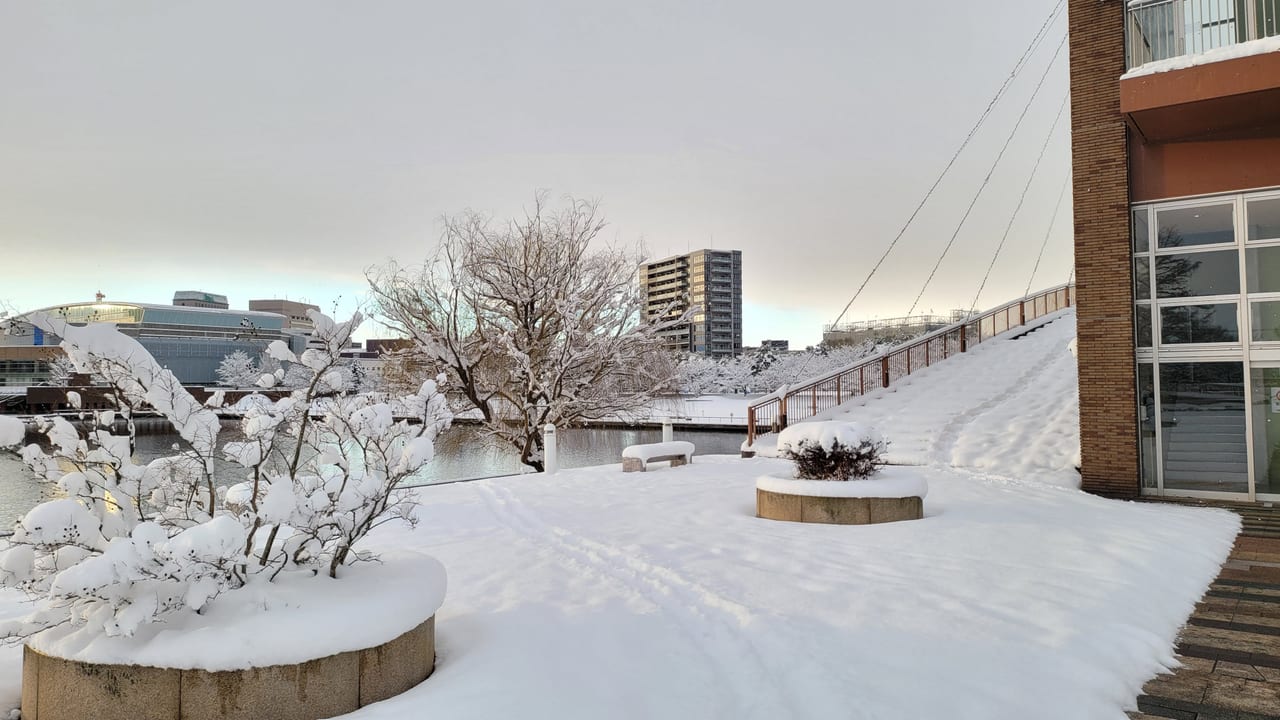
The city center is not the main event, but a half-day stroll is pleasant, and three stops string together neatly. The first is Fugan Canal Park, about a 10-minute walk from Toyama Station — home to a branch that won a Starbucks global store-design award and earned the internet nickname "the world’s most beautiful Starbucks," its wall of glass facing the canal and the Tenmon bridge, especially lovely at dusk and after dark (per official information it stays open late). The park itself is free, open, and photogenic, with the Toyama Prefectural Museum of Art alongside — the most worthwhile patch of the city to linger in.
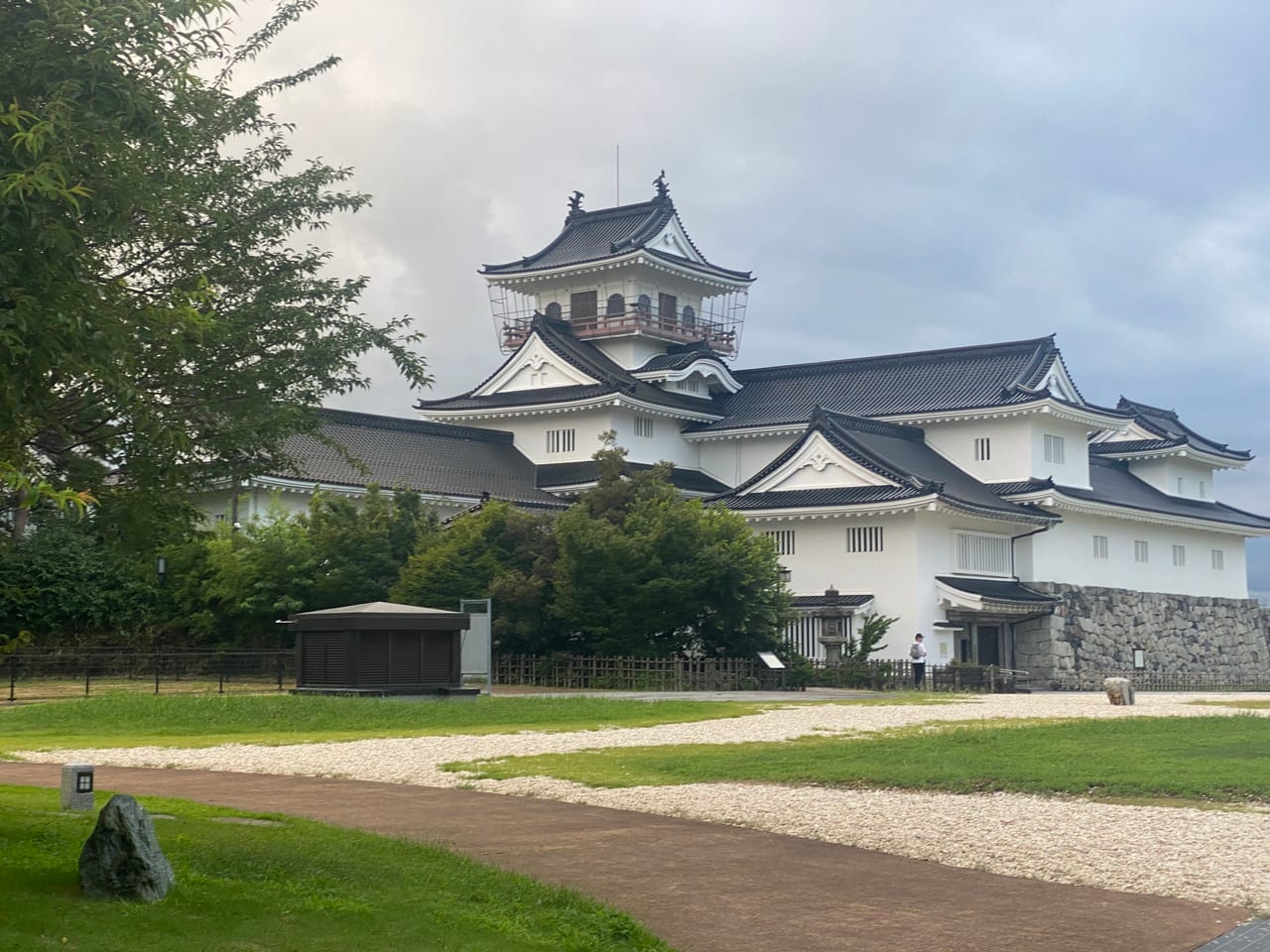
The second is Toyama Castle. To be clear: the current keep is a 1954 reinforced-concrete "mock keep" (historically Toyama Castle did not have a grand keep like this), and inside is the Toyama Municipal Folk Museum, telling four-plus centuries of the castle’s history, ¥210 for adults and free for high schoolers and under, open 9:00–17:00 (last entry 16:30). It is not a must-see famous castle, but the green castle grounds and moat make a relaxed walk, and the exterior is a fine photo on the way past. The third pillar is the food: Toyama Bay’s white shrimp (shiroebi), "the jewel of Toyama Bay," is caught only here — eaten raw as a sashimi bowl or nigiri, it is silky and elegantly sweet. The other must-try is trout sushi (masu-no-sushi), a pressed sushi shaped with bamboo leaves in a round wooden box, Toyama’s most famous local dish and a classic station bento — grab a box at Toyama Station before your Shinkansen.
Transport & lodging
Getting in is mainly the Hokuriku Shinkansen: Tokyo → Toyama on the "Kagayaki" is about 2 hours 10 minutes, and about 2h30–2h40 on the "Hakutaka"; Kanazawa → Toyama is only about 20 minutes, so the pairing flows. From Osaka you currently change at Tsuruga from a limited express onto the Shinkansen, roughly three hours total. For Kurobe Gorge, remember the torokko starts after a Shinkansen ride to Kurobe-Unazuki-Onsen station and a transfer on the Toyama Chiho Railway to Unazuki-Onsen station (see the Unazuki section above). If your trip spans several Shinkansen and local legs, do not rush to buy a pass — add up the actual segments on the JR site first, with the break-even math in our JR Pass guide. I set up data before flying with a KKday Japan eSIM — checking timetables and reservations in the canyon and the villages all runs on it, scan the QR on landing and go.
Around the region: Kurobe Gorge runs on the Shinkansen plus the Toyama Chiho Railway; Gokayama on the World Heritage Bus from Takaoka or Shin-Takaoka; the Amaharashi coast on the JR Himi Line. The city center is compact enough for walking plus the tram, with no car needed — but if you want to chain scattered spots like Gokayama, Shirakawa-go, and the Amaharashi coast in one day, self-driving saves a great deal of bus-waiting time, one of the few cases around Toyama where a rental car is worth considering.
For lodging, split it two ways: for easy Shinkansen access and city food, stay around Toyama Station; to ride the torokko and soak, sleep at Unazuki Onsen itself — into the canyon by day, hot springs at night, an easy departure at dawn, far better than a same-day dash. Toyama’s hotels are more plentiful and gentler on price than Kanazawa’s, but Unazuki Onsen gets tight on autumn-foliage weekends (October–November) and holidays, so book early. If you want to add Kanazawa, see the routing and lodging in our Kanazawa travel guide.
A two-to-three-day Toyama plan
Here is the same content shaped into a route that walks well:
- Day 1 (Kurobe Gorge + Unazuki Onsen): morning Shinkansen to Kurobe-Unazuki-Onsen, transfer to Unazuki-Onsen → ride the torokko into the canyon (from 1 October it reaches Keyakidaira, about 1 hour 20 minutes one way; through 30 September it is the Unazuki–Nekomata round trip, about 120 minutes) → afternoon back at Unazuki for a foot bath and the onsen street → check into a ryokan and soak in the evening.
- Day 2 (Gokayama or the Amaharashi coast): morning back to Toyama or Takaoka → run the "northwest line": take the Himi Line to Amaharashi for the range over the sea (best visibility in winter) and the michi-no-eki cafe, or the World Heritage Bus to the Gokayama Ainokura/Suganuma gassho villages (add Shirakawa-go if time allows) → back to the city in the evening.
- Day 3 (city + food): morning at Fugan Canal Park and the world’s most beautiful Starbucks → a walk through Toyama Castle grounds and the folk museum → a white-shrimp sashimi bowl for lunch → grab trout sushi at Toyama Station as a souvenir and ride the Shinkansen on to Kanazawa or Tokyo.
With only two days, drop Day 3 and squeeze the city into spare moments on the first two; with one day and a craving for the canyon, do Day 1 as a same-day return (tighter, and you miss Amaharashi and Gokayama). For pre-trip weather and packing — Amaharashi needs a clear winter day for Tateyama, and the canyon and villages run cool morning and evening — see our Japan packing & weather guide. And if you want the high snow-wall crossing to the south, read our Tateyama Kurobe Alpine Route guide — do not confuse it with this low-altitude canyon torokko.
FAQ
- Q1:Can you still ride the Kurobe Gorge torokko in 2026? How far does it go?
- Yes — and from 1 October 2026 it runs the full line to Keyakidaira again. Kurobe Gorge Railway announced on 3 July 2026 that full-line service resumes "from the first Unazuki-departing Keyakidaira train on Thursday 1 October 2026," the first time the whole line has opened since the January 2024 Noto Peninsula earthquake damaged the Kanetsuri bridge. The same day, Nekomata stops accepting passengers: the operator lists the boarding stations from 1 October as Unazuki, Kuronagi, Kanetsuri and Keyakidaira only. Trains still pass Nekomata; you just cannot get on or off there. Through 30 September the service is still the Unazuki–Nekomata round trip, about 120 minutes. One more thing to know before you go: you cannot walk far at Keyakidaira. While earthquake restoration continues, the operator says only the station building (including its rooftop viewpoint) and the Keyakidaira Visitor Center are open — Sarutobi Gorge and Okukane Bridge stay closed, and the operator has never published an end date for the restriction. The full picture is in our Kurobe Gorge Railway 2026 guide.
- Q2:How much is the Kurobe Gorge torokko, and do I need to reserve?
- A new fare table takes effect on 1 October. Per the official fare page, Unazuki–Keyakidaira is ¥2,480 one way for adults and ¥1,240 for children; Unazuki–Kanetsuri is ¥1,780 / ¥890 and Unazuki–Kuronagi ¥830 / ¥420. The operator publishes one-way fares only — return tickets exist (valid two days) but no return price is posted. Through 30 September, Unazuki–Nekomata is ¥2,820 / ¥1,420 return. There are only two carriage types — forget the "special" or "panorama" cars you may have read about. Standard cars are open-sided and cost nothing extra; the windowed Relax car adds ¥600 per one-way leg (so twice for a round trip), has no air conditioning, and is heated only in cold months. Booking rules changed too: reservations open three months before your travel date and close at 15:00 the day before, with April–June rides opening on 1 April. And for the 2026 season, Keyakidaira seats cannot be booked online at all — the operator states plainly that internet reservations for Keyakidaira are unavailable, leaving only the phone line (0765-62-1011, 09:00–16:30, Japanese) or a travel agency counter. Kanetsuri and Kuronagi can still be booked online. Same-day tickets go on sale at the Unazuki window at 07:40.
- Q3:Is the Kurobe Gorge torokko the same as the "Tateyama Kurobe Alpine Route"?
- No, and people mix these up constantly. The Kurobe Gorge torokko (this guide) is a small open-air train that runs from Unazuki Onsen up the lower Kurobe River canyon — red arch bridges and a jade-green river, low altitude, operating roughly late April to November. The Tateyama Kurobe Alpine Route is a high-mountain crossing of the Tateyama range using cable cars and highland buses, passing the Kurobe Dam and the famous snow walls — high altitude, completely different season and transport. Both are in Toyama Prefecture and both have "Kurobe" in the name, but they are not interchangeable. For the snow-wall crossing, see our Tateyama Kurobe Alpine Route guide.
- Q4:How is Gokayama different from Shirakawa-go, and which should I pick?
- Both were inscribed together in 1995 as the World Heritage "Historic Villages of Shirakawa-go and Gokayama," and both have the steep gassho-zukuri thatched houses. The difference is scale and crowds: Shirakawa-go (Ogimachi) is large, famous, and fully geared for tourism, but it is mobbed in peak season; Gokayama (the Toyama side, split into the Ainokura and Suganuma hamlets) is far smaller and much quieter, feeling more like a village people still live in. Per traveler reports: go to Shirakawa-go for the postcard scale and full facilities, choose Gokayama to escape the crowds and feel the original mountain-village calm. With time, do both — the same Tokai-Hokuriku expressway links them. Seasonal light-up events run in spring, autumn, and winter (check the official dates each year, do not assume last year’s).
- Q5:How do I get to Toyama from Tokyo, Osaka, or Kanazawa?
- Mainly the Hokuriku Shinkansen: Tokyo → Toyama is about 2 hours 10 minutes on the fastest "Kagayaki", and about 2h30–2h40 on the "Hakutaka." Kanazawa → Toyama is only about 20 minutes, so pairing the two is easy. From Osaka you currently change at Tsuruga from a limited express to the Shinkansen, roughly three hours total. Toyama is one of the most convenient bases on the line — common routings are "Kanazawa + Toyama" or "in via Tokyo, out via the Alpine Route." If your trip spans several Shinkansen and local legs, set up data first with a KKday Japan eSIM, then run the numbers on a pass; the break-even math is in our JR Pass guide.
- Q6:How many days does Toyama need, and how should I structure it?
- The city center itself is light on sights — half a day is enough: Toyama Castle (a reconstructed keep housing a local-history museum, ¥210 for adults), a 10-minute walk to Fugan Canal Park for the "world’s most beautiful Starbucks," and a meal of white shrimp and trout sushi. Toyama’s real value is as a base for the canyon and Hokuriku: plan 2–3 days — one for the Kurobe Gorge torokko plus Unazuki Onsen, one for Gokayama or the Amaharashi coast (the Himi Line for the range-over-the-sea view), with the city slotted into a half day. Stay near Toyama Station for easy Shinkansen access, or sleep a night at Unazuki Onsen if you want the hot springs. The detailed routing is in the itinerary section below.
Related reading:
Tateyama Kurobe Alpine Route 2027: Snow Walls, Kurobe Dam & Tickets
A high-mountain route across the Northern Alps, mid-April to late November only — the Snow Walls, Kurobe Dam discharge and six transport modes.
Kanazawa Travel Guide 2027: Kenrokuen, 21st Century Museum & Chaya
The craft old capital of Kaga — the three-great-garden Kenrokuen, the 21st Century Museum pool, Higashi Chaya gold leaf and Omicho Market seafood.
Hida-Takayama Guide 2027: Old Town, Jinya, Hida Beef & Festival
The little Kyoto of Hida — the Sanmachi old streets, Japan's only surviving jinya, the morning market, Hida beef and the Takayama Festival.