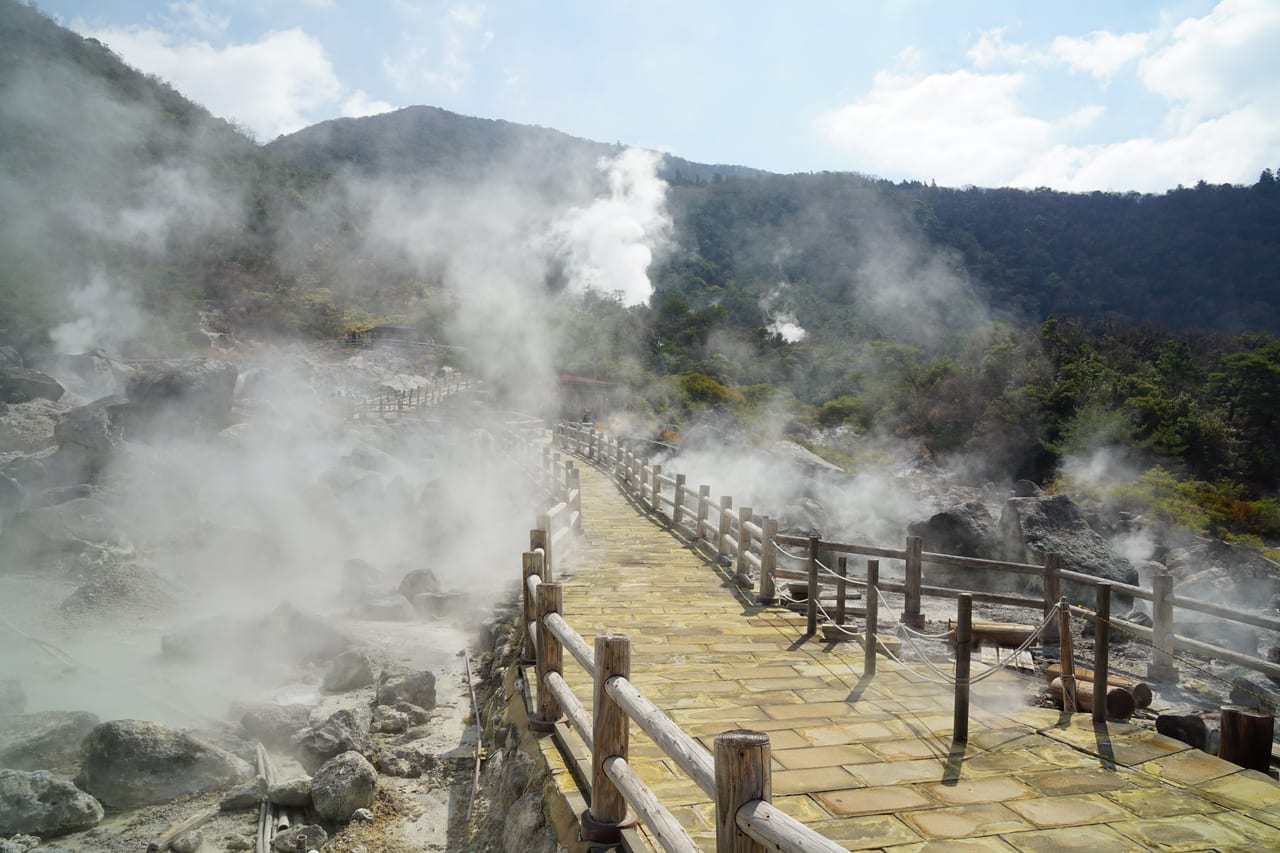
Unzen and Shimabara are Nagasaki's most badly underrated volcano-and-onsen trip — you can walk the entire Unzen Jigoku sulfur field for free, and ride the Nita Pass ropeway round trip for just ¥1,500 to look straight at Japan's newest mountain, Heisei-Shinzan. Shimabara Castle, ¥700, then walks you through one of the bloodiest Christian uprisings in Japanese history. But the genuinely clever part is the last step: a 30-minute high-speed ferry from Shimabara Port across the Ariake Sea drops you straight into Kumamoto, no backtracking to Nagasaki city. The boats have kept running since the 2026 Kumamoto earthquake; what trips people up is the bus on the Kumamoto Port side, so section 7 lays out the sailings, the last bus, and the dates to avoid. This guide covers Unzen Jigoku, Unzen Onsen, the Nita Pass ropeway and Heisei-Shinzan, Shimabara Castle and the rebellion, the carp town and spring water, the samurai quarter, the disaster memorial, plus transport and lodging. To extend, ferry south to Kumamoto (see Kumamoto Castle today); loop back via our Nagasaki city guide.
- Unzen Jigoku is free: ~30 sulfur-steaming hells, onsen eggs ¥200 for two, right beside the Unzen onsen village
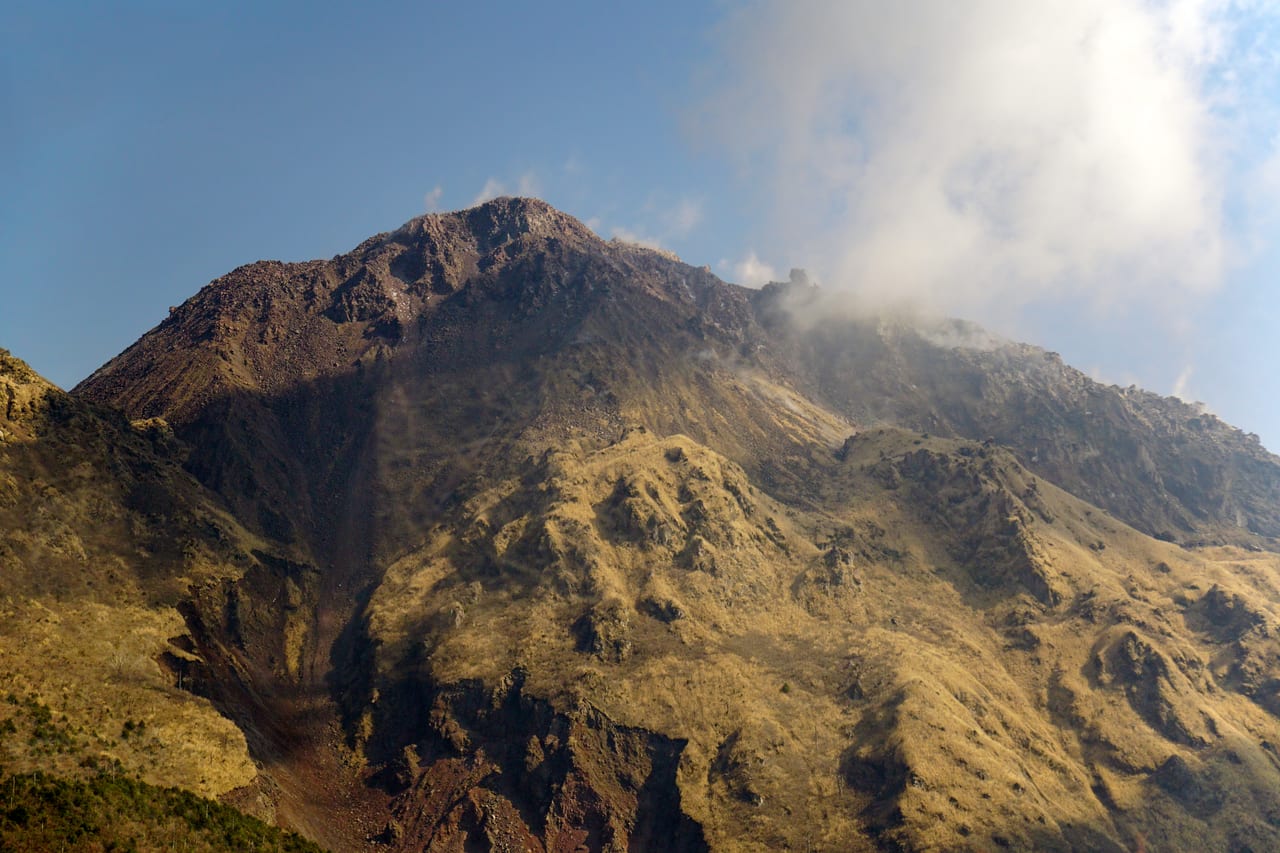
- Nita Pass ropeway ¥1,500 round trip: up Myoken-dake for a head-on view of Heisei-Shinzan (named 1996, Japan's newest mountain)
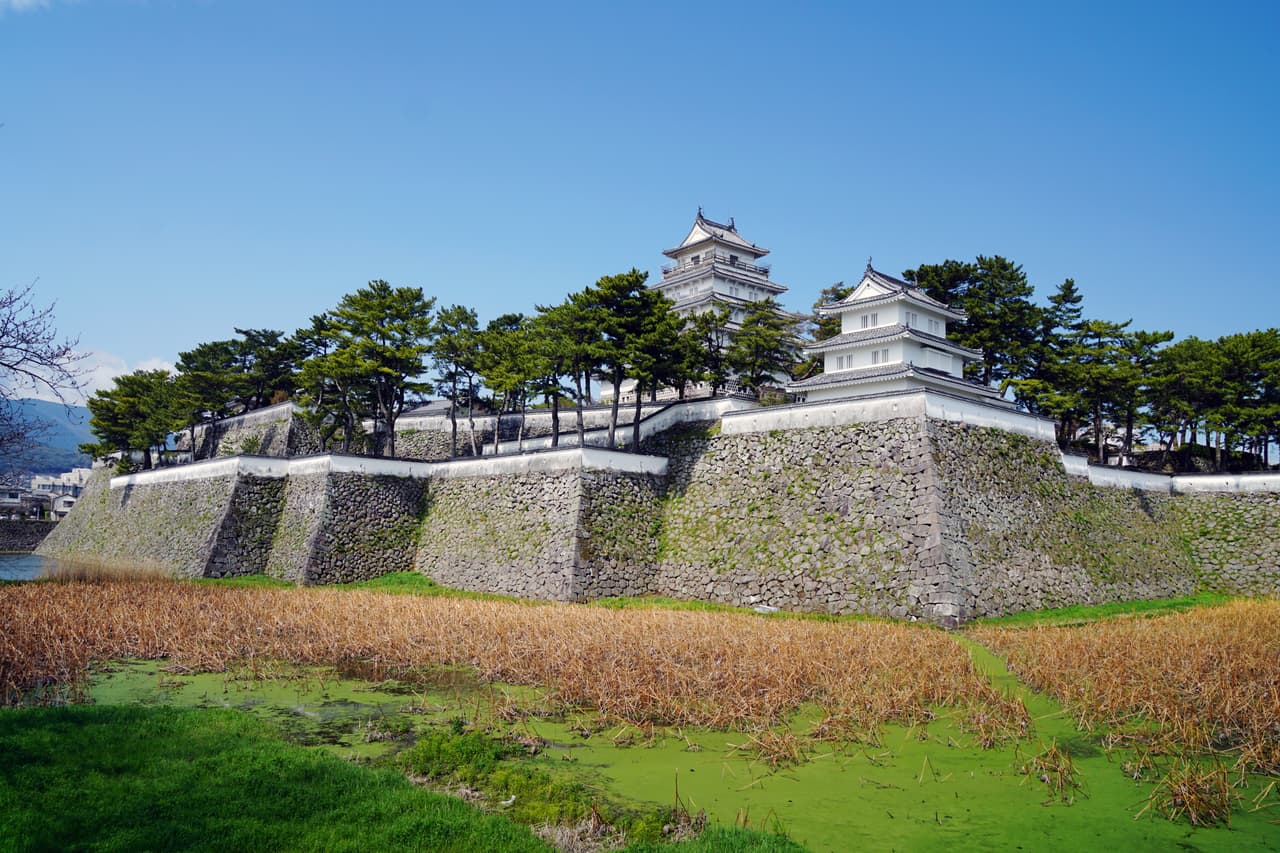
- Shimabara Castle ¥700: white layered-tower keep telling the 1637 Shimabara Rebellion, Amakusa Shiro, and Kirishitan history
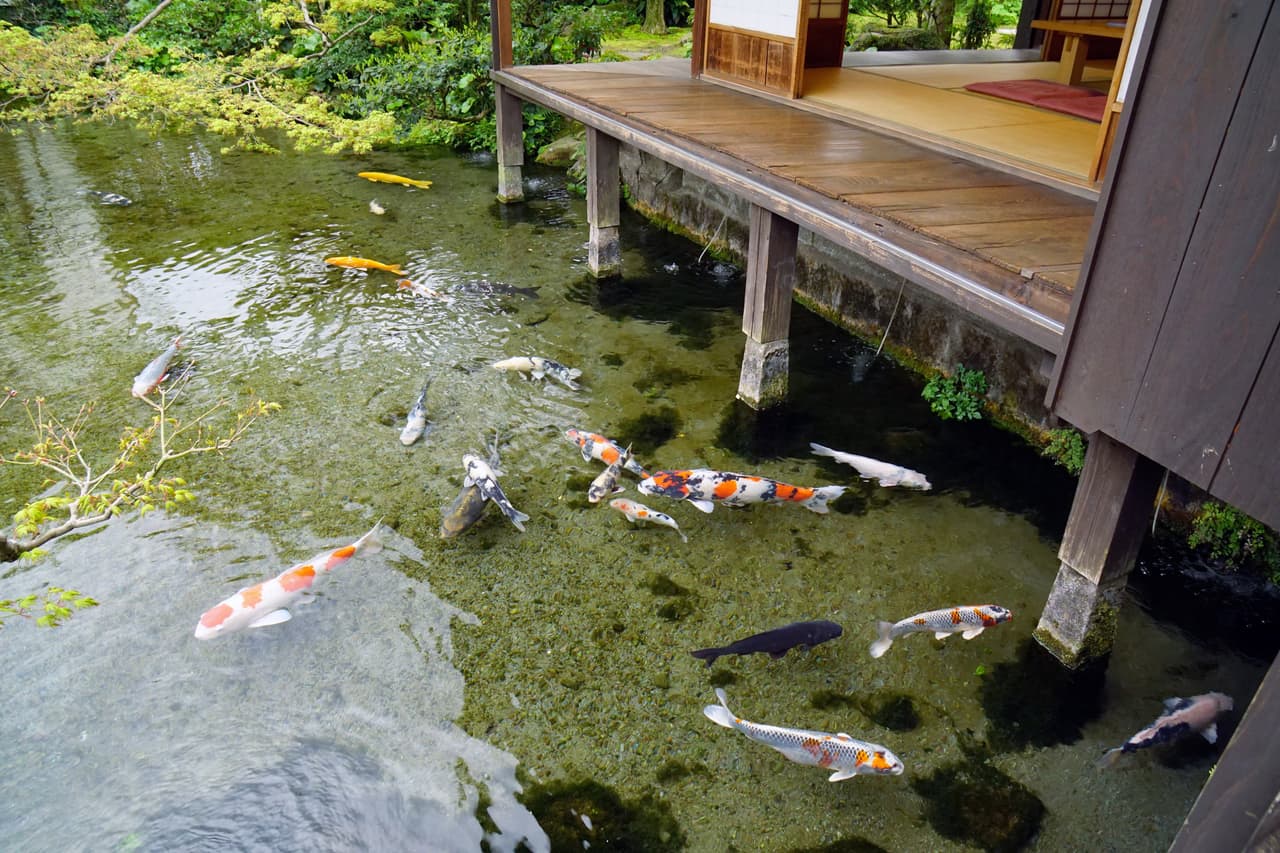
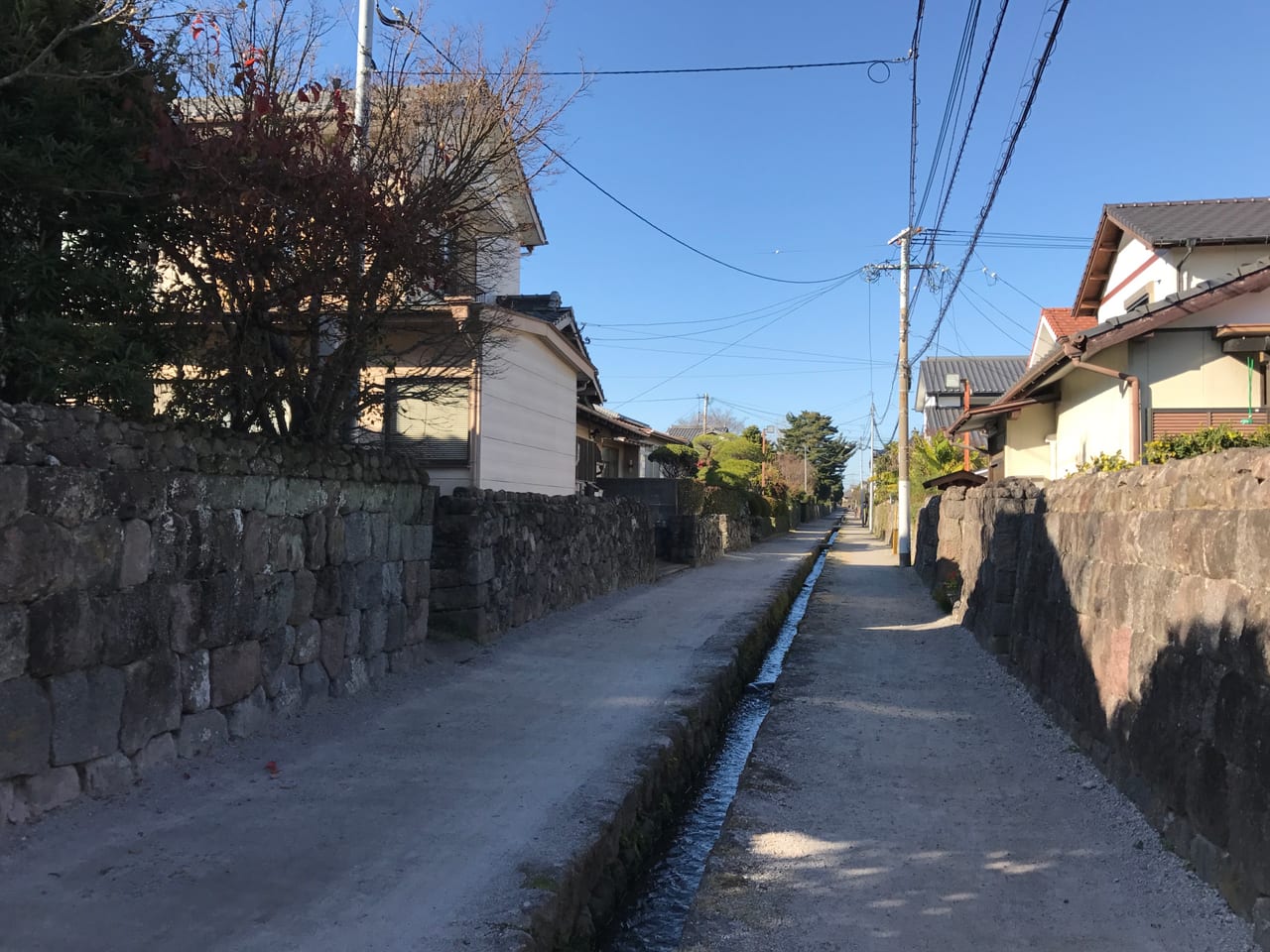
- Carp town is free: koi in Shimabara's spring channels, paired with the samurai-quarter water street
- Smart routing: 30-minute ferry from Shimabara Port across to Kumamoto, skipping the backtrack to Nagasaki. On weekdays sail by 17:30 (the last port bus to Kumamoto Station is 18:20), and note that the shuttle buses are suspended 19-27 September 2026
📖 Contents
Why visit Unzen and Shimabara
Honestly, Unzen and Shimabara are not where a first-time Kyushu visitor usually goes — people hit Fukuoka, then Nagasaki city for the night view and Glover Garden, and the Shimabara Peninsula gets skipped. Which is exactly the point: there are almost no tour-bus crowds here, yet you get four utterly different landscapes in one trip — a working volcanic geothermal field, a centuries-old onsen, a heavy chapter of Christian history, and a spring-water castle town — a density and range you rarely find in Kyushu. Unzen Onsen is the core of Japan's very first national park (Unzen-Amakusa, designated in 1934), while Shimabara is the ground where the 1637 rebellion unfolded and where the 1990s Mt. Unzen-Fugen eruption disaster is remembered. It suits two kinds of traveler — those who want to dodge the crowds and like onsen at a slow pace, and those drawn to history (Christian persecution, volcanic catastrophe). My framing is simple: this is a "volcano-and-onsen trip with stories" — don't run it like a checklist; walk it like a book.
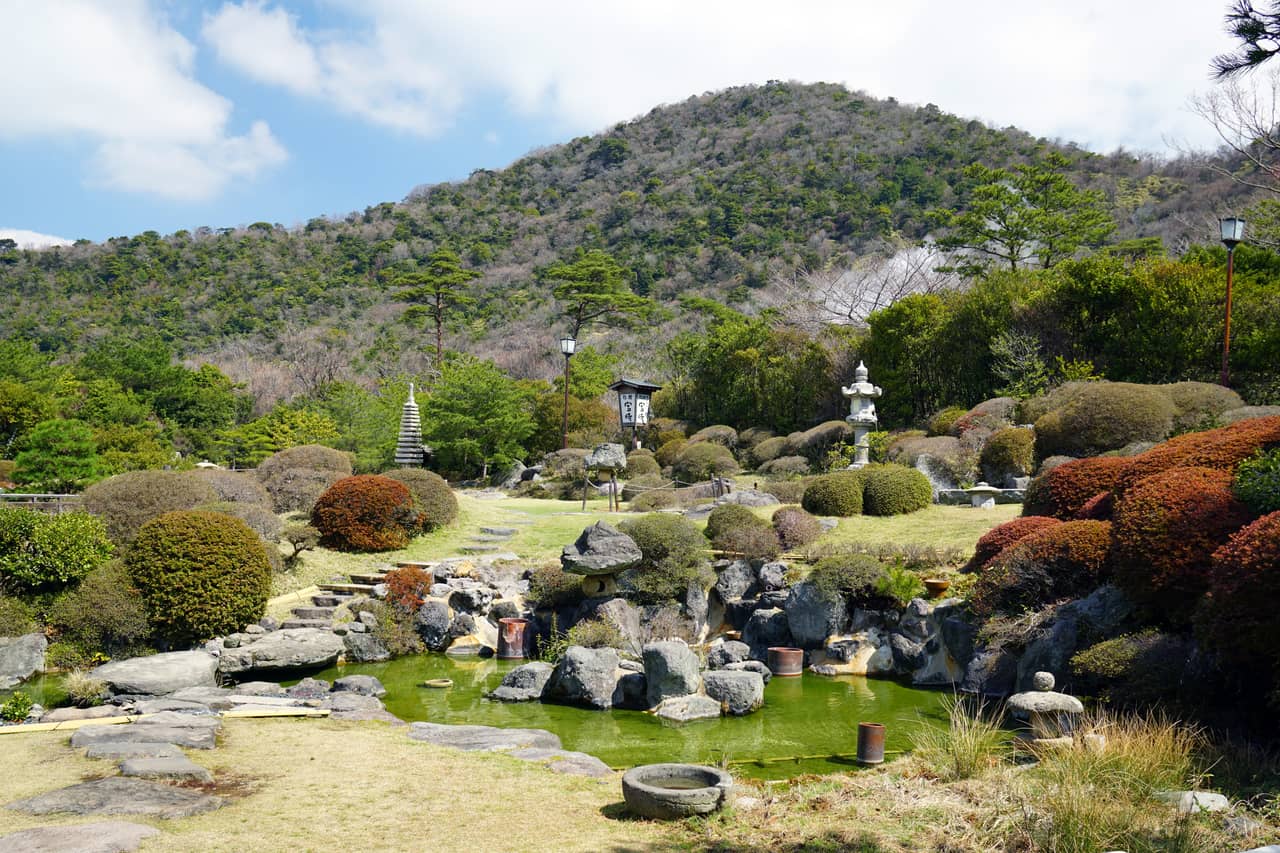
Unzen Jigoku & Unzen Onsen
Unzen's signature is Unzen Jigoku — a whole field of billowing white steam where almost nothing grows. Around 30 "hells" vent sulfur vapor from the ground, each with its own name (Daikyokan Hell, Seishichi Hell, and so on), with boardwalks threading between them; a full loop runs about 30–60 minutes. The one practical line to know up front: Unzen Jigoku is completely free. It is not a ticketed facility but an open natural geothermal landscape — the opposite of what many people assume about "volcano attractions."
The thing to buy in the hells is the onsen egg (onsen tamago) — an egg steamed in the hell vapor, about ¥200 for two or ¥400 for five per official sources, with a local saying that one egg adds a year to your life, two adds two, and three brings longevity. But Unzen Jigoku is more than a photogenic steam field — it is also the site of the Unzen martyrdoms: during the early-Edo ban on Christianity, Christians were brought to the scalding hot springs and pressured to renounce their faith, some executed here. Walking the boardwalk with sulfur in the air, knowing that history, the scene reads very differently.
Beside the hells is the Unzen onsen village, the core of Japan's earliest national park, with strongly acidic milky-white sulfur water and a row of long-running ryokan. My advice is simply to stay a night: once the day crowds clear in the evening, soaking in the sulfur water while the hiss of the hells drifts over is an atmosphere a day trip can never give you. One caution: the ground is hot and the steam is corrosive, so stay inside the boardwalks and keep clear of the vents and spring mouths, and hold small children's hands.
Nita Pass ropeway & Heisei-Shinzan
Climb up from Unzen Onsen to Nita Pass (a saddle at around 1,080 meters) and you can ride the Unzen Ropeway up to Myoken-dake. The numbers to lock in:
- Fares: Nita Pass station ⇄ Myoken-dake, ¥1,500 round trip / ¥830 one way for adults (children ¥750 / ¥420).
- Frequency and hours: about a 3-minute ride, cars every 12 minutes. Summer (Apr–Oct) roughly 8:51–17:23, winter (Nov–Mar) 8:51–16:51.
- 2026 closure: per the operator, closed June 15–25, 2026 for electrical-equipment renewal — check the latest notice before you go.
Up at Myoken-dake, the stunner is the head-on view of Heisei-Shinzan — a mountain with a heavy backstory. Mt. Unzen-Fugen began erupting in November 1990, and through 1995 lava kept piling up into a dome; the large pyroclastic flow of June 3, 1991, killed or left missing 43 people, one of postwar Japan's worst volcanic disasters. The lava dome eventually grew taller than the main Fugen-dake peak and was officially named "Heisei-Shinzan" in 1996, making it Japan's newest mountain. Standing on Myoken-dake looking at this still-warm new peak, what you see is not just scenery but a real chapter of catastrophe.
Seasonally, spring (May) sets Nita Pass ablaze with Unzen azaleas, washing the slopes pink — Unzen's signature season; autumn brings foliage and winter brings rime ice (the frost-coated branches of "muhyo"), so every season has its draw. But the Heisei-Shinzan area is still an active volcano, and the ropeway and trails can shut on short notice for volcanic alerts or strong wind and fog — this is not a "the affiliate ran out of stock" situation, it is genuinely impassable, so check the Unzen Ropeway site and the Japan Meteorological Agency before heading up.
Shimabara Castle & the rebellion
Drop down to Shimabara and the first stop is Shimabara Castle — a white, five-tier layered-tower keep, clean from afar and imposing up close. Per the castle's official information, admission to the keep is ¥700 for adults and ¥350 for students (¥560 for adult groups of 15+), open 9:00–17:30 (last entry 17:00), no annual closures. But the castle's real weight is not the architecture — it is the Shimabara Rebellion (the Shimabara-Amakusa Uprising, 1637) behind it.
The story: in early Edo, the Shimabara domain crushed its people with heavy taxes and hard persecution of Christians. In 1637, peasants of Shimabara and Amakusa, pushed past breaking point, rose up under the sixteen-year-old Amakusa Shiro (Masuda Tokisada) as their spiritual leader; tens of thousands of them — many hidden Christians — held out at Hara Castle against a shogunate army of a hundred thousand. In the end Hara Castle fell and the rebels were almost entirely slaughtered, and the uprising directly hardened the shogunate's policies of national seclusion and the Christian ban. The keep is now a museum of Kirishitan (Christian) materials, rebellion artifacts, and local history, and from the top you can see the Ariake Sea and Kumamoto across the water. Read it alongside the Unzen martyrdoms and you grasp it: the Shimabara Peninsula holds one of the heaviest pages in the history of Japan's Christian persecution.
The carp town & samurai quarter
Shimabara also has a completely different, gentler face — it is a famous "water city." Groundwater filtering down from Fugen-dake wells up all over the castle town, and the most famous spot is "Koi no Oyogu Machi," the carp town: the clear-bottomed channels around the Shinmachi district are stocked with colorful koi carp, released since 1978 per the city. Strolling the channels watching koi glide through transparent spring water is Shimabara's most atmospheric — and entirely free — experience.
Here is how I would weigh the spring-water spots in this pocket:
- Yusui-kan: a free rest house in a restored Showa-era building — a good spot to pause and feel the spring-water culture, no need to queue.
- Shimeiso (spring garden): paid entry, but worth it — a garden landscaped around the springs, with the pond floor bubbling up water and koi weaving through. Ten minutes spacing out on the engawa is genuinely soothing, and it is the most refined spot in the carp town.
- Samurai quarter: the old warrior-class residential street, a clear channel running down the center and rows of preserved thatched houses. The street and some residences are free, quiet and full of period feel — a world away from a busy tourist strip.
Chain the carp town, Shimeiso, and the samurai quarter together and half an afternoon fills up nicely — and this stretch costs almost nothing, making it the best-value walk in Shimabara.
The volcano disaster memorial
If the Heisei-Shinzan backstory above grabs you, the Unzen Disaster Memorial Hall (Gamadasu Dome) belongs on the list. It is built in the Anaka district, hit hardest by the debris flows, and uses a wealth of footage, models, and hands-on exhibits to reconstruct the 1990–1995 Mt. Unzen-Fugen eruption and the June 3, 1991 pyroclastic flow that took 43 lives. After a 2018 exhibit renewal it added a 4K "Heisei Great Eruption Theater" and a drone-footage "Mt. Unzen Sky Walk," telling the terror of the volcano and the story of rebuilding with real punch.
Beyond the hall, the peninsula has two more striking "disaster ruins" to see: around the Michi-no-Eki Mizunashi Honjin, houses buried by debris flows up to their roofs are preserved (the Buried Houses Preservation Park), letting you stand right in front of homes swallowed by mud — a sight that says more than any caption about a volcano's force. For families with kids, it is also an irreplaceable lesson in disaster preparedness — Japan's record-keeping and transmission of volcanic catastrophe is genuinely admirable.
Transport & lodging (incl. the Kumamoto ferry)
Read this before you build the itinerary, because transport is the main reason Unzen-Shimabara stays "underrated" — there is no direct Shinkansen, so you transfer a few times. By rail: from Nagasaki city, take JR to Isahaya, then transfer to the Shimabara Railway into Shimabara Station (a charming little private line hugging the Ariake Sea); Unzen Onsen has no railway, so you reach it by bus from Isahaya or Shimabara. The two main combinations:
- Unzen first, then Shimabara: Isahaya → bus up to Unzen Onsen (hells, ropeway, overnight) → bus down to Shimabara (about 40–50 min) → Shimabara Castle and the carp town → ferry from Shimabara Port into Kumamoto. This line flows best and is the one I recommend. The Shimatetsu bus down from Unzen stops at the Shimabara-ko (Shimabara Port) stop itself, so there is no need to go into town and double back. From 1 October 2026 Shimatetsu revises its timetable, including some route abolitions, cutting Unzen-to-Shimabara through services from 9 to 8 a day — recheck the timetable if you travel in October or later.
- Rental car: the peninsula's sights are spread out and buses are not frequent, so a car gives far more flexibility. Drive the peninsula loop road and the hells, Nita Pass, Shimabara Castle, the samurai quarter, and the disaster memorial all have parking — a real time-saver for a family in one car.
And the smartest step of all is finishing by crossing to Kumamoto: ferries cross the Ariake Sea between Shimabara Port and Kumamoto Port — per the operators, the high-speed "Ocean Arrow" takes about 30 minutes and the Kyusho ferry about 60 minutes, then a bus into central Kumamoto. That ferry stitches Nagasaki to Kumamoto, so you skip backtracking to Nagasaki city and the long land route, saving real time, with the next stop being Kumamoto Castle and the Aso volcano (see what has reopened at the castle and whether the crater is open). For how to chain the wider Kyushu rail network and whether a JR Kyushu pass pays off, see our 3-day Kyushu rail itinerary and JR Pass guide (note: the Shimabara Railway and the ferry are not covered by the JR Pass and are paid separately). One caveat if you continue south: per the transport ministry's 9 September disaster report, JR's Kagoshima Line between Uto and Yatsushiro is only targeting mid-October to reopen (buses substitute in the meantime), the Hisatsu Orange Railway between Yatsushiro and Higo-Tanoura likewise targets mid-October, and the Kyushu Shinkansen between Kumamoto and Shin-Minamata was scheduled to resume on 18 September.
Did the ferries stop? Can you still sail?
You can — both operators showed normal operation on 16 September 2026. What the 2026 Kumamoto earthquake damaged was the foot-passenger gangway at Kumamoto Port: per the transport ministry's disaster reports, the ferry bridge was struck by a pitching hull and its tip was wrecked, so the 30 July restart carried vehicles only and foot passengers could not board at all; a temporary route restored walk-on boarding on 1 August, and the repaired bridge reopened on 11 August, after which the reports stopped listing Kumamoto Port. Walking aboard with luggage is fine now.
| Kumamoto Ferry Ocean Arrow | Kyusho Ferry | |
|---|---|---|
| Crossing | About 30 min | About 60 min |
| Adult one way | ¥1,600 | ¥1,180 |
| Sailings per day | 6, plus a 7th on weekends and holidays Apr-Dec | 9 |
| Last departure from Shimabara | 17:30 (19:20 on weekends and holidays) | 17:45 |
| Onward bus at Kumamoto Port | Kyushu Sanko route bus, open to anyone, ¥630 to Kumamoto Station, about 30 min | Own free shuttle minibus to JR Kumamoto Station, ferry passengers only |
| Ferry + bus combo | Tsuitoru one-way ticket ¥1,900, sold only at Shimabara Port | Shuttle is free; no combo ticket |
KKday also sells the Ocean Arrow one-way ticket; the Shimabara Port window sells the same ticket, so the only difference is having it booked before you go. Four things to know first: online booking starts from the next day at the earliest, and around holidays it can be a few days out, so for a same-day crossing just buy at the window; you get a PDF voucher that you swap for a paper ticket at the Kumamoto Ferry counter at the port; bicycles and motorcycles cannot be booked online and are handled first-come at the port; and it covers only Kumamoto Ferry's 30-minute boat, not Kyusho Ferry. It is the boat only, without the Kumamoto Port bus.
See the Ocean Arrow one-way ticket on KKday →
Three conditions come with the Kyusho shuttle: it only connects to Kyusho's own sailings and cannot be booked on its own; it is a minibus with very little luggage space, and the operator states outright that large or numerous bags may be refused; walk-ons are possible if seats remain, but phone ahead by 17:00 the previous day and give your name at the Kyusho counter on the first floor of the Shimabara Port terminal at least 20 minutes before departure. At Kumamoto Station there is no dedicated stop — the bus pulls into the bus waiting area at the Shinkansen (west) exit about 10 minutes before departure.
How late can you sail in the evening?
On a weekday, leave Shimabara Port by 17:30 or you land with no bus. Per the 1 June 2026 revision posted on Kumamoto Ferry's site, the Kyushu Sanko route bus from Kumamoto Port to Kumamoto Station runs last at 18:20 on weekdays; only weekends and holidays add a 20:15. That gives three workable options:
- Weekday, Ocean Arrow: 15:45 or 17:30 from Shimabara — at the official 30-minute crossing the 17:30 docks around 18:00 and catches the 18:20 bus.
- Weekday, Kyusho: 16:25 from Shimabara, docking 17:25 for the 17:35 free shuttle, into Kumamoto Station at 18:05.
- Avoid the Kyusho 17:45 on weekdays: it docks at 18:45, the shuttle column for that sailing is blank, and the 18:20 route bus has already gone.
One piece of small print eats into that margin: Kumamoto Ferry notes that from September through May, Shimabara-to-Kumamoto sailings slow down for marine works around Kumamoto Port and can run about 10 minutes late. That leaves 20 minutes to make the 18:20 bus, so do not dawdle. If you miss it, taxis serve Kumamoto Port — the operator lists about 20 minutes from Kumamoto Station and 25 from Sakuramachi Bus Terminal.
19-27 September 2026: boats run, shuttles do not
The ferries sail on all nine days, but the connections at Kumamoto Port largely stop. Three things land at once:
- Every Kyusho free shuttle run is cancelled 19-27 September, the stated reason being road congestion around Kumamoto Station.
- The 10th Kyusho sailing (19:10 from Kumamoto, 19:05 from Shimabara) that was to be added 19-23 September is cancelled because of the 2026 Kumamoto earthquake; the normal timetable runs instead.
- Kumamoto Ferry's Tsuitoru ferry-plus-bus ticket has a blackout on 19-23 September, so ferry and bus have to be paid separately.
Two ways around it. Take Ocean Arrow and ride the Sanko route bus yourself — no suspension has been announced on that line and the weekday last departure is still 18:20. Or switch crossings entirely to the Ariake Ferry, which runs Taira Port to Nagasu Port in about 45 minutes, ¥500 for adults, departing both ports on the hour from 06:00 to 20:00 for 15 sailings a day — and 19-23 September actually gets an increased timetable. One thing to be clear about first: Taira Port is not Shimabara Port. It sits north of Shimabara in the Taira area of Unzen city, along the Shimabara Railway, so you have to travel north first; on the far side, Nagasu Port connects to Nagasu Station on the JR Kagoshima Line. How long the port-to-station legs take is not published on either operator's site, so do not build a door-to-door estimate from these numbers.
Three pages to check before you go
Check these on the morning you travel and nothing else. Both ferry operators post a daily operating-status page, and the bus side has its own:
- Kumamoto Ferry status: kumamotoferry.co.jp/ship_operation/
- Kyusho Ferry status: kyusho-ferry.jp/ply_state.php
- Kyushu Sanko Bus status: sankobus.jp/unkojokyo/
Two more dates for the calendar: 7-18 December 2026, when Kyusho switches to its dry-dock timetable (different sailings; the 19:10 from Kumamoto on 18 December does not run), and 1 October 2026, when Shimatetsu buses change, which affects the ride down from Unzen. The Sanko bus times above come from the 1 June revision hosted on Kumamoto Ferry's site rather than a post-earthquake notice, which is the other reason to look again before you travel.
Where to sleep
The smart move is to stay at an onsen ryokan in Unzen Onsen (around the onsen village): you get quiet sulfur soaks once the day crowds leave and connect straight to the Nita Pass ropeway the next morning. Unzen has plenty of long-running onsen ryokan across a wide price range; weekends in the azalea and foliage peaks get tight, so book early. If you would rather sleep by the sea, Shimabara town has business hotels handy for the next morning's ferry. For how to choose between the spring types, the full 12-facility day-bath price-and-hours table, and the ryokan and yusenpei shops, see the dedicated Unzen Onsen town deep-dive.
| Where | Booking.com | Agoda | Rakuten Travel |
|---|---|---|---|
| Unzen Onsen | Unzen city stays | Unzen and Shimabara stays | Unzen Onsen ryokan |
| Shimabara town | Shimabara city stays | Unzen and Shimabara stays | Shimabara city stays |
The three sites draw the area differently, so check each property's location: Booking.com's Unzen page covers all of Unzen city, which mixes in Obama Onsen down on the coast; Agoda lists Unzen and Shimabara on one page, and only the ones tagged "Unzen Jigoku" are in the onsen village; Rakuten Travel's Unzen Onsen page lists only the ryokan in the village. The list pages open on today's date, so change it to the night you want.
A two-day plan
Here is the content shaped into a route that flows (built around "Unzen first, then Shimabara, then ferry to Kumamoto"):
- Day 1 (Unzen: volcano + onsen): bus up to Unzen Onsen from Nagasaki/Isahaya → head straight for the Nita Pass ropeway up Myoken-dake for Heisei-Shinzan (while morning weather is stable and the view is clear) → afternoon walking Unzen Jigoku, onsen eggs, the martyrdom history → check into an Unzen onsen ryokan, soak the milky sulfur water, dinner of regional fare.
- Day 2 (Shimabara: history + spring water + crossing): bus down to Shimabara → morning at Shimabara Castle for the rebellion and Kirishitan history → walk the carp town, Shimeiso, and the samurai quarter spring-water streets → (add the disaster memorial if it grabs you) → evening, ferry from Shimabara Port across to Kumamoto: on weekdays take the 15:45 or 17:30 Ocean Arrow (30 min) or the 16:25 Kyusho (60 min, with the 17:35 free shuttle reaching Kumamoto Station at 18:05); skip the Kyusho 17:45, which has no connecting bus on weekdays. Then on to Kumamoto Castle and Aso.
If you can only do one zone, I would keep Unzen (hells + ropeway + bath), because it is a volcanic-onsen experience nowhere else replicates; Shimabara flexes with your schedule, but the ferry crossing to Kumamoto is too useful to skip when you can fit it. North of Unzen-Shimabara you can loop back to Nagasaki city for the night view and the churches (see our Nagasaki travel guide); south, the ferry hands you Kumamoto and Aso — together a layered deep-dive through western Kyushu.
FAQ
- Q1:How many days do you need for Unzen and Shimabara? How should I plan it?
- Given how the sights sit, Unzen plus Shimabara works best as an overnight (two days). One is up the mountain, the other by the sea: Unzen Onsen is high in the middle of the Shimabara Peninsula — the Jigoku hells, the Nita Pass ropeway, the bathing — while Shimabara is the coastal castle town on the east edge, with Shimabara Castle, the carp-and-spring-water streets, and the samurai quarter. The two are about 40–50 minutes apart by bus. My call: do Unzen on day one and sleep in a sulfur-onsen ryokan, then drop down to Shimabara on day two, and in the evening take the 30-minute ferry across the bay into Kumamoto. But "evening" has a hard cutoff: the last route bus from Kumamoto Port to Kumamoto Station leaves at 18:20 on weekdays, so on a weekday you want a sailing that leaves Shimabara Port by 17:30. And from 19 to 27 September 2026 the port shuttle buses on both ferry lines are suspended — do not schedule the crossing for the evening on those dates. A forced day trip just gets eaten by transit.
- Q2:Is there an entry fee for Unzen Jigoku? How do you buy the onsen eggs?
- No — Unzen Jigoku is completely free. It is not a paid attraction but an open geothermal field of sulfur steam, with boardwalks you can wander freely. Around 30 "hells" hiss out white sulfur vapor, and a full loop takes roughly 30–60 minutes. The onsen eggs (onsen tamago) are the local specialty, steamed in the hell vapor; per official sources they run about ¥200 for two or ¥400 for five, and there is a saying that one egg adds a year to your life. A caution: the ground is hot and the steam carries sulfur, so stay on the boardwalks and keep away from the vents and spring mouths. The hells sit right beside the Unzen onsen village, ideal for a post-bath stroll.
- Q3:How much is the Nita Pass ropeway (Unzen Ropeway), and can you see Heisei-Shinzan?
- You can. Per the Unzen Ropeway operator, the cable car from Nita Pass station to Myoken-dake is ¥1,500 round trip / ¥830 one way for adults (children ¥750 / ¥420), about a 3-minute ride with cars every 12 minutes. Summer hours (Apr–Oct) run roughly 8:51–17:23 and winter (Nov–Mar) 8:51–16:51. From Myoken-dake you look straight across at Heisei-Shinzan — the lava dome built up by the 1990–1995 Mt. Unzen-Fugen eruption, officially named in 1996 and Japan's newest mountain. Spring brings azaleas at Nita Pass and winter brings rime ice, so every season delivers. Note: the ropeway is closed June 15–25, 2026 for electrical work, and volcanic activity or bad weather can suspend it — check the official site first.
- Q4:How much is Shimabara Castle, and what is its history?
- Per the castle's official information, admission to the keep is ¥700 for adults and ¥350 for students (¥560 for adult groups of 15+), open 9:00–17:30 (last entry 17:00), no annual closures. This white layered-tower keep is bound to the Shimabara Rebellion of 1637 — when crushing taxes and the persecution of Christians on the peninsula drove tens of thousands of peasants (many of them hidden Christians) to rise up under the teenage leader Amakusa Shiro, holding out at Hara Castle against the shogunate before being brutally crushed. The keep now houses a museum of Kirishitan (Christian) materials, rebellion artifacts, and local history, and from the top you can see the Ariake Sea and Kumamoto across the water. Read it alongside the Unzen martyrdom history and the whole trip gains a different weight.
- Q5:What is Shimabara's "carp town," and is it free?
- Shimabara is a famous "water city," fed by abundant spring water, and the channels around the Shinmachi district are stocked with colorful koi carp — this is "Koi no Oyogu Machi" (the carp town), where, per the city, carp have been released since 1978. Strolling the crystal-clear spring channels watching the koi glide is Shimabara's most atmospheric — and free — experience. The nearby Yusui-kan is a free rest house; for a more refined spring garden, the adjacent Shimeiso (a spring-water garden, paid entry) is worth a sit, watching the spring bubble up through the pond floor. A little further is the samurai residence quarter — an old warrior-class street with a clear central channel and preserved thatched houses, where the street and some residences are free to enter.
- Q6:Can I go straight to Kumamoto from Shimabara? How do I cross?
- You can, and it is still the routing I push hardest — you just have to pick the right sailing. Two operators cross the Ariake Sea between Shimabara Port and Kumamoto Port: Kumamoto Ferry's high-speed "Ocean Arrow" takes about 30 minutes, ¥1,600 adult one way, 6 sailings a day plus a 7th on weekends and holidays from April to December; the Kyusho ferry takes about 60 minutes, ¥1,180 adult one way, 9 sailings a day. The onward buses are two separate systems: Kyusho runs its own free shuttle minibus to JR Kumamoto Station, but only for its own ferry passengers, it has to be booked together with the sailing, and oversized or numerous bags can be refused; Ocean Arrow passengers use the Kyushu Sanko route bus outside Kumamoto Port, ¥630 to Kumamoto Station, about 30 minutes. The hard limit is the bus, not the boat — the last weekday Sanko departure from Kumamoto Port is 18:20, so the Kyusho 17:45 sailing from Shimabara leaves weekday foot passengers with no public bus on arrival. Dates to avoid: 19–27 September 2026, when every Kyusho shuttle run is cancelled, and 19–23 September, which is a blackout period for Kumamoto Ferry's "Tsuitoru" ferry-plus-bus combo ticket. The boats themselves are fine — the 2026 Kumamoto earthquake damaged the foot-passenger gangway at Kumamoto Port, so sailings ran vehicles-only from 30 July, foot passengers returned via a temporary route on 1 August, and the repaired ferry bridge reopened on 11 August; both operators showed normal operation on 16 September 2026. Once in Kumamoto, see whether Kumamoto Castle is open. The rail approach to the area is JR to Isahaya then the Shimabara Railway into Shimabara, with buses up to Unzen Onsen; for the wider Kyushu rail picture see our 3-day Kyushu rail itinerary.
Related reading:
Nagasaki Travel Guide 2027: Inasa Night View, Glover Garden & Gunkanjima
Japan's closed-country window to the world — Mt. Inasa's night view, the World Heritage Glover Garden and Oura Church, Dejima, Peace Park and Gunkanjima.
Is Kumamoto Castle Open? 2026 Quake Status, Tickets & Hours
Kumamoto Castle reopened on 13 August 2026, but Wakuwakuza is closed, combo tickets are off sale and one car park is shut — tickets, hours and Shiro Akari.
Kyushu 3-Day Rail Itinerary 2026
Yufuin no Mori + Aso Boy chain Hakata → Yufuin → Beppu → Kumamoto → Aso. JR Kyushu Pass saves ~¥2,500 post-hike.