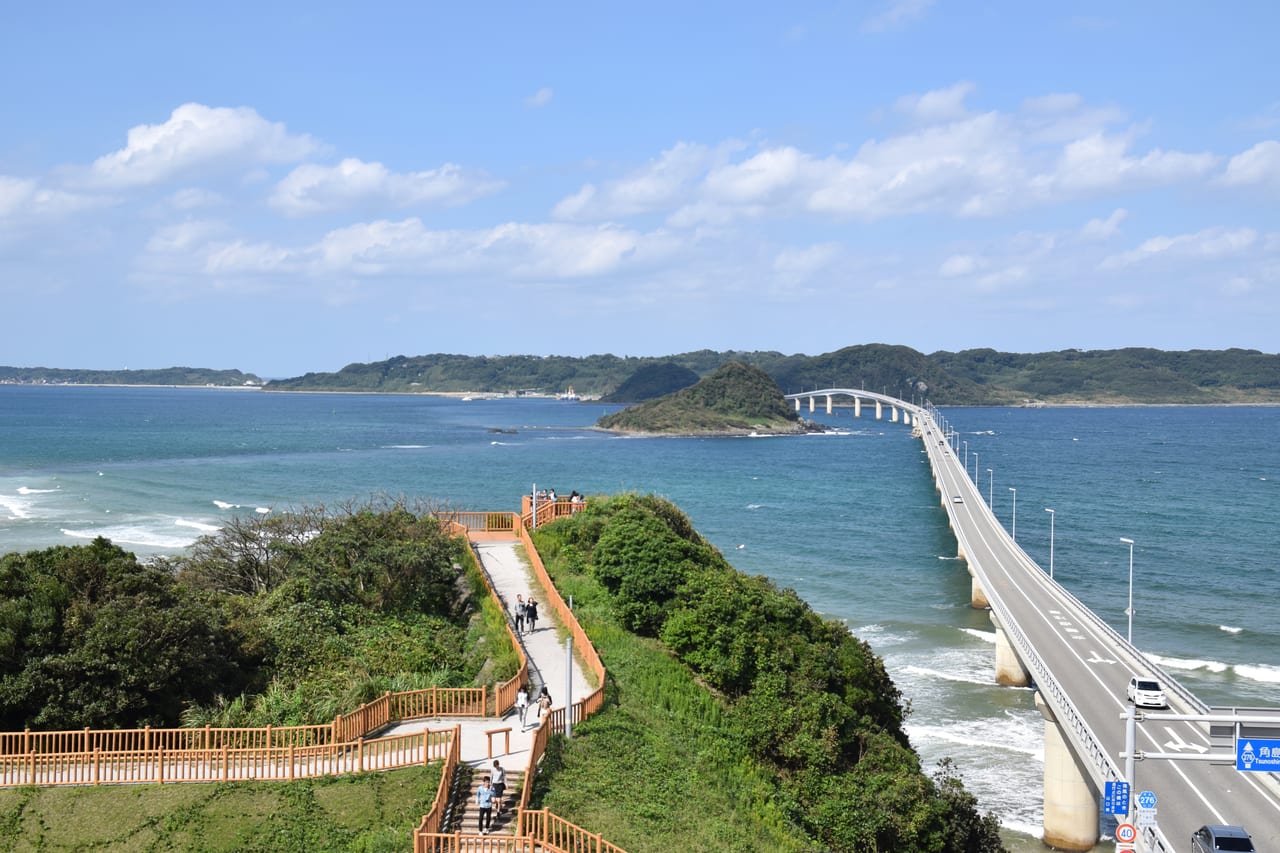
Western Yamaguchi is, to my eye, the most underrated scenery belt in Japan. The 1,780-meter, completely free Tsunoshima Bridge slices across a sheet of cobalt-blue sea — a shot that has been photographed to death and still makes you catch your breath — while just up the coast the 123 red torii of Motonosumi Shrine cascade down a cliff toward the Pacific. Inland sits Akiyoshido, Japan's largest-class limestone cave, beneath a vast karst plateau. But here is the blunt thing to know first: this is thoroughly car country. The sights are scattered across the rural west and the buses are slow and sparse, so without a rental you will lose your trip to transit. This guide covers Tsunoshima Bridge and its lighthouse, Motonosumi Shrine, Akiyoshido and Akiyoshidai, the freshly restored Rurikoji pagoda, fares, the best light for photos, and transport and lodging. The cleanest way to fit Yamaguchi in is after Hiroshima and Miyajima, pushing west toward Kyushu.
- Tsunoshima Bridge, 1,780m, free: Honshu's longest toll-free island bridge over cobalt sea; the best overhead shot is from the Honshu-side lookout
- Motonosumi Shrine, free: 123 red torii down a sea cliff, with an offering box atop a 6m torii — "Japan's hardest to hit"
- Akiyoshido, Japan's largest-class cave: dynamic pricing from Apr 2026 — ¥1,600 standard, ¥1,900 summer, ¥1,350 winter; a constant 17°C inside
- Rurikoji pagoda is restored: the Reiwa renovation finished Dec 2025, scaffolding down, the National Treasure tower visible again
- You need a car here: rent at Shin-Yamaguchi or Shimonoseki; without one, mobility is poor
📖 Contents
Why visit western Yamaguchi
Honestly, Yamaguchi is not most people's first Japan trip — wedged between Hiroshima and Fukuoka, it usually gets treated as a "pass-through" prefecture. But that is exactly its appeal: high scenery density, low tourist density. Sea views on the order of Tsunoshima Bridge would be jammed with crowds if they were in Okinawa, yet out here in western Yamaguchi you can often shoot the bridge with barely a car on it. What it sells is the combination of a scenic drive, coastal blues, and one enormous cave — a different animal entirely from city sightseeing.
My framing is direct: Yamaguchi suits travelers who have been to Japan a few times and want off the golden route, or people running a "Hiroshima + Kyushu" trip who want to wedge a scenic-drive segment in the middle. If this is your first visit and time is tight, locking in Tokyo and the Kansai cities is frankly more practical. But if you are willing to rent a car and drive the west-coast roads along the water, Yamaguchi delivers that "how is this so beautiful and so empty?" feeling. In a sentence: this is a "scenic-drive" trip, not a "checklist" trip.
Tsunoshima Bridge & lighthouse
Tsunoshima Bridge is the headline act, and the reason many people fly to Yamaguchi at all. It runs 1,780 meters, opened in November 2000, and is the longest toll-free bridge to an offshore island on the Honshu side. The deck hugs the water rather than arching high, so as you drive you have cobalt-to-emerald sea on both sides, with little Hatojima island midway — a regular in Japanese car ads and travel posters. A few practicals to lock in:
- Crossing is free and open 24 hours — no toll booths, drive or walk.
- The classic overhead shot is not on the bridge but from the Amagase Park lookout on the Honshu side — that vantage gives you the cleanest line of the bridge cutting across the blue. Park and it is a short walk.
- Light: to get that glowing blue, a clear morning to midday, with the sun high, gives the most saturated water; overcast or late-afternoon turns the sea grey and flat. Honestly, whether Tsunoshima is worth it is maybe 70% down to the weather — slot it on the day with the best forecast.
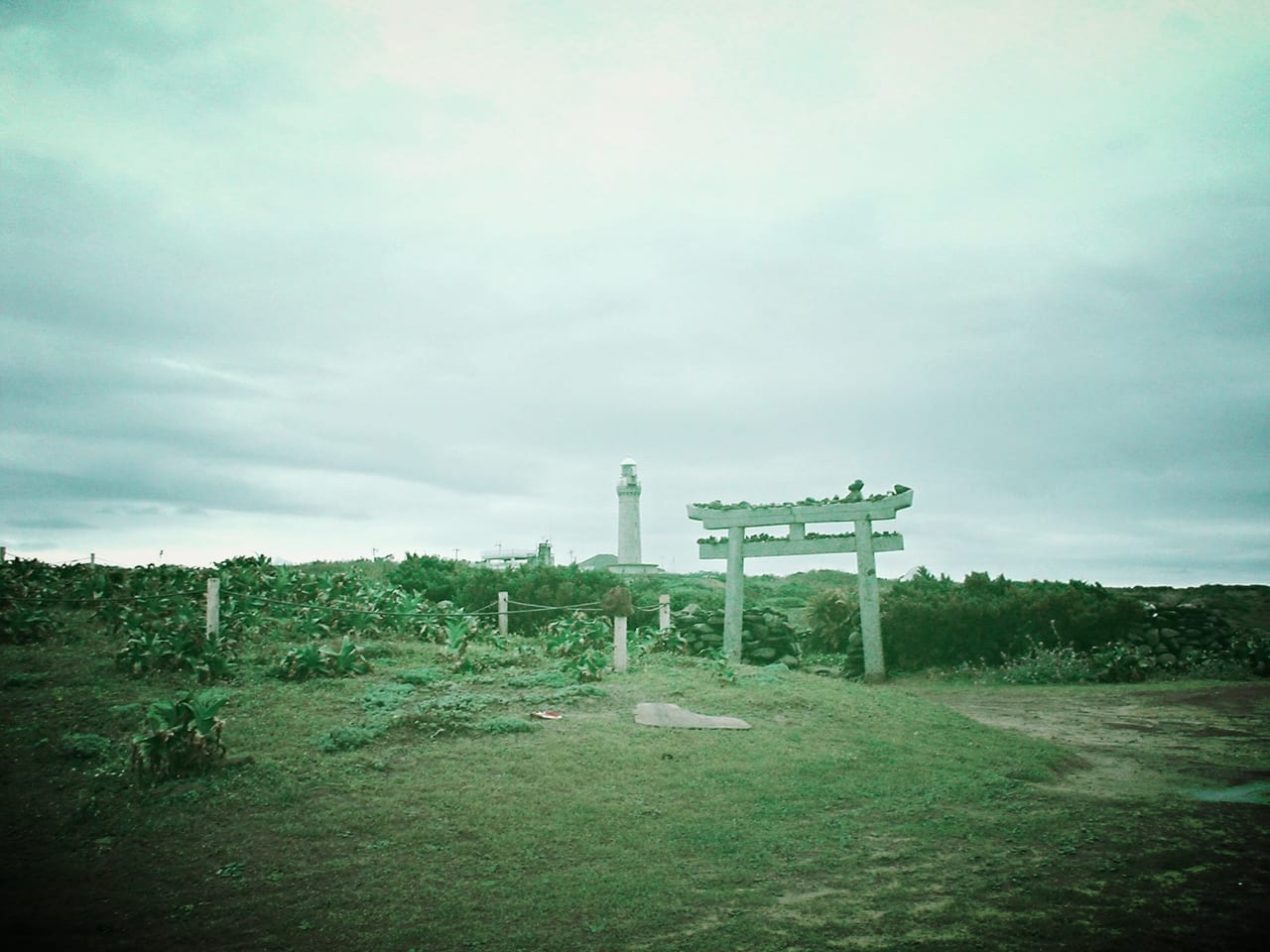
Once across on Tsunoshima island, the standout is the Tsunoshima Lighthouse — a granite Western-style lighthouse first lit in 1876, designed by the British engineer Brunton, and one of the few in Japan you can climb inside. Going up costs ¥300 for adults, free for kids, and from the top you get a 360-degree sweep of sea and island; if you skip the climb, walking the lighthouse park is free. The island also has the white sand of Tsunoshima Ohama Beach, lovely in summer. The whole island fills a satisfying half-day.
Motonosumi Shrine: 123 red torii
Driving northeast along the coast about an hour from Tsunoshima brings you to Motonosumi Shrine in Nagato. Its showstopper is the 123 red torii curving gently down a grassy sea cliff to the water — red gates, blue sea, green cliff colliding in one frame, the kind of scene CNN once named among "Japan's 31 most beautiful places." The gates were donated by worshippers starting in 1987 and took about a decade to reach their current number.
There is also a genuinely fun gimmick: the roughly 6-meter-tall grand torii at the entrance carries its offering box not on the ground but up on the top crossbeam. You have to toss a coin up and land it in that lofty box — make it, the legend goes, and your wish comes true, which is why it is dubbed "Japan's hardest offering box to hit." Almost nobody lands it first try, and the queue of people taking turns and laughing is half the charm.
Practicals: worship is free, only the car park charges (the first lot is right in front of the shrine, ¥300 per hour up to ¥500). There is no direct public transit — the nearest station still needs a bus or taxi onward, making this one of the most car-dependent stops of the trip. Come early, before the tour buses arrive, if you want a clean shot down the torii path; once the coaches roll in around midday you queue just to walk through. The nearby Higashi-Ushirobata terraced rice fields and the Senjojiki cliff plateau are en route and worth pairing.
Akiyoshido, Japan's largest cave
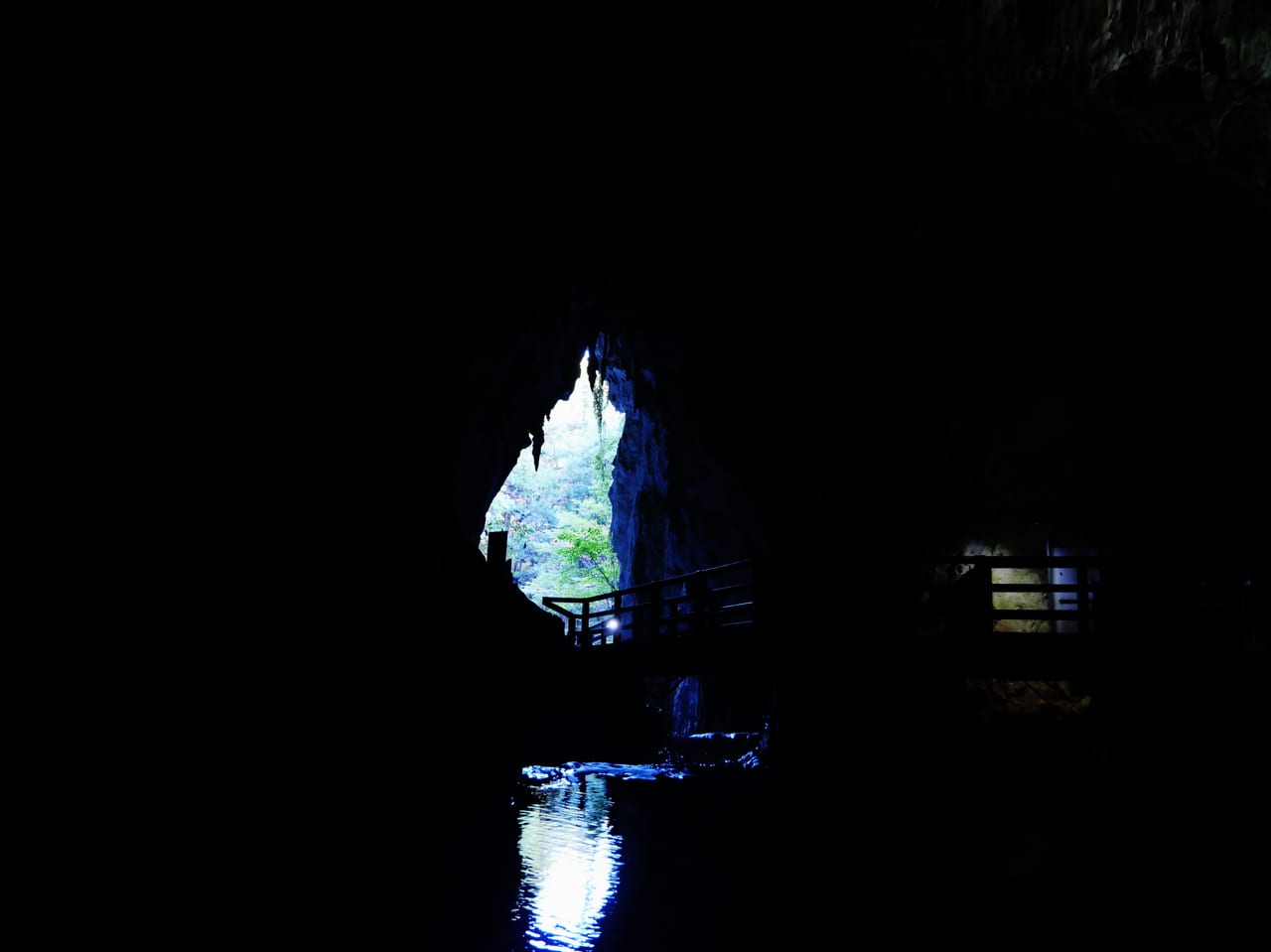
Once you have had your fill of sea, drive inland for Yamaguchi's other trump card: Akiyoshido, Japan's largest-class limestone cave and a designated Special Natural Monument. The passages total over 11 km, with a roughly 1 km tourable route that takes about an hour at an easy pace. Walk in and you understand the "largest-class" billing: the cavern is tall and wide, you follow an underground river deeper, and the famous Hyakumai-zara ("hundred plates") — tiers of travertine terraces stacked like rice paddies across the cave floor — is genuinely jaw-dropping, alongside named formations like the Golden Pillar.
Pay attention to the fares, because from April 2026 they switched to seasonal dynamic pricing:
- Standard season: ¥1,600 adults, ¥1,300 junior high, ¥850 elementary.
- Peak (Golden Week and the July 1–Aug 31 summer): ¥1,900 adults.
- Winter low season (Dec 1–Feb 28): ¥1,350 adults.
The cave holds a constant ~17°C year-round, so it is cool in summer, warm in winter, and completely unaffected by rain — which matters, because Akiyoshido is the perfect "rain insurance" for a Yamaguchi trip: when the weather wrecks the coast, just move the cave to the front of the plan. The floor is flat and easy, though some stretches are slightly wet, so wear decent shoes. For the more adventurous, there is a separate paid "adventure course" where you take a flashlight and clamber over ladders between the stalactites. My view is simple: since you are already in Yamaguchi, Akiyoshido absolutely justifies the inland detour — and it pairs with the plateau above it.
The Akiyoshidai karst plateau
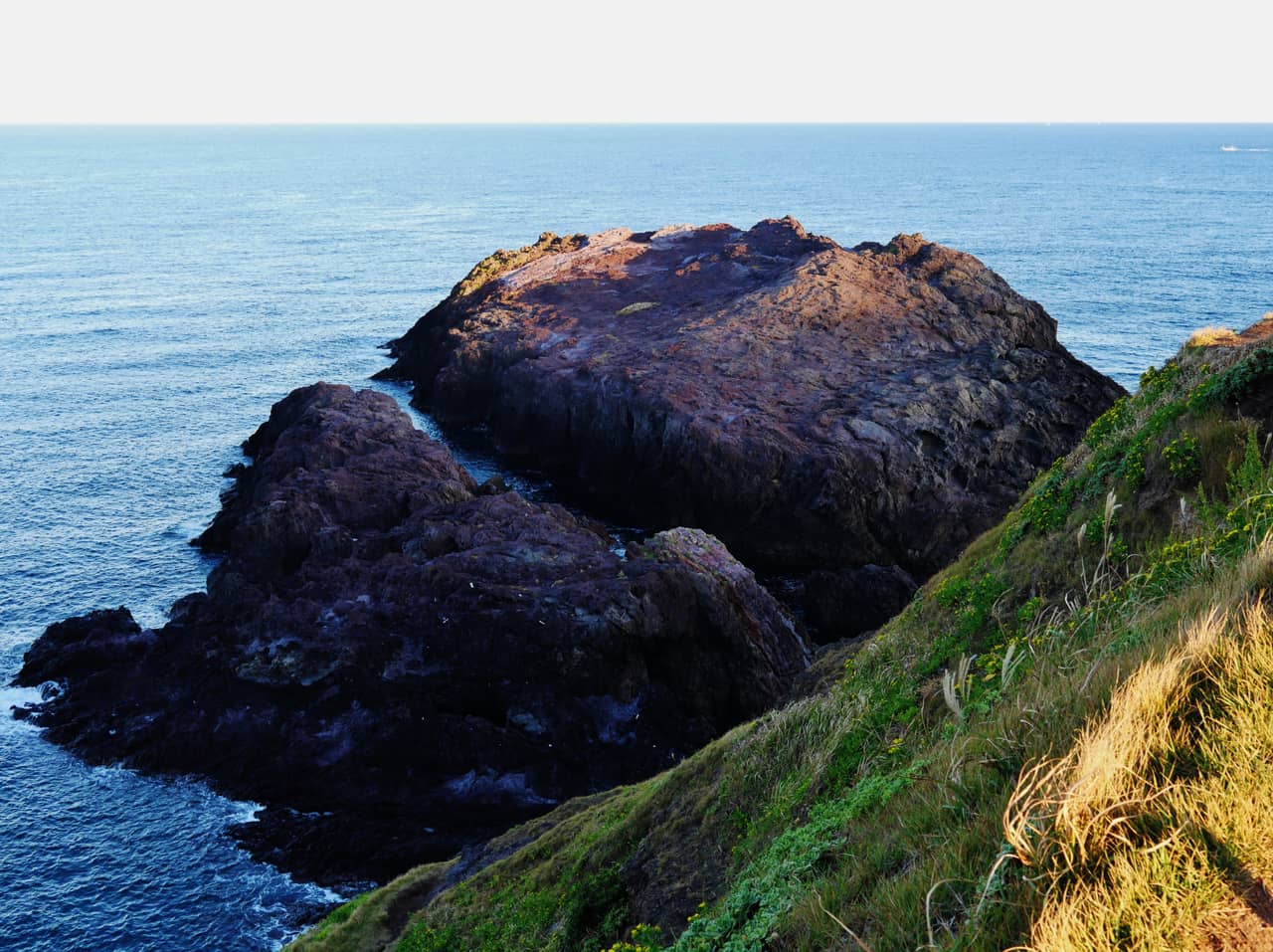
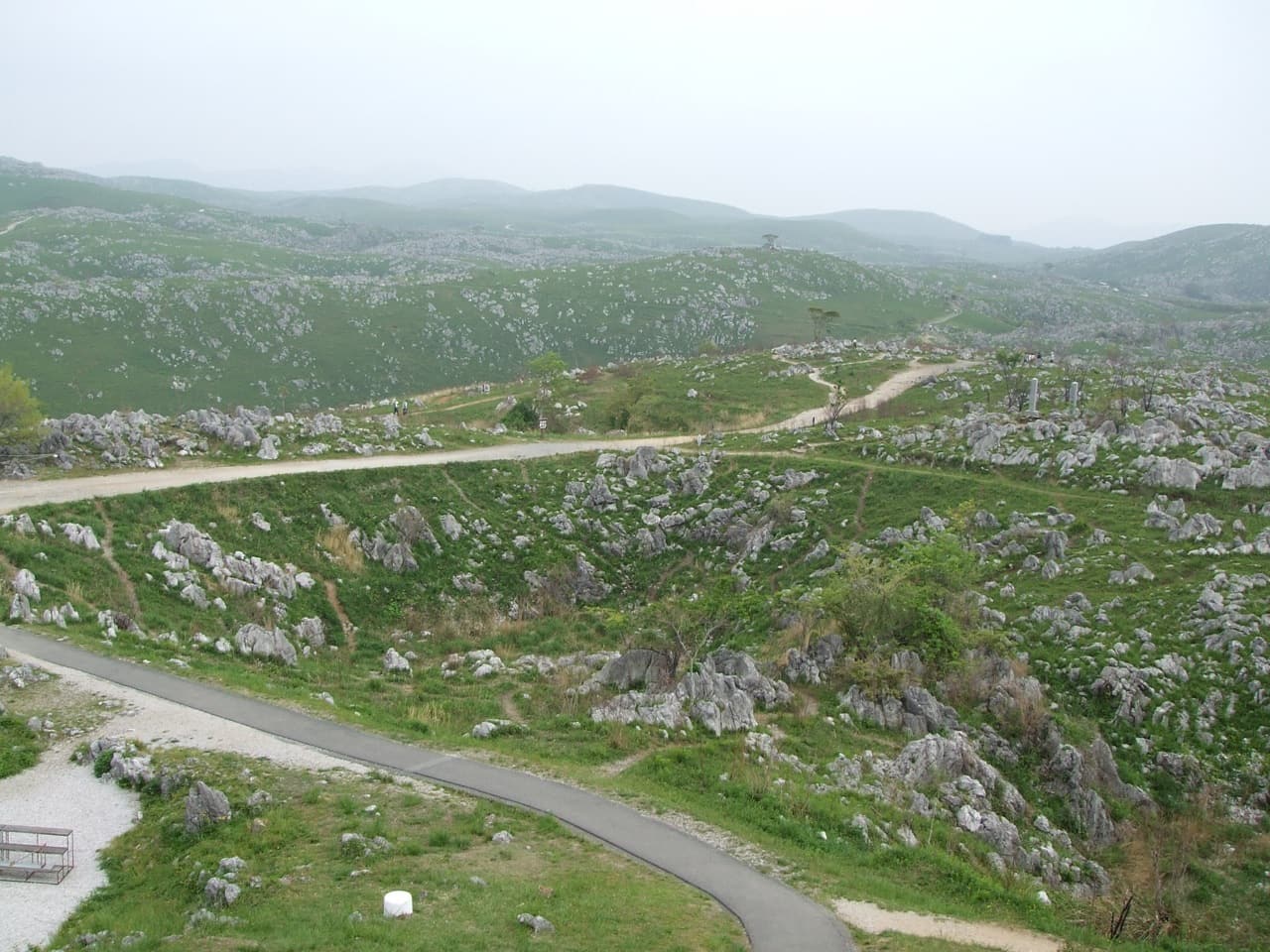
Directly above the cave sits Akiyoshidai — Japan's largest-class karst (limestone) plateau, made a Quasi-National Park in 1955 and a Special Natural Monument in 1964. Across a sweep of green grassland, tens of thousands of pale limestone rocks are scattered like a flock of sheep, and that rolling grassland studded with white stone is a landform you rarely see on Japan's main islands — nothing like the Japan most visitors picture.
How you do it is flexible: drive the "Karst Road" along the plateau, stopping at several lookouts to take in the view, or get out and follow the marked trails into the grassland for a closer look at the rocks. The plateau itself is free, and there is an elevator/passage linking Akiyoshido and Akiyoshidai, so "do the cave first, then come up onto the plateau" is the natural flow. In early spring the area does a controlled grass burn (yamayaki) to renew the meadow, which leaves it blackened for a while, so check the official notices if you want to avoid it. Golden pampas grass in autumn and fresh green in early summer are when the plateau looks best.
Rurikoji pagoda (restoration status) & Hagi
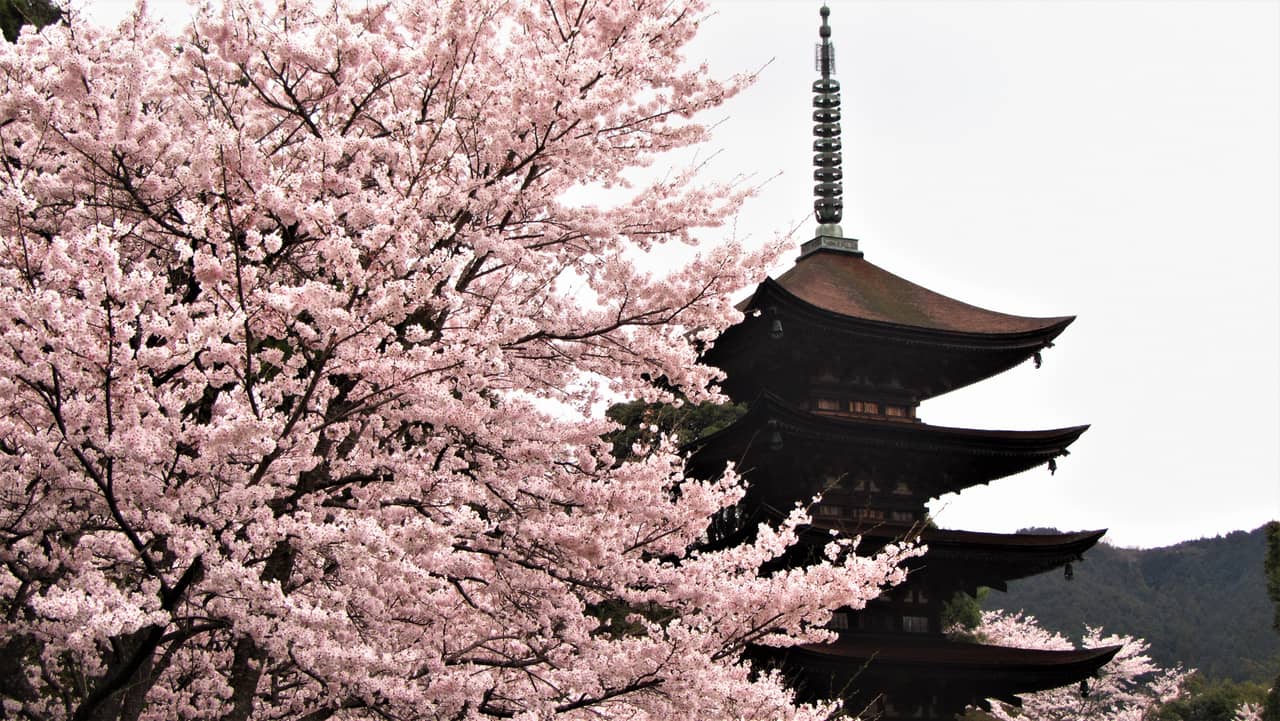
If your route swings through Yamaguchi City, the Rurikoji five-story pagoda is well worth a stop. It is a National Treasure counted among Japan's three finest pagodas, standing by a pond in Kosan Park and treated as the symbol of Yamaguchi, "the Kyoto of the west." Here is the detail many people get wrong, so let me update it — the "Reiwa Great Renovation" was completed in December 2025. It involved the first full re-laying of the cypress-bark roof in roughly 70 years, and during the work the tower was wrapped in scaffolding and protective sheeting, hidden from view. That wrapping has now been entirely removed and the pagoda is visible again, with a completion ceremony held in April 2026. So if you find an old article warning that it is "covered in sheeting, a wasted trip," that was the restoration period — it is back to normal and can be admired as usual now. Kosan Park is free and the pagoda's exterior can be seen any time.
The other worthwhile add-on is Hagi — a beautifully preserved castle town with white-walled samurai-residence streets, Mori-clan history, and the home of Hagi-yaki pottery, which anyone into old townscapes and ceramics will love. Hagi is not far from either Motonosumi Shrine or Akiyoshido, so fold it in if time allows. Both of these are culture-leaning stops that nicely balance the pacing after the coast and the cave.
Transport & lodging (why you need a car)
This is the most important section for planning Yamaguchi, so read it before you build the itinerary. Getting in is the Sanyo Shinkansen: the two usual gateways to the west are Shin-Yamaguchi Station (nearest for Akiyoshido, Yamaguchi City, and Hagi) and Shin-Shimonoseki / Shimonoseki Station (nearest for Tsunoshima). Hiroshima to Shin-Yamaguchi is about 30–40 minutes on the Nozomi, and Hakata (Fukuoka) to either Shin-Yamaguchi or Shin-Shimonoseki is quick too. But here is the catch — once you step off the Shinkansen, the real sights are all out in the countryside, and public transit is slow and sparse.
Plainly put, this is car country:
- Tsunoshima: a good hour-plus drive from central Shimonoseki along a gorgeous coastline; buses are infrequent and the transfers fiddly.
- Motonosumi Shrine: more remote still, with no direct public transit — the nearest station needs a bus or taxi onward, so it is effectively car-only.
- Akiyoshido / Akiyoshidai: route buses do run from Shin-Yamaguchi (one of the few stops that works by bus), but to pair it with a plateau drive a car is still far easier.
So my advice is clear: pick up a car at Shin-Yamaguchi or Shimonoseki and self-drive throughout. Do Tsunoshima + Motonosumi (the west coast) one day and Akiyoshido + Akiyoshidai (inland) the next — that flows best. It is not impossible without a car — sightseeing taxis and a handful of seasonal sightseeing buses exist — but your itinerary gets locked in and far less mobile, and a stop like Motonosumi is a real chore to reach by transfer. If the wider Chugoku-to-Kyushu trip leans heavily on the Shinkansen and JR, run the break-even math in our JR Pass guide first — but note the Yamaguchi-leg car rental and the local transport (beyond the free bridge) are not covered by the JR Pass and need budgeting separately.
For lodging, Yamaguchi has no big-city hotel cluster, so the two practical bases are Shimonoseki (handy for heading west to Tsunoshima, good city amenities, and famous fugu/pufferfish cuisine) and Nagato Yumoto Onsen (close to Motonosumi Shrine, Nagato's hot-spring town, recently redeveloped and very pleasant). If you are focused inland, business hotels around Shin-Yamaguchi Station also make a convenient launch pad for Akiyoshido. Yamaguchi lodging does not sell out the way Kyoto and Osaka can, but peaks and long holidays still warrant an early booking. For pre-trip weather and packing, see our Japan packing & weather guide — the west coast is windy, so bring a windbreaker for the seaside.
A two-day plan
Here is the same content shaped into a route that flows (written for a rental car; transit travelers should pad the transfers and swap Motonosumi for a sightseeing taxi):
- Day 1 (west-coast scenery): pick up the car at Shin-Shimonoseki/Shimonoseki → drive up the coast to Tsunoshima Bridge (shoot the overhead while the morning weather is good and the sea is bluest) → cross and explore Tsunoshima, climb the lighthouse, hit the beach → lunch → drive the coast to Nagato's Motonosumi Shrine (123 red torii, try the high offering box) → check into Nagato Yumoto Onsen for a soak and local food.
- Day 2 (inland cave + plateau): morning inland to Akiyoshido (Japan's largest cave, works in rain) → come straight up onto the Akiyoshidai karst plateau to drive and walk the grassland trails → lunch → as time allows, swing through Yamaguchi City for the restored Rurikoji pagoda or add the Hagi castle town → return the car at Shin-Yamaguchi and take the Shinkansen to Hiroshima or Hakata.
If you only have one day, take the west coast (Tsunoshima + Motonosumi) — the most memorable line — and save Akiyoshido for next time or as rain insurance. East of Yamaguchi you can chain Hiroshima and Miyajima for a complete western-Chugoku run, and west you carry straight on into Fukuoka and Kyushu — stretched to 5–7 days, the whole thing is richly rewarding.
FAQ
- Q1:Is there a toll on Tsunoshima Bridge, and when is it open?
- It is free and open 24 hours. The Tsunoshima Bridge runs 1,780 meters, opened in November 2000, and is the longest toll-free bridge to an offshore island on the Honshu side — no toll booths, no gates. You can drive or walk across it any time. The thing you actually pay for is the Tsunoshima Lighthouse on the far side: ¥300 for adults to climb inside (kids free); walking the lighthouse park without going up is free. The famous "bridge slicing across the blue sea" overhead shot is taken from the Amagase Park lookout on the Honshu side, not from the bridge itself.
- Q2:What is the deal with Motonosumi Shrine's "hardest offering box," and is there an entry fee?
- Worship at Motonosumi Shrine (in Nagato) is free; only the car park charges (the first lot is right in front of the shrine, ¥300 per hour up to ¥500). Its signature is the 123 red torii curving down a grassy cliff toward the sea, donated by worshippers over roughly a decade. The famous gimmick is the ~6-meter-tall grand torii at the entrance: the offering box sits on the top crossbeam of the torii, so you have to toss a coin up into it — make it, the legend says, and your wish comes true. It is billed as "Japan's hardest offering box to hit," and almost nobody lands it first try, which is half the fun.
- Q3:How much is Akiyoshido Cave, did prices change in 2026, and is the detour worth it?
- Worth it, especially once you are already in Yamaguchi. Akiyoshido is Japan's largest-class limestone cave — over 11 km of passages total, with a roughly 1 km tourable route that is flat and easy and stays around 17°C year-round, so it works in summer, winter, and rain alike. On pricing, note that from April 2026 it switched to seasonal dynamic pricing: standard season ¥1,600 for adults; peak (Golden Week and the July 1–Aug 31 summer) ¥1,900; winter low season (Dec 1–Feb 28) ¥1,350. It sits directly beneath the Akiyoshidai karst plateau, so the cave and the plateau make a tidy half-day together.
- Q4:Is the Rurikoji five-story pagoda still under restoration? Can you see it now?
- You can see it now — the "Reiwa Great Renovation" was completed in December 2025. This National Treasure pagoda (one of Japan's three finest, in Kosan Park in Yamaguchi City) had its cypress-bark roof fully re-laid for the first time in about 70 years, and during the work it was wrapped in scaffolding and protective sheeting so the tower was hidden. The wrapping has now been fully removed and the pagoda is visible again, with a completion ceremony held in April 2026. If older write-ups warn that it is "covered in scaffolding," that was the restoration period — it is back to normal now, and Kosan Park is free to walk.
- Q5:Can you do these Yamaguchi sights without a car?
- Honestly, it is hard — this is thoroughly car country. Tsunoshima, Motonosumi Shrine, and Akiyoshido are all out in rural western Yamaguchi, and the public-transit links between them are slow and infrequent — Tsunoshima is a good hour-plus drive from Shimonoseki with sparse buses, and Motonosumi is remote enough that the nearest station still needs a bus or taxi. The practical move is to get off the Shinkansen at Shin-Yamaguchi or Shimonoseki and rent a car, doing Tsunoshima + Motonosumi one day and Akiyoshido + Akiyoshidai the next. It is not impossible without a car (sightseeing taxis and a few seasonal buses exist), but your itinerary gets locked in and far less flexible. Work out the Shinkansen access and whether a pass pays off first with our JR Pass guide.
- Q6:Can Yamaguchi be combined with Hiroshima and Miyajima in one trip?
- Yes, and that is the smart way to do it. The Sanyo Shinkansen strings Hiroshima → Shin-Yamaguchi → Shimonoseki (Shin-Shimonoseki) → Hakata on one line, with Hiroshima to Shin-Yamaguchi about 30–40 minutes on the Nozomi. A common flow is to do Hiroshima and Miyajima first, then push west into Yamaguchi for Tsunoshima and Akiyoshido, and finally carry on into Fukuoka and Kyushu. The Yamaguchi sights are western and rural, so rent a car for the Yamaguchi leg while keeping Hiroshima and Miyajima on public transit. Slotting Yamaguchi between Hiroshima and Kyushu makes for a very complete western-Japan run.
Related reading:
Hiroshima Guide 2026: Peace Park, Okonomiyaki & Miyajima
Chugoku's gateway — 1.5 hr from Shin-Osaka by Shinkansen, the World Heritage A-Bomb Dome, layered okonomiyaki, and a Miyajima day trip.
Miyajima Guide 2026: Floating Torii Tides, Mt. Misen & Oysters
World Heritage Itsukushima Shrine — how to time the floating torii by tide, the Mt. Misen ropeway, ferries, the visitor tax and grilled oysters.
JR Pass 2026: Is It Still Worth It?
Four real routes calculated, six alternatives that may beat the Pass.