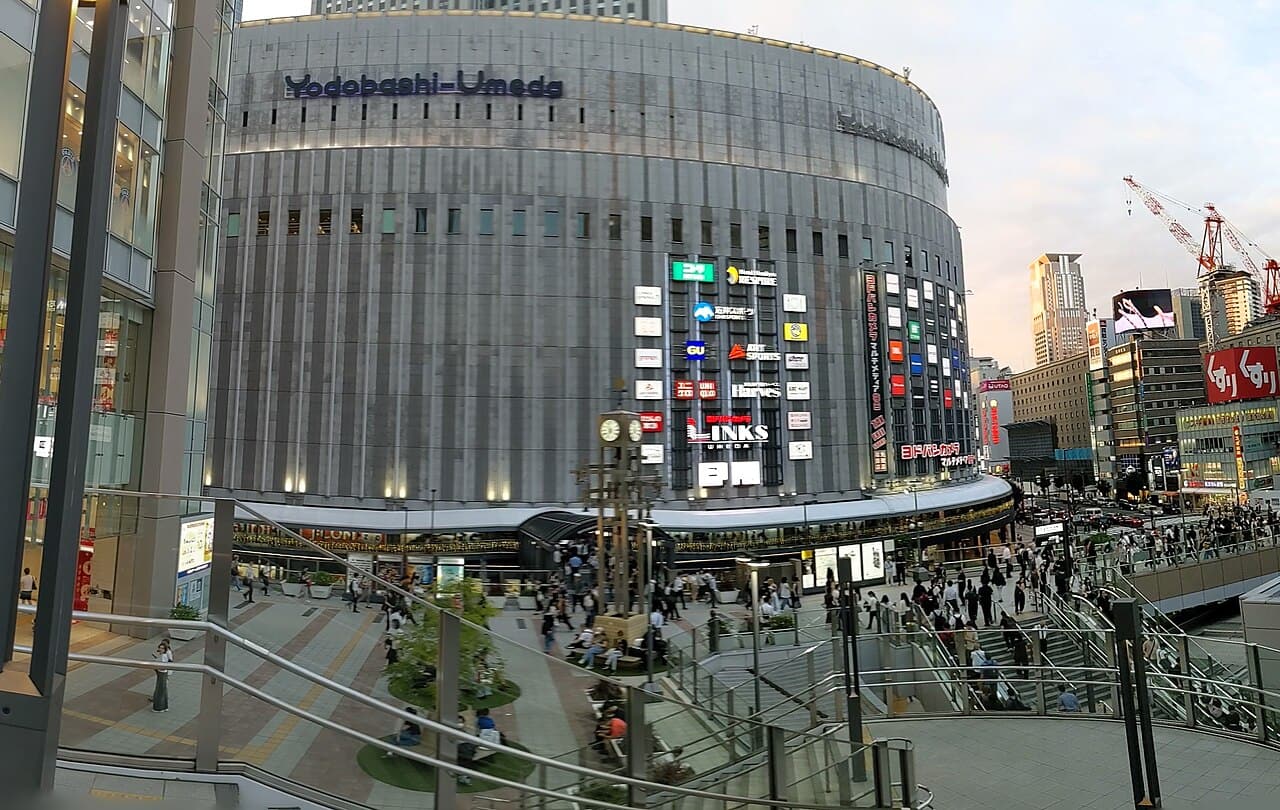
Let's save you half an hour: Yodobashi has no tourist coupon. We went through the official site — the tax-free support page is a 404, the store list never uses the word 免税, and the official FAQ has no tax-free entry at all. Yodobashi plays a different game: 10% back in points when you pay cash, but only 8% on a credit card — and 10% again if you use its app. On a JPY 110,000 camera that app is worth JPY 2,200. This guide covers the official point rules, how to convert those points into real savings the same day, what the November 2026 tax refund reform changes, and when you should walk to Bic Camera instead.
- No tourist voucher exists — stop searching for a "Yodobashi coupon"
- Rates: 10% on cash/debit/Edy, 8% on credit cards, 10% on cards via the official app
- Spend points the same day — 1 point = 1 yen, big item first, accessories second
- Points expire two years after your last use — don't save them for next trip
- Small items or vouchers → Bic Camera; one big-ticket item → Yodobashi
📖 Contents
What Yodobashi is, and what changed in 2026
Yodobashi Camera and Bic Camera are Japan's two big electronics chains, but they are built on opposite models. Bic Camera rents space in buildings beside train stations and opens many branches. Yodobashi builds its own tower and makes each store enormous. That difference decides where you should shop: Yodobashi has far fewer locations, but walk into one and you will find seven or eight variants of the same camera body, an entire wall of lenses, and accessory depth that no smaller shop matches. If you want to physically compare models, this is the better room.
It is not only electronics. The group also owns the outdoor retailers Ishii Sports and Art Sports, and the official site confirms points are now shared across all three. That matters more than it sounds: points earned on a camera can be spent on hiking socks, gloves or a dry bag.
Three 2026 changes worth knowing:
- A new Ikebukuro flagship opened on 30 June 2026. Yodobashi Camera Multimedia Ikebukuro anchors the new Yodobashi-Ikebukuro complex on the east side of Ikebukuro Station, with the LINKS DINING restaurant floor on 8F, Yodobashi Golf on 7F and Ishii Sports / Art Sports on 6F. If Ikebukuro is on your itinerary, this is the newest and most comfortable branch to browse.
- Kyoto Yodobashi finished a refit on 8 August 2026 — the 6F restaurant floor and the B2 specialty-shop arcade were renewed together. Handy if you want dinner and electronics near Kyoto Station in one stop.
- LINKS UMEDA's 8F restaurant street completed its renewal in August 2026 (all 22 units). Umeda was already the biggest store in western Japan.
Why you can't find a Yodobashi coupon
This is the part worth reading before anything else. If you have searched "Yodobashi coupon" and come up empty, your search skills are fine — the coupon does not exist.
We checked the official site on 12 August 2026. Three pieces of evidence:
- The tax-free support URL
/ec/support/taxfree/that outside articles keep citing now returns a 404 page-not-found. - The official store list does not contain the characters 免税 anywhere on the page, and no branch is flagged as offering tax-free service.
- The official FAQ likewise has no tax-free entry, and nothing addressed to foreign visitors.
Compare Bic Camera, which publishes a full tax-free page and issues an official scan coupon worth up to 7% through a JNTO partner platform. The two chains have deliberately diverged: Bic buys tourist traffic with vouchers, Yodobashi puts the same money into its point rebate.
So reset your expectations before you go: there is no voucher to hunt for. The thing to get right is capturing the full 10% and spending it before you fly home. Pages advertising "Yodobashi promo codes" are affiliate pages or stale. For vouchers that genuinely exist at other chains, our Japan coupon guide and the coupon roundup are faster. Worth noting that Muji is another chain with no tourist coupon at all, though its trap runs the opposite way — Muji really does have a 10% member discount, but the official terms make it mutually exclusive with tax-free, so it is one or the other.
The official Gold Point rate rules
The Gold Point Card is free to join with no annual fee, you can sign up in-store in a couple of minutes, and 1 point = 1 yen against any future purchase. Every rate below comes from the official Gold Point shopping page, checked August 2026:
| Payment method (in store) | Point rebate |
|---|---|
| Cash / debit card / Edy e-money | 10% |
| Credit card (without the official app) | 8% |
| Credit card (using the official app) | 10% |
| Installment loan | 8% |
| Gift certificate | 8% |
| PiTaPa e-money (Umeda store only) | 8% |
That app row is the single most valuable line in this article. The official page states plainly that with the Yodobashi Gold Point Card smartphone app, credit card payments also earn 10%. Run the numbers: a camera at JPY 110,000 including tax earns 8,800 points on a bare credit card, or 11,000 points with the app — a gap of 2,200 points, which is JPY 2,200 in spendable value. Buy a camera and a laptop on the same trip and the gap clears JPY 5,000.
Three more rules worth memorising:
- Points are calculated on the tax-inclusive price minus any points you redeem. The official worked example: a JPY 10,500 item at 10%, paid partly with 500 points, earns (10,500 − 500) × 10% = 1,000 points. In other words, spending points shrinks your next rebate — logical, but most shoppers never notice.
- Points expire two years after your last use. Go two full years without any activity and the whole balance is wiped. Generous if you visit Japan yearly, useless as a long-term store of value.
- Online, guests earn nothing — you must register an account at yodobashi.com — and the online rate is whatever the product page shows, unaffected by payment method. That is the opposite of the in-store rule.
One footnote for American Express holders: at 24 designated branches you can convert Membership Rewards into Yodobashi gift certificates at 3,000 points per JPY 1,000, collected on the spot. But gift certificates only earn 8% back, so treat this as a way to burn idle Amex points, not a reason to pay by certificate.
How visitors should actually use the points
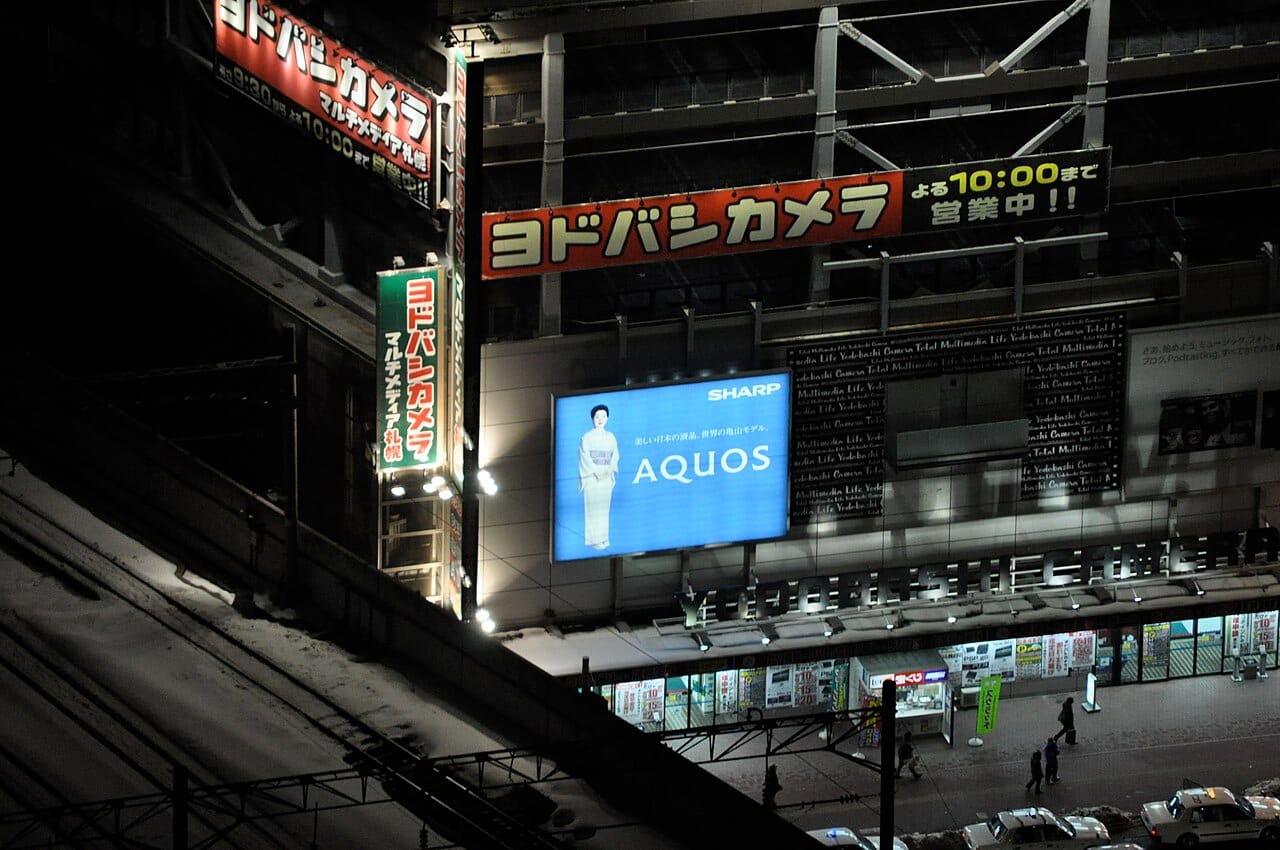
Plenty of guides claim Yodobashi's high point rate is "useless for tourists". That is half true, and believing it can cost you five figures in yen. Points are credited at checkout, are worth exactly 1 yen each, and can be spent immediately at any Yodobashi, Ishii Sports or Art Sports store on the same trip. They are not a loyalty scheme you benefit from next year — they are a discount you can cash the same afternoon.
Sequence matters:
- Buy the expensive item first — camera, lens, laptop, premium hair dryer — to generate the largest possible point balance.
- Pay for the small stuff with points — memory cards, filters, spare batteries, camera straps, headphones, a power bank, travel adapters. You were going to buy these anyway, so they are effectively free.
- Spill the remainder across the group — Ishii Sports and Art Sports share the same points, so hiking socks, base layers and flasks all qualify.
Reverse the order and it falls apart: buy your accessories first and by the time the big purchase credits your points, there is nothing left you want.
One practical note on price comparison: at Yodobashi you have to read the sticker price and the point rate together. A rival shop with a slightly lower sticker and no points can easily be the worse deal. Convert both numbers before you decide, rather than reading the shelf price alone.
Tax-free, and the November 2026 reform
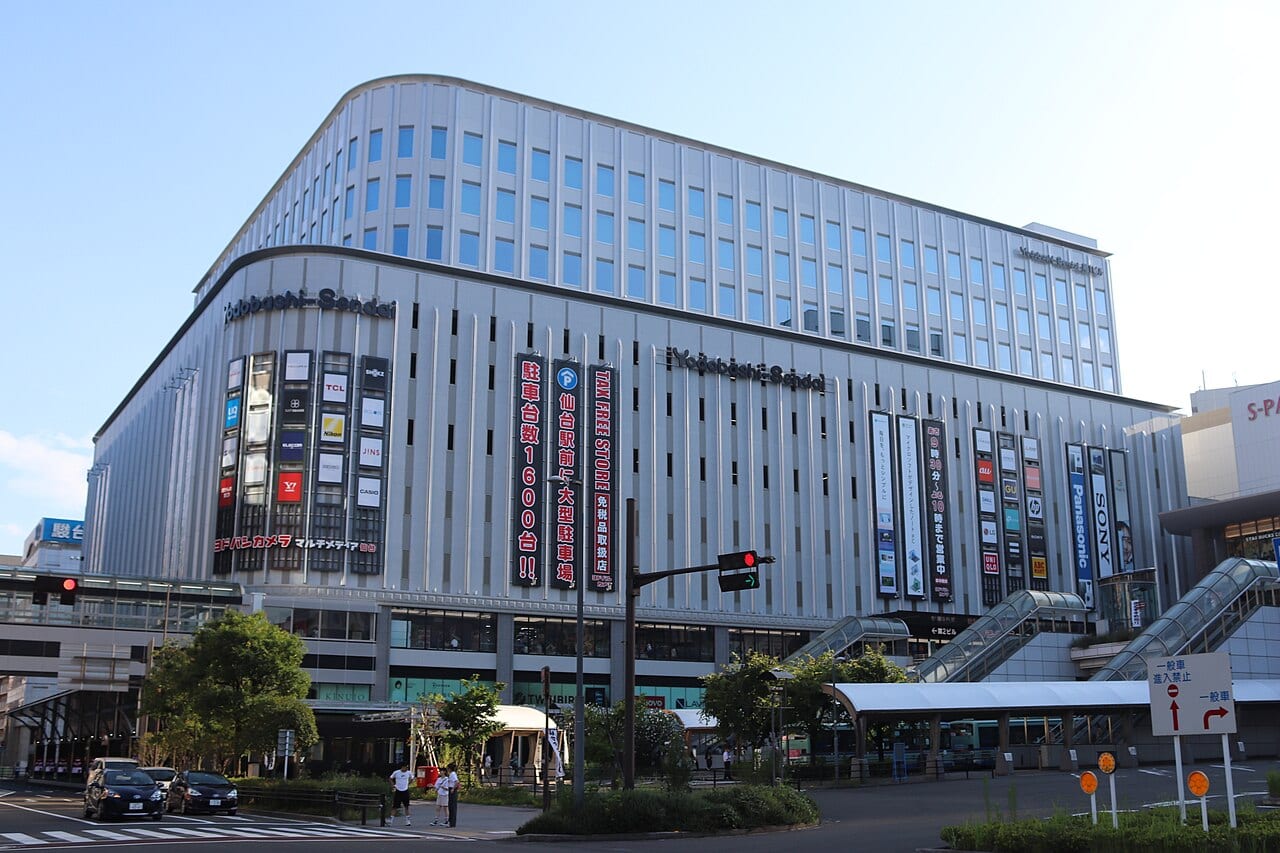
Despite the website's silence, the large Yodobashi branches do operate as tax-free stores. The reliable test is simple: look for a "TAX FREE" or 免税品取扱店 sign at the entrance. The Sendai photo above makes the point — not a word online, a two-storey banner on the wall.
The rules themselves are set by national law, not by the retailer, so Yodobashi and Bic Camera are identical here: spend ¥5,000 or more before tax at one store on one day, and show your passport. Bought up to 31 October 2026, electronics count as “general goods”: nothing is sealed and you can use the item in Japan. From 1 November 2026 that general/consumable split and the sealing rule are abolished — a camera you have used in Japan still passes the customs check; what actually costs you the refund is binning the box with the model number on it, because customs may then be unable to identify the item.
From 1 November 2026 the system changes fundamentally: instead of the shop deducting consumption tax at the register, you pay the full tax-inclusive price, and the money comes back after customs confirms at departure that the goods left Japan. Which regime applies depends on your purchase date, not your flight date. For electronics buyers that means four things:
- Cash flow. You front the whole amount. A camera that used to cost JPY 110,000 tax-free now needs about JPY 121,000 at the till — check your card limit before you travel. You also nominate how you want to be repaid in store, not at the airport; each shop's refund operator sets the deadline, so it is not always due at the till, but doing it there is safest.
- Never check the camera into the hold. The customs confirmation happens landside, before the security checkpoint, and it has to happen before you check your bags — official guidance is explicit that checked baggage cannot be pulled back. Bag drop first, refund gone.
- The kiosk and customs do not pay you. All that is there is a self-service kiosk where you scan your passport: green means done, red means carrying the goods to the customs inspection area. Japan's guidance puts the read-to-result step at a few seconds. The money itself comes from Yodobashi or its refund operator afterwards.
- Nobody can tell you how long, or what a fee would cost. The law does not regulate the timing and there is no official figure for it. On fees the government has answered only "who pays": whether it falls on the traveller or the shop is "not specifically prescribed", and the government itself charges nothing — the rate is each shop's own terms. On a high-value purchase, ask at the register while you are registering the refund method.
One more practical note: on where the kiosks are, the tourism and tax agencies' traveller material goes no further than "the international departures hall, before baggage check-in", so check your departure airport's own website for the floor. Eligibility, thresholds and the consumables traps are in our full breakdown of the pay-first system.
One question we could not answer, and you will hit it: do you get tax-free and points on the same purchase? The official page says points are based on the tax-inclusive price, but a tax-free sale has no consumption tax in it, and Yodobashi never explains how the two interact. We found no official statement, so we are not going to guess — ask at the register before paying. A rule of thumb: tax-free is a genuine 10% saved (from 1 November 2026 it lands after departure instead of at the till, but it is the same 10%); points only become value if you spend again. If it is one or the other, short-trip visitors should take tax-free unless a second purchase that day is certain.
Yodobashi vs Bic Camera
| Comparison | Yodobashi | Bic Camera |
|---|---|---|
| Store model | Own tower, huge single stores, few of them | Beside stations, many branches |
| Tourist voucher | None (nothing published) | Yes — official scan coupon, up to 7% |
| Points | Cash or app-card 10%, bare card 8% | Has points, limited use for visitors |
| Group stores | Ishii Sports, Art Sports | Kojima, Sofmap |
| Tax-free rules | Identical — set by law (¥5,000 before tax, one store, one day, passport) | |
The straight recommendation:
- One big-ticket item (camera, lens, high-end laptop, premium hair dryer) → Yodobashi. Stock depth lets you compare properly, and 10% in points buys the accessories the same day.
- Lots of small items, or you want a voucher → Bic Camera. The scan coupon reaches 7%, stacks with tax-free for roughly 15% off the tax-inclusive price, and there are far more branches to stumble into.
- Apple products and game consoles → neither gives you extra. Bic's coupon excludes them. Buy wherever is convenient and compare sticker prices.
Do not cross the city chasing a couple of percentage points. Shop whichever you reach first and spend your attention on voltage (Japan runs 100V — look for models marked 100–240V) and international warranty. Getting those wrong costs far more than any discount gap. Our Bic Camera guide has the full voltage and buying checklist.
Best branches for visitors
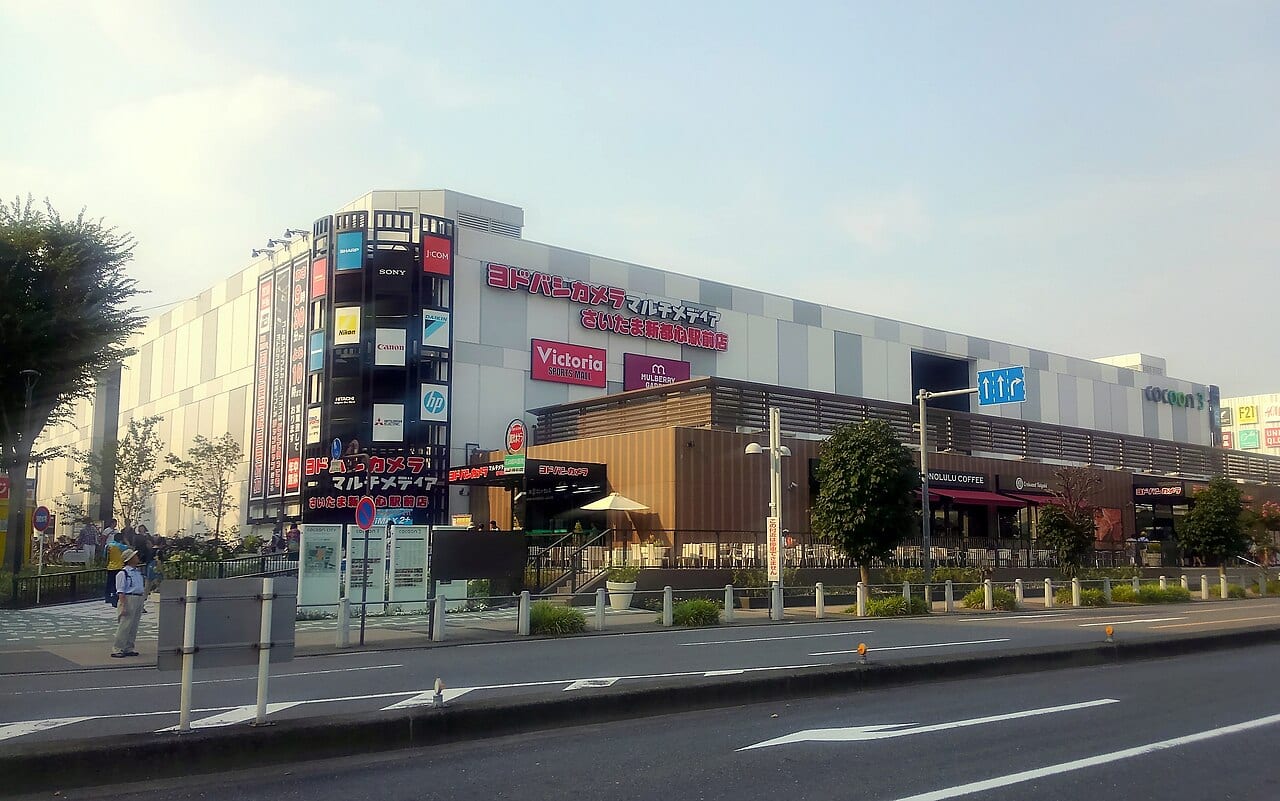
The branches worth your time:
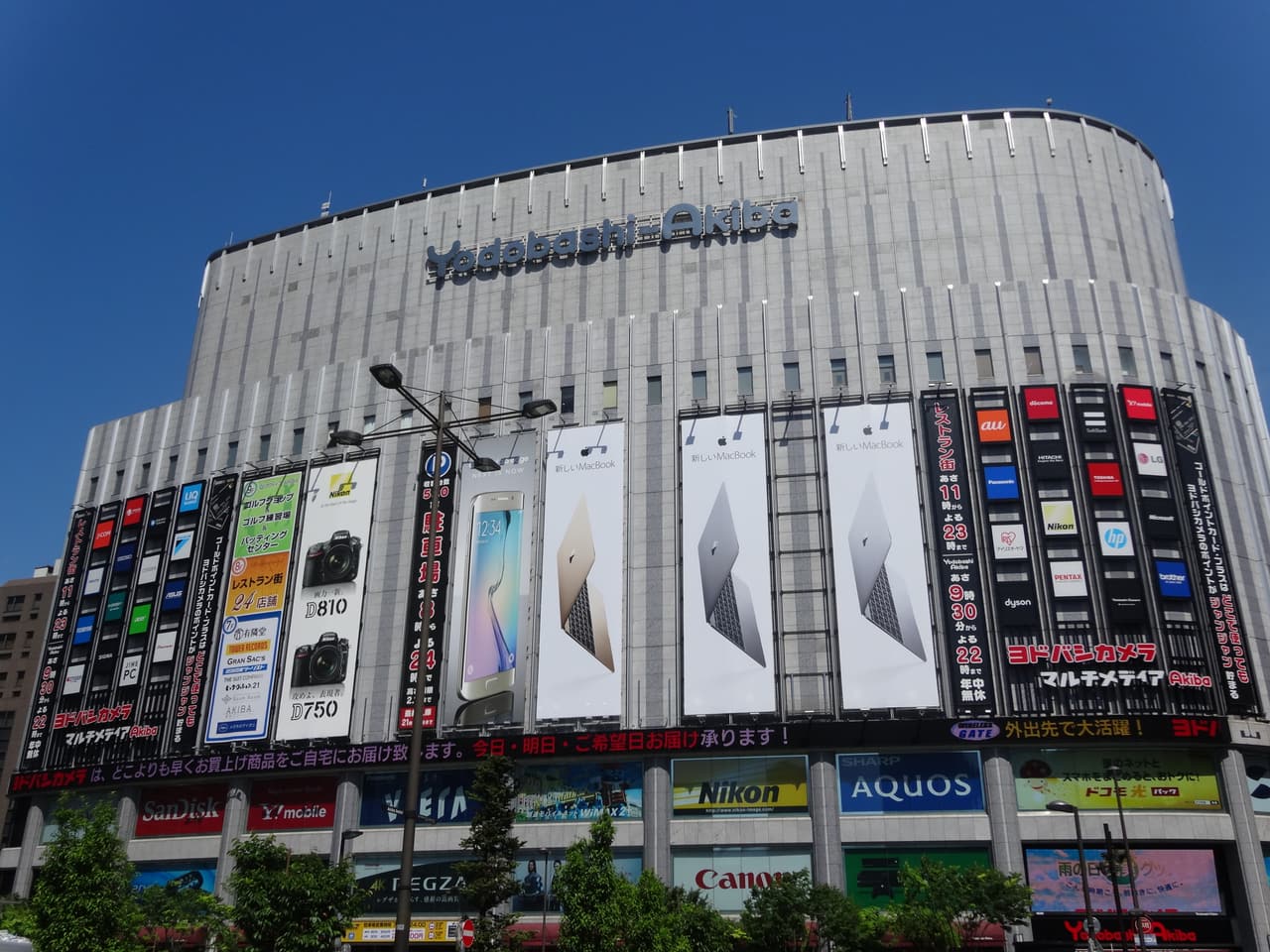
- Tokyo — Akihabara (Multimedia Akiba). The classic, right by the JR Akihabara Electric Town exit. Cameras, computers and hobby models in one tower; unmissable if you are doing Akihabara anyway.
- Tokyo — Shinjuku West Exit (flagship). Where the chain began, spread across several annexes. Camera and lens depth is among the best in Japan.
- Tokyo — Ikebukuro (opened 30 June 2026). The newest flagship, in the complex at Ikebukuro Station's east exit, with the restaurant floor upstairs.
- Osaka — Umeda (Yodobashi-Umeda). The biggest in western Japan and the building on this article's cover, right by Osaka Station; the LINKS UMEDA restaurant street above it was renewed in August 2026.
- Kyoto. In front of Kyoto Station, refitted 8 August 2026 — convenient for last-minute buying before you head home.
- Elsewhere. Sapporo, Sendai, Hakata and Nagoya (Sunshine Sakae) all have large stores next to the main station.
Most big branches trade until 22:00, so an after-dinner visit works — useful when the rest of your day is booked. For itinerary context see our Tokyo 5-day itinerary or the Osaka and Kyoto 5-day itinerary.
Frequently Asked Questions
- Q1:Is there a Yodobashi coupon for tourists?
- No. It does not exist. We checked the official site in August 2026: the old tax-free support URL returns a 404, the official store list does not contain the word 免税 anywhere on the page, and the official FAQ has no tax-free entry at all — let alone a tourist discount voucher. This is a deliberate split from Bic Camera, which does issue an official scan coupon worth up to 7%. Yodobashi competes on point rebates instead of vouchers. Any page advertising a "Yodobashi discount code" is a third-party affiliate page or stale information.
- Q2:What is the Gold Point rate, and does paying by card reduce it?
- Yes — by two full percentage points. Per the official rate page, in-store purchases earn 10% on cash, debit cards and Edy e-money, but only 8% on credit cards. Loans, gift certificates and PiTaPa (Umeda store only) are also 8%. The catch that saves you money: the official page states that if you use the Yodobashi Gold Point Card app, credit card payments earn 10% too. Online at yodobashi.com the rate is fixed per product and does not vary by payment method.
- Q3:Are the points actually useful on a short trip?
- Yes — but only if you spend them the same day. Gold Points are credited at checkout, are worth 1 point = 1 yen, and can be redeemed immediately at any Yodobashi, Ishii Sports or Art Sports store on the same trip. The correct sequence is buy the big item first, then pay for small items with the points: a JPY 110,000 camera earns roughly 11,000 points, which covers memory cards, filters, spare batteries and headphones. Doing it in the reverse order wastes them. Note the expiry: points die two years after your last use, so do not save them for a future trip.
- Q4:Can I get tax-free and points on the same purchase?
- Yodobashi does not publish an answer, so ask at the register before you pay. The official wording is that points are calculated on the tax-inclusive price, but a tax-free sale excludes consumption tax by definition, and the site never explains how the two interact. We could not find an official statement and we do not guess. A practical rule: tax-free is a genuine 10% saved (from 1 November 2026 the shop pays it back after you leave rather than deducting it at the till, but it is the same 10%), while points only convert into value if you spend again. If a store tells you it is one or the other, short-trip visitors should take the tax-free exemption unless you are certain you will buy a second item that day.
- Q5:Yodobashi or Bic Camera — which is better for tourists?
- It depends what you are buying. One expensive item (camera, lens, high-end laptop) → Yodobashi: individual stores are enormous, stock depth lets you actually compare models in person, and the 10% points buy your accessories the same day. Lots of small items, or you want a voucher → Bic Camera: it has an official scan coupon worth up to 7% (5% or 3% on some goods), far more branches, and broader mobile-payment support. Tax-free rules are identical at both because they are set by national law, not by the retailer. See our Bic Camera coupon guide.
- Q6:How does the November 2026 tax-free reform affect buying electronics?
- From 1 November 2026 Japan switches from in-store tax exemption to a refund paid after departure. Four practical consequences: (1) you pay the full tax-inclusive price at the register, so budget and card limits need headroom — a JPY 110,000 camera means fronting about JPY 121,000 — and you register how you want to be repaid in store, not at the airport (each shop's refund operator sets the deadline, so it is not always due at the till, but doing it there is safest); (2) on departure day you scan your passport at a self-service kiosk that sits landside, before the security checkpoint, and before you check your bags — official guidance says checked baggage cannot be retrieved, so a camera in the hold means no refund; (3) the kiosk and customs pay you nothing: the kiosk only performs the customs confirmation, and Yodobashi or its refund operator sends the money afterwards, with no legally set timeframe and no published rule on fees, so ask before you pay; (4) the minimum spend is still ¥5,000(同店同日最低消費(稅拔)) before tax at one store on one day, passport required. Which system applies depends on your purchase date, not your flight date. Full details in our Japan tax refund guide.