Once every seven years, Zenkoji in Nagano opens a reliquary that is otherwise kept shut and lets the public look at a Buddhist image almost nobody has seen. That event is called the Gokaicho, and the next one runs 4 April to 19 June 2027. Here is the part almost no English guide mentions: it was moved a year forward because a chamber of commerce asked for it, and the temple said so out loud at the press conference. Two other numbers have quietly changed underneath it — 77 days, when no postwar edition before 2022 had ever run past 31 May, and an admission price that jumped in April 2026 in a way that hit one age group six times harder than the headline increase suggests.
📍 This covers the 2027 event: dates, tickets, and how to judge what officials have and have not published. For the rest of Nagano — the snow monkeys, Shibu Onsen, Obuse — see our Nagano snow monkey and onsen itinerary. For how to behave at the hall and how to request a seal, see Japanese shrine and temple etiquette, step by step.
- Five years, not seven. Counting by the temple's own rule from 2022, the next edition should have been 2028. It became 2027 after the Nagano Chamber of Commerce and Industry petitioned in October 2024 and the temple agreed on 19 November.
- The Ox and Sheep year pattern is not ancient. From 1888 to 1936 the event followed Rat and Horse years. The Ox and Sheep rhythm only stabilised in 1955, and the anchor has moved at least three times in 140 years.
- 77 days is a long edition. Thirteen postwar editions ran 41 to 61 days and not one of them lasted past 31 May. The 88-day run in 2022 was deliberately stretched to spread out visitors, and 2027 keeps most of that extension.
- Prices changed in April 2026 and the brackets were redrawn. Adult inner-sanctuary admission went from ¥600 to ¥800, and junior high students went from ¥50 to ¥300 — six times more.
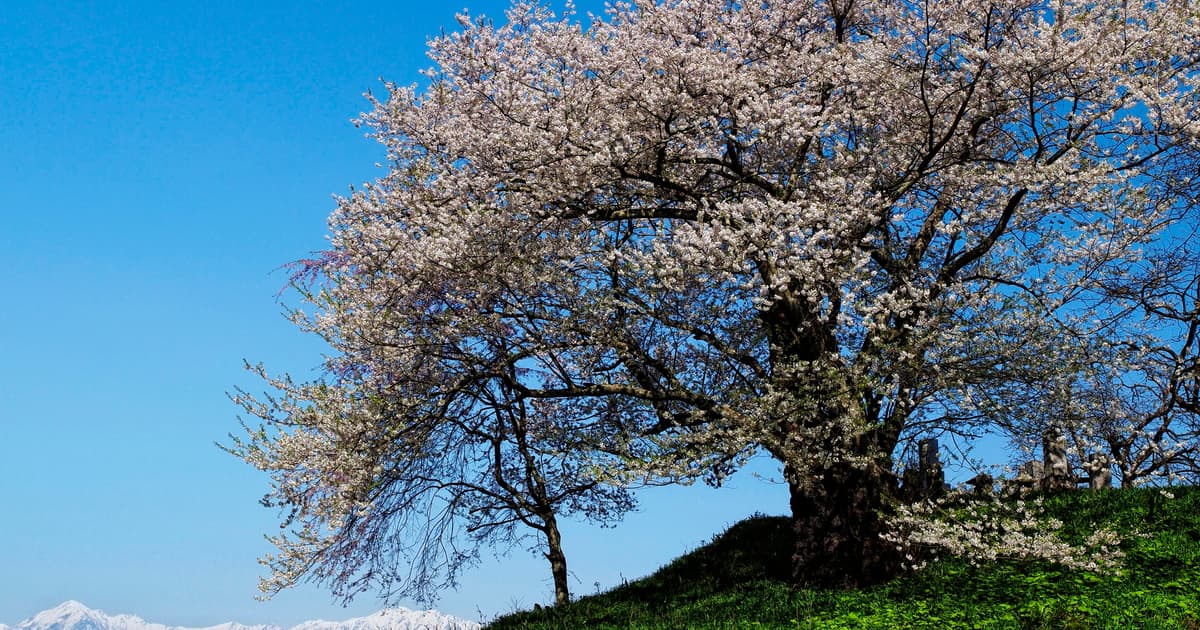
- On opening day, Nagano's cherry trees have not flowered yet in an average year: flowering 11 April, full bloom 16 April. And 19 of the 77 days fall in June, with no blossom at all.
- Shuttle buses and temporary car parks are literally marked "in preparation" on the official site. Any guide that already describes them is describing 2022.
📖 Contents
- What is a Gokaicho actually opening?
- Why is the gap only five years?
- Has it always been held in Ox and Sheep years?
- Is 77 days long or short?
- April or June: which is worth it?
- What you pay, and why the number you found is wrong
- Is the official website up to date?
- Seven ceremonies, and the three you cannot combine with the image
- What is the pillar, and how big is it?
- What hours can you actually see the image?
- Getting there, and where to put a car
- Six Zenkoji temples: is the circuit worth it?
- Why there are no photos of Zenkoji in this article
- What officials still have not announced
- So how should you book?
- Appendix: official Japanese wording
What is a Gokaicho actually opening?
Not Zenkoji’s principal image. Its stand-in.
The English word "unveiling" undersells this. Zenkoji's principal image is the Ikko Sanzon Amida Nyorai — three figures sharing one halo, Amida flanked by Kannon and Seishi. The temple's own word for it is zettai hibutsu, an absolute hidden Buddha: it sits inside an inner cabinet and is not shown. What the public is shown instead is the Maedachi Honzon, which the temple describes as a bunshin-butsu, a stand-in image of the principal one, made in the Kamakura period. It too lives inside a closed cabinet called a zushi, opened once every seven years — counted the Japanese way, inclusive of both ends, so the real interval is six years.
So the queue you join leads to the substitute, not the original. As for whether anyone has ever seen the principal image, the temple has published no account of it, and the line you will find repeated online — that not even the head priest has seen it — appears nowhere on Zenkoji's own site, so we are not going to repeat it either.
One more layer, because it is the part that makes the term make sense: a kaicho happens here every single day. The temple's events page lists a "noon kaicho" — during the service the curtain in front of the principal image is raised and you may glimpse what is behind it. What you glimpse is the ruridan platform and the cabinet, not the Buddha inside. Three layers, then: the cabinet daily, the substitute inside it once every seven years, and the principal image never. "Once in seven years" refers to the middle layer.
Why is the gap only five years?
Because the business community in Nagano asked for it, not because the calendar came round.
The last edition ran in 2022. Count forward under the seven-year rule and the next one lands in 2028.
What happened instead: in October 2024 the Nagano Chamber of Commerce and Industry formally petitioned the temple to bring the next edition forward to 2027. On 19 November that year the temple answered at a press conference — 4 April to 19 June 2027, 77 days — and the announcement went up on the official website the following day.
Two quotations from that press conference are worth having verbatim. The chamber's president, Masayoshi Mizuno, said that honestly speaking he wanted it held even one year sooner, because that is how much of a catalyst it is. The temple's administrator, Takanori Wakaomi, said the main reason for setting it in 2027 was that people had wished for it to be held sooner, and that this was in order to meet the expectation that it acts as a catalyst for the region. The temple stated publicly that the first reason was the local economy. The Japanese originals of both remarks are in the appendix, item 1.
The official framing is "returning to the original cycle"
The temple does not describe this as moving the event forward. It describes it as declining to treat the pandemic-delayed 2022 edition as the starting point. That framing is internally consistent — but it collides with the seven-year rule itself, which is exactly why the reporting that day made a point of noting that under the rule the next one would have been 2028.
A second calculation circulates online: count from the originally scheduled 2021 and 2027 is the seventh year. It reaches the same destination. The only difference is which edition you treat as the anchor.
One more thing to clear away. The dates were published on 20 November 2024, two years and four months ahead. Anything you read that says the 2027 dates have not been announced was written before then and has not been touched since.
Has it always been held in Ox and Sheep years?
No. The Ox and Sheep pattern only dates from 1955.
The Nagano Local History Society's chronology of Zenkoji Gokaicho editions carries a note against the year 1888 saying that from then on the Gokaicho became customary in Rat and Horse years — and records, in the same row, that Nagano Station opened on 1 May of that year. Follow the table down and the pattern holds: 1888 (Rat), 1894 (Horse), 1900 (Rat), 1918 (Horse), 1924 (Rat), 1930 (Horse), 1936 (Rat).
The first two postwar editions are messier still. 1949 was an Ox year and 1951 a Rabbit year, less than six years apart and matching no pattern at all. Only from 1955, a Sheep year, does the Ox and Sheep line settle down.
| Period | Zodiac years used | What set the anchor |
|---|---|---|
| 1888–1936 | Rat and Horse | Became customary from 1888 |
| 1949, 1951 | Ox, then Rabbit | Postwar restart, two editions off-pattern |
| 1955–2015 | Ox and Sheep | The rhythm everyone now quotes |
| 2022 | Tiger | Delayed a year by the pandemic |
| 2027 | Sheep | Moved a year forward by petition |
Stack those five rows and the conclusion writes itself: the anchor for this "once every seven years" event has been reset at least three times in 140 years — once when the Rat and Horse convention gave way to Ox and Sheep after the war, once for the pandemic, and once for this edition. It is not astronomy. It is a rhythm that people decide and keep re-deciding.
Is 77 days long or short?
It is the second-longest on record, and only the second postwar edition to reach June at all.
Lay the postwar editions out and the table does the arguing.
| Year | Zodiac | Period | Days |
|---|---|---|---|
| 1949 | Ox | 1 Apr – 31 May | 61 |
| 1951 | Rabbit | 10 Apr – 21 May | 42 |
| 1955 | Sheep | 10 Apr – 20 May | 41 |
| 1961 | Ox | 1 Apr – 21 May | 51 |
| 1967 | Sheep | 10 Apr – 20 May | 41 |
| 1973 | Ox | 8 Apr – 20 May | 43 |
| 1979 | Sheep | 8 Apr – 27 May | 50 |
| 1985 | Ox | 7 Apr – 26 May | 50 |
| 1991 | Sheep | 7 Apr – 26 May | 50 |
| 1997 | Ox | 6 Apr – 31 May | 56 |
| 2003 | Sheep | 6 Apr – 31 May | 56 |
| 2009 | Ox | 5 Apr – 31 May | 57 |
| 2015 | Sheep | 5 Apr – 31 May | 57 |
| 2022 | Tiger | 3 Apr – 29 Jun | 88 |
| 2027 | Sheep | 4 Apr – 19 Jun | 77 |
Across those thirteen editions from 1949 to 2015, not one ran past 31 May, and every single length falls between 41 and 61 days. 2022 was the first to cross into June, and officials explained why at the time: because visitors were being urged to spread out their visits, the period was extended by roughly a month, to 88 days.
The 77 days in 2027 keep most of that pandemic-era extension. That is 20 days longer than 2015, and 11 days shorter than 2022.
Why 77 rather than a return to 57? The temple has never explained. There is no official statement of a reason, and this article is not going to invent one for it.
What that does to your itinerary
The old mental model — Gokaicho means spring, cherry blossom, and a temple visit tacked on — no longer describes 2027. Nineteen of the 77 days fall in June. Those 19 days have no blossom and no public holiday, but the image is revealed exactly as it is in April and the pillar is exactly as touchable. If crowds are what you dislike most, those 19 days are the best thing about this edition.
April or June: which is worth it?
Go mid-April if you want the picture; go June if you want the space.
The official 2027 poster leads with cherry blossom — its tagline translates roughly as "walking the Shinano road as the cherry petals scatter" — so it is worth pinning the blossom timeline down precisely.
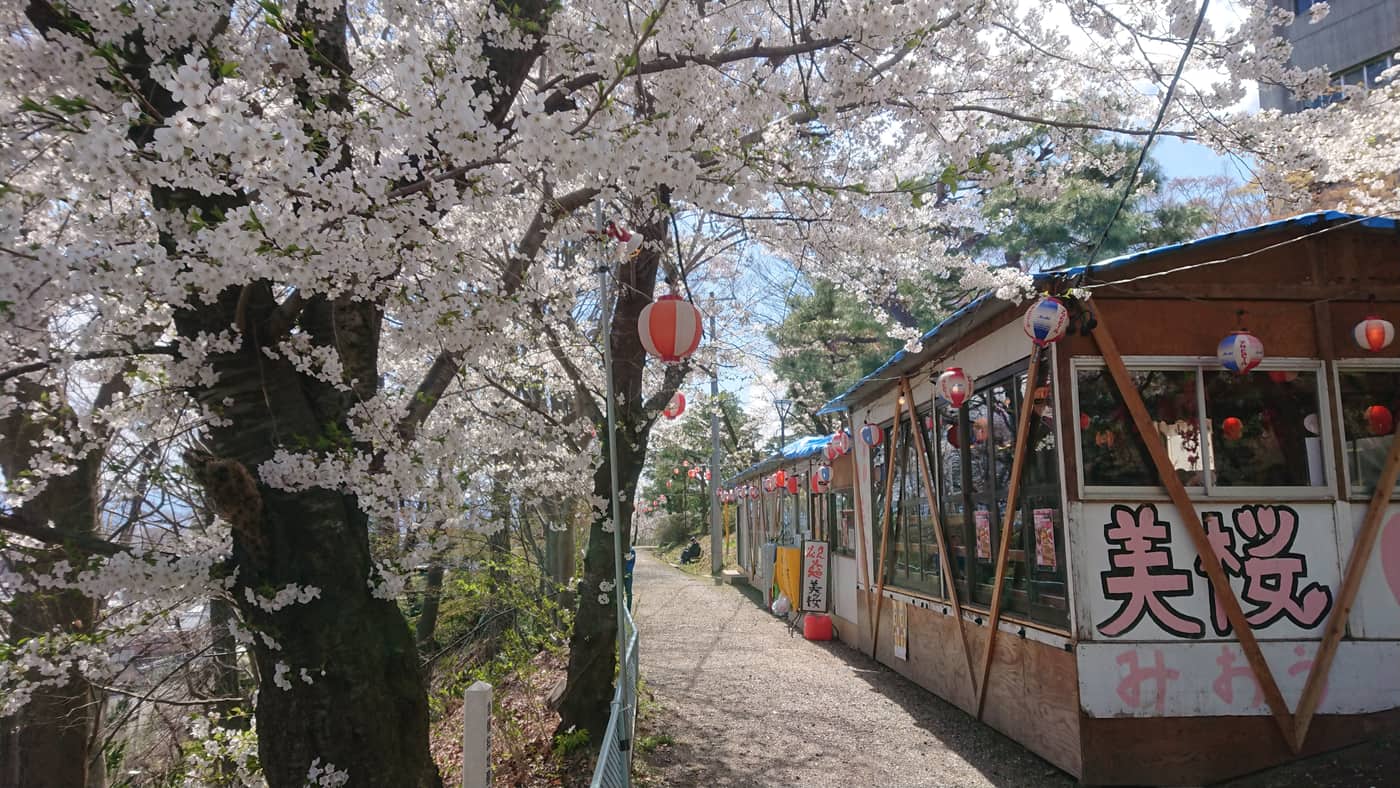
The Japan Meteorological Agency's phenological observations give Nagano's Somei-Yoshino cherry an average flowering date of 11 April and an average full-bloom date of 16 April, using the 1991 to 2020 baseline. The Gokaicho opens on 4 April.
Opening day sits a full week ahead of Nagano's average flowering date. In an average year, the trees have not opened when the opening ceremony takes place.
Push that one step further. The average window in which blossom and the pillar can appear in the same frame runs roughly 11 to 22 April — and the Tendai-sect mid-period ceremony is on 24 April. In an average year, blossom and the grand mid-period ceremony are mutually exclusive. Pick one.
But averages are not forecasts. In 2026, Nagano flowered on 31 March and hit full bloom on 6 April, ten to eleven days ahead of the baseline. Early seasons have become the pattern rather than the exception, so use the averages to shape the trip and revise a fortnight out against the current-year forecast. Our guide to reading Japan's cherry blossom forecasts covers when those numbers become reliable.
| Window | Blossom (average year) | Ceremony it collides with | Who it suits |
|---|---|---|---|
| 4–10 Apr | Not yet open | 4 Apr opening ceremony | People who want the opening rite |
| 11–22 Apr | Flowering to full bloom | None | People who want blossom and the pillar together |
| 23 Apr – 8 May | Fallen | 24 Apr Tendai, 8 May Jodo mid-period rites | People who came for the ceremonies |
| 9–31 May | None | 16 May Shinonoi lion dance offering | People with flexible dates |
| 1–19 Jun | None | 19 Jun closing ceremony | People who hate crowds |
In an early season, the top three rows shift forward by seven to eleven days, and in the most extreme case the trees would be at full bloom on opening day itself. If you cannot pin it down, treat the blossom as a bonus rather than the spine of the trip.
What you pay, and why the number you found is wrong
For 2027 specifically, officials have published no price at all.
The Gokaicho website's visitor information page contains no figures anywhere. The one usable precedent is what the temple did last time: in 2022 there was no Gokaicho-specific ticket, and visitors simply paid the ordinary admission of the day.
So the honest formulation is this — 2027 will probably run on ordinary admission, but do not turn today's numbers into a prediction, because ordinary admission was revised on 1 April 2026, and it was not a simple increase. The brackets themselves were redrawn.
| Ticket | Adult | Grades 7–12 | Grades 1–6 | Pre-school |
|---|---|---|---|---|
| Inner sanctuary and dark corridor | ¥800 | ¥300 | ¥100 | Free |
| Sanmon gate | ¥800 | ¥300 | ¥100 | Free |
| Sutra repository (Kyozo) | ¥500 | ¥300 | ¥100 | Free |
| Combined ticket (the three above plus the museum) | ¥1,500 | ¥600 | ¥200 | Free |
One age group paid six times more
The revision was announced on 30 March 2026 and took effect on 1 April, with officials citing precinct maintenance and the protection of cultural properties. On the surface it reads like this:
| Item | Old | New | Multiple |
|---|---|---|---|
| Inner sanctuary / Sanmon — adult | ¥600 | ¥800 | 1.33x |
| same — high school → grades 7–12 | ¥200 | ¥300 | 1.5x |
| same — elementary and junior high → grades 1–6 | ¥50 | ¥100 | 2x |
| Kyozo — adult | ¥300 | ¥500 | 1.67x |
| same — high school → grades 7–12 | ¥100 | ¥300 | 3x |
| Combined ticket — adult | ¥1,200 | ¥1,500 | 1.25x |
| same — elementary and junior high → grades 1–6 | ¥100 | ¥200 | 2x |
The real story hides inside those arrows. The old "elementary and junior high" bracket was split. Elementary pupils stayed in the cheapest tier; junior high students were moved up into the new "grades 7 to 12" bracket. The temple's own English page removes any ambiguity about where the line falls, defining the tiers as Students in Grades 7-12 and Students in Grades 1-6.
So a family travelling with a 13-year-old is not looking at a rise from ¥100 to ¥300. They are looking at ¥50 to ¥300, a sixfold increase. Two adults and two junior high students went from ¥1,300 to ¥2,200 for inner-sanctuary tickets alone. It is the sharpest cut in the whole revision, and on the published table it looks like a modest ¥100 to ¥300 line item.
Is the combined ticket worth it?
Do the arithmetic. An adult buying the inner sanctuary at ¥800 plus the gate at ¥800 has already spent ¥1,600, which is more than the combined ticket's ¥1,500. If you intend to enter two of them, buy the combined ticket. For grades 7 to 12 it is starker still: the same two tickets bought separately come to ¥600, exactly the combined price, so the sutra repository and the museum come free.
Tickets are sold at a machine on the right-hand side as you enter the main hall from the front, and also at the amulet office and the Chureiden entrance.
Two rules that quietly cost people money
The gate ticket carries two written restrictions. Holders of a disability certificate enter free along with one companion. And children of elementary age and below may not climb the gate, and a guardian must accompany those who do — so if you are travelling with small children, the gate ticket buys you something you cannot use.
The sutra repository needs a separate warning. The Japanese-language admission page sells a ¥500 ticket for it, and the March 2026 revision specifically raised its price. The temple's English page, however, says the Kyozo is suspending its opening pending an inspection of the ageing building — and that English page was updated more recently than the Japanese one. The two pages contradict each other, and this article is not going to guarantee either. Treat the notice on the day as authoritative. If the repository is the reason you are going, ask at the ticket desk before paying.
Is the official website up to date?
No. The FAQ on the dedicated Gokaicho site is still showing 2022.
This one costs people real money, so it is worth spelling out. The Gokaicho has its own official website, run by the promotion association, separate from the temple's own site. Its front page has been updated to 4 April – 19 June 2027 and looks current. Click one level deeper and:
- The FAQ gives the period as 3 April to 29 June. That is 2022.
- The same page quotes adult admission as ¥600. Also 2022; the current price is ¥800.
- The same page says the pillar came from Suzaka city and was a cedar nearly 200 years old. That was the 2022 pillar. The 2027 one comes from Matsushiro.
- The same page lists ceremony dates of 23 April, 7 May, 15 May and 22 May — all from the previous edition.
- The browser tab titles on the subpages still read 3 April to 29 June, Reiwa 4. Only the front page was changed.
- The description of the closing ceremony still contains the phrase "the Gokaicho, which continued for 88 days" — contradicting the 77 days on the same site's front page.
So carry one rule with you: that site is half-updated, and the deeper you click the older it gets. To test whether a passage is usable, check whether its numbers belong to the 2022 set — 88 days, 29 June, ¥600, Suzaka. If any one of them appears, discard the whole passage.
| Page | State | How to use it |
|---|---|---|
| Temple site, Gokaicho events page | 🟢 2027, correct | Authoritative for ceremony dates |
| Temple site, admission page | 🟢 Current ordinary prices | Authoritative for ticket prices |
| Gokaicho site, front page | 🟢 Period updated | Trust that one line only |
| Gokaicho site, FAQ and subpages | 🔴 2022 leftovers | Read as a record of the last edition |
| Temple site, English pages | 🟡 Contradicts the Japanese | Check the Kyozo on site |
Two technical traps as well. The Gokaicho site's address only resolves with the www prefix; without it you get a 404. And the site currently has no foreign-language version at all — the language menu is commented out in the page source, and the English, Traditional Chinese, Simplified Chinese and Korean addresses all return 404. If someone hands you a link to an "official English page", it is dead.
Seven ceremonies, and the three you cannot combine with the image
Three items on the official programme fall outside the viewing period entirely.
| Date | Day | Ceremony | Inside the period? |
|---|---|---|---|
| 28 Mar | Sun | Reception of the pillar | ⚪ Before opening |
| 3 Apr | Sat | Transfer of the Maedachi Honzon | ⚪ Before opening |
| 4 Apr | Sun | Opening ceremony (cabinet opened at the morning service, main rite from 10:00) | 🟢 |
| 24 Apr | Sat | Mid-period grand ceremony (Tendai sect) | 🟢 |
| 5 May | Wed, holiday | 105th Buddhist flower festival (Nagano City Buddhist Association) | 🟢 |
| 8 May | Sat | Mid-period grand ceremony (Jodo sect) | 🟢 |
| 16 May | Sun | Shinonoi great lion dance offering (approach road to the gate) | 🟢 |
| 19 Jun | Sat | Closing ceremony (cabinet sealed at 17:00 the same day) | 🟢 |
| 20 Jun | Sun | Return of the Maedachi Honzon | ⚪ After closing |
Book around 28 March or 3 April and you will arrive to find the image not yet revealed. Book around 20 June and the doors closed at 5 pm the day before. Read this table as two calendars laid on top of each other: when the ceremonies happen, and when the image is visible.
The two sects have swapped order since last time
Zenkoji is non-sectarian and is jointly served by the Tendai and Jodo schools, which is why the mid-period grand ceremony is held twice, once by each. This is where copying an old guide will catch you out:
- 2022: Jodo first on 23 April, Tendai second on 7 May.
- 2027: Tendai first on 24 April, Jodo second on 8 May.
The order is reversed. If you have a preference for one school's ceremony, book against the date, not against "the first one".
One correction while we are here. A temple notice dated 1 May 2026 gives 8 May as a Sunday, but the same site's events page and the Gokaicho site both say Saturday, and the calendar confirms Saturday. Follow the events page.
The ones not yet confirmed
Several items sit commented out in the Gokaicho site's page source, which means officials have not finalised them: the pillar-raising ceremony (1 April in 2022 — the one where the pillar is hauled upright by hand using traditional methods, and the reason a lot of people make a special trip), the national Zenkoji association procession, and the neighbourhood portable shrine offering. If the raising is what you want to see, keep it on a watch list rather than a booking.
What is the pillar, and how big is it?
Officials give the height as about 10 metres, and you can touch it 24 hours a day.
The ekobashira is a square timber pillar raised in front of the main hall for the duration of the Gokaicho. A cord called the "rope of virtue" runs from the pillar to the hand of the Maedachi Honzon, so touching the pillar is held to carry the same merit as touching the image itself. That is why the longest queue of the entire event forms at the foot of a piece of wood.
Five Sanskrit characters run down the shaft: void, wind, fire, water and earth, the five elements from which Buddhism holds the universe to be composed, represented in purple, green, yellow, red and white.
On dimensions, only the official figure belongs here: about 10 metres tall. The "45 centimetres square" that circulates widely has no official source — the temple has never published a cross-section — so it is not repeated here.
The most useful sentence in this section is about hours. Officials state that the pillar can be touched 24 hours a day, and that it is illuminated from sunset until 21:00. The pillar with an hour-long queue in the afternoon has nobody at it in the middle of the night.
Why it comes from Matsushiro
When the current main hall was rebuilt in 1707, the Matsushiro domain was assigned by the shogunate to supervise the construction. That connection stuck, and the pillar has been donated by Matsushiro ever since — more than three hundred years of it. Before reaching the temple, the timber is paraded through Matsushiro town alongside a feudal lord's procession and a princess procession, and touching the hauling rope along the route is itself said to bring merit, so the roadside fills up.
The 2027 pillar is mid-process right now
This is the one part of the story still moving. The Shinshu Matsushiro Tourism Association announced on 26 June 2026 that the axe-entering rite — the ceremony in which an axe is set to the chosen tree for the first time — would take place at 10:00 on 3 July 2026 at Nakamura Shrine in Nishijo, Matsushiro, Nagano city. The notice specifically states that there is no car park.
How big is the chosen tree? According to reports by NBS Nagano Broadcasting Systems and TV Shinshu, it is a cedar 35 metres tall with a girth of 2.8 metres and over 250 years old, with roughly 200 local residents attending the rite, felling on 8 October and dedication to the temple on 28 March 2027. To be straight about the sourcing: those specifications come from broadcast headlines, this round did not obtain the full article text, and the same figures do not appear on the temple's or the association's official pages.
Comparing with the last pillar makes the scale legible. The 2022 timber was a cedar from privately owned forest in Suzaka city, roughly 150 years old, 30 metres tall with a two-metre girth. The 2027 tree is markedly older and thicker.
| 2022 pillar | 2027 pillar | |
|---|---|---|
| Source | Private forest, Suzaka city | Matsushiro, Nagano city |
| Age | About 150 years | Over 250 years |
| Height | 30 m | 35 m |
| Girth | 2 m | 2.8 m |
| Axe-entering rite | 5 Sep 2021 | 3 Jul 2026 |
| Raising | 1 Apr 2022 | Date not announced |
One local detail from 2022 that has no 2027 announcement yet: shops in Matsushiro gave out offcuts from the pillar to customers during the Gokaicho, under a name that translates as "sharing a piece of the happiness". If Matsushiro is on your route, it is worth asking whether they are doing it again.
What hours can you actually see the image?
Judging by the 2022 edition, from the morning service until 17:00. The 2027 hours have not been published.
Start with the mechanism, because the mechanism does not change. The Maedachi Honzon sits in a cabinet, which the head priest opens during the morning service and closes with his own hands at the evening service at 5 pm. So your viewing window equals "today's morning service" to "17:00".
When does the morning service start? The temple's English page is the clearest source on this: its start time shifts by one minute a day in step with sunrise. There is no fixed hour, only a window that drifts with the season — somewhere after 6 in winter, somewhere after 5 in summer.
Here is what the last edition actually ran, as an estimate only, since 2027 is unannounced:
- 3 April to 22 April: 6:00 to 17:00
- 23 April to 29 June: 5:30 to 17:00
- 15 May only: 5:10 to 17:00
The window between 5 pm and 9 pm is the one everyone misses
Overlay the two sets of hours and a useful gap appears:
| Window | Maedachi Honzon | Pillar | Illumination |
|---|---|---|---|
| Morning service – 17:00 | 🟢 Visible | 🟢 Touchable | ⚪ |
| 17:00 – sunset | 🔴 Sealed | 🟢 Touchable | ⚪ |
| Sunset – 21:00 | 🔴 Sealed | 🟢 Touchable | 🟢 Hall and pillar lit |
| 21:00 – next morning service | 🔴 Sealed | 🟢 Touchable | ⚪ |
Those four hours after 5 pm are when you can touch the pillar and see the illumination but not the image. If the pillar and the night lighting are what you came for, schedule the visit for the evening and the daytime queue stops being your problem. (All of the above describes 2022; 2027 is unannounced.)
Two things that only happen during the Gokaicho
The goinbun blessing, in which one of the temple's three seals is pressed to your forehead, is normally available only from 7 to 15 January. During the Gokaicho it is given daily, from 8:30 until dusk at 17:00. Miss this edition and the next chance is years away.
The inner sanctuary itself is a matted space of about 150 tatami mats, far larger than most visitors expect, and it is where the genuinely close worship happens. The okaidan-meguri is something else again: a pitch-black corridor beneath the floor of the main hall, navigated by feel with one hand on the wall, with the goal of finding the "lock of paradise" directly below the principal image — touching it is held to bind you to the Buddha. One correction to a description that circulates widely in English: it is a lock or latch, not a key hanging on the wall.
Temple seals were issued from 5:30 to around 20:00 in 2022, at the seal reception on the left-hand side in front of the main hall. For how the limited Gokaicho seal works and what book to bring, see our guide to collecting goshuin in Japan.
Getting there, and where to put a car
A 15-minute bus from Nagano Station at ¥190, then a five-minute walk. Drivers need to accept one thing first: the 2027 temporary car parks have not been announced.
Long distance first. Tokyo to Nagano runs about 1 hour 30 minutes on the Hokuriku Shinkansen; Kanazawa to Nagano about an hour; Nagoya about three hours on the limited express Shinano. By car it is roughly 40 minutes to the temple from either the Nagano or Suzaka-Nagano-Higashi interchange.
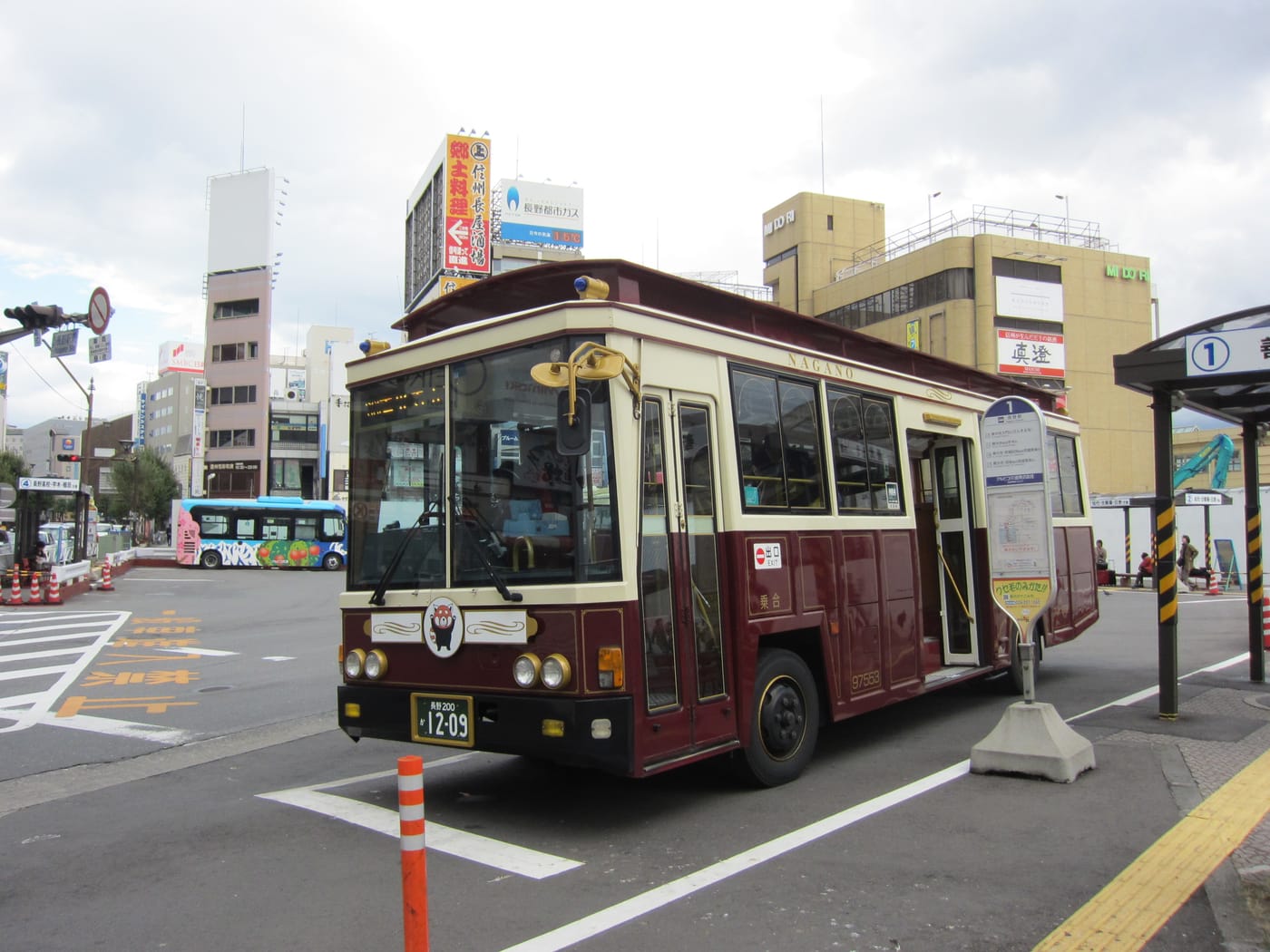
At Nagano Station, head for the bus rotary at the Zenkoji exit and use platform 1, marked for Zenkoji: about 15 minutes, ¥190, alighting at Zenkoji Daimon, then about five minutes on foot to the main hall. A sightseeing loop bus, the Binzuru-go, also serves platform 1 at the station and platform 2 at Zenkoji Daimon. Two things to remember before boarding: you enter by the rear door and leave by the front, taking a numbered ticket on the way in, and the on-board machine only changes ¥1,000 notes — do not board with a ¥5,000 or ¥10,000 note.
Drivers can only do half the planning right now
Current rates at the temple's car parks 1 to 5 are ¥600 for up to two hours for a car and ¥300 for each hour after that; ¥3,000 for up to two hours for buses and minibuses, then ¥500 per 30 minutes; and ¥500 for motorcycles. Officials state in writing that spaces cannot be reserved. Availability at car parks 1 and 3 updates every five minutes on the official site, so check before setting off.
Car park 1 sits at the north-west of the precinct with EV charging and a 2.0 m height limit; 2 is reserved for lodging-temple guests; 3 is at the north-east with a 2.5 m limit; 4 is on the west side, takes buses, has no height limit and has accessible bays, though it may be restricted to ordinary cars at peak times; 5 is on the west with a 2.0 m limit. If you have rented anything tall, read that height column first.
Now the bad news. On the Gokaicho site's access page, the sections for traffic information and congestion forecasting and for temporary car parks and shuttle buses literally read "in preparation". Not one item has been published. Any guide describing shuttle arrangements today is describing 2022.
Crowd forecasting is in the same state. The official congestion calendar carries its own label saying it is Reiwa 4 information, and the fine print on that 2022 version says it was based on visitor flows during the 2015 edition — an estimate built on an estimate. The 2027 version does not exist yet.
Put this in your calendar: check the official access page again between December 2026 and February 2027. Last time, the transport guidance only went live a few months before opening.
Book accommodation early. Shinshu Zenkoji alone drew 6.36 million visitors in 2022, and Nagano is not a big city. For how Japanese lodging licences work, what the categories mean and why unstaffed check-in is legal, see our guide to booking accommodation in Japan.
Six Zenkoji temples: is the circuit worth it?
Visit one.
2027 is again a "six Zenkoji simultaneous Gokaicho": Shinshu Zenkoji in Nagano, Moto Zenkoji in Iida, Kai Zenkoji, Seki Zenkoji, Gifu Zenkoji, and Zenkoji Tokai Betsuin in Sobue, Aichi. It sounds like a route. Last edition's attendance says otherwise.
| Temple | 2022 visitors | Share |
|---|---|---|
| Shinshu Zenkoji (Nagano) | 6,360,000 | 89.6% |
| Kai Zenkoji | 300,000 | 4.2% |
| Moto Zenkoji | 200,000 | 2.8% |
| Zenkoji Tokai Betsuin (Sobue) | 140,000 | 2.0% |
| Gifu Zenkoji | 60,000 | 0.8% |
| Seki Zenkoji | 40,000 | 0.6% |
The six drew 7.10 million between them, and the Nagano temple accounted for nearly nine-tenths of that. Listing them as equals misleads. It is one large event and five small ones. The three most photogenic rites — the reception of the pillar, the transfer of the image and its return — happen only at the Nagano temple.
On 2027 scheduling, only Seki Zenkoji has published anything: a mid-period ceremony on 15 May. Moto Zenkoji, Kai Zenkoji, Gifu Zenkoji and the Tokai Betsuin have nothing about 2027 on their sites, and the six-temple portal is still entirely 2022. Unless you already live in that part of the country, skip the circuit this time.
One number deserves a caveat when you see it quoted. The economic impact of the 2022 edition is widely reported as just over 109.5 billion yen, and the body that published that figure is the Nagano Chamber of Commerce and Industry — the same organisation that petitioned to bring this edition forward. It is not a third-party assessment, and it should be quoted with that attached.
Why there are no photos of Zenkoji in this article
Because the temple asserts that its precinct is private land, that the appearance of its halls is trademarked, and that photography and the use of photographs both require an application.
This is not an inference. The temple maintains a page addressed to the press which states in plain terms that the Zenkoji precinct is not a public space but private land; that photography within the precinct and any use of photographs or illustrations require an application without exception; and that copyright in such photographs, the likeness rights of the subjects, and the trademark rights in the name "Zenkoji" and in the appearance of its halls all belong to the temple as a religious corporation. The same page refuses outright the use of photographs acquired from the internet either for a fee or without consent, and asks that images of buildings, priests and Buddhist statues not be cropped in ways that damage the main subject. The Japanese original is in the appendix, item 3.
That page names the press as its audience, but the thing it claims authority over is photography in the precinct as an activity, not photography by journalists. Rather than operate at the edge of that permission, this article carries no images of the precinct or its buildings.
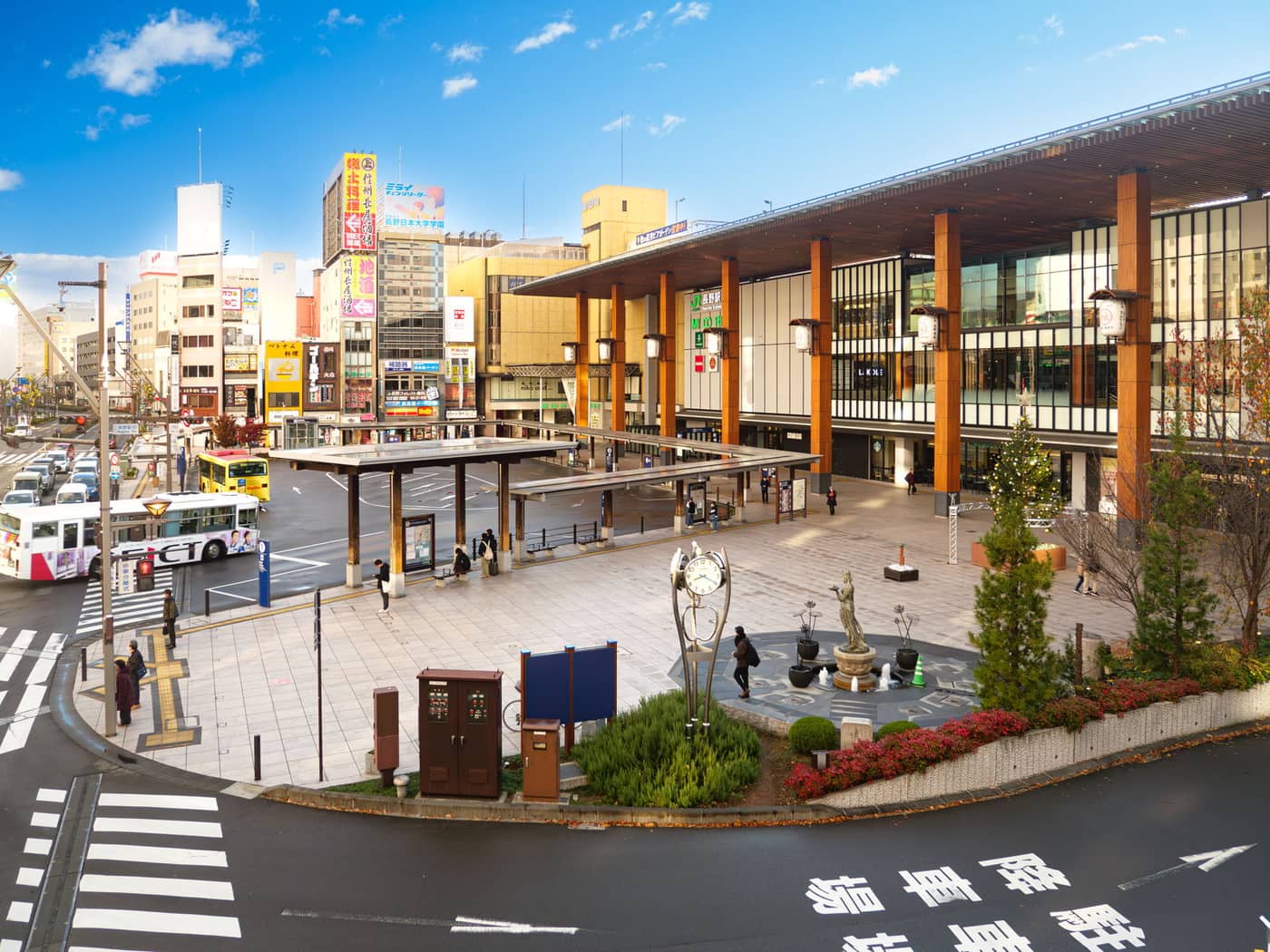
The decision is itself useful information, because the same rules apply to your camera. Keeping personal photographs is not the issue. But if you intend to put a precinct photograph to commercial use, sell it as stock, or place it in content that earns money, ask the temple first, on their terms. If you want photographs from the trip regardless, aim the camera elsewhere: the processions in Matsushiro, the area in front of Nagano Station, and the station end of the approach road all sit outside the precinct.
What the photographs would have carried, three measurements carry instead. The pillar stands about 10 metres tall, which means looking sharply upward from the forecourt. The inner sanctuary is about 150 tatami mats, a space that seats several hundred people at once. And 6.36 million people walked the same approach road in 2022 — across 88 days, that is over 70,000 a day. Put those three numbers side by side and you have a fair picture of what the daytime queue looks like.
What officials still have not announced
The dates went out early. Almost nothing else has. Separating the published from the unpublished tells you how far you can actually plan.
| Item | Status | When to expect it |
|---|---|---|
| Period: 4 Apr – 19 Jun, 77 days | 🟢 Announced 20 Nov 2024 | Settled |
| The seven main ceremonies | 🟢 Announced | Settled |
| Seki Zenkoji mid-period rite, 15 May | 🟢 Announced | Settled |
| Gokaicho-specific prices and ticket types | ⚪ Not announced | No official signal |
| Temporary car parks and shuttle buses | ⚪ Officially "in preparation" | By precedent, months before opening |
| Traffic control and congestion forecast | ⚪ Officially "in preparation" | Same |
| Date of the pillar-raising ceremony | ⚪ Not announced | No official signal |
| Association procession, portable shrine offering | ⚪ Not listed | No official signal |
| Morning service and inner sanctuary hours during the Gokaicho | ⚪ Not announced | No official signal |
| 2027 schedules at the other five temples | ⚪ Not announced | No official signal |
| The edition after 2027 | ⚪ Nothing at all | See below |
That last row needs saying clearly. Following the Ox and Sheep rhythm, the next edition would fall in 2033, but that is this site's extrapolation, not an official announcement. The temple has never published anything beyond 2027, and this article has already shown that the rhythm has been reset three times in 140 years, most recently for this very edition. Do not treat 2033 as a date you can plan around.
So how should you book?
Lock the dates first, budget for tickets last, and build in one point where you go back and check.
I would take the middle ten days of April. The reasoning is simple: in an average year it is the only window that delivers blossom and the pillar together, and it sidesteps both the opening-day crush and the two mid-period ceremonies. If the trip comes down to a single day, aim at around 15 April.
Match the window to whatever you actually care about:
- Blossom plus the pillar: 11 to 22 April in an average year, revised forward against the current-year forecast a fortnight out.
- A mid-period grand ceremony: 24 April for Tendai or 8 May for Jodo. The order is reversed from last time, so do not book "the first one" off an old guide.
- Space to breathe: those 19 days in June. No blossom, same image, same pillar.
- The reception of the pillar: 28 March — but the image is not yet revealed that day, so it means two separate trips.
- The pillar-raising: not bookable. Wait for officials to publish a date.
- Just the pillar and the night lighting: go after 5 pm and skip the entire daytime queue.
Three reminders to close on. First, verify before you believe: ¥600 is the old price, and the Gokaicho's own official FAQ still quotes it. Second, go back to the official access page between December 2026 and February 2027, because that is when parking and shuttle information will appear, if it appears. Third, book beds early; 6.36 million is not a number that leaves room for hesitation.
One closing thought that may land oddly. This edition exists a year early because a region wanted the economic lift, and the temple said so without dressing it up. Knowing that does not make the Gokaicho less worth attending. It just explains why Nagano is going to throw everything it has at those 77 days — for that stretch of 2027, the whole city is working on the same thing.
Appendix: official Japanese wording (click to expand)
The Japanese originals behind the quotations above, collected here so you can check them yourself.
1. NBS Nagano Broadcasting Systems, 19 November 2024 (the day of the press conference)
7年目ごとに開催される善光寺御開帳。19日、善光寺側は次回の開催を2027年とすることを長野商工会議所に伝えました。コロナ禍で1年延期した前回を起点にせず、本来の周期に戻ります。
「7年目ごと」という決まりにのっとると、次回は2028年の開催となりますが…
長野商工会議所は、10月、次回の開催を2027年とするよう善光寺に請願しました。
(長野商工会議所・水野雅義 会頭)本音を言うと1年でも早くやってほしい。それだけ起爆剤になる
(善光寺・若麻績享則 寺務総長)令和9年に設定した一番の理由は、やはり、早く開催してほしいという願いのあったこと。地域の起爆剤だと言われている期待に応えるためであります
前回は…1年遅れの2022年に開催されました。「分散参拝」を呼びかけたこともあり、期間は1カ月ほど長い88日間となりました
2. Zenkoji official website, 20 November 2024, announcement of the period
善光寺御開帳執行の会期が決定しました。未年の令和9年4月4日(日)から6月19日(土)までの77日間となります。全山をあげて準備をすすめてまいります。ご期待ください。
3. Zenkoji official website, notice to the press
善光寺境内は公共の場ではなく私有地です。善光寺境内での撮影、写真・イラスト使用には必ず申請が必要です。
写真の著作権、被写体の肖像権、「善光寺」の名称ならびに諸堂の肖像の商標権は、宗教法人善光寺(およびその関連寺院)に帰属します。
インターネット等から有料あるいは無断で取得(ダウンロード等)した写真・イラストの使用はかたくお断り致します。
4. Zenkoji official website, 30 March 2026, notice of revised admission
このたび令和8年4月1日(水)より、下記のとおり一部参拝料金および参拝券種を改定させていただくことになりました。今後もご参拝の皆様に善光寺如来様とのご縁を結んでいただけますよう、境内整備、文化財保護に努めてまいります。
5. Zenkoji official website, Gokaicho events page, main programme
令和9年
3月28日(日)回向柱受入式
4月 3日(土)前立本尊御遷座式
4月 4日(日)開闢大法要
4月24日(土)中日庭儀大法要(天台宗)
5月 8日(土)中日庭儀大法要(浄土宗)
6月19日(土)結願大法要
6月20日(日)遷座式
※開催期間77日間
6. Gokaicho official website, on the pillar
回向柱とは、御開帳期間中に本堂前に立てられる高さ約10mの柱です。前立本尊の御手と「善の綱」によって結ばれるため、回向柱に触れることは前立本尊に触れるのと同じ御利益があるといわれます。
宝永4(1707)年に現本堂が再建された際、松代藩が幕府から普請の監督を任されました。それが縁となり、回向柱は現在まで300年余にわたって松代から寄進されています。
回向柱は、大名行列や姫行列とともに松代町を練り歩いた後、善光寺にやってきます。途中引き綱に触ると御利益があるといわれ、沿道にはたくさんの人がつめかけます。
「空 風 火 水 地(キャ カ ラ バ ア)」。仏教において宇宙を構成する5大要素…紫、緑、黄、赤、白の五色で表されます。
24時間触れることができます。回向柱のライトアップ(日没〜21時)も実施しています。
7. Shinshu Matsushiro Tourism Association, 26 June 2026, notice of the axe-entering rite
令和9年に行われる善光寺前立本尊御開帳に向け、回向柱の用材となる巨木へ初めて斧を入れる神聖な儀式「斧入れ式」が、7月3日に松代町で執り行われます。
日 時 令和8年7月3日(金) 午前10時〜/場 所 中村神社 長野市松代町西条字中村2/注意事項 ①当日の見学場所等は、係員の指示にしたがってください。②駐車場はありませんので、ご了承願います。
(on the 2022 pillar)令和3年9月5日(日)斧入れ式:…「回向柱」に選ばれたのは須坂市の民有林に立つ樹齢約150年の杉。高さ30m幹回り2mの大木です。
8. Gokaicho official website, daily observances and the 2022 FAQ
毎年1月7日〜15日に行われていますが、御開帳期間中は毎日頂戴できます。(8時30分〜入相[17時])
御開帳期間中、毎日日没から21時まで本堂と回向柱がライトアップされます。
如来さまにより近い約150畳の畳敷きの内陣で参拝できます。
本堂床下の暗闇の回廊を手探りで巡るもので、御本尊の真下にある「極楽の錠前」に触れることで如来さまと結縁…
お朝事の法要で前立本尊の厨子の扉が開かれ、夕座法要(17時〜)で扉が閉じられます。
9. Zenkoji official English page (on the morning service, and the tiers)
The Morning Service O-ASAJI is the ritual at the HONDO every morning. Its starting time is adjusted one minute a day according to the sunrise.
Adults and Students of University & College — JPY 800. / Students in Grades 7-12 — JPY 300. / Students in Grades 1-6 — JPY 100. / Pre-schoolers — FREE
10. Zenkoji official website, access page
JR長野駅から善光寺までは、善光寺口バスロータリー「1番のりば(善光寺方面行き)」発の路線バスをご利用ください。(長野駅→善光寺大門、所要時間約15分、運賃190円)善光寺大門のバス停から善光寺本堂までは、徒歩5分程度です。
※なお、駐車場の予約はできません
11. Six Zenkoji portal site, 2022 attendance
令和4年、御開帳には信州善光寺(636万人)、元善光寺(20万人)、甲斐善光寺(30万人)、祖父江善光寺東海別院(14万人)、関善光寺(4万人)、岐阜善光寺(6万人)の方にご参拝頂きました。ありがとうございました。
12. Gokaicho official website, the congestion calendar's own label
<令和4年の情報です>/※平成27年善光寺御開帳期間中の人出を参考にしています。実際の状況と異なる場合があります。
13. Nagano Local History Society, chronology of Zenkoji Gokaicho, note against 1888
以降の御開帳が子・午ごとの開催慣例となる。5・1、長野駅開業
Frequently Asked Questions
- Q1:When exactly is the 2027 Zenkoji Gokaicho?
- Sunday 4 April 2027 through Saturday 19 June 2027, a run of 77 days. The temple announced those dates on 20 November 2024, two years and four months before opening, so any guide telling you the dates are not yet fixed is simply out of date. Two catches are worth knowing before you book flights. First, three of the ceremonies on the official programme fall outside the viewing period entirely: the pillar reception rite on 28 March and the transfer of the Maedachi Honzon on 3 April both happen before opening day, and the return rite on 20 June happens after the closing. Anyone booking around those dates will arrive to find the image either not yet revealed or already sealed. Second, on the final day the head priest closes the door of the reliquary at 5 pm, so 19 June is not an afternoon you can turn up late to.
- Q2:If it is held once every seven years and the last one was 2022, why is the next one 2027 and not 2028?
- By the rule itself, 2028 would be correct. The change to 2027 came from a formal petition that the Nagano Chamber of Commerce and Industry submitted to the temple in October 2024, and the temple gave its answer at a press conference on 19 November that year. At that conference the temple administrator, Takanori Wakaomi, said the main reason for choosing 2027 was that people wanted it held sooner and that the temple wanted to meet expectations that the event acts as a shot in the arm for the region. The chamber president, Masayoshi Mizuno, put it more plainly: even one year earlier would help, because the economic impact is that large. The temple frames this publicly as returning to the original cycle rather than counting the pandemic-delayed 2022 edition as the anchor. There is a second calculation circulating online that counts from the originally scheduled 2021, which also lands on 2027. Both routes reach the same year, and the difference is only which edition you treat as the starting point.
- Q3:How much is admission, and is there a special Gokaicho ticket?
- Officials have published no Gokaicho pricing at all. The dedicated Gokaicho website's visitor information page contains no figures anywhere on it. The only usable reference point is what happened last time: in 2022 the temple did not create a Gokaicho-specific ticket and simply charged its ordinary rates. Do not turn that into a forecast, because those ordinary rates were revised on 1 April 2026. The current everyday prices are 800 yen for adults for the inner sanctuary and dark-corridor ticket, 300 yen for grades 7 to 12, and 100 yen for grades 1 to 6; the Sanmon gate ticket matches those figures, the sutra repository is 500 yen for adults, and the combined ticket covering all of it plus the museum is 1,500 yen. The important part of that revision is not the increase but the redrawing of the brackets: junior high school students used to sit in the cheapest tier alongside elementary pupils and now sit with high schoolers, which took them from 50 yen to 300 yen, a sixfold jump.
- Q4:Can I combine the Gokaicho with cherry blossom in Nagano?
- Only if you pick your dates deliberately. The Japan Meteorological Agency's 1991 to 2020 averages put Nagano's Somei-Yoshino flowering on 11 April and full bloom on 16 April, while the Gokaicho opens on 4 April. In an average year the opening ceremony happens a full week before the city's cherry trees start to flower. The average window in which blossom and the pillar coexist runs roughly 11 to 22 April, which closes before the Tendai-sect mid-period ceremony on 24 April, so in an average year those two things cannot be combined. Recent years have run early, though: in 2026 Nagano flowered on 31 March and reached full bloom on 6 April, ten to eleven days ahead of average. Use the averages to shape the trip and the current-year forecast to fine-tune it a fortnight out. And be clear about one block of the calendar: 19 of the 77 days fall in June, and there is no blossom in any of them.
- Q5:Will there be shuttle buses and temporary car parks during the Gokaicho?
- Nobody knows yet. On the official Gokaicho website's access page, the sections headed traffic information and congestion forecast, and temporary parking and shuttle bus operation, both read as under preparation. Nothing has been published. So any English or Chinese guide that already describes shuttle arrangements is copying the 2022 edition. The same problem affects crowd forecasts: the congestion calendar still online carries an official label saying it is Reiwa 4 information, and that 2022 calendar was itself extrapolated from visitor flows in 2015, which makes it an estimate of an estimate. Ordinary access works like this: from platform 1 at the Zenkoji exit bus rotary at Nagano Station, a local bus takes about 15 minutes and costs 190 yen to Zenkoji Daimon, then it is a five-minute walk. Driving, the temple car parks charge 600 yen for up to two hours for a car, 300 yen for each hour after that, and officials state in writing that spaces cannot be reserved. Check the official access page again between December 2026 and February 2027.
- Q6:Six Zenkoji temples hold the Gokaicho at the same time. Should I visit all of them?
- Visit one. The gap between them is too large for a circuit to make sense. Official 2022 attendance was 6.36 million at Shinshu Zenkoji in Nagano, against 300,000 at Kai Zenkoji, 200,000 at Moto Zenkoji, 140,000 at Zenkoji Tokai Betsuin in Sobue, 60,000 at Gifu Zenkoji and 40,000 at Seki Zenkoji. That is 7.10 million in total, with the Nagano temple alone accounting for 89.6 per cent. Listing the six as equals suggests a touring route that the numbers do not support: it is one large event and five small ones. The three most photogenic rites, the pillar reception, the transfer of the image and its return, happen only at the Nagano temple. As for 2027 scheduling, only Seki Zenkoji has announced anything, a mid-period ceremony on 15 May; the other four temples have nothing about 2027 on their websites, and the six-temple portal site is still showing 2022 content.
- Q7:Why does this article contain no photographs of Zenkoji?
- Because the temple states on its own website that its precinct is private land rather than a public space, that photography inside the precinct and any use of photographs or illustrations of it require an application, and that the copyright in such photographs, the likeness rights of the subjects, and the trademark rights in the name Zenkoji and in the appearance of its halls all belong to the temple as a religious corporation. The same page explicitly refuses the use of photographs obtained from the internet either commercially or without permission. That page is addressed to the press, but what it claims authority over is photography in the precinct itself rather than photography by journalists, so rather than operate at the edge of that permission this article carries no images of the precinct or its buildings, and substitutes measurements instead: the pillar stands about 10 metres tall, the inner sanctuary is roughly 150 tatami mats, and 6.36 million people passed through in 2022. One practical consequence for your own trip: the same rules cover your camera. Keeping personal snapshots is one thing, but ask the temple first before putting any precinct photograph to commercial use.
Read next
Nagano Snow Monkeys & Zenkoji Guide 2026
Eighty minutes from Tokyo by bullet train: wild snow monkeys bathing at Jigokudani (¥1,000 from December), the 1,400-year Zenkoji and its pitch-black under-altar passage, Shibu Onsen and Obuse.
Goshuin Guide: Collecting Japan Shrine Stamps
How to start collecting goshuin: books, etiquette, fees, and a first-timer route.
Japan Cherry Blossom Forecast 2027: Which Week to Fly
Peak sakura lasts about 7 days and shifts a week each year. Using historical-average bloom dates and how to read the annual forecast: which week is safest, the one week to bet, and where to chase a late bloom.
📊 See the 2026 Price Index (JR Pass, DPA, eSIM, Airport Transport) →