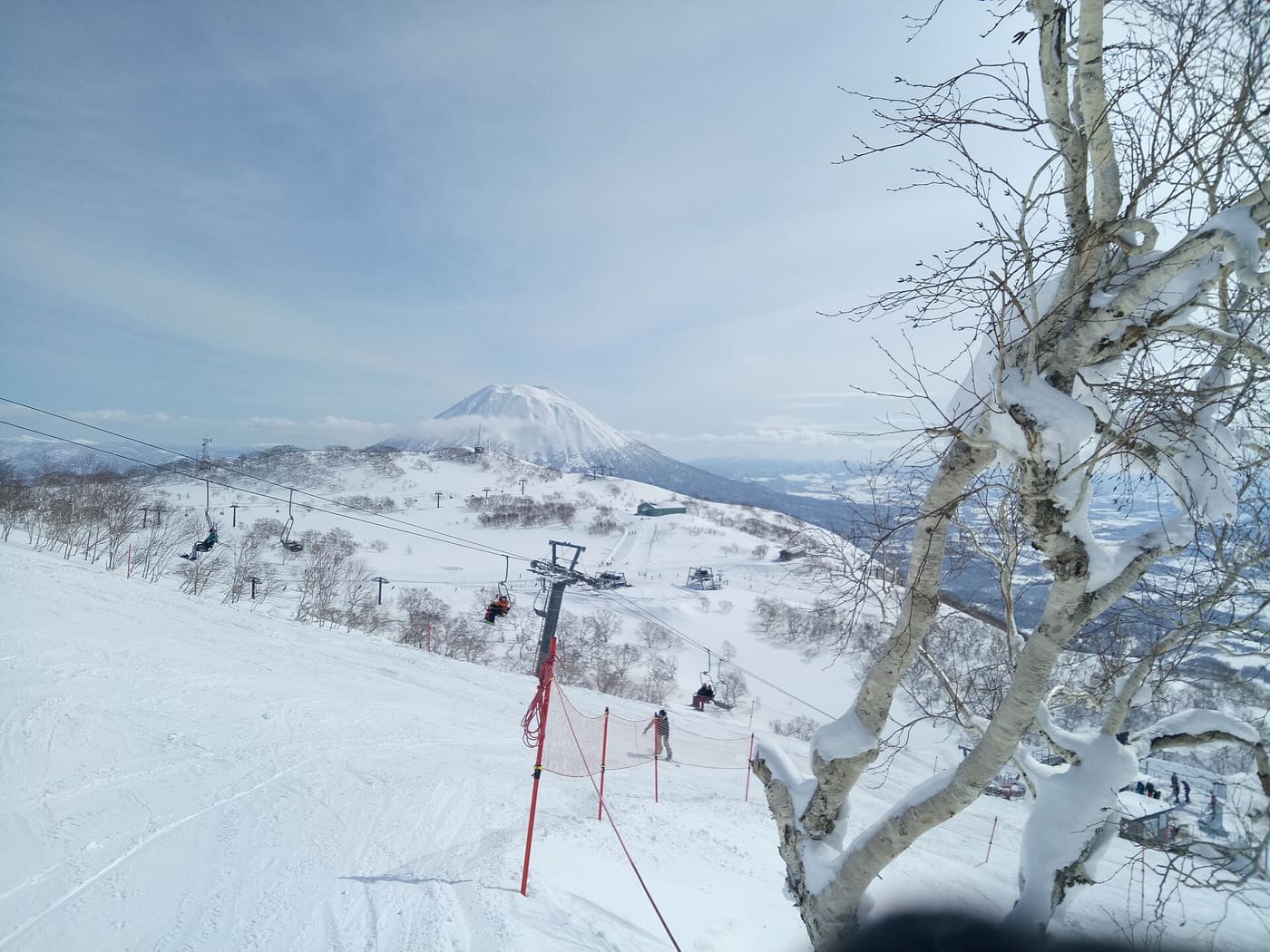
Hokkaido is the most extreme winter climate in Japan — Sapporo averages -7°C to 0°C in January, snow is heavy, and JR services occasionally shut down during blizzards. First-time winter visitors typically make three categories of mistakes: over-packing the itinerary (4+ hours of transit per day), under-packing the gear (a "winter coat" from a milder climate functions as a windbreaker at -8°C), and booking in the wrong order (Sapporo hotels are easy; Hakodate and Furano ski resort rooms are what you actually need to secure first). This 7-day plan paces the trip as "3 cities, deep" rather than "7 sites, surface," paired with 12 of the most common Hokkaido winter mistakes documented in traveler reports — so you don't spend your trip on transit.
- Route: Sapporo 3 nights → Biei/Furano 2 nights → Hakodate 2 nights (no backtracking)
- JR Pass: 7-day Hokkaido Rail Pass ¥28,000 wins for this full-loop route; the 5-day ¥22,000 fits Sapporo + Furano without Hakodate (there is no 3-day Hokkaido pass)
- Best window: mid-January to early February (stable powder + Sapporo Snow Festival Feb 4-11)
- Budget: Two travelers sharing: ¥270,000-345,000 (excluding flights)
- Critical gear: Real polar parka + snow boots (buy boots at Sapporo UNIQLO, not from home)
Table of Contents (click to expand)
- Why 7 days? Hokkaido's actual size
- Day 1: Arrive Sapporo + ramen alley
- Day 2: Sapporo deep dive (Odori, Mt. Moiwa)
- Day 3: Otaru canal day trip
- Day 4: Asahiyama Zoo + Biei Blue Pond
- Day 5: Furano skiing, or a non-ski alternative
- Day 6: Long transit to Hakodate
- Day 7: Hakodate morning market + Goryokaku + night view
- Hotel picks by region
- Transport: JR Pass math and snow-season bus traps
- 7-day budget breakdown: real two-person numbers
- Winter packing list and the snow-boot timing trick
- 12 common Hokkaido winter mistakes
Why 7 days? Hokkaido's actual size
Hokkaido covers 83,000 square kilometers — more than 2x the size of Taiwan and roughly equal to Austria. Sapporo to Hakodate by JR limited express takes 3.5 hours; Sapporo to Furano via Asahikawa takes 2.5 hours. First-time visitors often plan Hokkaido using a "Tokyo 5-day" mental model and end up spending half their trip on trains. The logic of this 7-day design:
- Three cities, not seven. Sapporo (with Otaru as a day trip) + Biei/Furano + Hakodate. Each city gets 2-3 nights so you're not packing every day.
- Daily transit under 3 hours. JR limited express plus Yamato (Kuroneko) luggage shipping means you don't haul large bags between regions.
- Day 5 stays flexible. Hokkaido weather changes fast; January-February blizzards halt JR lines regularly. The day-5 buffer absorbs this risk.
Five-day version: drop Hakodate, run Sapporo 3 + Furano 2. Ten-day version: extend east — winter is when the Kushiro Marsh red-crowned cranes gather on the snow and Lake Akan freezes over (Day 8 — if you want to fish on it, read up on permits and the two separate timelines first), an Abashiri drift-ice cruise (Day 9), then Shiretoko's drift ice and World Natural Heritage coast (Day 10).
Day 1: Arrive Sapporo + ramen alley
Most international flights arrive Sapporo afternoon. Day 1 goal: collect bags → reach the city → eat something hot → sleep early to fight jet lag. Don't schedule key sights — your body is still on home time.
- 14:00 Land at New Chitose Airport. The airport's connecting concourse has a full UNIQLO on the 2F level. If your home parka isn't warm enough, this is your last comfortable shopping window. The airport convenience stores also sell ¥3,500-5,000 snow boots.
- 15:30 JR Rapid Airport to downtown Sapporo. 37 minutes, ¥1,150 — about 30 minutes faster than the bus.
- 16:30 Hotel check-in. Stay near JR Sapporo Station (within 5 minutes walk of the north exit) for the next 3 days of city base. Compare prices on Trip.com Sapporo hotels.
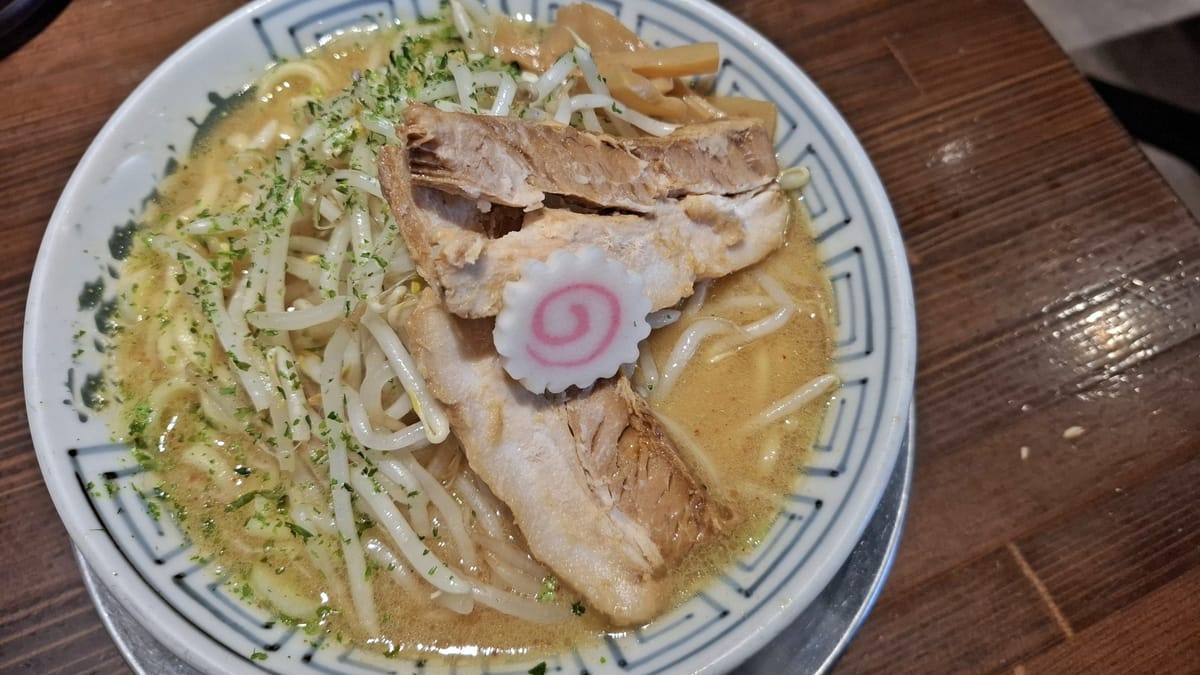
- 18:30 Dinner: ramen yokocho. Susukino's "Ganso Ramen Yokocho" packs 17 noodle shops side by side. For miso ramen, try Shirakaba Sanso or Shodai. Bowls run ¥1,000-1,300; pair with a ¥500 Sapporo Classic.
- 21:00 Sleep early. Sapporo sunset is 16:30 in winter, the city goes night mode by 17:00. First night: don't fight the jet lag.
Day 2: Sapporo deep dive (Odori, Mt. Moiwa)
Sapporo city core is doable in one day if you split the timing: morning at Odori Park area (better light, fewer people), evening at Mt. Moiwa (the iconic city panorama).
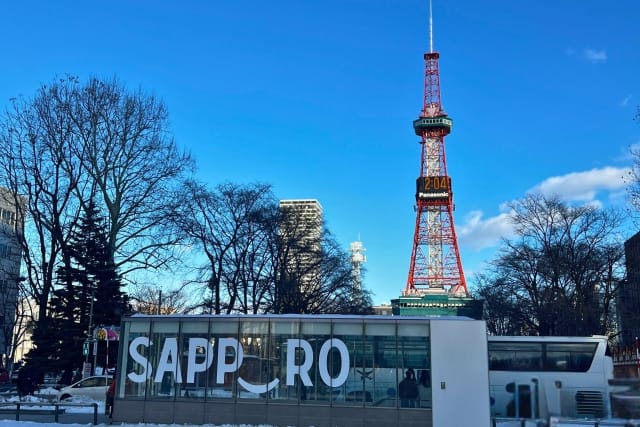
- 09:00 Odori Park + Sapporo TV Tower. The park's snow-covered length under the red TV tower is the city's signature winter shot. TV Tower observatory ¥1,200 — skippable if you're doing Mt. Moiwa later.
- 11:00 Hokkaido Shrine + Maruyama Park. Subway Tozai Line to Maruyama Koen station. The torii gate framed by deep snow photographs strongly. Around New Year (early January) the park is buried in deep snow, so good boots matter here.
- 13:00 Lunch: Nemuro Hanamaru rotating sushi (Sapporo Stellar Place 6F). The entry point to Hokkaido seafood. Sea urchin ¥600 a piece, hokkigai (surf clam) ¥350 — expect a 30-minute lunch wait.
- 14:30 Sapporo Beer Museum. Free entry, with a basement tasting room offering ¥200 per 100ml pours (try Black, Classic, and Edel Pils side by side).
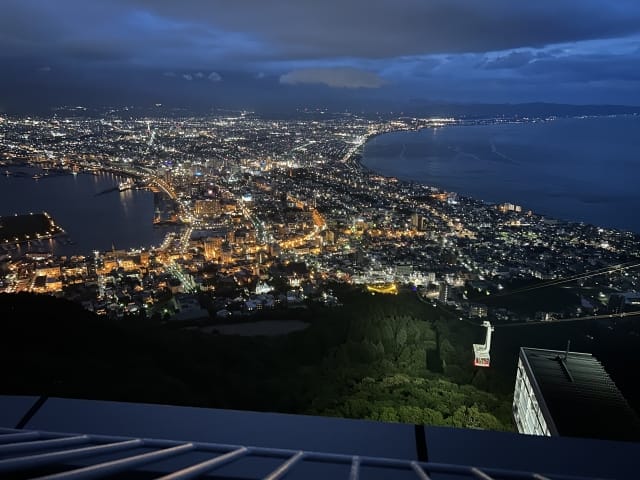
- 16:30 Mt. Moiwa ropeway. Take the city tram to "Ropeway Iriguchi" station. Cable car round-trip ¥2,100. The summit observatory is one of Sapporo's "million-dollar night views" — go up at 17:00 to catch sunset and city lights changing simultaneously.
- 20:00 Dinner: "Daruma" Genghis Khan grill (Susukino). Susukino institution. ¥3,500 per person for 90 minutes all-you-can-eat; expect a 1-hour wait if you don't arrive at opening.
Day 3: Otaru canal day trip
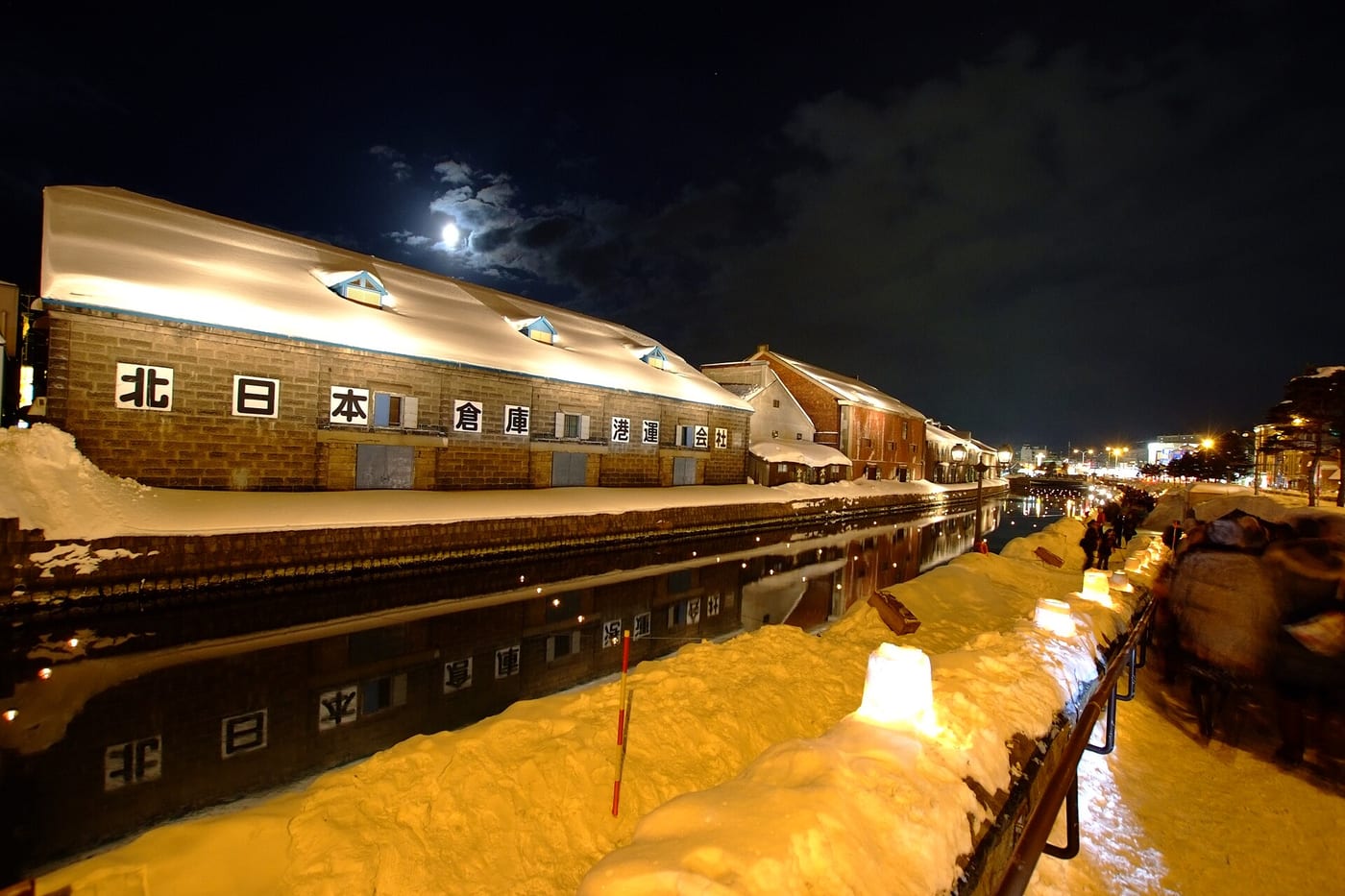
Otaru is the ideal Sapporo day trip. JR Rapid from Sapporo: 32 minutes, ¥750. Frequent service. All Otaru highlights are walkable from the station, so leave your bags at the Sapporo hotel.
- 09:30 depart Sapporo → 10:05 arrive Otaru Station.
- 10:30 Sakaimachi-dori shopping street + glass workshops. Kitaichi Glass Hall 3 is mandatory; ¥3,000-12,000 hand-blown glassware makes premium souvenirs. The original LeTAO double-cheese cake shop is on this street: takeaway ¥1,800, dine-in ¥980 with a drink.
- 12:30 Lunch: seafood don at Otaru Sankaku Market. Takinami Shokudo is the landmark; uni-ikura don ¥3,500, mixed five-topping ¥2,800. Roughly 20% cheaper than equivalent in Sapporo Nijo Market with comparable freshness.
- 14:30 Otaru Canal walk. Already beautiful in winter daylight. If your trip overlaps the Snow Light Path festival (typically the second week of February), the canal is lined with 1,500 candles after sunset — one of Japan's most romantic winter scenes.
- 16:30 Tenguyama ropeway. Optional. ¥2,000 winter round-trip. The summit gives a panorama of Otaru, Ishikari Bay, and Sapporo direction.
- 18:30 Return to Sapporo. JR runs every 15-30 minutes; last train roughly 23:00.
Day 4: Asahiyama Zoo + Biei Blue Pond
Day 4 is the move from Sapporo to the Furano/Biei area, with a side trip through Asahikawa. We recommend shipping your large bags via Yamato (Kuroneko) directly to the Furano hotel (¥1,800, arrives same afternoon) — travel light during this transit day.
- 07:30 Sapporo → Asahikawa (Limited Express Lilac, 1h25, ¥5,440, all seats reserved — Pass holders still need a seat reservation).
- 09:30 Arrive Asahikawa → bus to Asahiyama Zoo (40 minutes, ¥670).
- 10:30-13:30 Asahiyama Zoo. The winter-only "Penguin Walk" is the must-see: twice daily at 11:00 and 14:30, lasting 30 minutes. The polar bear, seal, and red panda houses are also strong. Admission ¥1,000.
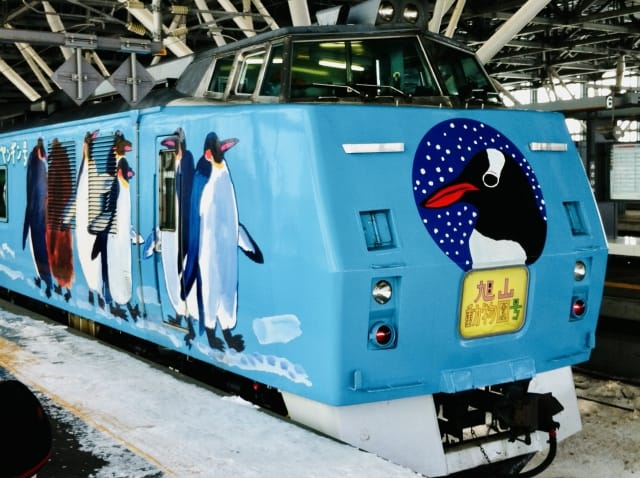
The winter-only "Penguin Walk" is Asahiyama's signature event — king penguins parade through the zoo's snow-packed paths. The 11:00 session is usually less crowded. - 14:00 Bus back to Asahikawa → 14:50 depart → 15:40 arrive Biei.
- 15:49 Dohoku Bus from Biei Station → 16:11 Shirogane Aoi-ike Iriguchi (Blue Pond). Winter evening illumination; once snow falls you will not see blue water — it is snow and lights. Start time depends on the month (Oct–Nov and Jan 17:00 / Dec 16:30 / Feb 17:30 / Mar 18:00), ending at 21:00 every night. The last bus from the pond back to Biei leaves at 16:54, so plan the evening by month:
- December: bus back to Biei the same day. Watch the 16:30 lights for about 20 minutes, take the 16:54 last bus (Biei 17:19), then JR Furano Line to Furano — check the train times before you go.
- Oct–Nov, Jan–Feb: stay one night at Shirogane Onsen. After the lights, take the 17:57 last bus from the same stop to Shirogane Onsen (18:01) and walk to Shirogane Bridge for the Shirahige Falls illumination (year-round, sunset to 21:00). Send big luggage to Furano as planned and continue there the next morning.
- March onward: the lights start after the last bus leaves, so take the 17:35 last bus from Biei straight to Shirogane Onsen and a taxi to the pond, or go by taxi throughout.
- Furano hotel check-in (December, bus-back version). Recommended: New Furano Prince Hotel (includes "Forest Café" and ski-slope shuttle) or Furano Natulux (Sapporo design firm aesthetic). If you stayed at Shirogane Onsen, book these from Day 5.
Day 5: Furano skiing, or a non-ski alternative
This is your flexible day. Pick option A or B based on weather and energy. If you stayed at Shirogane Onsen, take the 09:16 Dohoku Bus (you can hop off at the Blue Pond at 09:19 for the daytime snow view and catch the 10:05), reach Biei at 09:44 or 10:30, and continue to Furano on the JR Furano Line — skiing starts after lunch.
Option A: Furano Ski Resort (good for first-timers)
- 09:00 Free hotel shuttle to the slopes. Furano hosts national-level competitions, with powder snow and a full range of beginner-to-intermediate runs.
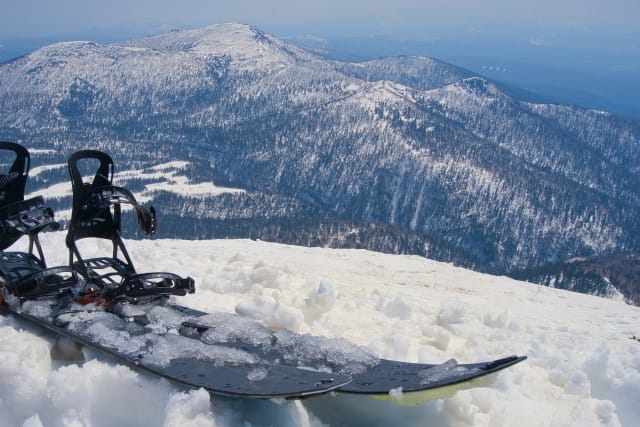
Furano has hosted multiple FIS Alpine World Cup events. Mid-January through late February is the peak window for powder, drawing a high ratio of international skiers. - Rentals: ¥6,000-8,000 per day (board + boots + poles; jacket and pants add ¥3,000).
- Lessons: ¥6,000-9,000 for 2 hours (English instructors require booking 1+ week ahead). For a true first-timer, two structured hours is roughly 3x safer than self-teaching.
- Day lift pass ¥6,000. Lunch at the summit restaurant: ¥1,500-2,000 for Genghis Khan grill.
- 16:00 Off the slopes, hotel onsen soak.
Option B: Hoshino TOMAMU — this connection no longer exists
So how do you actually get to TOMAMU? Enter from New Chitose Airport or Sapporo, and give it an overnight rather than hanging it off your Furano day. While we are here, three more numbers that get copied around incorrectly: the Frost Tree Terrace (Unkai Gondola) round trip is ¥2,500 for adults, not ¥3,500 (free with a lift ticket) — though note the resort prints the same figure on both its 2026-27 Frost Tree page and a lift-fee page explicitly labelled “2025-2026 information”, so we treat it as a 2025-26 actual; official 2026-27 pricing lands in September; Mina-Mina Beach day admission is ¥2,600, not ¥2,000; and the Ice Village "opening" does not mean every ice structure is open — the Ice Chapel runs only 20 Jan to 14 Feb 2027 and the Ice Hotel only to 20 Feb. Full transport, lift and Ice Village timing windows are in our Hoshino TOMAMU guide.
What to do with the day instead: if you are not skiing, stay around Furano and Biei, or head north to Asahiyama Zoo — the winter penguin walk is the single best set piece in this part of Hokkaido, with access and admission covered in that guide. Option A, skiing at Furano, is unaffected.
Day 6: Long transit to Hakodate
The longest transit day, but also the best window-watching day for snow scenery.
- 08:00 Furano → Sapporo (Limited Express ¥4,500 / Pass-free, 1h45). Ship bags ahead to your Hakodate hotel.
- 10:30 Sapporo → Hakodate (Hokuto Limited Express). 3h35, ¥9,440 / Pass-free. The route passes Oshamambe, Lake Toya, and Onuma Park — continuous snow scenery is the journey's highlight.
- 14:00 Arrive Hakodate Station. For Hakodate lodging, "La Vista Hakodate Bay" has a top-floor onsen with harbor view; "Hotel Resol Hakodate" is the no-fuss budget pick across from the station. Compare on Trip.com Hakodate hotels.
- 15:00 Hakodate Morning Market (still open until 17:00). Sea urchin, hairy crab, scallops are signatures; ¥2,500 three-color don is the entry point.
- 17:00 Kanemori Red Brick Warehouses. The harbor brick complex has winter snow-night illumination; entry is free.
- 19:00 Dinner: Hakodate Lucky Pierre's burgers. The Hakodate Western specialty; ¥980 Chinese chicken rice (sounds odd, but it's a local famous item).
Day 7: Hakodate morning market + Goryokaku + night view
- 06:00 Hakodate morning market freshly-cut seafood don. 6:00-7:30 is the freshest window. Akebono Shokudo serves a ¥2,800 five-color don.
- 08:30 Motomachi district walk. Hachiman-zaka downhill is the postcard view of Hakodate; old British Consulate ¥300, Russian Orthodox Church exterior is free.
- 11:00 Mount Hakodate ropeway daytime. ¥1,800 round-trip. Snow days reduce visibility but cut the crowd dramatically.
- 13:30 Goryokaku Tower + Goryokaku Park. ¥1,000 to the tower for the star-shaped fortress under snow. Winter snow makes the star fortress shape unusually crisp from above.
- 16:00 Hakodate Station departure. Hokuto Limited Express to New Chitose Airport: about 4 hours including transfer. Plan for the latest red-eye flight to avoid missing connections.
- 21:30 New Chitose Airport → home. If you have an extra 2 hours, the airport's "Hokkaido Ramen Dojo" on 1F has 10 ramen shops to pick from.
Hotel picks by region
One base per region, each close to the transit hub you will use in winter:
Sapporo (3 nights)
- Mid-tier: Mitsui Garden Hotel Sapporo (¥14,000-22,000/night). Six-minute walk from JR Sapporo south exit, large modern rooms, in-house onsen. The single best price-quality balance for the central station area.
- Budget: JR Inn Sapporo Eki Minamiguchi (¥8,000-12,000). Direct from JR Sapporo south exit, small rooms but the location compensates. Avoid the older "north" branch.
- Splurge: La'gent Stay Sapporo Odori (¥22,000-32,000). Walking distance to Susukino dining, in-house spa onsen, breakfast strong on Hokkaido produce.
Furano / Biei (2 nights)
- Mid-tier: Furano Natulux Hotel (¥14,000-19,000/night). Five-minute walk from JR Furano station, designer-grade rooms, best base if you want to mix town walks with a ski day.
- Splurge: New Furano Prince Hotel (¥22,000-38,000). Direct ski-resort access via free shuttle, "Forest Café" branch, in-house onsen with snow garden views. The premium pick if skiing is your day-5 plan.
- Boutique: Biei Pension Pippara (¥12,000-16,000). Eight-room rural inn between Biei and Furano, family-run, transports luggage to/from JR Biei. Best for travelers who want a Hokkaido "country home" experience.
Hakodate (2 nights)
- Mid-tier: La Vista Hakodate Bay (¥16,000-24,000/night). Top-floor onsen with Hakodate harbor view (the bath looking onto the morning ferry departures is iconic). Three-minute walk to Hakodate Asaichi morning market.
- Budget: Hotel Resol Hakodate (¥9,000-13,000). Across from JR Hakodate station, no-fuss business hotel, breakfast extra. Great if you're using Hakodate as a transit base.
- Splurge: Centennial Hotel Hakodate (¥20,000-30,000). Modern design hotel in the Goryokaku Park area, slightly inconvenient for the morning market but excellent if you're prioritizing the fortress and night-view side of Hakodate.
Booking timing tip: Sapporo Snow Festival week (Feb 4-11) and Lunar New Year week sell out 4 months ahead. For non-festival weeks in January-February, 6-8 weeks is usually enough lead time. December weekends are surprisingly easier than January.
Transport: JR Pass math and snow-season bus traps
Total JR fares for this 7-day route: Sapporo→Asahikawa ¥5,440 + Asahikawa→Biei ¥640 + Furano→Sapporo ¥4,500 + Sapporo→Hakodate ¥9,440 + Hakodate→New Chitose ¥9,000 + Sapporo-Otaru roundtrip ¥1,500 = ¥30,520.
The 7-day Hokkaido Rail Pass at ¥28,000 saves ¥2,520 in raw fare alone, plus the flexibility to change trains without re-booking. For detailed line-by-line calculations covering 3-day vs 5-day vs 7-day Pass scenarios, see our Hokkaido JR Pass complete guide.
Hokkaido JR Pass
This itinerary uses the 7-day all-Hokkaido Pass to chain Sapporo → Furano → Hakodate, including all limited express, Rapid Airport, and local lines. Pre-purchase issues an e-ticket to your phone — nothing gets shipped; exchange it for the paper pass at a JR information desk after landing.
Hokkaido Rail Pass 7-day e-ticket →7-day budget breakdown: real two-person numbers
Typical winter-peak ground-cost breakdown for two travelers sharing a room with breakfast included (based on published peak-season rates from each supplier):
- Lodging 7 nights (Sapporo 3 + Furano 2 + Hakodate 2): ¥150,000
- Hokkaido Rail Pass 7-day × 2: ¥52,000
- Ski day pass + rental × 2 (Day 5): ¥26,000
- Other attractions (Asahiyama Zoo, Mt. Moiwa, Mt. Hakodate, Goryokaku Tower, Aoi Ike bus or taxi): ¥17,000
- Food 7 days × 2 people (including 1 premium seafood don and 1 Genghis Khan all-you-can-eat): ¥62,000
- Local transit (subway, bus, taxi): ¥10,500
- Souvenirs (Shiroi Koibito, Royce chocolate, glassware): ¥26,000
- Two-person total: ¥343,500 (excludes flights)
Skipping the ski day (Option B for Day 5) drops the total to roughly ¥317,500. Round-trip flights to New Chitose (CTS) vary widely by season; compare prices on Trip.com Taipei-Sapporo flights (book 8-12 weeks ahead for the best rates).
Winter packing list and the snow-boot timing trick
Hokkaido is Japan's most extreme winter zone — pack accordingly:
- HEATTECH Extra Warm long-sleeve thermals × 4, thermal tights × 4 (the most critical layer)
- Sweaters or fleece pullovers × 3
- 700+ FP windproof, waterproof long-cut down parka × 1 (single most important item)
- Snow pants or fleece-lined jeans × 2 (regular jeans give up below -5°C)
- Anti-slip snow boots × 1 (buy in Sapporo at UNIQLO ¥3,000-5,000 — don't fly with them)
- Beanie × 1, waterproof gloves × 1, scarf × 1 (wool gloves get wet in snow)
- Hand warmers ×10-15 (also stocked at every Japanese convenience store)
- Lip balm and moisturizer (dry cold causes severe chapping)
Full Hokkaido clothing strategy and the four-season packing playbook are in What to Wear in Japan: complete pillar guide; the Hokkaido subsection covers -10°C-grade gear sourcing.
Japan unlimited data eSIM
Hokkaido mountain regions (Furano, Niseko, Shiretoko) have weaker signal than Honshu, but Docomo and KDDI still hold 4G in most ski resorts. eSIM activates the moment you land — lighter than pocket WiFi. For mountain coverage, pick an eSIM running on the docomo backbone.
Get Japan eSIM →12 Hokkaido winter mistakes we've actually made
- Wearing a temperate-zone "winter coat" to Hokkaido. Coats from Taiwan or southern US states function as windbreakers at best in -10°C. Plenty of travelers buy a real parka at New Chitose UNIQLO within 90 minutes of landing.
- Wearing sneakers as snow boots. Hakodate's Motomachi slopes, Otaru canal area, and Sapporo Odori all freeze. Falls on icy stairs are the most common winter injury.
- Lugging large bags between cities. Use Yamato (Kuroneko) takkyubin between hotels: ¥1,500-2,500 per bag, arrives same afternoon.
- Not checking JR snow-storm cancellations. January-February blizzards routinely halt the Hakodate Main Line and Chitose Line. Check JR Hokkaido's website daily.
- Renting ski gear on the ski day. Peak-season rental shops have 1-hour lines. Reserve when you book the hotel shuttle.
- Not booking dinner. Daruma Genghis Khan and Hanamaru sushi run 2-hour Saturday-night queues. Tabelog reservations save the evening.
- Underestimating jet lag. Sapporo sunset is 16:30; pushing through to 23:00 on day 1 leads to a cold by day 3. Sleep at 21:00 the first night.
- Phone in outer-coat pocket. At -10°C, phones drain to zero in 30 minutes if exposed. Keep them inside an inner layer with a hand warmer attached.
- Staying only in Sapporo. 70% of Hokkaido's character lives outside the city. Skipping Otaru, Furano, Hakodate means seeing one-third of the prefecture.
- Visiting Dec 29 - Jan 3. Worst possible cost-performance: peak flight and hotel pricing nationwide, attractions closed for New Year, and weather most volatile.
- No 20,000mAh+ power bank. Cold + photo + navigation drains phones startlingly fast.
- Booking too late. Sapporo Snow Festival week and Lunar New Year week sell out hotels 4 months ahead.
Read next
Hokkaido JR Pass Complete Guide 2026
Five routes recalculated with 2026 fares — all-reserved limited expresses and the post-2024 Furano line closure change the math.
What to Wear in Japan 2026: 4 Regions × 4 Seasons Packing Guide
A 4,500-word pillar: climate physics, region-by-region clothing strategy, four-season packing lists.
Japan trip prep checklist
eSIM, Visit Japan Web, tax-free, insurance — done in one read.
5 Best Japanese Onsen Ryokans 2026
From a 1925 Cultural Property to Michelin 3 Key — five definitive Japanese onsen inns.
🏨 Most winter Hokkaido itineraries include a ryokan night — Ginzan snow views, Jozankei, Noboribetsu, or Sounkyo are all strong picks. 5 Best Japanese Onsen Ryokans 2026 breaks down how to pick between Notoya and Kosekiya Bekkan at Ginzan; or browse the Hokkaido region at Japan Hotel Picks.