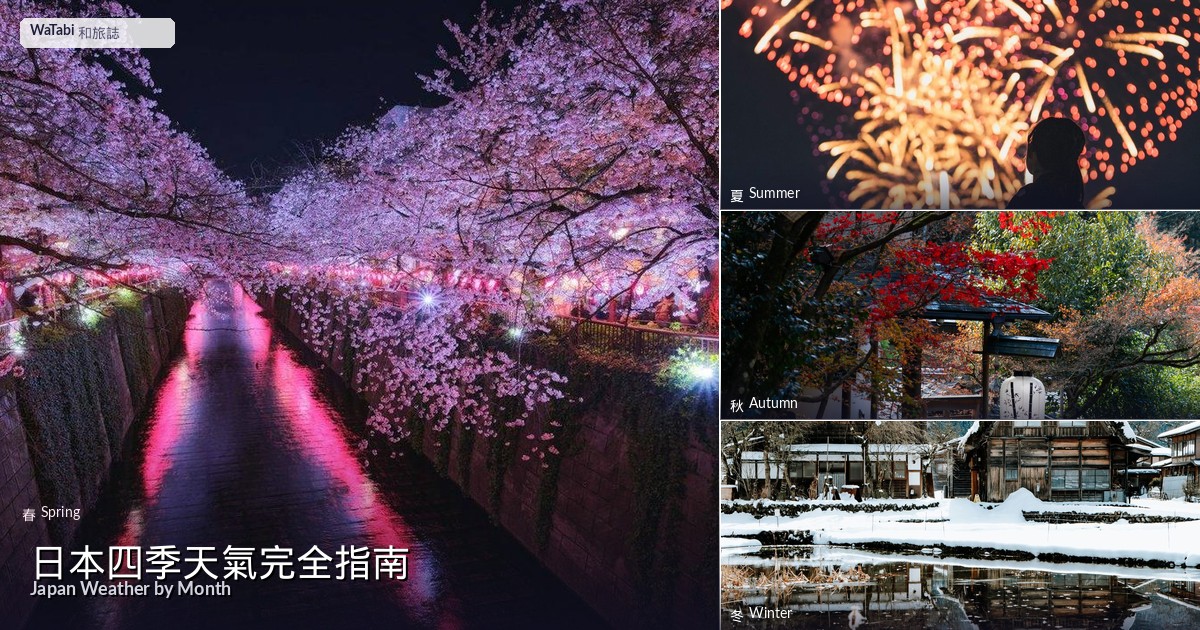
The most common Japan packing mistake is treating Japan as a single climate. We've made eight Japan trips — from a January week in Niseko's powder snow to August days in Okinawa's open-water snorkeling, from early-April cherry blossoms in Kyoto to late-November ginkgo gold in Tokyo — and the country's 22° latitude span produces 20°C+ same-day differences between Sapporo and Naha. If you pack by "season" alone, you'll either freeze or sweat through every trip that touches more than one region.
This is WaTabi's climate & clothing pillar: a single page that covers the underlying physics (latitude, ocean currents, monsoon), four regional deep-dives with what locals actually wear, and four full season-by-season packing lists you can check against your suitcase 30 minutes before departure. It is also the page we wish someone had handed us before our first Japan trip.
- "Region decides thickness, not month." Same December: Hokkaido needs polar gear; Okinawa needs a light jacket.
- The onion-style 3-layer stack (thermal base + sweater + windproof shell) covers 0°C to 20°C — the highest ROI packing decision you can make.
- Rainy season (June), heatwave (July-August), typhoons (September) are the three summer obstacles, each needing a different Plan B.
- The Kyoto basin has Japan's most extreme range — 1°C in January, 33°C in August — so layer by time-of-day, not by month alone.
- UNIQLO, GU, and MUJI are at every airport and city center. Don't overpack — restocking in Japan beats hauling extra layers from home.
Table of Contents (click to expand)
- Japan climate 101: why latitude matters so much
- 12 months × 4 regions at a glance
- 🎿 Hokkaido: Japan's most extreme winter and most comfortable summer
- 🗼 Honshu (Tokyo & Kyoto): the most dramatic four-season swings
- 🍜 Kyushu: mild winters and the typhoon belt
- 🏝️ Okinawa: subtropical Japan, completely different rules
- 🧳 Full four-season packing lists
- FAQ
Japan climate 101: why latitude matters so much
Japan is a 3,000 km island chain. The northernmost city, Wakkanai, sits at 45°N; the southernmost, Iriomote, at 24°N. That 22° spread is wider than Stockholm-to-Madrid in Europe. Within a single country you can travel through subarctic, temperate, and subtropical climate zones in a single week — one of the few travel destinations on Earth where this is possible.
Three factors that decide local climate
1. Latitude. Average annual temperature drops about 0.7°C for every degree of latitude moved north. Sapporo (43°N) sits roughly 16°C colder than Naha (26°N) on the annual mean — which is why one runs sub-zero in December while the other holds 18°C.
2. Ocean currents. Japan's western coast is washed by the cold Oyashio current; the eastern coast by the warm Kuroshio. This is why Niigata and Kanazawa (the "Sea-of-Japan side") get heavy winter snow, while Tokyo on the same latitude stays dry. If you're planning a winter Hokuriku trip — Kanazawa, Shirakawa-go — mentally adjust for "colder and snowier than the latitude suggests."
3. Monsoon. Summer southeast monsoons from the Pacific bring heat and the rainy season; winter northwest monsoons from Siberia drive heavy snowfall on the western coast. The result: Japan has four genuinely distinct seasons rather than the two-season pattern of subtropical neighbors like Taiwan or southern China.
That's the logic behind the table below: rows are months, columns are four regions, and each cell tells you both the temperature and what to wear. For a 30-second monthly lookup, see our Japan weather by month quick-reference table. Here we focus on the "why" and the "what to actually pack."
12 months × 4 regions at a glance
Each cell has three lines: temperature range (overnight low to daytime high), rainfall or special conditions, and the dominant clothing keyword. Source: Japan Meteorological Agency 1991-2020 normals. Real years vary ±2-3°C.
| Month | Hokkaido (Sapporo) | Tohoku/Kanto (Tokyo) | Chubu/Kansai (Kyoto) | Kyushu/Okinawa (Naha) |
|---|---|---|---|---|
| Jan | -7°C ~ 0°C ❄ Heavy snow Polar parka + snow boots | 2°C ~ 10°C ☀ Dry & cold Down jacket + beanie | 1°C ~ 9°C ☀ Dry & cold Down jacket + scarf | 14°C ~ 19°C ☀ Mild Light jacket + long sleeves |
| Feb | -7°C ~ 0°C ❄ Snow festival peak Polar parka + snow boots | 2°C ~ 10°C ☀ Driest month Down jacket + beanie | 1°C ~ 10°C ☀ Dry & cold Down jacket + scarf | 14°C ~ 19°C ☀ Mild Light jacket + long sleeves |
| Mar | -3°C ~ 4°C ❄ Snowmelt Heavy coat + waterproof boots | 5°C ~ 14°C 🌸 Late blossoms Layers (sweater + jacket) | 4°C ~ 14°C 🌸 Late blossoms Layers | 16°C ~ 21°C 🌸 Early blossoms Long sleeves + light jacket |
| Apr | 3°C ~ 12°C 🌸 Hokkaido sakura coming Sweater + windbreaker | 11°C ~ 19°C 🌸 Sakura peak Long sleeves + light jacket | 10°C ~ 20°C 🌸 Sakura peak Long sleeves + light jacket | 19°C ~ 24°C ☀ Warming up T-shirt + sunscreen |
| May | 8°C ~ 17°C 🌸 Hokkaido sakura Long sleeves + light jacket | 15°C ~ 23°C ☀ Most comfortable T-shirt / long sleeves mix | 14°C ~ 25°C ☀ Sunny & comfortable T-shirt + light pants | 22°C ~ 27°C ☀ Okinawa beach opens T-shirt + swimsuit |
| Jun | 13°C ~ 21°C ☀ No rainy season Long sleeves + light jacket | 19°C ~ 26°C 🌧 Rainy season T-shirt + rain gear | 19°C ~ 28°C 🌧 Rainy season T-shirt + rain gear | 25°C ~ 29°C 🌧 Okinawa rainy ends T-shirt + rain gear |
| Jul | 18°C ~ 25°C 🌸 Furano lavender T-shirt (light jacket at night) | 23°C ~ 30°C ☀ Hot + late rainy T-shirt + sunscreen | 23°C ~ 32°C ☀ Hot T-shirt + sunscreen + parasol | 26°C ~ 31°C 🌀 Typhoon season starts T-shirt + rain gear |
| Aug | 19°C ~ 26°C ☀ Cool summer T-shirt + light jacket | 25°C ~ 32°C ☀ Heatwave T-shirt + cooling fabric | 24°C ~ 33°C ☀ Kyoto's hottest T-shirt + cooling fabric | 27°C ~ 31°C 🌀 Frequent typhoons T-shirt + rain gear |
| Sep | 14°C ~ 22°C 🍂 Early autumn Long sleeves + light jacket | 21°C ~ 28°C 🌀 Typhoon tail Long sleeves + rain gear | 21°C ~ 29°C 🌀 Typhoon tail Long sleeves + rain gear | 26°C ~ 30°C 🌀 Typhoon tail T-shirt + rain gear |
| Oct | 7°C ~ 16°C 🍂 Foliage starts Sweater + jacket | 15°C ~ 22°C ☀ Comfortable cool Long sleeves + light jacket | 14°C ~ 22°C ☀ Comfortable cool Long sleeves + light jacket | 23°C ~ 28°C ☀ Last beach window T-shirt + light pants |
| Nov | 1°C ~ 8°C ❄ First snow Down jacket + scarf | 9°C ~ 17°C 🍂 Foliage peak Sweater + windbreaker | 8°C ~ 17°C 🍂 Kyoto koyo peak Sweater + windbreaker | 20°C ~ 24°C ☀ Cool Long sleeves + light jacket |
| Dec | -4°C ~ 2°C ❄ Heavy snow + illuminations Polar parka + snow boots | 4°C ~ 12°C ☀ Dry cold + illuminations Down jacket + beanie | 3°C ~ 11°C ☀ Dry & cold Down jacket + scarf | 16°C ~ 21°C ☀ Mild Light jacket + long sleeves |
🎿 Hokkaido: Japan's most extreme winter and most comfortable summer
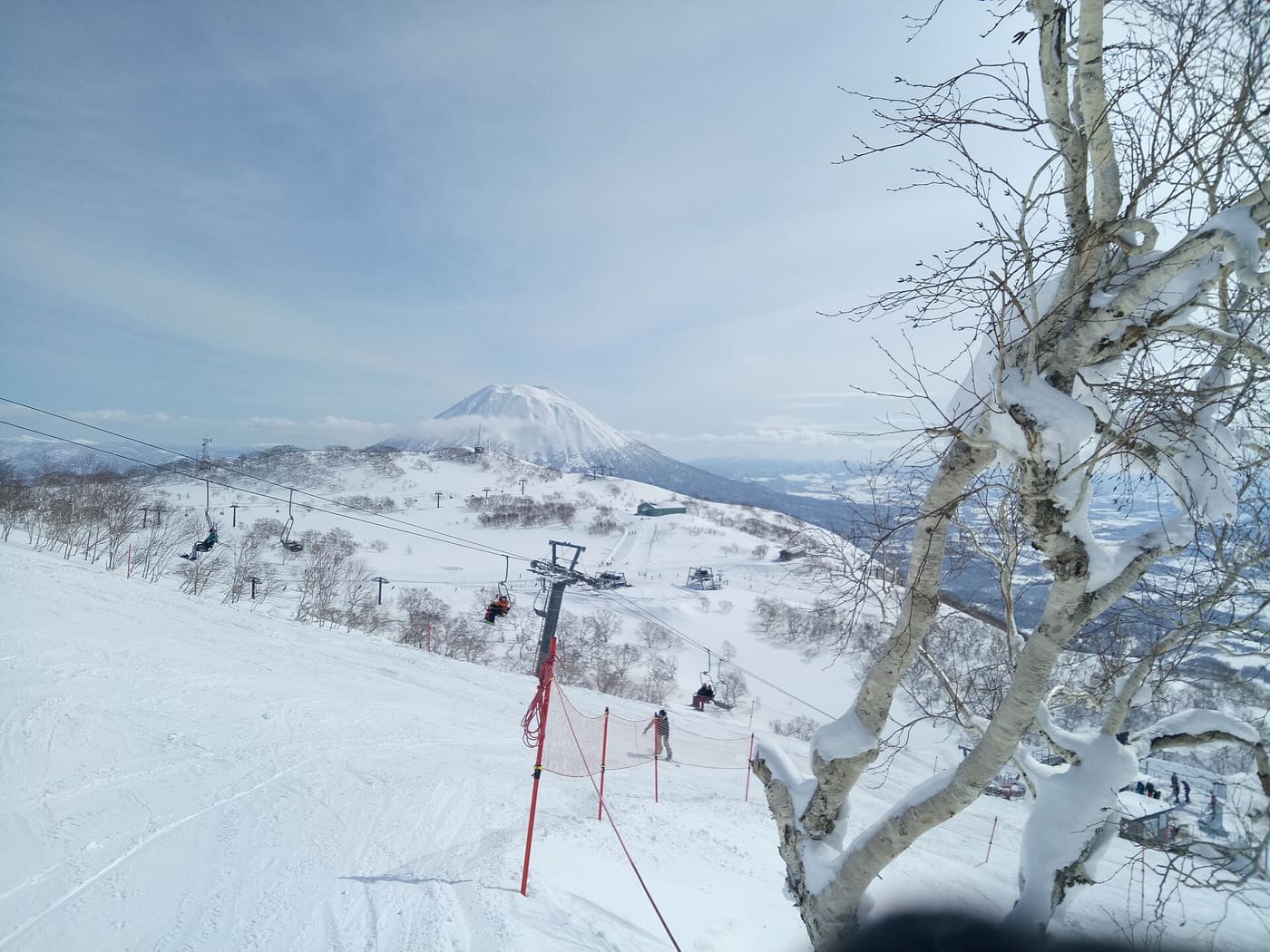
Hokkaido is the climatic outlier of Japan: too cold for "Japan in winter" stereotypes and too cool for what mainland Japan considers summer. It's also the region first-time visitors most often pack wrong for — a steady trickle of travelers shows up at New Chitose Airport in coats meant for Tokyo and ends up at the airport UNIQLO buying a real parka before they even hit Sapporo.
Winter (December-March): genuine arctic gear required
Sapporo averages -3°C in January, with lows around -10°C and chill factor pushing the perceived temperature lower. The key here isn't "thicker clothing" but windproofing and waterproofing. The combination that consistently works for Hokkaido winters:
- Base layer: UNIQLO HEATTECH Extra Warm long-sleeve and tights (the "Extra Warm" tier, not the regular HEATTECH)
- Mid layer: Turtleneck wool sweater or fleece pullover
- Outer: A real windproof, waterproof down parka (700+ fill power, longer cut) — not a fashion-style thin down
- Bottoms: Fleece-lined jeans or insulated snow pants (regular jeans give up below -5°C)
- Accessories: Beanie, waterproof gloves (wool gloves get wet in snow), scarf, anti-slip snow boots
Snow boots are the most underrated single item. Hokkaido sidewalks freeze ("ice slip" is the local term) from January through March, and regular sneakers slide on contact. Buy them in Sapporo rather than from home — every New Chitose Airport convenience store carries them, as do all UNIQLO outlets, for ¥3,000-5,000.
Summer (June-August): Japan's best heat refuge
While Honshu boils at 33°C, Hokkaido stays at a comfortable 18-26°C. This is the region's biggest summer draw — Furano's lavender fields peak early-to-mid July, the rainbow flower fields of Biei right next door, and a coastal-mountain landscape that Japanese travelers themselves prize as their best escape from mainland heat. If you want Japan in summer without the heatstroke risk, pair a 5-7 day loop with the Hokkaido JR Pass.
Summer clothing: T-shirts and light pants. Mountain mornings and coastal evenings can drop to 15°C — pack one thin jacket or sun-cover. Sapporo Beer Festival evenings (August) get cool; long sleeves in your bag are useful.
🗼 Honshu (Tokyo & Kyoto): the most dramatic four-season swings
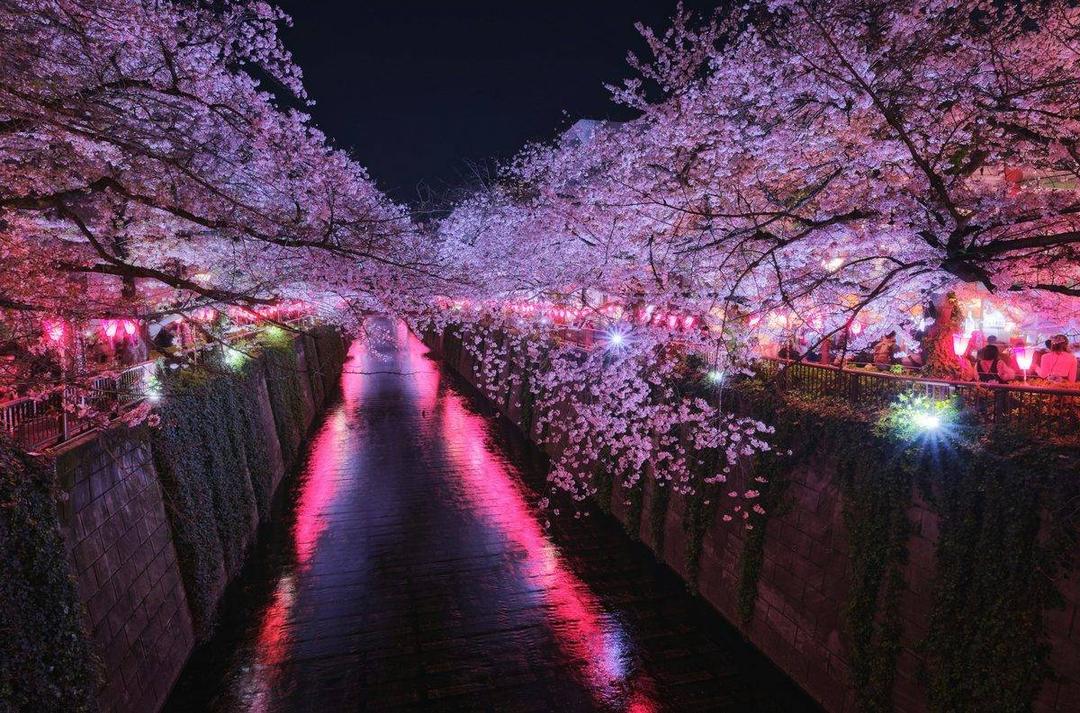
Honshu — the line connecting Tokyo, Kyoto, Osaka, Nagoya — is where most first-time Japan trips run, and it's the region with Japan's most clearly distinct four seasons. The clothing challenge here isn't "cold or hot" — it's 10°C swings inside a single day.
Shoulder seasons (March-May, October-November): onion-style is mandatory
An early-April Kyoto morning sits at 7°C; the same afternoon hits 18°C. Late November in Tokyo: 15°C at noon, 8°C by 6 PM. A single thick coat traps heat at midday; a single thin jacket leaves you shivering by evening.
The fix is the three-layer onion stack:
- Base: Long-sleeve T or thin thermal
- Mid: Thin sweater or knit
- Outer: Windbreaker or packable down (April) / wool overcoat (November)
In practice: leave the hotel at 7 AM with all three layers, drop to one layer by midday at busy attractions, layer back up after 5 PM. This pattern works across every Honshu city in March-May and October-November. Our Kyoto autumn foliage guide includes time-of-day clothing tips for the foliage peak.
Summer (June-August): heatwave + rainy season double trouble
June rainy season (tsuyu) is mostly drizzle, so most attractions still work — but viewpoint trips like Mt. Fuji and Shirakawa-go suffer. July-August is the real Honshu extreme: Tokyo at 30-33°C, Kyoto at 33-38°C, both with 70%+ humidity. Heatstroke is a real risk. Essentials:
- Cooling-fabric T-shirts (UNIQLO AIRism is the price-performance winner)
- Parasol or wide-brim hat (Japanese parasols are unisex; nobody will look twice)
- SPF 50+ sunscreen (Japanese drugstore brands like Anessa run ¥1,500 and outperform most imports)
- Battery handheld fan (¥1,500-3,000 at any BIC CAMERA or Don Quijote)
- Refillable water bottle (convenience stores every 200m mean free top-ups)
Time-of-day strategy matters more than clothing: hit major outdoor sites (Fushimi Inari, Arashiyama bamboo grove) before 9 AM, retreat indoors noon-to-3 PM, resume outdoor sightseeing after 5 PM. If rain hits, our 10 indoor spots in Tokyo guide is a ready Plan B.
Winter (December-February): "dry cold" is milder than the numbers suggest
Tokyo and Kyoto run 2-10°C in January-February — looks like Hokkaido on paper, but humidity below 40% plus typically calm wind makes the actual feel notably milder. Visitors from damp-cold cities (London, Taipei, Vancouver) often describe Tokyo winter as more comfortable than home, despite the lower numbers.
Gear is one tier lighter than Hokkaido: a regular down jacket (600 FP is fine), beanie, scarf, mid-tier thermal base. Snow boots are not needed — regular leather shoes or waterproof sneakers work fine. By JMA 1991-2020 normals, Tokyo averages about 8.5 snowfall days a year (mostly January at 2.8 and February at 3.5) and roughly 8 cm of annual snowfall, so accumulation is rare. Full first-snow and snow-depth normals by city are in when does it snow in Japan.
🍜 Kyushu: mild winters and the typhoon belt
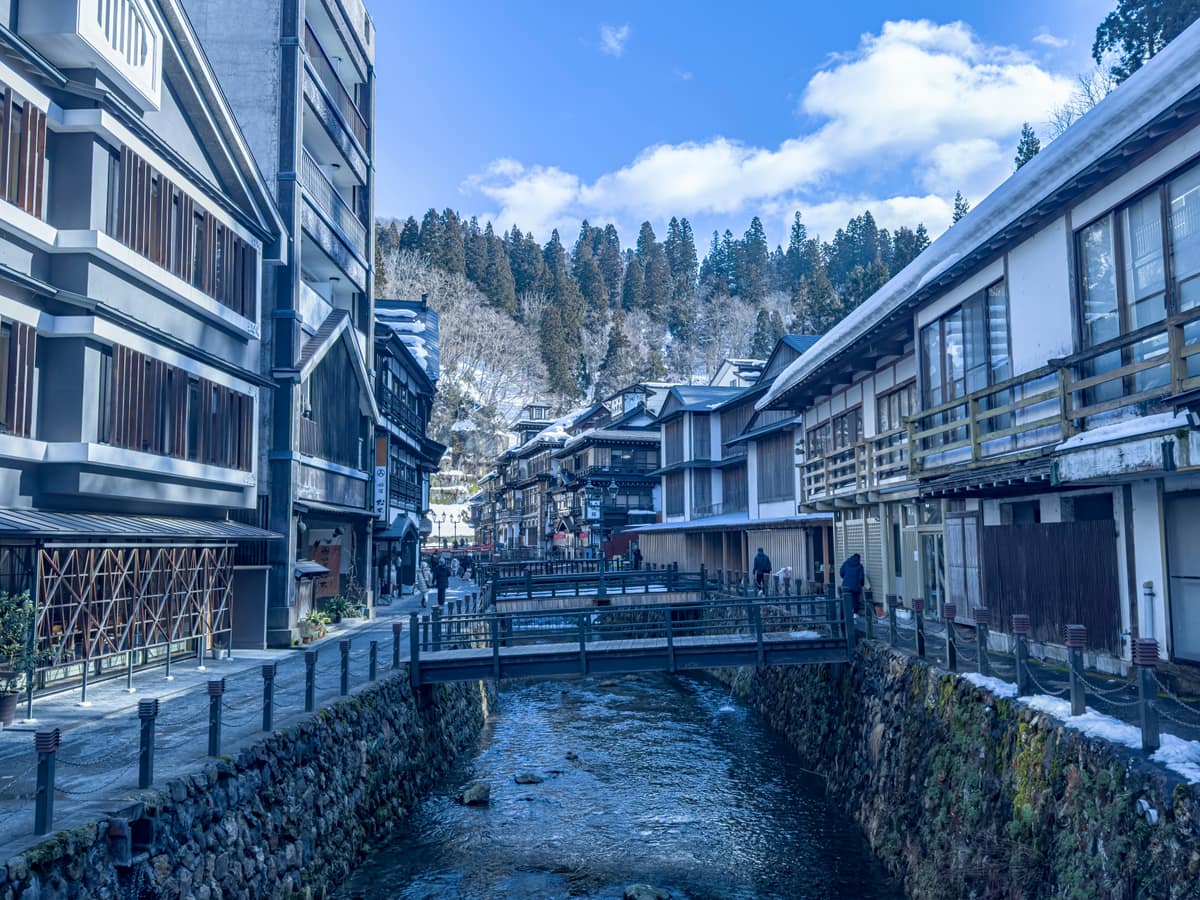
Kyushu — the line through Fukuoka, Kumamoto, Kagoshima, Nagasaki — sits between Honshu and Okinawa, with a climate signature of noticeably milder winters and a high typhoon frequency in summer. If you want a Japan winter trip without facing the Tokyo-and-Kyoto cold, Kyushu is a good middle ground.
Winter (December-February): Japan's most comfortable cold-season destination
Fukuoka in January averages 6-10°C — about 3-4°C warmer than Tokyo. Sub-zero is rare. Fukuoka is not snow-free, though: JMA 1991-2020 normals put first snow on December 16 and last snow on March 7, a window of nearly three months, even if accumulation in the city itself is unusual (see the first-snow normals by city). Clothing: a packable down or wool coat plus long sleeves and jeans is enough. Polar gear is unnecessary.
Kyushu winter advantages: (1) onsen ryokan off-season pricing in Kurokawa, Beppu, Yufuin; (2) Fukuoka's yatai (street-stall) season at its busiest; (3) snow-capped Aso volcano scenery; (4) hotels 30-40% cheaper than peak season. If you want a "real Japanese onsen town" experience on a budget, January-February Kyushu beats same-season Hakone or Izu by nearly half on lodging alone.
Summer (June-September): typhoons and heavy rainy season
Kyushu's biggest summer challenge is typhoons — September is peak, with an average 1-2 storms per month affecting the region. Check Japan Meteorological Agency forecasts (jma.go.jp) starting one week before departure, and pick travel insurance that covers weather-related disruption. Before you check, learn what Warning Levels 1 to 5 actually mean and which alert names were rewritten in May 2026 — the forecast is useless if the words on it mean nothing to you. Typhoon-day Plan Bs in Fukuoka: Hakata station's underground mall (the largest in Japan), Canal City, the partially-covered approach to Dazaifu Tenmangu.
June rainy season is shorter but more intense than Honshu's — afternoon thunderstorms instead of all-day drizzle. Clothing: T-shirt with cooling fabric, folding umbrella, waterproof shoes.
Spring & autumn (March-May, October-November): the most comfortable seasons
Kyushu sakura blooms 1-2 weeks earlier than Honshu (late March instead of early April), with about half the crowd; foliage in October-November (Yabakei Gorge, Kunenan) doesn't match Kyoto's intensity but offers less-traveled alternatives. Clothing parallels Honshu shoulder seasons but with the heaviest layer dropped — temperatures run 3-5°C warmer.
🏝️ Okinawa: subtropical Japan, completely different rules
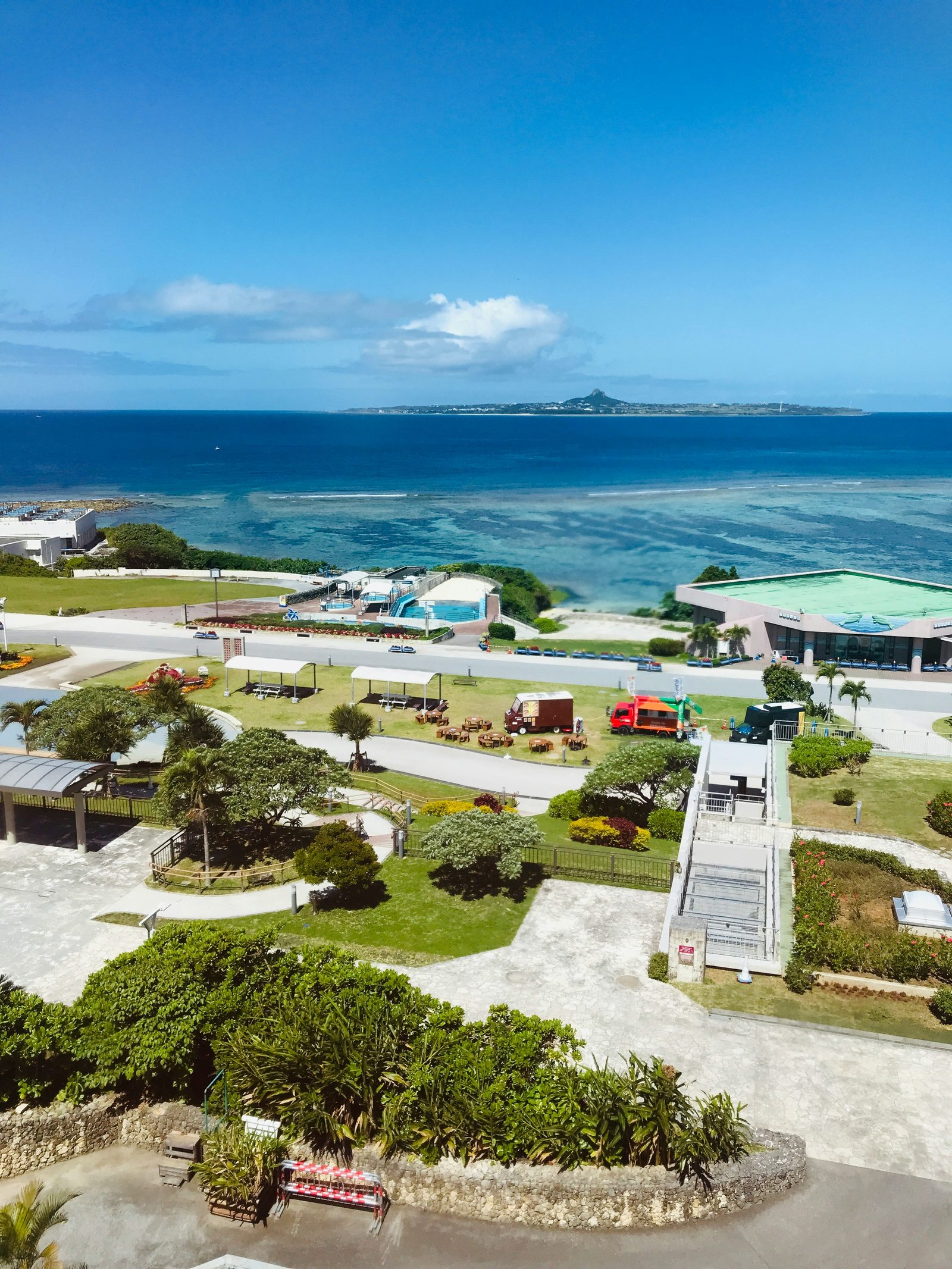
Okinawa is subtropical and operates on a completely different climate logic from Honshu and Hokkaido. If you arrive expecting "Japan in winter," your luggage will be wrong. Short version: Okinawa has no real winter — even the lowest temperatures sit around 14°C — and the summer is essentially Caribbean-style beach weather running May through October.
Beach season (May-October): nearly six months of swimming weather
Okinawa officially opens its beaches in May; water temperature already exceeds 22°C, earlier than southern Taiwan. The full beach season runs five-to-six months — snorkeling, diving, SUP all viable. Daytime temperatures sit at 25-31°C. Pack:
- Sunscreen SPF 50+ (UV intensity is higher than mainland Japan; if you're snorkeling, choose reef-safe formulations to avoid coral bleaching)
- Rash guard / swim shirt (jellyfish are active June-September; long-sleeve protection beats reapplying sunscreen every hour)
- Beach shoes (coral-rocky shorelines cut bare feet quickly)
- One thin long-sleeve (Cape Manzamo and Shuri Castle evenings drop to 19-22°C; over-air-conditioned restaurants are cold)
Typhoons are the dominant summer risk (peaking July-September). Indoor Plan Bs include Kokusai-dori shopping, Aeon Mall, and the Churaumi Aquarium. Driving is the standard way to cover Okinawa — see our Okinawa self-drive guide for routes and rental comparisons.
Winter (December-March): Japan's mildest "winter"
Daytime stays at 18-20°C; nights drop to 14-16°C. A light jacket (denim, packable down, or fleece pullover) suffices — no real coat or scarf needed for a typical traveler. Sea breeze can cool the wind chill, so a thin scarf is reasonable insurance.
Water temperature drops to ~22°C; diving requires a 5mm wetsuit, but snorkeling still works. The biggest winter advantage: hotels are 30-50% cheaper than summer, flights are off-peak, and crowds drop by half. For budget-conscious travelers, a December Okinawa trip is one of Japan's most overlooked deals.
Spring & autumn (April-May, October-November): the golden windows
Late April to early May is Okinawa's most comfortable window: 22-26°C, low rainfall (rainy season hasn't started), and the water already warm enough for swimming. October-November sits after typhoon season and before winter, also pleasant. Clothing: T-shirts and light pants, plus optional swimwear. Heavy layers are wholly unnecessary.
Whether you need a data plan is a separate question from what you pack, and this guide does not cover it. If you are choosing one, Japan eSIM: five providers compared breaks down coverage and pricing.
🧳 Full four-season packing lists
The following four lists are calibrated for a 5-7 day Honshu trip (Tokyo, Kyoto, Osaka), which most first-time Japan visitors take. For Hokkaido, add snow boots, Extra Warm HEATTECH, and a long-cut parka. For Okinawa, drop the sweater and trousers, add swimwear and beach shoes.
🌸 Spring (March-May) packing list
- Long-sleeve T-shirts × 4 (thin cotton)
- Short-sleeve T-shirts × 2 (wearable on April-May warm days)
- Thin sweater or knit × 2
- Packable down jacket × 1 (compresses into a pouch for daytime carrying)
- Beige windproof windbreaker × 1 (better photographs against cherry blossoms than black down)
- Trousers × 2 (jeans + slim chinos)
- Underwear and socks × 5 sets
- Comfortable walking shoes (15,000 steps/day is normal in Japan)
- Folding umbrella (occasional spring showers in April-May)
- SPF 30+ sunscreen (UV is already strong)
- Masks and an antihistamine (late February to April is cedar pollen season, and plenty of people react for the first time in Japan — see our hay fever guide)
☀ Summer (June-August) packing list
- Cooling-fabric T-shirts × 5 (UNIQLO AIRism is the workhorse)
- Long-sleeve light cover × 1 (for over-air-conditioned restaurants)
- Light long pants or wide-leg trousers × 2 (mosquito and sun protection beats shorts)
- Shorts × 1 (for hotel-area downtime)
- Underwear and socks × 6 sets (sweat volume requires extras)
- Anti-slip sneakers (Arashiyama stone paths get slick when wet)
- Folding umbrella (doubles as parasol; mandatory in June rainy season)
- SPF 50+ sunscreen + wide-brim hat + sunglasses
- Battery handheld fan (¥1,500-3,000 in Japan; cheaper to buy on arrival)
- Refillable water bottle (convenience stores every 200m for free top-ups)
🍂 Autumn (September-November) packing list
- Long-sleeve T-shirts × 4 (the workhorse for October-November)
- Short-sleeve T-shirts × 2 (early September is still warm)
- Thin sweater × 2 (the November workhorse)
- Wool overcoat or heavy windbreaker × 1 (late November workhorse)
- Down jacket × 1 (optional; some travelers want extra warmth in late November)
- Trousers × 2 (jeans + slim chinos)
- Underwear and socks × 5 sets
- Walking shoes (Arashiyama and Tofukuji foliage walks are long)
- Folding umbrella (September typhoon tail, October autumn rain)
- Scarf (post-November mornings and evenings)
❄ Winter (December-February) packing list
- HEATTECH long-sleeve thermal × 4 (Extra Warm tier for Hokkaido)
- HEATTECH thermal tights × 2
- Sweater or knit × 3 (mid layer)
- Down jacket × 1 (600+ FP works for Honshu; upgrade to 700+ long cut for Hokkaido)
- Windproof waterproof shell × 1 (recommended for Hokkaido and Hokuriku; optional for Honshu)
- Heavy jeans or insulated trousers × 2
- Underwear and socks × 5 sets (2 pairs of thick wool socks)
- Beanie × 1, scarf × 1, insulated gloves × 1
- Anti-slip footwear (snow boots mandatory in Hokkaido; regular sneakers fine in Honshu)
- Hand warmers × 5-10 (also sold at every Japanese convenience store)
- Lip balm and moisturizer (dry cold air causes serious chapping)
Packing done, transport is the next question — and whether a rail pass pays off is a separate calculation that has nothing to do with what you wear. Our JR Pass complete guide works through four real itineraries.
FAQ
- Q1:First time in Japan — how do I pack so I do not over- or under-pack?
- Three rules. (1) "Region decides thickness, not month." Same December, Hokkaido needs a polar parka and snow boots; Okinawa only needs a light jacket. (2) Use onion-style layering: three layers (thermal base + sweater + windproof shell) cover 0°C to 20°C, the most luggage-efficient setup. (3) A 30L carry-on plus a backpack is enough for 5-7 days. Do not overpack — UNIQLO and GU are everywhere in Japan; restocking on the ground beats lugging extra layers across continents.
- Q2:Is Japanese winter colder than my home country?
- It depends. Japanese winter is "dry cold" rather than damp cold, so it feels less harsh than many travelers expect. Tokyo averages 5°C in January with humidity under 40%, often more comfortable than 12°C damp-cold cities. But Hokkaido is genuinely arctic (-7°C to 0°C in January) and demands real polar gear. Okinawa stays at 14-19°C all winter — equivalent to a mild Mediterranean spring — so a light jacket is enough.
- Q3:Is June rainy season worth it for a Japan trip?
- It depends on where you're going. Hokkaido has almost no rainy season and is one of June's best destinations. Honshu's tsuyu is mostly drizzle, not all-day downpour, so attractions still work and hotels are 20-30% cheaper. Okinawa's rainy season ends in late June, so the second half of the month is fine. The trips to avoid in June are view-dependent ones — Mt. Fuji, Shirakawa-go — where overcast skies kill the experience.
- Q4:Will I get heatstroke in Kyoto in July or August?
- Risk is real. The Kyoto basin is one of Japan's hottest zones in summer, hitting 33-38°C with 70%+ humidity in August. Mitigations: (1) schedule outdoor temple visits before 9 AM and after 5 PM; reserve noon-to-3 PM for indoor venues like Kyoto Station, depachika basements, museums, or air-conditioned cafés; (2) pack cooling-fabric T-shirts, a wide-brim hat, SPF 50+, and a battery-powered handheld fan (¥1,500-3,000 at any BIC CAMERA); (3) carry a refillable water bottle — convenience stores every 200m mean free top-ups.
- Q5:How do I pack for a single trip combining Hokkaido and Okinawa?
- This is the hardest packing challenge in Japan. Three tactics work. (1) Use takkyubin (yamato) between hotels: ¥2,000-3,000 ships heavy gear ahead so you carry the right layers for each region. (2) Pack modular layers — a thermal base + sweater + parka stack handles Hokkaido, while removing the parka and sweater works for Okinawa. (3) Buy snow boots in Sapporo (New Chitose Airport convenience stores or any UNIQLO) rather than flying with them; ship them home or to your first stop afterward.
- Q6:Cherry blossom season in Kyoto — do I need a real winter coat?
- A packable down jacket is enough; you do not need a heavy parka. Early April Kyoto runs 6-8°C in the morning and 14-18°C at midday — large daily swing but the highs are mild. The most comfortable combination is "long-sleeve base + thin sweater + packable down or windbreaker": all three layers in the morning, drop to one layer at midday, layer back up after 5 PM. If you can only pack one outer layer, a beige windbreaker beats a black down — it photographs better against cherry blossoms and ventilates indoors.
Japan's climate is complex but logical: check region first, then month, then the actual weekly forecast before departure. We hope this guide saves you 30% on overpacking and adds 50% to your daily comfort. For a faster monthly lookup, see our Japan weather by month quick reference; for season-and-place specific deep dives, the three articles below cover our most-tested seasonal scenarios.
Read next
Japan Weather by Month 2026: 4-Region Quick Table
Hokkaido to Okinawa monthly temps, rain, what to wear — one table, 30-second lookup.
Ginzan Onsen Day Trip vs Overnight Stay 2026
By day it is crowded; the gaslight magic happens after sunset — day trip or overnight, and is the extra night worth it?
Shirakawa-go Illumination 2027: Dates & Booking
Four 2027 dates, 17:30–19:30, fully reservation-only.
5 Best Japanese Onsen Ryokans 2026
From a 1925 Cultural Property to Michelin 3 Key — five definitive Japanese onsen inns.
🏨 Dressed for the cold? An onsen ryokan night is winter Japan's highest-payoff add-on — Ginzan snow scenes, Kurokawa bamboo-lantern nights, Kusatsu Yubatake-front heritage. Our 5 picks: 5 Best Japanese Onsen Ryokans 2026, or filter by region at Japan Hotel Picks.